The Mecca Agreement: Is This The Beginning?
 CrossFireArabia
- August 12, 2026
By Helmi Al-Asmar
In politics, not all agreements are created equal. Some accords are signed only to be forgotten, while others open a new chapter in history. The question that arises today is: To which category does the Mecca Agreement belongs to?
For more than a century, the Islamic world has lacked an independent security system capable of protecting its interests outside the sphere of influence of major powers. Alliances have come and gone, and coalitions have shifted, but security decisions have often remained hostage to international balances rather than stemming from regional will.
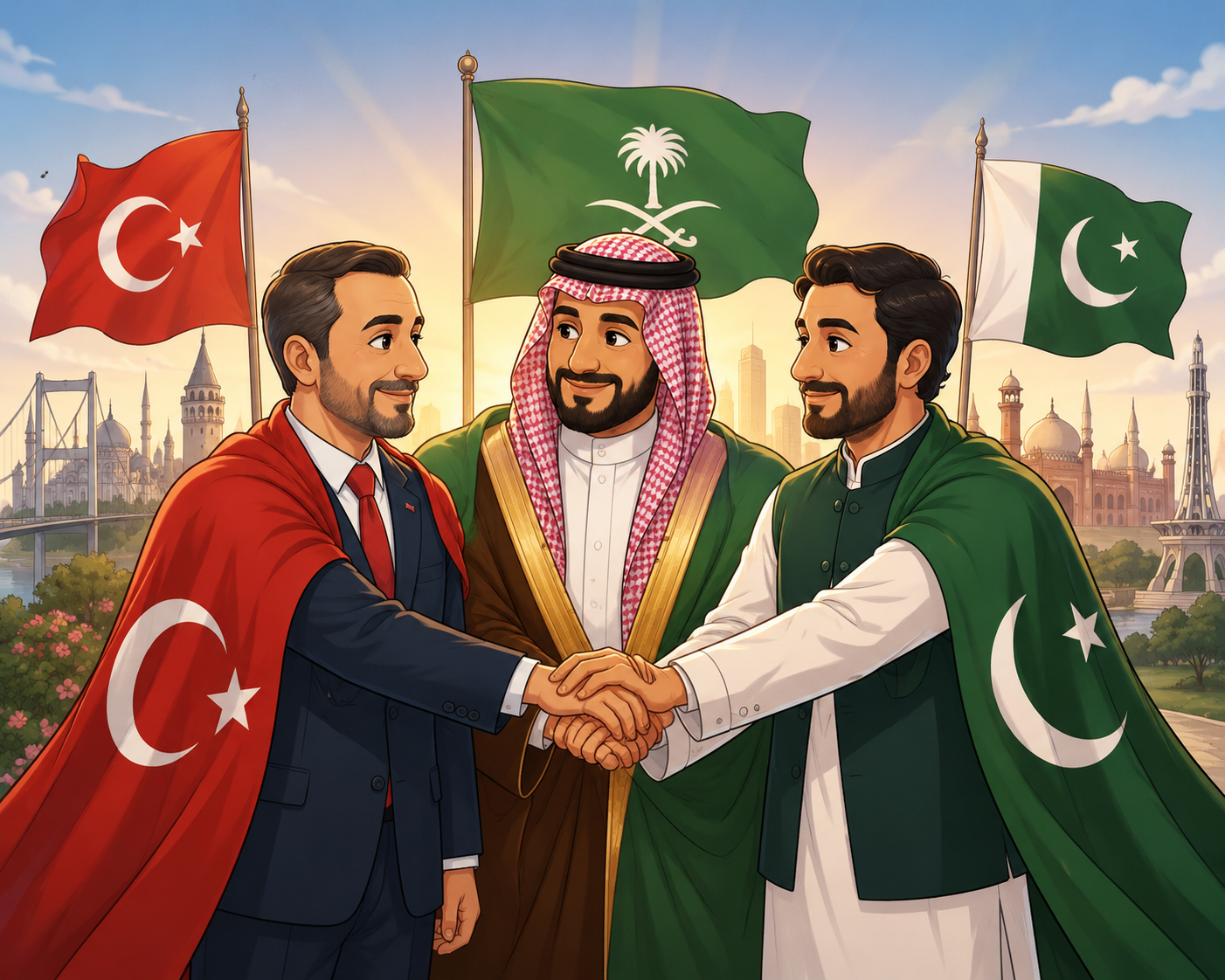
Today, three of the most important players in the Islamic world are coming together: Saudi Arabia with its political, economic, and religious weight; Turkey with its advanced industrial and military base; and Pakistan with its military strength, strategic expertise, and possession of nuclear weapons. The convergence of these elements within a single defense framework makes it difficult to treat the agreement as a mere passing news item.
But history also teaches us that texts alone do not create transformations. What gives any agreement its true value are the practical steps that follow: joint command, integration of military industries, intelligence sharing, unified defense systems, and regular exercises. Only then can it be said that the agreement has moved from paper to reality.
Conversely, this step will not pass without regional and international powers reassessing their calculations. The United States, Russia, China, Iran, and Israel will all interpret the agreement through the lens of its potential impact on the balance of power in the Middle East and the Islamic world.
However, the greatest challenge may not be external, but internal. Can the three countries overcome their differing priorities and interests and transform the political declaration into a long-term strategic project? This is the real test.
The Mecca Agreement may be just another milestone in the history of agreements, or it may be the first spark for building a different Islamic security system. Therefore, the question is not: What does the agreement stipulate? But rather: What will happen after its signing?
The answer will not be written in the final statement, but rather in the coming years.
Are we witnessing the beginning of a new chapter, or a major event destined for the archives of politics?
Only time will tell.
This opinion was originally written in Arabic and appeared in the Jo.24 website and republished in crossfirearabia.com