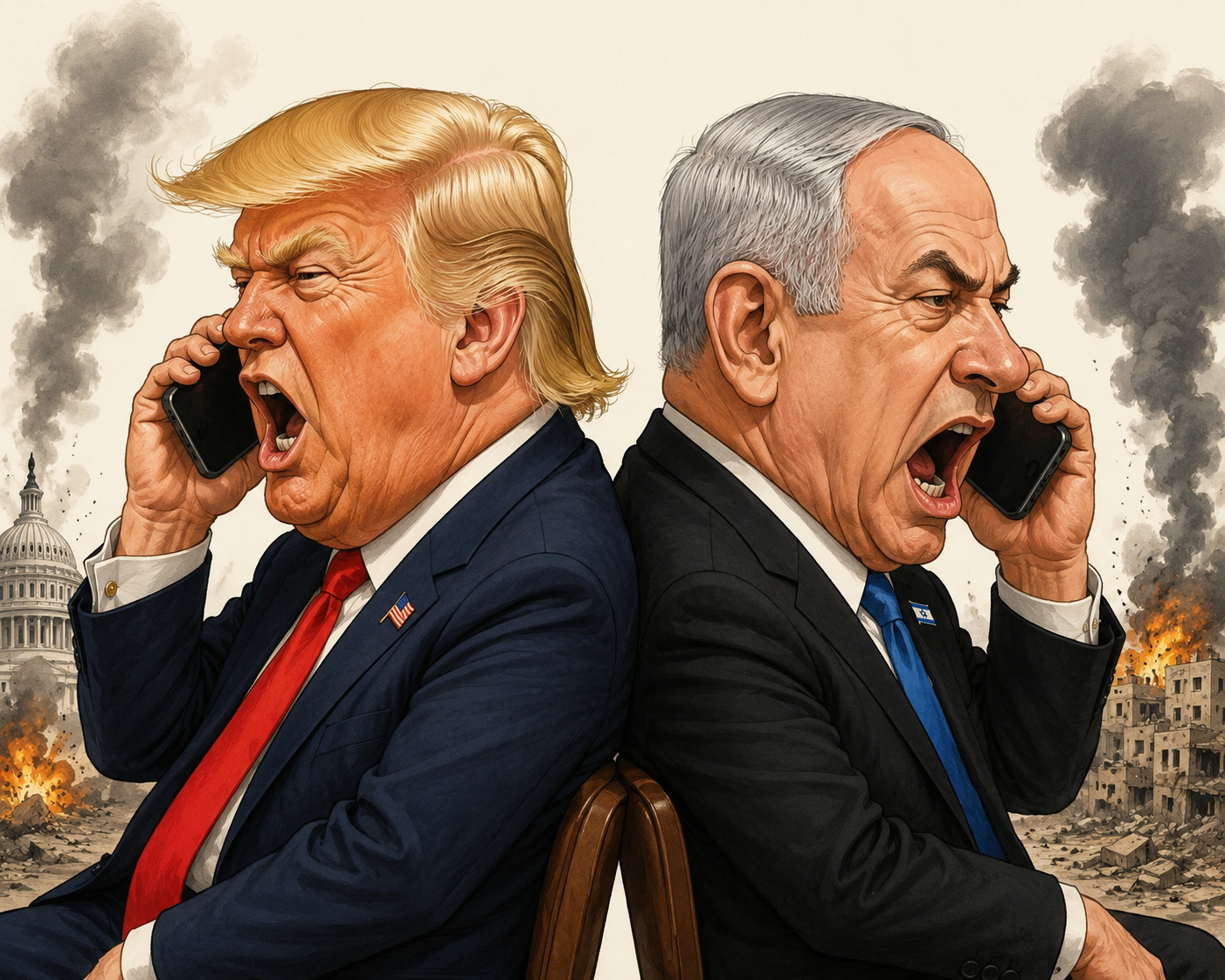
Trump, Netanyahu Rift Hits Rock Bottom: View From Amman

By Saleem Ayoub Quna

The Epic Fury Operation launched by the US against Iran in February 2026, will go down in modern history as the first open military conflict, where a superpower like the United States, has willingly and openly played the role of a war-proxy, on behalf of its smaller ally, Israel.

The difference of attitude between the two close allies, US and Israel, in relation to what they perceived as Iran’s threat, imminent or potential, was a key factor behind the gradual crumbling of the American-Israeli coordinated military and intelligence efforts, to bring down the regime in Tehran.


Israel under Benjamin Netanyahu’s extreme right-wing government, kept saying Iran posed an imminent existential threat to Israel, and therefore it must be brought down by force. While the US position was constrained by its previous international commitments on the issue of Iran’s nuclear ambitions, as stipulated in the 2015 Joint Comprehensive Plan of Action (JCPOA), signed between Iran and the P5+1 powers, during the administration of President Obama.


Since that moment Netanyahu kept vigorously urging, more likely lecturing the US and the West, on the dangers of the JCOPA agreement. When Donald Trump was elected President in 2017, things took an important and completely different turn. In the following year, he took the United States out of that internationally-backed deal as he had promised to do during his election campaign. He also kept his promises of moving the US Embassy to Occupied Jerusalem and recognize the occupied Syrian Golan Heights as part of Israel.


These symbolic and important gestures, whetted Netanyahu’s appetite for more American concessions to Israeli demands.


Netanyahu’s golden opportunity came when Trump was re-elected to his second term in 2023, the same year when Hamas launched its massive assault on the Israeli settlements in the so-called “Gaza enevlope”. Other militias connected and supported by Iran, including the Houthis in north Yemen, Hezbollah in south Lebanon, Syria under the previous regime and Shia factions in Iraq coordinated their efforts to stand by Hamas during that long and unprecedented confrontation with Israel.

For its part, Iran did not shy from making it clear that it helped create this “chain” of resistance factions to encircle Israel from three directions.

The second turning magical point in the US position on the issue of direct military intervention against Iran came about when Israel succeeded in serving Hezbollah, the severest military blow ever, in the pagers’ operation and the subsequent assassination of Hezbollah’s top leaders, including its charismatic Secretary-General Hassan Nasrallah on Sept 27, 2024.


Trump was very impressed with all of that Israeli action and Netanyahu gave himself the full credit for this unexpected success.


Accordingly, Netanyahu’s plan to Trump was simple. Based on the Israeli accumulated intelligence and expertise on the Iranian internal scene and emulating its operation against Hezbollah leaders in Lebanon, accompanied by massive American air strikes would provide both allies with the best chance to finish the Ayatollahs in Tehran once and for all!


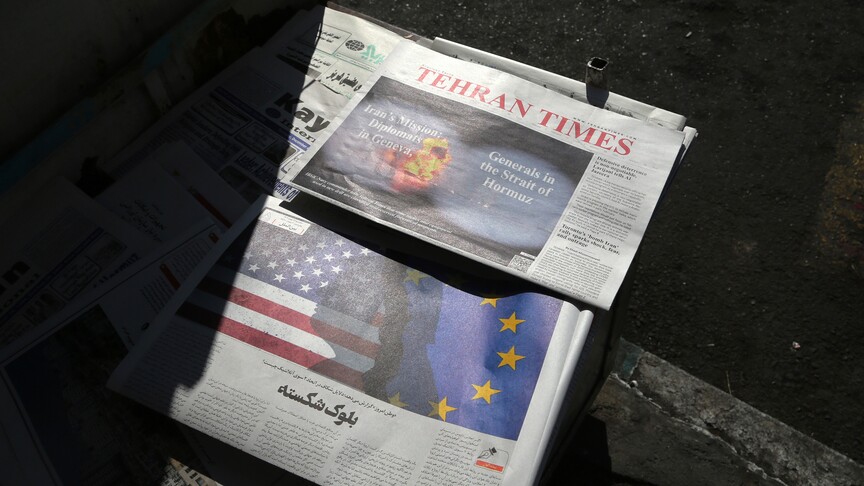
But as events unfolded, all of Netanyahu’s plans, personally and strongly endorsed by Trump and his military aides, suddenly started crumbling, one after the other. His relations with Trump slipped into stages of deterioration by the day and week as the closure of the Hormuz Strait by Iran, started hurting the world economy led by the US.


Here new red lights went on and the phone calls between the two men became more intense and vulgar. Then Trump decided to pass on the torch to his deputy, JD Vance, who seemed comfortable to tell Netanyahu what Trump avoided to do!


Conclusion: It is tricky to switch roles of allies in wars. A smaller entity can always stay safe as long as its leaders know the limits of their power and leverage. When people like Netanyahu think they have more power and clout than they actually have, versus their stronger ally, then irritation starts to brew, especially in the case of Trump who likes to show he is always in the driving seat. It also means that the leadership on the side of stronger partner has some problems of its own!


Whether it is a wrangle, rift, collision, divorce or worse between Trump and Netanyahu, we will not know for certain, until the negotiators in Switzerland close their files and head back home!
Continue reading
Will The US-Iran Deal Last?

By Ali Bakir

On June 15, Pakistan’s Prime Minister Shehbaz Sharif announced via the US social media platform X that a peace deal between the US and Iran had been reached, following over two months of mediation by his country. Sharif expressed gratitude to Qatar, Saudi Arabia, and Türkiye for their significant contributions, stating that the official signing ceremony would take place on June 19 in Switzerland. Following this announcement, a memorandum of understanding was signed electronically by US President Donald Trump and Vice President JD Vance on the US side, and by Iranian Parliament Speaker Mohammad Bagher Ghalibaf on the Iranian side.

The reported agreement is characterized as a framework peace deal aimed at ending the 2026 Israel/US-Iran war and transitioning the current ceasefire into a broader diplomatic process. Although the text of the agreement has not yet been published, key reported elements include immediate cessation of military operations, reopening of the Strait of Hormuz to international shipping, and a 60-day negotiation period to address unresolved issues, particularly Iran’s nuclear program, alongside discussions on sanctions relief and access to frozen Iranian assets during follow-up negotiations.

This agreement follows two significant developments. First, Israel conducted military strikes on Iranian targets in western and central Iran around a week ago, marking the first such actions since April. Explosions were reported in Tehran, Tabriz, Isfahan, and other cities in response to Iranian missile launches that were highly performative. Second, Trump warned that Iran would “pay the price” for what he described as slow progress in negotiations to end the conflict, indicating that the US could resume strikes against Iranian infrastructure.

5 bullet points on the agreement

Although the agreement does not necessarily mean that the root causes that prompted the war have fully disappeared, a few observations are worth mentioning and analyzing.

First, a lot of narrative spinning is occurring publicly at the moment. While the main parties are trying to sell the agreement as a victory, there are factions within the broader regional camps (such as hardliners in both Iran and Israel) that oppose it. Critics in Iran have labeled the agreement a “humiliating capitulation,” arguing that it involves unjustified concessions. Hardline opponents have publicly criticized the negotiating team, with Iranian MP Mahmoud Nabavian stating that the latest draft is “more damaging” than previous versions. Similarly, Israeli officials emphasized that Israel was not directly involved in negotiating the US–Iran deal and does not necessarily consider itself bound by its provisions. Israeli Defense Minister Israel Katz declared that Israel would not withdraw from territory seized in Lebanon and would continue to act against threats from Hezbollah and Iran if necessary.

Second, the timing of the agreement suggests that Iran was running out of options. As the Islamic Revolutionary Guard Corps (IRGC) focused on messaging and performative measures, the gap between their narrative and reality widened, with Iran’s ability to endure further pressure significantly diminishing. Trump’s counter-blockade against Iran’s restriction of the Strait of Hormuz imposed significant economic costs on Iran, leading to the decision to sign the agreement. It is estimated that the blockade could have cost Iran over $24 billion in just two months — almost equal to Iran’s reported total reserves of foreign currency — leaving the regime with little choice but to agree to the terms or face economic collapse.

Third, despite the negative reactions from hardliners in both Iran and Israel, the agreement highlights Trump’s genuine interest in reaching a resolution with Iran, especially following last year’s swift 12-day war between Israel and Iran. However, radical elements in both Iran and Israel seem intent on using procrastination, escalation, or military actions to sabotage meaningful attempts to achieve peace. Given that there is reportedly a 60-day negotiation period following the signing of the agreement, it is likely that these factions will continue to work against a comprehensive resolution.

Fourth, while Pakistan played a significant role in the mediation process, Qatar’s involvement was also crucial, as acknowledged by American, Pakistani, Saudi, and Turkish officials. Notably, neither the Qatari Foreign Ministry spokesman nor the ministry itself reported any independent measures taken by Qatar, apart from endorsing Pakistan’s mediation efforts. In fact, a Qatari spokesman denied any independent role in the mediation at this stage. Qatar’s involvement appears to have been executed at the request of the United States and had several dimensions.

Primarily, Qatar facilitated technical issues between the US and Iran, such as enabling the transfer of Iranian funds without direct US involvement, thereby avoiding the perception of it being a US initiative or taxpayer-funded. Additionally, Qatar played a role in establishing a communication channel between the United Arab Emirates and Iran, which emerged later in the mediation process. Finally, Qatar aligned itself with Saudi Arabia’s position, providing support for the Pakistani initiative.

Changing actors

Fifth, two awkward positions regarding the agreement can be highlighted. Firstly, the Europeans have been largely inactive in resolving the crisis yet somehow managed to host the official signing ceremony between the Americans and Iranians. Instead of crediting Pakistan, Switzerland offered to host the ceremony, which can be seen as an act of opportunism. Secondly, Oman, historically a favored mediator between the US and Iran, has been notably absent from this current arrangement. Oman’s position during this war was not popular in the Gulf Cooperation Council and beyond. According to a senior US administration official, Oman was removed from its mediation role in negotiations with Iran after the US concluded that Muscat had acted “very duplicitously” during the talks.

Finally, we must approach the prospects of the agreement with caution. It is essential to recognize that this is not a comprehensive peace agreement but rather a transitional framework. The future of the agreement will largely depend on the outcomes of negotiations in the next 60 days. Given that several factions within Iran and Israel are opposed to the agreement, we should not dismiss the possibility of sabotage, particularly from Israel.

Ali Bakir is an assistant professor of international affairs, security, and defense at Qatar University and senior nonresident fellow at the Middle East Council on Global Affairs. Anadolu

Continue reading
Trump Ticks Off Israel in Rebuke…

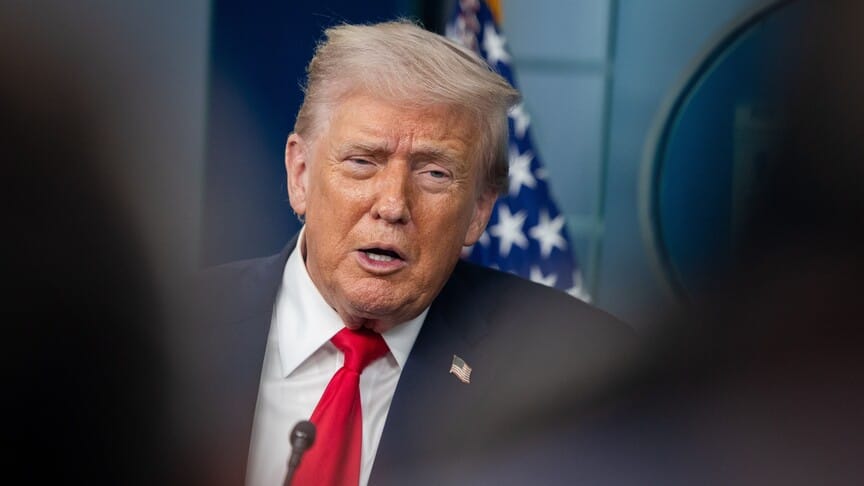
US President Donald Trump, Tuesday, issued a rare rebuke of Israel, rejecting the destruction of entire residential buildings in Lebanon in the search for a single Hezbollah member. He noted that many of the residents of those buildings are not affiliated with the group.

This came in remarks he made to reporters after meeting with Emir of Qatar Sheikh Tamim bin Hamad on the sidelines of the G7 summit in France. It comes two days after the announcement of a US-Iranian agreement.

In response to a reporter’s question, Trump said: “I’m not happy with the way Israel has dealt with Lebanon and with Hezbollah. They should have been able to get the job done much faster.”

He added: “You don’t have to destroy an entire apartment building every time looking for one Hezbollah member; there are many people living in those buildings, and not all of them are Hezbollah members.”

Trump said he had suggested to Israel that Syria be left to deal with the Lebanese Hezbollah group.

He pointed out: “The person running Syria (Ahmed al-Sharaa) is someone that I, Turkish President Recep Tayyip Erdoğan, and other figures supported, and we helped him come to power. He has done an exceptional job in restructuring the country.” He continued: “I suggested to Israel that Syria take care of Hezbollah, because frankly I think they would do a better job.”

https://www.facebook.com/reel/1565129145177584

He added: “If Israel can’t get the job done against Hezbollah without killing everyone, then (Syria) will take over. Syria will do the job.”

Trump also criticized the Israeli attack on Beirut just before the signing of the US-Iran agreement, saying: “I didn’t think it was right for Israel to attack Lebanon and Beirut hours before the agreement was signed. I didn’t like it at all, and I told him (Israeli Prime Minister Benjamin Netanyahu) that very clearly.”

Trump said that without the United States, “Israel wouldn’t exist and would have been destroyed,” calling on Netanyahu to act more responsibly toward Lebanon.

On Sunday, the Israeli army launched an airstrike targeting an apartment building in Beirut’s southern suburbs, claiming to be targeting “Hezbollah targets,” while the world awaited the imminent signing of a memorandum of understanding between Washington and Tehran to end the war.

The airstrike killed three people, including two women, and wounded 16 others, including four women. Iran vowed an “imminent response” to the Israeli attack in Beirut’s southern suburbs.

On Sunday evening, Washington and Tehran announced an agreement, brokered by Pakistan, to end military operations on all fronts, including Lebanon, reopen the Strait of Hormuz, and lift the naval blockade on Iran. The agreement is scheduled to be signed in Switzerland next Friday.

Since 2 March, 2026, Israel escalated its aggression against Lebanon as part of the ongoing conflict it has waged, alongside the United States, against Iran.

These attacks have resulted in the deaths of 3,826 people and injuries to 11,851 others in Lebanon, according to the latest figures released by the Lebanese Ministry of Health.

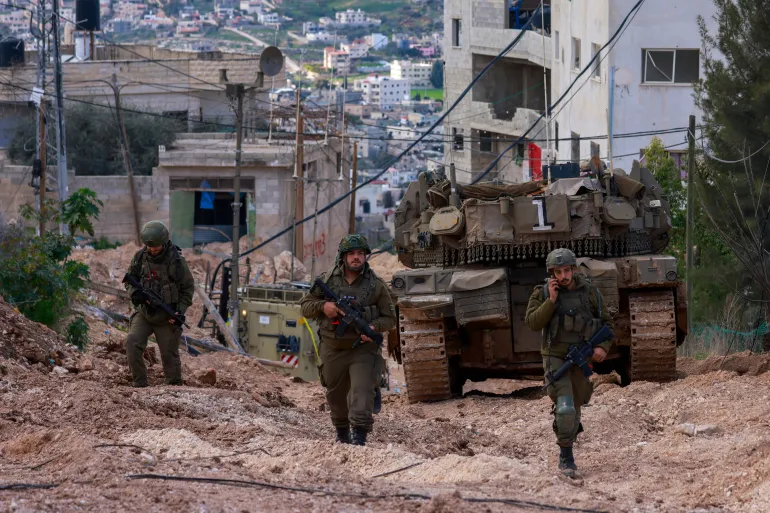
Israel continues to occupy areas in southern Lebanon, some for decades, and others since the previous war between 2023 and 2024, while during the current aggression it has expanded the scope of its incursion to a distance of more than 10 kilometers inside Lebanese territory according to Anadolu.

Continue reading
BoP and The Lurking Devil!


Eight months ago and precisely in June 2025, the US and Israel launched their first combined “Midnight Hammer” military operation against Iran, in an attempt to obliterate its controversial nuclear facilities, set since 2018, to be settled through negotiations between the US and Iran. Prior to that strike, not Ukraine nor Venezuela or Greenland, but Gaza was the hottest issue on Trump’ international agenda, as he was applying the final touches on his anticipated peace plan for the devastated tiny strip! On 26 January this year, i.e. nearly a month ago, Trump from Davos, in Switzerland, proudly announced the birth of BoP, “The Board of Peace”, which he would preside over forever.


To enhance his initiative’s chances to succeed, Trump had invited world leaders to join his new born club for peace. Those who responded favorably had little choice to do otherwise, and some of them promised to contribute billions of dollars to make the plan work. Other big shots such as Russia, France or China were either not interested or invited!


The last one to join the club, but reluctantly, was no other than the Israeli Prime Minister, Benjamin Netanyahu, despite his direct involvement in the thick of the matter. Netanyahu thought the plan was naïve and amateurish in more than one aspect! So he would send his Foreign Minister to attend the signing ceremony in Davos, for his own thoughts were focused on other more important issues that would take place later! Regardless of Netanyahu’s caveats, the Trump BoP seemed to be one of few feasible options to stop the violence and killing committed by Israel.

in Gaza, and a shy start towards a peaceful transition in Gaza and beyond despite the many loopholes.
On this occasion Trump said: “This is a big, big day, a beautiful day, potentially one of the great days ever in civilization”. The he added: “I am not talking about Gaza. Gaza is one thing, but we are talking about
much beyond Gaza. The whole deal, everything getting solved. It is called peace in the Middle East”. While this BoP was hailed as an achievement for Trump’s diplomacy, envisaged by his top capable advisor to the Middle East, Steve Witkoff, and his assistant Jared Kushner, Trump’s trusted son-in-law, it whistled disaster in Netanyahu’s ears.


From this man’s point of view, if the BoP was put on track of the peace train, let alone its arrival at its desired destination, it would mean one thing and nothing else: the end of Gaza tragedy which also meant the end of Netanyahu’s political career. For him, it looked like a trap that he had, knowingly but unwillingly, a role in setting up. At this crucial moment the manipulative devil and the survival instinct in
Netanyahu, were awakened and pushed him to embark on planning a reversal of this momentum. He had to end this nonsense talk about peace for Gaza, let alone beyond! For certain, he regretted his consent to the suspension of the Midnight-Hammer strike back in June against Iran. Now time is running short for him again.

He needs to take a big and last gamble to divert Trump’s current menacing approach to solve the thorny issues in this region. He, prematurely, and ahead of his originally scheduled visit to the US, books
a meeting with Trump at Mar-a-Lago in Florida, thus effecting his sixth meeting with Trump in less than a year!

There, he presents his case: Today, he tells Trump, Iran is the biggest real danger facing Israel and the free world led by the US; Iran is stockpiling an arsenal of all kinds of deadly missiles; the majority of
Iranians want the US to help them topple the regime which is massacring the protesters in the streets; Iranian negotiating team are just buying more time; it is now or a never again chance to finish this
nightmare called Iran, after its proxies in Syria, Yemen, Iraq, Gaza and Lebanon were defeated earlier.
Trump submissively listened, as Netanyahu managed to put a hold on every other item on Trump’s agenda, including his cherished BoP project for which he hoped to be nominated for the Nobel Prize for
peace!

Today as the war against Iran goes into its sixth day, two things and plus are crystal clear; there will be no peace prizes, and there will lot of havoc and chaos on the ground, plus the devil in Netanyahu, will be the happiest breathing creature around, for the time being!

Continue reading
More Countries Quit Eurovision in Protest…

Ireland’s Charlie McGettigan, who won the Eurovision Song Contest in 1994, said he will return his trophy in protest of Israel’s continued participation in the competition, joining Swiss singer Nemo, last year’s champion, in the symbolic move.

McGettigan said he plans to send the trophy to the European Broadcasting Union, which organizes Eurovision, in a video posted on social media. McGettigan won the contest with fellow Irish singer Paul Harrington.

He said Nemo had contacted him online to explain the decision to return the 2024 trophy.

“They came across as sincere and a very intelligent person and stated their case very well, and therefore in support of Nemo, I would like to return my trophy to the EBU as well,” said Harrington. “Unfortunately, our win was in 1994 and I can’t lay my hands on whatever trophy we received back then, but if I do find it, I will return my trophy as well.”

The move comes amid a broader controversy surrounding Israel’s inclusion in Eurovision.

Following confirmation last week that Israel would remain in the competition, broadcasters in five countries — Iceland, Ireland, the Netherlands, Slovenia and Spain — announced they would withdraw from the 2026 contest according to Anadolu.

Continue reading