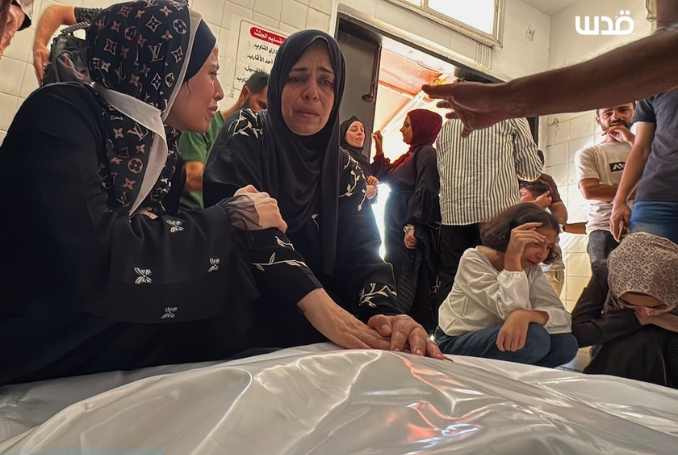
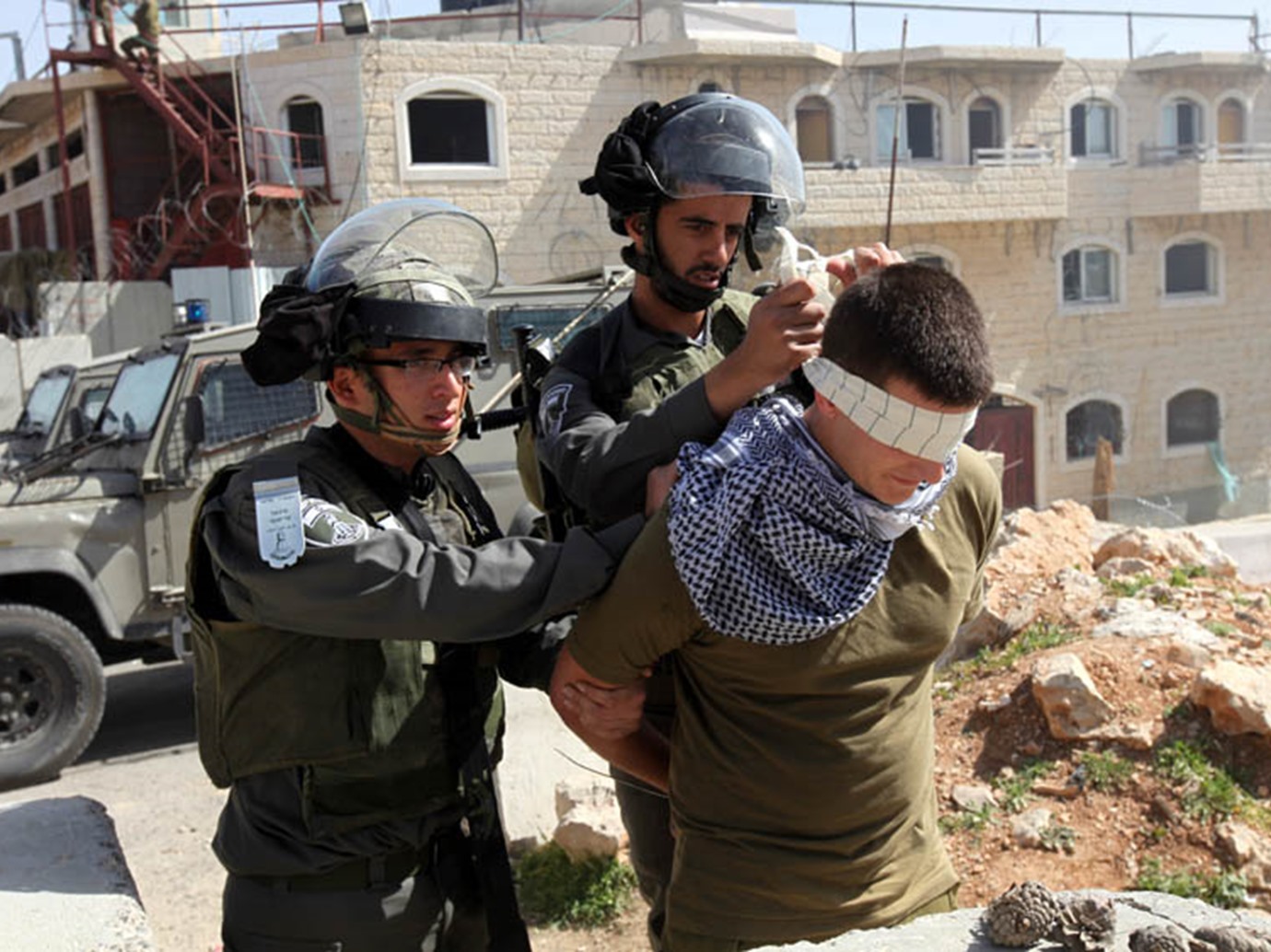
CROSSFIREARABIA – Israel is currently holding the bodies of about 1,700 Palestinians as a bargaining chip for future negotiations according to the Israeli daily Haaretz. “Israel is holding the bodies of hundreds of Palestinians as a bargaining chip, despite the fact there are currently no Israeli hostages,” it added in a report published Monday, basing its claim on two unnamed sources. It added the head of the Israeli Security Agency (Shin Bet), David Zini, is in favor of retaining the bodies, “in anticipation of a scenario involving Israeli prisoners or missing persons in the future and the Israeli army supports this view. Haaretz explained “the majority of the bodies belong to Palestinians from the Gaza Strip who participated in the 7 October, 2023, attack or in fighting since that date,” put pointed out that some of the bodies belong to Palestinians who were not involved in the fighting.” On that day, Hamas fighters attacked military bases and settlements along the Gaza border, killing and capturing Israelis, in retaliation for “the daily crimes of the Israeli occupation against the Palestinian people and their holy sites, especially the Al-Aqsa Mosque,” according to the movement. Israeli officials consider the events of October 7th to represent the biggest Israeli intelligence and military failure, severely damaging Israel’s image and that of its army worldwide according to Anadolu.
Actress Melissa Barrera has reaffirmed her support for Palestine, emphasizing that speaking about issues she believes are important remains meaningful to her. Her position has sparked renewed conversation around celebrity activism, freedom of expression and the role public figures can play in humanitarian discussions
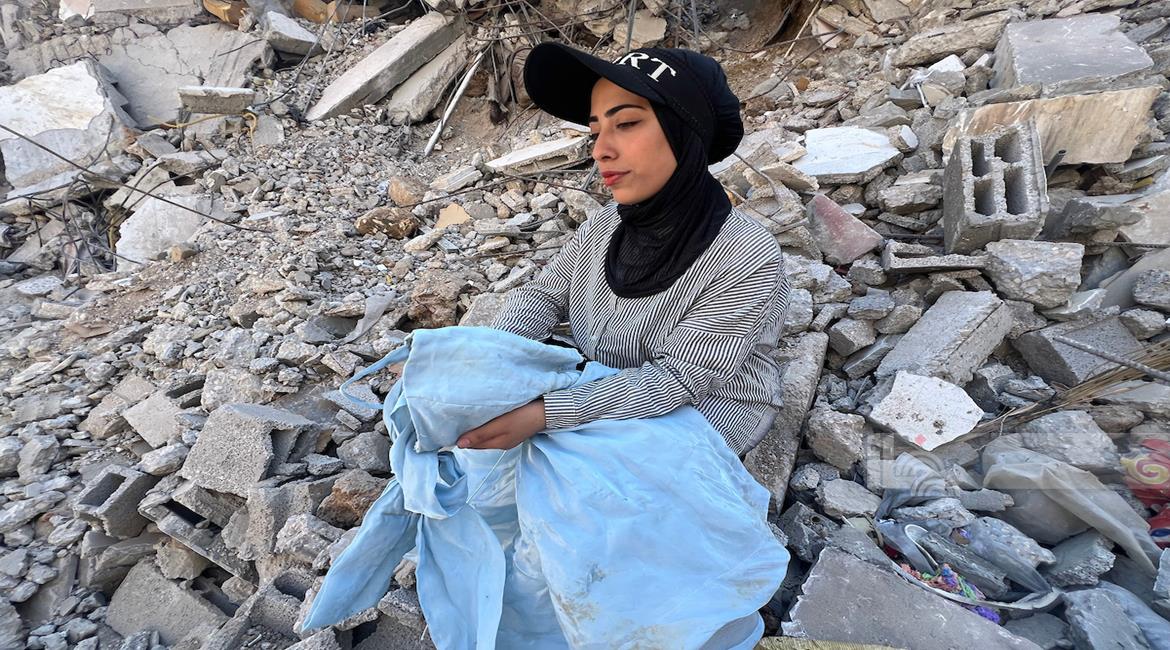
Aya Matran’s morning became like no other. She was to be a bride preparing to put on her white wedding dress and begin a new life. However, In Al-Maghazi refugee camp in central Gaza, she stood beside her father on the rubble of the home that was supposed to welcome the first days of her married life. She stood in a daze searching through stones and dust of the remains of her dreams buried in an instant by an Israeli airstrike only hours before her wedding.
Nothing remained of the house except piles of concrete and twisted metal. Buried beneath the rubble were her wedding dress, gold jewelry, bridal belongings, and everything the bride and her family spent years working to prepare for. What was meant to be a day of joy became yet another encounter with loss.
Five Hours…
The family had chosen the wedding day on what was thought to be a period of relative calm, hoping the celebration would take place at a time when there would be no bombing. But just five hours before the ceremony, the groom’s family was forced to evacuate the house after receiving a phone call from the Israeli forces. Shortly afterward, an Israeli airstrike targeted the house and completely destroyed it. Everything went up in smoke!
Aya says that everything was ready for the beginning of her new married life. All that remained was for her to put on her wedding dress. Instead, the bombing destroyed everything she had prepared and turned what should have been the happiest night into a painful memory.
She says her dreams were not extravagant. She simply wanted to begin her married life just like other young women. But the war took away her home, her bridal belongings, her personal possessions, and even the wedding dress that remained buried beneath the rubble.
Dad Relives the Memories Among the Ruins
Her father, Shadi Matran, stood beside her, looking at the place that was supposed to be filled with celebration but had instead become a scene of destruction and silence.
He says the family was shocked to learn that the house had been bombed only a few hours before the wedding, after they had completed all the preparations despite the severe economic conditions facing the Gaza Strip.
He adds that his daughter had left almost nothing behind at the family house, as she had already moved all her belongings to her future marital home. But within moments, everything disappeared beneath the rubble.
He explains that returning to the site each day feels like reliving an endless nightmare. From time to time, family members search through the debris, hoping to find anything that might remind them of what once stood there—or anything that can be salvaged from the memory of the home.
Wedding Dress Under The Rubble
Aya says she is no longer asking for much. She simply hopes to recover some of what she lost and retrieve some of the belongings buried beneath the rubble, especially the wedding dress she never had the chance to wear.
She stresses that the war did not merely postpone her wedding. It shattered a beginning she had waited years for and turned happiness in Gaza into a deferred dream, at a time when thousands of Palestinians are experiencing similar losses—the loss of homes, loved ones, and hopes for the future.
A Plea…
The bride’s father concludes by appealing to the international community and humanitarian organizations to work towards ending the war, so that the daughters of Gaza can celebrate their weddings away from continuous bombing and destruction.
In Gaza, the rubble no longer conceals homes alone. It also buries postponed stories, shattered memories, and dreams beneath the concrete. Among them lies a bride’s wedding dress that was waiting to see the light of day, but instead remains a silent witness to a war that did not even leave joy a chance to be complete.
The Government Media Office in Gaza announced, Thursday that the Israeli occupation forces committed 4,091 violations of the ceasefire agreement in its first 300 days.
According to the office, the violations resulted in the killing of 1,254 Palestinians, the injury of 4,121 others, and the arrest of 159 Palestinians since the agreement entered into force.
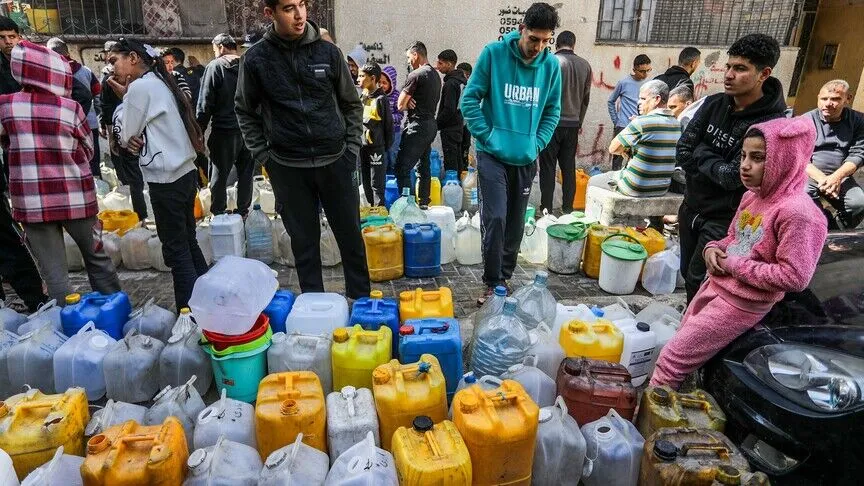
The office said the violations coincided with the continued obstruction of humanitarian assistance and severe restrictions on the movement of Palestinians through Gaza’s crossings.
The Government Media Office said in the statement that Israel allowed the entry of only 63,094 humanitarian and food aid trucks out of the 180,000 trucks scheduled under the agreement, representing a compliance rate of approximately 35%.
It also said only 10,703 Palestinians were permitted to leave Gaza through the Rafah crossing out of 27,400 scheduled travelers, amounting to a compliance rate of 39%.
The office condemned Israel’s “systematic policy of targeting and exterminating the Palestinian people” and held the occupation fully responsible for the worsening humanitarian conditions in the Strip.
It called on the mediators and guarantors of the ceasefire agreement to pressure Israel to fully implement its obligations and end the ongoing violations.
Israeli occupation forces continued military operations across the Gaza Strip on Thursday despite the ceasefire agreement.
According to Al Mayadeen’s correspondent, Israeli military vehicles opened heavy fire toward areas south of Al-Mawasi and west of Khan Yunis, as well as Al-Mawasi in Rafah.
One Palestinian was reported wounded in Al-Mawasi, Khan Yunis.
Israeli artillery also shelled northeastern Gaza, while tanks opened heavy fire north of the Al-Bureij refugee camp in central Gaza. – Palestine Chronicle
Palestinian embroidery is a work of art. Unfortunately, it receives little promotion worldwide. Palestinian embroidery is our most beautiful heritage art, and we have been working to revive this tradition for generations.


 CrossFireArabia