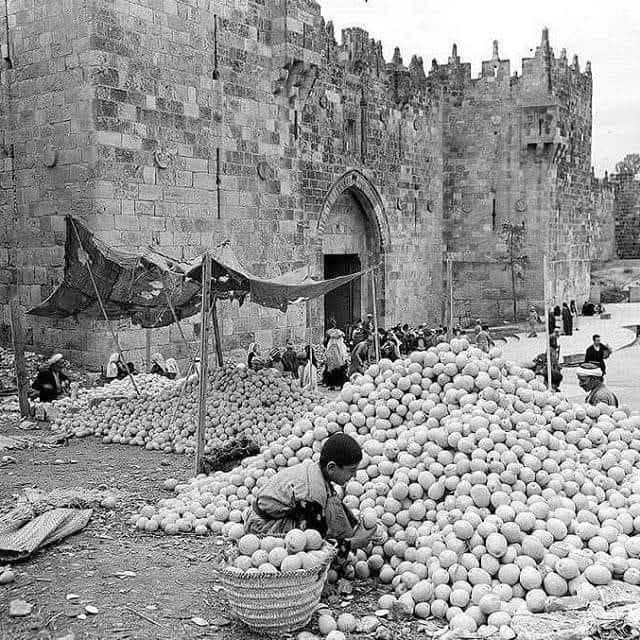
Jaffa Oranges in Jerusalem, 1937
 CrossFireArabia
- August 15, 2026
CROSSFIREARABIA – The world-famous Jaffa oranges brought all the way from the Palestinian city of Yafa to be sold in the holy places of Jerusalem in 1937.
 CrossFireArabia
CROSSFIREARABIA – The world-famous Jaffa oranges brought all the way from the Palestinian city of Yafa to be sold in the holy places of Jerusalem in 1937.
CrossFireArabia
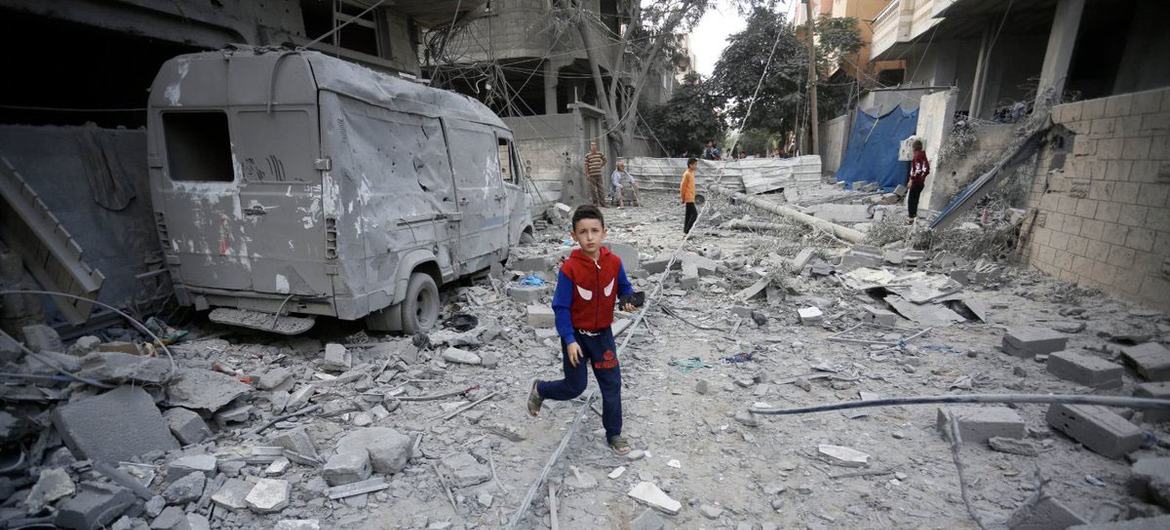
CROSSFIREARABIA – The Gaza Civil Defense uncovered the remains of 12 martyrs from the lowest depth of a wreckage of a house destroyed by the Israeli occupation forces during its genocidal war on the people of Gaza. The remains were uncovered on Al Zaytoun neighborhood, south Gaza City. The remains belonged to the Al Batnigy family in the Asqoulah area in Al Zaytoun. Civil defense teams are currently on a campaign to uncover the remains of people who died under wreckage with the latest being 112 belonging to the Al Huseinya and Abu Sharieh families. The Israeli army committed hundreds of massacres in its mass war through the deliberate destruction of houses knowing full-well that they were full of people with today’s total martyrs standing at about 74,000 people and 174,000 injured according to the Palestine Information Center.
CrossFireArabia
Reem Arkan writes:
“This is my new painting. It is titled “In Her Hand, a Red Homeland”. She explains in her eyes you can see Palestine; in the palm of her hand there is a watermelon; And the red, is the story of a land that will never die. She clutches the watermelon as if it were a homeland, And she guards in her heart the olive tree of memories.
O girl of the land, O color of Palestine,
You and the watermelon are the story of a people… and the story of steadfastness.”
Arkan is from Gaza, she is a teacher and has graduated from Al Aqsa University, hence the beautiful style in painting and words.
CrossFireArabia
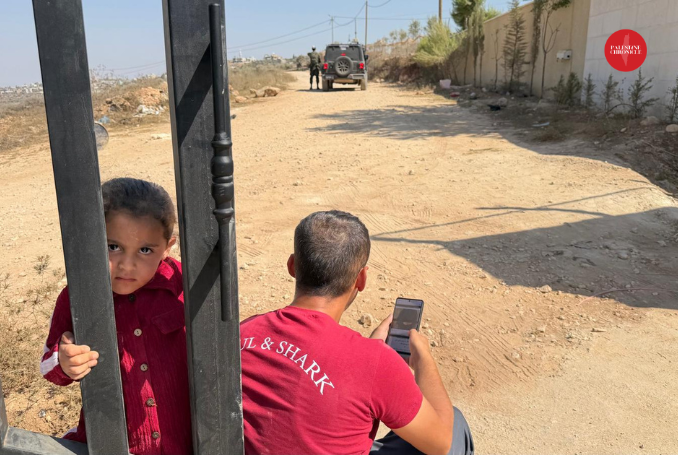
The Israeli army seized 16 Palestinian homes in and around Qusra in the northern occupied West Bank and converted them into military posts, a local official said Thursday.
Abdul Azim al-Wadi, head of the Qusra village council, told Anadolu that the army was continuing its military offensive in the town, south of Nablus, and had informed the council that it would last until Sunday morning.
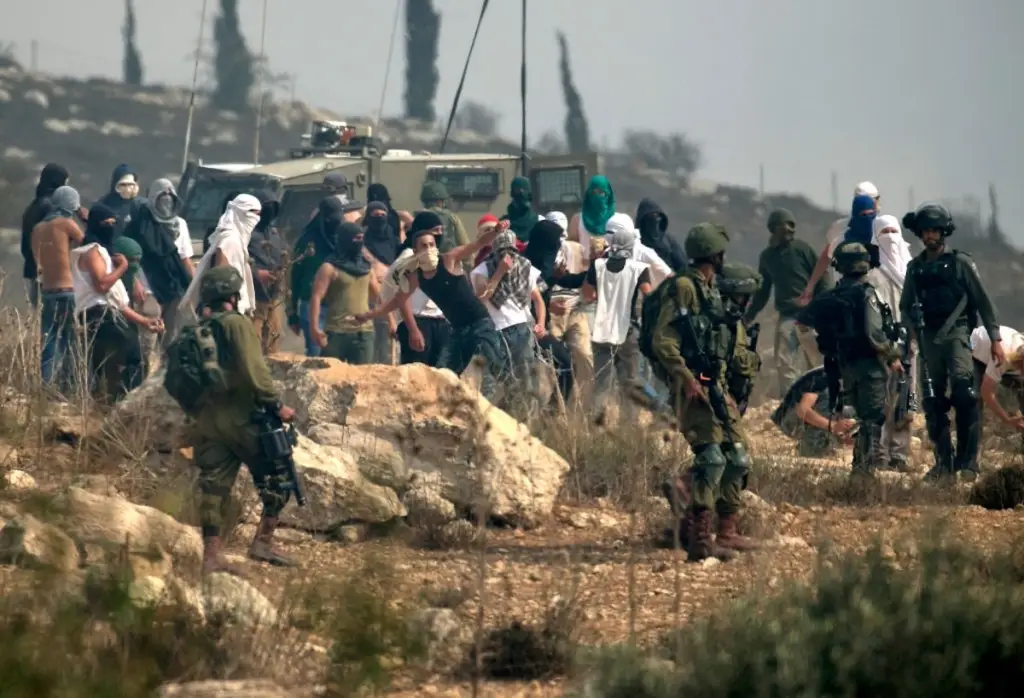
Large Israeli forces, accompanied by infantry troops, military vehicles and bulldozers, entered Qusra and deployed across the town and its outskirts, he said.
Al-Wadi said the Israeli army told the council it was seeking to dismantle an illegal outpost established by occupiers near the town amid escalating tensions in the area. He said three Palestinian families, including one with US citizenship, remained trapped inside their homes for a 4th consecutive day.
An Anadolu correspondent saw Israeli troops stationed inside several homes, while some families left their houses to stay with relatives.
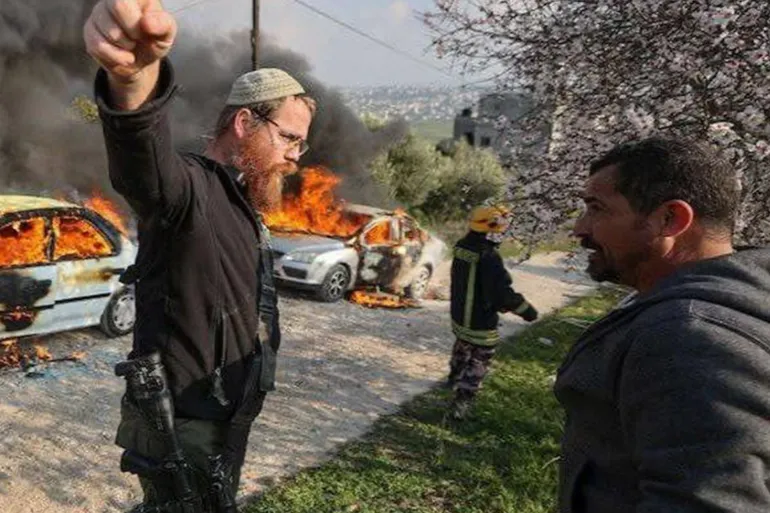
Since Sunday, Israeli occupiers have erected a tent and temporary structures among Palestinian homes in the Ras al-Ain area on the outskirts of Qusra, according to the Palestinian Colonization and Wall Resistance Commission.
The occupiers also blocked roads leading to the area with rocks and surrounded three homes, the commission said.
It warned that the attacks could develop into a prolonged siege intended to isolate the families and force them from their homes.
The occupiers have obstructed the delivery of food, water and medicine to the homes, while water and electricity lines have also been cut, it added.
Earlier Thursday, large Israeli forces raided Qusra, imposed a curfew and ordered businesses to close amid a widespread deployment of infantry troops, military vehicles and bulldozers.
The developments come amid escalating occupier attacks in the area and Palestinian concerns that attempts to establish the outpost could become permanent and lead to the seizure of Palestinian homes and land.
The commission said occupiers had attempted eight times to establish an outpost in the Jabal Ras al-Ain area, citing its strategic location on high ground overlooking a large area.
Attempts to raid and seize the homes began about four months ago, prompting family members to take turns staying in them to prevent their takeover, it added.
The commission warned of a repeat of events in the nearby village of Jalud, where it said occupiers seized a home belonging to Mahmoud al-Tubasi’s family on July 22 after besieging it for more than three months.
According to the commission’s latest figures, occupiers carried out 12,506 attacks from October 2023 through June 2026, killing 52 Palestinians and setting 890 fires that damaged Palestinian property and farmland.
It also documented 2,256 attacks across the occupied West Bank in July, including 1,458 by Israeli forces and 798 by occupiers. Anadolu
CrossFireArabia
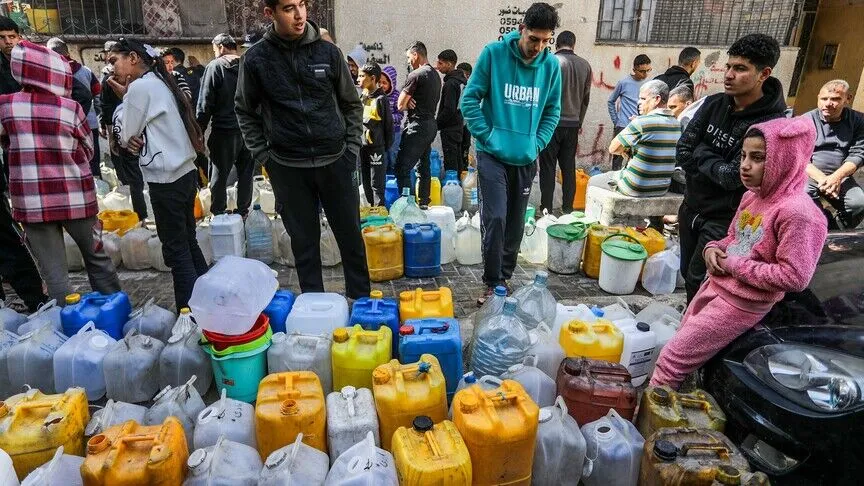
Israel persists in maintaining its illegal siege on Gaza, intentionally disrupting transportation and freight by destroying trucks and warehouses of transport companies. It also targets and detains drivers and blocks the entry of trucks, spare parts, and essential materials. This obstructs the delivery of food, medicine, and aid through crossings to the people, risking a return to famine in the Gaza Strip.
Furthermore, Israel enforces a comprehensive policy that disrupts the entire supply chain, starting from the entry of goods and aid through crossings until they reach the population. Even when trucks are permitted to cross into Gaza, it is not guaranteed that their cargo will reach those in need, due to the destruction or impairment of the transportation, storage, and distribution infrastructure.
Nahed Shuhibar, head of Gaza’s Private Transport Association, told Euro-Med Human Rights Monitor that before the Israeli genocide, Gaza had about 1,200 trucks delivering food, medicine, fuel, animal feed, building materials, and other essentials. Since then, only around 400 trucks remain after Israeli bombings and destruction, with roughly 100 out of service due to restrictions on the entry of spare parts, tyres, oils, and batteries. As a result, just about 300 trucks, which are only 25 per cent of the original fleet, are currently operational.
The total Israeli ban on importing essential maintenance materials has threatened the operation of the remaining trucks. Workers had to dismantle broken-down trucks and reuse their parts to keep others operational. Additionally, the cost of changing a single truck’s oil skyrocketed from roughly 450 shekels (about $150) before the genocide to around 100,000 shekels (about $33,000) now, due to a severe shortage of supplies. The price for one kilogram of engine oil, if available, reached nearly $1,100.
This ban halts the main way of delivering food, medicine, and fuel to an enclave where Israel has mostly destroyed its infrastructure and local production, leaving residents almost entirely reliant on foreign aid.
Field data indicates that Israeli attacks have damaged or destroyed over 150 trucks during their operations, mainly on roads leading to or near the Kerem Shalom crossing. These attacks have resulted in the death of more than 20 drivers, including four since the ceasefire in October 2025, and have led to the arrest of 15 others, some of whom have been detained for two years.
Several drivers, who were attacked or arrested, operated within convoys that had previously undergone vetting and coordination with Israeli authorities through the UN and international organisations such as the World Food Programme (WFP) and the UN Office for the Coordination of Humanitarian Affairs (OCHA). This confirms that Israeli authorities were aware of their identities, the nature of their tasks, and their routes.
Euro-Med Monitor emphasised that Israel’s obligations under international humanitarian law stand, regardless of coordination. This includes avoiding attacks on civilians and civilian structures, safeguarding relief workers and their transportation, taking all possible precautions to minimise harm during military actions, and enabling the swift, unobstructed delivery of humanitarian aid.
The destruction of approximately 150 transport company offices and warehouses, combined with the lack of safe storage and refrigerated facilities, has dismantled the logistics infrastructure essential for storing and distributing goods. This leads to delays of 24 to 72 hours in shipping, slow inspections, and truck breakdowns, which cause frozen food, medicine, and other vital materials to spoil before reaching those in need.
Additionally, Israeli forces intentionally and repeatedly stop truck drivers at military checkpoints and within the Kerem Shalom crossing, forcing them to strip and subjecting them to severe beatings and humiliation, even though they have prior security approval to work and access these areas.
Additionally, Euro-Med Monitor reported that several newly imported trucks in the Gaza Strip have been taken out of service. After approximately 100 trucks entered through private commercial arrangements, it was later discovered that these trucks remained registered to Israeli owners or were subject to outstanding ownership and security interests held by Israeli banks. This allowed Israeli authorities to seize the trucks upon arrival at the crossings, and 23 trucks have already been seized. Consequently, operators of the remaining trucks have halted their use to avoid losing them.
The number of trucks crossing alone can be misleading regarding the extent of relief, since the actual measure is the volume of goods that safely and consistently reach the population across all Gaza Strip areas. Aid isn’t truly available if it remains stranded, spoiled, or cannot be delivered to the most affected regions.
Justin Brady, head of the UN Office for the Coordination of Humanitarian Affairs in Palestine, warned that the Gaza Strip is facing a food emergency that could escalate to Phase 5 of the Integrated Food Security Phase Classification if aid flow diminishes. This is the highest level, signifying an extreme food shortage at the household level that endangers lives. The region is considered to be in famine when these conditions become widespread, combined with malnutrition and mortality rates surpassing specific thresholds.
During a press conference on 3 August 2026 in Ramallah, Brady explained that an analysis involving over 60 experts from 20 organisations, along with a scientific review of local conditions and field surveys, predicts that more than 1.4 million people, which is 67 per cent of Gaza’s population, will face Crisis level (IPC Phase 3) or worse food insecurity from July to December 2026, compared with around 1.6 million people, or 77 per cent of the population, at the end of last year when Israel’s policy of mass starvation caused extensive civilian casualties.
The analysis indicates that approximately 212,000 people, nearly 10 per cent of the population, will remain in a Phase 4 food emergency, the penultimate stage. Many of these individuals live near the Israeli-imposed Yellow Line, where access to humanitarian aid and essential services is limited. Additionally, the governorates of North Gaza, Gaza, Deir al-Balah, and Khan Yunis are projected to experience IPC Phase 2 malnutrition. Some areas near the Yellow Line could not be classified because assessment teams were unable to reach them.
Furthermore, the analysis shows that approximately 83 per cent of households lack any income source, and “an estimated 1.9 million people (90 per cent of the population) would face high levels of acute food insecurity in the absence of humanitarian food security assistance through December 2026.” This indicates that the observed improvement is due to aid, not an actual recovery in the population’s capacity to produce or purchase food. Consequently, even minor disruptions in the aid’s entry, transportation, or distribution could swiftly nullify this progress.
The comparison with last year’s data reaffirms that the humanitarian crisis in the Gaza Strip remains critically severe. Any reduction in aid volume could swiftly worsen living conditions, which are already very fragile.
Israel, as the occupying power, has an obligation under Articles 55 and 59 of the Fourth Geneva Convention to guarantee that the population receives food and medical supplies when local resources are insufficient. It must also approve relief plans and assist in their implementation using all available means. Customary international humanitarian law also mandates enabling the swift and unobstructed flow of humanitarian aid. This obligation includes ensuring that supplies are not only permitted to enter through crossings but are also effectively transported and distributed to civilians.
Euro-Med Monitor emphasises that Israel breaches these obligations by intentionally destroying the logistical infrastructure required for transporting food and medicine and hindering its repair or replacement. This occurs despite awareness of hunger, disease, and the population’s near-total reliance on aid, representing yet another aspect of Israel’s ongoing genocide in the Gaza Strip.
The transport system has become crucial for the population’s survival due to widespread challenges such as disease, malnutrition, loss of jobs and sources of income, destruction of farmland, livestock, and food production facilities, and disrupted fishing activities. These issues have damaged local food sources, prevented most residents from buying essentials, and made access to external food and medicine a matter of survival.
Israel cannot claim ignorance of these facts or their consequences, as it controls the crossings and supply routes, and continually receives notifications and warnings about hunger, disease, and the population’s almost total reliance on aid. Despite this, Israel still destroys transportation means for food and medicine and prevents their repair or replacement.
This conduct fulfils the material element of genocide by intentionally subjecting Palestinians to life conditions designed to deprive them of survival means and aiming to destroy them physically, wholly or partly. This specific intent is evidenced by Israel’s continued enforcement of these conditions after their impacts became evident, coupled with their awareness of these effects. This occurs within a broader pattern of acts of genocide and statements by Israeli officials that indicate a goal to eliminate Palestinians in the Gaza Strip.
International humanitarian law clearly prohibits starving civilians. Intentionally withholding essential objects and materials necessary for survival, such as relief supplies, can be considered a war crime under Article 8(2)(b)(25) of the Rome Statute. The Pre-Trial Chamber I of the International Criminal Court has previously determined that depriving people of food, water, and medicine in the Gaza Strip constituted using starvation as a method of warfare.
Commercial and civilian trucks are generally considered protected civilian objects unless they meet specific criteria to be classified as military targets under international humanitarian law. Drivers and trucks involved in humanitarian aid benefit from special protections, and intentionally attacking them, while they retain civilian protection, is considered a war crime according to Article 8(2)(b)(3) of the Rome Statute.
These acts also continue Israel’s failure to comply with the binding provisional measures set by the International Court of Justice in 2024. These measures specifically ordered Israel to provide basic services and humanitarian aid on a large scale without obstruction, as well as to increase the capacity, number, and accessibility of crossings.
The international community needs to act promptly and decisively to stop Israel’s ongoing genocide, cease all hostilities, lift the illegal and comprehensive siege on Gaza, ensure free movement of people and goods, and allow the population access to food, water, medicine, and livelihoods without being hostage to unpredictable Israeli policies.
States need to go beyond mere statements of concern by enforcing a comprehensive embargo on supplying weapons, equipment, and military or security services that could perpetuate the siege or hinder relief efforts. They should suspend cooperation contributing to ongoing violations, impose targeted sanctions on responsible individuals, and actively work to enforce the rulings of the International Court of Justice. Additionally, states ought to support investigations by the International Criminal Court instead of offering political protection to Israeli officials.
Israeli authorities must promptly and unconditionally lift all restrictions on importing new trucks, spare parts, tyres, engine oil, batteries, fuel, maintenance and diagnostic equipment, cranes, and power generators. They must also allow the private and humanitarian sectors to bring in a transport fleet that matches the population’s real needs.
All land crossings should be open to regular humanitarian and commercial traffic, functioning according to transparent, published schedules. Restrictions on quantities and arbitrary inspections should be eliminated, with a set time limit for inspections and clearance. Additionally, detailed daily data on truck numbers, loads, and their entry and arrival times should be publicly available.
Euro-Med Monitor urges an immediate stop to targeting drivers and trucks, ensuring their freedom of movement within the Strip, as well as the establishment of safe, permanent routes beyond temporary or superficial coordination. Furthermore, transparency regarding detained drivers, their detention sites, and the legal ground for their arrest is crucial. Israeli authorities must immediately release anyone not charged with a recognised crime and provide detainees with proper channels to communicate with their families and lawyers.
Additionally, Euro-Med Monitor urges the return of confiscated trucks or full compensation for the affected merchants. It also requests an investigation into how trucks with outstanding interests, held by Israeli banks, were permitted to enter. Moreover, it calls for assurances that crossings and banking systems are not exploited to seize or disable Palestinian property.
The United Nations and donor countries should finance an emergency initiative to restore logistical capabilities in the Gaza Strip. This includes acquiring or leasing trucks, setting up mobile maintenance centres, deploying temporary storage, refrigerated warehouses, and containers, and maintaining a reserve of spare parts and operational supplies. Priority should be given to isolated regions and areas near Israeli-controlled zones.
Euro-Med Monitor calls for the establishment of an independent UN mechanism to monitor the movement of trucks from the moment they enter until their loads reach the population, and to document cases of delay, refusal, targeting, or confiscation, provided this mechanism does not become a substitute for Israel’s direct legal responsibility or a means of lending legitimacy to its unlawful control over relief.
The International Criminal Court (ICC) should accelerate its investigations into all international crimes in the Gaza Strip, aiming to expand prosecutions to include all accountable individuals. It must issue additional arrest warrants for anyone reasonably suspected of responsibility. States parties are required to enforce these warrants promptly and without bias, avoiding the receipt, protection, or facilitation of the movement of wanted persons. Furthermore, all states should invoke universal jurisdiction to investigate and prosecute these crimes in their own courts.
Relief is determined by what actually reaches the population, not just the number of trucks Israel permits to cross. Food that remains stranded at the crossing or spoils before reaching those in need does not alleviate hunger and cannot be considered relief.
Euro-Med Monitor strongly criticises Israel’s claim that aid is facilitated based on truck numbers, pointing out that Israel destroys the trucks carrying supplies, obstructs repairs, and targets drivers. This effectively nullifies the impact of entry and allows control over how much food and medicine are delivered, where, and when. Such disruptions make transport a direct tool for managing deprivation and starvation.