How Should Arabs Influence The US?

By Hamed Kasasbeh

The United States faces a sensitive equation in the Middle East. On one side, a strong strategic alliance with Israel, built on military and intelligence superiority. On the other, a deep economic and security partnership with Arab states, which control oil, gas, key waterways, and sovereign wealth funds. Yet Washington still treats Arabs as financial and energy suppliers, while granting Israel unconditional superiority. The question is: How long can this continue before America pays a strategic price?

Since the 1970s, oil has been tied to the U.S. dollar through the petrodollar system. This made the dollar the backbone of the global financial order and allowed Washington to finance deficits while keeping global dominance. But the landscape is shifting. BRICS seeks to reduce reliance on the dollar. With Saudi Arabia and the UAE joining, Arabs now have direct influence on the future of global finance. Any move to price oil in other currencies could shake the foundations of U.S. power.

Meanwhile, Israel—backed by open U.S. support—pushes Netanyahu’s vision of a “New Middle East.” The plan is clear: destroy Gaza, swallow the West Bank, fund the displacement of Palestinians, and strike Lebanon, Syria, Qatar, and Yemen. Even Gulf states are no longer outside the danger zone, as Israeli threats expand across the region.

Israel has little economic weight compared to the Arabs, but it enjoys political and military privileges that make it a forward base for Washington. Arabs, by contrast, hold powerful cards: oil and gas, the Suez Canal, Bab al-Mandab, the Strait of Hormuz, and sovereign funds with hundreds of billions in U.S. markets. Used together within a united stance, these cards can rebalance U.S. policy toward Israel.

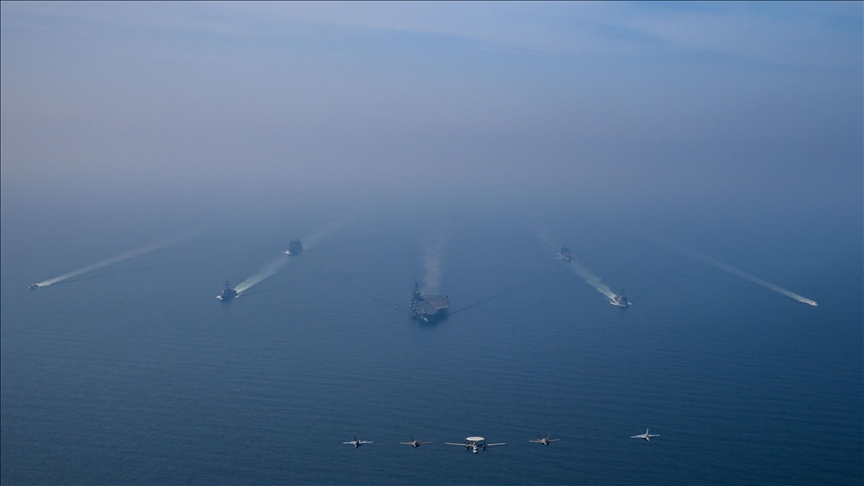
The pressure is not only economic. The U.S. operates dozens of military bases in the Gulf, Jordan, and Turkey. If Arabs link these facilities to Washington’s position on the conflict, the cost of bias will rise. At the same time, Arabs are no longer just oil producers. They are key players in renewable energy and green hydrogen, shaping the future of global energy markets.

Inside the U.S., the Israeli narrative no longer dominates unchallenged. A growing movement among youth, universities, and independent media rejects blind support for Israel, especially after the humanitarian disaster in Gaza. This has fueled mass protests, political pressure, and divisions inside the Democratic Party between the old guard and a younger generation more critical of Israel. Arabs can build on this by engaging think tanks, universities, and Arab-American communities.

In Europe, the EU cannot ignore its vital interests with the Arab world in energy, trade, and investment. Public anger over Gaza is rising. Arabs have an opportunity to unify their message and push Europe toward greater independence from Washington. Linking access to Arab markets with balanced political positions could turn sympathy into official pressure on Israel from within its Western allies.

At the international level, Israeli actions no longer pass without scrutiny. The UN Security Council has issued repeated condemnations, despite Washington’s vetoes. The latest vote reaffirmed the two-state solution as the only path to peace, highlighting Israel’s growing isolation. A united Arab stance could transform this consensus into real leverage, combining international legitimacy with Arab economic power.

In the end, the ball is in the Arabs’ court. They hold the tools to impose a new balance and secure a fair solution for Palestine. If they act with unity and resolve, they can curb Israeli arrogance and reshape the region. If not, the cost will fall on Arab citizens—through weaker economies, shrinking wages, and eroded sovereignty—while the future of the Middle East is written without them.

The writer is a columnist in the Jordan Times

Continue reading
Boycott V. Starvation

By Dr Usman Masood 

As we debate the sanity and economics of boycotting products during our tea breaks, many in Gaza are going through one of the slowest and most painful transitions imaginable – agonizing starvation. The aroma of my favorite coffee may be one-of-a-kind, but if the same brand operates in Israeli-occupied apartheid territories it’s time to rethink my choices.

Sometimes we call our favorite brands irreplaceable, being so attached to them so as to identify ourselves with their trademarks. Sometimes the economists within us argue that if we don’t buy from a certain company, our people are going to lose jobs. And sometimes, the cleverest among us spell out a simple calculus: boycotts are a sentimental overreaction that is not actually actionable or sustainable.

Arguably, a person should not be defined by a brand. In a world ever more sensitive to businesses’ social responsibility, it is the brand which should be defined by the kind of people it serves – its responsibility to society in the neatest sense.

Humanitarian-washing

If a company thinks it is legitimate to set up its businesses in illegitimately occupied lands, serve an army carrying out massacres, and then offer them “deals” on goods ranging from demolition machinery to feel-good grocery packs, then allowing such brands to represent us is profoundly troubling.

Sprinkling a few giveaways to the poor here and there in the name of social responsibility, after making fortunes from genocide, is the kind of “humanitarian-washing” some companies are heavily relying on these days. As responsible consumers, we need to be wary of giving them a free pass. Draped in philanthropic robes, beneath you’ll find the same Faustian bargain on offer – pleasure, products, and plenty in exchange for “looking the other way,” assuming convenient apoliticism.

Even if you set aside these moral considerations, the arguments in favor of “business-as-usual,” on the pragmatic basis of “it’s the economy, stupid,” are fundamentally flawed.

Economics beyond slogans

Yes, standing up to Israel – and the complicit companies – may cost jobs and investment to the boycotting country, but this considers only the static, one-time costs, ignoring the potential for dynamic, long-run gains. If a boycott causes momentary unemployment, an economist should tell you that capital flows, divestment in one company means investors warming up to another, and hence substitute job creation.

Moreover, a local company picking up steam at the expense of its foreign competitor ensures that the profits and jobs stay at home, rather than being repatriated to the countries of origin. Many economies that saw unprecedented growth in history used the recipe of replacing goods previously imported with local production, which vitalized the domestic industry. While import-substituting policies have had their demerits, the formula proved transformational in the case of economies like Japan, China, and South Korea, where the local production which had initially kicked off in an effort to replace imports flourished with time, making these countries the leaders in global exports.

In his book, Bad Samaritans: The Myth of Free Trade and the Secret History of Capitalism, Ha-Joon Chang notes that the drive for consuming domestically produced goods came down to the grassroots level, to something as frivolous as cigarettes. Such was the emphasis on consuming local products in South Korea that a stigma was attached to smoking foreign brands.

The state encouraged people to report such “treasonous” acts that wasted foreign exchange – foreign currency being a scarce resource, which represented the “blood and sweat” of “industrial soldiers” (p. xiv). Through this lens, boycott metamorphoses into an opportunity. The reluctance to buy Israeli – or occupation-aligning companies’ – products has already been instrumental in carving out a market for local products in countries like Türkiye, Pakistan, and Saudi Arabia.

Transformative power of consumer choice

There are still some who contend that a comprehensive boycott is simply not practical, and therefore, futile. But what’s the point of such an all-or-none approach? To be clear, boycotting does not have to be extreme – not everything, everywhere, forever. One may start with a few products that are easily substitutable, as soon as they may be substituted, for as long as necessary. Small, incremental changes to our consumption patterns may feel insignificant but they can affect retailers’ buying decisions, wholesalers’ stocking decisions, and ultimately, a company’s production decisions. The effect of consumer decisions is such that the impact is heavier each step up the supply chain, a phenomenon referred to as the bullwhip effect.

A small jolt to one consumer’s whip may feel unimportant, but collectively, it may unsettle the machinery of complicit capitalism. It’s time to opt out of the genocide, one product at a time.

The author is an assistant professor in SZABIST University in Islamabad, Pakistan and contributed this article to Anadolu.

Continue reading
Israel Loses Public Relations Battle

Israel has “completely lost the public relations battle,” particularly among young people active on social media, according to Martin Gak, an Argentinian-born Jewish journalist and former Deutsche Welle correspondent.

In an interview with Anadolu, Gak said Israel’s attempts to counter reports of famine and devastation in Gaza with costly international ad campaigns have failed to convince global audiences.

He argued that despite investing millions of dollars in hasbara — a Hebrew term often translated as “propaganda” used to describe Israel’s state-backed messaging abroad — these campaigns are seen less as outreach and more as disinformation.

“At a time of war it’s war propaganda, and at a time of genocide, it’s genocide propaganda,” Gak told Anadolu. “They cannot really compete with the images which are coming raw from the people that are documenting their own destruction.”

Amnesty International, Human Rights Watch, UN experts, and the International Association of Genocide Scholars, among others, have described Israel’s actions in Gaza as genocide, citing mass killings, starvation policies, and aid blockades.  

‘With Gaza, we had the opportunity every single day to stop it – and we did nothing’

He accused Israel of trying to “bomb social media spaces” with ads showing restaurants and bars in Gaza, which he said amounted to “bald-faced lies” given the reality of widespread hunger and destruction.

Gak also said Israel’s long-standing influence in Western media has not shielded it from international criticism.

He pointed to public protests and rhetoric as evidence that “nobody believes anything that the Israelis say,” and that their statements are now widely seen as propaganda aimed at covering up war crimes.

“The general understanding is that whatever they say is made up in order to cover crimes against humanity, war crimes … the perpetrated famine (and) mass infanticide,” he said.

Looking ahead, Gak argued that accountability must not only focus on Israel’s actions but also on the role of political and media institutions that downplayed or suppressed coverage of Gaza.

“This has been possible only by two years of media and political groups claiming there was nothing to look at,” he said.

“Even in Sudan, Ethiopia, Bosnia, or Myanmar, the number of victims was higher. In those genocides, we weren’t implicated daily and had no daily chance to stop it. With Gaza, we had that opportunity every day, yet we — or our colleagues — did nothing.”

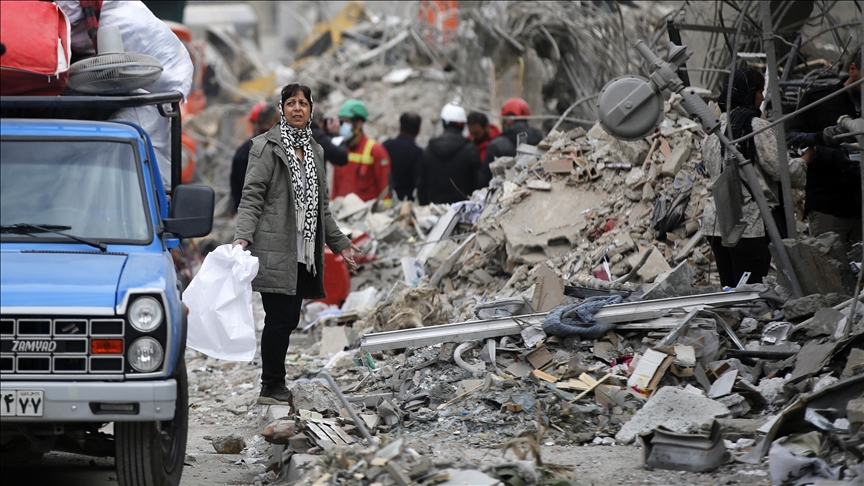
The Israeli army’s offensive on Gaza has killed over 64,700 Palestinians since October 2023, leaving the enclave devastated and facing famine.

Last November, the International Criminal Court issued arrest warrants for Israeli Prime Minister Benjamin Netanyahu and his former Defense Minister Yoav Gallant for war crimes and crimes against humanity in Gaza.

Israel also faces a genocide case at the International Court of Justice for its war on the enclave.

Continue reading
Israel’s Mideast Message

By Dr Maisa Al Masri

“This is a message to the entire Middle East,” Israeli Knesset Speaker Amir Ohana said in response to the Israeli airstrike that targeted Hamas leaders in the heart of the Qatari capital, Doha.

However, this statement is not merely a comment on the military operation strike into a declared strategic message, telling the entire region, and primarily the Gulf, that Israel, in partnership with Washington, has become the master of the decision-making process in the region.

Ohana’s statement is an explicit and direct threat that leaves no room for interpretation,  reflecting the new deterrence doctrine adopted by Tel Aviv: No red lines, no geographical immunities, and no Western allies outside the confines of Israeli dictates. Simply put, anyone who disagrees with us becomes a legitimate target, even if they are in the heart of a friendly capital that hosts the largest American military base.

This makes for a dangerous conclusion: Israel no longer views the Gulf states as partners in stability, but rather as “open arenas for fiery messages.” Washington is blessing the silence, participating in complicity, and mocking the Arabs.

Naked dominance

And don’t forget the Israeli crime in the heart of the Gulf marks the beginning of a new era of naked dominance. It’s not a traditional security operation, but a pivotal turning point in the rules of regional engagement, in which Qatar has been embarrassed both on the Arab level and internationally.

Israel has now publicly placed itself in a circle (no longer concealing its intentions) – through bombing and military strikes – that it no longer sees a distinction between political geography and the theater of operations. More dangerously, the heart of the Gulf today has become openly subject to Tel Aviv’s fire. And who can challenge it?

The strike wasn’t an intelligence leak or a silent targeting, but a direct airstrike in an area teeming with embassies, schools, and residential buildings, in a country that is a major ally of Washington and a pillar of American security in the Middle East.

Thus the message has become clear to everyone: No one is above attack… no state, no sovereignty, no partnership.

The US administration, led by Donald Trump, evaded with a series of conflicting statements about its prior knowledge of the operation. But whether it knew and blessed it, knew and remained silent, knew too late, or did not know at all, the outcome is the same: The American cover was removed, Gulf confidence eroded, and billions perished. The statements of the US embassy in Doha did not go beyond expressions of caution to American citizens, while White House statements swayed between “regret over the location” to “understanding the goal of eliminating terrorism.”

I believe the opposite message was conveyed to the Gulf capitals: Your security is not a priority, and your sovereignty does not equate to a clear position from Washington. The question that now arises however is: Why Qatar? Why now? Why was the strike carried out in Qatar and not in Turkey, or Iran for example? This is despite the fact that the Hamas leaders that were targeted had just returned from Istanbul, suggesting Tel Aviv chose the location not arbitrarily but with deep political awareness. Tel Aviv did not pull the trigger in Istanbul, even though the targeted leaders passed through it only hours earlier.

Turkey, with all its military, political, and international complexity, is not a testing ground for Israeli madness. There are red lines that even Tel Aviv dares not cross… and Turkey is one of them. The potential Turkish military response, the internal Turkish explosion during a highly sensitive election season, and the delicate balance of power within NATO rendered Turkish territory “operationally closed” even to the most violent wings of Israeli decision-making. But when the targeted figures left Istanbul for Doha, everything changed.

Qatar, like other threatened Arab states, in the Israeli security and intelligence mindset, is merely an intermediate gray area, neither neutral nor classified as an “enemy,” potentially a shocking target at a low cost. This is something all Arab decision-makers should be aware of.

From Tel Aviv’s perspective, Qatar is balancing contradictory roles, managing mediation, funding aid, and hosting parties that anger Israel without possessing a genuine deterrent umbrella. There are no international calculations that could prevent a surgical strike carried out within hours. Merely hosting an American base does not make Doha “immune,” but may even further tempt Tel Aviv, proving that decision-making in the region is no longer solely in Washington’s hands but in Tel Aviv as well.

In short, Israel needed a platform to send the biggest message since the Gaza war… so it chose the weakest link, amid the silence of its strongest ally.

Here, we can pause a moment at the Knesset member’s statement that the operation was “a message to the Middle East.” This is not a slip of the tongue, but a strategic doctrine upon which future decisions are based. Israel is telling all countries in the region that whoever harbors Hamas, or even engages in dialogue with it, will be next.

If the Arab states fail to take a firm political stand, the Doha precedent will be repeated elsewhere. It may not be Hamas’s mediation that stands accuse but rather the concepts of neutrality, balance, and even dialogue with parties Tel Aviv disapproves of and which then could become sufficient justification for a strike. It’s a policy of punishment.

This scene is posing existential questions for Arab capitals. If Qatar, Washington’s most important ally, is being bombed over the heads of its own people, after Syria, Lebanon, and Gaza… should we wait for Iraq’s turn? Riyadh? Abu Dhabi? Kuwait? And others? Does the American umbrella truly protect us, or is it used only when our interests intersect with Israel’s?

And what is the point of hosting American bases if they do not prevent airspace violations? Or provide protection?

What happened in Doha is pushing the region to crossroads: Either continuing its position of dependency and timid mediation, or repositioning strategically and developing independent air defenses, which is logistically difficult, or seeking alternative alliances (Ankara, Beijing, Moscow, Tehran?), and establishing red lines that Tel Aviv will not cross.

Qatar now faces difficult choices: Will it withdraw from the Hamas mediation? Will it demand real security guarantees? Will it go further, toward symbolic deterrence or unconventional partnerships? Or will it pay the price of protection once again?

Beware: A war of wills is beginning now. The Israeli airstrike in Doha was not just a blow to Hamas, but also a slap in the face to the sovereignty of the Gulf and the region, an undermining of the prestige of international law and its signed, ratified, and binding agreements, and an insult to the concept of the alleged strategic partnership with America.

This is the beginning of a new era, one in which Israel and Washington declare that the security of the region is no longer an Arab decision. The question now is: Will the Arabs as a whole wake up before “Ohana’s message” reaches other capitals? Perhaps.

The author is a political writer based in Amman Jordan and contributed this article to the Al Rai Alyoum Arabic website

Continue reading