Israel’s Mideast Message
By Dr Maisa Al Masri
“This is a message to the entire Middle East,” Israeli Knesset Speaker Amir Ohana said in response to the Israeli airstrike that targeted Hamas leaders in the heart of the Qatari capital, Doha.
However, this statement is not merely a comment on the military operation strike into a declared strategic message, telling the entire region, and primarily the Gulf, that Israel, in partnership with Washington, has become the master of the decision-making process in the region.
Ohana’s statement is an explicit and direct threat that leaves no room for interpretation, reflecting the new deterrence doctrine adopted by Tel Aviv: No red lines, no geographical immunities, and no Western allies outside the confines of Israeli dictates. Simply put, anyone who disagrees with us becomes a legitimate target, even if they are in the heart of a friendly capital that hosts the largest American military base.
This makes for a dangerous conclusion: Israel no longer views the Gulf states as partners in stability, but rather as “open arenas for fiery messages.” Washington is blessing the silence, participating in complicity, and mocking the Arabs.
Naked dominance
And don’t forget the Israeli crime in the heart of the Gulf marks the beginning of a new era of naked dominance. It’s not a traditional security operation, but a pivotal turning point in the rules of regional engagement, in which Qatar has been embarrassed both on the Arab level and internationally.
Israel has now publicly placed itself in a circle (no longer concealing its intentions) – through bombing and military strikes – that it no longer sees a distinction between political geography and the theater of operations. More dangerously, the heart of the Gulf today has become openly subject to Tel Aviv’s fire. And who can challenge it?
The strike wasn’t an intelligence leak or a silent targeting, but a direct airstrike in an area teeming with embassies, schools, and residential buildings, in a country that is a major ally of Washington and a pillar of American security in the Middle East.

Thus the message has become clear to everyone: No one is above attack… no state, no sovereignty, no partnership.
The US administration, led by Donald Trump, evaded with a series of conflicting statements about its prior knowledge of the operation. But whether it knew and blessed it, knew and remained silent, knew too late, or did not know at all, the outcome is the same: The American cover was removed, Gulf confidence eroded, and billions perished. The statements of the US embassy in Doha did not go beyond expressions of caution to American citizens, while White House statements swayed between “regret over the location” to “understanding the goal of eliminating terrorism.”
I believe the opposite message was conveyed to the Gulf capitals: Your security is not a priority, and your sovereignty does not equate to a clear position from Washington. The question that now arises however is: Why Qatar? Why now? Why was the strike carried out in Qatar and not in Turkey, or Iran for example? This is despite the fact that the Hamas leaders that were targeted had just returned from Istanbul, suggesting Tel Aviv chose the location not arbitrarily but with deep political awareness. Tel Aviv did not pull the trigger in Istanbul, even though the targeted leaders passed through it only hours earlier.
Turkey, with all its military, political, and international complexity, is not a testing ground for Israeli madness. There are red lines that even Tel Aviv dares not cross… and Turkey is one of them. The potential Turkish military response, the internal Turkish explosion during a highly sensitive election season, and the delicate balance of power within NATO rendered Turkish territory “operationally closed” even to the most violent wings of Israeli decision-making. But when the targeted figures left Istanbul for Doha, everything changed.
Qatar, like other threatened Arab states, in the Israeli security and intelligence mindset, is merely an intermediate gray area, neither neutral nor classified as an “enemy,” potentially a shocking target at a low cost. This is something all Arab decision-makers should be aware of.
From Tel Aviv’s perspective, Qatar is balancing contradictory roles, managing mediation, funding aid, and hosting parties that anger Israel without possessing a genuine deterrent umbrella. There are no international calculations that could prevent a surgical strike carried out within hours. Merely hosting an American base does not make Doha “immune,” but may even further tempt Tel Aviv, proving that decision-making in the region is no longer solely in Washington’s hands but in Tel Aviv as well.
In short, Israel needed a platform to send the biggest message since the Gaza war… so it chose the weakest link, amid the silence of its strongest ally.
Here, we can pause a moment at the Knesset member’s statement that the operation was “a message to the Middle East.” This is not a slip of the tongue, but a strategic doctrine upon which future decisions are based. Israel is telling all countries in the region that whoever harbors Hamas, or even engages in dialogue with it, will be next.
If the Arab states fail to take a firm political stand, the Doha precedent will be repeated elsewhere. It may not be Hamas’s mediation that stands accuse but rather the concepts of neutrality, balance, and even dialogue with parties Tel Aviv disapproves of and which then could become sufficient justification for a strike. It’s a policy of punishment.
This scene is posing existential questions for Arab capitals. If Qatar, Washington’s most important ally, is being bombed over the heads of its own people, after Syria, Lebanon, and Gaza… should we wait for Iraq’s turn? Riyadh? Abu Dhabi? Kuwait? And others? Does the American umbrella truly protect us, or is it used only when our interests intersect with Israel’s?
And what is the point of hosting American bases if they do not prevent airspace violations? Or provide protection?
What happened in Doha is pushing the region to crossroads: Either continuing its position of dependency and timid mediation, or repositioning strategically and developing independent air defenses, which is logistically difficult, or seeking alternative alliances (Ankara, Beijing, Moscow, Tehran?), and establishing red lines that Tel Aviv will not cross.
Qatar now faces difficult choices: Will it withdraw from the Hamas mediation? Will it demand real security guarantees? Will it go further, toward symbolic deterrence or unconventional partnerships? Or will it pay the price of protection once again?
Beware: A war of wills is beginning now. The Israeli airstrike in Doha was not just a blow to Hamas, but also a slap in the face to the sovereignty of the Gulf and the region, an undermining of the prestige of international law and its signed, ratified, and binding agreements, and an insult to the concept of the alleged strategic partnership with America.
This is the beginning of a new era, one in which Israel and Washington declare that the security of the region is no longer an Arab decision. The question now is: Will the Arabs as a whole wake up before “Ohana’s message” reaches other capitals? Perhaps.
The author is a political writer based in Amman Jordan and contributed this article to the Al Rai Alyoum Arabic website
Barghouti: Arabs Must End Israel Ties After Doha Bombing
ُُُThe Israeli attack targeting the Hamas delegation in Doha represents a “turning point” that will have very dangerous consequences warned Secretary-General of the Palestinian National Initiative Movement Dr. Mustafa Barghouti. He stated Israel has been exposed for what it truly is: The one obstructing an agreement, not the Palestinian side, and is deliberately escalating every time.
The State of Qatar condemned the Israeli attack, which targeted the residential headquarters of several members of the Hamas Political Bureau, stressing it will not tolerate this reckless Israeli behavior.
The Qatari Foreign Ministry said in a statement: “The criminal attack is a violation of all international laws and a serious threat to the security and safety of Qataris and residents.”
Barghouti said the Israeli aggression, which failed to achieve its goal in the war on Gaza, targeted Qatar, which was undertaking mediation efforts, and targeted Hamas leaders while they were discussing the American proposal. This means that “this proposal was not serious, and Israel does not want any agreement. It persists in its genocidal war against the Gaza Strip and its ethnic cleansing of the Palestinian people.”
In an interview with Al Jazeera, Barghouti did not rule out the possibility that the United States was involved in what happened today, saying no one could believe that Washington was actually playing the role of mediator.
What is required by Arabs and Muslims?
Barghouti said he hoped the attack on Doha would lead to a major shift in the position of Arab and Islamic countries, especially since the one that was being attacked was the State of Qatar, known as a peaceful country that has never attacked any party and has devoted all of its resources to reaching peace agreements. Without its role, a large number of Israeli and Palestinian prisoners would not have been released in previous agreements.
Regarding what is currently required of Arab countries in light of Israel’s continued implementation of its plan, which could lead to the mass displacement of Palestinians from Gaza, Barghouti explained Arab and Islamic countries, especially those that have normalized relations with Israel, are required to halt and sever all relations with Israel, impose comprehensive sanctions, and boycott it completely.
He added that in the light of the Israeli aggression on Doha, Arab and Islamic countries must ask themselves know how to protect their own national security, not just of the Palestinians.
Barghouti called for imposing sanctions and completely isolating Israel. He noted that Israeli Prime Minister Benjamin Netanyahu (wanted by the International Criminal Court) has “lost his mind and acts like the leader of a crazy gang out of control.” Barghouti said that he continually attacks Palestinians, Lebanon, Syria, Yemen, Iran, and now Qatar.
He also indicated that the Israeli occupation’s failure to achieve its goal behind the attack on Hamas leaders in Doha will have domestic repercussions for Netanyahu and his government according to Al Jazeera.
Israeli Planes Drop 30 Bombs on Yemen
Israeli warplanes struck the Yemeni capital Sana and the Al Jawf Governorate with 30 bombs killing nine people and injuring 118 according to the Yemeni Health Ministry, Wednesday.
It was described as a massive attack in which 10 Israeli warplanes struck 15 Yemeni targets.
The aggression on Sana’a targeted a medical station on 60th Street, southwest of Sana’a, the Moral Guidance Dept., of the Defence Ministry and the headquarters of the “26 September” and “Al-Yaman” newspapers.
A senior official source said the attack on the “26 September” newspaper resulted in the death and injury of a number of male and female journalists.
In Al-Jawf, northeast of the country, the Israeli aggression targeted a government complex in Al-Hazm District.
Yemeni Armed Forces spokesman Brigadier General Yahya Saree stated, “Our air defenses were able to launch a number of surface-to-air missiles while confronting the Zionist aggression against our country.”
Sare’i added in a social media post some combat formations were forced to leave before carrying out their aggression, thwarting the bulk of the attack as reported in almayadeen.
Sare’i denied the Israeli occupation’s allegations of targeting missile launchers, asserting its raids targeted purely civilian targets.
He emphasized this brutal aggression will not pass without a military response.
An Israeli Air Force source told Israeli media that “the attack on Yemen involved more than 10 fighter jets, and more than 30 munitions were used against 15 sites.”
A senior Yemeni military source confirmed to Al-Mayadeen the aggression struck purely civilian targets, noting that the government complex in Al-Jawf is a building serving citizens and has no military connection.
The source emphasized that targeting civilian facilities will not “stop Yemen from fulfilling its role,” noting that the occupation’s targeting of the government complex is evidence of its incompetence and failure.
The aggression on Yemen “will not stop us from supporting Gaza and disciplining the Israeli entity,” he continued.
The Yemeni armed forces have continue their operations against Israel, directing strikes at various targets, including Ben Gurion Airport and imposing a ban on Israeli ports.
Israeli Intensifies Bombing of Gaza Homes
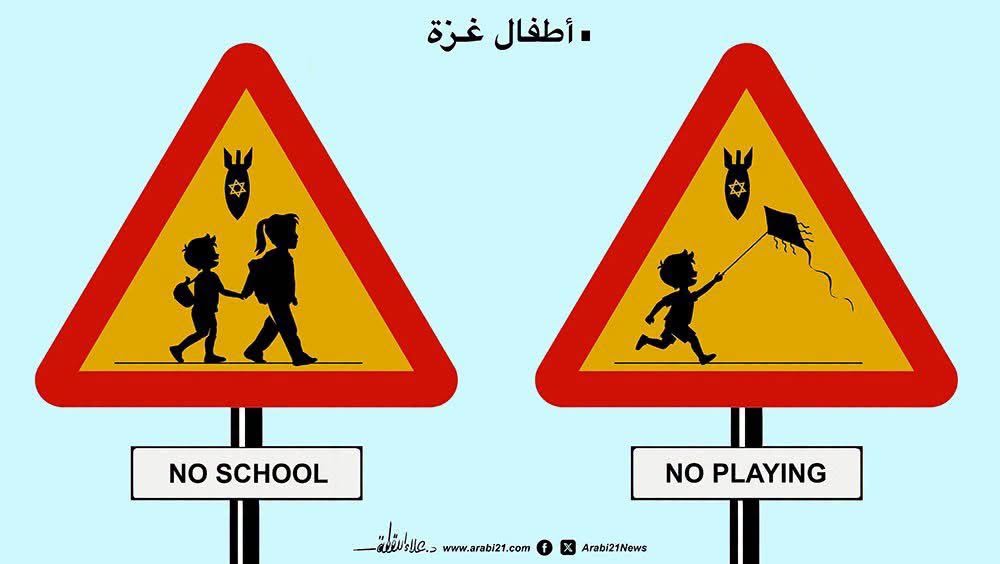
Israel escalated its assault on Gaza City on Wednesday, flattening residential towers and pounding crowded neighborhoods, as Tel Aviv pressed ahead with an ongoing offensive to occupy the entire city.
Explosions echoed throughout the day as Israeli jets struck across the city of more than 1.2 million people. The attacks were concentrated in the west, where hundreds of thousands of displaced families from northern and eastern Gaza have sought refuge, witnesses said.
One of the strikes destroyed the “Tayba 2” tower, a seven-story building that housed hundreds of residents and stood beside camps for the displaced. Medics said two Palestinians were killed, several others wounded, as thousands were left without shelter after the attack according to Anadolu.
The building was the seventh high-rise brought down in Gaza City since Friday, part of what residents describe as a step-by-step demolition of apartment blocks aimed at making the city uninhabitable.
Israeli military spokesman Avichay Adraee urged civilians to evacuate immediately via al-Rashid Street toward al-Mawasi in southern Khan Younis, warning that remaining in the city is “extremely dangerous” and vowing expanded operations to “eliminate Hamas.”
Palestinian officials countered that the campaign is designed to empty Gaza City. The Government Media Office said more than 1.2 million people remain despite bombardment and displacement, accusing Israel of trying to force 1.7 million Palestinians into the coastal strip of al-Mawasi and Rafah, which lack hospitals, infrastructure or basic services.
Human Rights Watch has reported that Israel has destroyed nearly 90% of Gaza’s infrastructure since October 2023, leaving most displaced families with nowhere to live except schools and university buildings.
The bombardment comes as part of Israel’s latest ground offensive, dubbed “Gideon’s Chariots 2,” launched Sept. 3 to fully occupy Gaza City. The plan has faced criticism inside Israel over fears it could jeopardize the lives of soldiers and captives held in the enclave.
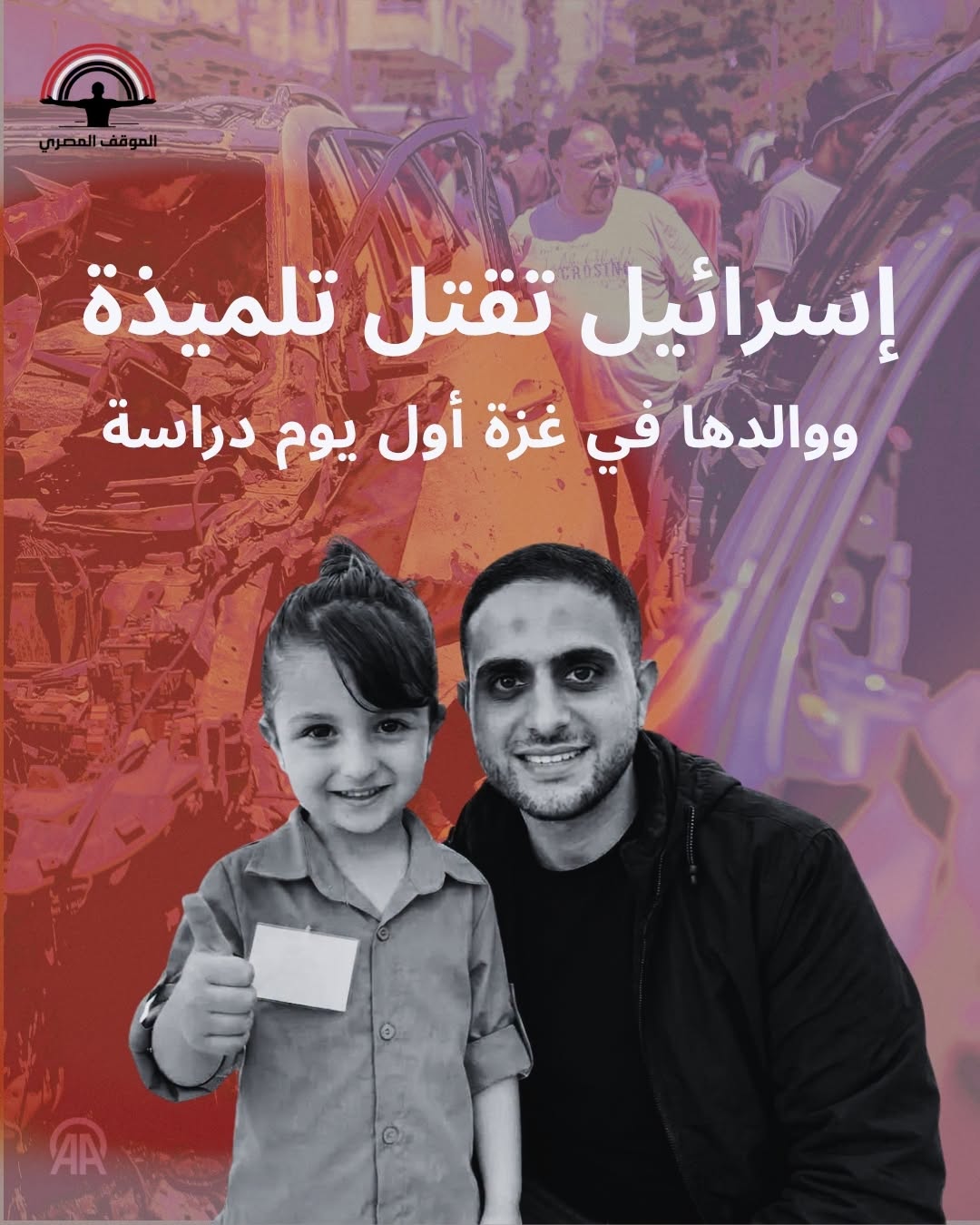
The Israeli army has continued a brutal offensive on the Gaza Strip, killing at least 64,600 Palestinians since October 2023. The military campaign has devastated the enclave, which is facing famine.
Last November, the International Criminal Court issued arrest warrants for Israeli Prime Minister Benjamin Netanyahu and his former Defense Minister Yoav Gallant for war crimes and crimes against humanity in Gaza.
Israel also faces a genocide case at the International Court of Justice for its war on the enclave.