Is America Abandoning Europe?

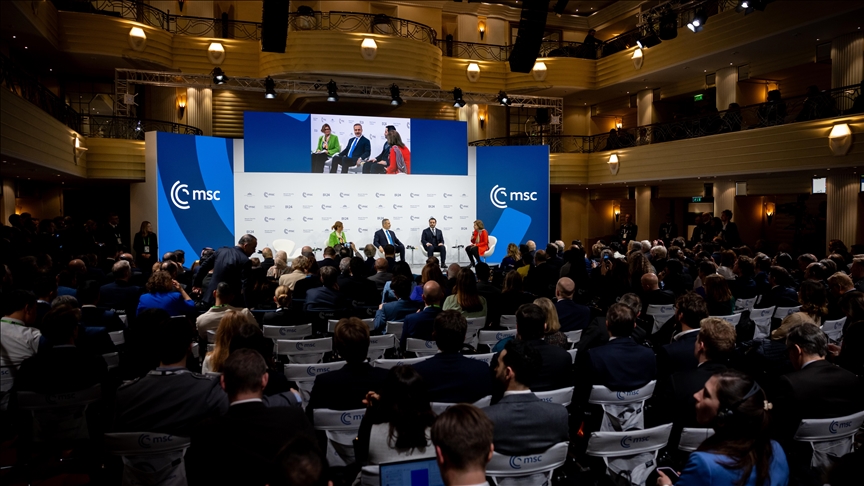
In 2007, Russia’s President Putin gave a now-infamous speech at the Munich Security Conference (MSC), announcing Russia’s new posture of hostility towards the US and Europe. In 2022, when Russia invaded Ukraine, many looked back at Putin’s 2007 Munich speech as a revealing moment of his intentions.

This year’s MSC could be a similar watershed. This time, the warning bells ring from across the Atlantic. US Vice President JD Vance delivered one of the most hostile speeches by a US official to Europe in decades. Rather than addressing the Russian or Chinese threats, Vance argued that Europe faced a “threat from within,” accusing the EU and national governments of censorship and ignoring popular demands on issues like illegal migration.

Meanwhile, away from Munich, US President Donald Trump held a phone call with Putin, setting the stage for negotiations between the US and Russia for a peace agreement in Ukraine – without involving European counterparts in the discussions. The day before, Defence Secretary Pete Hegseth announced some of the US expectations from this deal: Ukraine should drop its NATO membership bid, European countries would need to provide the forces to enforce the agreement, and these forces would not be covered by NATO’s Article 5 guarantees.

The transatlantic picture in which the MSC took place was even bleaker. Since Trump’s inauguration one month ago, the new president had promised (and now imposed) tariffs against countries across the world, including Europe. He has threatened to annex the territory of allies like Canada and Denmark.

Normally, the MSC is an opportunity for the United States to reaffirm its commitment to Europe and the Atlantic alliance. This year, it could be remembered as the time when the US started the process of abandoning Europe – or even going aggressively after it.   

An attack on Europe

Vance’s speech and the reactions to it have dominated the discussions at the MSC. Although the conference theme was “multilateralization”, the real topic on everyone’s mind was: how would Trump’s second administration approach Europe?

As the pre-conference report argued: “Donald Trump’s presidential victory has buried the US post–Cold War foreign policy consensus that a grand strategy of liberal internationalism would best serve US interests.” That this consensus was gone was clearly visible in the conference. Despite perfunctory references to shared values, Vance’s speech did not talk about the alliance between Europe and North America, nor about the common threats and how to face them.

And he has voiced support for anti-EU parties. Vance pronounced his speech in Germany, just weeks before federal elections, and argued that there should not be “firewalls” in government – a clear reference to the far-right Alternative für Deutschland (AfD) which has so far been kept out of governing coalitions. After the speech, Vance met with the AfD leader.

Additionally, Vance criticized Romania for canceling its 2024 elections and accused the EU of censoring free speech. But Vance failed to acknowledge that the very election that brought Trump and him to power in November was the subject of major foreign interference by Russia, China, and Iran. Rather than sitting idly by, US agencies took active measures to counter these malign actions and prevent disruptions – like raising awareness, coordinating with the media, and keeping politics out of the fight. With his speech, Vance seems to be arguing for the exact opposite approach.

All these issues did not touch on security and defense, the core of the MSC’s discussions. But they did lure in the background of Vance’s speech. A few months ago, Vance argued that the EU should not regulate tech companies owned by Elon Musk. If the Europeans did so, he argued, the US should reduce its security commitments to NATO. Hence, American assurances could become bargaining chips to resolve other issues.   

How will the EU respond?

Vance’s Munich speech marks a new era in US relations with Europe. While the themes are not new – Trump has never been a fan of NATO, and enjoys courting Europe’s far-right – the extent of the rhetorical change cannot be understated. Ukraine’s President Zelensky, speaking in Munich the day after Vance, spelled out the challenge in clear terms: “We can’t rule out the possibility that America might say ‘no’ to Europe on issues that threaten it.”

The reaction from European leaders has been strong so far. EU Commission President Von der Leyen called for an emergency clause in the EU treaties to allow member states to boost defense spending [8]. French President Macron called for a summit of European leaders in Paris on Monday, February 17 – to sketch out a common position on the upcoming negotiations over Ukraine, and on making up for US security guarantees from Europe.

The greatest challenge, however, will be transforming outrage into meaningful action. Europeans have long ignored calls to take charge of their own security. Domestic constraints over spending, divisions and the continued belief that Uncle Sam will have their back have stood in the way of ambitious choices. Will this time be different?  

This opinion was written by Giuseppe Spatafora for the Anadolu news website.
Continue reading
Saudi Arabia Holds 5-Nation Summit For Gaza

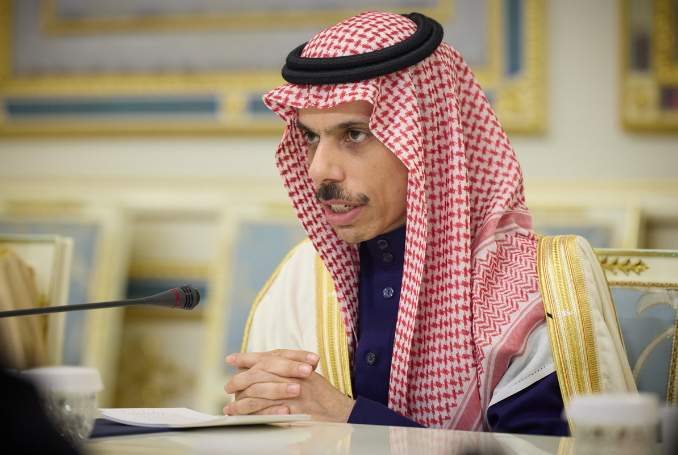
Saudi Arabia is set to host a five-nation Arab meeting on 20 February to discuss an Egyptian-led proposal for rebuilding the Gaza Strip while ensuring that its Palestinian residents are not displaced, an Arab League official announced.

The meeting will bring together officials from Saudi Arabia, Egypt, Jordan, Qatar, and the United Arab Emirates (UAE), according to Hossam Zaki, the Arab League’s assistant secretary-general.

In a televised statement, Zaki noted that Palestine may also be invited to take part in the discussions, which aim to establish a framework for the reconstruction initiative ahead of an upcoming Arab summit according to The Palestine Chronicle.

https://youtube.com/watch?v=vcly18dvil4%3Ffeature%3Doembed

Egypt has scheduled an emergency Arab summit for 27 February, following the controversial proposal by former US President Donald Trump to take control of Gaza and forcibly resettle its Palestinian population.

Trump claimed his plan would turn the devastated enclave into the “Riviera of the Middle East,” a proposal widely condemned as ethnic cleansing.

“The countries participating in the upcoming meeting seek to coordinate their positions regarding the Egyptian proposals that will be presented at the Arab summit,” Zaki stated.

He added that the summit could be postponed for logistical reasons to ensure maximum participation from Arab leaders.

https://www.palestinechronicle.com/israel-is-threat-to-all-arab-nations-ramzy-baroud-speaks-to-egypts-al-dostour/embed/#?secret=mqxlQ55DlN#?secret=ZpysDELW92

According to Zaki, the summit will aim to unify the Arab stance on Palestine, firmly reject displacement schemes initiated by Israel and backed by the US, and put forward a collective Arab counterproposal to Trump’s plan.

On Sunday, Egyptian President Abdel Fattah el-Sisi confirmed that Cairo is working on a comprehensive reconstruction plan for Gaza, emphasizing that the initiative would not involve the forced relocation of Palestinians.

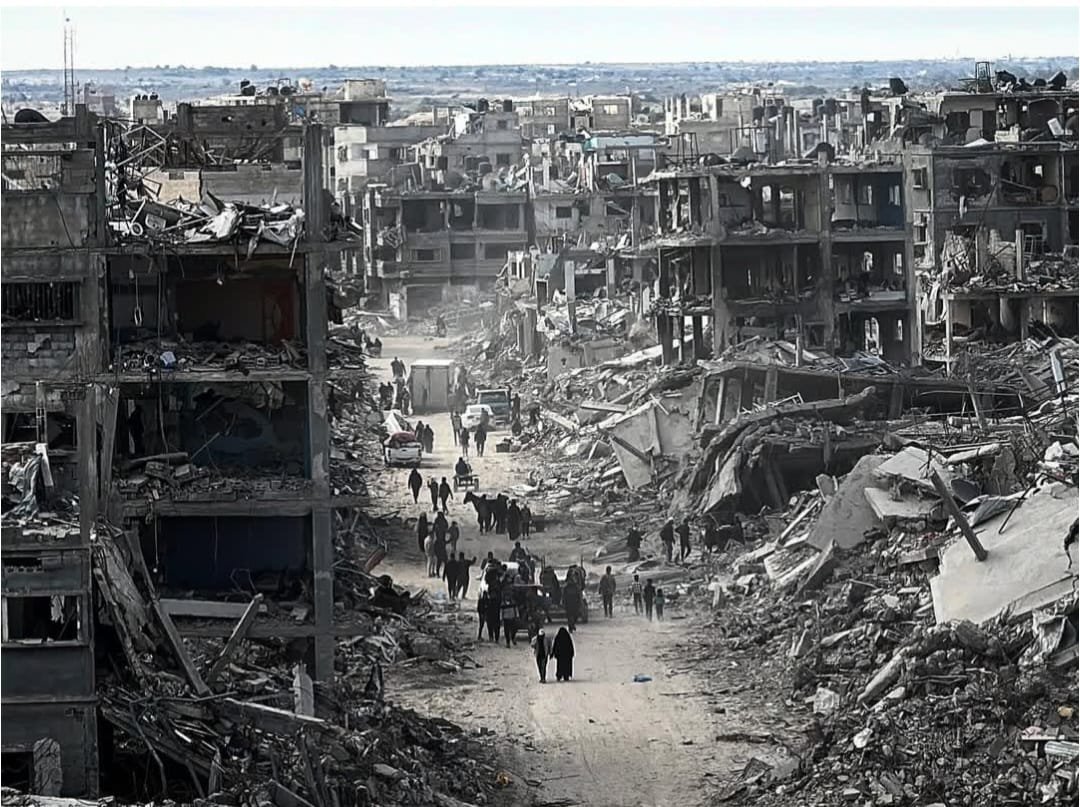
The discussions come in the wake of a ceasefire agreement that took effect in Gaza on 19 January, ending months of Israeli attacks that killed and wounded over 160,000 Palestinians—mostly women and children—and left much of the enclave in ruins.

Continue reading
Thank You Africa

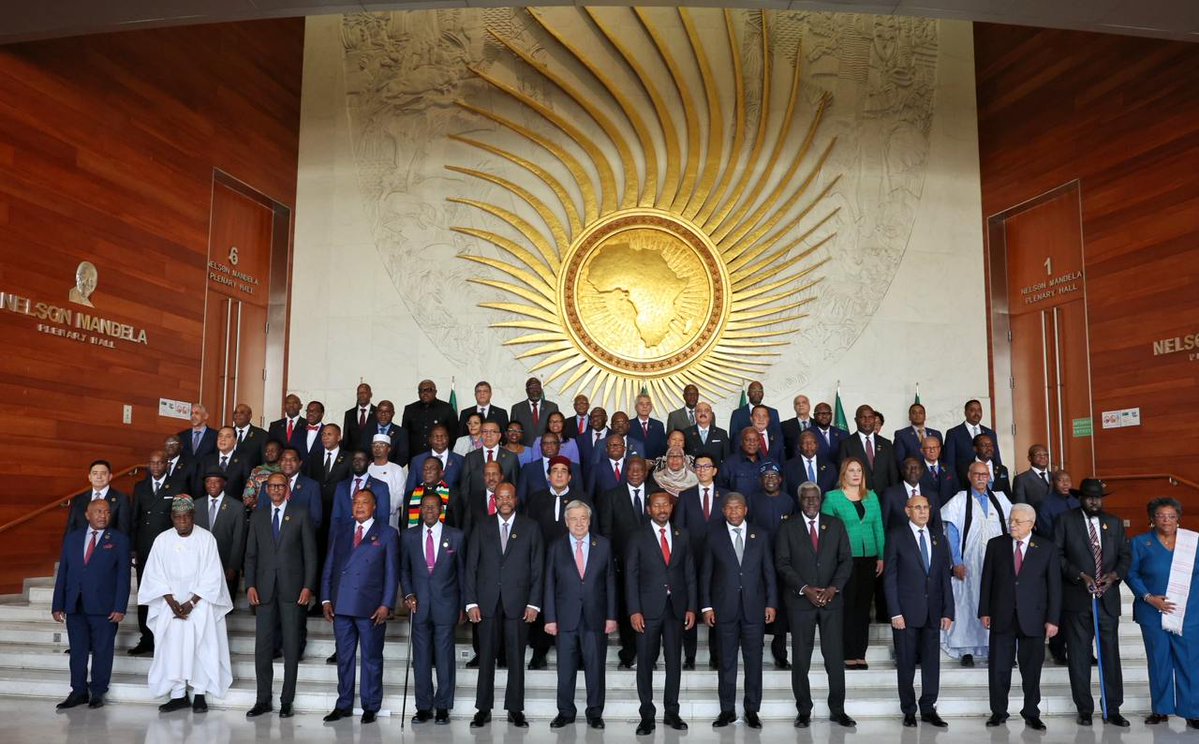
Final statement of the 38th African Union Summit:

“Israel is committing genocide against the Palestinians and must be prosecuted internationally. We call for an end to cooperation and normalization with Israel until it ends its occupation and aggression against Palestine.”

The Summit was held in the Ethiopian capital of Addis Ababa.

Continue reading
Smotrich Vows to Demolish Highest Number of Palestinian Homes

Israeli Finance Minister Bezalel Smotrich has vowed that the occupation state will demolish more Palestinian homes than are built in the West Bank by 2025. If that is fulfilled, it will mark the first time since 1967 that Israel’s demolitions will outpace construction.

Smotrich made the announcement during a speech at a meeting of the Israeli Civil Administration’s Law Enforcement Unit on Sunday. He emphasized that the government would intensify demolition operations, aiming to increase efforts significantly by 2025.

“2025 will be the first year since 1967 in which we will destroy more than what Palestinians build,” Smotrich declared. He highlighted that controlling land is at the core of the Israeli colonial project.

Smotrich confirmed that the Israeli government will continue to block Palestinian construction in areas occupied by Israel. He pointed to the 2025 budget, which includes substantial increases for demolition operations. This will involve more manpower, new equipment, and advanced technology to monitor Palestinian construction according to the Quds News Network.

Since the start of the genocide in Gaza, Israel has escalated settlement activity in the West Bank. This is part of a broader strategy to annex more Palestinian land, despite international opposition.

Israel’s settlement expansion continues amid official statements and consensus among Knesset members rejecting the creation of a Palestinian state, defying international law. The United Nations has repeatedly called for a halt to these illegal settlements.

Since October 7, 2023, Israel has intensified attacks in the West Bank and the eastern part of occupied Jerusalem, resulting in over 900 Palestinian deaths, thousands of injuries, and the displacement of hundreds. Israel’s demolition campaign has destroyed more than 1,300 Palestinian structures in Area C, displacing over 1,100 people, according to UN reports.

By the end of 2024, around 770,000 Israeli settlers lived in the West Bank, spread across 180 settlements and 256 outposts. These settlements are considered illegal under international law.

Continue reading
Hebrew Media: Israel Fails to Achieve Goals of Gaza Onslaught

Israeli media outlets discussed Tel Aviv’s failure to achieve the goals of the war now ongoing for more than a year on the Gaza Strip. Hebrew newspapers stressed that the army is unable to eliminate Hamas, while disagreements are increasing regarding the future of military operations and the ceasefire agreement.

Yitzhak Brik, former commander of the Southern Corps said Israel has not been able to eliminate Hamas despite the war, now in its 15th month. He asked, “If we have failed throughout this period, how can we achieve it now?”

Brik pointed out that Hamas possesses a huge arsenal of weapons, and has developed its combat methods with its fighters exiting the underground tunnels and returning to them easily, making it difficult for the Israeli army to eliminate them.

He added Hamas has regained its strength, and that the Israeli army has destroyed no more than 10% of the tunnels of the Islamist organization, according to Israeli military sources. He also acknowledged that the military operations have not achieved their goals, and that the war has drained the army more so than at the beginning.

The army is a tool of an extremist government


For her part, Yifat Gadot, from the “Families of Soldiers Cry Enough” organization said the Israeli army has become a tool in the hands of an extremist government that is working to prolong the war to achieve its political and ideological interests.

Gadot added that there is a growing conviction among the families of soldiers that the war has become a means of maintaining the government coalition, not achieving security.

As for attorney Yair Nahorai, an expert in religious Zionist movements, he confirmed that the ongoing conflict is not just a war against Hamas, but part of an extremist religious vision that seeks to occupy Gaza, noting that some parties in the Israeli government consider the “sanctity of the land” more important than human life, which complicates the Israeli position even more.

In the same context, political analyst Ben Caspit considered that the real reason behind the slowdown in implementing the second phase of military operations is the political considerations of Prime Minister Benjamin Netanyahu.

He explained that the pressure exerted by right-wing ministers, such as Bezalel Smotrich and Itamar Ben Gvir, is obstructing the making of decisive decisions regarding the war, as Netanyahu seeks to maintain the stability of his government coalition instead of focusing on recovering the prisoners.

A Joke in the Middle East


For his part, Ben Gvir attacked the government, describing it as lacking courage, and missing a historic opportunity to impose its conditions on Hamas, adding that Israel has become a “joke in the Middle East” due to what he described as weak and hesitant decisions in managing the war and negotiations.

In contrast, Gil Dickman (a relative of one of the Israeli female prisoners killed in Gaza) responded to Ben Gvir’s statements, accusing him of politicizing the issue of prisoners, and called on him to support Netanyahu in his efforts to return the kidnapped, criticizing his withdrawal from the government due to recent agreements.

In another context, political analyst Dana Weiss stated that the Israeli political crisis escalated after statements by US President Donald Trump, who pressured the government to expedite the release of prisoners, threatening decisive responses if Israel did not respond to his demands.

Weiss confirmed that the Israeli government found itself between internal pressures from the extreme right and American and international pressures pushing towards diplomatic solutions, which further complicates the internal Israeli scene in light of the ongoing military operations in Gaza.

Continue reading