Iran: ‘Strategic Patience’ to ‘Sustained Confrontation’

By Najih Mohammad Ali

In a clear and direct language, the Iranian Revolutionary Guard Corps (IRGC) affirmed that regional “peace and stability will not be achieved unless there is withdrawal from the occupied Lebanese territories.” This stance followed Hezbollah’s Secretary-General’s rejection of the Washington talks, emphasizing his refusal to separate the arenas and the “Dahieh for the North” equation.

This statement expresses a coherent strategic vision that considers regional stability inextricably linked to ending occupations and aggressions. It places the defense of Lebanon, Syria, and the region among Iran’s political and military priorities.

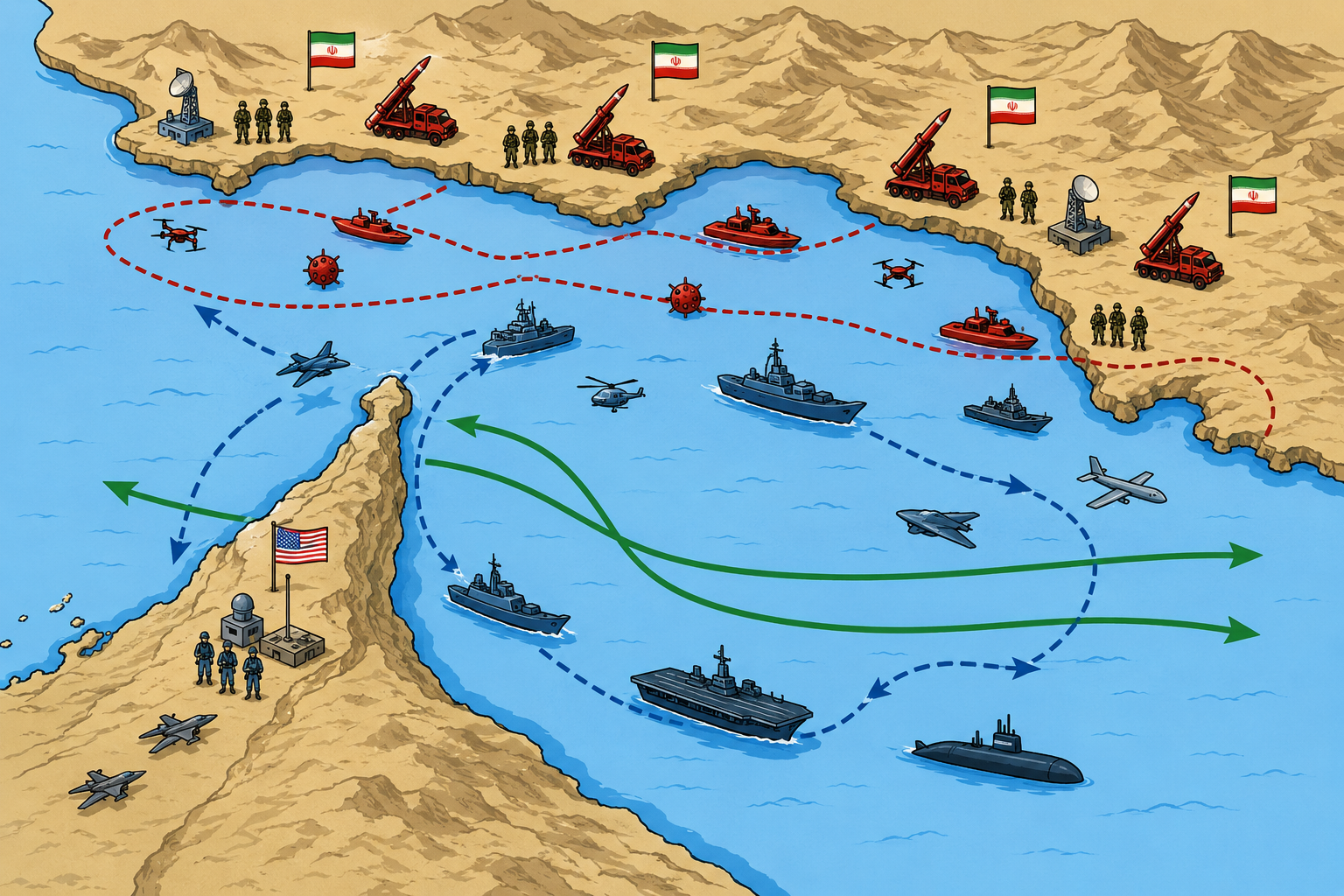
This shift to a strategy of “eternal war”—or continuous confrontation—and reflects a pragmatic and principled decision made by Tehran after decades of pressure and aggression. Iran did not abandon the idea of ​​a settlement in vain; rather, it realized that relying on partial agreements with Washington, which imposes unilateral conditions and disregards the rights of peoples, is no longer a viable option.

The cowardly assassination of Martyr Qassem Soleimani, followed by direct strikes targeting high-ranking Iranian leaders, including Supreme Leader Ayatollah Seyyed Ali Khamenei, proved that relying solely on “strategic patience” is mistaken for weakness. Therefore, Iran has shifted to a doctrine of active deterrence based on the entire axis of resistance, making any aggression costly for its adversaries.

This transformation was not the result of the absolute dominance of a hardline faction, as Zionist-American narratives and their Arab proxies (and, of course, the Iranian opposition abroad) claim. Rather, it is a natural evolution of the Iranian elite that stood united in the face of external aggression.

After significant losses, the priority of maintaining national and revolutionary cohesion emerged. Defending revolutionary principles—exporting the spirit of resistance and confronting arrogance—has become an essential part of the regime’s identity that has become a source of strength to prevent internal collapse whilst uniting the people behind the leadership in the face of sanctions. Pragmatists and hardliners alike now agree that continued confrontation better protects national interests than concessions that could lead to disintegration.

The leaders of the Iranian regime believe—and I think they are right—that continuing the confrontation will yield greater strategic gains than any fragile peace agreement. History proves that America understands only the language of force and attrition. From Vietnam to Afghanistan, wars of attrition forced Washington to withdraw.

Today, the “Axis of Resistance” is cleverly applying this equation: Linking the arenas to prevent separate deals that would weaken Lebanon, Iraq, or Yemen, and imposes a heavy price on its adversaries. Iranian diplomacy has been transformed into the diplomacy of the field, as General Soleimani envisioned, and is now a flexible tool that buys time and exposes the contradictions of the other side, while maintaining full military readiness.

The American-Israeli strikes have already altered Tehran’s calculations in favor of adopting an offensive-defensive posture. Instead of settling for limited responses, Iran is developing comprehensive deterrent capabilities through its natural allies, who represent the will of the region’s peoples in the face of occupation.

This is a calculated escalation, a precise strategic calculation based on resilience and strategic depth. Within the elite, a balance prevails between caution, fearing losses, and resolve, which sees resistance as the only path to dignity and independence.

Compared to the previous “strategic patience,” the strategy of sustained confrontation has proven effective in preserving battlefield gains and preventing the regional collapse of the resistance axis. It has succeeded in exhausting the enemy and strengthening internal unity, despite economic challenges primarily attributed to unjust sanctions, not Iranian policy.

The most serious risk facing this strategy lies in the possibility of miscalculation by adversaries and their attempts to impose a full-scale war, but Iran has repeatedly demonstrated an exceptional capacity for resilience and adaptation.

We are indeed facing a “simmering cold war,” where there is no false peace imposed by force, nor a total war that destroys everyone. This situation serves Iran and its axis because it maintains the strategic balance, prevents surrender, and opens the door to a comprehensive and just settlement based on withdrawal from occupied territories and respect for the sovereignty of states.

In conclusion, this “perpetual war” relies on the long-term vision of the Iranian character. It is not a whim, but an existential choice imposed by the ongoing aggression against Iran and the peoples of the region.

Iran is defending itself and the dignity of the nation, and affirms that true stability begins with ending aggression, occupation, and foreign interference. This path, despite its difficulties, reinforces Tehran’s position as an indispensable regional power and paves the way for a new balance of power that respects the rights of peoples. The region needs such firm stances to achieve an honorable peace, not surrender.

The author is a researcher in Iranian and regional affairs and this article is reproduced from the Arabic Al Rai Al Youm website and reprinted in crossfirearabia.com.
Continue reading
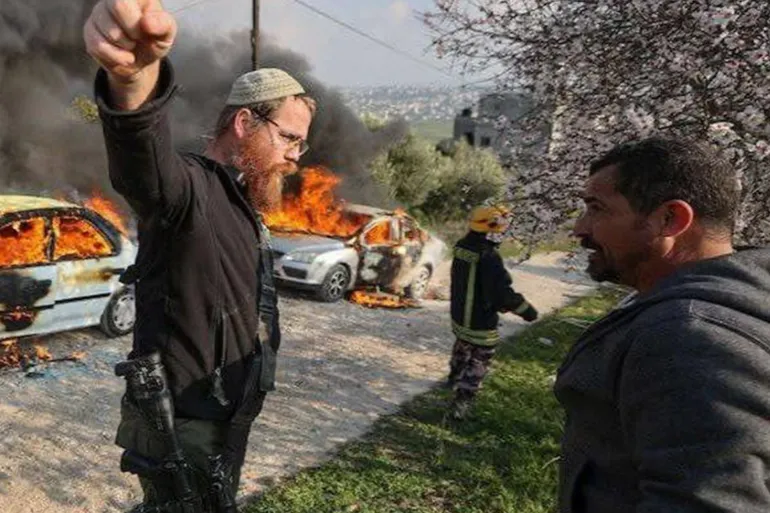
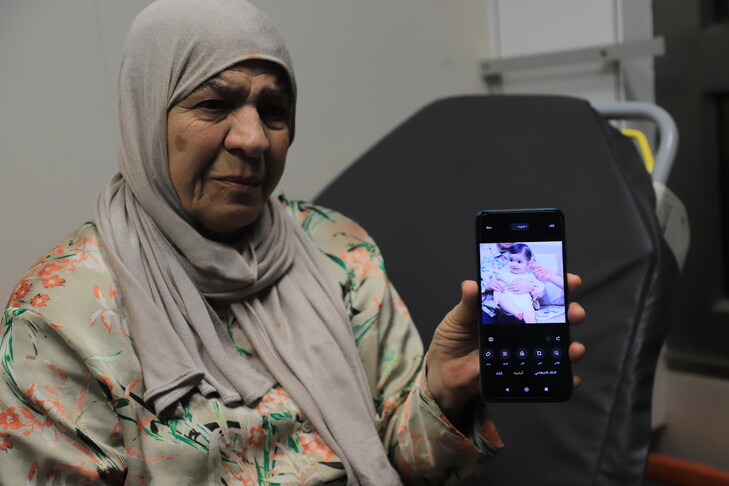
Israel Soldiers Shoot, Kill Baby in Hebron

A 7-month-old Palestinian infant was killed Friday and his parents wounded when the Israeli army shot at the family’s car in the Tel Rumeida area in the southern occupied West Bank, according to the Palestinian Health Ministry.

It said the Israeli army killed Sam Abu Haikal and that his father, Fahd Abdul Aziz Abu Haikal, a lecturer at Bethlehem University, lived with his wife and son in Bethlehem.

The shooting took place while Abu Haikal was on his way to his mother’s house in the Tel Rumeida neighborhood in central Hebron.

Israeli soldiers fired live ammunition, wounding the father in his hand. His wife was also wounded by the same bullet, which pierced the jaw of their infant son. All three were taken to the hospital.

The occupied West Bank has witnessed escalating Israeli military raids, arrests and settlement expansion since the start of Israel’s war on the Gaza Strip in October 2023 according to Anadolu.

Continue reading
Israeli Looters in Lebanon

❝The accounts describe the theft of motorcycles, televisions, paintings, sofas and rugs on a wide scale, which has become routine. Both senior and junior commanders on the ground are said to be aware of the phenomenon, but are not taking disciplinary action to curb it.

According to the testimonies, as IDF soldiers leave Lebanon, they load stolen items onto their vehicles openly, without attempting to conceal them. “It’s on a crazy scale,” one soldier said. “Anyone who takes something – televisions, cigarettes, tools, whatever – immediately puts it in their vehicle or leaves it off to the side, not inside the army base, but it’s not hidden. Everyone sees it and understands.” – The Palestine Project

Continue reading
Welcome Ramadan

The whole Muslim world— 2 billion people—start fasting just before the sun raises to sun-down as commitment to God and his commands. The Sohour of eating before the sun raise is a religious ritual, designed to give us the strength to carry on the day till sundown when we break the fast.

Ramadan is a commitment to God, one of whose characteristics is to feel with the poor and hungry and realize the Almighty has bestowed upon you greater material things you should appreciate and not over-indulge in or use in excess.

We try to apply the teachings of the Quran and Islam during the holy month, and not indulge in over-eating after the breaking of the fast, but I suppose like anybody else we are guilty of not sufficiently feeling with the poor, despite the fact it is rife, and you see them everywhere men, women and children holding their hand out to you in the street and coming to your shop and asking for money.

But, this is human nature, the way we have been molded, from the day we were first conceived in the womb, that’s why Islam came to us as a source of spiritual salvation, as enlightenment, a methodology, a way of thinking, and a way of life to be connected to God.

I like Ramadan, because for one whole month our lives appear to be turned upside down. Our eating habits change, our sleeping habits change, we start praying on a regular basis, and maybe hear the word of God more often on our lips than we usually do in any other part of the year. Many start praying, the regular five times a day routine.

We are supposed to stop indulging in idle talk and stop talking about other people behind their backs and just keep to one self in spiritual solitude, praying to and thinking about the connection that binds us to God. In Islam, we are constantly told through the Koran to think how we are made, think of the universe, the earth and the skies, and ponder on the vastness and the extraordinary ability of that omnipotent being and examine that eclectic relations where we are supposed to obey commands, and are intrinsically related to the wishes of God, but at the same time have the freewill to make our decisions, and reach conclusions of our own.

I like Ramadan because we don’t spend much, we cut down on our spending habits, we eat what’s in the fridge, and that includes the leftovers, we eat lots of salad, or fatoush (bread and salad) and Qatayeef (small velvety bread with almonds or cheese and sugar) for sweetners, but try not to indulge, buy lots of Qamar Din (apricot drink ) for instance to prevent thirst.

My wife keeps telling me we are not representative of other people, who engage in a spending spree of over-buying food that necessarily goes to waste. We try to stick to basics, although consumption booms during the holy month.


We do however continue to drink Pepsi or Coke with guilt complexes about not boycotting the soft drinks because of being sold freely in Israel that is still widely regarded as an occupation state.

But we try console ourselves by saying the game of boycott is bigger than us, the fizzy soft drink maybe unbearable to resist despite the fact that more and more people maybe shying away. We say it’s a great game of power politics and economics and that the road to non-violent action is long and dreary, and needs commitment. Though many people are tutning to boycott these days because of the Israeli genocide in Gaza.

Instead we limit our devotion to the cultural, religious and spiritual aspects of life, ideas and feelings which we feel we have control over. We like to think of Ramadan as “civilizational”, enriching our soul, with good things in life ones that would please God. In themselves these are deep fulfilling issues but are they enough when so many things are wrong in this world!

Good for the tummy!

Ramadan has practical aspects as well. It is actually good for the stomach, it’s healthy, by a process of denial we are actually enriching our body. By ceasing to eat for one month, you are giving your stomach a rest, from the constant chewing and churning of food, from the everyday wants of avarice, indulging in unnecessary needs and unwanted desires.

As human beings, we constantly drive our selves beyond bodily needs, we eat, drink and copulate in excess, without realizing the damage we are doing to ourselves, our liver, intestines, heart and blood circulation.

In Ramadan our body clock sort of eases down, developing a slower pace to relax and push its muscles in the way it wants, by fasting we are in fact protecting our circulation system, stopping our hands from reaching for the cup of coffee all the time or the pack of cigarettes, from munching from the fridge at all hours of the day. Ramadan is about developing will-power and instituting a method to our life.

In Ramadan the focus shifts from superfluous wants to spiritual needs, with the net result of rejuvenating our bodies both physically and spiritually. Of course as Muslims, we need to increase that spirituality through constant prayers and the utterance of God on our lips which demands a certain amount of will-power to forego immediate pleasures like watching the television and Arabic soap operas which tend to be plenty of in Ramadan. We unfortunately fall guilty to these whims!

If we are fasting for strictly religious reasons, rather than those who just abstain for customary and social reasons—which is the case for quite a lot people—we don’t feel as hungry as the others because there is a purpose, objective and a goal in our fast.

Hunger and thirst is deflected through religious reverence, prayer and ablution that refreshes our very being and increases our will power to help our fellow-beings while devoting our mind, body and soul to a higher being, God.


Ramadan increases our spiritual perception, makes us more pious and in some cases humble. Ramadan lowers our threshold of selfishness, greed, individualism, immediate family interests. It makes the need for togetherness, collectiveness, know the needs of thy neighbor and extend a helping hand that much more greater.


Ramadan is about helping to build the nation and make it strong by making its communities wield together, it’s about kin and folk rather than parochialism and isolationism.

This article was piblished was published on the hackwriters website in 2007.

Continue reading
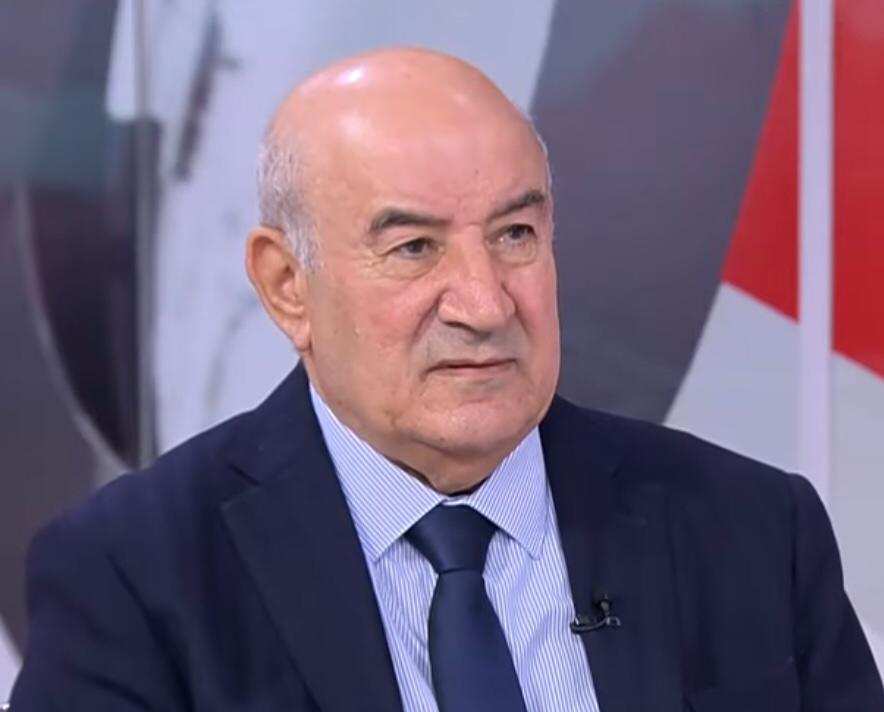
‘Israel Will Not be Able to Defeat Hezbollah’ – Military Expert

Israel will not succeed in achieving the goals it set in Lebanon and will not be able to defeat Hezbollah said military expert Retired Maj-Gen Mamoun Abu Nawar.

He pointed out Israel is still unable to cross the border into southern Lebanon due to the heavy losses and after seven failed attempts to do so by its soldiers.

He stressed Israel does not have the ability to defeat Hezbollah despite the losses and assassinations it carried out through its air strikes on southern Lebanon and Beirut’s southern district in the last two weeks.

Abu Nawar added to Jordan 24 the Israeli occupation army is trying to get out of the Gaza impasse and its inability to achieve the goals it announced there by opening the Lebanese front and is trying to cross the border and establish a foothold there to start extensive military operations later.

But he pointed out it is failing to do so after the heavy losses inflicted on its invading soldiers.

Abu Nawar explained opening a third front with Iran will not be easy and Israel does not have the ability to confront the strikes and ballistic and hypersonic missiles, which are considered among Iran’s most powerful weapons.

Abu Nawar pointed out that the air strike on Iran requires the approval of four countries for the aircraft to cross, namely Jordan, Saudi Arabia, Iraq and Syria. He noted Jordan has already refused for its airspace to be used by both parties and the other countries will not allow the use of their airspace because they will be partners in the operation and this is not easy either.

Abu Nawar continued that there are also technical, technological and logistical reasons for Israel’s inability to strike Iran by air, including because the lack of aircrafts available to refuel after they were taken out of service; and in this case it needs the intervention of the USA to supply it with them or use its military bases in the Middle East, and this is not possible at the present time.

Continue reading