What Will The Future Hold For Palestine in 2025?
 CrossFireArabia
- December 27, 2024
In 2024, there were a host of startling developments occurring in the Middle East and the wider world that impacted Palestine, most of them unforeseen 12 months ago: the continuation of the unrelenting Israeli genocide in Gaza, the battlefield defeat of Hezbollah and the devastation in Lebanon, the overthrow of Bashar Assad in Syria, the isolation of Iran, the election of Donald Trump, and a series of seminal rulings by the International Court of Justice (ICJ) and the International Criminal Court (ICC).
All of these seismic events make the assignment of imagining what Palestine’s future will be in 2025 a precarious task. Yet, with caution thrown to the wind, we can make some educated guesses on six leading features.
Leading scenarios for Palestine’s future
Donald Trump’s return to the US presidency will certainly encourage Israel’s accelerating subjugation of the Palestinians. His major appointments on the Middle East – including his secretary of state, his ambassador to Israel, and his two regional envoys – are all diplomatic gifts to Israel’s far-right nationalist government. His political instincts are all about respecting the strong and disparaging the weak. The only restraint that Trump may impose on Israel would result from his quest for a substantive deal with Saudi Arabia, which is publicly demanding a credible path to Palestinian statehood.
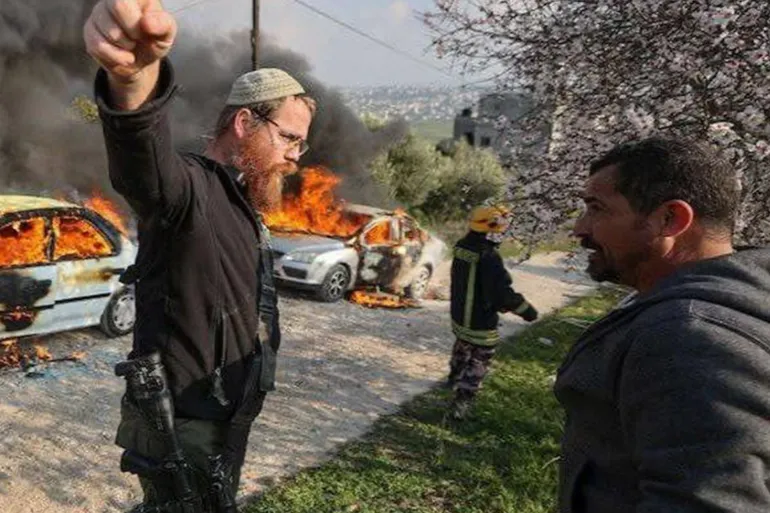
A genuine Palestinian state is further away than ever. In 2025, more Palestinian land will be confiscated, more illegal Israeli settlements will be built, and settler violence, already at record levels, will only intensify. While Trump might restrict Israeli Prime Minister Benjamin Netanyahu from formally annexing parts of the West Bank, de facto Israeli annexation will continue unabated. The ability of the Palestinian Authority to shape events in its favor will likely shrink even further. As for the comatose peace process, the Palestinians long ago arrived at a traffic intersection, and the red light never changed. It remains red today, its only color.
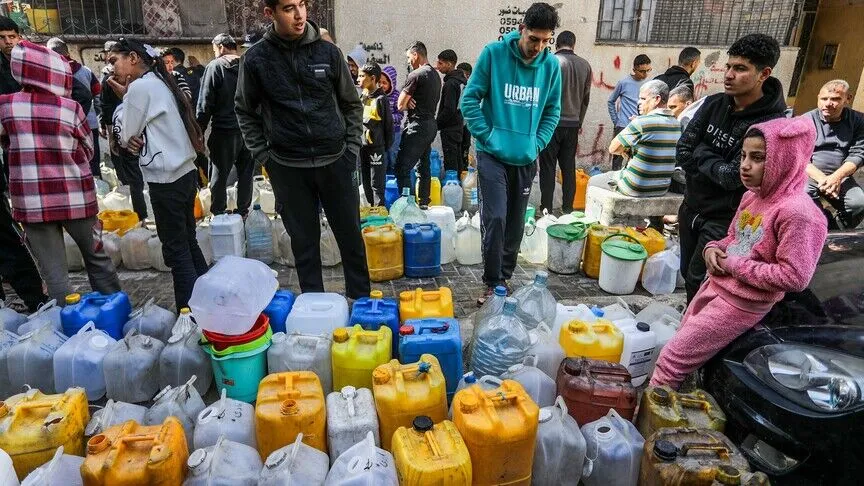
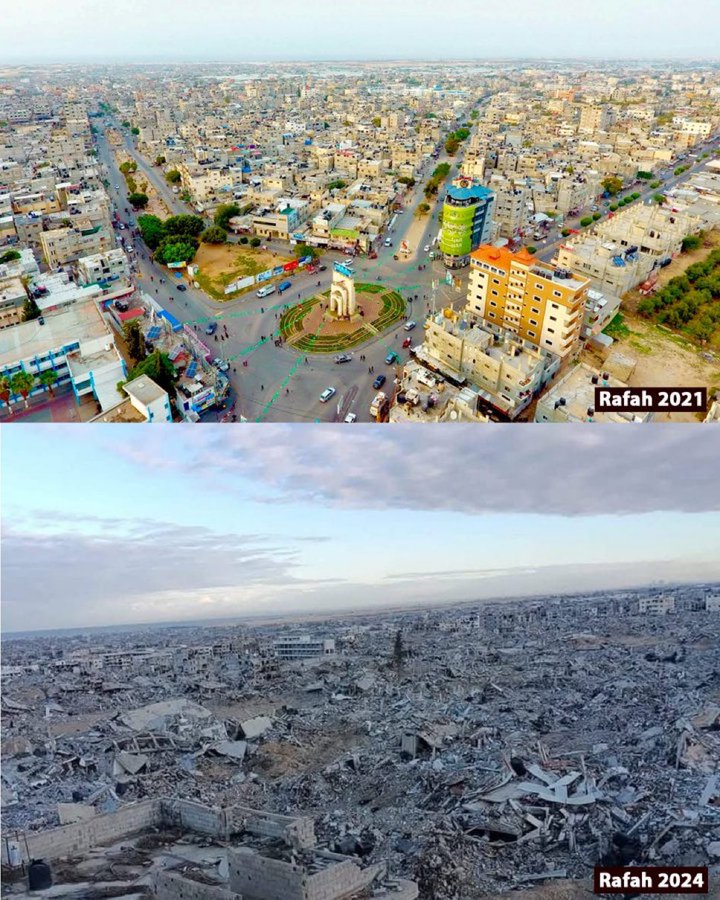
The genocidal war on Gaza will finally end with a formal ceasefire, the release of Israeli hostages, and some Palestinian detainees. However, the unimaginable toll of deaths and suffering among the Palestinian civilians in Gaza will continue, as starvation, infectious diseases, a decimated economy, and a devastated landscape afflict the population. Hamas won’t be completely defeated, but it has suffered a grievous blow in the short run. Israel will push hard to build settlements in the north and for clan warlords to run the rest of Gaza, which Trump might allow. Another great test will be the raising of the $40-60 billion needed for the reconstruction of Gaza; this will create tension between Trump and his Gulf states allies, who will resist paying the lion’s share of the consequences of a war they opposed.
Will the international community face the Palestine issue in 2025?
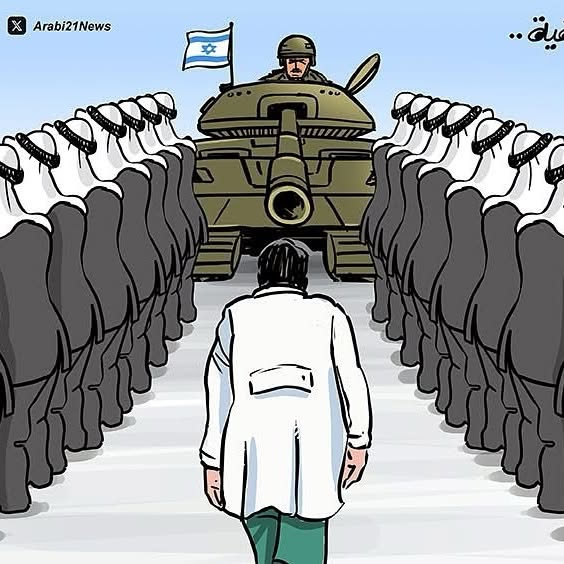
Respecting Palestine, the United Nations will face some of its most perilous challenges in 2025. The one-year deadline set by the General Assembly for Israel to completely end its occupation of Palestine arrives next September, with Israel and the US committed to defying the obligation. In addition, Israel – with Trump’s backing – is seeking to dismantle UNRWA, the UN agency that delivers education, health, and social services to Palestinian refugees in the Levant. The challenge for Europe and the Arab world will be whether they will defend the UN, its core commitment to successfully resolving the oldest item on its political agenda (Palestine), and the preservation of its largest agency.
Israel’s diplomatic isolation will continue, even as its relationship with its superpower patron will deepen. Its outlier status at the United Nations – particularly at the General Assembly and the Human Rights Council – will see even more lopsided votes against its 57-year-old occupation, its denial of Palestinian self-determination, and its abuse of international law. The arrest warrant issued by the International Criminal Court against Benjamin Netanyahu and his former Defense Minister Yoav Gallant will make him politically radioactive, with heads of state and government that have signed the 1998 Rome Statute refusing to meet him. Pressure will grow within Europe to rethink various trade and cooperation agreements with Israel as a reaction to the war and its horrendous humanitarian consequences.
Role of international law more important for Palestine than ever
The role of international law in pronouncing on the question of Palestine will become even more momentous in 2025. After the signature rulings by the ICJ and the ICC in 2024, we are likely to see a growing movement to insist upon a rights-based approach to peacemaking in Palestine, replacing the discredited (but still very much alive) realpolitik approach of the Oslo process.
The momentum created by the recent genocide reports by Amnesty International and Human Rights Watch will continue to echo through UN corridors and foreign ministries. But there are also headwinds: Republicans in the US Senate are determined to sanction the ICC for issuing the arrest warrant against Netanyahu, meaning that the viability of the court will require a stout defense by the 124 members of the Rome Statute, particularly from Europe.
As we learned from the past year, there will almost certainly be unexpected surprises in 2025. And while there will continue to be dark times for the Palestinians in the year ahead, the war in Gaza has also sparked a global movement of solidarity – particularly among the young – that will continue to inspire courageous thinking and bold acts. Its lasting impact should never be underestimated.
Michael Lynk he author is a professor emeritus of law at Western University, London, Ontario, Canada. He served as the 7th United Nations special rapporteur for human rights in the occupied Palestinian territory between 2016 and 2022. Opinions expressed in this article are the author’s own and do not necessarily reflect Anadolu’s editorial policy.
Houthi Missiles and Israeli Mass Hysteria
- CrossFireArabia
- December 25, 2024
By Abdul Bari Atwan
What are the options Israel and America’s has to confront the continuing Yemeni drones and hypersonic missiles? Is it bombing Tehran and/or implementing the latest Syrian case in Sanaa? Why not rule both out?
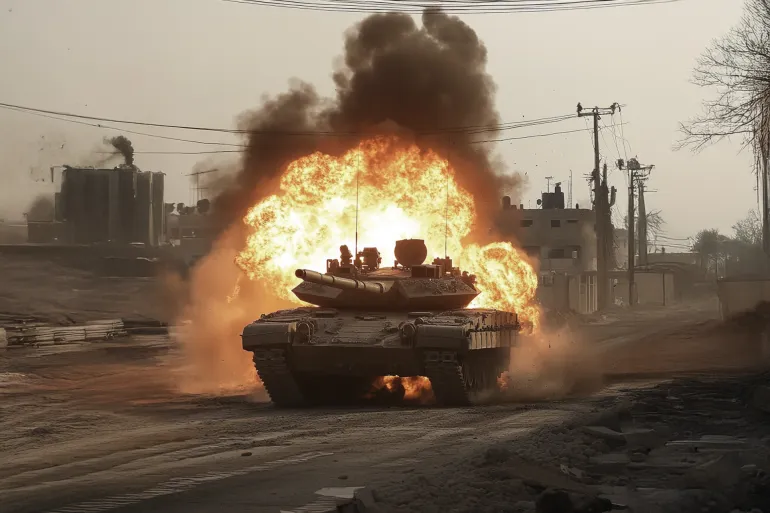
The Israeli occupation, government and settlers, are today in a state of hysterical panic due to the never-ending hypersonic ballistic missile attacks and the advanced drones bombing the heart of Tel Aviv and causing serious human casualties and huge fires.
This state of hysteria is reflected in four distinguishing signs:
First: Threats by more than one Israeli official to launch a massive attack on Yemen similar to that on Gaza whilst carring out assassination campaigns targeting the political and military leaders of Ansar Allah, especially Abdul-Malik al-Houthi.
Second: More than two million Israeli settlers took refuge in shelters, and sirens sounded in more than 80 locations in occupied Palestine over the past four days.
Third: Closing the airspace of Ben Gurion Airport to air traffic, which created confusion, chaos, isolation, and moral collapse.
Fourth: Failure of Israeli celebrations of two major successes achieved according to Hebrew newspapers, namely: In Imposing a ceasefire in Lebanon, stopping attacks from the southern Lebanese border, and the second by toppling the Syrian regime, the jewel of the resistance axis as boasted by Netanyahu that it was he who played the biggest role in achieving this.
Israeli Minister of War Yisrael Katz broke with all established Israeli norms by officially acknowledging, for the first time, responsibility for the assassination of the Ismail Haniyeh in Tehran, Hassan Nasrallah in Lebanon, and Yahya Sinwar in Rafah.
Katz threatened the Houthis leaders that they would face the same fate, and that the destruction that occurred in Gaza and Beirut would be repeated in Sanaa and Hodeidah.
But what terrifies the Israelis most, and worries their leadership is the arrival of the incessant Yemeni missiles and drones to the heart of major Zionist cities, like Tel Aviv, Haifa, Ashkelon, and Eilat with millions of settlers descending into shelters.
Indeed, this points to the failure of Israel’s highly advanced air defense systems to intercept these missiles, prevent them from reaching their targets, and inability to provide security and protection for the settlers in these major cities.
Perhaps the threats of Israeli officials to launch attacks on Yemeni cities reflect the extent of the pain they are suffering as a result of these incoming deadly projectiles.
These, and before them the Israeli, American and British air strikes on Sana’a and Hodeidah, have not achieved the goals of deterring Yemeni missile attacks and stopping their bombing of the Israeli depth.
On the contrary, they gave completely opposite results with their continual launching of hypersonic missiles and drones, and more dangerously, the downing of the advanced US F-18 jet, and the damaging of American aircraft carrier Harry Truman in the Red Sea and its escape to the north to prepare to leave the region, like its predecessors, the Eisenhower, the Lincoln, and many other naval destroyers.
The Yemeni military statements by Brigadier-General Yahya Saree in the past three days confirmed the bombing of Tel Aviv, Ashdod and Ashkelon deep inside Israel will continue as long as the extermination war on Gaza continues.
These statements were backed by the launch of more hypersonic missiles and drones in quick and direct responses to the Israeli threats, which means Yemen is not afraid and is responding in kind, has patience, and is ready to sacrifice.
Yemen has become the spearhead of the axis of resistance, and main front after the situation in Lebanon calmed down following the ceasefire agreement, and the commitment of the Islamic resistance there despite the violations. It is not unlikely that the Israeli occupation state, with American support, and perhaps Arab support as well, will present two main military options in the coming few days:
First: Going to the head of the octopus, i.e. Iran, as described by the Israelis, by launching an expanded tripartite Israeli-American-British attack to destroy it, according to the recommendation of Mossad Chief David Barnea as targeting Sana’a and Hodeidah again will not stop the Yemeni attacks with missiles and drones from reaching the occupied Palestinian depth.
Second: Repeating the Syrian scenario in Sana’a, i.e. an attempt to undermine and exhaust the Houthis by supporting the other Yemeni military groups and movements hostile to it by supplying them with modern weapons, providing air cover for their attacking forces, and mobilizing regional support for this step.
Launching a large tripartite aggression on Yemen may fail and give adverse results, and the same can be said about the expected attack on Iran, and it will be the occupying state and its military bases that may be exposed to bombing with thousands of ballistic and supersonic missiles, because the loss of the resistance axis of its last, most powerful and effective arena (Yemen) means its end and its Iranian leadership, and the creation of a new Middle East led by a “Greater Israel”.
However great Yemen will not surrender, and will not be defeated, as history tells of its victory over all previous invaders. Its steadfastness for more than eight years in the US-backed Gulf War against it confirms it will withstand any new Israeli-American-British targeting it, as its internal incubator is strong and solid and difficult to break due to the rallying of people around its leadership, which is embodied in the massive million-person demonstrations every Friday now for several months in solidarity with our people in the Gaza Strip.
Abdel Bari Atwan is the Chief Editor of Al Rai Al Youm
‘Can You Look in The Mirror After You Have Bombed an Entire Neighborhood?’
- CrossFireArabia
- December 22, 2024
By Dr Ahmad Tibi
In the midst of the Spanish Civil War, some time in 1937, fascist dictator Francisco Franco’s regime bombed the Basque town of Guernica, with the help of Germany and Italy. In less than four hours, and after bombs weighing a total of 22 tons were dropped on it, the town was completely destroyed.
Hundreds were killed in the bombardment, which shocked the entire world and became a symbol of the cruelty of those times. Guernica was immolated in the fire of fascistic propaganda and in historical memory it is testimony to the fragility of justice during war. Pablo Picasso’s famous masterpiece, “Guernica,” has become a symbol of the destruction and horror of war.
In the bombing of Guernica, no pilot refused to obey orders. They flew – and carried out their job as dictated. Obedient soldiers. Eighty-seven years later, it is the same old song. No Israeli pilot has stood up and said “No.” “This is the limit.”
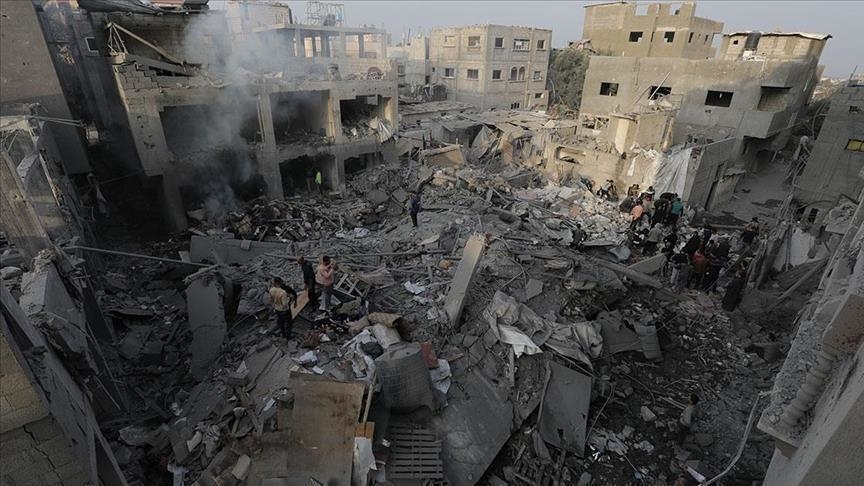
The bombardments in the Gaza Strip have hit and damaged hospitals, schools, kindergartens, mosques and churches, bakeries, public buildings and entire neighborhoods – leaving behind tragedies too numerous to elaborate – and not a single pilot has said “No.”
The pilots, who in their private lives are apparently considered by themselves and their surroundings moral men of integrity and values, sons of parents, fathers of children, good friends to their buddies – have made themselves a major part of the well-oiled killing machine that knows no mercy. Or limits.
During the past 14 months, and after multiple Guernicas in Gaza – human morality is facing yet another test. Since the war began, tens of thousands of children, women and men have lost their lives, and entire towns – like Beit Hanoun, Beit Lahia and Jabalya – have been wiped off the face of the earth in bombings by the IDF.
Cities comparable in population size to Herzliya and Dimona have been bombed into rubble. And the world, with its silence and its armaments and materiel support, is supporting this. The media in Israel wobbles between total denial and depicting the actions as heroic, justified, essential deeds.
How can a pilot be proud of this? How does he sleep at night? Killing 17,000 children and wounding about 100,000. Killing masses of civilians is not “self defense” even in the face of the horrors of the killing of dozens of children alongside hundreds of other civilians in the Gaza border communities.
We have arrived at an absurd rule: Nothing justifies October 7 – but in the name of October 7 everything is justifiable. There is no security justification for such massive bombing. No military action can justify bombing helpless human beings, or the eradication of Beit Lahia, Beit Hanoun and Jabalya from the face of the earth. This ethnic cleansing is reminiscent of the ethnic cleansing of 530 villages in 1948.
In the Israel of 2024, after 14 months of nearly constant bombardment, day and night – the voice of refusal has gone silent and is unheard. In the Jewish Israeli public, voices of protest and resistance are hardly audible.
The planes thunder and morality is silenced – and there are even those who are demanding yet more bombing and even more destruction. The few who refused to be conscripted this year – for example, Ido Ilam – and kudos to him for that – can be counted on the fingers of one hand, and the letters of refusal and resistance actions on the fingers of two, but no more than that.
Conscientious objection is entirely a personal gesture: It is a political act of resistance to the system. It is a refusal to commit war crimes in the name and for the sake of the system, a refusal to be part of a process of destruction and ruin. A refusal to kill. A refusal to steal. To destroy. To burn down a home. To rob. To deprive. And to ruin. But refusal only because of a judiciary reform is not enough.
Without refusal to take part wholesale military destruction, human society sinks ever deeper into its moral darkness, which has no limits.
“The West,” which for years fought for the values of democracy and human rights, is choosing to turn a blind eye to the horrors of Gaza. Under cover of “the right to self-defense” – as though Israel were not a regional military superpower and lacked might and means – the West is allowing it almost unlimited freedom of action and giving it a green light to destroy Gaza and deepen the occupation of the Syrian Golan Heights.
The ethnic cleansing taking place before our very eyes, and which is being broadcast live on social media, is made possible under the auspices of the Western countries that are enlightened only in their own eyes.
And the administration of the Democrats in the United States, led by President Joe Biden and Secretary of State Antony Blinken, will be remembered forever in disgrace, alongside Prime Minister Benjamin Netanyahu, as the destroyers of Gaza, perpetrators of ethnic cleansing and mass murder of women and children.
What will they say about this a few decades hence? What will you tell your children? Your grandchildren?
Ultimately, every individual’s morality – including a pilot’s morality – is measured by his deeds. What he agrees to do and what he refuses to do. Are you prepared to press the button that will kill scores of children? That will burn to death three generations of a single family? Can you look in the mirror after you have bombed an entire neighborhood?
Do you love the person the mirror reflects back to you in the morning? Gaza, like Guernica, did not ask to be a moral test and a symbol of the human cruelty of these times. Above all, it is a place, a home to millions of people – men, women and children – who want to live outside the walls of the biggest prison in the world. A prison that has become the biggest graveyard in the world.
Gaza, like Guernica, reminds us how important it is to resist and refuse to participate in injustice – loudly and clearly, even at a steep personal price. Where there is resistance, there is hope, and where there is hope there is a future for all of us.
Dr Ahmad Al Tibi is a Palestinian-Israeli politician and has been a member of the Knesset since 1999. This opinion was reproduced from the Israeli Haaretz.
Why The Silence on Gaza?
- CrossFireArabia
- December 22, 2024
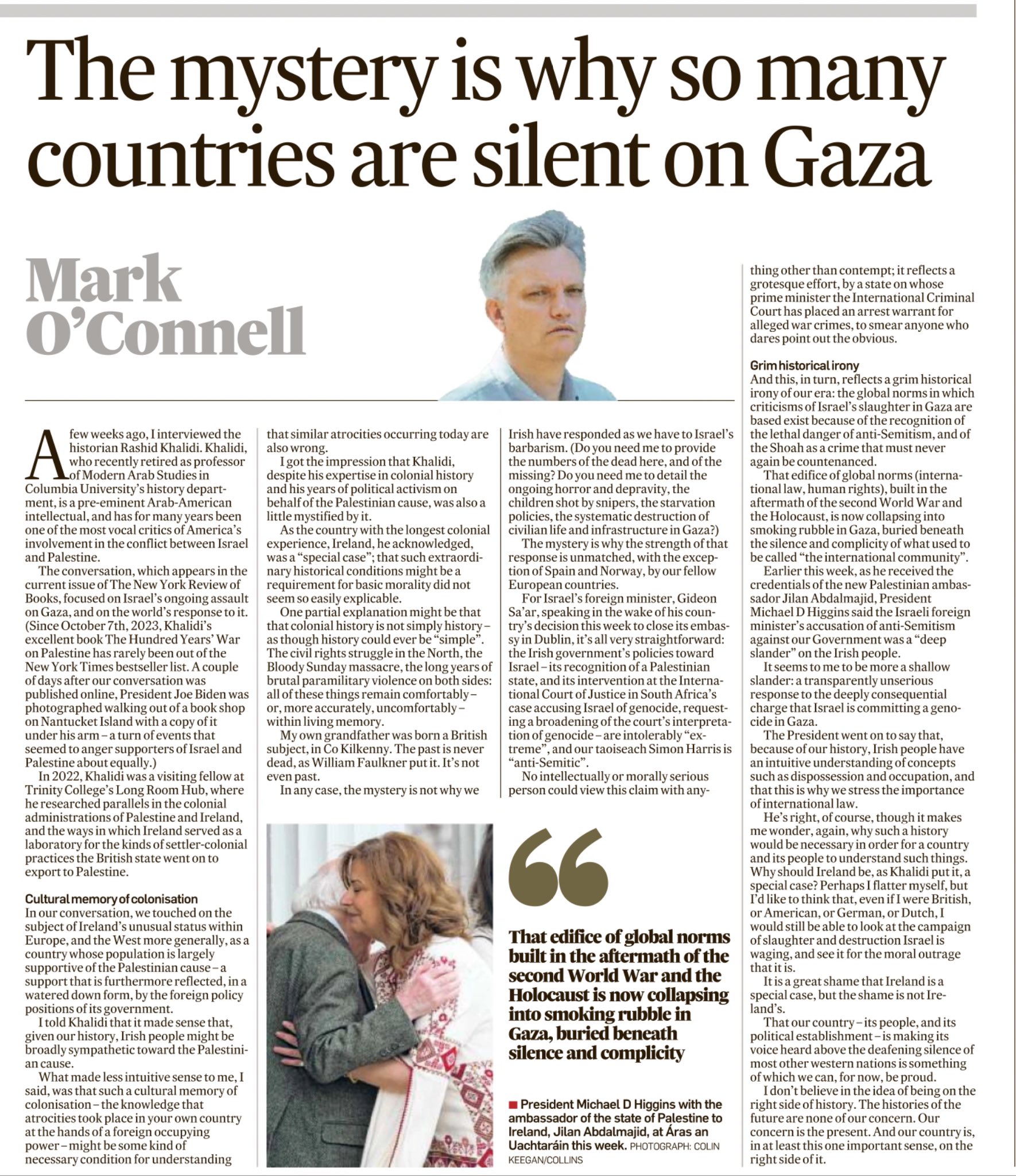
Pádraig Murchadhfinn wrote this on X:
“It is a great shame that Ireland is a special case, but the shame is not Ireland’s.” – Mark O’Connell
The Irish Times