Fadwa Tuqan: A Poet of Palestine
  • HebaHeba
  • August 6, 2026

Palestinian Heritage facebook page

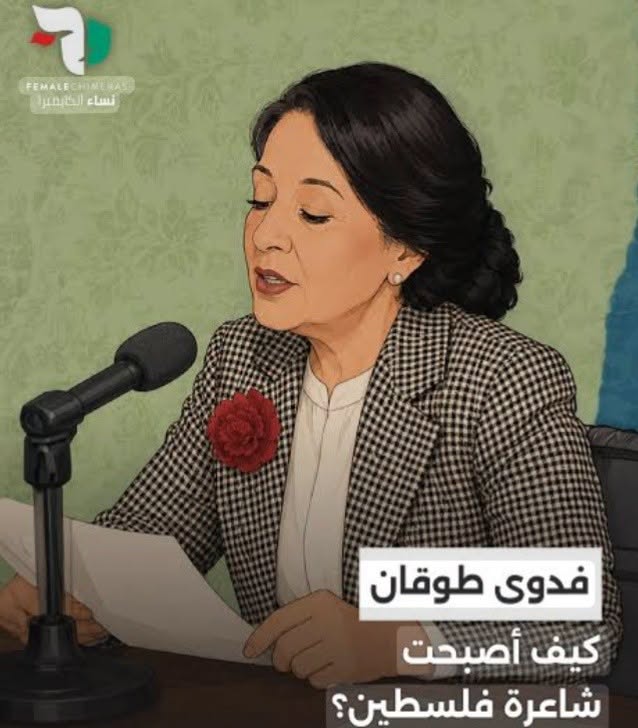
Fadwa Tuqan (1917-2003) was one of the most important Palestinian poets of the 20th century. Born in Nablus to a prominent Palestinian family, she was known as the “Poet of Palestine” because her poetry provided a strong foundation for exploring women’s experiences of love, revolution, and protest against society.

Fadwa Tuqan received her education only up to the primary level, as her family considered women’s participation in public life unacceptable. She left school and continued her education independently. Later, she studied under her brother, the renowned Palestinian poet Ibrahim Tuqan, who nurtured her talents and guided her towards writing poetry.

He encouraged her to publish in numerous Arab newspapers and called her “Umm Tammam” (Mother of Tammam). Mahmoud Darwish later dubbed her “Umm al-Shi’r al-Filastini” (Mother of Palestinian Poetry).

Although she signed her early poems with the pen name “Dananeer,” a name derived from a slave girl’s name, her favorite pseudonym was “al-Mutawwaqa” (the Encircled One) because it contained a double entendre, a subtle and eloquent allusion to the poet’s specific circumstances. The word “Matawwaqa” means her affiliation with the well-known Touqan family, and at the same time symbolizes her circumstances in a traditional, unforgiving society.
Continue reading
Pitching Together, Palestine

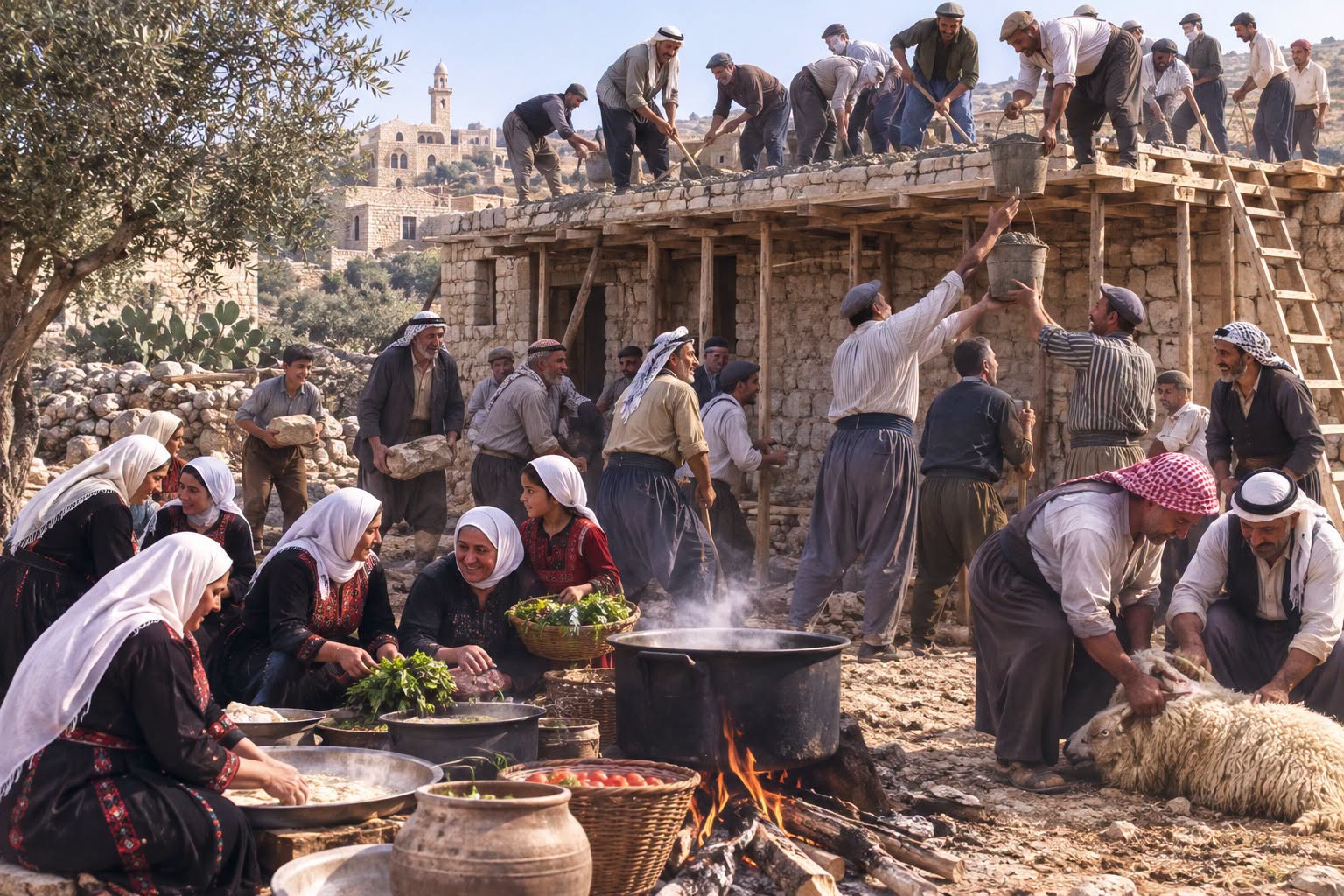
Mutual aid was more than just a social custom; it was an unwritten pact that united hearts before hands, making the community one home whose doors were never closed to anyone. As soon as someone began building a house, harvesting a crop, or pouring concrete for a roof, men would rush from every direction, carrying picks and stones, each offering their labor with love and contentment, without expecting any reward or compensation.

Generosity was deeply rooted in their hearts, and the sound of folk songs would fill the air, easing the hardship of the work and planting joy in their hearts. The owner of the concrete structure would slaughter a sheep or a goat in honor of those who stood by him, and the women would prepare the food. The workday would then transform into a celebration of cooperation and love, showcasing the most beautiful aspects of Palestinian solidarity. Today, life has become a heavy burden on people… everyone is preoccupied with their livelihood, work, and studies… many of the values ​​we were raised on have faded… and “mutual assistance” has become more of a tale from a bygone era than a reality… Yet, this spirit hasn’t died… it still lies dormant in the hearts of the people of this nation… waiting for someone to awaken it and restore it to its rightful place.

Nations are not preserved by their buildings and markets alone… but also by their authentic values… and by the sense of honor that compels a person to rush to the aid of their brother before being asked… Does that spirit of mutual assistance that once united people in love still exist among us… or has it become a memory we recount to our children with endless nostalgia?

Continue reading
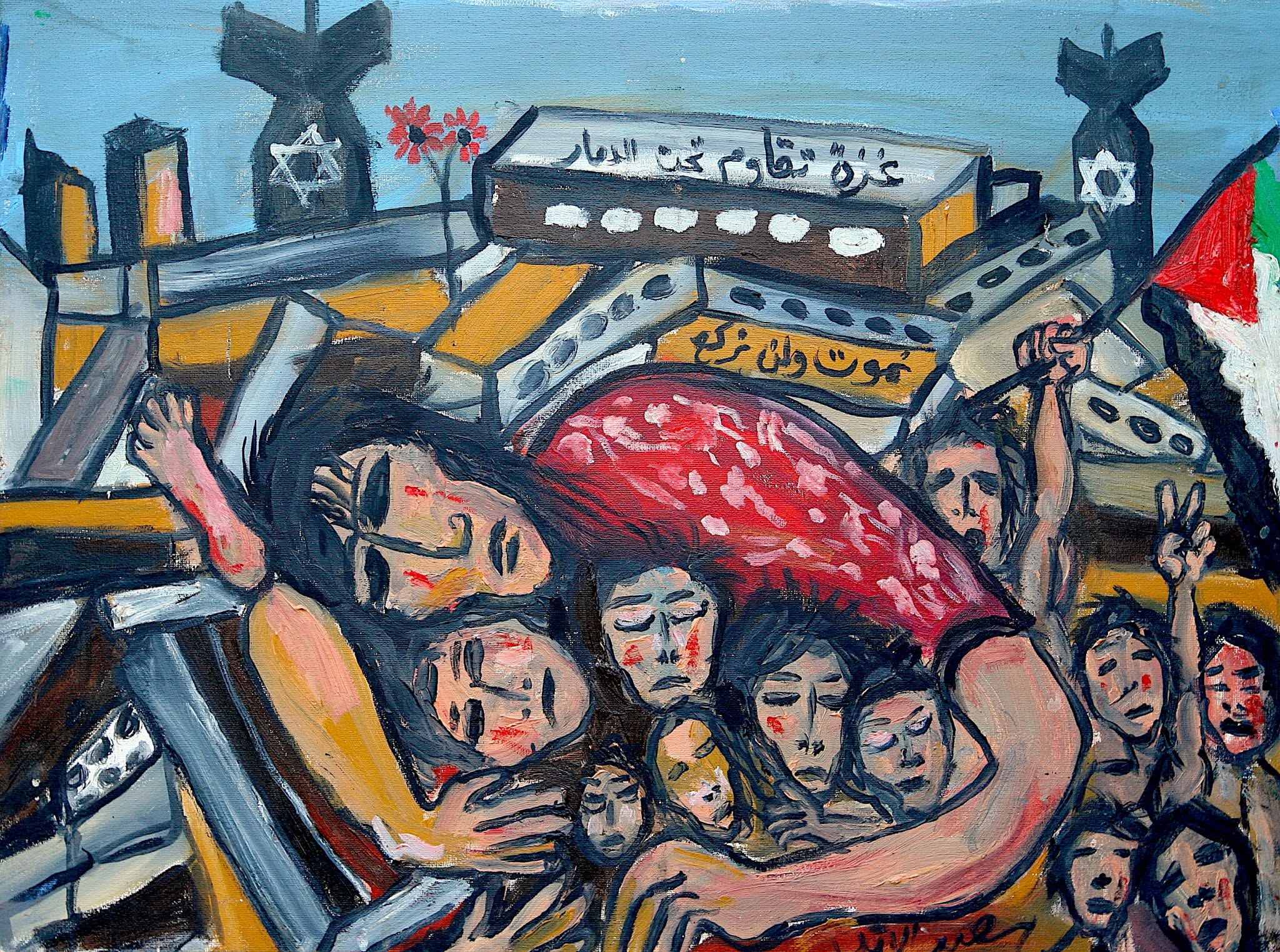
In Art: Trapped Under The Rubble

Said Alatab writes:

My painting depicts a Palestinian mother and her children trapped beneath the rubble after bombing Gaza City. This work reflects the immense suffering, loss, and tragedy endured by innocent families caught in war. Through this painting, I hope to honor the victims and remind the world of the human cost of violence. Please share it. Please share and support my art

Alatab is a professional artist currently living in the United States having immigrated there in 1979. He was born in the Sabra and Shatila Camp in Beirut in 1959. After studying art in New York he became a professional artist with alluring paintings that display fascinating features which he says are inspired by his personal journey, struggles, and observations of the world.

“I often explore suffering, hope, and the human condition,” he points out. Currently, as his displayed works show, he is focusing on the war in Gaza and the suffering of its civilians. “For me, art is more than a career. It is my life’s purpose, a way to preserve memory and inspire reflection. I continue to paint to express truth, emotion, and hope.”

One of the artists who has influenced Alatab most is the great artist Vincent Van Gogh. “I feel a deep connection to his emotion, honesty, and intensity. His dedication to painting despite hardship inspires me to continue creating art that reflects my life, my struggles, and my vision of humanity,” he comments.

Continue reading
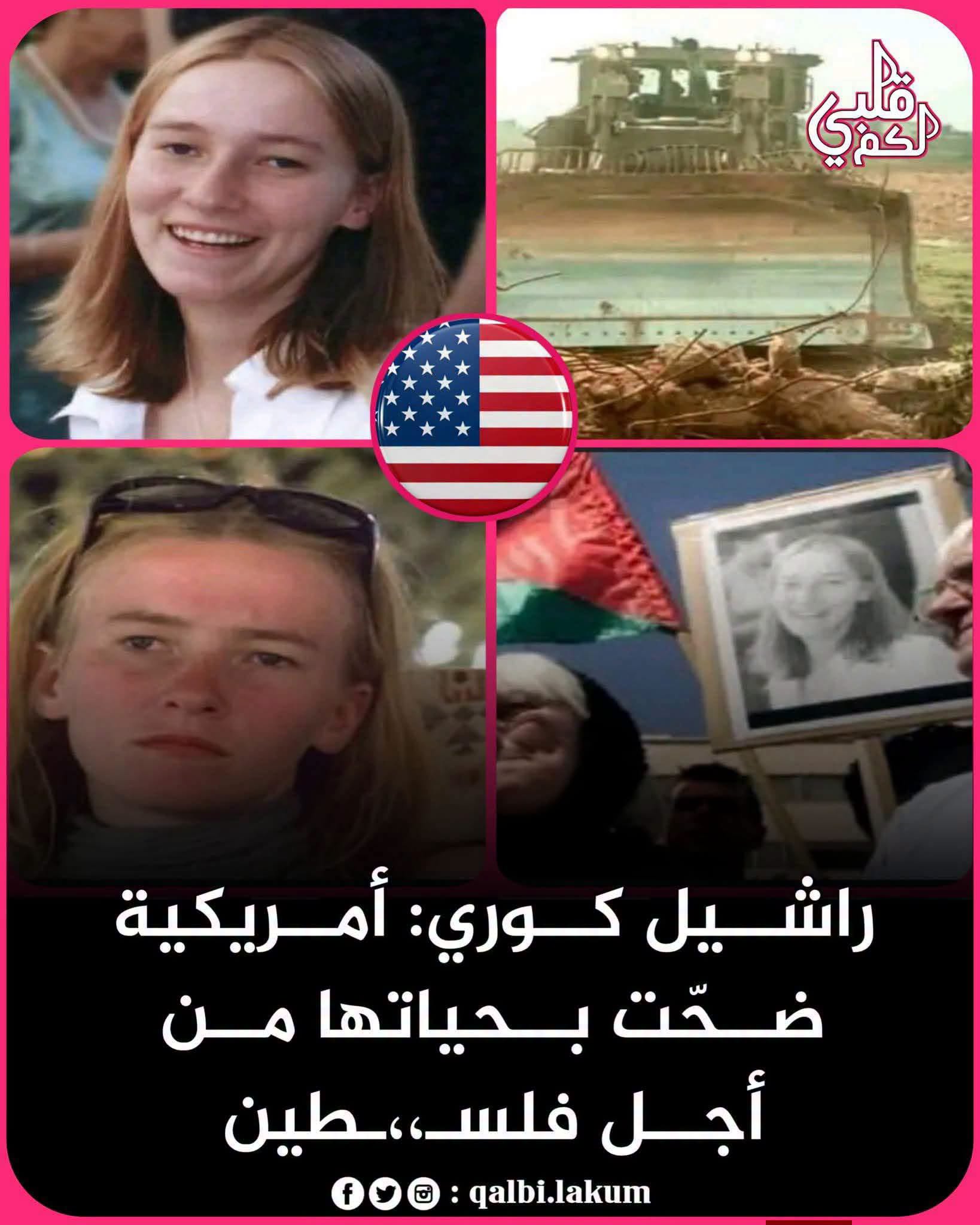
Remembering The Brave: Rachel Corrie

Rachel Corrie, a 23-year-old American peace activist, was killed by an Israeli military bulldozer while standing as a human shield to protect a Palestinian family’s home from demolition.

In 2003, Rachel left the comfort of her home in Olympia, Washington, to stand in the dust of Rafah. She didn’t just talk about justice; she lived it, ultimately sacrificing her life to protect civilians she had never met. Though she was buried in the same sand she tried to defend, her voice has never been silenced.

Today, her parents, Craig and Cindy, carry on her courageous legacy, having spent decades transforming their grief into an unwavering struggle for Palestinian human rights. Rachel’s spirit remains an eternal flame for all who believe that love and justice are worth everything.

May God have mercy on you, Rachel. Your sacrifice will never be forgotten.

Continue reading
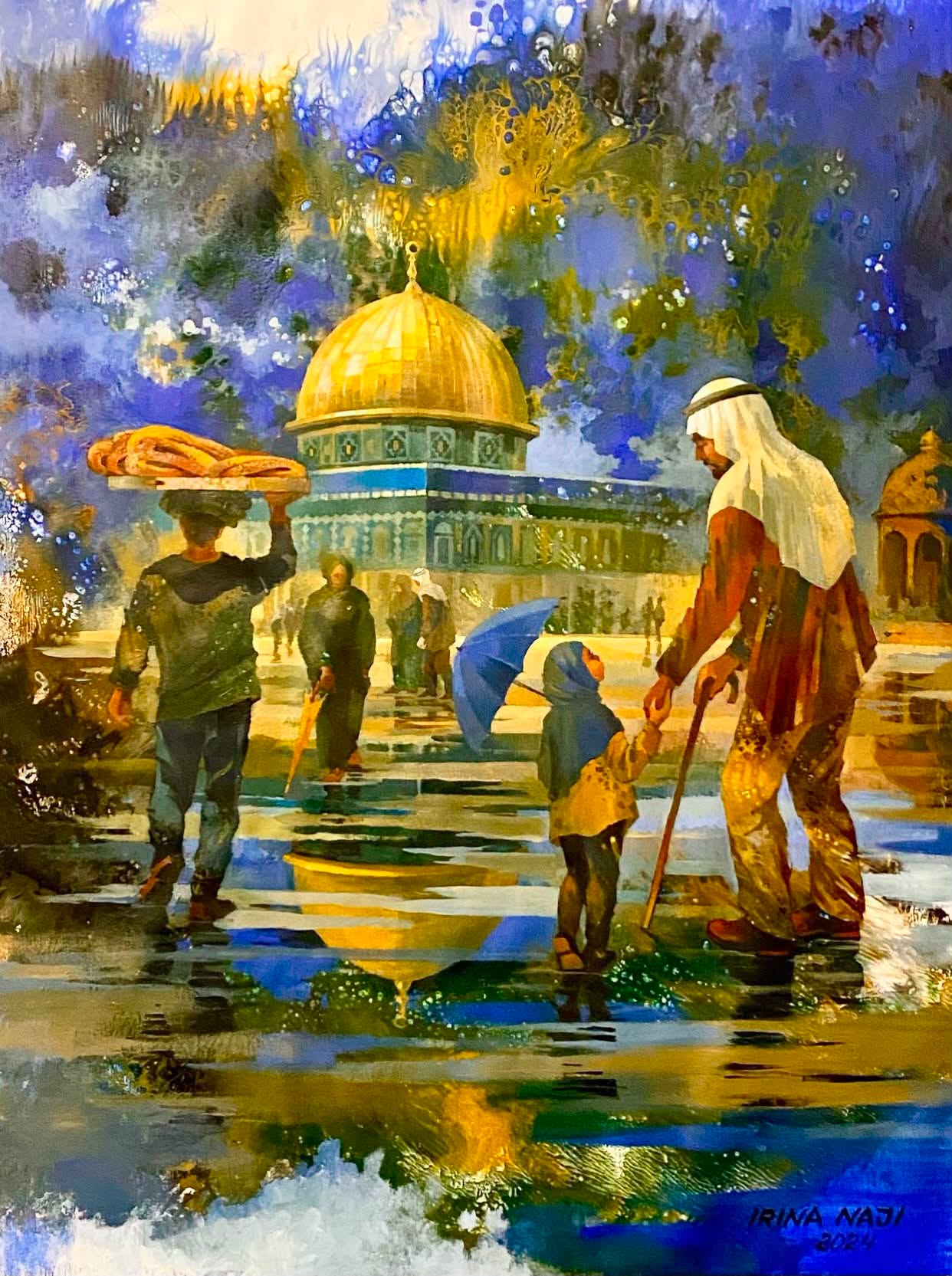
Jerusalem After The Rain

Irina Naji writes:

Even after the rain, the sun is always reflected in every drop.
So too, hope always lives in the hearts of a people who cherish their memory, their land, and their love.

On her facebook page she says:

I narrate “the life, traditions and memory of the Palestinian people through my art.”

The painting is incredible in the use of color, painting and detail, itching out a buzzing community around Jerusalem even under the bright rain. The imagination is stark but realistic

Continue reading