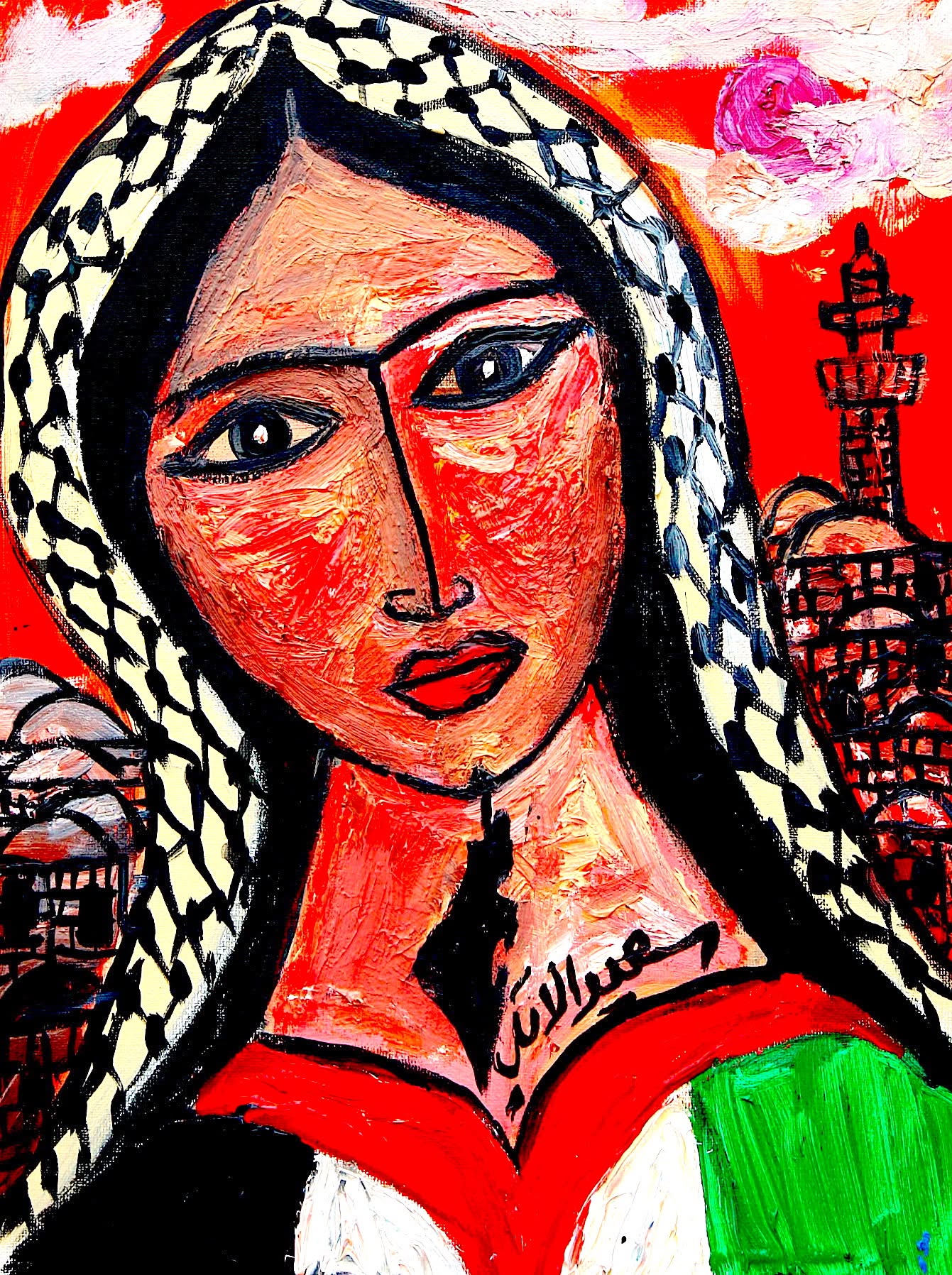
Suleiman Mansour: A Painter For Palestine

In a distinguished cultural and artistic evening held in Jaffa, the “Bride of the Mediterranean,” the pioneering Palestinian visual artist Suleiman Mansour, creator of the famous painting “The Camel of Burdens,” was honored at an event organized by the Arab Culture Association in cooperation with Al-Saraya Theater and Al-Mat’hana Gallery.

The evening included speeches praising Suleiman Mansour’s decades-long career, and an open dialogue that addressed his rich artistic experience, his cultural and national contributions, and his prominent role in documenting the Palestinian scene and conveying the suffering and resilience of the Palestinian people to the world through his artwork, which has become part of the Palestinian national memory.

Participants emphasized that Suleiman Mansour’s works, most notably “The Camel of Burdens,” constituted a landmark in Palestinian visual art and contributed to consolidating national identity and preserving the Palestinian narrative through the language of art and creativity, making him one of the most prominent figures of the contemporary Palestinian artistic and cultural movement.

Continue reading
Last Wedding in Tantura

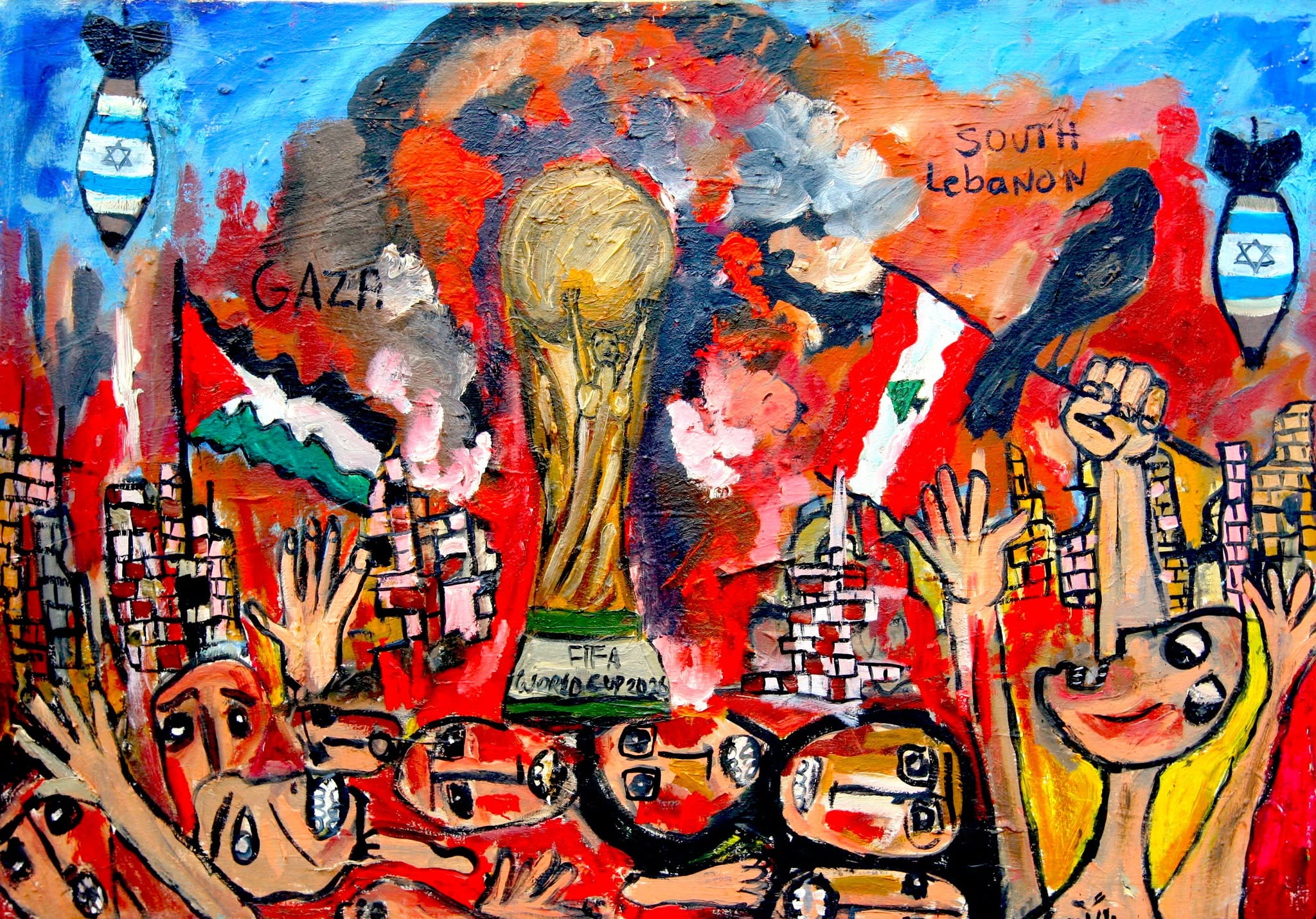
Tantura was a Palestinian fishing village of around 1,500 residents located south of Haifa. On May 22–23, 1948, during the Nakba, the village was captured and ethnically cleansed by the Alexandroni Brigade. Testimonies and historical accounts indicate that more than 200 unarmed villagers and disarmed fighters were massacred and buried in mass graves.

Tantura symbolizes far more than the destruction of a single village. It represents the violent interruption of ordinary Palestinian life in 1948: homes abandoned, families torn apart, futures stolen, and entire communities turned into memory overnight.

Yet even in loss, Palestinians continue to insist on dignity, memory, and survival. It is also a reminder that our love for one another, and for our land, remains stronger than displacement and erasure.
.
Last wedding in Tantura (العرس الاخير في الطنطورة), acrylic and oil on canvas, 2022

Continue reading
Handala in Ireland

In Ireland today, there is the statute of Handala, the Palestinian boy cartoon who refuses to turn around until Palestinian is liberated.

The sculpture in County Clare has been created by Irish artist Peloloca as an expression of solidarity with the Palestinian people and a dedication to the tens of thousands of children killed in Gaza by the Israeli war machine.

The statute, hoisted in early June 2026, is based on the character drawn by the late cartoonist Naji Al Ali created in 1969 to represent Palestinian dispossession.

Here is a word from Handala

My name is Handala. 

Grownups ask me what my name means. 
I tell them it is the name of a plant that grows in the harshest of conditions. Grownups always seem to need to have things explained for them.

I am from Palestine. 
I don’t live there anymore, but I will return.  
I’m always on the lookout for how soon I will. 

Some tell me I should pay less attention to what’s happening.  They say I should focus on something else. Change my clothes. Stop walking barefoot. 
Show my face before I go back home. 
I will never understand grownups.

What about you? 
I hope you’re not a grownup. 
I would love to know who you are, where you are from, what feelings run through your heart as you go to sleep.

My name is Handala. 
I am Palestinian. 
Will you be Palestinian with me?

Continue reading
Educator For The Arab World

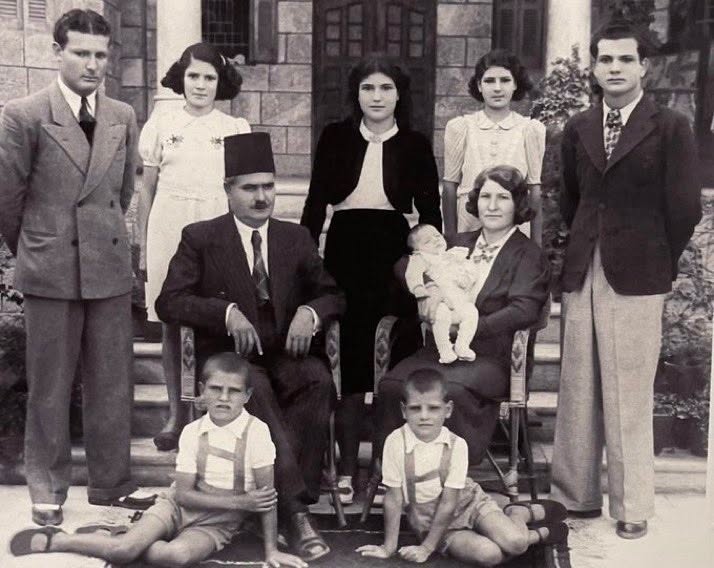
The renowned Palestinian writer and poet Khalil al-Sakakini and his wife in the village of Artas in 1930. Anyone between the ages of 60 and the early 50s knows this towering figure in education who authored the Arabic language curriculum for all grades in the Levant and the Arabian Peninsula during their early years of independence. Students would reach the fifth grade able to read a newspaper fluently and without any errors or stammering, and they also possessed excellent writing skills.

Then, these curricula were replaced with others, and now we see many students graduating from university with stumbling over their reading, not to mention their spelling mistakes and poor handwriting.

Continue reading
An Egyptian House in a German Town

An Arab house in a German town, all the trappings of a different culture, Egyptian, Jordanian, Syrian, and Yemeni, an Oriental setting in a traditional western German context.

The town is Bruchsal, to the west of Frankfurt, owners, the Burkards, they fell in love with a different culture, and decided to “transport it” to their house and in their lands, having lived in Cairo in the 1970s and 1980s.

Helmut Burkard and his wife Beta decided to pack their belongings and their kids in 1974 and move to Cairo. Neighbors told him “you are mad” to go to the Middle East at that precise moment. “Its dangerous.”

But he wasn’t swayed. They loved every single minute of it. Helmut teaching music at a convent, Beta, an economist by training had become a proper housewife, and the two kids growing up.

Over the years Beta spent her time collecting traditional artifacts, souvenirs, paintings and different copies of the Quran from Cairo’s old Souqs and Bazaars as she had a preordained feeling that one day she and her family would go back to their home on Mozart Way and fill it and make it a house of converging cultures.

And so today as you enter the house, you are immediately struck by the mementos, artifacts, framed pictures, the rugs, swords, scabbards hanging on the different walls of the house. The speak of a different culture, and a far away civilization embedded in a geographical separateness, novel, yet very human.

What’s fascinating about this house is that it’s totally covered with trinkets and memorabilia. The stairs, landing, living room, bedrooms all smell of a civilization that is anything but German, yet relaxing and soothing.

Pottery, pans, Arabic coffee pots, earrings worm by Bedouin women adorned the place from head to foot together with wall paintings by different Egyptian artists.

In fact, if it wasn’t for the large black piano in the living room, and the number of German books, a visitor like way would be forgiven for thinking the house belongs to a foreign family living in rural Germany.

Every wall, every corner, nook and cranny of every room—literally—filled with every aspect of an Arab life which the Burkards lived either in the long stretch in Cairo, and or the vacationing he used to take his family to in different parts of Jordan, Syria and Yemen.

Beta just kept collecting on these holidays inevitably made driving through these areas. “I wanted my family to experience these countries by roads, and not through planes,” he used to say.

The house is an Arabic treasure. On Mozart Way, you can’t say, “oh I want to write an impressionistic piece on this house” simply because of the intricate detail involved in these artifacts. The house tells a story of a past the Burkard’s lived in. If you let Beta go on, she would speak for ages on how she got this piece, and from which Souq she had to go to.

You can’t point to any particular room and say this is the pride and joy of the Burkards. They are all special. Take the living room, for instance. One is struck by its aura of combination of religiosity, culture, art, music and literature that spanned across.

There was picture frame of Al Faateha (Opening chapter of the Quran), engravings of the name of Allah (God) and Prophet Mohammad on different plates.

In a small side section named by Helmut Burkard as the “Arabic room”, there is a mixture of Arabesque and teak, a desk, a large rounded Arabesque coffee table with a copper plate and a traditional wooden shield used as a divide from one section of the house to another.

Of course both husband and wife know what all these means. Helmut speaks good Arabic with an Egyptian accent, so does Beta although she didn’t let on. But Helmut was directly in touch with the local population, that’s why he picked up the accent and the slang.

After Egypt the Burkards went back to Germany, however, Helmut returned to Jordan in 1996 as a fellow teaching in the Music National Conservatory where he remained till 2003. He first came to Cairo when he was in his early 40s, now he was in his 70s, his kids grown up, and his wife Beta attending the garden and on frequent trips to Switzerland which is just around the corner from where they lived. But he was still a “musical fighter”, humming to himself a piece by Mozart or Bach as he went down the corridor.

At the Conservatory, he established an exchange program where German pupils came to Jordan to play music followed by Jordanian pupils going to Germany to play classical music with Arab themes. He called this a “musical culture of dialogue”; the German pupils would also learn different Arabic pieces and even sing them.

Helmut, now in his early 80s, and who brought the last German music group to play in Amman in 2010, is a strong believer in a culture of dialogue between east and west as a means to bringing people closer together.

His house is a testimony to that.

This artical is reprinted from my account on Hubpages

Continue reading