Voices From Gaza: 700 Days of ‘Hell’

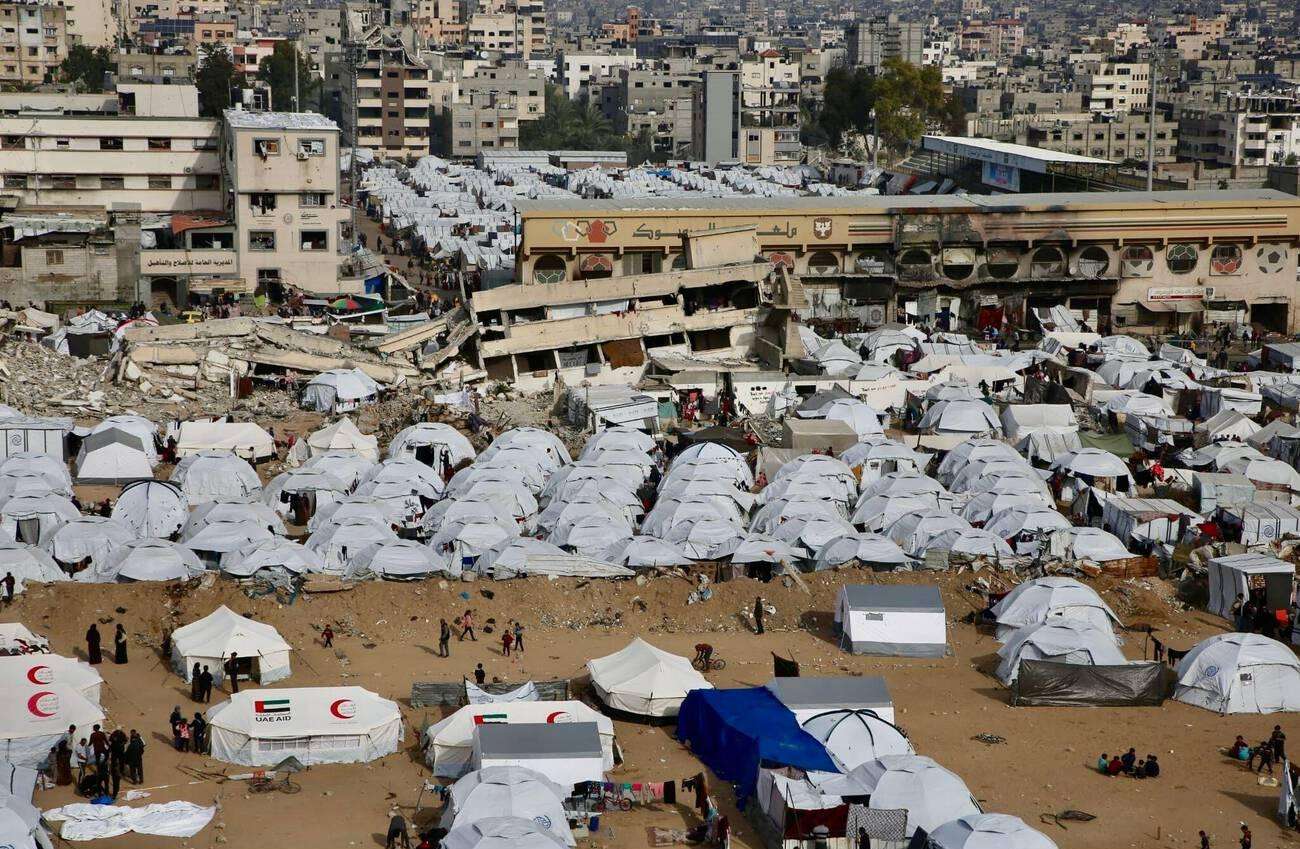
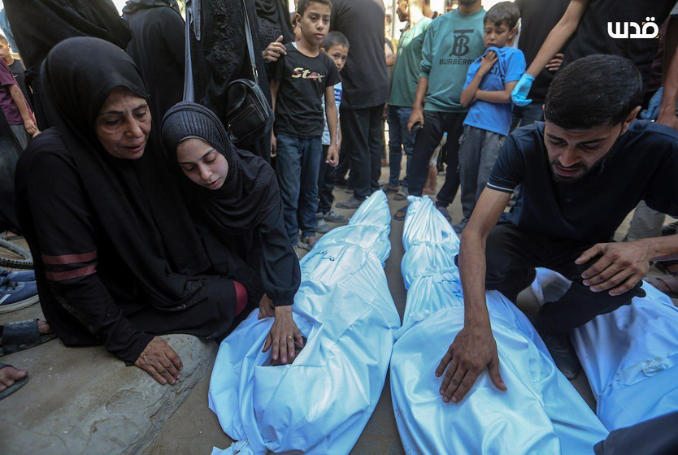
The Israeli genocide starting on 27 October, 2023 through mass bombs and missiles dropped on the Gaza Strip is being discribed as hell-on-earth. After 700 days of slaughter in which the enclave was reduced to ruin, debris and mass killings, Gazans speak of the “hell” they are going through between multiple and countless displacements, starvation and waiting in limbo for what is going to happen next. Their lives have been turned upside down and live in limbo of fog.

All the above interviews were conducted by Al Jazeera satellite channel on the 700 days of horrors the Israeli army has subjected the Palestinian civilians of Gaza to.

“700 days and the killings are still going on with the war taking everything from us,” said one man. “The blood of martyrs is still hemorrhaging,” he continued.

“I now envy the people who have died in this slaughter,” said another. “In this past 700 days, journalists were killed, civil defense men gone, hospitals bombed, children murdered and many other things disappeared…”

After 700 days there is nothing left, there is no children left, no food,  no drink, starvation everywhere, life has become extremely difficult. I have started to say to myself I wish I was long dead and have left this sorry place,” said another woman.

What about the handicapped

‘“I have three teenager sons who are handicapped and the process of displacement with them is very difficult…we were forced to move by the Israeli army more than 15 times – I walked them, I sometimes carried them would you believe, there is no transport and walked under bombs and missiles, sometimes they’d fall very near us, the danger of being killed is real,” the father of the three said.

“There is no food, no drink, there is no place to live, the sewerage is bad, we can’t do anything.”

He added on this 700 day of living like this, the Israeli army has just called on us to keep moving. “They want to displace us yet again from the north to the south, what is next we don’t know. 

We don’t have food, we don’t have water, we don’t have tents, we don’t have anything. On the 700 day, the world is just sitting and looking at us while we move from one place to another.

Another 30-year-old who lost her husband and five children and just stares into the void: “Now they are gone I feel life is empty and meaningless. I force myself to work just to forget but its like living in a distant memory and suddenly wake up to this nightmare. 

Another man with five small children moving around him said: “I have a handicapped son – a grown up, as you can see and I have to carry him across my shoulder blades whenever we are ordered to keep moving.

We are at the end of our tethers after 700 days of devastation, we see death in front of our eyes, there is no let up, the kids keep screaming at all hours of the day and night. We don’t know what is going to happen to us and now we are called upon to keep moving.”

The same is true of another lady. Her plight is the same as many others. “We are being displaced from one place to another. After 700 days we are not able to settle down to establish a tent we can live in, being displaced is like losing one’s soul and I don’t know when this will end or how.

We are living in devastation, death, slow death. Today I envy the people who have died and become martyrs.” 

Another man in crutches said: “Our savings have now ended, we are on aid to say alive, my son used to go to Zakim to get some stuff but they shot at him and now sit by me unable to move.

Blood on the streets

“The past 700 days were the deadliest, killings, bombing, starvation, you see blood seething on the streets, laying bodies of martyrs, people with no legs or arms”.

It has been an extremely difficult 700 days for a woman with the responsibility of looking after three children. “How do I cope, how do I make ends meet. My husband went before my eyes, in front of his kids, I saw, my kids saw an incredible sight of their father spluttering on the wall and now that image never leaves me nor them.

In this 700 days you lost a brother, a relative, a friend as you were forced to move from one place to another in between charities, water queues, cutting wood and all the rest of it. I just can’t describe it,” said one young man.

Sullen future

“For me, my future has perished, gone up in flames, I could have been working by now, having just finished university, but I live in a 4 by 6 tent with nothing to look forward, searching for morsels of food and hewing water, carrying buckets of water not just today but everyday, said a young lady.

Nothing is for certain. The people of Gaza, as of yet, have nothing to look forward to but more slaughter. There is a nagging fleeing, frequently made by Israeli ministers, that the aim is to push these people dubbed at around two million to other countries.

But the Gazans, still after two years of slaughter and going to the third, say they are not leaving Gaza except as dead bodies.

Continue reading
Explosive Robots: Destroying A City

The Israeli army is destroying about 300 residential units daily in Gaza City and Jabalia, using around 15 robots carrying nearly 100 tonnes of explosives.

These bombings are taking place at an unprecedented pace, aimed at destroying Gaza City and displacing its residents, as part of a dangerous escalation of the ongoing genocide against Palestinians in the Gaza Strip for nearly 23 months.

Euro-Med Monitor’s field team documented the Israeli army’s intensified use of armoured, explosive-laden robots to demolish residential areas at an accelerating pace. Most homes and infrastructure in Jabalia al-Balad and Jabalia al-Nazla have already been destroyed, while the army advances with comprehensive destruction toward the heart of Gaza City from the south, east, and north.

Since the Israeli army announced last Friday, the end of what it called a “temporary humanitarian ceasefire” in Gaza City, which it claimed applied during daylight hours, Euro-Med Monitor’s field team has documented a doubling in the number of explosive-laden robots detonated, from about seven to nearly 15 per day.

Each of these robots is loaded with highly explosive materials, sometimes weighing up to seven tonnes, and is directed to detonate in Jabalia al-Balad and Jabalia al-Nazla north of Gaza City; the Zeitoun, al-Sabra, al-Shuja’iyya, and al-Tuffah neighbourhoods south and east of Gaza City; as well as the al-Saftawi and Abu Iskandar areas northwest of Gaza City.

The unprecedented pace of destruction of residential neighbourhoods in Gaza City using explosive-laden robots indicates Israel’s determination to wipe the city off the map. At the current rate, the rest of the city could be destroyed within two months, a timeline that may shorten further given the Israeli army’s massive firepower and the absence of any pressure to halt its crimes against Palestinians.

After preliminary assessments of the robot attacks, Euro-Med Monitor estimates that each robot can completely or partially destroy around 20 housing units. This will soon leave hundreds of thousands of people without homes or shelters, forcing them to flee once again in deadly conditions, without even the bare minimum for survival.

The robots used in the bombing are essentially Israeli military vehicles, such as outdated M113 armoured personnel carriers, loaded with tonnes of explosives and remotely piloted through civilian neighbourhoods. They are directed to explode in carefully selected locations to maximise destruction. In some cases, the robot is not rigged to detonate but is fitted with large boxes of explosives that are unloaded at the target site, after which the vehicle is returned to base for reuse in other operations. This reflects an organised military strategy aimed at systematically destroying residential neighbourhoods and maximising the scale of devastation.

The catastrophic impact of explosive-laden robots extends beyond the physical destruction of residential neighbourhoods to the systematic use of psychological terror against civilians. The Israeli army deliberately detonates most of these robots late at night or at dawn to spread fear and panic and force residents to flee. The explosions produce deafening sounds that shake Gaza City, while the remaining buildings shudder under the violent blast waves, deepening the population’s suffering and turning daily life into a constant state of terror and insecurity.

The sound of explosions from these robots often carries beyond the entire Gaza Strip, heard at distances of over 40 km from the blast site. This demonstrates the immense destructive force of such weaponry, which Israel employs to wipe out cities in the enclave.

The international community’s blatant inaction and complicity, together with the refusal of influential states and relevant UN and international bodies to hold Israel accountable, have enabled it to carry out the destruction of Gaza City openly, without even attempting to invoke legal justifications to legitimise the crime.

Such blatancy was illustrated by Israeli Defence Minister Israel Katz’s statement on 22 August, when he declared: “If they [Hamas] do not agree to Israel’s terms, Gaza will become Rafah and Beit Hanoun. Just as I promised – so it will be.”

The first documented use of robots by the Israeli army to destroy residential areas occurred during the two campaigns against the Jabalia refugee camp in the northern Gaza Strip in May and October 2024, before their deployment expanded to other areas across the Strip.

Israel’s use of explosive-laden robots is explicitly prohibited under international humanitarian law, as they are inherently indiscriminate weapons incapable of accurately targeting military objectives. Their wide-area explosive effect directly and indiscriminately impacts civilians and civilian objects, in blatant violation of the principles of distinction and proportionality, which form fundamental pillars of international humanitarian law.

These weapons fall under the category of prohibited arms, and their use in populated areas constitutes both a war crime and a crime against humanity, as they cause widespread killing, forced displacement, and deprivation of basic living conditions as part of a systematic or widespread attack on the civilian population.

Moreover, the systematic use of such robots, as currently practised to destroy residential neighbourhoods and strip residents of their homes and livelihoods, makes them a direct tool for committing genocide. This pattern of destruction clearly falls within the acts defined in the Genocide Convention, specifically the intentional infliction of conditions of life calculated to bring about the destruction of the group, in whole or in part.

The use of these destructive methods, primarily robots, not only causes loss of life and forces residents into deadly displacement but also seeks to obliterate residential neighbourhoods and infrastructure entirely, erasing any possibility of life in Gaza City and undermining Palestinians’ future, along with their inherent right to remain on their land and return to their homes.

Explosive-laden robots are only one of the methods used by the Israeli army to wipe out cities in the Gaza Strip. They form part of a broader arsenal of destructive tools, including aerial bombardment with missiles and heavy bombs, continuous artillery shelling, the dropping of bombs and explosive packages from drones, the deliberate booby-trapping and detonation of buildings, and the use of military and civilian bulldozers to raze structures or what remains of them.

More than one million Palestinians in Gaza City face an existential threat as Israeli destruction, starvation policies, and forced displacement persist, amid the international community’s unjustifiable silence on this unprecedented crime.

The UN General Assembly must urgently act under Resolution 377 (V) “Uniting for Peace”, which authorises it to address situations where the Security Council fails to act due to a lack of unanimity among its five permanent members. Under this resolution, the General Assembly may issue recommendations to UN member states for collective measures to ensure the restoration of international peace and security.

The General Assembly must urgently act under the aforementioned resolution to establish and deploy an international peacekeeping force in the Gaza Strip. This step is necessary to end crimes against civilians, guarantee their protection, secure unhindered access to humanitarian aid, safeguard medical and relief facilities, and stop the systematic targeting of such facilities. Activating this mechanism is both a legal and moral duty of the international community to protect over two million people in Gaza from ongoing genocide and grave violations.

All states, individually and collectively, must fulfil their legal obligations and act urgently to stop this genocide in Gaza, taking every feasible measure to protect Palestinian civilians there. They must enforce Israel’s adherence to international law and the rulings of the International Court of Justice and hold Israel accountable for its crimes against Palestinians.

Israel must be held accountable for its crimes against Palestinians before both international and national courts. This includes, without waiver, enforcing the arrest warrants issued by the International Criminal Court for the Israeli Prime Minister and former Minister of Defence at the earliest opportunity and surrendering them to international justice to stand trial for crimes against humanity and war crimes committed against Palestinians in the Gaza Strip, including killing, persecution, other inhumane acts, and the use of starvation as a method of warfare.

The international community must also impose economic, diplomatic, and military sanctions on Israel in response to its systematic and grave violations of international law. This includes banning weapons exports to Israel and halting arms purchases from it; suspending all forms of political, financial, and military support and cooperation; freezing the assets of officials involved in crimes against Palestinians or inciting such acts; and imposing travel bans on them. Moreover, trade privileges and bilateral agreements that grant Israel economic advantages, enabling it to commit crimes, must be suspended.

Continue reading
‘When Israel Stole My Eyes…’

By Fatina Abu Mustafa

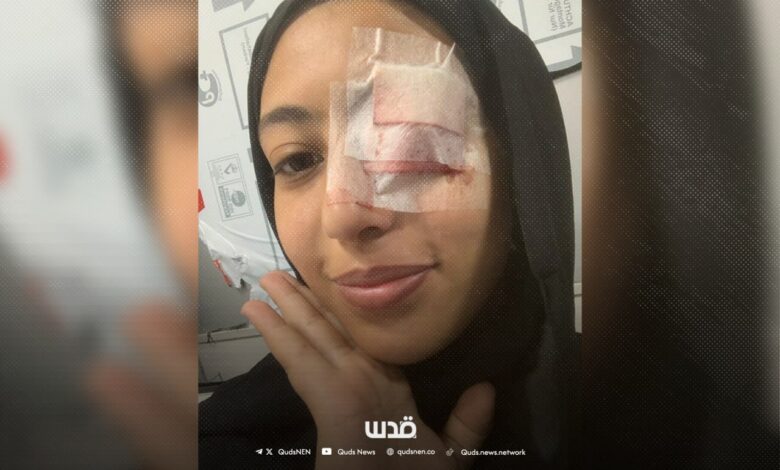
Blood covered my face. My hair was burning. The fire in my hair was the only light I could see,” Tasneem whispered, recalling the night her world collapsed.

I can’t imagine an end to this war. I can’t even define the peace of imagining what it would look like, because war has stolen everything from Gazans, even the light in their eyes.

Just months earlier, 19-year-old Tasneem was preparing for her tawjihi, Palestine’s crucial high school exams that decide a student’s future. Like thousands of other students in Gaza, she dreamed of scholarships, university, and a life beyond the blockade. Instead, she was fighting to keep her eyesight, grieving her sister and father, and carrying her schoolbooks through displacement camps.

Her story is one among thousands. According to Gaza’s Ministry of Education, 15,553 school students and 1,111 university students have been killed since the genocide began. Another 23,411 schoolchildren and 2,317 university students were injured, many left permanently disabled. For Gaza’s youth, war has not only destroyed classrooms but also their bodies and futures.

The Night That Changed Everything

It was October 10, 2023, at 2:30 a.m. in Bani Suhaila. Tasneem and her sister Hadeel stood at the window when shelling lit up the street near the Asfour station.

“Suddenly, smoke, dust, and fire blinded me,” Tasneem said. “Blood covered my face. My hair caught fire. I couldn’t see. I couldn’t breathe. My hair burning was the only light around me.”

When she looked back, she saw Hadeel lying on the floor in flames. “That moment is the hardest I’ve ever lived through,” she said through tears.

Tasneem stumbled down the stairs as flames consumed the upper floor. Shattered glass cut deep into her feet. Her leg broke when she slipped. Outside, the sky glowed red and the streets burned.

“I sat on the street with my hands on my head,” she recalled. “I just wanted this nightmare to end.”

Tasneem, after her last surgery in Gaza — blind in one eye, barely seeing with the other.

Loss Upon Loss

Tasneem thought her entire family had died. Whispering the shahada, she braced for death. But her parents were alive, and in the chaos her mother tried to comfort her. “Mama, my face is all distorted. I can’t see, only blood,” Tasneem cried. Moments later, they discovered the unbearable truth: Hadeel had been martyred.

Her injuries were severe; a burst eyeball, retinal detachment, and deep cuts that required stitches. Gaza’s hospitals, overwhelmed and starved of resources, made her wait hours before doctors could treat her.

Just three days later, tragedy struck again. Her father, Adli Baraka, was killed in another Israeli strike. “I felt like I lost all my vision and hope,” she said.

The Fight for Sight

On October 11, a private doctor warned her family that her condition was critical. Without immediate surgery, she would go blind. With Gaza’s health system collapsing, the operation was performed without anaesthesia, crude stitches to hold her eye together.

The Ministry of Health in Gaza reports that around 1,500 people have already lost their eyesight during this genocide, while another 4,000 are at risk due to shortages of medicine and equipment. UNRWA has warned of catastrophic consequences as Israel continues to block vital aid, including supplies for eye surgeries.

For Tasneem, the pain was relentless. Doctors warned her not to cry, not to stress, not to strain her eye. But how could she obey, when she had just buried her sister and father, and was living under bombardment?

Dreams Against the Rubble

On November 3, 2023, after weeks of delays, Tasneem was finally evacuated to Egypt for emergency surgery. By the time she arrived, her right eye was blind. Surgeons injected silicone oil in hopes of saving her remaining sight.

Despite advice to stay in Egypt and continue treatment, Tasneem returned to Gaza. Her younger siblings were still there, and after her father’s death, she couldn’t abandon her mother. She gave up comfort and medical care to be with her family.

Tasnim Baraka after undergoing surgery on her eye in Egypt, November 2023. Her mother took this photo as they hoped for a chance at healing after weeks of devastation.

Now she lives in a tent, suffering headaches, worsening pain, and the weakening of her other eye. And yet, she studies. Every time she fled — from Bani Suhaila, then Rafah, then Deir al-Balah — she carried her schoolbooks with her.

“The doctors told me reading could make my eyes worse,” she admitted. “But I still took my books. They are my last hope.”

Her books are not just paper and ink; they are her defiance. In a genocide that has stripped her of almost everything, they are the one dream she refuses to surrender.

The Unseen Wounds of War

The physical injuries are only part of Tasneem’s struggle. Shame keeps her indoors. “When I wear the eye patch outside, I feel so ashamed,” she said. “I’m a young girl who wants to live like other young ladies.”

Her mother, Ghada, reminds her daily that she is beautiful, no matter the scars. But emotional healing is nearly impossible in a place with no safe spaces, no medical aid, and no support for trauma survivors. Every step of Tasneem’s recovery has come not from international organizations, but from her family’s sacrifice.

A Message to the World

When I asked Tasneem what she wants now, her answer was simple:

“I wish the war would end. I want the suffering to stop. I want proper medical care for my eye and to continue my education like other girls. I don’t want to lose my eyes — I need them as a child needs something with all of its heart.”

Tasneem’s story is one of tens of thousands. Gaza’s children are not just casualties of bombs; they are being starved, blinded, and denied the chance to learn. Her voice is a reminder that these are not numbers — they are young lives, interrupted but still fighting.

“Put yourselves in our place,” Tasneem said, her one good eye filling with tears. “You couldn’t live one minute as we do.”

Quds News Network

Continue reading
Obliterating Al Zeitoun – Israel’s Appetite For Destruction Boundless

“The situation was terrifying. I clutched my daughter as we walked over shattered glass and rubble, surrounded by smoke, flames, and explosions everywhere. I ran without knowing where to go. God help us. Enough, world, enough.”

For six days, Israeli occupation forces have been razing the Zeitoun neighbourhood, southeast of Gaza City, flattening approximately 400 homes with explosive-laden robots and aerial bombardment.

This wide-scale military operation mirrors similar assaults in Rafah, Khan Younis, and northern Gaza, aimed at obliterating entire communities and forcibly displacing all who remain. These actions form part of the genocide against Palestinians in the Gaza Strip.

Launched on 11 August, the operation represents Israel’s ongoing push to assume total and unlawful control over Gaza City. The intent is to evacuate long-standing residents and up to one million displaced individuals, most having fled northern Gaza, and confine them to isolated, small areas in the south.

Drones, specifically quadcopters, are being deployed to encircle residential blocks and coerce civilians into fleeing under armed threat. Meanwhile, ground forces advance under heavy cover fire from positions near Street 8, the Dola junction, the Barasi land and the Illiyin areas. This operation has already displaced over 90,000 residents.

Field data from Euro-Med Monitor documents targeted bombings of homes belonging to the Lubbad, al-Aidi, Dader, and Irhayyem families, resulting in nine deaths within the Irhayyem household.

Air raids also hit houses near the Bilal Bin Rabah Mosque, striking the homes of the Dalloul and al-Nassan families, the Bashir Siksik Company premises, and the Kuhail, Shahd, and Siyam residential towers. An attack near Al-Farouq Mosque destroyed the home of the al-Husari family, claiming four lives.

The Israeli forces demolished dozens of homes along Street 8 and at the start of the Hassan al-Banna area. Tents housing displaced members of the Hunaideq family were also bombarded, resulting in seven deaths. Additional structures impacted include those near the University College of Applied Sciences (UCAS), the Al-Falah and Ain Jalut schools, and a charity-run shelter on Albasateen Street, killing eight more civilians. A strike on the Abu Daff family home resulted in 12 fatalities.

Artillery and air strikes continue to pound the areas of Hassan al-Banna, Al-Musalaba, UCAS, Al-Nadeem, and Almadaris Street. Civilians killed near Ain Jalut School and Badr Mosque (not to be confused with the one in Rafah) remain unrecovered due to ongoing bombardment. An airstrike also struck the Al-Huwaiti building in the Old City near Katib al-Wilaya Mosque, killing a mother and her young daughter, and even targeting nearby open ground.

In her testimony to the Euro-Med Monitor, 45-year-old Um Raid said: “We fled before dawn with the children, carrying nothing, as bullets whistled above our heads and bombs shook the ground, leaving behind what remained of our home and all we owned.”

Meanwhile, 33-year-old Mohammad D. described how he had no choice but to flee with his family after a “quadcopter drone” began firing randomly. He said, “I couldn’t even grab my children’s birth certificates. Aircraft roared overhead, armoured vehicles closed in, and I felt we would die if we stayed a minute longer.”

Another resident, 29-year-old Sahar L., who lived near the Bilal Bin Rabah Mosque, recounted, “The situation was terrifying. I clutched my daughter as we walked over shattered glass and rubble, surrounded by smoke, flames, and explosions everywhere. I ran without knowing where to go. God help us. Enough, world, enough.”

Almost half the homes in the Zeitoun neighbourhood were demolished without any documented military necessity, as no fighting had recently taken place there. The destruction was caused by the systematic use of automatic explosives and explosive-laden robots after residents had been forcibly displaced. This pattern shows the intent was not military but to erase infrastructure and force Palestinians into displacement.

The widespread destruction in Zeitoun, the largest neighbourhood in Gaza, is part of a deliberate Israeli policy: completing a campaign of genocide and erasing Palestinian urban life through the total destruction of homes, infrastructure, and access to basic livelihoods.

The international community, including the United Nations and global legal bodies, must intervene urgently to halt the massacres, protect civilians, and hold Israeli leaders accountable for these heinous crimes against the civilian population.

Israel’s ongoing attacks and territorial expansion threaten to unleash unprecedented mass slaughter in Gaza, destroying the already fragile humanitarian response and cementing a new chapter of systemic Israeli genocide. These attacks are not sudden battlefield escalations but calculated policies, and the international community, through its silence, financial backing, and political cover, bears full responsibility for the resulting crimes and tragedies.

States and organisations must exert maximum pressure on Israel to halt the crime of starvation and immediately push for the resumption of humanitarian access by ending the illegal siege of the Gaza Strip. This is the only way to stem the fast-deteriorating humanitarian crisis and ensure the entry of essential aid and supplies amid the looming threat of famine.

Safe humanitarian corridors, under UN supervision, must be established to guarantee the delivery of food, medicine, and fuel to all parts of the Strip, with independent international monitors deployed to ensure compliance. At the same time, rapid rehabilitation of Gaza’s agricultural and livestock sectors must begin as part of both emergency relief and long-term recovery efforts.

All States, individually and collectively, must fulfil their legal obligations and act urgently to stop this genocide in Gaza, taking every feasible measure to protect Palestinian civilians there. They must enforce Israel’s adherence to international law and the rulings of the International Court of Justice and hold Israel accountable for its crimes against Palestinians.

This includes, without waiver, enforcing the arrest warrants issued by the International Criminal Court for the Israeli Prime Minister and former Minister of Defence at the earliest opportunity and surrendering them to international justice, upholding the principle that no one is immune from prosecution for international crimes.

Euromed Human Rights Monitor

Continue reading
Who is With Israel in World Sports?

The refusal of international and continental sports federations to suspend Israel’s membership, 22 months after its perpetration of genocide in the Gaza Strip, constitutes a blatant violation of the values and principles they claim to uphold. It reflects a selective, double-standard application of the rules governing the participation of states, clubs, and individuals in international and continental competitions, whether official or friendly.

The International Federation of Association Football (FIFA), the Union of European Football Associations (UEFA), the International Olympic Committee, and other international federations continue to refrain from acting against Israel, despite its killing of 664 Palestinian athletes since the start of the genocide in the Gaza Strip in October 2023 and its violations of regulations and standards on human rights, peace, and non-discrimination.

Since the start of its genocide, Israel has targeted all aspects of life in the Gaza Strip, including the sports sector. According to the Palestinian Football Association, the Israeli army has destroyed 264 sports facilities, 184 completely and 81 partially.

Sports activities in the Gaza Strip have been completely suspended since October 2023 due to the widespread and systematic targeting of sports infrastructure, which has been almost entirely destroyed.

Athletes have been killed or, like most of Gaza’s population, forced to devote their time and effort to finding shelter and food, amid ongoing Israeli military attacks, repeated displacement, and starvation and blockade policies that have left the entire population food insecure and claimed the lives of approximately 220 people to date.

In July alone, the Israeli army killed 40 athletes and scouts, the vast majority in the Gaza Strip, according to the Palestine Olympic Committee.

The global influence of football associations, particularly FIFA and UEFA, places a double responsibility on them to uphold human rights principles and exclude national associations whose member states are implicated in serious crimes. It is unjustifiable for the Israeli national team to continue participating in FIFA tournaments, or for Israeli clubs to compete in UEFA tournaments, while Israel kills nearly one Palestinian athlete every day.

The continued disregard by international and continental sports federations for their own regulations, and their failure to take disciplinary action against Israel, constitutes a breach of their ethical and institutional obligations and exposes them to accountability, particularly if Israel exploits its international sporting participation to whitewash human rights violations and promote its sporting activities as a cover for atrocities committed by its army against Palestinian civilians.

The normalisation by sports federations of the participation of representatives of a state committing genocide is not only a legal violation but also an unprecedented moral failure. Allowing Israeli athletes to perform before audiences of hundreds of millions misleads the public and enables Israel to use sporting events as a powerful tool to influence global opinion.

In many cases, Israeli athletes themselves are implicated in grave violations against Palestinian civilians, with consistent estimates indicating that about 30 members of the Israeli delegation to the 2024 Paris Olympics served in the Israeli military or publicly supported the genocide in the Gaza Strip.

Although there is no official data on Israeli athletes who served in the army, Israel’s policy of compulsory conscription makes it reasonable to believe that most people of active athletic age served as reserve soldiers and may have participated in crimes committed during the genocide in the Gaza Strip, particularly given the army’s extensive and long-standing reliance on reserve forces to destroy civilians and infrastructure in the enclave.

FIFA’s regulations provide clear grounds to punish Israel. Article 3 of the FIFA Statutes states that “FIFA is committed to respecting all internationally recognised human rights and shall strive to promote the protection of these rights.” Article 16 also empowers the FIFA Council, “without a vote of the Congress, [to] temporarily suspend with immediate effect a member association that seriously violates its obligations.”

Similarly, Article 11 of the UEFA Disciplinary Regulations states that “all entities and persons subject to these regulations must respect the Laws of the Game, as well as UEFA’s Statutes, regulations, directives and decisions, and comply with the principles of ethical conduct, loyalty, integrity and sportsmanship.” Article 14 provides that “any entity or person subject to these regulations who insults the human dignity of a person or group of persons on whatever grounds, including skin colour, race, religion, ethnic origin, gender or sexual orientation, incurs a suspension lasting at least ten matches or a specified period of time, or any other appropriate sanction.”

On this basis, Israel could be punished and its clubs banned from European competitions for violating the principles of non-discrimination and integrity, engaging in conduct that conflicts with UEFA values, particularly by including clubs from illegal Israeli settlements in Palestinian territory in its league, and for the racist and discriminatory behaviour of some Israeli players.

As for the International Olympic Committee, Principle 1 of the Fundamental Principles of Olympism in the Olympic Charter states that “Olympism seeks to create a way of life based on the joy of effort, […] and respect for internationally recognised human rights.” Article 1 of the Fundamental Principles of the Olympic Code of Ethics also stipulates “respect for human dignity.” Accordingly, the Committee can punish Israel by suspending its membership for violating these and other principles.

It is unacceptable for the administrations of international and continental sports federations to submit to political pressure or favouritism, or to apply double standards in addressing human rights violations.

FIFA swiftly suspended Russia and its football clubs from official activities following its 2022 invasion of Ukraine, with UEFA following suit by banning Russian teams from European championships and prohibiting matches on Russian soil. The International Olympic Committee also acted, citing allegations of human rights violations, aggression against the sovereignty of an independent state, and the destruction of civilian infrastructure.

International and continental sports federations must take a decisive and immediate stance by suspending Israel’s membership in all sporting activities, banning events on its territory, ending its treatment as a state above the law, and imposing all disciplinary measures for the genocide it is committing in the Gaza Strip. They must also prevent Israel from using sport to whitewash gross human rights violations and normalise its illegal actions internationally.

The Israeli Football Association must be compelled to remove settlement clubs in the occupied Palestinian territory from its domestic competitions, in line with the rules of territorial jurisdiction and the non-recognition of illegal annexation.

Euro-Med Monitor calls on international and continental sports federations to form independent committees to document the destruction of sports infrastructure and the killing of Palestinian athletes, press Israel to rebuild the destroyed facilities, compensate affected athletes, and provide emergency support to Palestinian federations to ensure their continued operation through temporary headquarters, secure equipment and records, and rehabilitation programmes.

Continue reading