In the summer of 2023, the London-based Palestinian filmmaker Yousef Alhelou travelled to Gaza with a simple mission to capture the vibrant pulse of a place that has long been off-limits to the world.
What he did not know was that his footage would soon become an unintentional obituary.
The Phoenix of Gaza, a 48-minute documentary, was filmed just months before Israel launched what Alhelou now calls a “genocidal war” on the strip.
Premiered in London in February 2025, the documentary stands as a hauntingly beautiful archive of a Gaza that no longer exists.
Over a period of two years, Israel dropped more than 85,000 tonnes of bombs on Gaza, reducing the enclave to dust. Alhelou’s film now serves as an archive, a memory, and a monument.
Through his lens, we witness a Gaza that was already a “Riviera of the Middle East,” a place of joy and defiance that Israel turned into a mass graveyard.
“We refused to vanish. We refused to give up,” he says.
He shows us an authentic view of the place now touted as the “Riviera of the Middle East” in AI-generated videos.
Gaza before annihilation
Shot in July and August 2023, The Phoenix of Gaza is breathtakingly beautiful.
The film opens in London. We see him in his London apartment, packing his bags, his voice brimming with anticipation as he prepares to return to Gaza after a decade away.
He calls his mother, who showers him with prayers for safe travels, while his 10-year-old son makes a quick appearance.
“I wanted to show the world the life of Gazans, the daily life, the hustle and bustle,” he tells TRT World.
Little did Alhelou know that this footage, shot in July and August of 2023, would become a historical artefact, the last unvarnished portrait of Gaza before its annihilation at the hands of Israeli forces.
Where once there were vibrant markets, there is now rubble. Where children played, there are now craters. Photo: TRT World / Yousef Alhelou
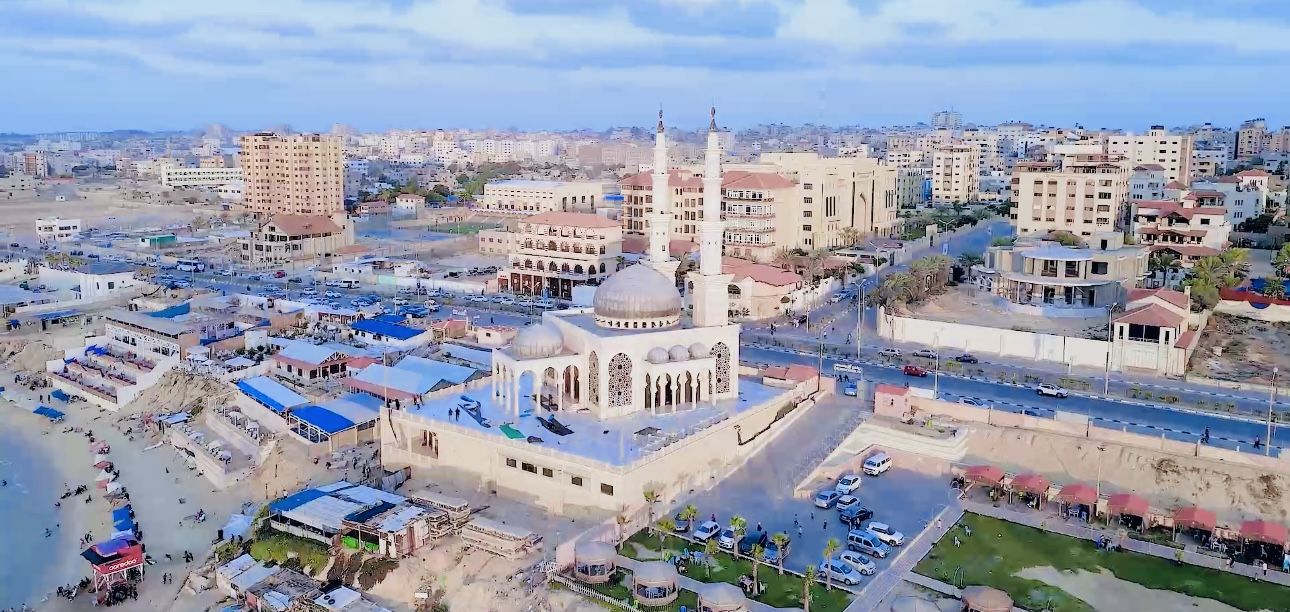
Through sweeping drone shots, we see a city that defies its 20-year siege.
Clean roads hum with smooth traffic, high-rise buildings adorned with solar panels, born of necessity after Israel bombed Gaza’s only power plant in 2006.
Greenbelts and trees dot the urban sprawl, while public parks appear full of families lounging on picnic chairs, children playing, and people strolling along the pristine Mediterranean beach.
“We managed to beautify and decorate our prison of Gaza,” Alhelou says, emphasising the resilience of a people who transformed a “high-density concentration camp” into a vibrant urban centre.
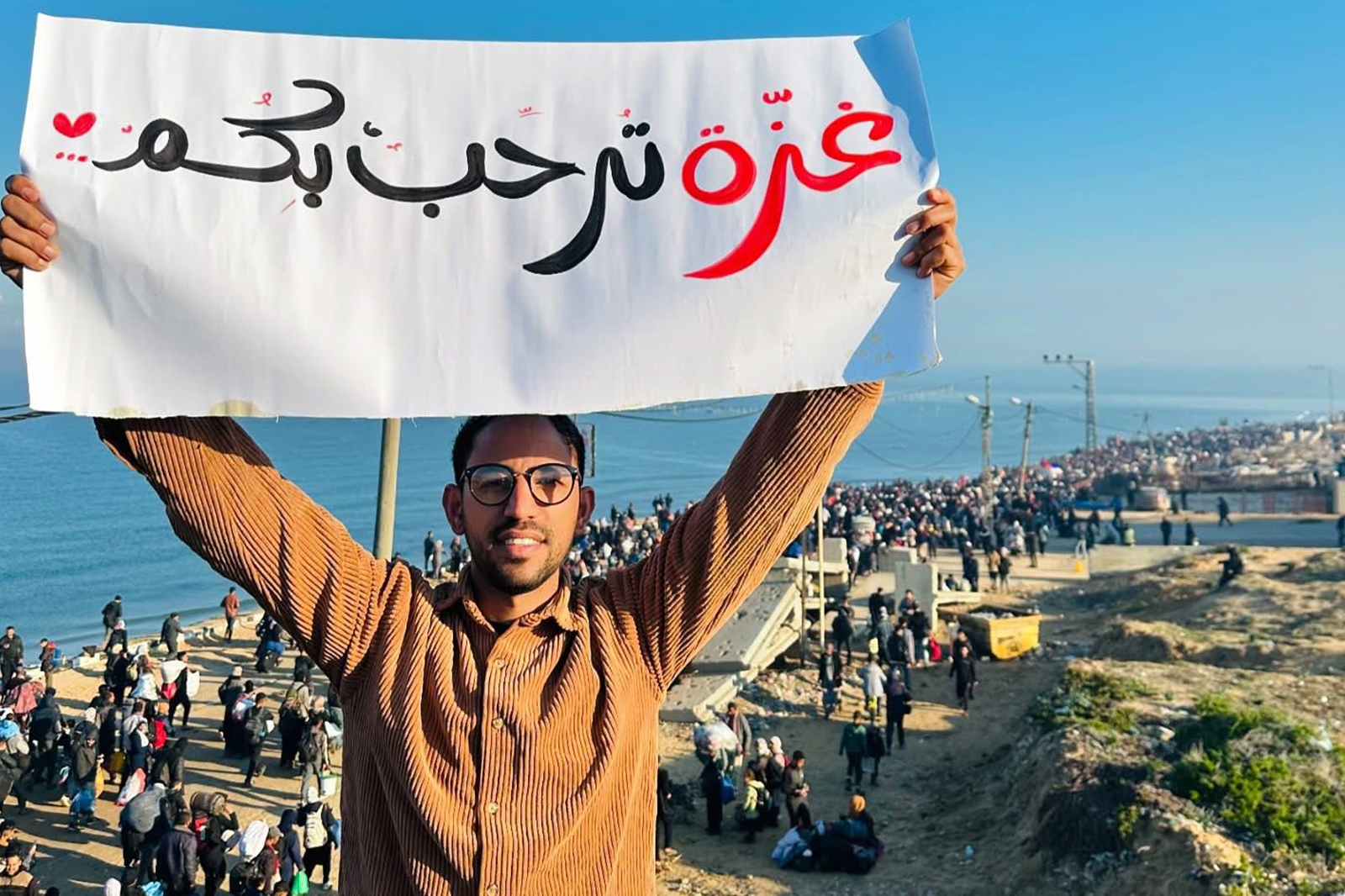
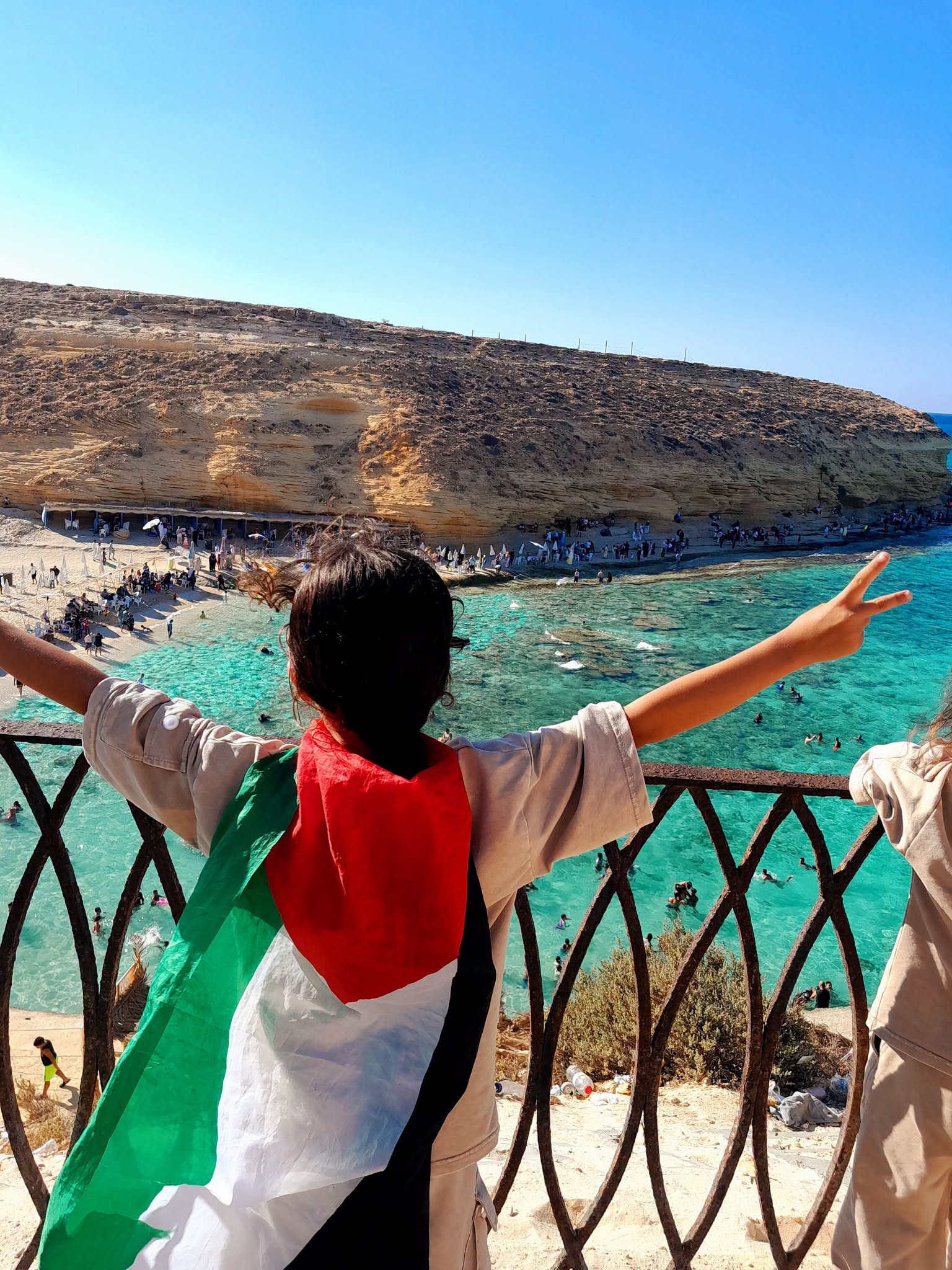
The beach is crowded, the water clear. Palestinian flags flutter as water-skiers speed by. The imagery defies the narrative of Gaza as a place of only suffering.
His approach is unpretentious: he walks through markets, parks, streets. He chats with shopkeepers, children, and the elderly.
At a public square, a phoenix statue, which is the emblem of Gaza’s municipality, stands as a symbol of rebirth, a motif that resonates throughout the documentary.
He takes us to the ancient gold market, its shopfronts full of jewellery, and the 1,400-year-old Great Omari Mosque, a UNESCO-protected site, later reduced to rubble by Israeli bombs.
On Omar al-Mukhtar Street, named after the famed Libyan anti-colonial warrior, restaurants and shops appear full of customers, scenes now unimaginable as the street currently lies in ruins.
In the Shujayyah neighbourhood of Alhelou’s childhood, children roam the same streets that he did in the 1980s, unaware that many would soon perish in Israel’s indiscriminate bombings.
He films the 700-year-old Pasha Palace, where Napoleon once slept for three nights, and the Church of Saint Porphyrius, built in 1160, both destroyed by Israeli bombs.
He explores beachside cafes and Gaza’s culinary scene by hopping to the roadside food stands. He visits the Ottoman Hamam, a space for relaxation, near the historic Jewish neighbourhood, which predated the Israeli occupation of Palestine.
The documentary highlights the educational achievements in Gaza, a place that has one of the world’s highest literacy rates on a per capita basis.
Scenes of cultural events – music, art, and a wedding ceremony – capture the “heartbeat of Gaza”, while a student appreciation ceremony celebrates young graduates with song and dance.
Even Gaza’s cemeteries tell a story. Alhelou lingers in the English cemetery, where 3,500 graves of World War I soldiers are meticulously kept, a gesture of dignity, in sharp contrast to the thousands of Palestinians now buried beneath collapsed buildings.
Elegy for family under rubble
He left Gaza in late August 2023. The war’s toll is personal.
“This genocidal war impacted me in the sense that I cannot believe that my city, the place of my birth, has been destroyed and that it’s beyond recognition,” he says.
Alhelou’s eldest sister, Asma, and her seven children were killed in Israeli strikes and are still buried under the rubble. His elderly parents and siblings remain in Gaza, fighting a daily battle for survival amid Israel-imposed starvation.
The documentary, initially intended for his Arabic-speaking followers, has taken the shape of an elegy meant “to keep the memory and the legacy of Gaza for generations to come.”
The contrast between Gaza then and now is gut-wrenching. Where once there were vibrant markets, there is now rubble. Where children played, there are now craters.
The Riviera of Gaza, which Alhelou compares to Singapore and Dubai, is gone. It has been replaced by a landscape where “there is no infrastructure, no electricity, no water, no food, no places to visit”.
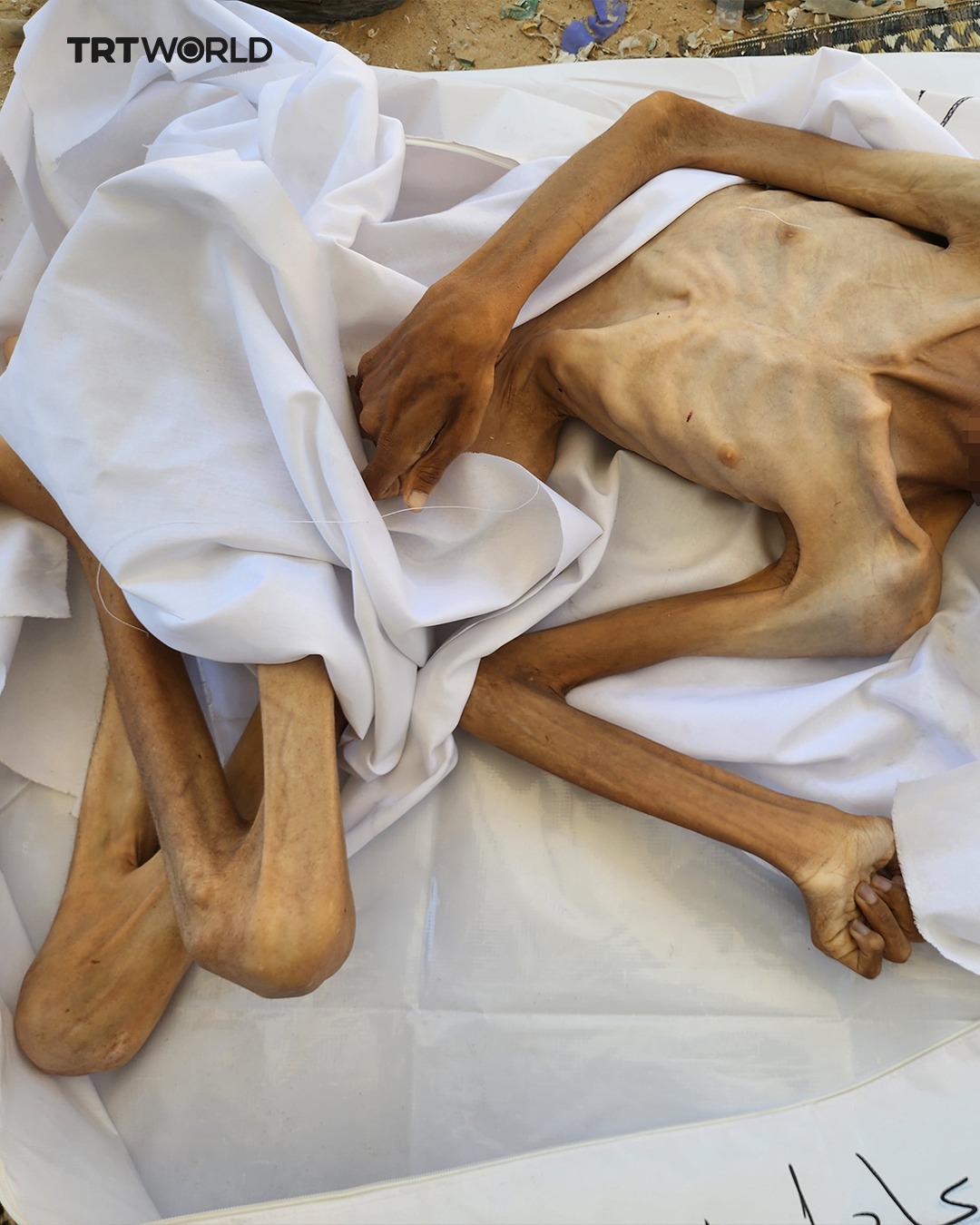
The “man-made starvation” orchestrated by Israel is particularly harrowing. “I cannot believe that we are facing starvation in the 21st century,” Alhelou says.
Any escalation in Israeli military attacks, especially ground operations in the Gaza Strip, would cause unprecedented civilian slaughter and collapse the already failing humanitarian response.
The planned escalation, if carried out, would mark an unprecedented chapter in Israel’s ongoing genocide, committed openly before an international community that continues to provide political, financial, and military cover to the perpetrators. These forthcoming crimes would be premeditated, arising not from sudden developments on the ground but from a deliberate and public policy. The international community bears full responsibility through its silence and inaction, alongside the direct complicity of numerous states.
Strong indications suggest that the Israeli government intends to escalate its genocidal campaign, culminating in the full military occupation of the Gaza Strip. Over the past week, political and military actions led by Prime Minister Benjamin Netanyahu have intensified, including discussions in closed-door meetings explicitly raising the option of a full-scale invasion and occupation. The cabinet has also begun deliberating executive measures to prepare for the operation.
Available data indicate that Prime Minister Netanyahu has approved the general framework of a plan aimed at seizing control of the entire Gaza Strip by force.
The planned military escalation violates international law, including international humanitarian law and the Genocide Convention. It follows months of forcibly confining over two million Palestinians to less than 15 per cent of the Gaza Strip, the systematic destruction of housing, the elimination of approximately 84 per cent of hospitals and health facilities, the collapse of over 95 per cent of water and sanitation systems, and the closure of all schools. This reflects a deliberate strategy of imposing coercive living conditions intended to destroy the Palestinian population in the Gaza Strip, a protected national group, within a pattern of acts that constitute the crime of genocide.
Euro-Med Monitor’s field assessment indicates that the Gaza Strip is currently undergoing the worst phase of humanitarian collapse since the onset of the genocide in October 2023. Over 90 per cent of the population has been forcibly displaced across devastated areas in repeated waves driven by relentless bombing and destruction.
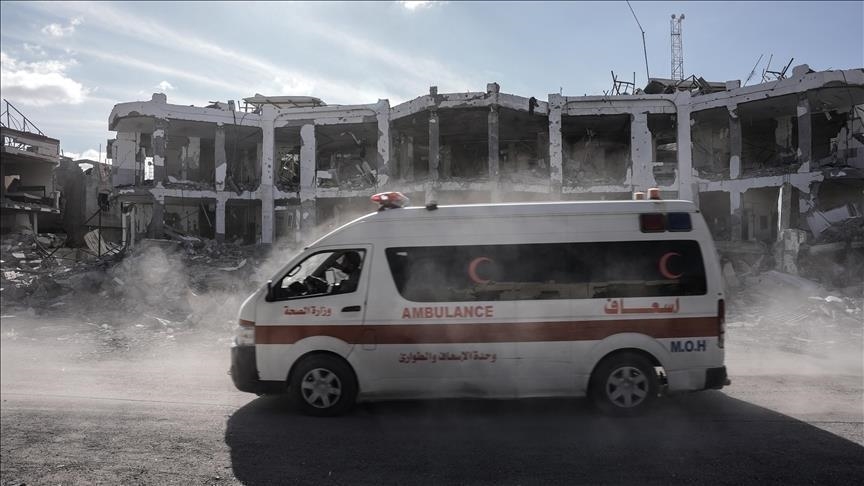
Famine has escalated to the point of claiming hundreds of lives, with the entire population now facing severe food insecurity. Meanwhile, the health system has nearly collapsed due to overwhelming pressure and the depletion of medicines and essential supplies.
Israel’s plan to further escalate military operations reflects a dangerous level of brutality and underscores the impunity it continues to enjoy. Over the past 22 months, Israeli forces have committed some of the gravest crimes against Palestinian civilians, systematically stripping them of their humanity. The Gaza Strip now faces unprecedented destruction, sustained by unconditional US political and military support and widespread international complicity that has enabled these crimes to continue without accountability.
The Gaza Strip is now the most densely populated area on Earth, with nearly 2.3 million people forced into no more than 55 square kilometres, lacking infrastructure or any form of protection.
Any ground assault would inevitably result in unprecedented human casualties, particularly among women and children, who often make up over 70 per cent of the victims of Israeli attacks. This would amount to mass killing in a confined space from which civilians have no means of escape.
Since 26 July, Israel has pursued a deceptive scheme, falsely claiming improvements in the humanitarian situation in Gaza while in reality maintaining the blockade and starving the population.
Incoming aid meets less than 15 per cent of basic needs. This superficial increase is intended to appease global public opinion and reduce pressure over the unfolding famine. The greater danger lies in using this as a cover to escalate the genocide and consolidate military control over the Strip. This includes forcing civilians into detention and deportation camps in preparation for their displacement, while reshaping Gaza’s geography and demography to serve the Israeli colonial-settler project in the occupied Palestinian territory.
The involvement of several states in pro forma measures, such as increasing aid airdrops without addressing the root causes of starvation and blockade, risks providing false political or humanitarian cover for policies aimed at the destruction of the Gaza Strip and its population. An immediate review of these states’ responsibilities is essential, along with concrete measures to ensure their contributions are not used to legitimise or conceal genocidal policies. They must take urgent action to halt ongoing crimes and uphold their obligations under international law.
States must urgently push for the restoration of humanitarian access and the lifting of the illegal blockade, as this is the only way to stop the accelerating humanitarian deterioration and ensure the entry of aid, given the imminent threat of famine.
The establishment of safe humanitarian corridors under UN supervision is vital to ensure the delivery of food, medicine, and fuel to all areas of the Gaza Strip, with the deployment of independent international monitors to verify compliance and ensure the rapid rehabilitation of the agricultural and livestock sectors as part of both emergency relief efforts and long-term recovery.
All states, individually and collectively, must urgently fulfil their legal obligations to halt the genocide in the Gaza Strip in all its forms. This includes taking concrete measures to protect Palestinian civilians in the enclave, ensure Israel’s compliance with international law and the International Court of Justice rulings, and guarantee full accountability for crimes committed against Palestinians. Euro-Med Monitor also calls for the enforcement of the International Criminal Court arrest warrants issued for the Israeli Prime Minister and former Defence Minister, and for their swift surrender to international justice without regard to immunity.
The international community is urged to impose economic, diplomatic, and military sanctions on Israel and its more powerful allies, particularly the United States, for their grave and systematic breaches of international law; these sanctions should include comprehensive arms embargoes and the suspension of all forms of political, financial, military, and intelligence cooperation. In addition, Euro-Med Monitor calls for freezing the assets of responsible Israeli, US, and any complicit EU officials, banning their travel, halting their military and security companies’ access to international markets, and suspending trade privileges and bilateral agreements that facilitate Israel’s ongoing Western-backed crimes against the Palestinian people.
Countries with universal jurisdiction courts must issue arrest warrants for Israeli political and military leaders involved in the ongoing genocide and initiate legal proceedings to fulfil their international legal obligation to prosecute serious crimes and combat impunity. They must also hold accountable their citizens found to have committed violations against Palestinians, in line with their national and international legal obligations and within their territorial or personal jurisdiction.
Furthermore, the International Criminal Court (ICC) must expedite its investigation into crimes committed in the Gaza Strip, broaden its scope to include genocide and forced displacement, and issue additional arrest warrants for Israeli officials involved in these crimes. States Parties to the Rome Statute must fulfil their legal obligations by executing ICC arrest warrants without delay, thereby upholding international justice and ensuring accountability for grave crimes against victims.
No doubt you’ve noticed. There are rational men and women engaged in the mainstream media of the Western world who still allow eroded figures of speech to inhabit their common parlance when they write about the deranged horrors in Gaza, as if what is happening there is a “war,” typically an open and often prolonged, garden variety military conflict between the armed forces of two nations or groups.
What we are in reality witnessing in that tormented, 142-square-mile strip of land — once described as an open-air prison camp but now as an open-air death camp — is clearly not a war but the most anguishing humanitarian catastrophe of the 21st century, one that challenges the shared sense of morality inherent in our global dialogue of cultures.
We need not describe these horrors inflicted on the 2.3 million souls who “live” – yes, this word needs to be enclosed in quotation marks – in Gaza, a people now hunted beyond all human endurance.
We know these horrors already. We’ve read about them. We’ve watched them on our screens. And they have shocked us to the core of our humanity.
Two worlds
The enclave we call Gaza is today a wasteland whose destruction has been Carthaginian in scale, where starved Palestinians are neither dead nor alive. They and their skeletal children have been ghoulishly described as “walking corpses.”
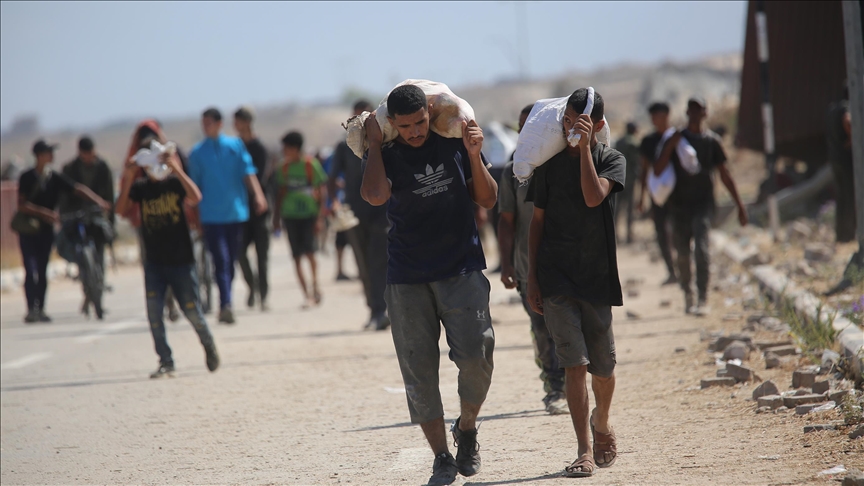
You see them at dangerous food distribution centres where trigger-happy Israeli soldiers gratuitously kill dozens of them daily, and where their humanity is so reduced to a fragment that they are willing to die for a bag of rice, a quart of milk, a jerrycan of water.
Yet, a few kilometres away, across the border, supermarkets are loaded with food and people go about their quotidian lives. Walking their streets. Drinking their coffee. Watching their films. Reading their Torahs. Visiting their dentists. Hugging their children. Listening to music. And making love.
Surely, these are two orders of reality whose spatial and temporal coexistence the mind baulks at reconciling and the imagination recoils at envisioning.
Questions crowd upon us.
What justification do those who deny children access to food have for preventing them from meeting their basic needs? What propels the need in one people to calculatedly inflict such repeated, unspeakable savagery on another?
And what drives the seemingly normal Israelis to give such a massive echo of approval to the racist bellowing of their political and military leaders, instead of turning away from it in nauseated disbelief, thus reducing whatever there is in them of the human and restoring what there is of the beast? (It is a sad fact that progressive Israelis have always failed to insinuate into, let alone impose on society, the humane rigour inherent in their beliefs.)
Writers, like other laymen, would do well to abstain from taking part in a debate such as this that the therapeutic community considers its own. But reasons there must be, albeit dark and disquieting ones.
Blinkered world
One thing is plain. Gaza is burning. Its analogue is hell. So, why has the global conscience not compelled the powers that be to intervene and put an end to the genocide in Gaza, an end to the immeasurable agonies of its people? And if not now, when?
Very simply this: The US, the self-styled “leader of the free world” and putative “maker and shaker” of international affairs, insists on maintaining its long-held, notoriously right-or-wrong support of Israel.
So much so, it has repeatedly used its veto power to sabotage any efforts by other members of the UN Security Council to end the mayhem in the besieged enclave.
And governments elsewhere in the Western world have opted to become mere onlookers of that mayhem, that is, where they are not closet backers of it.
Yet, that is not the end of that. That global conscience has already become something to reckon with, having progressively morphed into – to paraphrase Japanese Admiral Isoroku Yamamato’s famous observation about Japan’s assault on Pearl Harbour — a sleeping giant, now awakened and filled with potent resolve.
True, the silence with which the Western world has met the horrors in Gaza may have raised serious doubts about the gravitas attributed to the foundational values of Western liberalism, showing them as a sham.
But the majority in that same world have now bravely taken a stand against their governments, seeing it not just as a moral imperative but also as a means to speak truth to power.
And by adopting that posture, they in effect tell themselves, each other and the world at large that human beings are complicit in that which leaves them indifferent, for by not speaking up, they are indirectly giving their approval to the prevailing order.
Let no one be in doubt that these folks’ voices have been heard.
Their voices have resonated, loudly, clearly, and impactfully, even in the US, traditionally the heartland where support of Israel was once robotic. Indeed, signs of that shift are already evident in public surveys, including the most recent Pew poll.
Yes, more than 18,500 children have so far been killed by Israel in Gaza, a little strip of land now reduced to being a place where the dead reach out to drag the living into the abyss of their mass graves, as a final act of mercy in a place where living has lost all meaning.
As for us Palestinians who, by a trick of fate, are “here,” fed beyond our need, safe in our beds and in our streets and protected against disorder in our daily lives, what is happening “there”, in that parcel of hell, remains indivisible to our identity and will remain tattooed, in indelible ink. It is etched in our collective memory and will remain with us for generations.
And our history books will tell that no child slaughtered in Gaza was ever forgotten, no brutality committed there was ever forgiven.
Fawaz Turki was born in Haifa in 1940. He fled with his family to Lebanon following the 1948 Nakba. He is a Palestinian-American journalist, lecturer and author based in Washington, DC. His publications include the autobiography The Disinherited: Journey of Palestinian Exile (1972), Soul in Exile (New York, 1988) and Exile’s Return: The Making of a Palestinian-American (New York, 1995). TRT World.
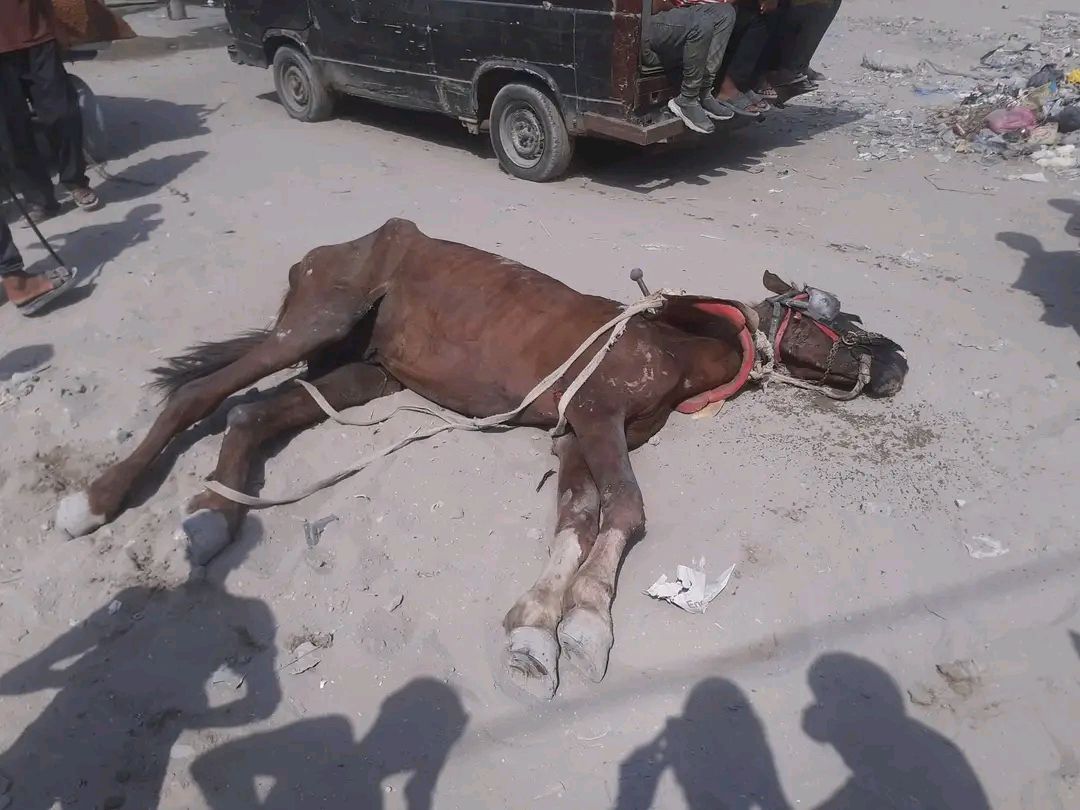
Israel has destroyed nearly all animal wealth in the Gaza Strip, approximately 97 per cent, through bombing and systematic starvation, including working animals that served as the last means of transport amid fuel shortages and limited public mobility.
The destruction of animal wealth coincides with the bulldozing of thousands of acres of farmland as part of a deliberate policy to starve the population, destroy food sources, and inflict severe physical and psychological suffering, all of which are fundamental components of the ongoing crime of genocide against Palestinians in the Gaza Strip.
Through the deliberate imposition of unsustainable living conditions leading to physical destruction, Israeli policies reflect a systematic and ongoing pattern of genocide. This is carried out through the destruction of food sources, livestock, and agricultural production, alongside widespread killings, an illegal blockade on the Gaza Strip, and the deliberate restriction of food supplies for nearly two years. These acts constitute a grave violation of international law and demonstrate a clear intent to destroy the Palestinian population as a protected group under the Genocide Convention.
https://www.facebook.com/share/r/16uDd4Rxfj
More than 97 per cent of sheep and goats were destroyed, either through direct killing or death caused by genocidal conditions
Before Israel’s genocide in the Gaza Strip in October 2023, the enclave had around 6,500 poultry farms that supplied about three million chickens to the local market each month. Now, 666 days later, over 93 per cent of these farms have been completely destroyed, and the few remaining have ceased operations entirely.
Euro-Med Monitor’s field team documented the deaths of tens of thousands of birds, either due to direct bombing or the lack of feed and water, in one of the largest systematic assaults on white meat production.
According to data collected by the field team, the Gaza Strip had approximately 15,000 cows before the genocide. More than 97 per cent were killed, either by direct bombing or starvation, while a limited number were slaughtered for food in the early months due to the lack of alternatives.
Regarding livestock, including sheep and goats, estimates indicate that the Gaza Strip had around 60,000 sheep and 10,000 goats before the genocide. Current data shows that more than 97 per cent were destroyed, either through direct killing or death caused by genocidal conditions, as part of the systematic targeting of food sources and livelihoods.
Estimates prior to the genocide indicated that the Gaza Strip had approximately 20,000 donkeys, along with several horses and mules used as working animals. By August 2024, around 43 per cent of these animals had died, while more recent data shows that no more than 6 per cent remain, reflecting a near-total collapse of this vital sector.
Donkeys and mules have become the main mode of transport in the Gaza Strip, used to carry people, aid, the injured, and even corpses, amid the destruction of roads and vehicles and the complete breakdown of transportation due to fuel shortages. Despite growing reliance on them, most of these animals have died, while the rest are so exhausted by bombing, starvation, and severe fodder shortages that they can no longer move or perform any tasks.
Reports by Israeli Channel Kan 11 revealed that the Israeli army gathered hundreds of donkeys from across the Gaza Strip during military operations, transferred them to a farm run by the non-profit Starting Over Sanctuary, and then sent them to animal shelters in France and Belgium under the pretext of rescuing “animals in distress”. This is not only misleading propaganda designed to mask the reality of genocide, but also a blatant act of looting and part of a systematic policy to dismantle the foundations of life in the Gaza Strip by seizing the last remaining means of survival under blockade and destruction.
Depicting such acts as humanitarian while all forms of life in Gaza have been systematically wiped out over the past 22 months is nothing more than a deceptive ploy aimed at manipulating global public opinion.
Israel’s extermination of animal wealth is part of a systematic policy to enforce starvation and dismantle the foundations of survival. The ongoing military attacks have had catastrophic impacts on public health, the environment, agricultural land, and the quality of water, soil, and air, contributing to a deepening environmental collapse.
These impacts do not occur instantly but accumulate and intensify over time, eventually reaching a tipping point that can trigger sudden and alarming surges in the death toll. This is already evident in the daily deaths from hunger and malnutrition, with clear indications that the numbers will rise sharply unless the blockade is lifted and basic necessities are restored.
Access to food, in all its variations, and water is a fundamental human right essential to preserving health and dignity. This right can only be upheld by ending the genocide, lifting the blockade as a form of collective punishment and a war crime, and urgently salvaging what remains of the Gaza Strip, now rendered uninhabitable. Each day of delay risks pushing the enclave past the point of no return, at a grave cost to civilian lives and health.
States must urgently push for the restoration of humanitarian access and the lifting of the illegal blockade, as this is the only way to stop the accelerating humanitarian deterioration and ensure the entry of aid, given the imminent threat of famine.
The establishment of safe humanitarian corridors under UN supervision is vital to ensure the delivery of food, medicine, and fuel to all areas of the Gaza Strip, with the deployment of independent international monitors to verify compliance and ensure the rapid rehabilitation of the agricultural and livestock sectors as part of both emergency relief efforts and long-term recovery.
All states, individually and collectively, must urgently fulfil their legal obligations to halt the genocide in the Gaza Strip in all its forms. This includes taking concrete measures to protect Palestinian civilians in the enclave, ensure Israel’s compliance with international law and the International Court of Justice rulings, and guarantee full accountability for crimes committed against Palestinians. Euro-Med Monitor also calls for the enforcement of the International Criminal Court arrest warrants issued for the Israeli Prime Minister and former Defence Minister, and for their swift surrender to international justice without regard to immunity.
The international community is urged to impose economic, diplomatic, and military sanctions on Israel and its more powerful allies, particularly the United States, for their grave and systematic breaches of international law; these sanctions should include comprehensive arms embargoes and the suspension of all forms of political, financial, military, and intelligence cooperation. In addition, Euro-Med Monitor calls for freezing the assets of responsible Israeli, US, and any complicit EU officials, banning their travel, halting their military and security companies’ access to international markets, and suspending trade privileges and bilateral agreements that facilitate Israel’s ongoing Western-backed crimes against the Palestinian people.
Israeli forces at the sites of a new US-backed aid distribution system in Gaza have routinely opened fire on starving Palestinian civilians in acts that amount to serious violations of international law and war crimes, Human Rights Watch said Friday.
Mass casualty incidents have taken place on a near-daily basis at or near the four sites operated by the Gaza Humanitarian Foundation (GHF), which operates in coordination with the Israeli military. At least 859 Palestinians have been killed while attempting to obtain aid at GHF sites between May 27 and July 31, 2025, most by the Israeli military, according to the United Nations. The dire humanitarian situation is a direct result of Israel’s use of starvation of civilians as a weapon of war—a war crime —as well as Israel’s continued intentional deprivation of aid and basic services, ongoing actions that amount to the crime against humanity of extermination, and acts of genocide.
“Israeli forces are not only deliberately starving Palestinian civilians, but they are now gunning them down almost every day as they desperately seek food for their families,” said Belkis Wille, associate crisis and conflict director at Human Rights Watch. “US-backed Israeli forces and private contractors have put in place a flawed, militarized aid distribution system that has turned aid distributions into regular bloodbaths.”
States should press Israeli authorities to immediately stop using lethal force as a method of crowd control against Palestinian civilians, lift unlawful sweeping restrictions on the entry of aid, and suspend this flawed distribution system, Human Rights Watch said. Instead, the UN and other humanitarian organizations should be permitted to resume aid distributions across Gaza at scale and without restrictions, as they have proven able to feed the population in line with humanitarian standards and as required by binding rulings by the International Court of Justice in South Africa’s genocide case against Israel.
In May, after more than 11 weeks of an Israeli-imposed total blockade on Gaza, the GHF distribution mechanism began operating. The aim of the Israeli authorities was reportedly to ultimately replace humanitarian aid delivery by the UN and other aid organizations.
Israeli authorities justified these moves by claiming Hamas diverted aid, but New York Times reporting, based on Israeli military sources, indicates that the Israeli military does not have evidence that Hamas systematically diverted aid from the UN. The UN-led system remains operational, but is subject to significant restrictions by Israeli authorities, including how much and what type of aid is allowed in and where it can go.
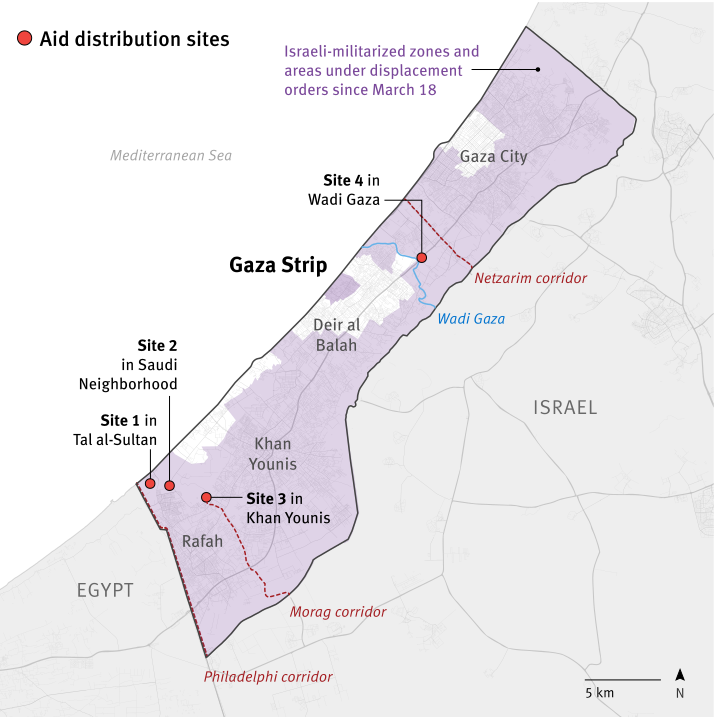
The GHF system is run by two US private subcontracted companies: Safe Reach Solutions (SRS) and UG Solutions, in coordination with the Israeli military. The companies have said they are “committed only to delivering food to suffering civilians” and are independent of any government, but all four distribution sites are within militarized areas. Three sites are in Rafah, which Israeli authorities have largely razed to the ground and where they have proposed to concentrate Gaza’s population. One is in the ethnically cleansed Israeli security zone known as the Netzarim Corridor, which cuts Gaza in half. None of the sites are accessible to people in northern Gaza, who are instead reliant on the UN-led distribution system.
In July, Human Rights Watch interviewed 10 people who were on the ground in Gaza in recent months and witnessed violence at or near aid sites, or who treated those injured and killed at the sites. Those interviewed included Anthony Bailey Aguilar, a retired US Army Special Forces lieutenant colonel, who worked in Gaza as a security contractor for UG Solutions, including in the control centers and at dozens of distributions at all four distribution sites between May and June; a foreign humanitarian worker who worked in Gaza in June; two foreign doctors who worked in Gaza in May, June, and July and treated civilians who were injured at or near GHF aid distribution sites; and six Palestinian witnesses to violent incidents related to the distributions. Researchers also analyzed satellite imagery at different spatial resolutions, verified videos and photographs including content taken by Aguilar, analyzed document metadata, and reviewed social media posts by GHF.
Human Rights Watch sent letters to GHF, SRS, UG Solutions, the Israeli military, and the US government on July 19 with a summary of findings and list of questions. The Israeli military, UG Solutions, counsel for UG Solutions, and counsel for GHF/SRS responded and their overall responses are reflected below.
The four GHF distribution sites were selected and constructed by the Israeli military, counsel for GHF said to Human Rights Watch. Through satellite imagery, researchers confirmed that the sites are in militarized zones, surrounded by military outposts. Counsel for GHF said it hired SRS to run the distribution sites, which in turn hired UG Solutions to provide security at the sites.
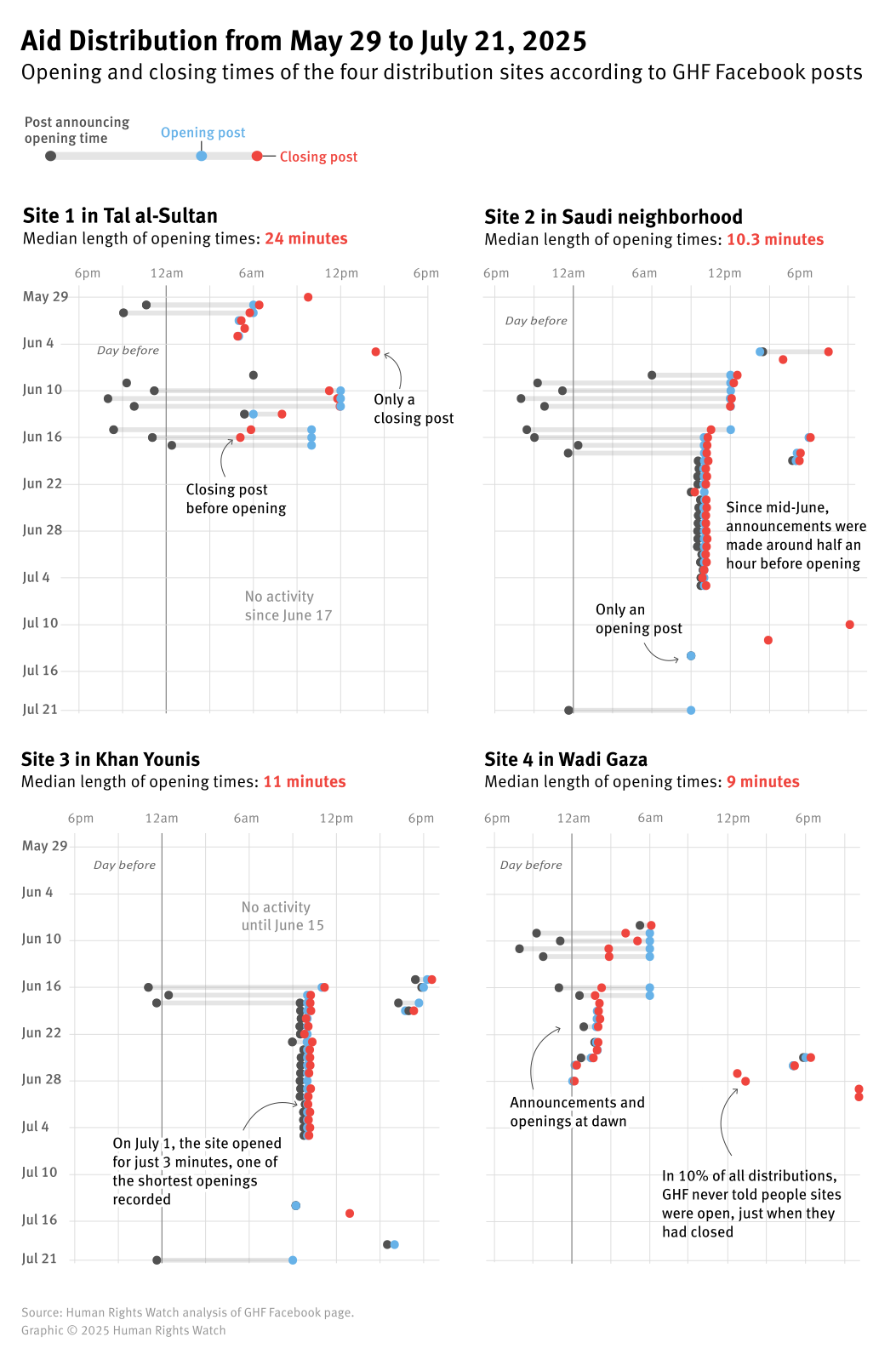
Rather than delivering food to people at hundreds of accessible sites throughout Gaza, the new mechanism requires Palestinians to trek across dangerous and destroyed terrain. According to five witnesses, Israeli forces control the movement of Palestinians to the sites through the use of live ammunition. Inside the sites, the distribution of aid itself is an uncontrolled “free-for-all,” as Aguilar described it, that often leaves the most vulnerable and weakest people with nothing. Human Rights Watch analyzed announcements made on GHF’s Facebook page of 105 distributions across the 4 sites and found that 54 distribution windows were under 20 minutes long and 20 distributions were announced as finished before their official opening time had begun.
One Palestinian man told Human Rights Watch that he left his home at about 9 p.m., trying to reach a site that was due to open at 9 a.m. the next day. On the way, he said, an Israeli tank opened fire on him and others as they were walking towards the site: “If you stopped walking, or did anything they didn’t want, they fired at you.” In a separate incident, Aguilar said he witnessed an Israeli tank fire on a civilian vehicle just outside Site 4, which he believed killed four people inside, on June 8. Another contractor who spoke to ITV News described the same attack on the car.
Another Palestinian man who went to one of the aid sites described the difficult and risky journey: “So many people who need aid are not getting it because they are not able to make it all the way there. Those who do go are taking their luck into their own hands, and it’s remarkable if they come back alive.”
According to seven witnesses interviewed by Human Rights Watch, Israeli forces regularly fired on civilians. Three Palestinian witnesses and Aguilar also claimed they witnessed armed guards within the GHF sites using live fire and other weapons against civilians during aid distributions. These armed guards would apparently be UG Solutions contractors, given that the letter from the counsel of GHF and SRS confirmed that the only contractors with weapons inside the distribution sites are from UG Solutions. GHF, SRS, and UG Solutions have denied the allegations that their contractors used force against civilians and stated that UG Solutions personnel only use deadly force as a last resort and have never harmed civilians or aid seekers.
The aid mechanism has failed to address mass starvation in Gaza, Human Rights Watch said. Counsel for GHF said they have delivered 95 million meals in Gaza, as of July 28. However, even at full capacity at the four sites, the GHF scheme is only capable of providing about 60 trucks of food per day, according to Aguilar, as compared to the 600 trucks per day that entered Gaza under the UN-led aid scheme during the ceasefire in early 2025.
On July 29, the world’s foremost experts on food insecurity, the Integrated Phase Classification (IPC), said that the “worst-case scenario of famine is currently playing out in the Gaza Strip.” Gaza’s Ministry of Health reported that, as of July 30, 154 people, including 89 children, have died due to malnutrition since October 7, 2023, the majority of whom since July 19. On July 27, the Israeli military announced it would resume airdrops, designate secure routes for the entry of aid, and implement “humanitarian pauses” in populated areas to facilitate aid.
International humanitarian law, or the laws of war, applicable to the hostilities between Israeli forces and Palestinian armed groups, require parties at all times to distinguish between civilians and combatants. Attacks may only be directed against military objectives, and attacks that target civilians and civilian objects, or are indiscriminate, are prohibited. International human rights law, which also applies in Gaza, prohibits the intentional lethal use of firearms by law enforcement officials except when “strictly unavoidable to protect life.” These standards also apply to private security personnel exercising police powers.
Under both bodies of law, authorities may take measures to ensure aid delivery, but the use of lethal force against civilians is strictly limited. For example, if civilians had moved off a route designated by the Israeli armed forces, that would not, in itself, make them targets who could be lawfully attacked. Nor would such a situation justify the intentional use of lethal force by policing authorities as “strictly unavoidable in order to protect life.” The willful unlawful killing of civilian members of the occupied population is a war crime.
The repeated use of lethal force against Palestinian civilians by Israeli forces, without justification, violates both international humanitarian and human rights law. Human Rights Watch is not aware of any evidence in the cases documented that those killed represented an imminent threat to life at the time they were killed. The intentional use of lethal force by those exercising policing powers without lawful justification also violates human rights law. Regular killings by Israeli forces near GHF sites also amount to war crimes, given all the evidence indicating that these are deliberate, targeted killings of persons the Israeli authorities would know would be Palestinian civilians.
On June 26, one month after SRS started distributing aid at the sites, the US government announced it was allocating US$30 million to GHF. The source of funding for GHF’s first month of distributions remains unknown; in its letter to Human Rights Watch, counsel for GHF said it “received $100 million from a government other than the United States or Israel,” without specifying the government.
The Trump administration sent the allocation by circumventing congressional approvals. The United States is complicit in Israeli violations of the laws of war in Gaza, given its provision of substantial military aid despite knowledge of the continuing grave violations.
The US Congress should also be requiring notifications on any additional funding destined for GHF and demand a report on how US funds are being used currently, including an assessment of the effectiveness of the aid for starving Palestinians.
Pursuant to their obligations under the Genocide Convention, states should use all forms of their leverage, including targeted sanctions, an arms embargo and suspension of preferential trade agreements, to stop Israeli authorities’ ongoing atrocity crimes.
“It is indefensible that, instead of using its significant leverage to press Israel to end its ongoing acts of genocide, the US is backing and even funding a deadly mechanism that is resulting in Israeli forces killing starving Palestinian civilians as a method of crowd control,” Wille said. “States should urgently act to stop the extermination of Palestinians.”
Israeli Killings of Palestinians Seeking Food Aid
According to the UN, at least 1,373 Palestinians were killed as they tried to access food between May 27 and July 31, 2025, most by the Israeli military, including 859 who were in the vicinity of GHF sites.
Dr. Victoria Rose, a British doctor who worked at a large hospital in Gaza in May and June, said that on June 1 staff were alerted that there had been mass casualties at Site 1 that morning. She said throughout May, she had not seen any patients with gunshot wounds, only blast injuries. However, on that day, she said over 100 people—mostly men but also some women and teenage boys—were brought into the hospital with gunshot injuries. Two of the men she treated had been shot in the back of their legs. “Already by the late morning there were over 10 bodies piled up against one side of the emergency room,” she said. According to the Gaza’s Ministry of Health, 31 died that day.
Dr. Nick Maynard, another British doctor working at the same hospital in Gaza in June and July, echoed that there has been an uptick in gunshot injuries with the increased distributions via the GHF mechanism. Individuals who sustained injuries at or near distribution sites were mostly teenage boys with gunshot injuries in the abdomen, neck, head, or groin area, he said.
Humanitarian organizations on the ground have documented similar trends. Doctors Without Borders noted “a stark increase in the number of patients with gunshot wounds” at the time of the expansion of GHF aid distributions. The International Committee of the Red Cross (ICRC) on July 8 highlighted a similar “sharp surge in mass casualty incidents linked to aid distribution sites,” saying the organization’s medical team treated “over 2,200 weapon-wounded patients” and logged more than 200 deaths, “a scale and frequency … without precedent.” After the mass casualty event on June 1, the ICRC noted that “all patients said they had been trying to reach an aid distribution site.”
The Israeli military has largely responded to questions about killings of Palestinians seeking aid by saying they fired on people they viewed as a “threat,” or when crowds moved in a way that “threatened the forces,” or that they were merely firing “warning shots.” Based on accounts from Israeli officers and soldiers, the Israeli newspaper Haaretz reported that soldiers were “ordered to fire at unarmed crowds near food distribution points in Gaza, even when no threat was present,” something Anthony Bailey Aguilar alleges he witnessed on numerous occasions. Aguilar told Human Rights Watch that he was monitoring a distribution at Site 4 in a control room along with a senior Israeli commander, who told Aguilar to give the order to contractors to shoot three unarmed children who an adult had lifted up onto a Hesco barrier (a large, collapsible wire mesh container lined with a heavy-duty fabric and filled with sand, dirt, or gravel to create a solid wall) to avoid being crushed or trampled by the crowd. When he refused to give the order, the commander replied, “Tell your men to shoot them now or we will shoot them,” Aguilar said. In the end, he said, no shooting occurred on that occasion because the children got down on their own.
In its letter to Human Rights Watch, the Israeli military said it conducted “in-depth examinations” of “reports of civilians casualties near distribution sites” and that “incidents are under review by the authorized bodies,” but it did not provide any further details. Israel’s internal law enforcement system has long been recognized by human rights monitors as a “whitewash mechanism.”
UG Solutions also said in its July 29 letter that Aguilar could not have witnessed Israeli military abuses, since “he did not leave the static distribution site during operations and would not have had a line of sight to IDF assets beyond the high berms protecting the sites.” Human Rights Watch, though, reviewed multiple videos in which UG Solutions’ contractors were positioned on top of high berms with a line of sight into areas where Israeli forces operated and verified a video taken by Aguilar on June 8 of an Israeli tank next to Site 4.
Accounts from Aid Seekers at Distribution Sites
An aid seeker who has a disability told Human Rights Watch he walked for 12 hours to a GHF distribution site in Rafah in early June for a distribution that began at 2 a.m. He said Israeli forces made him and tens of thousands of others who arrived at the site early wait outside for several hours. He and many others decided to lie down in a pit in the ground until the site opened to avoid being shot by Israeli forces. He said Israeli military tanks were posted in the area and at the site entrance. He said he saw a tank shell hit a young man in the head when the tanks opened fire on the crowd, apparently to keep people from approaching before the site officially opened. He believes the man died.
The aid seeker was able to go inside and pick up some food on that occasion, but the next time, he said:
The smarter and stronger ones got to the aid first. Some people were crushed by the crowd. Within an hour, all the aid was gone, and tanks came back with a quadcopter flying in the sky. I rushed away as fast as I could empty-handed. Someone like me with a disability couldn’t do much. We call this death aid.
Aguilar also highlighted how the GHF aid distribution method disadvantaged those who could not run quickly and push through crowds to get aid, noting that “others, particularly older people, women and children, were sifting through the dirt for scraps like individual beans.”
Another man who went to the distribution sites twice in June said the first time, when he was at the front of the line waiting for Israeli forces to let people into the site, he witnessed Israeli military tanks firing into the crowd, killing at least one man near him in the front. Once allowed into the site, he was able to get some aid. The second time, he waited further back, and as a result was unable to get any aid by the time he entered the site. He witnessed multiple quadcopter drones drop stun grenades onto the crowd on that occasion as well, he said.
Gaza Humanitarian Foundation Operations
The GHF aid mechanism was reportedly designed by about a dozen Israeli reservists and businessmen who began meeting as early as December 2023 in an effort to sideline the UN, according to the Wall Street Journal, citing people who said they took part in the discussions. Aguilar said he and the other contractors entered Israel on B2 tourist visas: “We were just tourists with guns. It was absurd.” Aguilar shared pictures of the visa and the tax invoice he received with Human Rights Watch.
Before the distributions, SRS staff put out boxes and then open the sites, after which Palestinians rush in and grab what they can and leave. According to Aguilar and other witnesses, this distribution system lacks registration, vetting, tracking, or equitable distribution mechanisms.
“There is no oversight of who gets the aid; it’s a free-for-all. People take multiple boxes, and many leave with nothing,” Aguilar said.
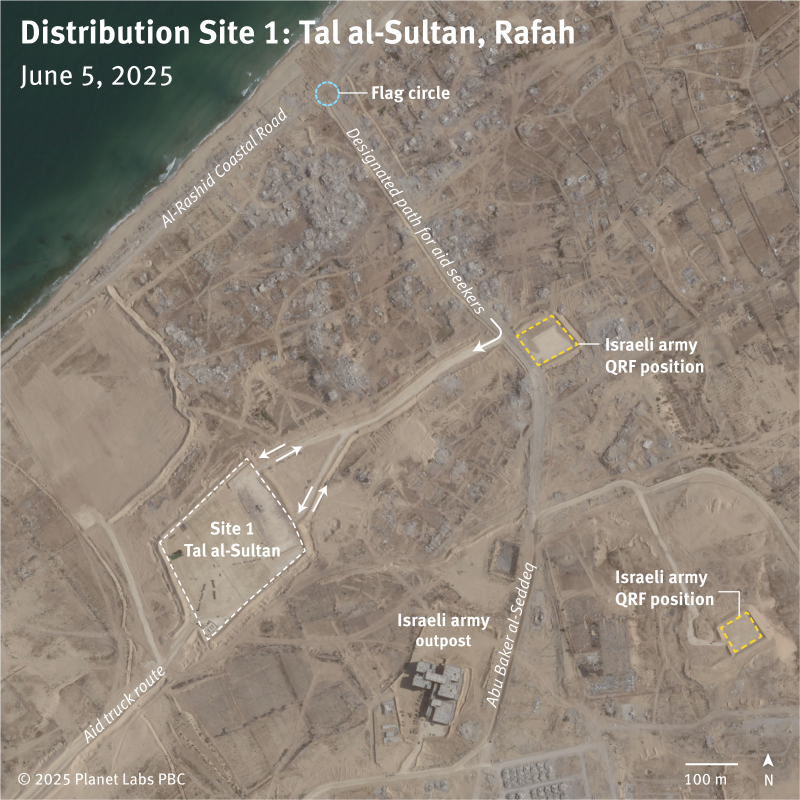
The four GHF distribution sites are all located within militarized areas designated by the Israeli military in security corridors and buffer zones in large parts of the Gaza Strip. Three of the distribution sites (Sites 1, 2, and 3) are in the Rafah Governorate within the buffer zones created along the “Philadelphi” and “Morag” Corridors, where Israeli military operations are ongoing. A fourth site (Site 4) is in the buffer zone created by Israeli forces in the “Netzarim Corridor,” located in central Gaza. These areas have been completely razed and emptied of Palestinians by Israeli forces, actions which amount to the crime against humanity of forced displacement and ethnic cleansing.
In contrast, when allowed to operate without restriction, the UN distributes aid to hundreds of sites across Gaza to improve people’s ability to reach aid safely in their area and mitigate issues of crowd control. Aid distribution takes into account identified needs at the community level, specific vulnerabilities, and family size.
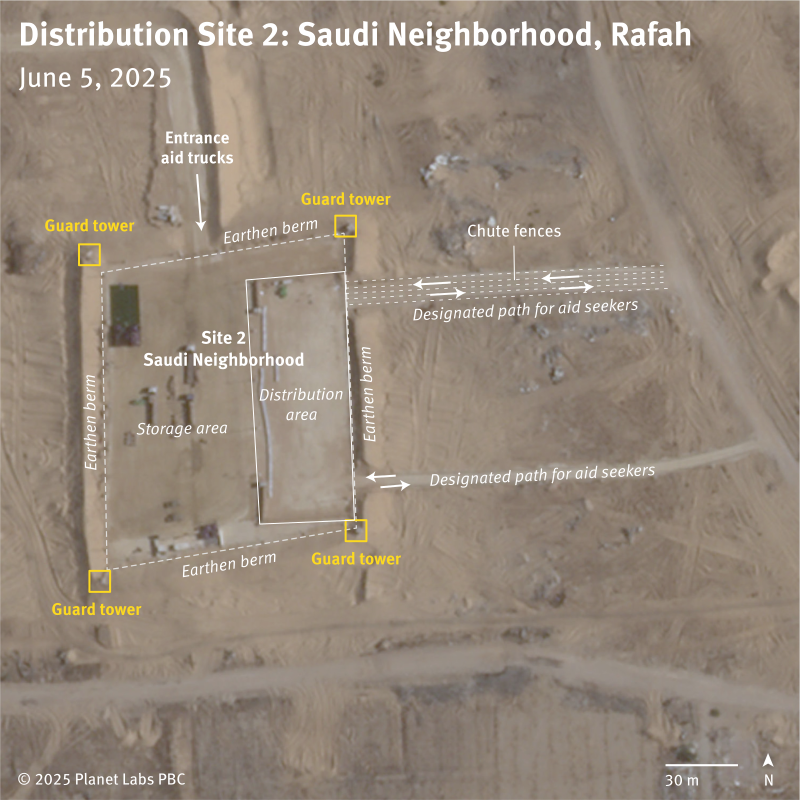
According to satellite imagery, as of April 26, none of the four sites had been established. Soil preparation began in late April for Sites 1 and 4, and in early May for Sites 2 and 3. Construction appears to have been completed around May 17 for Site 4 and by May 23 for Sites 1, 2, and 3, less than three days before Site 1 became operational.
Each of the four open-air distribution sites has a rectangular layout enclosed by earthen berms, with four guard towers positioned at the corners. Civilian access to the distribution area is controlled through narrow entry and exit points, guided by chutes or jersey barriers, while a separate path allows aid trucks to access the storage area.
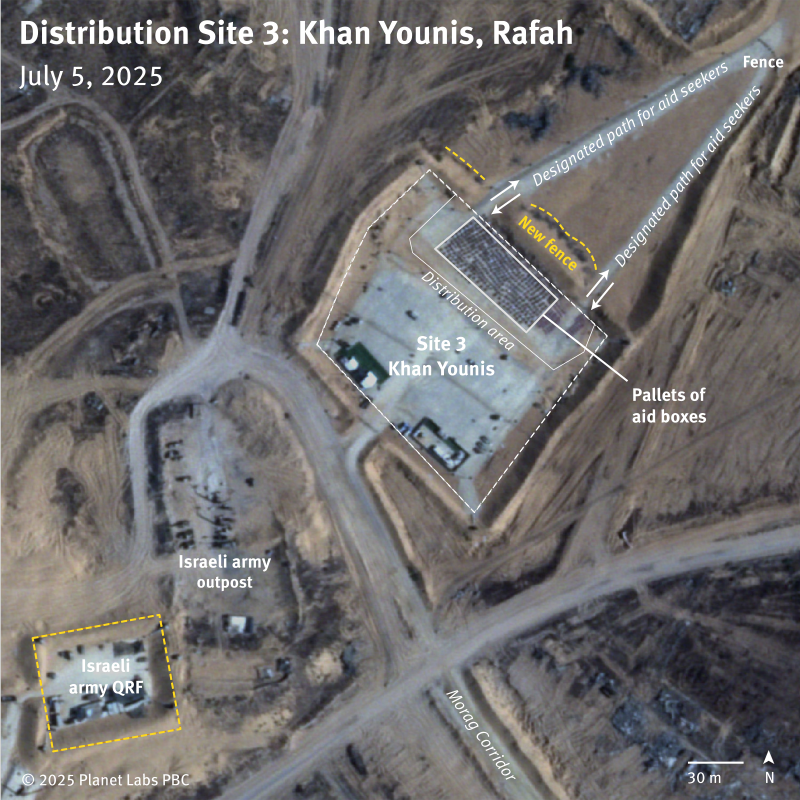
Before distribution operations started on May 26, Aguilar said he raised concerns with the design and construction of all four sites, including in particular Site 3. Human Rights Watch documented how additional “security” features added to some sites in early June could harm Palestinians seeking aid, that the sites were particularly dangerous when congested, and that the sites were in proximity to Israeli forces. Satellite imagery from July 5 shows an additional fence added to the north berm of Site 3. Aguilar said that this is a triple-strand razor wire added in early June to deter civilians from rushing over the berm and could prove dangerous if people were pushed up against it.
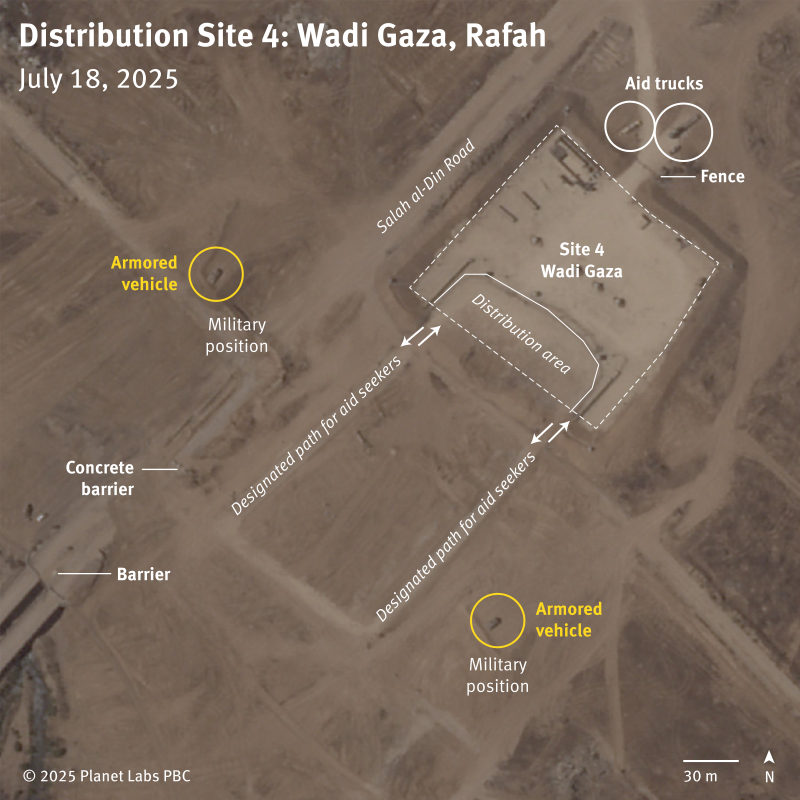
The exits and entrances often become congested due to the large crowds. Satellite imagery of Site 4 shows that Israeli armored vehicles usually sit at the entrance and exit of the civilian routes.
The sites are surrounded by military infrastructure including outposts, equipment, and vehicles, some of which are positioned along the civilian access routes. While some of the infrastructure was pre-established by the Israeli military during the creation of these corridors, additional outposts, defined by Aguilar as Israeli military Quick Reaction Force (QRF) staging areas, were constructed during the establishment of the distribution sites. Aguilar said that when the distribution is ongoing, the Israeli military positions tanks and soldiers in these nearby holding areas.
It is also difficult for Palestinians in need of aid to get basic and accurate information about GHF operations: from May 29 onward, GHF asked people to check its Facebook page where it posted information daily, though many in Gaza do not have an internet connection or sufficient battery charge for their phones. This is because Israel has cut off electricity, targeted and damaged telecommunications infrastructure, and restricted the entry of fuel. There was a near total communications blackout between June 11 and 13.
These posts detailed which sites were open and closed, allowing researchers to identify how long GHF said distributions lasted each day. GHF also posted important notices of changes to their system. Facebook is the main platform through which GHF has consistently communicated to Palestinians despite also having a WhatsApp and a Telegram group. On June 18, GHF posted that all official announcements regarding locations and times would be posted exclusively on their Facebook page.
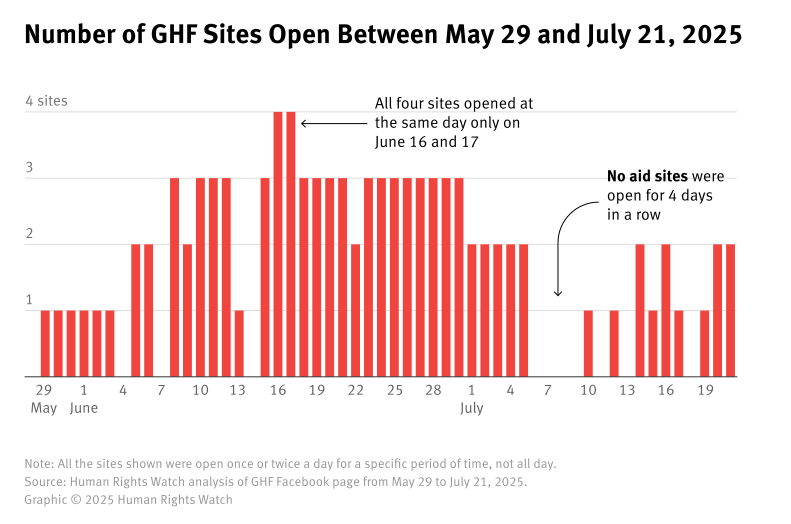
Through the analysis of GHF Facebook posts from May 29 and July 21 of a total of 105 distributions, Site 2 had 39 distributions, followed by Site 3 with 29, Site 4 with 22, and lastly Site 1, with 15 distributions.
The raw data behind this graphic can be downloaded on the Human Rights Watch GitHub account here.
While the four sites were in operation after May 26, they only all began operating once a day on June 16. However, this only lasted for 2 days, on June 16 and 17. These were the only days on which all 4 sites operated. Either 2 or 3 sites were operational on the majority of days analyzed by Human Rights Watch. On June 18, GHF posted that staff would distribute aid twice a day at the distribution sites, “when they were able.” Staff were able to do this only on 9 occasions. Out of the 54 days between May 29 and July 21, no aid was distributed from any sites on 10 days in this period. The stated reason for this was, most often, due to maintenance and renovation works.
The raw data behind this graphic can be downloaded on the Human Rights Watch GitHub account here.
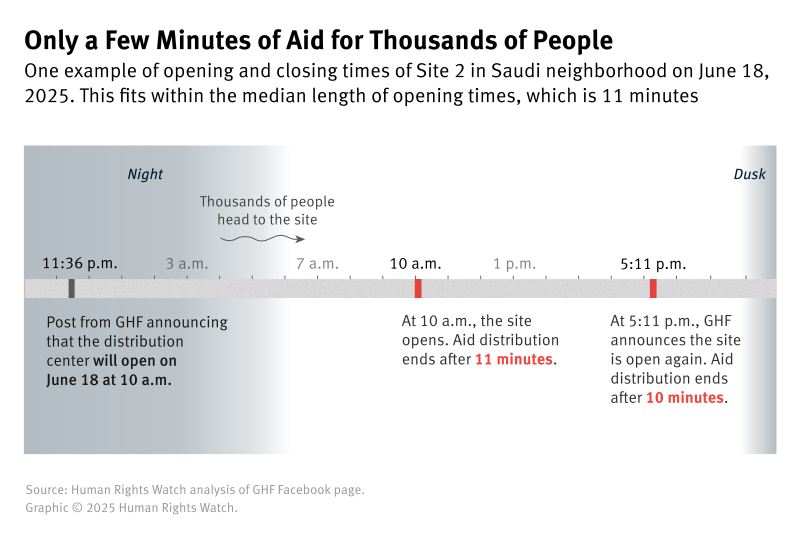
On 14 occasions, GHF announced that sites were closed at the end of distribution, but they had not announced when distribution had begun, making it impossible for Palestinians to know when aid was being distributed. On 54 occasions, the distribution windows were open for less than 20 minutes. On 20 occasions, the distribution windows were announced to be closed before they had been announced as open. For example, on June 15 and 16, GHF announced that Site 1 would open at 10 a.m. for distribution, but then posted, on June 15, that aid distribution had finished at 5:50 a.m. and, on June 16, at 5:06 a.m. Fifteen distributions took place at Site 1. While, of these, 10 distributions were scheduled with a specific opening time, they still were open at this time on only 3 occasions. Researchers analyzed 21 distribution events at Site 2 from June 15 to July 5, finding that the median duration of each distribution was 11 minutes.
Eleven distributions took place in the hours of darkness between 1 a.m. and 3 a.m. On July 15, GHF posted that people should not approach the sites during the hours of darkness due to safety concerns. This followed the introduction of a red or green flag system at Site 3 on July 14 and at Site 2 on July 17, according to GHF Facebook posts. Green indicated that the site is open and red that it is closed, according to a GHF post on July 14. Human Rights Watch has no further information about how this system supposedly worked, where the flags were placed and how often the sites were opened and closed. In its July 28 letter, GHF said: “SRS has added flag systems to identify open and closure times, loudspeaker systems to better communicate with the population, improved site defenses to prevent interactions that could lead to escalation, and has communicated site rules to the population using a variety of social media platforms.”
A day after introducing this flag system at Site 3, GHF posted on July 15 that they had to shut down the site due to overcrowding. On July 16, between 17 and 21 Palestinians were trampled to death at that site in a crowd crush, GHF counsel said in its letter, adding the incident was triggered by “agitators in the crowd.” The GHF Facebook account never posted that Site 3 and Site 2 were open on that day, and only posted at 1:05 p.m. that they would not reopen that day. Gaza’s Ministry of Health said that 15 Palestinians died in a crowd crush after tear gas was fired at a crowd of people awaiting aid, and that Israel forces shot dead another 6 people.
On July 18, the sites were seemingly all closed. Limited information was shared on July 19 and 20, only that the sites were open, but no time was given for the distribution.
It would be near impossible for Palestinians to follow the instructions issued by GHF, stay safe, and receive aid, particularly in the context of ongoing military operations, Israeli military sanctioned curfews, and frequent GHF messages saying that people should not travel to the sites before the distribution window opens.
The director of GHF stated in a live-streamed event on July 22 that GHF was planning to open up four new distribution sites in the coming weeks.
Alleged Use of Force by UG Contractors
Human Rights Watch separately interviewed four people, Aguilar and three Palestinians, who claimed they witnessed armed guards using live fire and other weapons against civilians during aid distribution inside the GHF sites. GHF and UG Solutions have both denied this. In letters from UG Solutions and the companies’ counsel, they state that UG Solutions personnel only use deadly force as a last resort and have never harmed civilians or aid seekers.
A 39-year-old Palestinian man, who said he had been to GHF aid distribution sites roughly 30 times, told Human Rights Watch that he was near his brother, a father of three, when he was fatally shot in the head near the entrance of Site 4 in Wadi Gazi at around 9:50 p.m. on June 29. The man said he saw the gunfire that killed his brother coming from armed men inside the site soon after an Israeli tank which had been in the area retreated, the signal the Israeli military has developed to indicate when a site is open for distribution. A second man at the same distribution said he saw two armed guards at the site open fire on the crowd after an Israeli tank retreated. As the crowd rushed into the site, he said a bullet to the head killed his friend, whose body he carried from the site, and bullets hit two other men next to him, one in the chest and one in the leg. He is not sure whether they survived. GHF’s Facebook page notes that a distribution at Site 4 concluded around 10 p.m. that night. A third Palestinian man, who went to the distribution sites twice in June, said, “I saw people being shot in the leg, arm, and head,” inside the distribution sites while he was there.
Aguilar has alleged that UG Solutions contractors fired in the direction of civilians, including women and children, who were not visibly armed, apparently as a method of crowd control. During the period while he worked with UG Solutions, he also said he was never given any written rules of engagement. Aguilar alleged that he saw contractors fire towards the crowds during distributions, including with stun grenades and pepper spray and, in some cases, live ammunition. “The crowd control mechanism was live gunfire, rendering these sites into death traps,” he said. “We were setting people up to die. I couldn’t be complicit in that.” Contractors fired toward people, particularly their feet, as they entered the site, to make the crowd stick to a particular path, Aguilar alleged. On occasion after all of the aid boxes were gone—often minutes after the distribution began—he alleged he saw contractors again fire towards the crowds, including with stun grenades, tear gas, and pepper spray, to force out those who remained, scouring the dirt for loose beans, or trying to take wood from the pallets on which the food had been transported, he added.
Aguilar alleged that, from what he saw, at no point were the lives of staff working at the distribution sites in any risk, nor did he see any of the Palestinians coming for aid carrying weapons. However, counsel for GHF said that several staff members were injured during aid distributions, and that Hamas “assassinated” 12 of its employees and “tortured others.” Human Rights Watch asked GHF for more information about the injuries and killings of their employees, but they did not provide further details regarding the 12 employees who were killed. News reports indicate that they were attacked on their way to an aid distribution. Hamas has denied responsibility for the alleged killings. Counsel for GHF added that two UG security personnel were injured by a grenade on July 5, citing a Reuters article, and that, “on July 16, one UG medic was stabbed with an icepick by an unknown person while successfully disarming an unknown individual who threatened UG and local workers with a pistol.”
Aguilar described two incidents he witnessed in which he alleges that private contractors fired live ammunition in the first incident and stun grenades in the second, into crowds of Palestinians at the aid distribution sites, killing one person on each occasion, he believes. Human Rights Watch could not independently verify the killings, which the companiesdeny. Aguilar provided videos and photographs he took capturing elements of both incidents, which Human Rights Watch analyzed, along with other sources of data where possible.
In one of the incidents, parts of which Aguilar caught on camera, at Site 4 on May 29, Aguilar said he saw a UG Solutions contractor firing into a crowd and then a man dropped to the ground, motionless, at a distance away from him. According to Aguilar, another contractor cheered and said, “Damn, man, I think you got one,” and the shooter yelled back, “Hell yeah, boy.”
Human Rights Watch analyzed seven videos filmed by Aguilar at Site 4 between 12:03 p.m. and 12:30 p.m. local time on May 29, according to the files’ metadata.
One of these videos, taken at 12:17 p.m. on May 29 and geolocated to the civilian access route at Site 4, shows over a dozen armed men inside the site. A man with an American accent says, “I’ve got an IDF tank posted in the northwest corner now. I brought them in and talked to them; they’ll do a show of force.” Aguilar said the distribution had finished for the day and people were leaving because there were no more aid boxes left.
Another voice says, “I told them [the Israeli military] to hold there, I don’t want this to be too aggressive because this is calming down.” A person off-camera, likely on the other side of an earthen berm, fires 29 shots. A voice with an American accent shouts in celebration, and then a second person with an American accent says, “Damn, man, I think you got one.” Someone answers back, “Hell yeah, boy.” Another voice with an American accent comes on a two-way radio nearby and says, “We are destroying trust now, let’s go.”
A second video taken approximately 30 seconds after the video of the alleged shooting finished shows a contractor firing his rifle in the direction of Palestinians. The video shows the individual wearing a gray uniform, wielding a rifle, and he is identified as one of “our guys” through a radio communication made by another contractor, with an American accent, to the Israeli forces. The contractors can be heard telling the Israeli forces that they are firing warning shots. No dead body or injured person can be seen in this six-minute video filmed from the top of a berm.
In a second incident that occurred on June 2 at Site 1, Aguilar alleged he saw a UG Solutions contractor fire a stun grenade into the crowd and hit a woman in the head while she was picking up scattered beans from the ground. He said she dropped, apparently lifeless, to the ground and was taken away by a donkey cart.
Human Rights Watch reviewed a photograph from Aguilar of the woman on the cart that was taken on June 2 at 5:31 a.m. local time, according to the metadata. Aguilar said he touched her body after the incident and found no signs of life, but her injuries are not visible in the photograph.
Aguilar also said that UG Solutions contractors used extensive amounts of less-lethal ammunition, including stun grenades, tear gas, and pepper spray. He said that on June 16 at Site 1, for example, contractors expended 18 stun-tear gas grenades, 19 stun grenades, 27 tear gas canisters, and 60 cans of OC spray, a chemical irritant much stronger than typical pepper spray and capable of incapacitating people rather than merely dispersing crowds, during an 8.5 minute distribution of 25,000 boxes of food for about 8,000 aid seekers in which no-one he believed posed “any risk.”
In its July 28 letter to Human Rights Watch, counsel for GHF said, “SRS Rules of Engagement allow use of deadly force ‘only under extreme necessity and only when lesser means have failed or cannot be reasonably employed.’” GHF’s counsel added, “With respect to crowd control devices, in limited instances, and only when strictly necessary to prevent civilian harm, we use non-lethal devices. At no point has any GHF employee or contractor fired a weapon at a civilian” or “killed or injured aid seekers.”
UG Solutions said contractors used pepper spray and other less-lethal munitions in order to “prevent trampling in the crowds of civilians seeking aid,” noting that this has saved lives. The company’s letter confirmed that the only contractors with weapons inside the distribution sites are from UG Solutions, adding that “no UG Solutions personnel have ever directed warning shots towards civilians,” and that they instead directed them “upwards, in the air and towards the coastline.” Despite Human Rights Watch’s requests for more information on the lethal and less-lethal weapons issued to UG Solutions contractors at the sites, counsel for GHF said it would “not disclose” details on this.

 CrossFireArabia