Don’t Kill The Olive Tree of Palestine

By Fayha Shalash – Ramallah

Illegal Jewish settlers carry out these illegal practices in various areas of the occupied West Bank with the full protection of the Israeli army.

Abdul Muti Yassin was surprised by a call from one of his relatives last September, informing him that illegal Jewish settlers were cutting down the olive trees on his land in the village of Yasuf, south of Nablus, in the occupied West Bank.

Cutting down trees, especially ancient olive trees that characterize the mountains of the West Bank, is a routine policy implemented by the settlers under the directives of the Israeli occupation government, to steal more Palestinian lands.

Illegal Jewish settlers carry out these illegal practices in various areas of the occupied West Bank with the full protection of the Israeli army.

Without Olive Trees, We are Nothing’

When he received the call from his cousin, informing him that the settlers were cutting down his olive trees one by one, Yassin was not in his village.

He immediately headed back to his land, but the Israeli army prevented him from accessing it while allowing the illegal settlers to carry on what they were doing.

Dozens of olive trees were cut down, some older than 60 years old. Once they finished, the settlers left, leaving behind chaos and destruction.

“My land is located in Area B, which is supposed to be out of Israel’s jurisdiction, but apparently they have the upper hand to attack and steal whichever land they desire,” Yassin told the Palestine Chronicle.

Over the years, this Palestinian man took extra care of his trees, visiting weekly to ensure that they were in good condition.

 “I was impatiently waiting for October so that my family and I could go pick the olives during the harvest season. Now, however, all we feel is sadness,” he said.

Yassin is also the owner of another piece of land in an area near his village. 

He anticipated going there with his family to pick olive trees during the harvest season. However, illegal Jewish settlers again stood in his way, preventing him from reaching that land as well.

“For us Palestinians, our land and olive trees are everything … without them, we are nothing,” he said bitterly.

Use of Bulldozers

The village of Yasuf is characterized by a beautiful landscape, with olive trees disseminated across the slopes of the mountains. 

The village, however, is routinely attacked by settlers, who often cut down olive trees.

Wael Abu Madi, head of the village council, told the Palestine Chronicle that the illegal settlers have intensified their attacks on the village since the start of the Israeli genocide on the Gaza Strip over a year ago.

Settlers often attack the lands of the villagers and prevent them from accessing to their lands.

“During this olive harvest season, they are using various methods to prevent people from reaching their lands, including the use of bulldozers to expel families,” the Palestinian official explained.

According to Abu Madi, the illegal settlers cut down over 150 olive trees on village lands classified as C last month alone. Some of these trees were more than 70 years old.

“These practices aim to expand one of the settlements at the expense of the village lands,” he pointed out.  

“We submitted an objection but were told that the lands belong to the settlers who planted parts of them with grape trees, and that cannot be undone,” Abu Madi added.

A total of 2,000 of the 6,000 dunums of the village lands have been confiscated for the benefit of illegal settlements.

The head of the village council stressed that settlers are currently doing everything they can to steal the remaining lands.

For several weeks, countless villages in the occupied West Bank have been subjected to these aggressions.

In Burqa, east of Ramallah, settlers have carried out aggressions on an almost daily basis, cutting down that were over a hundred years old.

The Colonization and Wall Resistance Commission said in a recent statement that settlers destroyed a total of 9,957 trees since the beginning of the year, including 4,097 olive trees.  

A total of 3,741 trees were uprooted in the city of Nablus, 3,055 in Bethlehem, and 2,125 trees were uprooted and damaged in Hebron (Al-Khalil).

The Commission stated that the scale of the current aggressions, aimed at systematically emptying Palestinian lands and turning them into barren lands, is unprecedented.

(The Palestine Chronicle)

– Fayha’ Shalash is a Ramallah-based Palestinian journalist. She graduated from Birzeit University in 2008 and she has been working as a reporter and broadcaster ever since. Her articles appeared in several online publications. She contributed this article to The Palestine Chronicle.

Continue reading
Story of The Paramedic Killed by Israel

Israeli forces targeted and killed a health care worker who was en route to assist wounded Palestinians in northern Gaza, an area under tight siege and heavy bombardment where evacuations have not been allowed.

Due to the severe blockade imposed by Israel, rescue teams in northern Gaza struggle to reach devastated areas, leaving the injured unable to be evacuated.

On Oct. 15, Israeli warplanes bombed the home of the Al-Sayyid family in the Bi’r al-Naja neighborhood west of Jabalia in northern Gaza.

Ambulances and civil defense teams could not reach the family’s home due to Israeli attacks and obstructions. On that day, Ahmed al-Najjar, a 33-year-old Palestinian paramedic who was known for his bravery and dedication, set out to rescue the wounded. But before he could arrive, he was killed in a targeted drone strike in the Al-Faluja neighborhood of Jabalia.

Aiding those in need

Al-Najjar’s relatives and friends said that he refused to heed Israeli evacuation warnings, continuing his duties under intense bombardment and repeatedly risking his life to help the wounded. His friend Ghazi al-Majdalani told Anadolu that al-Najjar was known for his courage and dedication, working tirelessly to assist the injured until the very end.

“Ahmed was a truly good person and a role model. He never listened to Israel’s calls to evacuate the north, feeling a deep responsibility toward the injured and sick,” al-Majdalani said.

Al-Najjar not only provided medical care but also documented Israeli attacks. He shared photos and videos with journalists to highlight the atrocities and make them known to a broader audience.

Hero until the last moment

Ahmed’s brother, Khalil al-Najjar, described him as a compassionate and exemplary individual who loved helping those in need. Even when his wife and children moved south due to intensified air and ground assaults, Ahmed chose to stay in the north to assist the wounded.

Khalil emphasized that his brother worked tirelessly to prevent infections among the injured since the beginning of the attacks, saying Ahmed risked his life until the very last moment to save others.

Ahmed was well-loved by the community in the Jabalia refugee camp, and his death was described as a significant loss for everyone there. Before his death, he had shared his phone number on social media, urging those trapped in the north to contact him if they needed emergency medical help, as Israeli forces often blocked rescue teams from reaching disaster sites.

Ahmed al-Kahlout, the director of civil defense in northern Gaza, expressed his condolences on social media.

“May God have mercy on you, kind-hearted Ahmed. You had no fear of death as you saved people from between tanks and danger. May your efforts be accepted and your good deeds fill the scales in your favor,” he said.

Gaza Civil Defense spokesman Mahmoud Basal also confirmed that Israeli forces blocked access to areas where the injured needed evacuation. Additionally, Inas Hamdan, acting director of the Gaza Media Office of the UN agency for Palestinian refugees (UNRWA), said that Israel denied requests to pull people from under the rubble in northern Gaza.

“We have warned over the past two weeks about the worsening siege in northern Gaza and the Jabalia refugee camp. The situation is becoming increasingly dire. Israel’s ongoing military operations in northern Gaza put tens of thousands of civilians at immense risk,” Hamdan said.

Continue reading
UN Must Force Israel to Halt Its Genocide on Northern Gaza

The UN must declare northern Gaza a disaster zone requiring immediate intervention and compel Israel to halt the genocide being carried out by its army through systematic and widespread mass and individual killings, deliberate starvation, mass forced displacement, and the complete destruction of the remaining essentials for life. The international community’s silence and inaction render it complicit in this brutal genocide.

The Euro-Med Human Rights Monitor’s field team has documented heinous crimes against civilians in Beit Lahia, the Jabalia Refugee Camp, and across the northern Gaza Strip as the Israeli occupation army escalates its attacks, bombing several homes and killing over 80 Palestinians in Beit Lahia overnight. The previous night, the Israeli military bombed homes belonging to the Al-Hawajri, Nassar, and Abu Al-Aish families in the Tel Al-Zaatar area of Jabalia Camp, killing 33 Palestinians and injuring over 70 others. 

An undetermined number of Palestinians are still missing, likely trapped beneath the rubble. Since the last attack on the northern Gaza Strip, 500 people have been confirmed dead, and thousands more have sustained injuries. Many remain unaccounted for, either in the streets or buried under the debris.

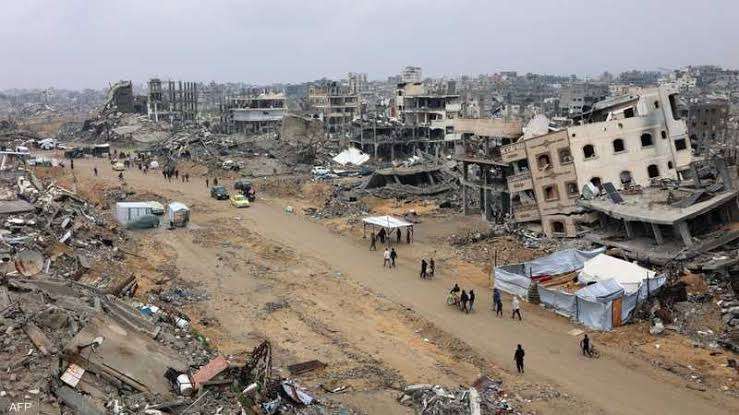
With no justification other than to kill the remaining residents and force any survivors to flee, Israeli occupation forces used multiple missiles to bomb the residential blocks, destroying them while hundreds of civilians were inside.

On Saturday, 19 October, at dawn, Israeli army forces surrounded the Indonesian Hospital in the northern Gaza Strip town of Beit Lahia. They fired two artillery shells at the hospital, cut off its electricity, and targeted anyone moving in the area. One of the hospital’s walls was also demolished by Israeli bulldozers.

Dr Munir al-Barash, Director-General of the Ministry of Health, reported that Israeli forces shelled the upper floors of the Indonesian Hospital, where more than 40 patients and wounded persons were located, dozens of whom were in critical condition, along with the medical staff.

He stated that the Israeli army also targeted a group of displaced people at the hospital gate. At the same time, the hospital’s electricity was completely cut off, and patients and medical staff were in a state of extreme panic as a result of the army’s heavy and continuous shooting directed at and around the hospital.

According to information obtained by Euro-Med Monitor, the Israeli occupation army is besieging four shelter centres near the Indonesian Hospital in northern Gaza.

On Saturday morning, Israeli warplanes bombed the yard of Kamal Adwan Hospital in the Beit Lahia Project during funeral ceremonies for victims of the previous day’s attack, killing at least two people. Dr Bilal Abdel Aal, a doctor at Kamal Adwan Hospital, was also killed, along with several members of his family, in an Israeli airstrike on their home in the Al-Ilmi neighbourhood in Jabalia Camp.

In recent days, the Israeli occupation army has targeted and destroyed the remaining water wells and bombed communications and internet exchanges, severing all connections in the area. The army is now systematically dismantling the already limited healthcare system by actively targeting medical crews and further worsening the crisis.

Israeli forces have blocked the entry of humanitarian aid since the beginning of the month, and since 5 October they have continued their invasion of northern Gaza, putting over 400,000 Palestinians in the northern Gaza Valley at risk of bombing or starvation.

With Israeli forces enforcing a fire ban on the movement of ambulances and civil defence teams in most parts of Jabalia and its camp, many victims and the injured remain in the streets or in their homes, unable to be transported to hospitals. Euro-Med Monitor’s field team has documented hundreds of Israeli airstrikes and bombing operations that have destroyed homes, shelters, and streets across northern Gaza for the last 15 consecutive days.

The international community must recognise the situation in northern Gaza and declare it a disaster zone that requires immediate action. Israel must be pressed to cease its attacks on civilians, allow the provision of life-saving emergency aid, and end its violent genocidal campaign.

The United Nations, alongside individual and collective states, must intervene immediately to save the hundreds of thousands of people living in northern Gaza, prevent Israel from committing genocide for the second consecutive year, impose a comprehensive arms embargo on it, hold it accountable for all its crimes, and take all necessary steps to protect Palestinian civilians.

EuroMed Human Rights Monitor

Continue reading
Aim to Kill! Lebanese Paramedics Face Israeli Big Guns

Israel’s clear and continued pattern of targeting relief and ambulance teams in Lebanon is a serious violation of international law, especially international humanitarian law. Since the start of its most recent attack on Lebanon, the Israeli army has launched numerous military attacks directly against ambulance and relief crews, particularly those affiliated with the Islamic Health Authority, killing at least 120 medical and relief workers.  

With no proof, an Israeli army spokesperson recently justified the targeting of paramedics and their vehicles in various parts of Lebanon by claiming that they were transporting “saboteurs and weapons”. In this regard, the Israeli army targeted on Sunday morning, 13 October 2024, a Red Cross relief convoy in the southern town of Sarbin, wounding four volunteers. This attack came after the Israeli army targeted a house in Sarbin in an initial airstrike, and then targeted the same site in a second airstrike after the Red Cross convoy arrived to search for the injured.

This targeting took place even though the Red Cross had previously arranged to visit the site alongside UNIFIL, the United Nations peacekeeping force in southern Lebanon. The Red Cross reported that the airstrike damaged its vehicles in addition to injuring four members of its team.

The Israeli army also targeted two aid trucks today (Monday 14 October), which were passing through the Ras Baalbek area. The trucks were flying Red Cross flags after receiving UN approval to deliver aid, according to official Lebanese sources. The bombing smashed the windows of the two trucks and injured the driver of one of them. The Israeli targeting in Lebanon follows the same pattern as in the Gaza Strip, raising the possibility that aid trucks may be targeted directly and repeatedly in the future under false pretenses and pretexts.

The Red Cross must be respected as a neutral and impartial organisation that conducts humanitarian work in field operations that assist and protect people who do not participate in, or have ceased to participate in, hostilities. Its mission is to alleviate human suffering and promote respect for the rights of those affected by armed conflicts and other situations of violence. It is required to protect these individuals, and to take all reasonable precautions to limit the impact of hostilities on them. The warring parties have a legal, moral, and humanitarian duty to protect medical and relief workers and not impede the delivery of aid.

Article 35 of the First Geneva Convention, and Article 21 of the Fourth Geneva Convention, both mandate the protection of medical transports. Article 21 of Additional Protocol I broadened the scope of this obligation to include civilian medical transports in addition to military medical transports under all conditions. This is supported by Rule 29 of customary international humanitarian law, which mandates that medical transports that are only used for medical transport must always be respected and safeguarded.

According to the Rome Statute of the International Criminal Court, attacking medical facilities and transportation vehicles that use the distinctive emblems listed in the Geneva Conventions, in accordance with international law—including emblems belonging to the Red Cross—as well as attacking personnel, facilities, materials, units, or vehicles used in a humanitarian assistance mission constitutes war crimes under the Rome Statute. These crimes are also considered crimes against humanity because they are committed against civilians, particularly killing and willfully causing serious bodily harm or physical health. These crimes are part of Israel’s massive attack on the civilian population in Lebanon.

The international community must therefore fulfill its obligations to uphold and implement both international humanitarian and human rights law. It must put an end to Israel’s serious crimes against unarmed civilians in both the Gaza Strip and Lebanon, including its deliberate targeting of ambulances and relief teams that transport and evacuate the wounded, and ensure the freedom of passage of all medical and humanitarian missions. Targeting civilians and impeding the delivery of aid and relief to them indicates the intention to purposefully kill people not involved in fighting and military operations.

EuroMed Human Rights Monitor

Continue reading
Israel Uses ‘Killer Robots’ to Murder, Flatten Gaza

The Euro-Mediterranean Human Rights Monitor  stated that the Israeli occupation army is using booby-trapped robots loaded with tons of explosives in the widespread destruction and killing operations carried out in northern Gaza.

It explained, in a statement Sunday, it “received numerous testimonies from inside Gaza, about the Israeli army’s use of booby-trapped robots and their detonation remotely, causing widespread damage to surrounding homes and buildings and great loss of life, at a time when the work of ambulance and civil defense crews is almost completely disrupted, except for a narrow range in some neighborhoods,” according to Quds Press.

“Israel’s use of booby-trapped robots is prohibited under international law, as these robots are considered random weapons that cannot be directed or their effects limited to military targets only,” the Euromed Monitor added.

It explained that “due to their nature, they directly hit civilians, or hit military targets, civilians or civilian objects indiscriminately. Therefore, they are prohibited weapons under international law, and their use in residential areas constitutes an international crime in and of itself.”

The statement quoted a Palestinian besieged in the “Al-Qassabi” neighborhood south of the “Jabalia” camp in the northern Gaza Strip, who said, “last Wednesday evening – 9 October – a huge explosion occurred in the Al-Qassabi neighborhood near where we were located.”

He added, “the sound of the explosion was very loud, I had never heard it so loud before, we have become able to distinguish between the sounds of explosions, so we know whether this sound is from bombing by aircraft, artillery or something else.”

He pointed out that “the sound of the explosion was many times louder than the sound of the airstrike, to the point that white dust covered the entire area. We later found out that this explosion was the result of a robot loaded with tons of explosives detonating, and that this robot destroyed about 6 or 7 houses at once. The occupation army detonates the robot in the houses without knowing whether there are civilians inside them or not.”

The Euro-Mediterranean Human Rights Monitor said that it documented the occupation army detonating two other robots in the “Tawam” area and in the “Zahraa” neighborhood adjacent to the Civil Defense west of the “Jabalia” camp, and another robot in the vicinity of the “Abu Ali Mustafa” intersection in “Bir al-Naja” in the western areas of the Jabalia camp.

Using “robots” to relieve pressure on the air force

military expert, engineer Muhammad Magharbeh, indicates that the “Israeli” air force “is going through its weakest stage,” considering that the occupation army’s resort to alternative destructive means to aerial bombardment is an important indicator of the challenges currently facing this weapon.

In an interview with Quds Press, he pointed out that the hundreds of thousands of tons dropped on Gaza during the year “are explosives resulting from bombs received from American ammunition stores, which are no longer able to meet the Israeli Air Force’s demands at the required speed.”

He also pointed out that Israeli Air Force air bases were damaged by the recent Iranian missile attack, in addition to “the great waste in using bombs on the Gaza and southern Lebanon fronts.”

He stressed that the Israeli Air Force faces “difficulty in carrying out full and effective air missions in its war with Hezbollah, difficulty in destroying tunnels at the expense of the scarcity of ammunition that it is forced to economize on, and the choice between using them for Iranian targets or destroying the Lebanese tunnels, or destroying the northern Gaza Strip to force the residents there to move to the south.”

Reports indicate that the Israeli occupation army consumed a large amount of ammunition in the early stages of its war on the Gaza Strip, specifically those used in aerial bombardment. During the first four months of the military operation, the Israeli Air Force bombed approximately 31,000 targets, 29,000 of which were in the Gaza Strip and the rest in other areas, most notably Lebanon.

According to a statement by the Israeli occupation army, the majority of these raids were carried out using fighter jets. The Israeli occupation forces, supported by the United States and Europe, continue to commit the crime of genocide in the Gaza Strip, for the 372nd consecutive day, by launching dozens of airstrikes and artillery shelling, while committing massacres against civilians, amid a catastrophic humanitarian situation resulting from the siege and the displacement of more than 95 percent of the population.

Continue reading