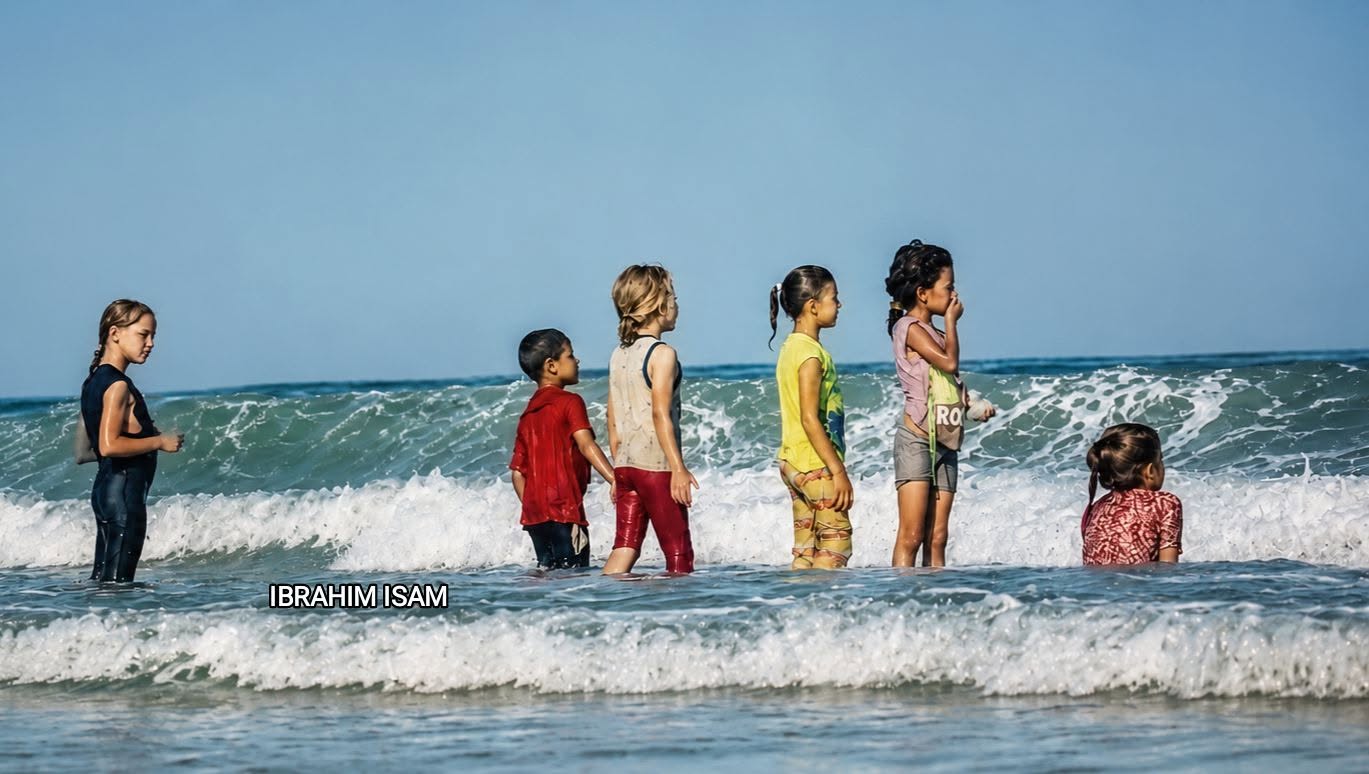
As I often do at sunset, I was trying to photograph the children as silhouettes—small figures dissolving into the last light of the day.
I captured one image that I liked very much. Perhaps because it seemed open to many interpretations, as if the photograph had left a small door ajar for the viewer’s imagination. I hurried back to a place where I could find an internet connection, eager to share it before the moment disappeared.
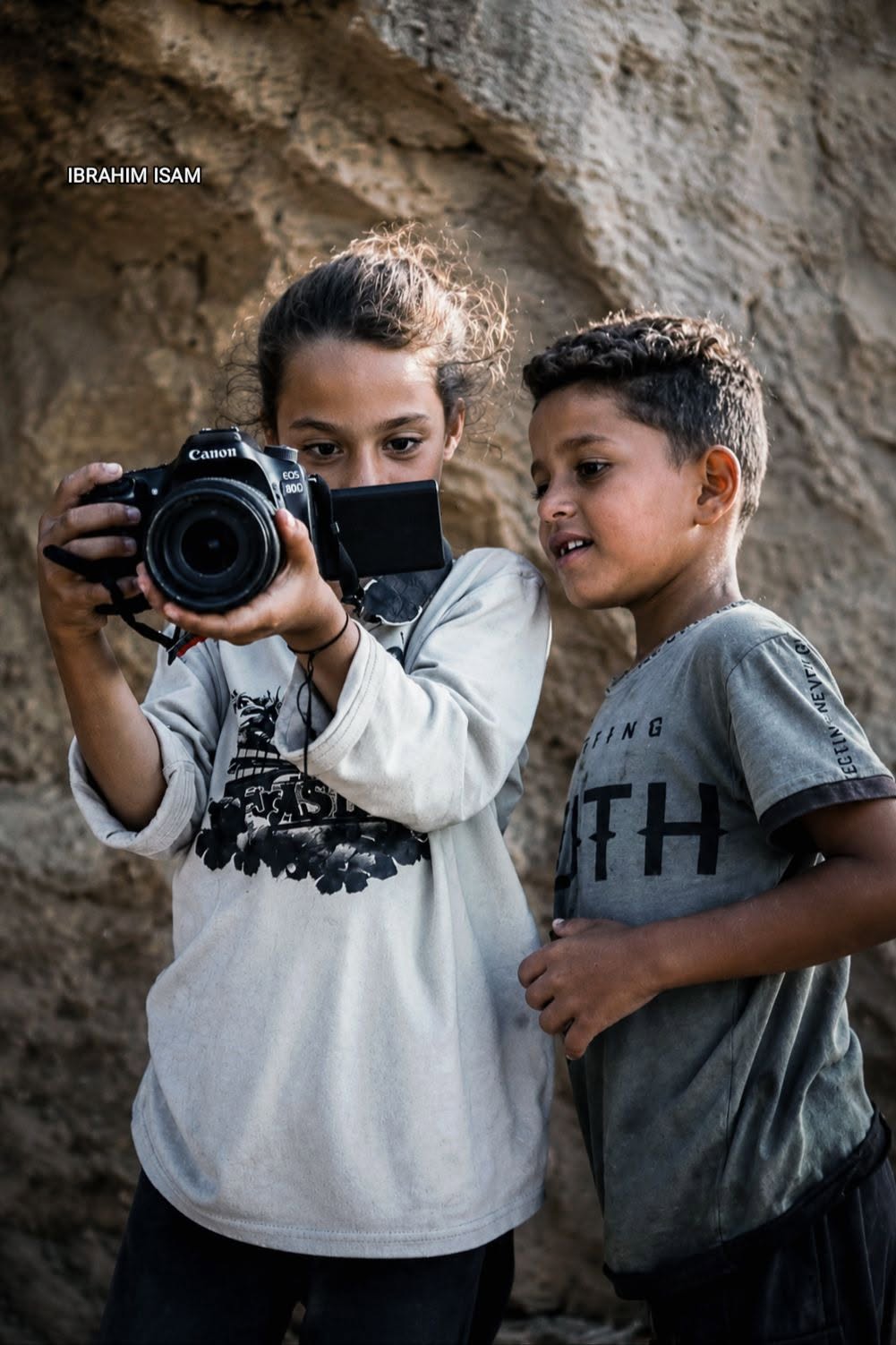
But on the way, I saw the two of them.
I wanted to photograph them. They agreed, but only on one condition:
“We’ll pose—but you have to photograph us with the camera.”
I had no choice. My camera was with me, but I could not use it for the portrait they wanted. So I took out my scratched-lens phone and tried, with that imperfect little lens, to give them what they had asked for.
I thought I was simply taking their picture.
Then, some time later, I looked at it again.
And somehow, it felt as though I had not entirely taken the photograph.
Perhaps they had.
Perhaps they had simply chosen, for themselves, how they wanted to be seen.
EDITOR’S NOTE: This is the story of Jabal Al-Weibdeh generated by AI. Its detailed, historical, imaginative, exciting and well-read, done in no more than few minutes. Bang goes the days when writers and journalists would hark on pencil and paper and computer for hours and tomorrows while screaming and pulling off their hairs to make sure they got their thought in the right order. Here is a perfectly good story with references. Below is the original headline generated by AI.
Jabal Al-Weibdeh: Where Amman Remembers Itself
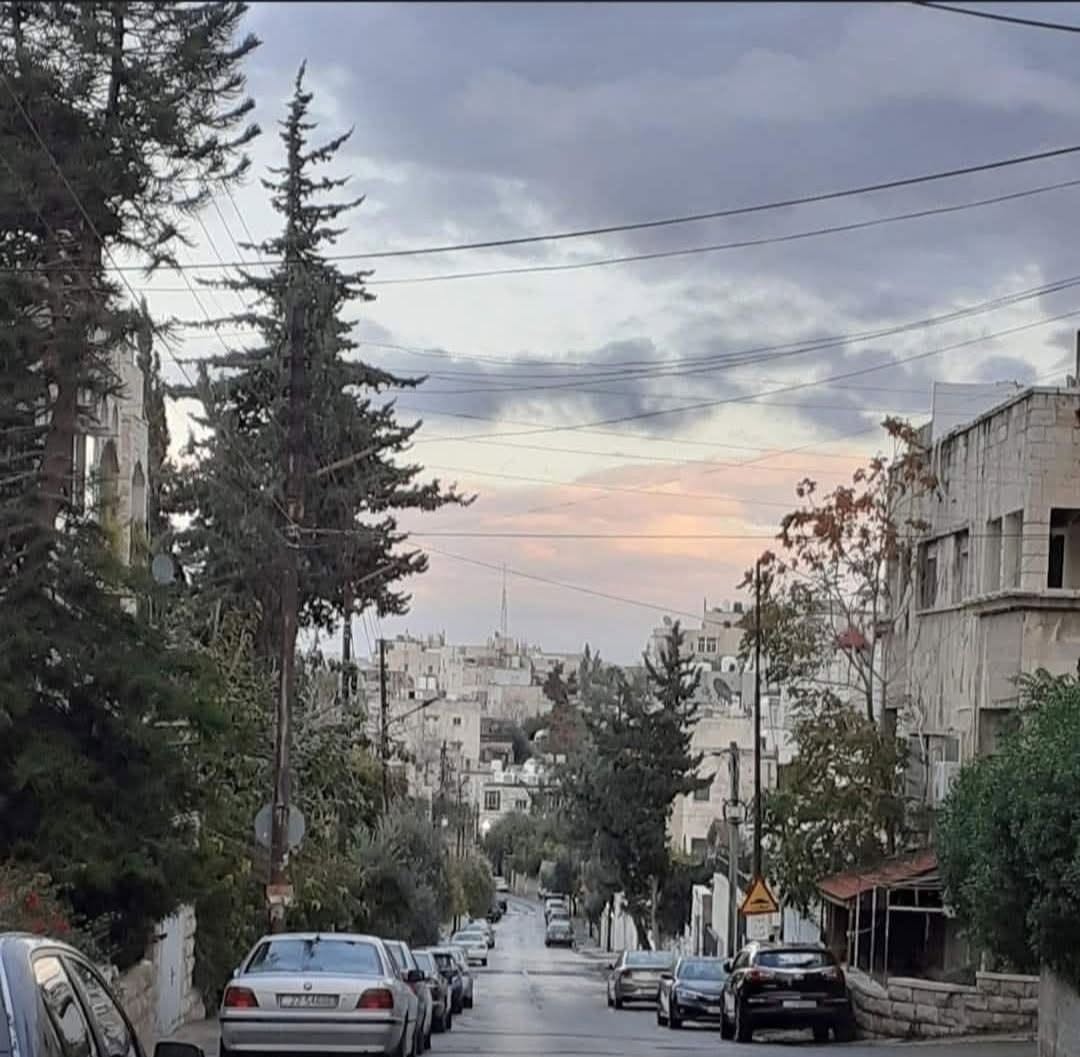
There are neighborhoods one visits for their monuments, and others one remembers for their atmosphere. Jabal Al-Weibdeh belongs firmly to the latter. Its story is not contained in a single building or museum. It is scattered among stone houses and garden walls, old staircases descending toward downtown, galleries hidden behind gates, balconies shaded by trees, and streets bearing the names of poets.
Perhaps the best way to understand Al-Weibdeh is simply to walk through it. And there is no better place to begin than at its eastern edge, at Darat al Funun – The Khalid Shoman Foundation.
Where Art Meets the Ancient City
Darat al Funun seems almost to grow out of the hillside. Below it lies the dense fabric of downtown Amman; above it, Al-Weibdeh begins its gradual climb.
The setting itself tells several chapters of Amman’s history at once. The art house occupies six historic buildings and warehouses, while archaeological remains in its gardens reach much further back into the city’s past. The main house was built around 1918, beside the remains of a sixth-century Byzantine church built over an earlier Roman site. (Darat al Funun)
Today, contemporary Arab art inhabits these old rooms. Paintings hang where families once gathered; artists and researchers work in buildings that were originally homes. Architecture, archaeology and contemporary art coexist rather than compete.
That combination makes Darat al Funun an appropriate doorway into Al-Weibdeh, because the neighborhood itself works in much the same way. It does not erase one period to make room for another. It accumulates them.
From the terraces of the Darat, downtown appears almost within touching distance. This geographical relationship matters. Al-Weibdeh was part of the moment when Amman began climbing out of its central valley in the early 20th century. As the commercial town below expanded, residential neighborhoods spread onto the surrounding hills, including Jabal Amman and Jabal Al-Weibdeh. (Darat al Funun)
Walking uphill from Darat al Funun is therefore, and in a sense, walking through the story of Amman’s expansion.
The Houses as Portraits
The architecture soon becomes part of the walk.
Look beyond the apartment buildings and shopfronts, Al-Weibdeh reveals an extraordinary collection of early Ammani houses: Pale limestone façades, arched openings, columned porches, high ceilings and gardens where jasmine, citrus and old trees soften the stone.
Some of the houses constructed here in the 1920s drew on architectural traditions then fashionable in eastern Mediterranean cities such as Beirut, Haifa and Jaffa. The early houses associated with Darat al Funun, for example, show Venetian influences and typically use a central-hall plan with rooms arranged symmetrically on either side. Darat al Funun’s architectural history notes that at least 30 houses of this period and style were built in Al-Weibdeh alone. (Darat al Funun)
This helps explain why walking through the hill sometimes feels less like moving through a planned district than through an architectural album.
Each house has a personality.
One of the neighborhood’s remarkable surviving residences is the Abdel Badi’ Yash House, remembered particularly for its richly worked stone and architectural detailing. Another is associated with former prime minister Suleiman Al-Nabulsi. Historical accounts of the neighborhood also identify houses connected with poet and statesman Fouad Al-Khatib, while one of the historic buildings incorporated into Darat al Funun became known as the Blue House. (Thaqafat)
These names matter, but not simply because prominent people lived here. They point toward something larger: Al-Weibdeh was once a residential meeting ground for political figures, writers and artists. This helps explain why walking through Al-Weibdeh sometimes feels less like moving through a planned district than through an architectural album.
The cultural identity that the neighborhood possesses today did not suddenly arrive when galleries opened. In many ways, the galleries inherited a landscape that was already cultural.
An Open-Air Gallery
Continue upward and art begins to appear almost casually. A gallery may occupy an old villa. A studio sits behind an ordinary door. A framed artwork appears in a window. The distinction between residential and cultural space becomes pleasantly uncertain.
Among the important institutions associated with the neighborhood is Dar Al-Anda Art Gallery, itself housed in a heritage building dating to the 1930s and overlooking old Amman. (Dar Al-Anda Art Gallery)
There is also Wadi Finan Art Gallery, alongside smaller contemporary spaces and studios such as the Overlooking Al Weibdeh Gallery. The neighborhood has long hosted artists’ studios, cultural associations and institutions connected with writers, visual artists and performers. (Hagzi)
This concentration has gradually turned Al-Weibdeh into something larger than a district containing galleries.
The neighborhood itself has become a gallery.
Its architecture supplies the walls; its gardens provide the installations; its staircases create unexpected perspectives; and the city below becomes the backdrop.
Paris Square: The Neighborhood’s Living Room
Eventually the streets lead toward Paris Square, still remembered by many older Ammanis by its earlier name, Hawooz Circle after the water reservoir once associated with the site. (Alghad).
If Darat al Funun represents Al-Weibdeh’s contemplative side, Paris Square represents its social one.
Here the neighborhood opens up.
People sit outside cafés. Residents cross paths with students, artists, expatriates and visitors. Small shops survive alongside newer restaurants and creative businesses. Conversations spill from tables onto pavements.
Paris Square does not overwhelm which is it precise attraction.
Unlike the monumental squares of grand capitals, it operates at the scale of a neighborhood. It feels closer to a living room than a civic plaza.
And around it remains the stone houses that prevent the area from becoming simply another fashionable café district. They remind the visitor that the life visible today is taking place inside a much older urban framework.
That tension is central to contemporary Al-Weibdeh.
It is fashionable, but old.
Cosmopolitan, yet unmistakably Ammani.
Residential, yet cultural.
Quiet in one alley and intensely social around the next corner.
Streets Named for Poets
Even the street signs participate in Al-Weibdeh’s cultural character.
Throughout the neighborhood appear the names of poets, writers and thinkers: Ahmad Shawqi, Hafez Ibrahim, Ibrahim Touqan, Al-Akhtal and others. Accounts of Al-Weibdeh have remarked on this unusual concentration of literary names. (Al Arabi)
There is something wonderfully appropriate about it. In a neighborhood populated by galleries, writers, painters and old houses, one navigates geographically through literature.
A poet becomes an address.
A writer becomes a corner.
Culture becomes part of the map.
Toward the National Gallery
From Paris Square, continue westward through the quieter streets toward Muntazah Park and the final cultural landmark of the walk: the Jordan National Gallery of Fine Arts.
The transition is subtle. The tightly woven residential streets begin opening toward green space until art reappears, this time not inside a converted private home but as a national institution.
The Gallery’s buildings house its permanent collection as well as visiting and local exhibitions, with a specialized library devoted to art, design and architecture. (nationalgallery.org)
There is something fitting about ending here.
The journey began with contemporary Arab art inhabiting historic houses overlooking downtown and ends with a national collection surrounded by the everyday life of Al-Weibdeh.
Between the two lies the neighborhood itself. And perhaps that is Al-Weibdeh’s greatest artwork.
A Balcony Over Downtown
To understand the importance of Jabal Al-Weibdeh, however, one must finally look beyond Al-Weibdeh.
Look downhill. Downtown Amman is never far away.
Staircases and steep streets physically connect the neighborhood with the old commercial center below. Historically, this proximity was fundamental: Al-Weibdeh emerged as Amman expanded beyond the valley and climbed onto its surrounding hills. (Darat al Funun)
So Al-Weibdeh occupies a fascinating position in the geography of the capital.
Below it lies the older commercial Amman of markets, mosques, churches, cinemas, cafés and crowded streets. Beyond it lies the Amman that continued expanding westward—larger roads, newer neighborhoods, towers and commercial developments.
Al-Weibdeh sits between these worlds.
It is close enough to downtown to remain part of old Amman’s memory, yet elevated enough to have developed a quieter residential identity of its own.
That makes preserving it important for reasons that go beyond nostalgia.
Cities need places where their different historical periods remain visible at the same time. Without them, urban history becomes something encountered only inside museums.
In Al-Weibdeh, history remains inhabited.
People still drink coffee beneath balconies built generations ago. Children pass houses that belonged to politicians and poets. Contemporary artists exhibit inside old villas. Galleries preserve buildings by giving them new lives. Elderly residents remember the Hawooz Circle while younger generations meet their friends at Paris Square.
And at the edges of the neighborhood, the stairways still descend toward downtown.
Perhaps this is why Al-Weibdeh occupies such a particular place in Amman’s imagination.
It is neither a frozen heritage quarter nor simply a fashionable arts district. It is one of the places where Amman can still see the different versions of itself existing together.
Start at Darat al Funun, climb slowly toward Paris Square, wander among the galleries and old houses, and finish beside the National Gallery.
Then turn around.
Look back toward the limestone city spreading across the hills.
The walk has not merely taken you through Al-Weibdeh. It has taken you through the story of Amman itself.
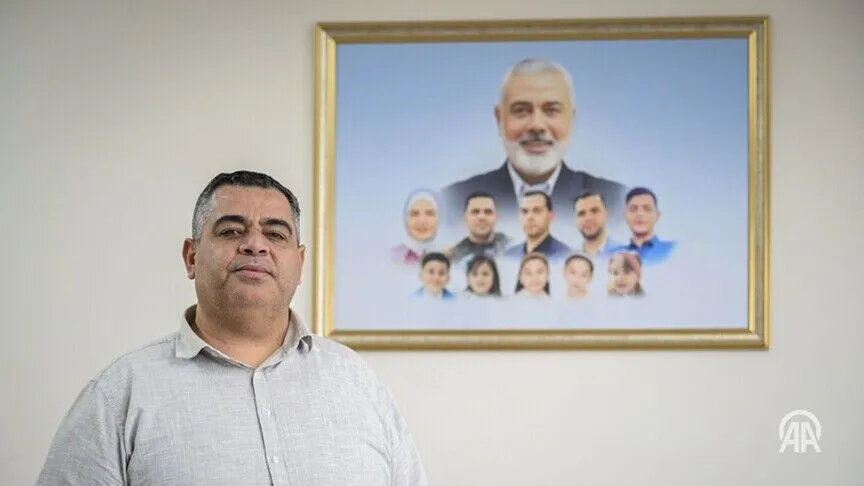
Abdul Salam Haniyeh, the son of slain Hamas Political Bureau chief Ismail Haniyeh, said more than 75 members of his immediate family and 250 members of the wider Al-Hajj clan have been killed during Israel’s war on the Gaza Strip.
In an interview with Anadolu marking the second year of his father’s assassination, Abdul Salam described Türkiye as “a political supporter of the Palestinian people,” praised President Recep Tayyip Erdogan’s backing of the Palestinian cause and expressed hope that mediation efforts by Egypt, Qatar and Türkiye would succeed in securing implementation of the Gaza ceasefire agreement.
Family portrait bears scars of war
Standing before a large family portrait hanging on the wall, Abdul Salam pointed to the faces of relatives killed during the war.
He identified Ismail Haniyeh’s three sons — Mohammed, Hazem and Amir — along with several grandchildren who were killed in an Israeli strike April 10, 2024, the first day of Eid al-Fitr, the Muslim holiday at the end of the holy month of Ramadan.
“More than 75 members of the Haniyeh family have been martyred during the war,” he said, adding that 250 members of the broader Al-Hajj clan had also been killed.
‘Teacher, mentor and caring father’
Abdul Salam described his father as a man who combined the roles of father, educator, leader and friend.
“At home, my father was a teacher, mentor, leader, caring father and friend,” he said.
He said Ismail Haniyeh treated his children as friends, regularly sought their opinions and remained closely connected to his extended family.
“We miss his beautiful voice, his warm presence, our meetings with him and our Quran recitation sessions at home,” he said.
Quoting Arabic poetry, he added, “In the darkest night, the full moon is most missed.”
‘Remain among the people’
One of his father’s most important pieces of advice was never to become detached from ordinary people or from Gaza City’s Beach refugee camp, where the family was raised, according to Abdul Salam.
“He always advised us to remain among the people, for the people, and close to our family, neighbors and mosque, because the people are one’s greatest asset in this life,” he said.
He said his father urged his children to stay humble, preserve family ties, serve their community, maintain their prayers and Quran recitation, and support people in times of grief and joy.
“He always reminded us that he could leave this world at any moment and that we should uphold these values after his death,” he added.
‘Still present in our people’s lives’
Abdul Salam said his father continues to occupy a prominent place in Palestinian public life two years after his assassination.
“He remains present in every aspect of our people’s lives,” he said, citing continued public, political and media commemoration of his legacy.
He argued that remembering Palestinian leaders who were killed reinforces the message that the Palestinian struggle will continue.
Ismail Haniyeh was assassinated July 31, 2024, at his residence in Tehran after attending the inauguration ceremony of Iranian President Masoud Pezeshkian. Israeli Defense Minister Israel Katz acknowledged Israel’s responsibility for the assassination in December 2024.
‘Türkiye is a political supporter’
Abdul Salam said Türkiye hosts thousands of Palestinians and has consistently provided political and humanitarian support.
He praised Erdogan’s stance on Gaza and his support for the Palestinian cause.
“Türkiye stands with the Palestinian people under President Erdogan and is making every effort to end the occupation of Palestinian land, in accordance with international law and UN resolutions, and to establish a Palestinian state,” he said. “There is a feeling that we have political support from Türkiye under President Erdogan.”
He highlighted Türkiye’s diplomatic efforts at the UN Security Council, the UN General Assembly and in contacts with the US administration.
Public solidarity should influence leaders
Abdul Salam welcomed growing international public support for the Palestinian cause, including recognition of the State of Palestine by several European countries.
But he argued that popular solidarity must translate into political action.
“The message of the people must reach the tables of international political leaders so that the conflict ends, the occupation ends and the Palestinian state is established,” he said.
He urged European countries and the broader international community to work toward ending the war, ending the Israeli occupation of Gaza and the occupied West Bank, and stopping settler attacks.
He said more than 1.8 million Palestinians are living in tents while Israel controls more than 70% of the Gaza Strip and much of the enclave’s infrastructure has been destroyed.
Hope for Egypt-Qatar-Türkiye mediation
Abdul Salam expressed hope that mediation efforts by Egypt, Qatar and Türkiye would lead to implementation of the ceasefire agreement.
“We are in the midst of mediation by Egypt, Qatar and Türkiye, and we hope there will soon be implementation of the agreement and that Israel will abide by it,” he said.
He praised the role played by the three countries and said he hoped the agreement would restore hope, reconstruction and normal life to Gaza and lead to a full Israeli withdrawal.
His remarks come as Egypt, Qatar and Türkiye continue efforts to implement the second phase of the Gaza ceasefire roadmap after consultations with Hamas and other Palestinian factions.
The Board of Peace and US President Donald Trump announced an agreement Friday on implementing the next phase of the ceasefire, with the board saying Hamas had approved a detailed roadmap.
‘Gaza’s children deserve to live’
Abdul Salam addressed the people of Gaza. “We are from you, and you are from us,” he said.
He said Gaza’s children are appealing to the world to stop the violence after more than 30,000 children have been killed during the war.
“The children of Gaza and Palestine deserve to live like children everywhere else, to build their future, receive an education, and live with hope and stability,” he said.
Despite the ceasefire that took effect Oct. 10, 2025, Palestinian authorities said Israel has continued to violate the agreement, with Gaza’s Health Ministry reporting 1,222 people have since been killed and 4,053 injured.
The ministry said the overall death toll since October 2023 has reached 73,349, with 174,162 injured. Anadolu
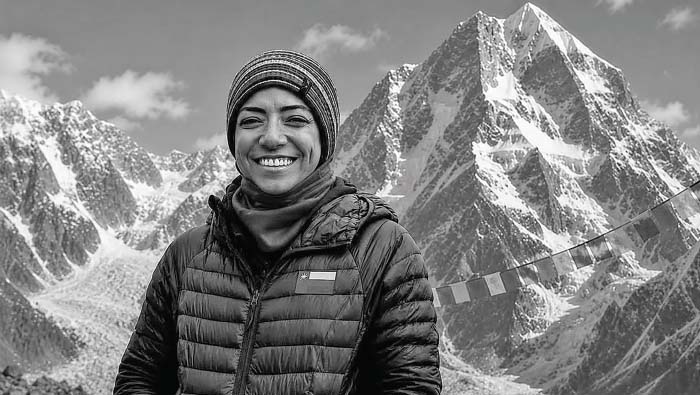
Oman has been plunged into mourning following the tragic death of pioneering mountaineer Nadhira bint Ahmed Al Harthy on Thursday, whose life was cut short in a devastating avalanche while climbing in northern Pakistan, bringing an abrupt end to the extraordinary journey of the woman who inspired a generation by carrying the Omani flag to some of the world’s highest and most dangerous peaks.
Nadhira was among a 10-strong team of climbers reported missing following the avalanche in Pakistan-administered Gilgit-Baltistan while attempting to climb Broad Peak, the world’s 12th-highest mountain at 8,047 metres. Her death – alongside that of the Nepalese climber Pur Bahadur Gurung – was announced by the Alpine Club of Pakistan on social media on Friday.
Nadhira etched her name into Oman’s history books in 2019 when she became the first Omani woman to conquer Mount Everest, planting the national flag atop the world’s highest mountain and inspiring countless young Omanis to dream beyond perceived limits.
Nadhira, who was the second Omani national to summit Mount Everest after late Khalid Al Siyabi, became a landmark figure for adventurers across the Sultanate of Oman.
Among the seven still missing from the 10-person expedition on Broad Peak, is renowned Nepal-born climber Nirmal Purja. The multinational climbing group was being led by Purja. He is known for climbing all 14 of the world’s 8,000m-plus mountains in just over six months in 2019.
Three of four climbers’ bodies have been located by Pakistani search crews.
Nadhira’s death triggered an unprecedented wave of grief across the Sultanate, with ministries, senior officials, diplomats, sports personalities and ordinary citizens paying tribute to a woman widely regarded as a symbol of courage, resilience and national pride.
Tributes also spread widely across social media, where thousands of Omanis shared messages celebrating her legacy.
The Ministry of Foreign Affairs confirmed that it is working closely with the relevant Pakistani authorities to complete the formalities required to repatriate Al Harthy’s body to Oman after it was recovered during a difficult search and recovery mission on Broad Peak. Times of Oman
In a statement, a spokesperson for the ministry’s Consular Department expressed profound sorrow over the loss, while extending heartfelt condolences to her family and loved ones.
The ministry also highlighted that Nadhira’s impact reached far beyond mountaineering.
As Chairperson of the Oman-Nepal Friendship Association, she played a significant role in strengthening humanitarian and cultural relations between Oman and Nepal, promoting friendship, cooperation and community engagement.
The Ministry of Culture, Sports and Youth described her as one of Oman’s most inspiring personalities, saying her life represented ambition, perseverance and determination. The ministry said the nation had lost an exceptional figure whose achievements would continue to inspire future generations long after her passing.
The Civil Defence and Ambulance Authority also mourned her death, remembering her as a passionate advocate of safety awareness. The authority said she consistently demonstrated exemplary commitment to safety procedures during her expeditions and actively supported initiatives aimed at promoting a culture of safety throughout society.
Condolences poured in from prominent Omani figures who remembered not only her remarkable achievements but also her character and determination.
Saud Al Harthy described his cousin as a young woman defined by resilience, strength and an unwavering determination to succeed. He said she had left behind a legacy of extraordinary accomplishments that would continue to elevate Oman’s name on the international stage.
Former leading women’s sports administrator Saada Al Ismaili paid tribute to what she described as her inspiring national, educational, sporting and historical legacy. She praised her ability to pursue the demanding mountaineering pursuits, while proudly raising Oman’s flag atop some of the world’s most challenging mountains.
Khalid Al Muslahi, Undersecretary of the Ministry of Foreign Affairs for Administrative and Financial Affairs, described Nadhira as the embodiment of perseverance and determination. He said she would forever be remembered as the first Omani woman to stand on the summit of Mount Everest and as a lasting symbol of courage whose legacy would remain deeply rooted in the hearts of Omanis.
Pakistan’s Ambassador to Oman, Naveed Safdar Bokhari, also expressed his condolences.
“Deeply saddened by the tragic news of demise of Nadhira Al Harthy in an avalanche accident. She was a legend in the field of mountaineering and a great source of inspiration for millions. I wish to convey our heartfelt condolences to her family and the entire Omani nation.”
Nadhira etched her name into Oman’s history books in 2019 when she became the first Omani woman to conquer Mount Everest, planting the national flag atop the world’s highest mountain and inspiring countless young Omanis to dream beyond perceived limits.
Nadhira’s high-altitude accomplishments also included successful summits of several of the world’s most formidable 8,000m peaks, including Manaslu, K2, and Nanga Parbat.
She became the first Arab woman to reach the summit of Nepal’s challenging Ama Dablam. Earlier in her mountaineering career, she had also climbed Mount Kilimanjaro, Africa’s highest mountain.
To many Omanis, however, her greatest achievement extended beyond records and summits. She became a role model who inspired women, young people and aspiring adventurers to pursue ambitious dreams while proudly representing their country on the world stage.
Following a challenging search and recovery operation, Nadhira’s body was recovered from Broad Peak and was transported by helicopter to Skardu. From there, arrangements are being made to repatriate her remains to Oman, where family, friends and the nation will bid a final farewell to a woman whose courage took the Omani flag to the roof of the world—and whose legacy will continue to inspire generations to come. Times of Oman
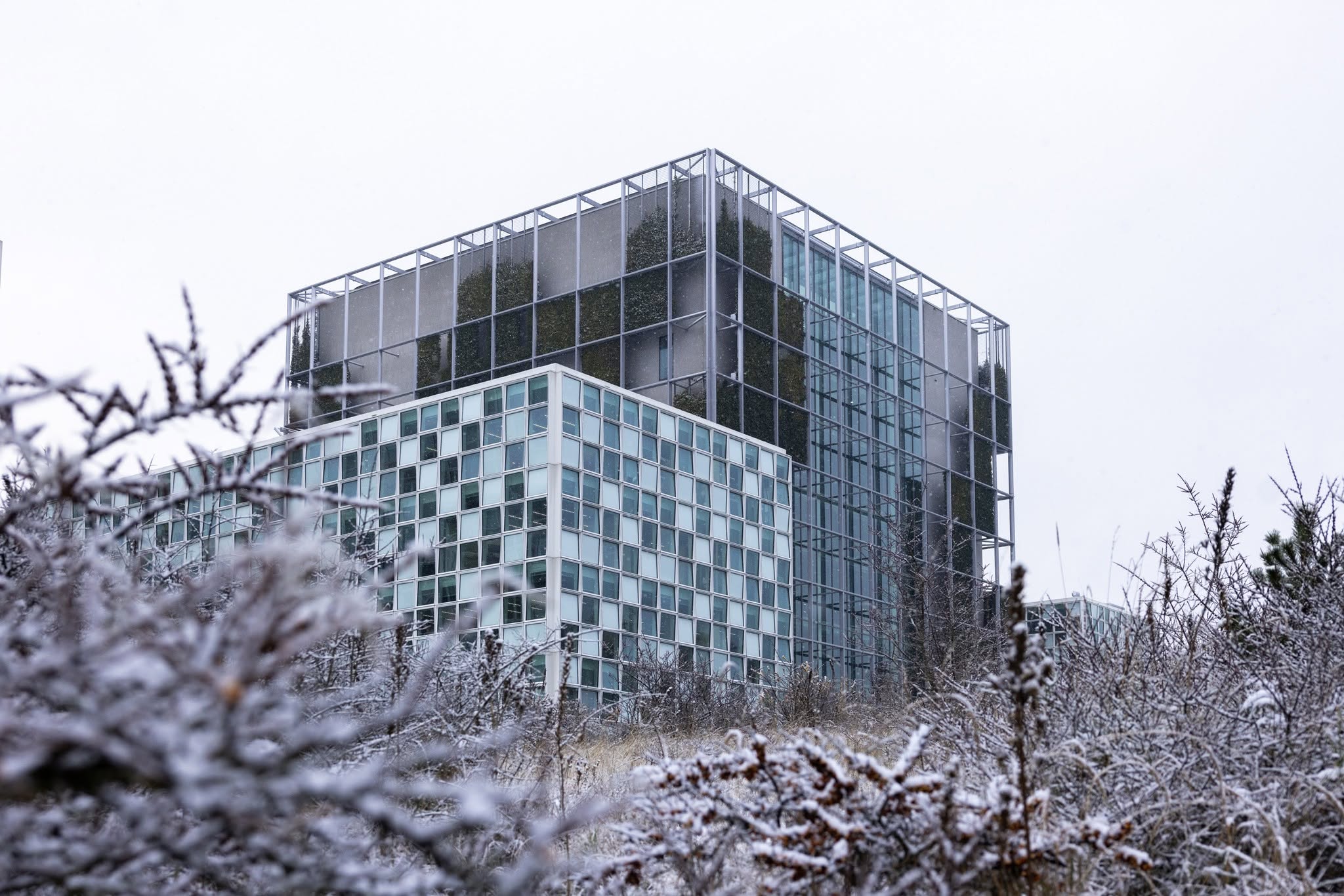
The coordinated actions to dismantle the International Criminal Court (ICC) and hinder its jurisdiction are deeply troubling and signal a dangerous path forward. This trend has become apparent with Venezuela and Chad announcing plans to withdraw from the Rome Statute. This occurs alongside clear US incitement efforts against the Court, including sanctions on its officials, and the European state parties’ lack of substantial action on arrest warrants for Israeli officials.
These actions risk undermining the international criminal justice system and depriving victims of international crimes of one of the few remaining accountability mechanisms, thereby entrenching impunity for perpetrators and providing political and legal cover for ongoing grave violations of international law.
Euro-Med Human Rights Monitor expresses deep concern over the Chadian government’s announcement that it has begun the process of withdrawing from the ICC. This comes shortly after Venezuela notified the United Nations of its withdrawal, following similar notifications from Niger, Mali, and Burkina Faso. These actions indicate a concerning trend of countries moving away from the Rome Statute, both within and outside Africa.
Chad plays a crucial role in Darfur investigations because of its direct border with the region and its large refugee, survivor, and witness populations. It has also recently supported ICC teams in documenting crimes. Although Chad’s withdrawal does not legally remove the Court’s jurisdiction over Darfur crimes, it may significantly hinder access to victims and evidence and impede cooperative efforts.
Additionally, Venezuela’s decision is especially significant because it occurs during an active investigation by the Court into alleged crimes against humanity since April 2017. This investigation involves suspected state security forces, civilian authorities, and pro-government actors. There are serious concerns that the withdrawal might be used as a tool to hinder cooperation and reduce chances of holding accountable those responsible for the crimes under investigation.
Venezuela and Chad’s simultaneous withdrawal decisions, along with similar actions by other states, reveal a coordinated effort to weaken the Court through two main strategies. The first involves a fierce campaign led by the United States with Israeli backing, employing sanctions, threats, and public rhetoric to encourage states to withdraw. The second consists of internal weakening tactics by state parties’ governments, such as withdrawing during investigations, ignoring cooperation duties, or selectively enforcing decisions while refusing to arrest or surrender wanted individuals.
Washington’s welcoming of Venezuela and Chad’s withdrawals on 25 and 27 July are part of a broader campaign, announced by US Secretary of State Marco Rubio on 13 July, aimed at dismantling the Court.
The successive withdrawals primarily harm the victims by limiting their access to justice, rather than penalising the Court as an institution. This situation gives perpetrators of international crimes more room for impunity, especially when there are no effective, independent national judicial alternatives.
The criticisms levelled at the ICC regarding slow procedures, selectivity in case handling, and limited outcomes, particularly concerning crimes committed outside Africa, are legitimate and demand serious structural reforms to strengthen the Court’s independence, efficiency, and consistency. However, addressing these shortcomings must not be done by dismantling or withdrawing from the Court, but by reforming it, enhancing its effectiveness, and ensuring it exercises its jurisdiction free from political interference or selectivity.
Past operational failures should not justify undermining the Court’s authority. The bias within the international justice system highlights the need to reform accountability mechanisms and broaden their scope, rather than weakening the few tools available to hold perpetrators of the gravest international crimes accountable.
Euro-Med Monitor points out the irony of the US administration exploiting African concerns about ICC selectivity while simultaneously intensifying its campaign against the international judicial system. This escalation is mainly due to the Court’s expanded reach to include officials in Israel, a key US ally.
Washington’s imposition of financial sanctions and travel restrictions on the ICC Prosecutor, judges, and deputy prosecutors due to their work on cases involving US and Israeli officials represents a blatant interference in the independence of international justice. These measures not only intimidate Court staff and block access to vital financial and technical resources but also discourage banks, corporations, organisations, and experts from cooperating, which hampers investigations, delays enforcement of decisions, and limits victims’ access to justice. Moreover, it sets a dangerous precedent that allows powerful states to penalise international justice whenever it targets their officials or allies, thereby broadening impunity.
On 21 November 2024, the ICC Pre-Trial Chamber I issued arrest warrants for Israeli Prime Minister Benjamin Netanyahu and former Defence Minister Yoav Gallant, after judges found reasonable grounds to believe they are criminally responsible for war crimes and crimes against humanity in the Gaza Strip.
Both arrest warrants remain in effect and must be obeyed by the parties involved. The argument that the Court lacks jurisdiction because Israel is not a signatory to the Rome Statute is unfounded, as jurisdiction is based on crimes committed within the territory of the State of Palestine, a member state. This covers the Gaza Strip, the West Bank, and East Jerusalem. Therefore, Israel’s non-acceptance of the Rome Statute does not exempt its officials from accountability for crimes allegedly committed on the land of a party state.
The fact that Greece, Italy, and France permitted a government aircraft carrying Israeli Prime Minister Benjamin Netanyahu to fly through their airspace during his recent trip to the United States, despite all three being state parties to the Rome Statute and aware of the active arrest warrant against him, raises serious questions about whether this conduct aligns with their legal duty to cooperate in good faith with the Court and to refrain from undermining its decisions.
Granting prior airspace transit was not compulsory for these states; it was a sovereign choice they could refuse. This decision allowed an individual wanted by the International Criminal Court on suspicion of war crimes and crimes against humanity to pass, which undermines the purpose of the arrest warrant. It also highlights a contradiction: while these states publicly support legal obligations, their actions of helping wanted persons evade arrest contradict their stated commitments.
The European Union’s political backing for the Court diminishes in credibility and practical value when member states allow a judicially wanted official to transit through their territories, instead of denying transit permissions and using their authority to prevent their territories from being used to evade arrest warrants.
Euro-Med Monitor emphasises that Greece, Italy, and France need to give clear legal reasons for granting transit permissions. It is essential to adopt strict, clear protocols to prevent facilitating the movement of wanted persons and ensure their rapid arrest and surrender to the Court if they enter or land in these countries, in line with their obligations under the Rome Statute.
It is important to clearly separate proceedings related to the ICC Prosecutor Karim Khan’s personal and professional conduct from the Court’s judicial decisions. The process of dismissing or investigating Khan is a separate institutional matter and does not affect the legality of the arrest warrants.
Holding any Court official accountable for misconduct, when proven through independent, fair procedures that ensure the rights of all involved parties and safeguard whistleblowers and victims, is an institutional obligation that upholds the Court’s integrity without threatening its independence. Using individual accountability as a reason to discredit ongoing investigations or nullify independent judicial rulings is unacceptable.
Euro-Med Monitor rebukes any attempts to leverage Khan’s case to challenge the investigation into the situation in Palestine or the arrest warrants for Netanyahu and Gallant. The warrants were not issued by the Prosecutor in his personal capacity, but by an independent Pre-Trial Chamber that determined, following an evaluation of prosecution submissions, that there were reasonable grounds to believe both individuals bear criminal responsibility for crimes within the Court’s jurisdiction. Consequently, the enforceability and legal validity of the warrants do not depend on Khan remaining in office.
The removal of the Prosecutor does not disrupt the Court’s legal or institutional continuity, nor does it invalidate ongoing investigations or active arrest warrants, including those related to Palestine and Venezuela. Additionally, it does not absolve state parties from their obligation to cooperate fully with the Court and enforce its judicial orders.
A transparent, independent, and competitive process is crucial for selecting a new Prosecutor. This process should be based on clear public criteria for competence, integrity, and experience, ensuring candidates undergo rigorous professional and ethical assessments. It must also shield the selection from political influence and conflicts of interest. The Court must guarantee continuous progress on all cases without delays or bias, avoiding the transitional period being used to disrupt investigations or expose them to pressure from the US and Israel, which could undermine accountability.
Concerning the legal consequences of the withdrawals, notifications from Chad and Venezuela to begin withdrawal procedures do not cause an immediate departure from the Rome Statute. Article 127 states that a withdrawal becomes effective one year after the UN Secretary-General receives written notification, unless a later date is specified. Until that time, both countries remain state parties with legal obligations, including cooperating with the Court and fulfilling its requests.
Venezuela’s withdrawal, even after it takes effect, does not remove the Court’s jurisdiction over crimes committed while the Rome Statute was in force for the country. It also does not end ongoing investigations or cancel cooperation obligations related to proceedings started before the withdrawal became effective. Similarly, Chad’s withdrawal does not impact the Court’s jurisdiction over Darfur crimes or disrupt cooperation processes initiated during its membership. Withdrawal does not erase individual criminal responsibility nor stop the Court from considering issues submitted before it officially took effect.
Chad, Venezuela, Niger, Mali, and Burkina Faso should reverse their withdrawal decisions, retract their notifications before they become effective, uphold their legal commitments, and collaborate with other States Parties to reform the Court and address operational issues, rather than undermining the international criminal justice system and depriving victims of one of the few accountability tools available.
Concerned states should fully cooperate in relevant cases and investigations. This includes allowing Court investigators access to victims, witnesses, information, and evidence, while ensuring the protection of victims and witnesses and the preservation of evidence. States must also avoid using withdrawal procedures that could hinder investigations or reduce accountability for international crimes within the Court’s jurisdiction.
The United States should stop its efforts to dismantle the Court and lift any financial sanctions and travel restrictions imposed on its judges, prosecutors, and associates. EU member states and other allies need to work together to implement legal, financial, and technical strategies that protect the Court and its personnel from sanctions and political influence, so it can continue to utilise the necessary services and resources to fulfil its responsibilities.
European state parties to the Rome Statute should turn their support for the Court into tangible actions by refusing to accept wanted individuals or allow their transit through their airspace. They must also ensure the arrest and surrender of such individuals on their territories, adhering strictly to legal obligations, including executing arrest warrants for Netanyahu and Gallant without bias or political influence.
Euro-Med Monitor calls on state parties to review national legislation and adopt clear, binding protocols for executing arrest and surrender requests, as well as for handling transit, landing, and official visit requests by wanted individuals, thereby preventing procedural loopholes from being exploited to protect them.
It is vital to persist in investigating the situation in the State of Palestine, covering crimes in the Gaza Strip, the West Bank, and East Jerusalem. This includes executing arrest warrants for Netanyahu and Gallant without bias or political influence and rejecting any efforts to interfere with or alter the investigation’s direction or priorities.
Euro-Med Monitor calls on the Assembly of States Parties to ensure a transparent, independent, and competitive process for choosing and electing the new Prosecutor. This process should be based on published criteria for competence, integrity, and experience, with candidates undergoing comprehensive professional and ethical evaluations. It is also essential to disclose the selection procedures, prevent political interference and conflicts of interest, and thereby protect the independence of the Prosecutor’s Office. These measures are vital for maintaining the trust of victims and Court staff, and for ensuring ongoing investigations.
National judicial authorities should invoke universal jurisdiction as per their national laws, initiating independent investigations into international crimes and prosecuting suspects when jurisdiction is applicable. This approach broadens accountability opportunities beyond just the International Criminal Court. Euromedmonitor

marwan
 CrossFireArabia