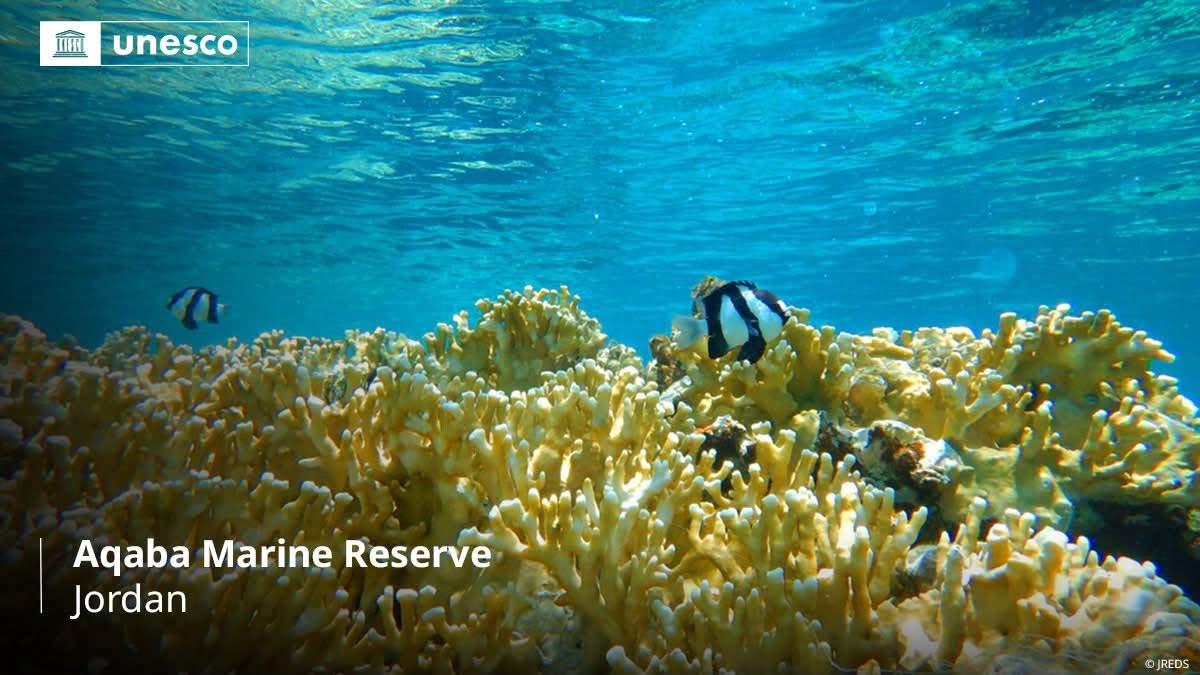
On July 25, Jordan achieved a historic milestone as the Aqaba Marine Reserve was officially inscribed on the UNESCO World Heritage List during the 48th Session of the World Heritage Committee in Busan, Republic of Korea. Recognized under UNESCO’s natural criteria (ix) and (x), the Reserve earned global recognition for its outstanding ecological processes, extraordinary marine biodiversity, and exceptional contribution to the conservation of one of the world’s most resilient coral reef ecosystems. This inscription marks Jordan’s first natural World Heritage Site, adding a new dimension to the country’s internationally celebrated cultural heritage.
This achievement extends far beyond international recognition. It positions Jordan at the center of one of the defining global challenges of the twenty-first century: climate change. While coral reefs around the world continue to suffer unprecedented bleaching events caused by rising sea temperatures and ocean acidification, the coral reefs of the northern Red Sea have demonstrated an extraordinary ability to withstand environmental stress. Scientists increasingly regard the reefs of Aqaba as among the most climate-resilient coral ecosystems on Earth, offering valuable insights into the future survival of tropical reefs worldwide.
The Aqaba Marine Reserve is therefore more than a protected area. It is a living laboratory for international scientific research and a beacon of hope in the global effort to understand, protect, and restore marine ecosystems. The Reserve safeguards hundreds of coral species, over five hundred species of fish, and an extraordinary diversity of marine life that continues to thrive in conditions that threaten reefs elsewhere. At a time when the world is searching for solutions to biodiversity loss and climate adaptation, Jordan now hosts one of the planet’s most significant natural assets.
The UNESCO inscription also carries profound implications for Jordan’s tourism sector. Across the world, World Heritage designation is recognized as a symbol of quality, authenticity, and long-term conservation. It strengthens international confidence, raises global visibility, and attracts travelers seeking meaningful, sustainable, and environmentally responsible experiences. Increasingly, today’s visitors are choosing destinations that demonstrate a genuine commitment to protecting nature and preserving cultural identity. The Aqaba Marine Reserve perfectly reflects this global shift toward sustainable tourism.
For Jordan, this recognition presents an opportunity to diversify its tourism economy beyond traditional cultural attractions. Aqaba can now establish itself as a premier international destination for marine ecotourism, diving, underwater photography, scientific expeditions, educational travel, and conservation-focused experiences. Universities, research institutions, environmental organizations, and climate scientists from around the world are likely to view the Reserve as an increasingly important destination for collaboration and discovery. Such partnerships generate knowledge, investment, employment opportunities, and long-term economic benefits while reinforcing Jordan’s reputation as a responsible steward of global heritage.
Perhaps the greatest opportunity lies in integrating this achievement into Jordan’s broader tourism vision through the Golden Triangle—the internationally renowned destinations of Aqaba, Petra, and Wadi Rum. Few countries possess such an extraordinary concentration of globally significant heritage within such a compact geographical area. Within only a few hours, visitors can dive among some of the world’s most climate-resilient coral reefs, stand before the timeless grandeur of Petra, and experience the breathtaking desert landscapes of Wadi Rum. Together, these destinations offer an unparalleled journey through sea, stone, and desert, where nature, culture, history, and adventure come together in one seamless experience.
The Golden Triangle now tells a more compelling story than ever before. Aqaba represents the resilience of nature. Petra embodies the resilience of human civilization. Wadi Rum showcases the dramatic geological forces that have shaped the landscape over millions of years. Together, they present Jordan as a destination where natural heritage and cultural heritage complement one another, creating a tourism model that is both economically powerful and environmentally sustainable.
Petra and Aqaba, in particular, share a remarkable narrative despite representing different forms of heritage. Petra stands as one of humanity’s greatest achievements in adapting to an arid environment through sophisticated engineering, water management, and urban planning. Aqaba demonstrates how nature itself has adapted to environmental extremes, preserving coral reefs that continue to flourish despite rising sea temperatures. One tells the story of human resilience; the other tells the story of ecological resilience. Together, they position Jordan as a global symbol of adaptation, innovation, and coexistence between people and nature.
This achievement also reinforces Jordan’s international leadership in heritage conservation. With six UNESCO World Heritage properties—five cultural and now one natural—the Kingdom demonstrates that protecting heritage is not limited to preserving monuments and archaeological sites. It extends equally to safeguarding ecosystems, biodiversity, and the natural landscapes upon which future generations will depend. The inscription of the Aqaba Marine Reserve broadens Jordan’s global identity from a country renowned for its ancient civilizations to one that also contributes meaningfully to international environmental conservation.
Yet UNESCO inscription is not the conclusion of the journey—it is the beginning of a greater responsibility. Global recognition brings with it an obligation to strengthen conservation efforts, enhance scientific monitoring, carefully manage tourism growth, regulate coastal development, and ensure that local communities remain active partners in protecting this remarkable marine environment. Sustainable management must remain the foundation upon which future tourism development is built.
Jordan has shown that conservation and economic development are not competing priorities but complementary objectives. Protecting nature creates opportunities for scientific innovation, sustainable investment, local employment, and responsible tourism. The Aqaba Marine Reserve now stands as a global example of how environmental stewardship can generate lasting social and economic value while preserving irreplaceable natural heritage.
As the world confronts the realities of climate change, biodiversity loss, and increasing environmental uncertainty, Jordan offers a powerful message of optimism. The inscription of the Aqaba Marine Reserve is more than a national achievement—it is a contribution to humanity’s shared future. Together with Petra and Wadi Rum, it establishes the Golden Triangle as one of the world’s most remarkable destinations, where ancient civilizations, resilient ecosystems, and extraordinary landscapes unite to tell a story of hope, sustainability, and the enduring relationship between people and the natural world.
Yazan K. Mahadin is commissioner for Petra Archeological park and Tourism – PDTRA. He contributed this article to The Jordan Times
With a complete power outage, destruction of water infrastructure, and the sweltering heat of summer, the overcrowded tents and shelters in the Gaza Strip have become veritable ovens.
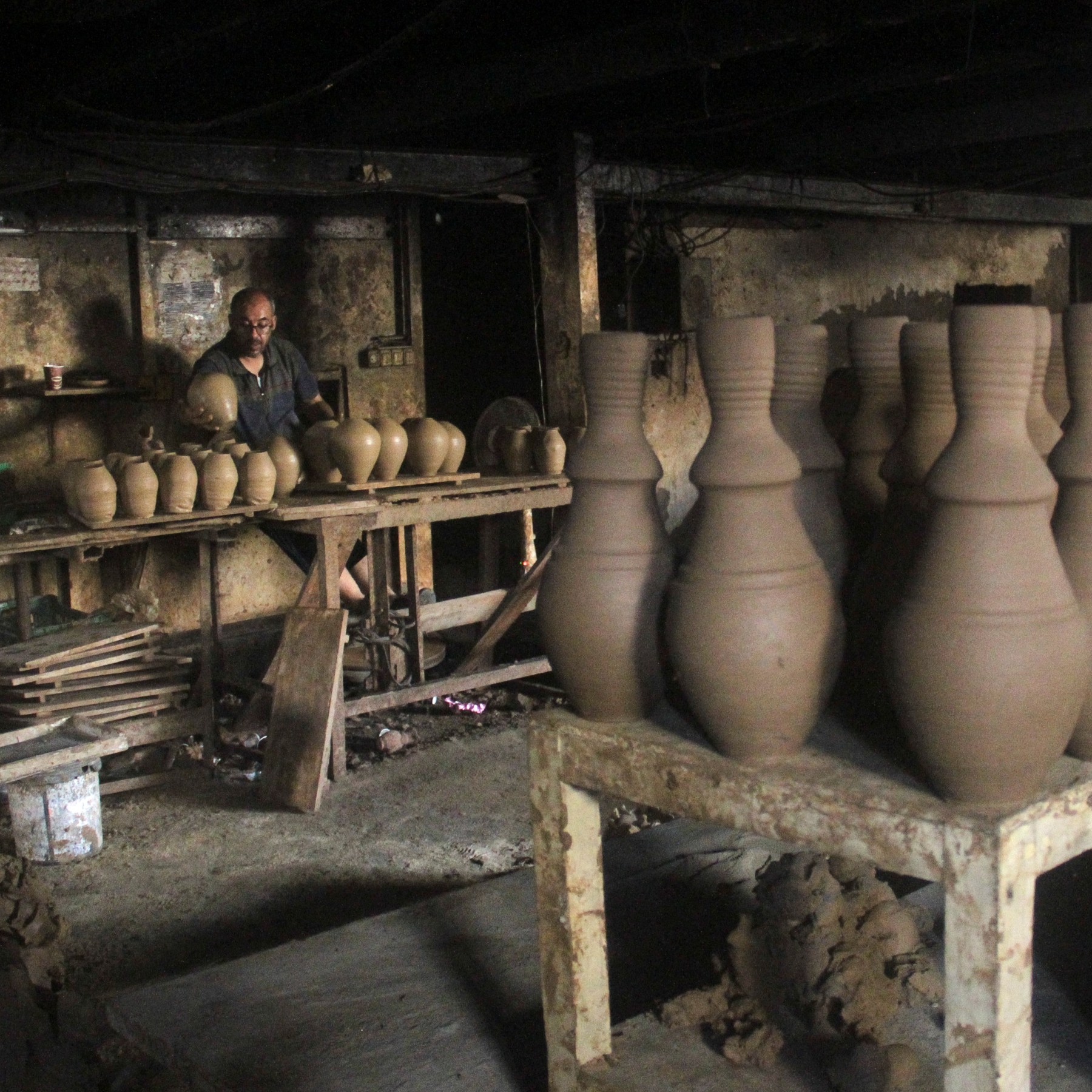
Amid this suffering, the earthenware jug, a product of the siege and displacement, has become a true lifeline, serving as an indispensable “natural refrigerator” for thousands of families searching for a drop of cool water under the burning plastic sheeting.
As temperatures exceed normal levels inside the camps, water stored in plastic containers becomes hot and undrinkable, posing a health risk with prolonged exposure to the sun.
This is where the earthenware jug comes in. The natural porosity of the clay allows water to seep through and evaporate, significantly lowering its temperature and providing displaced people with a refreshing dose of cool water to alleviate the scorching heat.
Craft Resisting Extinction
From the heart of the rubble, this historic craft has been revived. After the ongoing Israeli war destroyed the pottery district in Gaza’s Old City, artisans relocated their makeshift workshops to the central and southern parts of the Gaza Strip, restarting production with rudimentary tools and increased physical effort.
Craftsman Abu Muhammad al-Hissi told Quds Press: “It’s true that the workshops were destroyed by the bombing, and cooking gas is no longer available to power the kilns for drying and firing pottery. However, we now rely on the scorching sun to dry the pottery, then fire it using pieces of wood, cardboard, and whatever rubble we can find from destroyed houses and buildings.”
Despite this revival and increased demand, acquiring a piece of pottery is no longer easy. The scarcity of materials, the difficulty in obtaining firewood, and the complete reliance on primitive transportation via animal-drawn carts or even carrying the pottery by hand have caused a significant price increase, making it an additional financial burden for families who have lost everything.
The price of a 10-liter water jug costs around 80 shekels ($25), while larger jugs, exceeding 15 liters, cost approximately $50.
Faced with this reality, Gazans resort to ingenious methods to maximize the use of these clay pots. They place an ice cube, purchased from the market, inside, allowing the clay’s porous structure to retain cold water for more than 12 hours.
This rudimentary method has become an alternative source of income for some displaced families, who now sell bags of cold water to passersby in markets and at intersections, creating a new space for survival and continuity from clay and thirst.
For 1000 days, Gaza existed between life and death. Our endurance is no longer breaking news; it has become a painful question confronting the world.
As a journalist from the Gaza Strip, I have lived through the genocide since its very first day. I am still trying to remain strong, not for my own sake, but for the mission I believe I was born in Gaza to fulfill. It is a mission that goes beyond personal pain, becoming a testimony to an entire era in which human beings are being erased before the eyes of the world.
What has happened in Gaza since October 7 cannot be reduced to statistics, news headlines, or even thousands of journalistic reports. It is an entire chapter in the history of humanity unfolding before the world’s eyes. It is a story that must be documented, preserved, and taught to future generations, not only as a record of destruction, but as a testament to what human beings can endure when every essential means of survival is stripped away.
For 1000 days, Gaza has existed between life and death. Our endurance is no longer breaking news; it has become a painful question confronting the world: How much suffering can a human being endure? And how many tragedies can the world witness before deciding that what has happened has crossed every possible line?
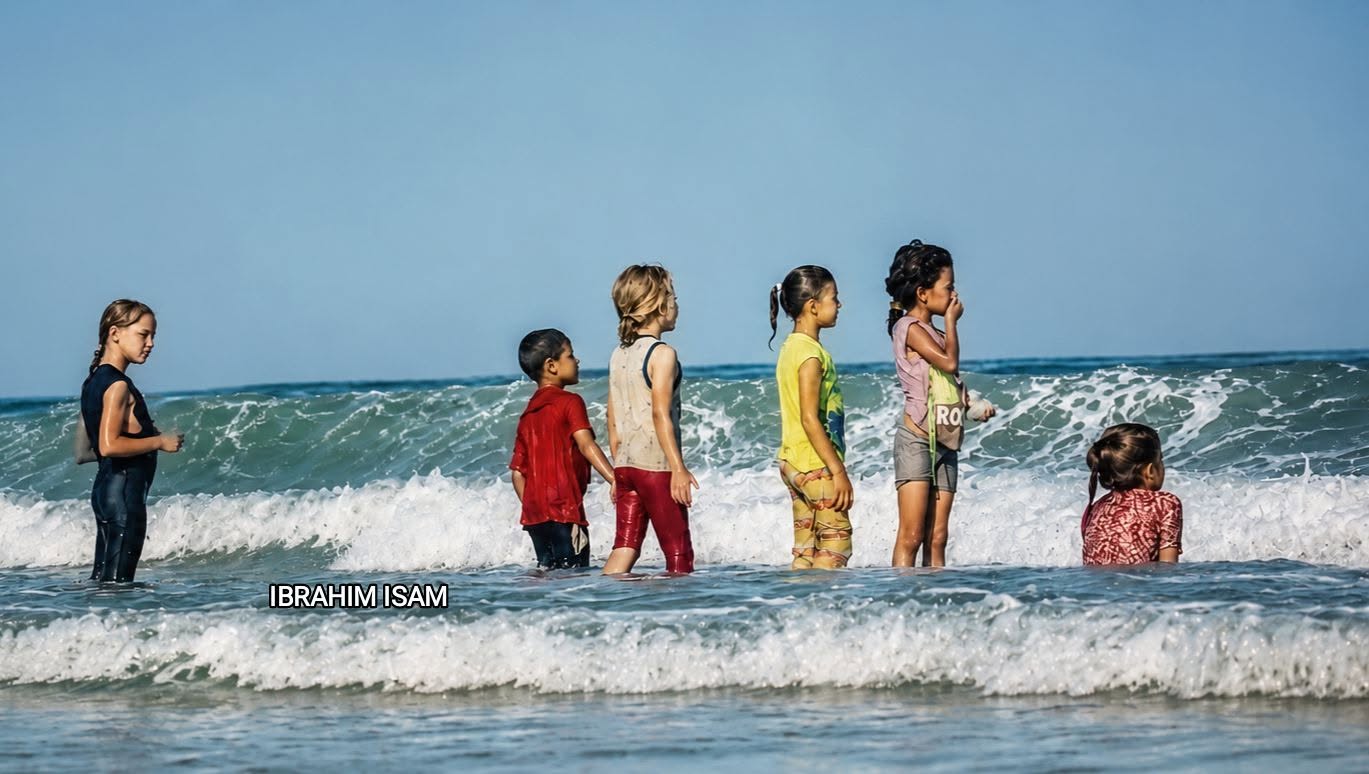
This war has touched every family in Gaza. There is not a single home that has been spared grief, fear, displacement, or loss. Families who once believed their homes were the safest places on earth found themselves sleeping in tents, schools, hospitals, or out in the streets. Parents carried their children through the ruins, while children learned the sound of bombs before they ever learned what safety felt like.
We moved from one place to another, not because we wanted to leave, but because survival demanded it. Every time we were told there was a “safer place,” we gathered what little we had left and made our way there, hoping to find temporary shelter. But fear followed us wherever we went. Areas described as humanitarian zones became places of death, and safety became a word that appeared more often in official statements than in reality.
For many people around the world, home is associated with comfort, memories, and a sense of belonging. For Palestinians in Gaza, home has become a memory of what was lost. Entire neighborhoods have disappeared, and streets once filled with families have been reduced to fields of rubble. The places that once held our childhood memories now remind us only of those who are gone.
Yet despite everything, people in Gaza wake up every morning searching for a reason to keep going.
They search for water, struggle to find bread, and try to obtain medicine. They hold their children close throughout the night when the sound of explosions returns, and they rebuild small pieces of their lives again and again, knowing they may lose them once more.
This is what the world must understand: Gaza’s resilience is not a romantic story, nor is it an easy choice. It is the result of people being forced to fight for the most basic of human rights: the right to exist.
What Israel has done to Gaza, in full view of the international community, has forced us to question the very meaning of the principles the world claims to uphold. What does justice mean if those who suffer are left without protection? And what value do international laws have if civilians, hospitals, journalists, and children remain in danger despite the protections those laws are supposed to provide?
In Gaza, these are no longer abstract political or legal questions. They are questions asked every day under bombardment, while standing in line for bread, searching for clean water, and living inside fragile tents that offer protection from neither the weather nor the war.
We are not only searching for an explanation for what is happening to us. We are searching for an explanation for the world itself.
The people of Gaza have learned that no one is outside the circle of danger. Journalists, doctors, paramedics, civil defense crews, children, women, older people, and people with disabilities have all come face to face with the same reality: A life that can be endangered anywhere, at any moment.
Journalists did not simply document the destruction; they lived through it themselves. Many lost their homes, their families, and their colleagues, yet they continued carrying their cameras and documenting what was happening around them. They paid an immense price simply for preserving the memory of a place the world might otherwise have chosen to forget.
On a personal level, I lost 54 members of my family during the genocide. They were all killed, and entire branches of my family were erased from the civil registry. We grieved, we suffered, and we cried out under the weight of such immense loss, but we never abandoned our mission. I continued writing, documenting, and telling the world the truth because I know that every story left untold is another loss, and that bearing witness to what has happened has become a duty no less important than survival itself.
Doctors and healthcare workers faced a similar reality. Hospitals, which should be the safest places during war, became places of fear and destruction. Medical staff continued their work under impossible conditions, treating the wounded with extremely limited resources while facing the same danger that threatened the very patients they were trying to save.
What kind of world turns hospitals into battlefields? What kind of world arrests or targets doctors while they are carrying out their humanitarian duty? And what kind of world kills journalists in their homes, alongside their families, simply because they carried a camera instead of a weapon?
These are not isolated incidents. They are part of a much broader reality in which every line that was supposed to protect civilians has been crossed.
Among the most painful chapters of this war has been hunger.
Before this war, it was rare to hear of children dying from hunger in the modern world. In Gaza, however, hunger became a daily reality. It was no longer simply the absence of food; it became a condition that shaped every aspect of life. It first appeared on the faces of children before it appeared in official reports. It was visible in their frail bodies, in the exhaustion of parents, and in the despair of families searching for something as simple as bread.
We walked through streets where people were too weak from hunger to remain standing. Children cried throughout the night because their bodies could no longer understand why food had disappeared from their lives. Families shared the few crumbs they had, dividing tiny portions among many people and trying to convince themselves that tomorrow might be different.
But tomorrow usually brought the same reality.
We followed evacuation orders and went to areas described as “humanitarian zones.” We believed they might offer us some protection from the violence. Yet even there, people were killed, tents were burned, and families were destroyed.
The very idea of shelter became fragile, and safety became a word repeated in official statements but rarely experienced by those living through the war.
Many people remember the image of the little girl, Warda Jalal al-Sheikh, standing amid flames, smoke, and devastation after her family’s tent was struck and caught fire. Several members of her family were killed as she struggled to stay alive. Her image became a heartbreaking symbol of what it means to be born into a reality where fire surrounds you before you have even had the chance to understand the world.
Many also remember our colleague, journalist Ayman al-Jadi, who was waiting for his wife as she gave birth to their child. It should have been a moment of new beginnings, a moment to welcome new life. Instead, he was killed while waiting to meet his baby.
How can the world comprehend a reality in which death reaches even the moments meant to embody hope?
These stories are not exceptions. They are scenes repeated over and over in a place where simply staying alive has become extraordinary.
Even after the ceasefire was announced, the suffering did not simply disappear.
Across Gaza, a new reality began to take shape with the continued expansion of what has come to be known as the “Yellow Line.” Marked by yellow concrete blocks and military boundaries, these zones have redrawn the map of the Gaza Strip, cutting off access to vast areas of land.
The Yellow Line has continued to consume more territory, approaching nearly 70 percent of Gaza’s total area and separating communities from their homes, farmland, and neighborhoods. For many Palestinians, these yellow concrete barriers are not merely physical obstacles; they represent the continuation of displacement by other means.
Despite the ceasefire announcement, violations continued in full view of international mediators and the world. The nature of the war may have changed, but people’s sense of insecurity has not. The sound of bombardment may have faded in some areas, yet the fear of losing what remains has never left people’s hearts.
The expansion of these boundaries raises a painful question: Can there truly be a ceasefire while the map of Gaza continues to shrink?
For Palestinians, the yellow barriers have become a symbol of an even deeper fear: That the temporary measures imposed during the war will become a permanent reality, reshaping the future of an entire people.
After one thousand days of genocide, Gaza cannot be understood solely through the numbers of those killed, wounded, displaced, or left homeless. Statistics matter because they reveal the scale of the devastation, but behind every number is a human story, a family, a dream, a memory, and a life cut short.
The true story of Gaza is not only a story of destruction. It is also the story of people who refused to disappear.
It is the story of mothers who continued caring for their children despite their grief; fathers who searched for food under impossible circumstances; doctors who kept working despite exhaustion; journalists who continued writing despite the danger; and ordinary people who rebuilt small pieces of their lives even when everything around them had collapsed.
This resilience must not be mistaken for an acceptance of suffering. The ability of Palestinians in Gaza to survive does not make their suffering acceptable, nor does it absolve those who allowed this reality to continue of their responsibility. Survival is not proof that people are well. It is proof of the immense burden they have been forced to endure.
The world should not see Gaza’s resilience as a reason to move on and forget what has happened. It should see it as a reason to ask more difficult questions about justice, accountability, and the value the world places on human life.
One thousand days of genocide are not merely the passage of time. They are the living memory of an entire generation being written in real time. They are children growing up with images of destruction instead of ordinary childhood memories, and families learning how to mourn their loved ones while still struggling to survive.
What has happened in Gaza must not become another chapter that the world reads and then closes. It must remain an open testimony, a reminder of what happens when international principles are ignored and human suffering becomes something people watch from a distance.
Gaza’s resilience after one thousand days cannot be captured in a news report or a headline. It deserves to be written into the history books, not only as a record of pain, but as evidence of a people who continued to live despite every attempt to break them.
Because the story of Gaza is not only about what was done to it. It is also about what remains after everything else has been taken away.
Homes may have been destroyed, streets transformed, and familiar landmarks erased, but the people remain, carrying their memories, their names, their stories, and their determination to be seen and heard.
As a journalist from Gaza, I know there are countless stories that have yet to be told. Behind every destroyed building lies the history of a family. Behind every empty chair is someone we still mourn. Behind every survivor is a story of resilience that deserves to be heard.
In the end, we are still here.
We are still writing.
We are still documenting.
We are still bearing witness.
Because what remains untold about Gaza is far greater than anything the world has heard so far.
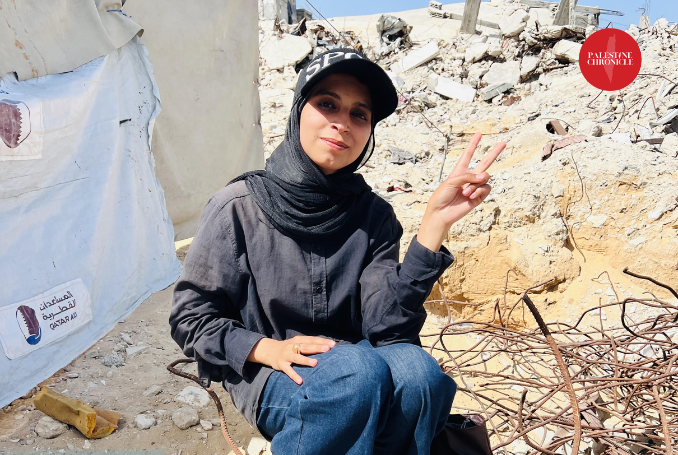
– Shaimaa Eid is a Gaza-based writer. She contributed this article to the Palestine Chronicle.
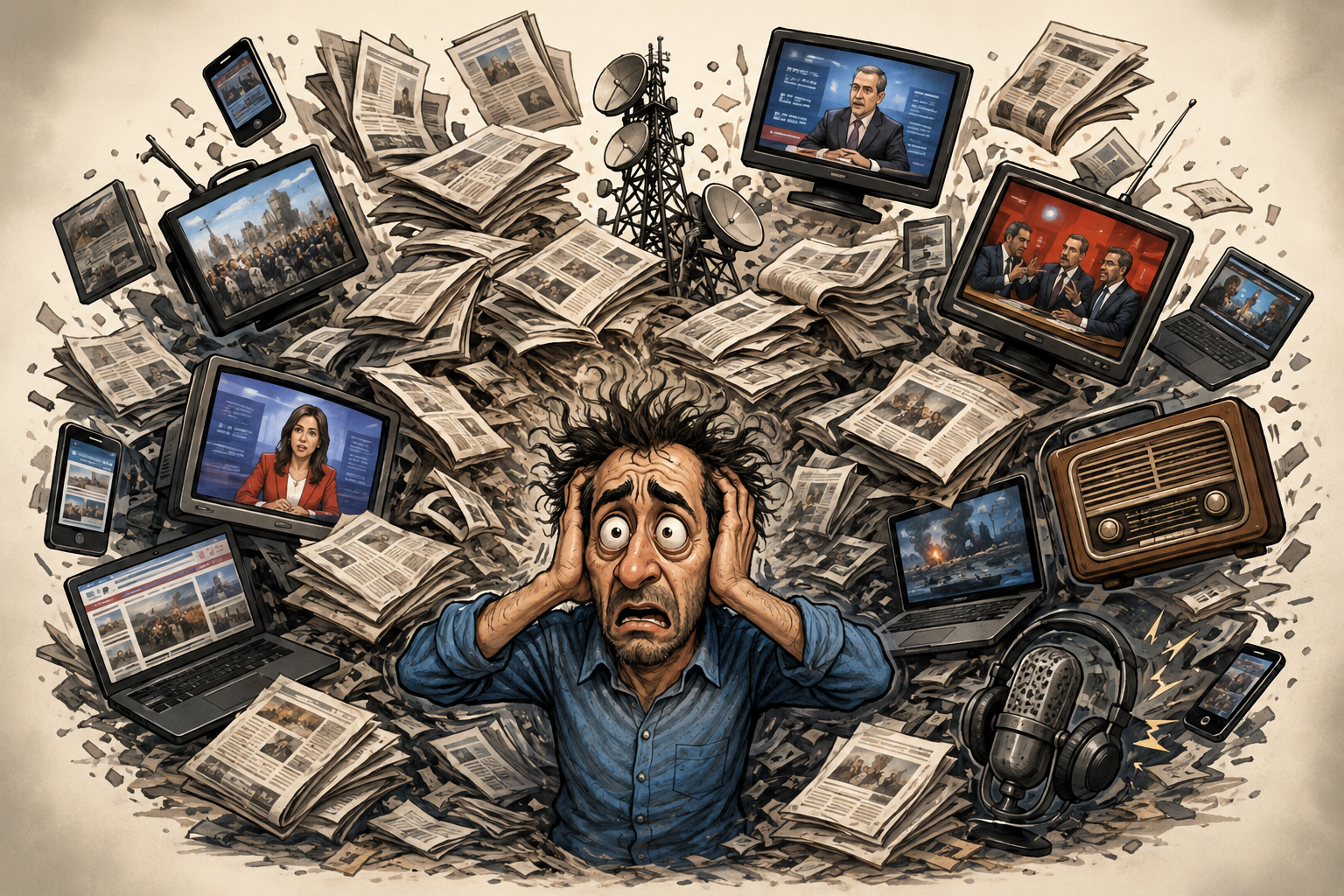
Lebanese media outlets have traditionally played a pivotal role in shaping public opinion on the current issues of the day. This includes their promotion of the Syrian tutelage in the 1990s, their tacit acceptance of Hezbollah’s influence during the 2016 presidential settlement, and their consistent coverage of the framework agreement recently signed in Washington.
Local TV channels align with the agendas of their respective political parties. Each era has its agenda with the current one clearly aimed at whitewashing the image of Israel in the eyes of the Lebanese public, and reinforcing the notion that peace with Israel is possible, and normalization is not impossible.
Lebanese television stations are controlled by influential figures linked to political parties or families known for their impact on local politics. Al-Manar is affiliated with Hezbollah, while NBN is owned by Speaker of Parliament Nabih Berri and seen as the official mouthpiece of the Amal Movement. Pierre Daher, who broke away from the Lebanese Forces following a dispute that reached the courts, owns half of LBCI.
This is while MTV, headed by Michel Murr, is owned by his family and is known for promoting the Lebanese Forces’ rhetoric. Al-Jadeed, owned by Tahsin Khayat, fluctuates its editorial policy depending on its funding sources, and OTV is affiliated with the Free Patriotic Movement. Given the clear affiliations and loyalties of the Lebanese audience, these television channels appear more like a mirror image reflecting the sectarian and political mosaic of the country, spanning the spectrum from the far right to the far left and everything in between.
Political Money in Lebanese Media
A study by the Maharat Foundation in collaboration with the Legal Agenda and the European Media and Journalism Research Centre (MJRC) indicates that the vast majority of print, broadcast, and online media outlets in Lebanon are affiliated with political parties, sectarian groups, or influential political entities. These outlets reflect political agendas rather than editorial independence, transformed into tools in the hands of powerful decision-makers, whether individuals, parties, or even regional states. The study describes journalism in Lebanon as a weapon in the ongoing political conflicts.
Media coverage of the recent Israeli war on Lebanon reveals that most television stations chose to prioritize their political agendas over the Israeli crimes targeting Lebanese civilians and this demonstrates their political alignment over the issues professionalism and interests of the people.
Research by the Legal Agenda reveals shortcomings in the media coverage of the 2024 Israeli war on Lebanon. This coverage has sometimes misled public opinion, justified violations, weakened documentation, and obscured the victims. A review of the media coverage of 10 war crimes committed by Israel showed that the three most-watched television channels (Al-Jadeed, LBC, and MTV) omitted crucial legal questions. The extent of Israel’s adherence to the principles of international humanitarian law and its disregard for necessary measures to protect civilians. These were ignored. Furthermore, their coverage lacked legal analysis of the Israeli attacks, despite their serious violations amounting to war crimes.
Lebanese journalist Jumana Baalbaki affirms that some media outlets “deepened the division, justified the aggression, and indulged in dangerous sectarian rhetoric, thus deviating from the priority of maintaining peace and accuracy.” The accuracy that Baalbaki refers to is not limited to publishing the correct news; it also refers to the neglect of events and realities such as people’s stories, their deaths, displacement, and their suffering. “The victims became mere numbers, without names or faces, and consequently, their stories not part of the narrative that could have exerted pressure to stop the war, as happened in Gaza, where its people shared their suffering through TikTok.”
In his study, “The Lebanese Press and Its Role in Times of Peace and War,” Dr. Nassim Khoury argues that the Lebanese media has historically played a constructive role on one hand and a destructive one on the other. It contributed to strengthening nationalist and independence sentiments, while on the other hand, at various periods in Lebanon’s history, it served as a tool for political polarization, sectarian conflict, and foreign influence.
According to Khoury, the relatively broad press freedom in Lebanon allowed for the flourishing of diverse opinions, but it also enabled newspapers to align themselves with political parties, sectarian groups, and foreign governments instead of serving the public interest. Although the study focused on Lebanese newspapers, most of which no longer exist, its conclusions can be applied to the majority of visual, audio, and electronic media.
He argues that the media formed part of the conflict during the Lebanese Civil War, whether through its work as an arm of the various political factions and militias or through fueling fear, hatred, and division.
Mobilizing the Street
Some might think the various Lebanese media outlets learned from their experience with political alignments, but not so. Political money, promoting specific agendas, continues to influence most of them, and more openly than in previous eras.
Lebanese journalist Hussein Ayoub confirms the role played by most Lebanese media outlets has not changed. He points to the worsening situation with the deepening internal divisions over Lebanon’s identity and regional positioning. Are these media outlets “an ally of America and Israel, or an ally of Iran? Are they an ally of Turkey, Saudi Arabia, and the Gulf states, or an ally of Europe? Is it even permissible for a country like Lebanon to be neutral?” Ayoub asks.
The environment in which the media operates takes us back to the early stages of the formation of the Lebanese state, according to Ayoub: “When you live in a country called Lebanon, whose pillars, since it’s founding a 100 years ago, have been sectarian and reinforced by foreign tutelage,” political, partisan, cultural, and media institutions represent “an extension of the sectarian system.” They are distributed according to sectarian considerations, making them a tool for measuring the sectarian audience that follows this channel or boycotts that one, based on criteria of polarization and alienation.
It is clear to observers today that the loudest voices are those of media outlets promoting peace—if their presence is compared to the voices rejecting any kind of relationship with Israel. And abundant political funding not only ensures the media’s adherence to the peace agenda but has also demonstrated its ability to disseminate this orientation.
As Lebanese media outlets compete to promote the Israeli narrative to their local audiences, MTV hosted members of the South Lebanon Army residing in Israel on one of its programs to glorify the Jewish state and create the impression of Israelis’ love for the Lebanese, revealing a performance that aligns with a predetermined agenda. LBCI television defied the Israeli boycott law by hosting Israeli journalist Barak Ravid, a correspondent for Israel’s Channel 12 and Axios.
In this context, Al-Jadeed’s Washington correspondent, Pedro Ghanem, rushed to make an exclusive interview with Israeli Ambassador Yechiel Leiter following a round of negotiations between the Lebanese and Israeli delegations, giving him airtime to comment on the talks.
During an interview with MP Hassan Fadlallah, a member of the Loyalty to the Resistance Bloc, George Salibi, host of the “Halak Shu” program on Al-Jadeed, posed a question on behalf of Israeli army spokesperson Avichai Adraee to his guest, who declined to answer it.
Ayoub believes that such matters transcend normalization with Israel and reach the level of professional ethics. He argues that “the most egregious aspect of this is that of George Salibi and the question he raised while his country negotiates directly with the Israelis in Washington and concluding an agreement with them that can only be described as a complete violation of Lebanese sovereignty. Nothing prevents the deployment of Lahad militia operatives in villages whose inhabitants have not been displaced, or mercenary companies contacting Lahad agents in Israel to determine if they can exploit them or their children should the security zone be established” in southern Lebanon.
In an interview with “Voice of the People” radio, university professor and researcher Jad Melki links the Lebanese media’s promotion of the Israeli narrative to the official Lebanese discourse that has criminalized the resistance. He points out that the media chaos facilitated by the Lebanese presidency is being met with widespread condemnation from the Lebanese public.
He gives as an example the video that went viral on the social media, in which a young Lebanese woman, participating in a survey about the possibility of peace with Israel, says: “They party like us, they talk like us, and they value women like us,” attempting to draw parallels between Lebanese and Israelis. Maliki says this video wouldn’t have gained such widespread attention had there not been a negative reaction and rejection of what the young woman said.
Malki add: “In all media coverage, those on the fringes, the extremes, attract the largest audience, even though they might represent only one percent. For example, today in the United States, those who talk about abortion are very few. A large segment is on the extreme right, and a small segment is on the extreme left. These are the ones who attract the most attention. But the majority of the population, those in the middle, and most of them are rational on this issue, accept abortion under certain circumstances, but not always. The same applies to all issues,” Maliki explains.
Opinion Polls and the Transparency of Representation
Public opinion polls typically reflect people’s views on a particular topic by taking the opinions of a representative sample encompassing all segments of society according to rigorous scientific standards. However, things take a different turn in a country like Lebanon, where those concerned question the representativeness of public opinion polls and the extent to which the institutions conducting them are subject to political funding.
Hussein Ayoub states: “There are questions raised about the timing of most opinion polls in Lebanon like who funds them, and what are their objectives, do they have Lebanese or foreign agendas.” He points out also that scientific standards are absent from many opinion polls, especially in the way questions are formulated. “It’s not just about asking the question, but also about selecting the sample,” he says, asking rhetorically: “Can you ask a drowning person if they would like to travel to La La Land?” He stresses the necessity for a scientific methodology related to types of questions asked, timing, sample selection, and target audience.
Among the polls that sparked controversy in Lebanon was the one held by “International Information,” which showed a significant increase in public support for signing a peace agreement with Israel, from 25 percent in August 2025 to 49 percent this year. But there was much criticism on the way the organization used in conducting the poll. Ayoub points out that the poll overlooked the fact that 26 percent of respondents refused to answer and were given alternatives—a percentage that, if included, could have altered the poll’s results whilst mentioning other shortcomings, errors, and flaws common in most opinion polls.
Political parties and research centers
Jumana Baalbaki focuses on several Lebanese political parties that rely on research centers to conduct polls for purely internal purposes: Gauging popularity and/or identifying factors that benefit the party in its battles with its rivals. She questions whether research institutions classified as independent, such as Ipsos, International Information, and Araa, are truly free from the influence of business interests in their work and results, especially since many of these polls are conducted or commissioned by political parties to reinforce a particular viewpoint.
Neither Ayoub nor Baalbaki believes that opinion polls in Lebanon—like the media—actually reflect the pulse of the street. “Perhaps a more accurate approach would be to hold a public referendum, provided its results are not manipulated as happens in elections,” Baalbaki explains. Ayoub argues that “the problem with opinion polls is more serious than with the media, in that most of the funding is external.”
He points to the electoral climate where polling institutions compete to demonstrate their support for one candidate or another, resulting in figures determined by who pays the most. There are always exceptions, whether in the media or polling institutions, but they are few in a country like Lebanon, governed by sectarianism and sharp internal divisions, amidst the extremely delicate and complex circumstances the country is experiencing.
A study on media platforms and news sources and their impact on political trends during the 2026 Israeli war on Lebanon, supervised by Dr. Jad Melki, Journalism and Media Studies Professor at the Lebanese American University, revealed a radical shift in how Lebanese people access news. According to a survey of 1,000 participants, television stations lost their position as the primary source of war news for the first time to social media, specifically to WhatsApp. The study showed 73 percent of those following war news received their information via mobile phones, 63 percent via television, and only 2 percent via radio.
The study indicates that despite the fact that 50% of survey participants closely followed war news, 82% did not share any war-related content on social media. WhatsApp again emerged as the most used platform, with 53% of respondents using it, followed by Facebook at 22%, Instagram at 14%, and TikTok at the bottom, with less than 7%.
The study reveals that despite the sharp political differences among respondents, there was widespread agreement regarding the stance towards Israel; with 87% of those surveyed considering Israel as the enemy, 51% the United States as an enemy, and 38%, as Iran as the enemy. Regarding the future path, 54% chose diplomacy as the sole means for liberation, while 35% in favour of armed resistance.
The study concludes that media usage in Lebanon reflects and reinforces political polarization. The shift from traditional media like television to social media platforms is a double-edged sword. While it threatens social cohesion during wartime, it also empowers the new generation with broader global perspectives and a more critical outlook, particularly if they transcend their sectarian divisions.
The lack of trust in traditional media and polls has fostered critical thinking, analytical skills, and the ability to read between the lines. In a country like Lebanon, there are no single friends or enemies, and the country is governed by a sectarian system characterized by sectarian power-sharing in all state institutions. The media, often referred to as the fourth estate, struggles to transcend its role as a mirror of this sectarian power-sharing system. This raises doubts about its ability to represent the pulse of the street and transforms it into a platform for loud noise, still striving to convince the audience that it represents the majority.
This article, originally written in Arabic, appeared in Al Quds Al Arabi and is reprinted in crossfirearabia.com. Sama Abu Sharar is a professional journalist, writer and translator with skills in three languages: Arabic, French and English. She is currently residing in Beirut and writes on different Palestinian and Lebanese issues for publications such as the online Palestine Chronicle and Al Quds Al Arabi, a prestigious Arabic language daily newspaper published in London. Her articles appear in translated form in crossfirearabia.com.
Palestinians have been widely sharing the story of aid worker Mohammed al-Wahidi following his death in an Israeli drone strike in Gaza City, remembering him for organizing relief efforts and public screenings of FIFA World Cup matches for displaced families.
Al-Wahidi, 65, was known in Gaza for overseeing humanitarian activities and setting up large outdoor screens where displaced Palestinians could watch World Cup matches despite widespread destruction, electricity shortages, and mass displacement.
According to posts shared by Palestinians on social media in recent days, al-Wahidi survived an initial Israeli drone strike on the vehicle he was traveling in before boarding another civilian car that was later struck, killing him.
“Israeli military drones pursued Mohammed al-Wahidi twice; they struck the first car he was in and he survived, then he got into another vehicle, which was hit, killing him,” Palestinian Yusuf Fares wrote on Facebook, citing a member of al-Wahidi’s family.
In a Facebook tribute, his cousin Nizar al-Wahidi wrote that Mohammed al-Wahidi, known as Abu Suhaib, “was not spared assassination.”
He added that al-Wahidi’s “greatest crime” was serving as director of the Office of Mukhtars and Community Leaders at the Egyptian Committee for Relief of the Displaced in Gaza and helping prepare public screenings for Egypt’s World Cup match against Argentina.
Following his death, Palestinians widely shared photographs of al-Wahidi during relief activities and recalled his efforts to assist families and organize football screenings that offered residents brief moments of normalcy amid the war.
World Cup screenings
During the 2026 FIFA World Cup, al-Wahidi supervised the installation of large public screens in displacement areas across Gaza, allowing displaced families, children, and other residents to gather and watch matches despite the humanitarian crisis.
Many displaced Palestinians now live in overcrowded tents or damaged buildings after Israeli military offensives destroyed their homes and repeated evacuation orders forced them from their neighborhoods.
Al-Wahidi was preparing public viewing areas ahead of Egypt’s Round of 16 match against Argentina before he was killed.
Egypt was eliminated from the tournament on Tuesday after Argentina came from two goals down to win 3-2.
Relief work
The Egyptian Relief Committee in Gaza said in a statement that al-Wahidi headed its Office of Mukhtars and Community Leaders in Gaza City.
The committee described him as a respected community figure dedicated to reconciliation, humanitarian work, and serving Palestinian families.
In his role, he coordinated with community elders and local leaders, helping facilitate relief operations and community initiatives.
Egyptian news outlet Masrawy quoted committee spokesman Mohammed Mansour as saying al-Wahidi was participating in a neighborhood reconciliation meeting shortly before the Israeli strike.
Mansour confirmed that al-Wahidi managed the committee’s Office of Mukhtars and Community Leaders, denying reports circulated online that he headed the committee itself.
Strike killed four
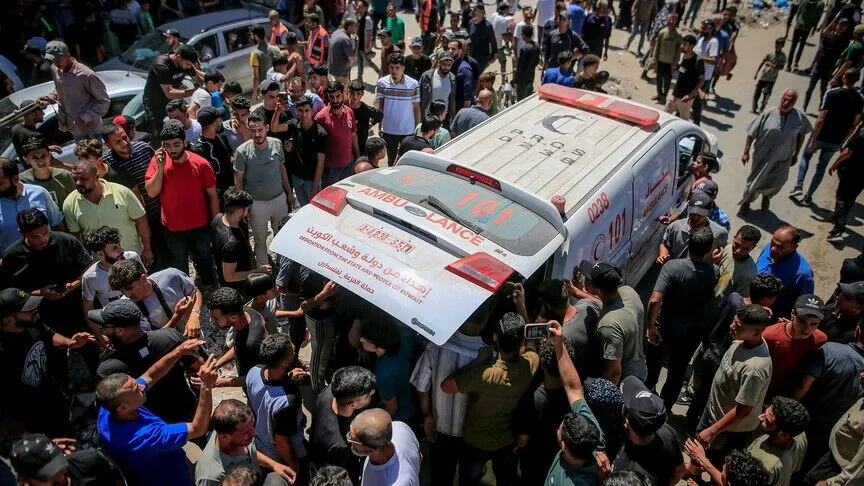
According to an Anadolu correspondent, an Israeli drone struck a civilian vehicle in Gaza City’s Sabra neighborhood on July 7.
The strike killed four Palestinians, including two siblings, as well as al-Wahidi and Ahmed Doghmosh, who were inside the vehicle.
The Palestinian Centre for Human Rights said al-Wahidi had been preparing public World Cup viewing areas before the strike, which occurred shortly before the Egypt-Argentina match.
The rights group said his killing raises “serious concerns that the (Israeli) occupation is not only killing Palestinians but also seeking to eliminate every space for normal life and collective joy.”
It argued that targeting individuals and initiatives providing residents with moments of relief reflects a broader policy aimed at undermining civilian life and keeping Palestinians under constant fear and deprivation.
Hundreds of Palestinians later attended al-Wahidi’s funeral in Gaza City, carrying his body draped in the Palestinian and Egyptian flags. Community leaders, aid workers, and local residents also gathered to offer condolences to his family.
Gaza has been devastated by Israel’s genocidal war since Oct. 8, 2023, with more than 73,000 Palestinians killed and over 173,000 injured, according to Palestinian figures. Israeli attacks have also damaged or destroyed about 91% of the enclave’s infrastructure. Anadolu

marwan
 CrossFireArabia