Dad Digs For Family After Israel Bombs Their House

Hammad’s house in the Sabra neighborhood was destroyed Dec. 6, 2023, during heavy Israeli bombardment. He said a powerful bomb weighing around 2,000 pounds (907 kilograms) struck the building while the family was inside.

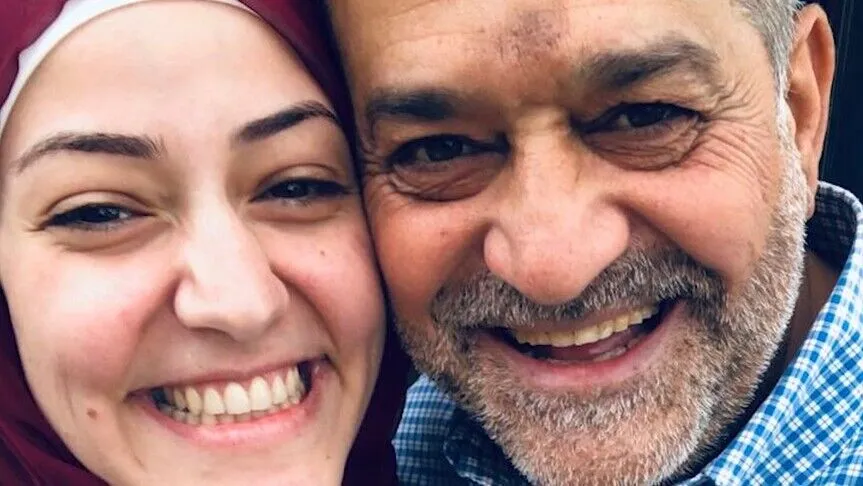
On a mound of sand and shattered concrete that once formed the foundation of his six-story home in Gaza City, Mahmoud Hammad digs methodically through the debris, searching for the remains of his wife and children killed beneath the rubble.

Armed with little more than a small shovel and a metal sieve, the 45-year-old father filters sand by hand, hoping to find bone fragments that would allow him to lay his family to rest.

“In the absence of machinery, this is what we have,” he said, holding up the sieve.

Home reduced to dust

Hammad’s house in the Sabra neighborhood was destroyed Dec. 6, 2023, during heavy Israeli bombardment. He said a powerful bomb weighing around 2,000 pounds (907 kilograms) struck the building while the family was inside.

He lost his wife, six children, his brother, his brother’s wife and their four children.

Hammad survived but sustained severe injuries, including multiple rib fractures and injuries to his shoulder and pelvis. After months of partial recovery, he returned to the site to begin searching for his family’s remains.

“I wanted to bury them properly,” he said.

With the help of neighbors, he managed to retrieve and bury his brother and his brother’s family. But the bodies of his wife and children remain under layers of hardened debris.

“I collect what I can, piece by piece,” he said.

Missing under the rubble

Nearly 9,500 Palestinians are missing beneath destroyed buildings across the territory, according to official estimates in Gaza.

Officials said recovery efforts are severely hindered by the lack of heavy equipment needed to clear the debris. Despite a ceasefire that took effect in October, authorities said the entry of large-scale machinery remains restricted, limiting the ability of rescue teams to reach buried bodies.

Civil defense crews have repeatedly warned that the longer debris remains uncleared, the harder it becomes to recover remains.

Private grief amid mass destruction

Hammad said his wife was pregnant and close to delivery when the strike occurred, as medical services across Gaza were collapsing under the strain of the war.

“She and our unborn child died together,” he said.

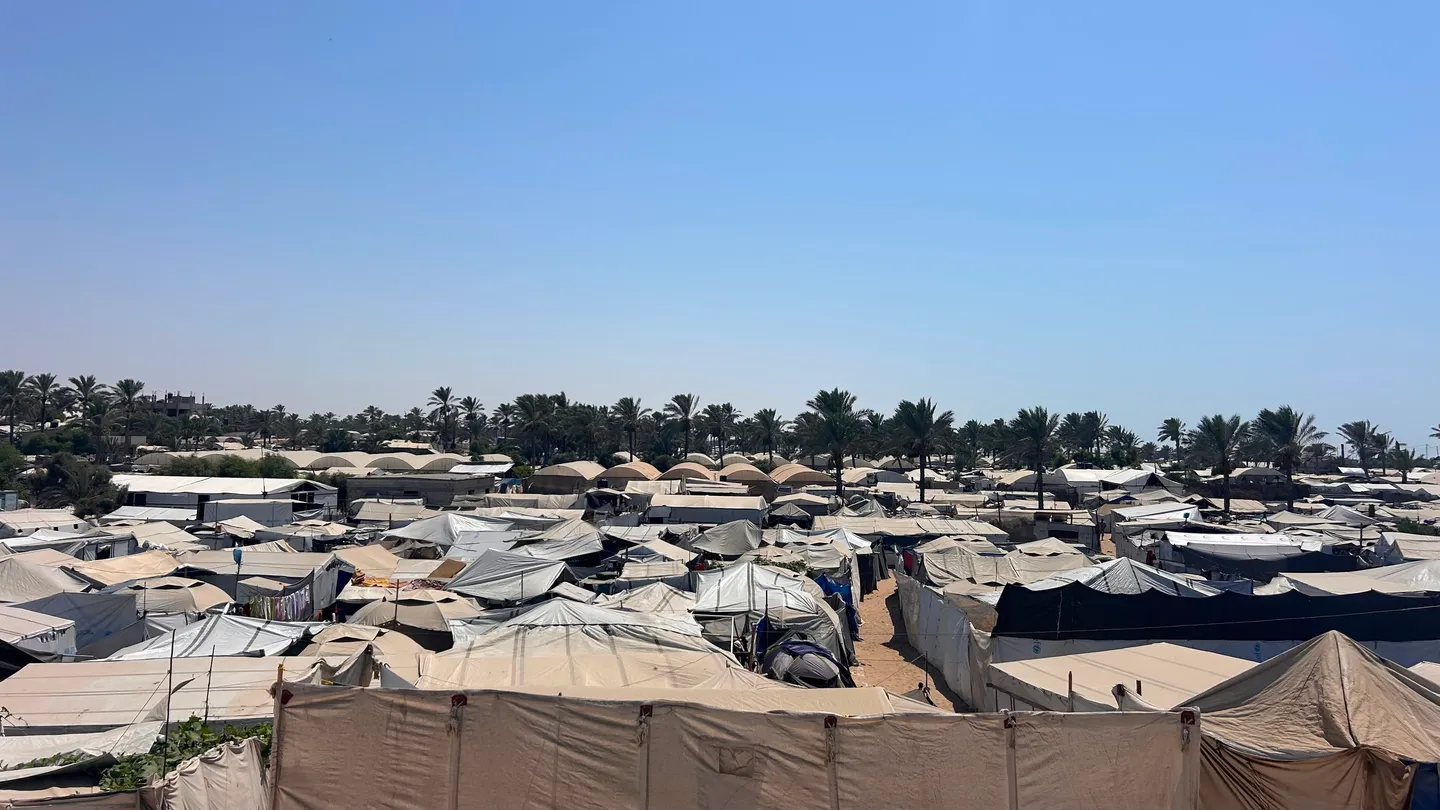
Since December, Gaza has been battered by repeated storms that further displaced families living in makeshift shelters after their homes were destroyed.

For Hammad, however, the focus remains on the ruins before him.

Each day, he returns to sift through dust and fragments of concrete, driven by what he describes as a simple duty.

“They deserve to be buried with dignity,” he said.

At least 591 Palestinians have been killed and more than 1,598 injured in Israeli attacks since a ceasefire deal took effect Oct. 10, according to Gaza’s Health Ministry.

​​​​​​​‏Israel’s war on Gaza, which began Oct. 8, 2023, and lasted two years, has killed more than 72,000 Palestinians and wounded over 171,000, most of them women and children, and destroyed about 90% of Gaza’s civilian infrastructure.

By Tarek Chouiref in Istanbul for Anadolu

Continue reading
Over 50,000 Foreigners Serve in The Israeli Army

Israeli military data identifies over 50,000 foreign nationals, including Western and Arab citizens, serving during the Gaza genocide.

Key Developments

  • Israeli figures show over 50,000 soldiers hold foreign citizenship alongside Israeli nationality.
  • Largest contingents come from the United States, France and Russia, alongside multiple European states.
  • Rights groups urge investigations under universal jurisdiction laws over Gaza war conduct.
  • Legal complaints already filed in Canada, Belgium and Britain targeting suspected war crimes.

Detailed Nationality Breakdown

Newly disclosed Israeli military data has revealed the extensive multinational composition of its armed forces, with 50,632 soldiers holding at least one foreign nationality in addition to Israeli citizenship.

According to figures published by Yedioth Ahronoth and detailed in regional reporting, the largest contingent consists of 12,135 United States nationals.

They are followed by 6,127 French nationals and 5,067 Russian nationals.

The data further records 3,901 German nationals, 3,210 Ukrainian nationals, 1,686 British nationals, and 1,675 Romanian nationals serving in the army.

Additional figures list 1,207 multi-national US citizens, 337 multi-national French citizens, 102 multi-national Russian citizens, 292 multi-national German citizens, and 56 multi-national Ukrainian citizens.

The list also includes recruits from Poland, Canada, and several Latin American countries, alongside smaller numbers holding Arab nationalities, including Yemen, Tunisia, Lebanon, Syria and Algeria.

Beyond dual nationality status, the data shows 4,440 soldiers hold two additional foreign citizenships, while 162 soldiers possess three or more foreign nationalities.

The publication marks one of the most detailed official disclosures illustrating the global reach of recruitment into the Israeli military across North America, Europe and other regions.

Role During the Gaza War

The presence of foreign nationals has gained particular relevance following the start of Israel’s genocidal war on Gaza in October 2023, during which tens of thousands of dual- and multi-national soldiers participated in military operations.

The multinational composition indicates the conflict extends beyond diplomatic and military support into direct participation by citizens of numerous countries in combat activities.

This has intensified scrutiny over whether individuals may bear personal criminal liability for actions carried out during the war.

Growing Legal Scrutiny

Legal experts say the participation of foreign nationals opens the door to prosecutions under the principle of universal jurisdiction, allowing courts to pursue suspected war crimes regardless of nationality or location.

International organizations including Human Rights Watch and Amnesty International have called for independent investigations and urged governments to examine the conduct of their citizens who served in the conflict.

Several countries have already seen legal action. Canadian federal police opened investigations into suspected war crimes believed to involve dual-national reservists. In Belgium and the United Kingdom, rights organizations filed complaints before national authorities and the International Criminal Court targeting hundreds of individuals, including European citizens.

Political Implications

The disclosures place Western governments under increasing pressure, as many provide political and military support to Israel while also facing potential legal obligations toward their nationals serving abroad.

The issue complicates diplomatic positions, particularly in countries whose domestic law restricts participation in foreign armed forces or mandates prosecution of grave international crimes.

According to Palestinian authorities, more than 72,000 Palestinians have been killed since October 2023 and over 171,000 wounded, while roughly 90% of civilian infrastructure has been destroyed.

Human rights organizations say ongoing documentation efforts and legal cases are likely to expand as evidence from the conflict continues to emerge. – Palestine Chronicle

Continue reading
Gaza Readies For ‘Sweet’ Ramadan

As the Islamic holy month of Ramadan set to start next week, Palestinians in the Gaza Strip are preparing to mark the fasting month by reviving the tradition of making Qatayef on makeshift wood-fired stoves.

In Gaza, the arrival of the holy month is not counted in days, but sensed in the aroma of this classic Palestinian dessert once again filling the markets after two years of devastating war.

In the “Garage Rafah Market” in the city of Khan Younis in southern Gaza, which used to be crowded with shoppers before the Israeli war, a number of shop owners are trying to revive their businesses as the fasting month approaches. Among them are Qatayef makers who have returned to lighting wood stoves amid the rubble.

In the middle of widespread destruction and near areas still occupied by Israel east of the city, shop owners continue their work under difficult conditions, including shortages of fuel and gas.


Deep-rooted Ramadan tradition

With more than 20 years of experience, Salim Al-Bayouk — known as the “King of Qatayef” in the market — continues to prepare the dessert by hand despite scarce resources and the lack of basic materials.

Bayouk, 54, told Anadolu that he began the business in the city of Rafah before moving to Khan Younis after Israel occupied the city, expressing his determination to continue despite the difficult circumstances.

Qatayef is considered “the queen of Ramadan desserts” among Palestinians, distinguished by its ease of preparation and low cost. It consists of a small pancake filled with nuts, cheese, or dates, then baked and soaked in sugar syrup.

Bayouk said during Ramadan, his work primarily depends on cooking gas, requiring about 25 kg daily. However, supply shortages have forced him to rely on wood in order to continue his profession.

Since a ceasefire agreement came into effect in October, Israel has allowed limited quantities of cooking gas into Gaza, while the enclave needs 20 truckloads daily, according to local officials.

Despite shortages and rising operating costs, Palestinians insist on continuing, rejecting displacement and holding fast to Ramadan traditions they refuse to let disappear from their city.

Bayouk said he reduced the price per kilogram to 10 shekels (about $3) and provides work for 10 to 15 workers during the season, emphasizing his commitment to remain despite the damage to his shop and his reliance on makeshift repairs.

Hundreds of other Palestinians across different parts of the Gaza Strip also continue this seasonal profession among tents, narrow alleys, and crowded camps.

They set up makeshift stoves and light wood fires to compensate for gas shortages, attempting to revive a Ramadan ritual they are accustomed to despite the restrictions.


Basic dish

For his part, Saeed Khalaf, 38, said that the street where the market is located used to be packed with shoppers before the war, and it was nearly impossible to walk through due to the crowding.

“Qatayef remains a basic dish on every family’s Ramadan table,” Khalaf said, expressing hope for the restoration of normal life, and the actual implementation of the second phase of the ceasefire deal.

The ceasefire ended an Israeli offensive that began in October 2023 and lasted two years, killing over 72,000 Palestinians and wounding over 171,000 others, while destroying about 90% of Gaza’s infrastructure.

Despite the ceasefire deal, the Israeli army has continued to violate it, killing at least 591 Palestinians and injuring more than 1,578 others, according to Gaza’s Health Ministry

The US announced in mid-January the launch of the second phase of the agreement after delays, saying the plan includes further Israeli troop withdrawals, transitional governance arrangements for Gaza, and the start of reconstruction efforts.

By Serdar Dincel for Anadolu

Continue reading
‘We Are Dying’: Cancer Patients Plead For Treatment

As World Cancer Day is marked on Wednesday, thousands of patients in Gaza face worsening illness, untreated pain and closed crossings – despite the limited opening of the vital route through Rafah this week.

“We are dying. Every day, between two and three patients die inside this hospital,” says Munther Abu Foul, a cancer patient lying on his bed in Gaza’s largest hospital. “I can’t get out of bed because of the pain. We want a solution – open the crossings.”

His words capture the reality facing thousands of cancer patients across the Strip, where access to specialist care has collapsed and evacuation for treatment abroad remains out of reach for many.

Local health organisations warn that around 11,000 patients are currently deprived of specialised or diagnostic cancer treatment inside Gaza. 

Some 4,000 patients who received medical referrals to hospitals outside the Strip have been waiting for more than two years to travel.

UN News visited Al-Shifa Hospital in Gaza City, documenting the dire conditions inside its oncology department. Patients crowd corridors and wards, waiting for consultations or treatments that are no longer available. 

Essential medicines and equipment are in short supply, while many patients endure chronic pain that leaves them barely able to move.

Raed Abu Warda, a man in a green jacket, comforts his brother Hamid Abu Warda, a cancer patient, at Al-Shifa Hospital in Gaza City.

UN News

A man takes care of his brother, a cancer patient at Al-Shifa hospital in Gaza City.

‘Every day, two or three patients die’

Mr. Abu Foul flips through his medical transfer papers, issued long ago for treatment outside Gaza. He has not been able to travel for more than two years.

“The health situation in the Gaza Strip is dilapidated,” he says. “There is no treatment or medicines, and we are dying. Every day, two to three patients die here inside this hospital. I can’t get out of bed because of the pain.”

He appeals directly for help. “We want a solution. Open the crossings properly so that God will release us from this suffering. Everyone will be held accountable.”

Nearby, Mohamed Hammou tends to his elderly mother, who is also battling cancer. He says families are forced to watch loved ones deteriorate without care.

We want a solution. Open the crossings properly so that God will release us from this suffering – Abu Foul

“This is how we stand in front of a patient who is dying, without treatment or any medical facilities that help them recover,” he says. “This does not please God and it does not satisfy people. We call on Islamic, Arab and international nations to look at the sick with mercy.”

A brother in pain

In another ward, Raed Abu Warda cares for his brother Hamid, whose cancer has worsened after long delays in treatment. What began as a small, benign illness has become a life-threatening condition.

“He has been suffering from cancer for two years,” Raed explains. “He waited all this time for the crossing to open so he could be treated outside. His pain has increased, as you can see.”

He gestures towards a wound that has opened beneath his brother’s chin. “The disease has created this wound, and his condition is getting worse every day. I stand watching my brother and mourning his condition because of the pain.”

Mundhir Abu Foul, a cancer patient in Gaza, sits on a hospital bed with his hands open, appearing to speak or gesture.

UN News

The health situation in the Gaza Strip is deteriorating for those suffering from life-threatening cancers, despite the limited opening of the Rafah crossing.

The number of patients seeking care at Gaza’s oncology departments continues to rise, even as hospitals face severe shortages of medicines, equipment and specialised staff. For newly diagnosed patients, the future is increasingly uncertain.

Evacuations far short of needs

With the limited reopening of the Rafah crossing, the World Health Organization (WHO) is supporting the evacuation of patients and their companions from Gaza, focusing on ensuring safe transport. Yet the scale of need far outstrips what is currently possible.

All we ask for is a way to live

More than 18,000 patients – including around 4,000 children – are waiting to be evacuated abroad for medical treatment, according to WHO.

The UN Office for the Coordination of Humanitarian Affairs (OCHA) reported last week that Gaza’s Ministry of Health had recorded more than 1,200 patient deaths while people were waiting for medical evacuation. Around 4,000 cancer patients remain on critical waiting lists, trapped between closed crossings and a health system pushed beyond its limits.

For patients like Munther Abu Foul, time is running out. “We are dying,” he repeats. “All we ask for is a way to live.” – UN News

Continue reading
Kingdom of Vice: Epstein and the Mossad… The Devil in Every Detail

Asia Al-Atrus

Five hundred lawyers are currently studying the documents released so far by the US Department of Justice regarding the Epstein case, in accordance with the Transparency Law. This indicates the seriousness and gravity of the case, which has dominated many media outlets to date.

In numerical terms, we are dealing with three million documents, 180,000 photos, and 2000 videos. This means that the information and names published about those involved in the official prostitution network are merely the tip of the iceberg, and we will have to wait for what the remaining files will reveal, should they occur, as the document review process progresses.

Similarly, talk of resignations within political parties, governments, or royal families is merely a prelude to what is to come. We know very well that prostitution rings, human trafficking gangs, and the exploitation of minors exist in the world of crime and corruption, and these networks are transnational. However, when it comes to the world’s decision-makers and experts in politics, finance, communication, and cinema—those who distribute the cards of virtue and good morals— they are tantamount to a collapse. The collapse of the values ​​and principles upon which the world has been built until now—values ​​and principles supposedly meant to provide protection from the inferno of chaos.

As the scandals of the empire of vice linked to Epstein continue to unfold, it remains certain that he was merely the front for the intelligence network and Mossad, who recruited him for this mission before eliminating him in the hope of burying the dark truth with him. It is crucial at this juncture to examine the initial reaction of the US president following the release of three million tons of documents by the US Department of Justice, nearly five years after the death of the influential owner of the Epstein Island, accused of child rape.

Some of those accused are now breaking their silence, exposing the role of a segment of the American elite, Hollywood elites, and others in this scandal, which will likely make the American public forget the Watergate scandal that brought down President Richard Nixon. While awaiting further revelations about the abhorrent scandals of Epstein Island and perhaps the motives behind the disappearance of the main perpetrator, who died in prison, it appears that many names from both the Democratic and Republican parties are implicated.

This is the crux of the matter: The decision-makers who circulate the game, control the fate of the world, and compete to spread democracy. Those who claim to uphold morality and universal values ​​are embroiled in scandals into which they have been swept, falling into a trap that even Hollywood studios seem incapable of imagining or matching. US President Donald Trump, whose name has repeatedly surfaced in the case files, appeared resolute, asserting that the published documents prove his innocence, contrary to the claims of his leftist adversaries.

This suggests that the US president is concerned with the implications and impact of this case on American public opinion at this particular time. We are not here to judge the US president’s statements in this most serious case circulating on social media, but rather to try to understand the repercussions of this case on the rapidly unfolding regional and international transformations. However, this understanding is not without considering the primary and influential force pulling the strings, manipulating or pacifying those involved through all available means after studying their personalities and weaknesses.

This involves luring them into compromising situations, filming or recording them to exert pressure, blackmail, and bargaining. Perhaps we are not exaggerating when we consider these tactics to be typical of intelligence networks, foremost among them the Israeli Mossad and which surpassed American intelligence. In his book, “By Way of Deception,” former Mossad agent Victor Ostrovsky reveals the inner workings of the Mossad and its deception of the world to carry out dirty work in various European and Arab countries. He describes how Mossad agents infiltrate these countries, luring and assassinating politicians, activists, and scientists thanks to their advanced technology and the listening posts they have established from the Mediterranean to the Red Sea.

In one chapter, Ostrovsky exposes a swimming pool where Mossad leaders meet with their male and female collaborators. This pool is no less sordid, deviant, vile, and despicable than what goes on on Epstein Island, which can be described as the Devil’s Salt Flat, a gathering place for the political, Hollywood, and intelligence elite to conduct their criminal activities and practices. They are obsessed with exploiting children for their pleasure and plotting to target anything that might stand in the way of their interests.

The book clearly illustrates the Mossad mentality, which has consistently employed every malicious practice to ensnare its targets: Politicians, businessmen, media figures, and artists, whom they use in the game of intelligence and its wars. The Hidden…

…Some names, including British politician Peter Mandelson, chose to resign from the Labour Party to avoid embarrassment for his party after new information was revealed about his friendship with Jeffrey Epstein…


In Slovakia, a high-ranking official also resigned after photos and emails revealed his meetings with Epstein in the years following his release from prison… Prince Andrew, brother of King Charles, was stripped of his titles and forced to apologize after photos of him with Epstein were published, and the same happened with the Crown Princess of Norway.

There is no doubt that Epstein kept a list of his close associates to exploit in blackmail operations, and it can be concluded that Epstein’s death in 2019 was not natural but rather part of a plan to get rid of him and bury his secrets and documents with him. However, it seems that the magic is turning against the magician, and perhaps the results of the investigations into three million documents will surprise many, including the American public, if the remaining documents are declassified and placed under scrutiny to expose the network of official profiteering from underage children, killing them, and shedding their blood to practice deviant satanic rituals. Its title is moral corruption and the exploitation of the dignity and humanity of underage children.

The Black Record, or Black Book, of Epstein has only revealed a fraction of it. Trump, and before him Bush Jr., and others, and their relationship with Epstein may not be the end of the story. Perhaps the coming days will hold more shocking surprises about the man of peace and his whims, but also about his plans, capabilities, and potential.

The Mossad’s intentions in infiltrating and penetrating are for purposes that cannot be discerned. The question remains: Why is all this dangerous information and these facts being leaked at this particular time? What are the Israeli Mossad’s calculations? And is there a link between the Epstein documents and the Israeli occupation entity’s insistence and pressure to target Iran and attempt to destabilize the Middle East region?

Asia Al Atrus is a Tunisian writer and journalist and this article appeared in the Arabic website Rai Al Youm.

Continue reading