Israel Must Not Be Allowed to End UNRWA

As Israel shuts down UNRWA in Gaza and the occupied West Bank, the move serves a strategic purpose: Undermining Palestinian national liberation and the right of return.

Sara Troian

By Sara Troian

This week, Israel’s ban on the United Nations Relief and Works Agency (UNRWA) takes effect, cutting off its services in its two main areas of operation in Palestine; namely, Gaza and, the occupied West Bank, including east Jerusalem.

Established in 1949 in response to the Nakba, UNRWA was meant to provide humanitarian aid and protect Palestinian rights until a just resolution to the refugee crisis was achieved. Central to this is the Palestinians’ inalienable right of return, which Israel has consistently denied.

Beyond the 5.4 million UNRWA-registered refugees, at least five million more Palestinians have been forcibly displaced by Zionist colonisation. The right of return belongs to them all.

Calculated attack on Palestine

In October, the Israeli parliament passed two bills targeting UNRWA. The first prohibits the agency from operating within the 1948 borders. The second bars Israeli officials from engaging with UNRWA in any capacity.

These laws are designed to remove Palestinian rights to a homeland and further weaken the agency that serves them. They also mark the culmination of decades of attacks by Israel and its allies seeking to dismantle UNRWA as part of the broader Zionist settler-colonial project.

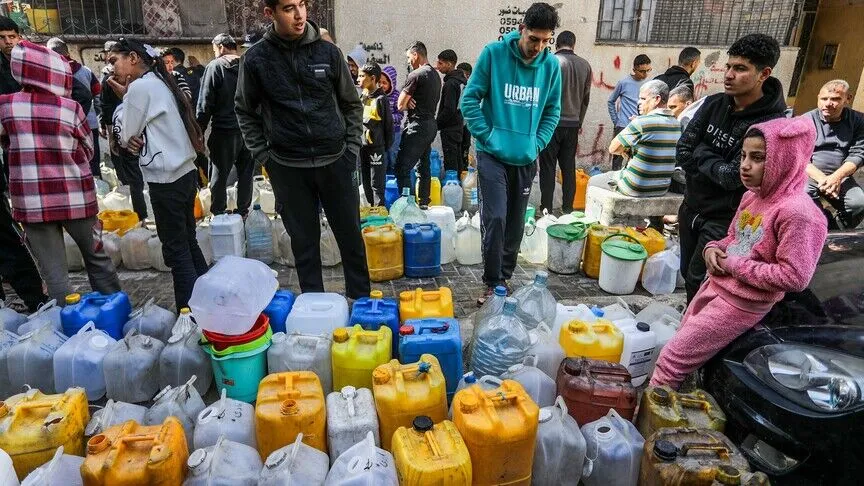
For the 2.1 million Palestinians in Gaza, this will cripple efforts to rebuild the warmth of their homes and the safety of life-sustaining infrastructure vaporised by Israel’s annihilatory violence. This will further obstruct the restoration of life and the healing from nights spent beneath skies ablaze with fire and days suspended between slow and quick death in dwindling food rations.

In the West Bank and east Jerusalem, 49,000 students will be forced out of UNRWA schools, and will be left either without education or, in Jerusalem, to the whims of Israeli curricula that distort, dehumanise and erase their history and culture.

Nearly a million Palestinians will be denied medical care. The loss of thousands of jobs will further drive Palestinians into economic precarity, deepening the cycle of engineered de-development.

Political goals and neoimperial strategies

The dismantling of UNRWA is not just a humanitarian crisis; it is a political manoeuvre. Zionism has slated Palestine for erasure as part of a broader regional strategy. In this imperialist framework, the US and EU finance oppression, Israel enforces it, the local bourgeoisie complies, and the UN provides a thin veil of legitimacy.

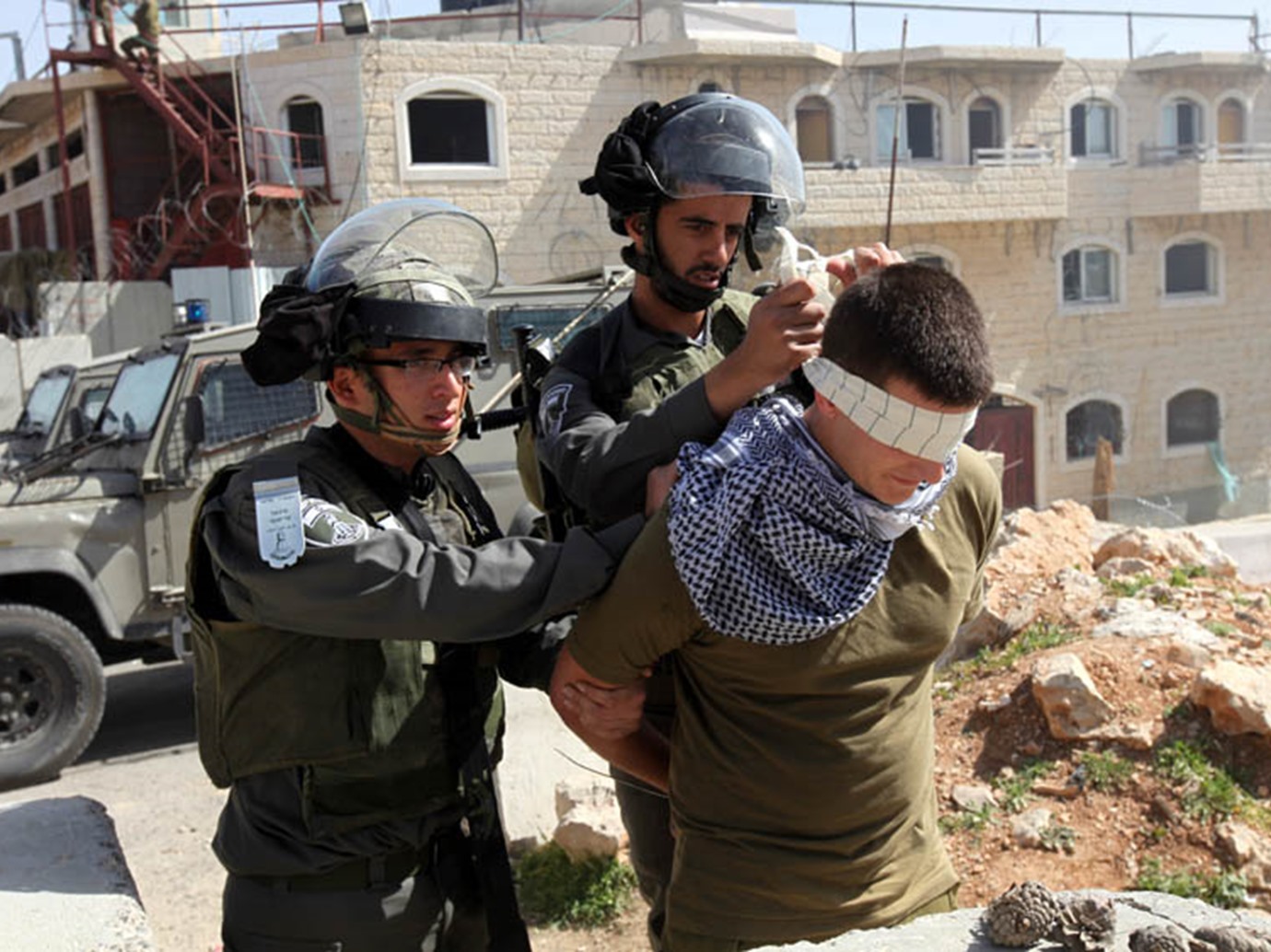
The timing of the ban aligns with Israel’s shifting tactics. While the intensity of genocide in Gaza has momentarily slowed, violence in the West Bank—particularly in Jenin and Tulkarem refugee camps—has escalated. Zionist forces use airstrikes to destroy life-sustaining infrastructure, obstruct healthcare, and drive mass evacuations, all while continuing the daily expansion of settlements and mass arrests.

Palestinians today face the same oppressive forces as during the 1936-39 revolt: self-serving leadership, Arab regime complicity, and Zionist-imperialist domination.

At the core of these dynamics is Palestinian refugeehood—a fundamental consequence of Zionist colonisation. Since 1948, Israel has displaced over 10 million Palestinians, most, descendants from the Nakba, severing them from their homeland.

The right of return threatens Zionism’s foundation because it challenges Israel’s colonial reality, built on destruction and displacement.

The Zionist-Western axis‘ attacks on UNRWA aim to depoliticise its mandate, while crystallising Palestinian refugeehood into a permanent humanitarian crisis to be managed.

While the status of Palestinian refugees and their right of return cannot be solely determined by UNRWA or any international agency–as it is a condition that stems from the implementation of Zionist settler-colonialism– these attacks weaken the agency’s ability to advance Palestinian political claims within the UN.

Moreover, heavy reliance on donor-driven funding has transformed the agency into a semi-corporate entity, dependent on fluctuating foreign funding, further undermining its capacity to support Palestinian political aspirations. This, however, is a symptom of the neoliberal exploitation that, disguised as humanitarianism, treats Palestinians as disposable and expendable subjects to Western imperial expansion.

Palestinians are therefore held hostage by a global structure designed to rob them of their autonomy. This is reflected, for example, in the fact that all senior UNRWA officials are non-Palestinian, making decisions for 5.4 million refugees, yet often against their quest for national liberation.

Integration?

Meanwhile, US imperialism has dealt another blow by freezing all USAID projects–except for those in Israel and Egypt– and halting military aid to all countries except Israel, Egypt and Jordan.

The suspension of USAID serves as a coercive tool to absorb the thousands of Palestinians whom Israel’s brutal campaign aims to expel in the coming months. For example, in Jordan, where USAID plays a critical role in supporting public services like healthcare, justice, and water supply, the freeze pressures the Kingdom to participate in this plan, which has been in the works for years, but only recently the US has openly encouraged Egypt and Jordan to endorse a new wave of forced Palestinian exile.

In recent years, experts and international bodies have proposed integration into host countries or resettlement in third countries as pathways to securing a modicum of rights and emancipation for Palestinians who have been forcefully encamped for over seven decades.

While access to civil and political rights in places of exile is crucial, these proposals must not be weaponised to suppress the central struggle for return. At this moment, such narratives risk legitimising forced expulsions, under the guise of legal solutions, erasing Palestinian claims from the global agenda.

Access to rights must never serve as a strategy to downplay or marginalise the central struggle for return and efforts to secure it. At this moment, it is crucial to recognise how such narratives and solutions can be exploited—either to hinder Palestinian survival amid genocide or to suppress resistance against forced displacement.

Read More

Türkiye condemns Israel’s ban on UNRWA in occupied Palestinian territories

Many Palestinians in the West Bank already hold Jordanian citizenship—remnants of the Nakba and Oslo. If Palestinians will be forced to relocate to Jordan or third states under the pretense of naturalisation and resettlement, this strategy, framed as a legal solution, will ultimately legitimise further forced expulsions and erase their right of return from the international agenda.

This will facilitate the elimination of 10 million Palestinians as a political force challenging Western imperial expansion.

The time for return

A just solution cannot emerge from the very institutions and structures that have perpetuated Palestinians’ plight and the plundering of their land for decades. Such alternatives merely rebrand subjugation of the people.

The answer lies in the steadfastness of Palestinians themselves. Over the past 16 months, in defiance of over a century of disenfranchisement and exile, including 480 days of settler-colonial erasure, Palestinians alone have transformed return from a distant dream, into a tangible reality.

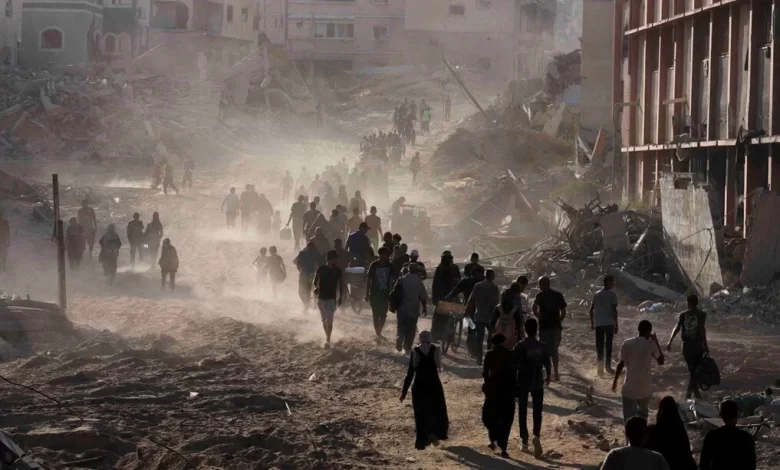
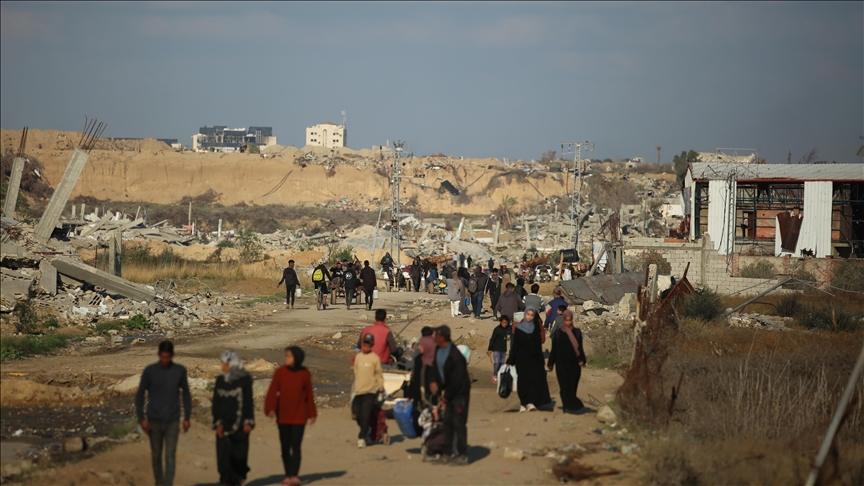
As displaced Palestinian in Gaza flood back towards their destroyed homes in Gaza City, Beit Lahiya, Jabaliya, and Beit Hanoun, this marks only the beginning of their Great March of Return. Eighty percent of Gaza’s population descends from those expelled from 247 villages in central-southern Palestine through waves of Zionist massacres.

This must be the guiding principle for any just and lasting solution—one that restores Palestinians to their homes, land, and dignity from which they have been forcibly expelled for far too long.

SOURCE: TRT World


Sara Troian

Sara Troian

Sara Troian is a Hume PhD Scholar in the Department of Law and Criminology at Maynooth University. Her PhD research examines the tension between international law and settler-colonialism in Palestine.

Continue reading
Israel Frees 32 Palestinian Prisoners

Thirty-two Palestinians were released from Israeli jails on Saturday as part of the fourth batch of the prisoner swap deal between Israel and Hamas.

The freed prisoners were handed over to the International Red Cross from the Ofer Prison facility near Ramallah in the central occupied West Bank, in line with the terms of the cease-fire and prisoner swap deal that took effect on Jan. 19.

According to an Anadolu correspondent, hundreds of Palestinians gathered near the Ramallah Cultural Palace to welcome the freed prisoners, waving Palestinian flags and chanting in support of the Palestinian resistance and Gaza.

Despite earlier warnings by the Israeli army, the crowd gathered to receive the prisoners, who raised victory signs in defiance of Israeli orders.

Many of the released prisoners appeared in poor health, with some barely able to walk. They were taken to hospitals in Ramallah for medical checks and treatment, the Anadolu correspondent added.

Commenting on the freed Palestinians’ poor health, the Hamas group said this confirms “the brutality” of what Palestinians prisoners endure in Israeli jails.

Hamas described these violations as “war crimes and crimes against humanity that require immediate intervention by the international community, the UN and the rights’ group.”

Meanwhile, the International Red Cross staff were ‘angry’ over the way Israel released the Palestinian prisoners on Saturday as they were led out in shackles with their hands behind their heads, according to the Israeli daily Haaretz.

Earlier, the Al-Qassam Brigades, the armed wing of Hamas, released three captives from Gaza and handed them over to the Red Cross.

A total of 183 Palestinians are expected to be released Saturday from Israeli jails, including 111 who were arrested by the Israeli army in Gaza after Oct. 7, 2023, according to the Hamas-run Prisoners’ Information Office.

Continue reading
No Victory For Israel in Gaza

Ruvik Rosenthal in Haaretz: The Israeli occupation has failed to achieve its war goals, losing both the war and global public support. Despite destroying land and killing tens of thousands, the occupation is still losing. #Israel #Gazaceasefire #Trump

He write in a column the Israeli daily newspaper that none of the war’s goals were achieved. Hamas was not “destroyed”, but its ranks were replenished, the residents of Gaza went nowhere. There is no security for the Israeli residents of the envelope (areas sorrounding Gaza) who have not yet returned to their destroyed homes, and dozens of kidnapped soldiers have not yet returned from captivity.

He added we lost years of the world’s sympathy for us, the country’s economy entered at least a decade of stagnation, the army was eroded, and the circles of physical and psychological rehabilitation expanded and reached every home in Israel.

Rosenthal continued there is no image of victory. There are no “fruits” of victory. But if we cannot enjoy the fruits of victory, perhaps this is the time to enjoy the fruits of loss. The fruits of loss are the fruits of awareness, the fruits of the difficult realization that war is not a possible way of life for a people who want to live. The fruits of loss are the transition from the bloody battlefield and back to the family of peoples, to international agreements, to the Abraham Accords.

Continue reading
Israel’s War on Gaza Cost it $42 Billion

The cost of the war for the Israeli occupation, until mid-January 2025, was 150 billion shekels (about $ 42 billion). That is an average of 300 million shekels (about $84 million) per day, according to the Israeli Yedioth Ahronoth.

The newspaper reported there are large gaps between the cost of fighting in Lebanon, the cost of the Gaza Strip, and the “days of intense fighting” (i.e. attempts to confront Iranian missiles).

According to it, the heaviest cost in security expenditures is “funding the reserve army,” which amounts to 45 billion shekels (more than $12 billion).

A high-ranking source in the Israeli Ministry of Finance previously stated the huge new budgets allocated for 2025 to rebuild the northern and southern settlements are “frozen.”

The source told Yedioth Ahronoth that “the use of these budgets will not be possible until the final approval of the government budget.”

The source added the failure to approve the government budget for 2025 “is already causing significant damage to the economy, while the concern in the Finance Ministry now is that Israel will be run for an entire quarter on an interim budget, with the budget for each of the months of January, February, and March equal to 1/12 of the original government budget for 2024.”

However, “the Finance Ministry’s accountant general decided to allocate a smaller budget, for fear that there would be a need to finance additional months with an interim budget, and to create a reserve aimed at preventing disruption to the budgets of vital services for Israelis.”

In the same context, a senior government economic source also expressed to Yedioth Ahronoth “real concern about the possibility that the government budget will not be approved by the deadline set by law, March 31.”

“If that happens, it will be a disaster,” the source said, adding that “the government’s failure to run the full budget required during the war, with a huge deficit and special security tasks that cannot be implemented, will cause enormous damage to the economy and security,” as stated in Al Mayadeen.

Continue reading