Through Its Prisoner Handover, Hamas Shows Strength – Expert
Military and strategic expert Nidal Abu Zeid said the scenes of the handing over of the three Israeli prisoners, Saturday, were more disciplined and organized and carried many messages that the Palestinian resistance wanted to send to the Israeli occupation as part of the superiority it achieved in the battle of image and media.
Abu Zeid added to Jordan 24 the handover took place in two locations in the north and center of the Gaza Strip, which indicates the continuing strength of leadership and control of the resistance even after Hamas announced the martyrdom of seven of the first-rank leaders of the Qassam Brigades.
He pointed out this indicated that the Palestinian resistance also succeeded in overcoming the crisis of its organizational structure as well as in replacing its leaders who were killed in Israel.
Abu Zeid pointed out the black jeep that appeared during the handover of the two prisoners in Khan Yunis is one of the occupation army vehicles the resistance seized during its military operations there. This is in addition to the scenes of weapons carried by the resistance fighters during the handover, such as the Uzi and Scorpion, which are weapons of the elite units of the Israeli occupation forces.
He explained the place of handover in Khan Younis and the background pictures of leaders Mohammed Deif, the Hamas military chief and Rafeh Salama on the platform, shows the symbolism of the city, as the birthplace of Deif and leader Salama who led the Khan Younis Brigade, and both were martyred in an operation by the Israeli occupation in Al-Mawasi, west of Khan Younis.
This is in addition to the symbolism of handing over one of the prisoners who holds American citizenship in the Gaza port near the area where the American side tried to establish the sea pier but miserably failed and ended in losing millions of dollars.
Abu Zeid pointed out the resistance is still superior in the battle of the image and the media it broadcasts through scenes of handing over prisoners within messages related to the capabilities of the resistance and decoding some of the symbols of the signals through which it wants to prove its capabilities and the fact it is able to continue, whether through the diplomatic dimension and negotiations or a return to the military operational dimension.
Freed Palestinian Prisoners Speak of Abuse, Death Threats in Israeli Jails
Palestinian prisoners released by Israel on Saturday as part of the Gaza ceasefire and exchange deal said they were treated badly in the days leading to their freedom.
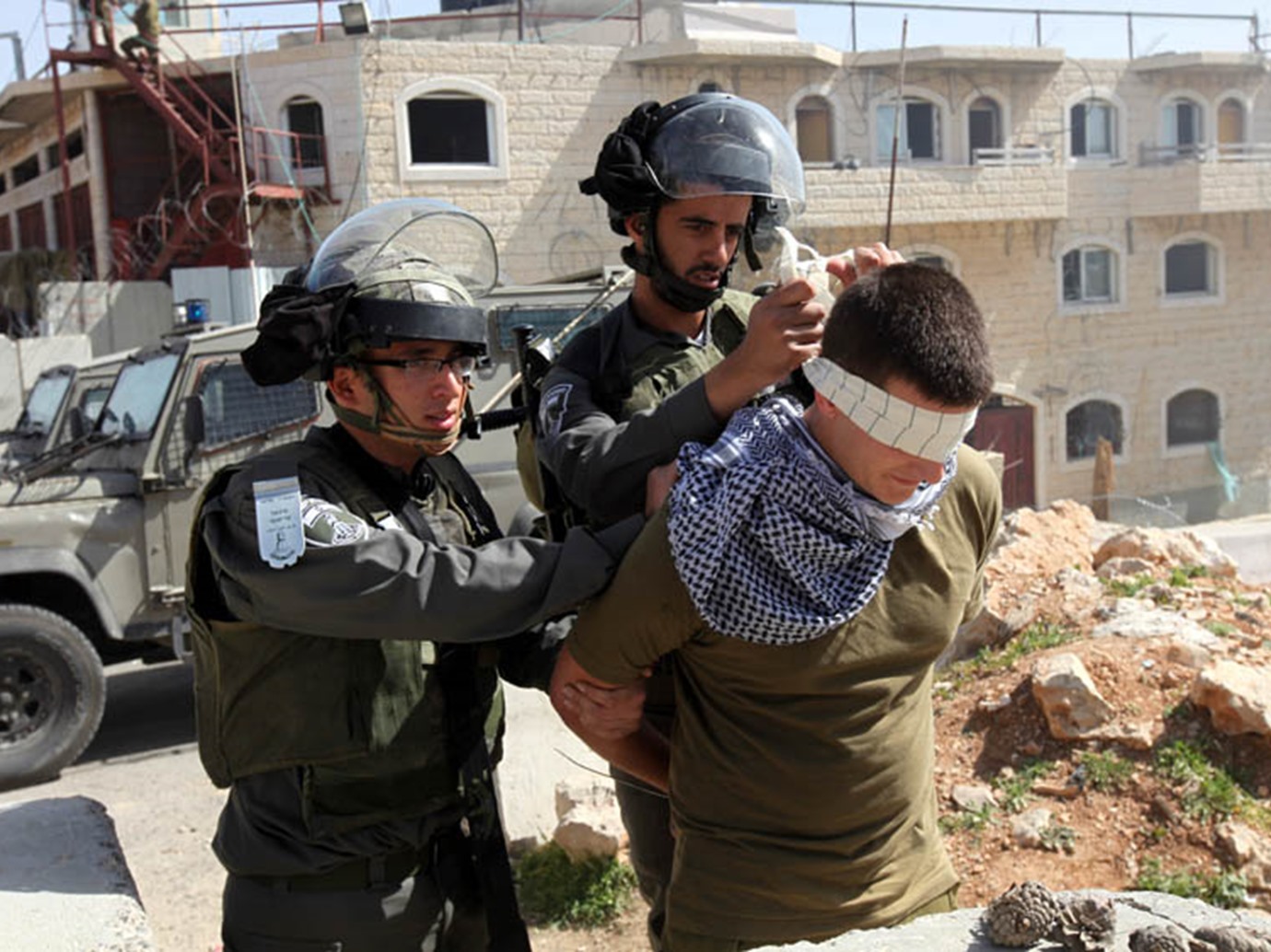
During their reception in Ramallah, occupied West Bank, a number of prisoners said they faced death threats from the Israeli army, endured severe beatings, and were deprived of food and water, according to an Anadolu correspondent on the ground.
The deteriorating health condition of the released prisoners was evident, with some appearing unable to walk on their own, while others were carried in wheelchairs. Many were taken to hospitals for medical checkup and treatment.
“The Israeli prison system subjected the prisoners to brutal beatings before their release, which continued for days, according to numerous testimonies,” the Palestinian Prisoners Society said in a statement.
“In some cases, the beatings resulted in rib fractures.”
The group stressed that Israel systematically terrorizes the to-be-released prisoners and their families through various means, most notably severe beatings and threats, including death threats, if any welcome celebrations are held.
Buses carrying Palestinian prisoners set free arrived in Ramallah and Khan Younis, southern Gaza on Saturday. A total of 183 prisoners were to be freed in the fourth prisoner-hostage swap under the truce.
Three Israeli captives — Keith Siegel, Ofer Kalderon and Yarden Bibas — were also released by Hamas.
Arab World Rejects ‘Dark’ Proposal on Gaza
A six-nation Arab ministerial meeting in Cairo has firmly rejected the displacement of Palestinians from Gaza and reiterated the call for the implementation of a two-state solution to the Israeli-Palestinian conflict.
Saturday’s meeting, held at Egypt’s invitation and attended by representatives from Saudi Arabia, the United Arab Emirates (UAE), Qatar, Jordan, Palestine, and the Arab League, issued a joint statement stressing the importance of working toward a just and lasting peace in the Middle East.
The statement also expressed support for collaboration with US President Donald Trump’s administration to achieve a comprehensive peace in the region based on the two-state solution.
The participating countries voiced their strong opposition to any attempts to infringe on the inalienable rights of Palestinians, including settlement activities, forced expulsions, house demolitions, land annexations, or any measures encouraging the displacement or uprooting of Palestinians from their land.
The six nations called on the international community, particularly global powers and the UN Security Council, to take immediate action toward implementing the two-state solution.
‘Clean out’ Gaza
Saturday’s meeting comes in the wake of repeated statements from Trump suggesting to “clean out” Gaza and resettle Palestinians to Egypt and Jordan, describing the enclave as a “demolition site.”
The two countries, however, vehemently rejected any call for the displacement or relocation of Palestinians from their land.
Trump’s proposal came after a ceasefire agreement took effect in Palestine’s Gaza on January 19, suspending the Israeli war, that has killed more than 47,400 Palestinians, most of them women and children, since October 7, 2023.
The relentless Israeli attacks have reduced the enclave to a wasteland of ruins and rubble.
Trump’s proposal has received widespread condemnation, with critics calling it “ethnic cleansing” and a “war crime.” Many countries in the Muslim and Arab world, as well as European nations such as France, have firmly rejected the idea according to TRT World.