Hormuz: End of an Era of Martime Dominance

By Ismail Al-Sharif

“Nations that believe themselves to be eternal are often the first to be surprised by history.” – Charles de Gaulle

In May 1949, the Chinese Civil War was nearing its conclusion in favor of the Communists under Mao Zedong. At that time, Great Britain, the world’s most powerful nation, maintained warships on the Yangtze River to protect its citizens and commercial interests in cities like Shanghai and Nanjing. Among these ships was the British frigate HMS Amethyst.

On April 20, 1949, the frigate sailed up the Yangtze River toward Nanjing, but the Communist forces, who controlled the northern bank of the river, considered the ship’s presence a foreign intervention in the war. Suddenly, Chinese artillery began bombarding the ship, inflicting direct hits. Its captain and several crew members were killed, and its navigation system was disabled before it finally ran aground in the mud near the shore.

Other British ships attempted to come to its aid, but they too were fired upon by Chinese artillery and forced to retreat. The ship remained trapped for four months under fire from communist forces, amidst tense negotiations between Great Britain and the communist leadership.

On the night of July 30, 1949, the ship’s new captain, John Cairns, decided to execute a daring plan. He waited for a merchant ship to pass, then moved behind it in the darkness, taking advantage of its cover. His plan succeeded; the ship managed to escape and reach open waters.

This incident is considered a symbol of the end of the era of British imperial dominance and a harbinger of its decline. Many historians cite it as the moment when the great powers realized that the world had changed and that the balance of power was no longer what it once was. This story is repeating itself today, but it’s not about a single ship; it extends to the American destroyers that patrol our seas.

Half a century ago, missile production was prohibitively expensive, and the technology for precise guidance systems was unavailable. Therefore, the American navy was designed according to the realities of that era. Then came the 21st century, when electronic technology and computers became accessible to everyone, and precision guidance systems became readily available, whether in a sophisticated missile or a simple drone.

The Ukrainian war revealed that the era of tanks is over; they became easy targets for drones that cost only a few thousand dollars each. Similarly, the Iranian war reveals that warships at sea are like tanks on land: Easy targets for drones and missiles.

Consider the crown jewel of the American navy, the aircraft carrier USS Eisenhower, which resembles a floating city with an area of ​​approximately 18,900 square meters. It is accompanied by other highly advanced destroyers possessing immense destructive power. However, no destroyer carries an equal number of interceptor missiles and drones to those possessed by its adversaries.

This is why Iran continues to defy this presence and close the Strait of Hormuz. This scenario is reminiscent of the Houthis’ actions when a group from one of the world’s poorest countries challenged the world’s most powerful nations and managed to disrupt shipping in the Bab el-Mandeb Strait last year.

Iran controls the northern coast of the Strait of Hormuz and possesses a diverse arsenal that includes land-based missiles, submarines, drones, fast attack craft, and sea mines. In contrast, US warships have only a limited number of defense systems compared to the size of Iran’s arsenal in this region.

Military strategists have formulated a simple equation called the “fire-off equation.” This equation posits that a ship’s survival depends less on its destructive power and more on the ratio of threats directed at it to the number of interceptor missiles it possesses to counter them. When Iran or the Houthis launch a salvo of 50 drones at a destroyer with a limited stockpile of interceptor missiles—a stockpile that cannot be replenished in combat—the objective is not necessarily to sink the ship directly, but rather to exhaust its defenses. Once the interceptor missiles are depleted, these destroyers are reduced to approximately 9000 tons of scrap metal adrift at sea.

In late 2023 and throughout 2024, the Houthis targeted ships in the Red Sea, placing the US Navy in a precarious position. Unable to forcibly reopen the Bab el-Mandeb Strait, commercial shipping was rerouted around the Cape of Good Hope, a detour of approximately 19,000 kilometers. This added weeks to each voyage and incurred additional costs estimated at thousands of dollars. Thus, the most powerful navy in history found itself unable to secure the Bab el-Mandeb Strait.

For 80 years, the global economy has been built on the assumption that US ships can keep shipping lanes open. However, recent conflicts demonstrate that this assumption is beginning to crumble. Naval power can still destroy the largest fleets on the high seas, but on coastlines and in narrow waterways, it appears less decisive.

It’s a story reminiscent of the British frigate HMS Amethyst; a moment when superpowers discover their power is no longer what it once was, and that the era of absolute dominance is drawing to a close.

This article by Ismail Al Sharif was originally written in Arabic for the Addustour daily and reprinted here in crossfirearabia.com

Continue reading
How Will Trump Get Out of This War?

By Ismail Al Sharif

“We are in an advanced position, and we will decide when the war will end,” said Kazem Gharibabadi, Iranian Deputy Foreign Minister.

President Donald Trump, in coordination with the Zionist entity, is igniting a regional war with Iran which is an unprecedented event in the region. Analysis of the true motives behind this fateful decision vary. One school of thought believes the strategic objective lies in controlling Iranian oil wealth and containing growing Chinese influence. Another links this to the Epstein affair, based on claims of Zionist pressure threatening to expose him to sensitive information.

A third school believes that Trump is tied to political commitments made to Miriam Adelson, who generously funded his election campaign. Some go even further, alleging that Trump, known for his transactional negotiating style, received substantial financial compensation for engaging in this war. In a related context however, recent reports indicate that Trump himself has blamed his son-in-law, Jared Kushner, and several close advisors for instigating this latest military adventure.

Whatever the true motives behind igniting this war, one path seems almost certain to end it: Trump will hold a press conference declaring a unilateral and absolute victory. The precise timing of this declaration remains uncertain.

But the decision to cease hostilities does not rest with Trump alone; it is contingent upon the agreement of two other key parties: Tehran and Israel.

Israel shows no desire to end this war, as it is the primary beneficiary of its continuation. It systematically seeks to dismantle the structure of the Islamic Republic and sees no harm in the regime’s collapse leading to widespread chaos engulfing Iran and the entire region.

If Trump fails to restrain Netanyahu, the latter will not hesitate to continue his military operations even after any official American declaration of a ceasefire. This may explain why Trump declared that any settlement to end the conflict would only be possible with Netanyahu’s consent and explicit blessing.

However, the Zionist entity might feign acceptance of a ceasefire while its Mossad intelligence apparatus works behind the scenes to fuel separatist and rebellious sentiments among ethnic minorities within Iran, such as the Kurds and Balouchis, potentially threatening the cohesion of the Iranian state from within. In response, Tehran would have no choice but to continue targeting the entity, which would then retaliate swiftly, potentially drawing Trump back into a cycle of military confrontation.

Adding to Trump’s predicament is the possibility that he might ultimately declare a ceasefire unilaterally, without any fundamental change to the structure of the Iranian regime, and without extracting any genuine concessions from Tehran regarding halting uranium enrichment, dismantling its missile program, or severing its ties with regional allies—the very pretexts used to launch the war.

Even more dangerous is the fact that the Islamic Republic’s resilience and its emergence from this crisis with its system intact will make it a unique and exceptional model: The first country to challenge American hegemony and emerge unscathed. This could encourage other countries suffering under the weight of Trump’s policies or ambitions—such as Venezuela and Greenland—to adopt resistance as a path, even if they lack Iran’s military capabilities.

It seems to me that President Trump may be following in the footsteps of his predecessor, George W. Bush, when he famously declared victory in 2003 from the deck of the aircraft carrier USS Abraham Lincoln, which was then—as it is today—at the eye of the American military storm. It is worth recalling here that Bush’s speech was a highly symbolic and premature declaration, one that was quickly contradicted by events, as the war on Iraqi soil continued for nearly a decade afterward.

The war has exhausted Iran and burdened it with immense hardships, making it seriously seek a cessation of hostilities. However, it simultaneously finds itself in direct confrontation with American will. Iranian officials have made it clear that any agreement to a ceasefire and the resumption of negotiations is contingent upon receiving firm guarantees from Washington and Tel Aviv that the aggression will not be repeated. Should Tehran manage to withstand and overcome this phase, it is likely to add to its list of demands one of which is the lifting of some of the sanctions imposed upon it.

Therefore, it appears that the Iranian strategy is essentially based on a policy of systematic attrition; simultaneously exhausting the United States and Israel by driving oil prices to high levels and closing the Strait of Hormuz, the world’s vital energy artery. This would impose heavy economic burdens that might ultimately compel Washington to reconsider its calculations and agree to a ceasefire.

In short, Trump will not be in a position to deliver a victory speech in the next week or two, and any such declaration without genuine cooperation from Israel and Iran will amount to nothing more than empty rhetoric devoid of any real substance on the ground. There is no doubt that President Trump has put himself, his country, and the entire region in a very complex strategic predicament, from which the way out may not be as easy as those who made the decision to go to war imagine.

This analysis was originally written in Arabic and reprinted in crossfirearabia.com

Continue reading
Sirens Blast Six Times in Israel in One Day

Sirens sounded across Israel six times on Friday, sending millions running for shelter, with emergency services reporting damage at several locations in the center of the country reports the Times of Israel.

One impact, possibly by a cluster bomb sub-munition or other fragments, sparked a blaze on the roof of a building in Shoham. According to the Kan public broadcaster, dozens of people have been forced to leave their homes as a result of the damage, the daily paper added.

CCTV footage appeared to show an impact at an empty school in Rishon Lezion, and several cars were also damaged in the town.

“I finished running and saw the missile fall. It was a great miracle that my wife and three children were in the reinforced room,” witness Tomer Nativ told the Ynet news site. “It was scary, everything caught fire on the street.”

A cluster munition also hit a highway in the center of the country, causing a crater, while an impact in Holon sparked a fire in a building, the English paper reported.

An additional missile hit an open area in central Israel — no sirens sounded as that projectile did not pose a threat to a populated area.

Cluster bomb warheads indiscriminately spread dozens of submunitions, each with several kilograms of explosives, over a radius of around 10 kilometers (6 miles).

On the first day of the war, Iran launched some 90 missiles at Israel, before firing around 60 the following day. The rate then declined to around 20 missiles per day for around a week, before slowing further to several a day in recent days. Times of Israel

Continue reading
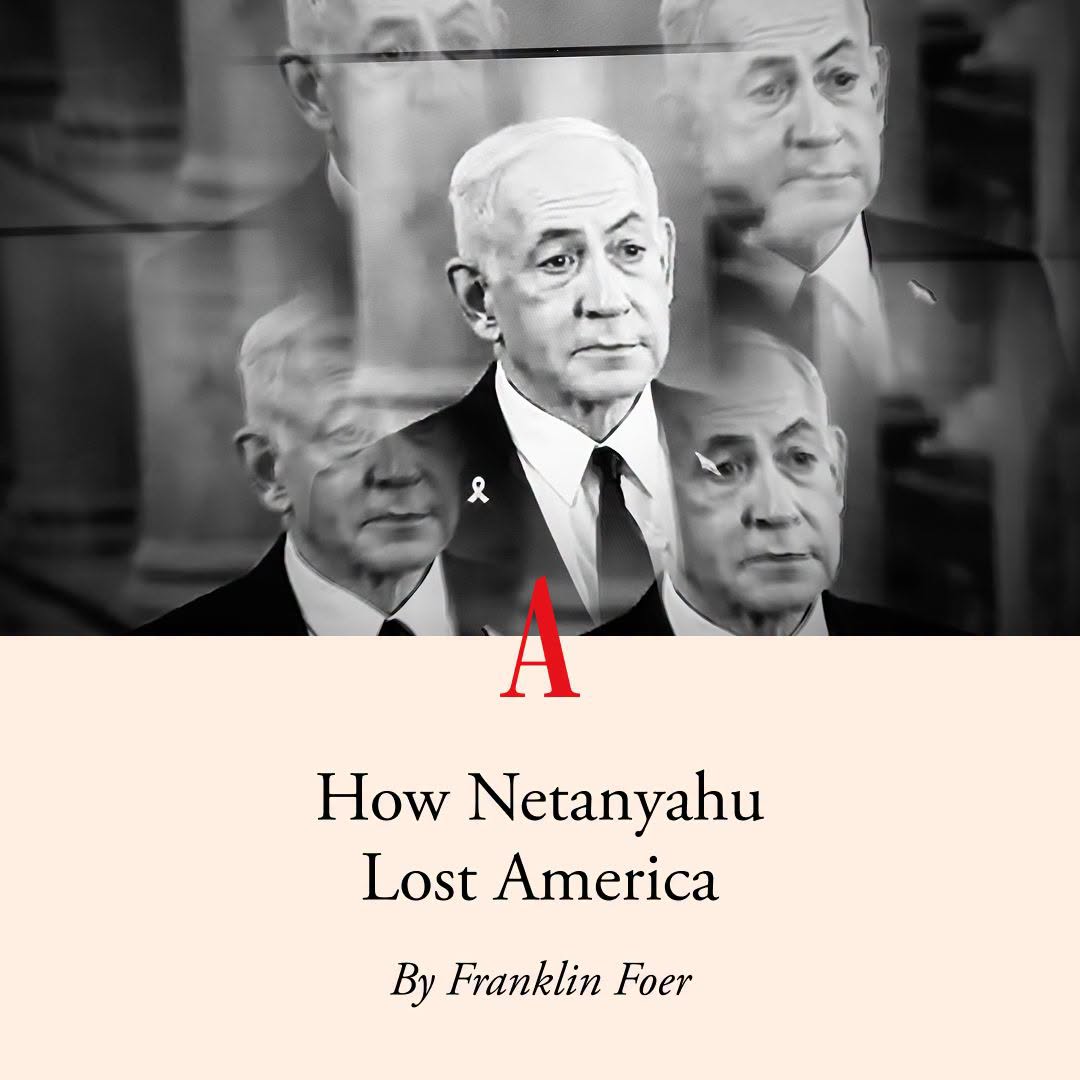
What Hold Does Netanyahu Have on Trump?

By Abdel Barri Atwan

Criticism is mounting against US President Donald Trump within the American ruling elite for his embrace of Benjamin Netanyahu and the racist right wing rulers of Israel, his capitulation to their pressure to prioritize Israel, and his mobilization of all American military and diplomatic capabilities to serve their wars in the Middle East, particularly against Iran.

The American president has become a laughingstock due to his ignorance of the Middle East and its history, both ancient and modern. The latest manifestation of this ignorance is the awakening of America, both its leadership and its people, to the astonishing resilience of the Iranian military on the battlefronts, the success of its forces in destroying all American military bases, and, more significantly, the resilience of the Iranian ruling establishment and the regime’s failure to collapse despite American military strikes and the assassination attempt against Ayatollah Ali Khamenei, the Supreme Leader of the Iranian Islamic Revolution.

We don’t know the secret behind Trump’s weakness in the face of Netanyahu, his transformation into a puppet in Netanyahu’s hands, carrying out his orders without hesitation. During his first term, he moved the US embassy to occupied Jerusalem, recognized Israel’s annexation of the Golan Heights, and withdrew from the nuclear agreement with Iran. In his second term, he supported the war of annihilation in the Gaza Strip and sent his bombers to launch two attacks on Iran: the first in June (the 12-day war) and the second 10 days ago. Trump went even further when he begged the Israeli president to pardon Netanyahu, ending his appearance before the Israeli Supreme Court in four corruption cases.

There is a prevailing theory, supported by the majority of observers, that explains this submission to Netanyahu by the leader of the world’s most powerful nation. It suggests that this subservience stems from scandalous files held by the Israeli Mossad, implicating Trump in the sexual abuse of minors, known as the Epstein files. These videos were used to blackmail him.

The only thing Trump learned from his “mentor” Netanyahu was lying, impulsive decision-making, and a contemptuous and arrogant attitude toward the other side and its capabilities. There are numerous examples of this, most notably the bombing of Iranian nuclear facilities last June, claiming their complete destruction, only to find them still intact. The current aggression against Iran six months later is the strongest evidence.

And while we’re on the subject of Iran, we mustn’t forget Trump’s pledge and insistence on his approval of the new Iranian Supreme Leader, and his veto of the selection of Mojtaba, the son of the martyred Supreme Leader, Ayatollah Ali Khamenei. Now, the Iranian deep state has delivered a powerful and humiliating blow to him by voting for Mojtaba in the internal elections held by the Assembly of Experts in a secret location and under American and Israeli bombardment. It is certain that Trump will not succeed in assassinating him or preventing him from remaining in power for long.

Trump will go down in history as the American leader who destroyed America’s prestige and all its global bases, its superior military deterrent, and his country’s third defeat in the Middle East—after Afghanistan, Iraq, and now Iran. All these setbacks stem from his breaking his promises to put America first and to refrain from foreign intervention and wars.

Trump’s days seem numbered, as the American people and the deep state will not allow him to continue his destructive policies against their security, economy, and prestige. His defeat in Iran is now clear, leaving him with only two options: Either continue the war and suffer further defeats and losses, or a swift and unconditional ceasefire with Iran and the signing of a “surrender” agreement.

There are two indicators that he may choose to withdraw and retreat, indirectly acknowledging defeat and failure as an admission of error:

First: The swift and sudden cancellation at the last minute of the planned visit to Tel Aviv by his aides Steve Wittkov and his son-in-law Jared Kushner, as its purpose was to coordinate the escalation of aggression against Iran. Second: The destruction of more than 17 American bases in the Middle East by Iranian missiles would effectively cripple America’s military might.

Israel has embroiled America in a war of attrition from which it will emerge severely wounded and on the brink of bankruptcy due to the current global energy crisis. This crisis is a direct result of Iran’s closure of the Strait of Hormuz, the soaring prices of gas and oil, and the dramatic collapse of global financial markets. All of this is thanks to Iranian cunning, resilience, and military and political preparedness, and above all, their unwavering determination to fight to the death, whatever the cost.

This piece was translated from the Arabic daily website Al Rai Al Youm

Continue reading