Al-Duwairi: Hamas, Jabalia and Fall of 28 Israeli Soldiers

Retired military, strategic expert Major-General Fayez al-Duwairi said the military operations carried out by the Qassam Brigades recently in Jabalia camp, north Gaza, resulted in the deaths and injuries of at least 28 Israeli soldiers, while the occupation army only announced one or two injuries.

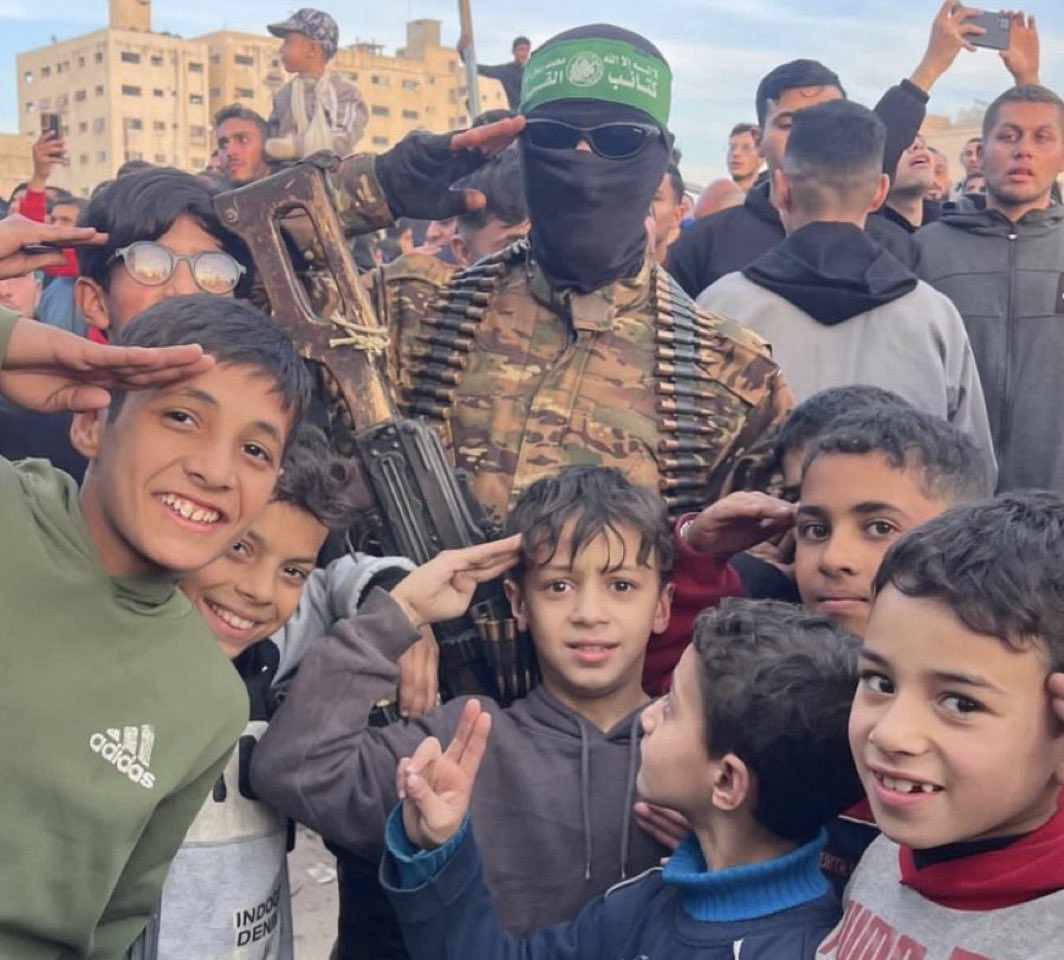
The Hamas military wing, the Qassam Brigades in footage, Saturday showed the destruction of seven Israeli military vehicles in the Jabalia camp; including the targeting of Merkava tanks, military bulldozers, and an armored personnel carrier with shells and missiles from close range.

Injured but fighting

Al-Duwairi explained on Al Jazeera the Qassam footage included several remarkable qualitative operations. He noted what was most surprising was the operation made by one of the injured fighters by targeting a Merkava tank using an explosive charge.

He added: “The first [camera] shot has more than one dimension, as the fighter is talking about his injury, which appeared to be in his hand, prompting him to switch from using a launcher to using a suicide charge, which was more primitive than the previous charges.”

The military expert stressed that what the injured fighter did was an “extraordinary act”, explaining that “no ordinary person or even a trained person can do such an act, especially with an injury to his hand and to get to a tank equipped with all capabilities and potentials”.

In detailing the human losses, Al-Duwairi explained that the armored personnel carrier carries 11 soldiers, and the tank carries a minimum of 4 soldiers with the possibility of the number reaching 10 soldiers, noting the operations included targeting thress tanks, two bulldozers and an armored personnel carrier.

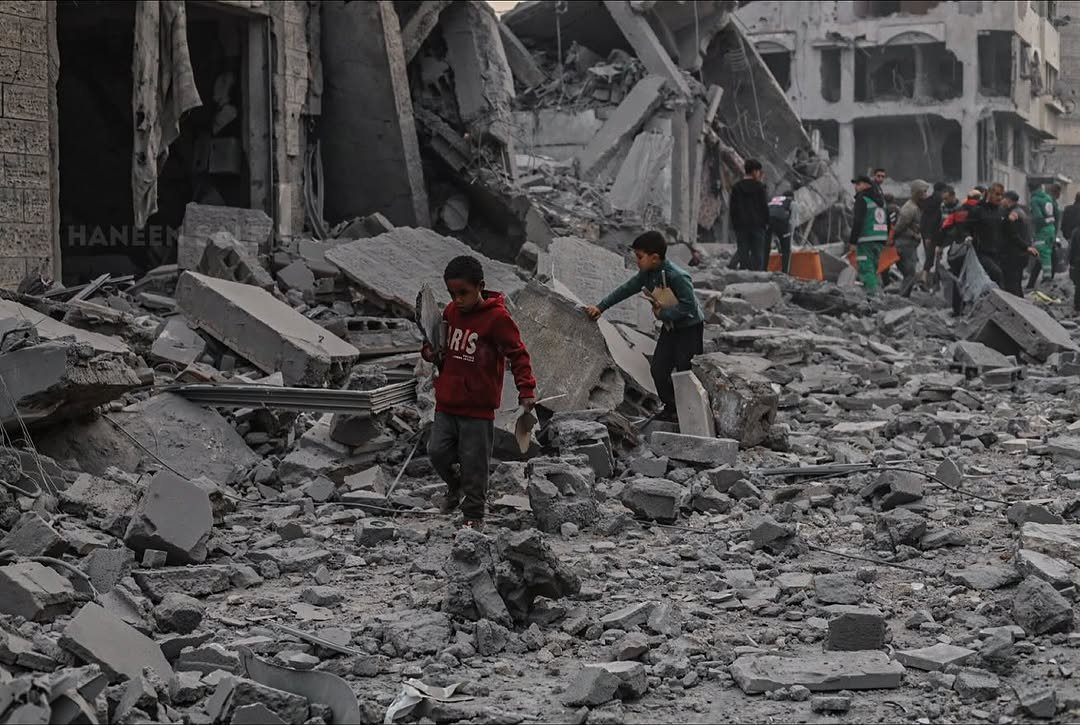
Al-Duwairi pointed out to the nature of the area in which the confrontations took place. He stressed it is a completely rubbled destroyed area were fighters are emerge, adding: “They are a group of fighters, if they had reinforcements the occupation army would not have been able to confront them”.

He pointed out in this situation the large mechanisms of the occupation army “become blindspots”, making their targets possible, but reaching them remains extremely difficult due to the presence of the “quadcopter” aircraft covering the skies of the area.

Continue reading
Expert: Israeli Soldiers in State of ‘War Fatigue’

Military expert Brigadier-General Mohammed Al-Samadi said the killing of five Israeli soldiers in two separate incidents in the Gaza Strip confirms the resistance’s exploitation of the rubble and debris of houses to launch sniper operations against occupation soldiers.

Al-Samadi added Israel imposes a blackout and censorship on its real losses in Gaza, as the operations indicate they are much greater than what is announced, pointing out the morale of the soldiers has declined significantly, because they have come to realize the futility of the war they are fighting.

The military expert cited talk about reducing the periods of service of the occupation forces, saying it confirms attempts to reduce cases of evasion from conscription and perhaps complete abstention from service due to frustration and “war fatigue”.

According to Al-Samadi, the resistance does not need large numbers of fighters to launch its operations, while the occupation army needs entire battalions and brigades in order to continue the war.

He pointed out the danger of the Israeli soldiers’ reluctance to go to war “at this dangerous stage in the life of the state”, and said that it reflects a lack of faith in the political leadership and the usefulness of the war, in addition to the fact that last October was the bloodiest month in the ranks of the occupation army.

Reducing period of service

The Israeli occupation army decided to reduce the period of reserve service from an average of 20 weeks for each soldier to only 9 weeks after the unusual decrease in the number of applicants for service, according to Israeli media.

Israeli media revealed a significant decrease in the number of reserve soldiers joining the Israeli army as a result of the government pushing a bill that allows the continued exemption of religious Jews from military service, as well as due to fatigue.

Yedioth Ahronoth newspaper said that the army is concerned about a decrease of between 15% and 25% in reserve service, and explained that this feeling emerged in recent weeks in the combat brigades in the Gaza Strip, and on the northern front – during the war on Lebanon – stressing that it affects the army’s operational decisions according to Al Jazeera.

Continue reading
Trump Signals New Arab-Israeli ‘Normalization’  

President of the Kuwaiti-based Reconnaissance Center for Research and Studies Abdul Aziz Al-Anjari, confirmed Donald Trump’s return to the White House next January will pave the way for the implementation of a pre-prepared plan to bring about radical changes in the Middle East.

Normalization

Al-Anjari, a member of the National Press Club in Washington, told Quds Press this plan seeks “to push towards almost complete normalization in the region, and to form a ‘new Middle East’ to strengthen Israeli hegemony, and establish the role of the United States as the main guarantor of this trend.”

Al-Anjari pointed out that “the plans are proceeding, despite the hopes of peoples demanding justice, and international human rights movements supporting Palestinian rights, but decisions are ultimately taken at the level of governments, most of which have shown a tendency towards greater rapprochement with Israel, and adopting a security vision that excludes all forms of armed resistance, which governments consider a threat to stability in the region.”

He added that “US-Israeli cooperation includes steps to enhance rapprochement with Israel by imposing laws that limit the boycott of Israeli products, measures that prevent some countries from rejecting Israeli travelers, or restricting the permission of Israeli aircraft to use airspace.

These policies aim to relieve some governments of the embarrassment they feel in front of their people, and to show that they find themselves forced to approach Israel under legal and diplomatic pressures, while the truth is that these plans are known in advance to some governments as part of broad normalization plans,” he said.

Two-state solution

Al-Anjari also touched on the issue of the “two-state solution,” considering it “a mere mechanism for managing the conflict, not resolving it, as this solution, as proposed today, seeks to grant the Palestinians an entity with diminished sovereignty and space, while consecrating the recognition of Israel as a fully sovereign state.”

The Kuwaiti analyst criticized what he described as “the contradiction in the positions of some parties calling for the two-state solution, which “support this solution, but refuse to recognize Palestine as a state,” considering that this “reflects a duality aimed at deceiving public opinion.”

The issue of Palestinian refugees and “two-state solution, if implemented, which is highly unlikely, will ignore the right of return; as Israel categorically rejects this right for fear of affecting its demographic balance, while granting the right of return to every Jew around the world, which leaves millions of Palestinian refugees without their basic rights.”

He added that “this makes the proposed Palestinian state lacking sovereignty, without real control over its borders, and unable to make its decisions freely.”

He pointed to “the possibility of future changes through elections in democratic countries, if their people are able to choose governments that support Palestinian rights.”

Continue reading
Analysis: Hezbollah’s War Strategy Against Israel

Military and strategic expert Fayez al-Duwairi said the resistance’s performance witnessed a qualitative development. He pointed to a recurring pattern pf targeting the Israeli depth reaching a distance of 145 kilometers from the Lebanese border.

He explained that this development is accompanied by an increasing focus on targeting strategic military bases in Israel.

Al-Duwairi continued the resistance has begun to target the main strengths of the Israeli army, specifically the armored forces on the Blue Line and the air bases from which the aircrafts take off from.

He stressed targeting air bases is a strategic priority for them, as hitting a vital part of any base can disable them for hours, which reduces the number of sorties.

In his assessment of missile capabilities, the military expert explained the current range of missiles requires them to be launched from a depth of no less than 160 kilometers, pointing to the diversity of the missile systems used, as the Fateh missiles, for example, have a range of 300 kilometers, while the payload of the explosive warheads ranges between 70 and 500 kilograms.

Dense Barrages

Regarding the tactics used, Al-Duwairi pointed out Hezbollah’s strategy is to flood the skies of Israel with dense barrages of missiles, simultaneously with sending drones.

He pointed out that this tactic exploits the weaknesses of the Israeli Iron Dome system, which has only 10 batteries, while it needs 14-17 batteries to cover the all of the Israeli-occupied Palestine.

The military expert warned of the limited efficiency of the Israeli defense system, which does not exceed 65%, even with its reinforcement by the Iron Beam and the David’s Sling systems.

He explained the resistance exploits these loopholes by launching short-range missiles to flood the batteries, followed by long-range missiles or drones, which are tactics that have proven successful on several occasions.

Al-Duwairi stressed that the success of this strategy depends on precise coordination between different types of weapons and the appropriate timing of attacks, noting that the resistance is demonstrating an increasing ability to manage military operations with high efficiency.

Continue reading
Trump’s Paradigm Shifts 

Dr Khairi Janbek

Islolationism in American terms meant historically, the interests of the USA are best served by not getting entangled in wars across the Atlantic, nor in the political affairs of Europe and possibly beyond, while keeping the economic expansion going.

Now to what extent will the incoming administration of Donald Trump proceed with isolationism and to what extent it believes will serve US interests?; in the mean time let us not forget that people electioneering or euphoric, are not the same people in the Oval Office. 

But still the first signs of isolationism are emerging in the field of US trade policy, with intended high customs and duties on imported goods from abroad.

This goes as well for the foreign policy of Trump which signals his distaste to negotiating with blocks and preferring bilateral agreements. This puts him in good standing with likeminded world leaders but certainly at odds with the EU, which by extension at odds with NATO also.

Ukraine

As for the current hot spots, Trump is accustomed to paradigm shifts, for a start he thinks that supporting Ukraine is a money losing project, and good business requires an atmosphere for peace. Therefore, most likely Trump will adopt a position of neutrality in this war, neither doing anything to harm Ukraine effectively, nor help it financially or militarily, while at the same time, trying to open diplomatic and trade dialogue with Russia. 

He may take the initiative to urge negotiations between the two parties on the basis of a business deal, in other words concessions.  No Meg’s Russia and not totally sovereign Ukraine, in any case, in Trump’s eyes, it is a European war after all.

Mideast

Now when it comes to the Middle East, this can be more tricky.  Trump has good relations with the Gulf Arab leaders, leaders of Egypt and Jordan, but also he is committed to the security of Israel and has good relations with Netanyahu. 

In a sense he has to square the circle if he wants to keep his relationships unscathed to deal with two most sour issues: The two state solution to the Palestinian problem, and the future of Iran, while taking into consideration, that both his allies, Egypt and Jordan are jittery about the issue of population transfer.

Trump’s option would be offering Netanyahu a free hand in Iran with US support, in exchange for a semblance of Palestinian self-rule, thus paving the way for deligitimising Hamas while legitimizing and presenting the continuation of war as a war between Israel and Iran, with Iran’s proxies being a legitimate target. 

Dr Khairi Janbek is a Jordanian writer based in Paris and the above opinion is that of the author and doesn’t reflect crossfirearabia.com. 

Continue reading