‘No Need For Your Crocodile Tears’
  • HebaHeba
  • August 13, 2026

By Ismail Al Sharif

“I’ll say it frankly: We should have exerted more pressure on Israel to adopt a different approach in Gaza” – Jake Sullivan, National Security Advisor to ex-President Joe Biden.

A striking phenomenon is recurring in American politics: Some presidents, cabinet members, and senior officials become more outspoken in their stances toward the Israeli occupation entity after leaving office, expressing regret for decisions that contributed to the injustice inflicted upon the Palestinian people.

This may be due to their liberation from diplomatic and partisan constraints, the pressures of Zionist lobbies, and the influence of tainted money, or perhaps their consciences awaken belatedly as they feel closer to death, realizing the enormity of the injustice they participated in or condoned.

Examples of this are numerous. Among the most prominent is former US President Jimmy Carter, who, after leaving office, shifted from a traditional pro-Zionist rhetoric to criticizing the Israeli occupation and its policies. Then there is Chuck Hagel, former US Secretary of Defense, who held the United States responsible for the Zionists’ continued aggression and described their practices as terrorism— but only after his retirement, of course.

Robert Gates, the former Secretary of Defense, also criticized war criminal Benjamin Netanyahu, calling him ungrateful.

More recently, Jake Sullivan, former National Security Advisor, and Antony Blinken, Biden’s lackluster Secretary of State, joined the ranks of those who have expressed regret. Both men have blood on their hands from the blood of Palestinian children and played a shameful role in supporting the Israeli entity during one of the greatest acts of genocide in modern history.

This was revealed in a lengthy investigation published in The New Yorker magazine last 20th July, titled “How Biden Enabled Israel’s Aggression Against Gaza – and Iran,” with the subtitle: “Top officials from the previous Administration now express regret over their failure to rein in Netanyahu.”

However, this regret will not absolve them for they knew full well that the Zionists were committing genocide in Gaza. On 5 March, 2024, five months after the start of the genocide, Mirjana Spoljarić, president of the International Committee of the Red Cross (ICRC), sent a confidential letter to President Biden. The ICRC, in addition to its humanitarian mission, is obligated under the Geneva Conventions to provide states with information and advice to help them avoid committing war crimes.

In her letter, Spoljarić reminded President Biden that the organization had condemned the “horrific” massacre perpetrated by Hamas against Israelis on 7 October 2023 and that it had continued to press the movement “tirelessly” for the release of the “hostages” it was holding.

However, this time she appealed to Biden with “grave concern,” warning that Israel, which had continued to bombard Gaza with heavy munitions since that October, was ignoring the ICRC in an unprecedented manner.

In her letter, she wrote: “The way Israel conducts hostilities is inconsistent with the laws of armed conflict, particularly the obligations to protect civilians, to distinguish between military objectives on the one hand and civilians and civilian infrastructure on the other, to ensure the humane treatment of detainees and the dead, to protect medical facilities and personnel, and to provide and facilitate the delivery of humanitarian aid.”

Despite these clear warnings, the United States remained a key partner in the genocide, providing weapons, money, and political and international cover to Israel. And now some of its officials come to shed crocodile tears for the children of Gaza!

I say to them: You have no right to repent now, after all these martyrs, after all these tragedies, to say: “We are sorry, we made a mistake.” You knew, and you had the power to pressure and prevent, but you chose to support, arm, and cover up. You bear the burden of what happened, and the blood of the children of Gaza will haunt you and pursue your names to the dustbin of history.

This piece by Ismail Al Sharif was originally published in the Arabic Addustour daily and reprinted in English in Crossfirearabia.com.
Continue reading
To Evelyn: The Baramki Home in Jerusalem
  • HebaHeba
  • August 13, 2026

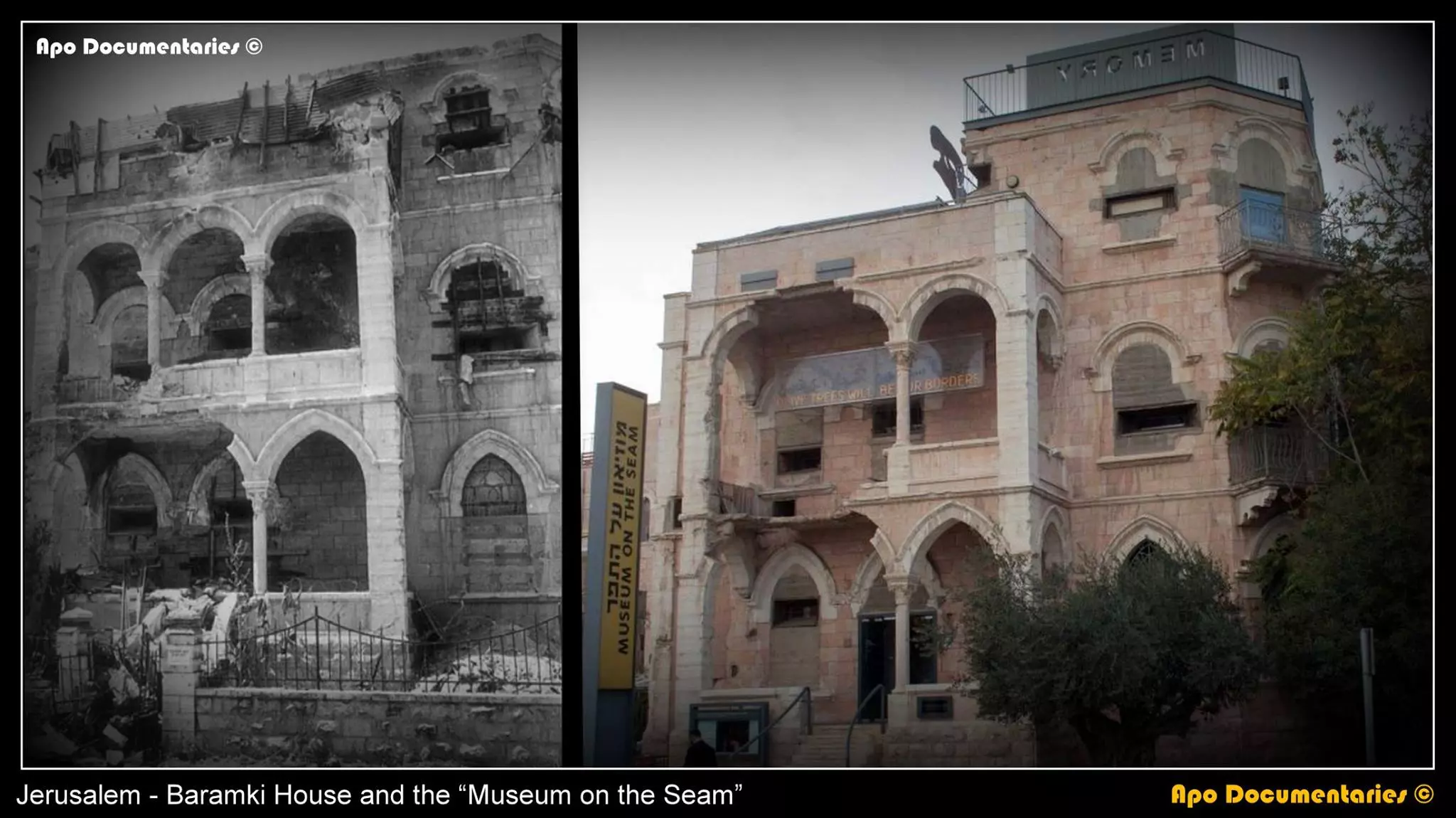
CROSSFIREARABIA – This house belongs to Andoni Baramki whom he built in dedication to his beautiful wife Evelyn. Andoni was a prominent Jerusalemite architect and built the home in 1932. The couple lived in this beautiful house until the War of 1948. Its location became a border area between the eastern part of Jerusalem under Jordanian rule and the western part of the city which Israel occupied. The house was located next to the Mandelbaum Gate, so the building was confiscated by Israel under its so-called Absentee Law which it introduced in 1950 and became an Israeli military outpost. After the Six Days War of 1967, the owner of the house demanded his property be returned by the Israeli authorities but his request was denied. In 1999, an Israeli foundation transformed the house into a museum, calling it as the Museum on the Seam. From Palestine Remembered

Continue reading
Reshida Tlaib Sweeps in Polls
  • HebaHeba
  • August 12, 2026

From Mahmoud Alghoul

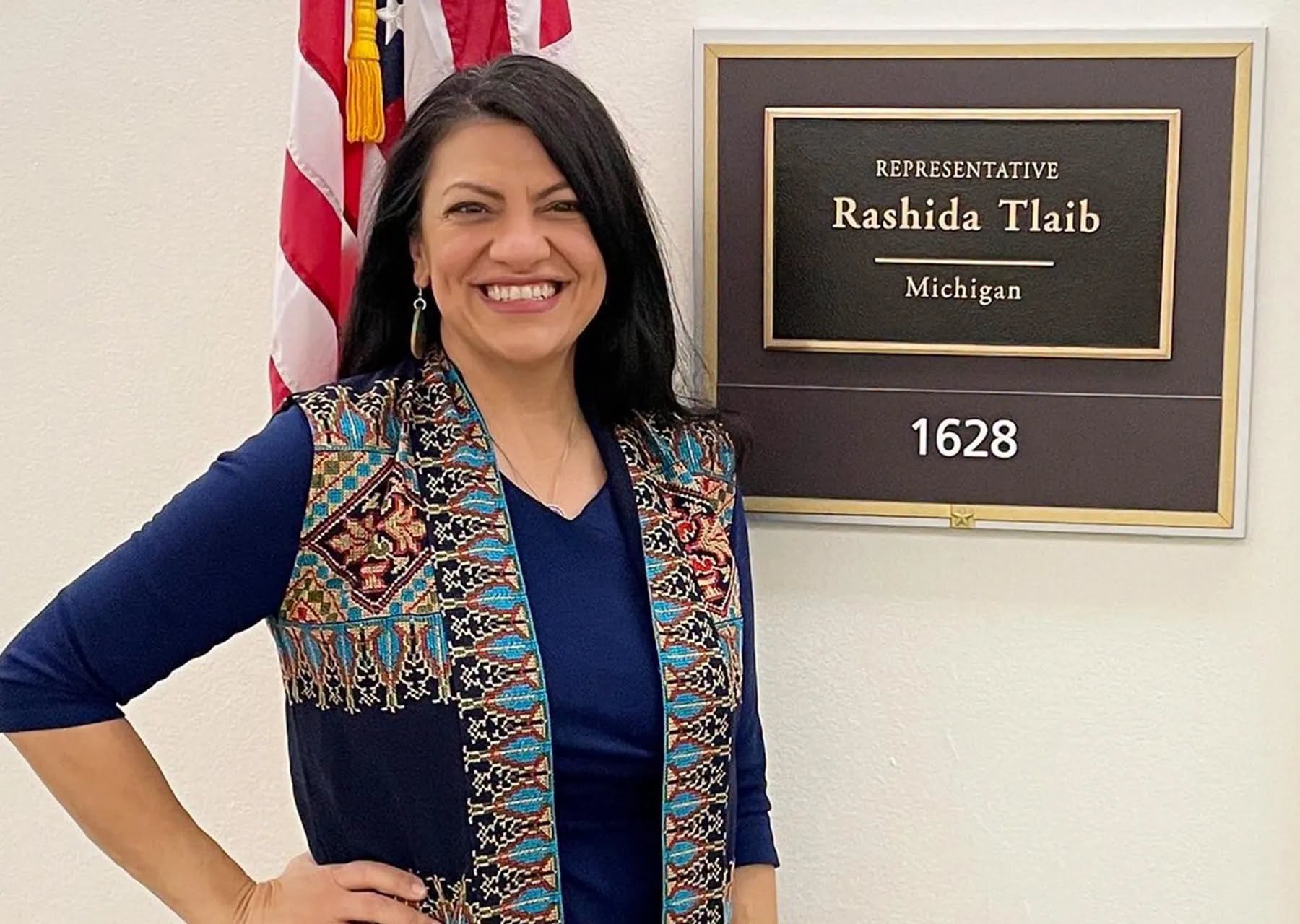
Rashida Tlaib sweeps her opponents in Michigan elections… and proudly proclaims her roots and family: “A big part of my strength comes from being Palestinian.”

“I am proud to be a Palestinian American, and a big part of my strength comes from being Palestinian,” Rashida Tlaib said, speaking about her Palestinian identity and heritage. She recalled her mother, who hails from a small village in the West Bank, and her grandmother and relatives in Palestine who have followed her political journey closely.

When she first won her seat in the US Congress, she said she wanted to amplify the voices of families in her district while remaining true to her Palestinian roots, emphasizing that her Palestinian identity was a significant source of strength.

For Tlaib, Palestine was not merely a family background she mentioned on occasion; it remained a constant presence in her political discourse. In 2019, she stated that she had never felt as Palestinian as she did within the halls of Congress, explaining that her presence in Washington had made her Palestinian identity more visible and pronounced. Rashida Tlaib, the Palestinian-American Democratic congresswoman, secured a resounding victory in the Michigan Democratic primary, thus clinching her party’s nomination for the general congressional elections scheduled for November.

This decisive win reflects the confidence Tlaib enjoys within her 12th Congressional District in Michigan, a district encompassing diverse communities and a broad base of support from Arab and Muslim communities, as well as progressives.

According to official results, Tlaib swept the race, garnering 73.9% of the Democratic vote, a significant lead over her closest rivals: former state legislator Chanel Jackson, who received 16.8%, and Inkster Mayor Byron Nolen, who received 9.2%.

This victory carries political significance beyond simply securing Tlaib’s nomination. It represents a new test of the strength of the progressive wing within the Democratic Party and reflects continued support for her positions on social justice, human rights, and foreign policy, particularly regarding the Palestinian issue. Tlaib is not only the first Palestinian-American woman elected to Congress, but she has also made her Palestinian roots an open part of her political identity. In previous statements, she spoke about her grandmother, who lives in the West Bank, and her emotional connection to Palestine. She also said that while Palestinians she knew in her family’s homeland saw her as American, her Palestinian identity felt more prominent within the U.S. Congress.

Rashida Tlaib is scheduled to face Republican candidate James Hooper in the upcoming general election in November, and given the nature and composition of her district, her chances of retaining her seat for another term appear favorable.

Continue reading
Yafa Train Station 1910
  • HebaHeba
  • August 12, 2026

From Palestinian Heritage:

This historical photograph shows the Jaffa railway station, which opened in 1892 as part of the first railway line connecting Yafa and Jerusalem. It is considered one of the earliest railway stations in Palestine and the Middle East. Work on the project began in 1889, financed and managed by a French company, and it was officially opened on September 26, 1892. The Yafa-Jerusalem line was approximately 87 kilometers long and represented a significant leap forward in connecting the Palestinian coast to the Holy City. The station was built in the historic city of Yafa. The photograph shows the station buildings with their distinctive architectural design and the railway lines in front of them. Here the image colorization was made by Husam Abdullah Abu Farha

Continue reading
‘They Can’t Take The Sea From US’
  • HebaHeba
  • August 12, 2026

A Vast Sea, and a Narrow Water

By Ibrahim Isam

The sea was wide enough to carry the dreams of an entire city, yet in Gaza, it seemed narrower than a child’s dream.

Three children stood in the water, close together, as though sharing a secret they did not want the wind to overhear. No net. No boat. No fishing rod. Only scraps of fishing line they had gathered from abandoned nets along the shore, trying to turn what was left behind into a path toward a fish.

Perhaps they were fishing for fish.

Or perhaps they were fishing for something else.

Something that looked like tomorrow.

The sea stretched open to the horizon, yet they could not go far. A cruel contradiction: To see the road before you and still be unable to take it; to stand before endless water while life itself grows narrower for those who belong to it.

In the old stories, the sea was a passage into the unknown. Ships crossed it in search of a homeland, salvation, or a new beginning.

But these children had only a few meters of water, a broken thread, and a very small wish:

to return with something they could eat.

And still, they laughed.

Perhaps because children do not know surrender in the way adults do.

They see the water.

They see the fish.

They see the hand of a friend.

And they see, beyond the horizon, a place they cannot understand why they are forbidden to reach.

Perhaps innocence begins with this simple question:

Why can’t I go farther?

Perhaps peace begins there, too.

Peace is not a word written on walls, nor a promise postponed until tomorrow. Peace is a child being able to enter the sea without fear; carrying a real fishing net instead of a broken thread; returning home with a fish in his hands—not because that fish will change the world, but because it will tell him that life is still possible.

They walk through the water, step by step, as if teaching the sea itself the meaning of patience.

They do not ask for much.

Only a small piece of the sea,

and a larger space in which to live.

For freedom, in its simplest form, may be nothing more than reaching your hand toward the horizon without anyone telling you where you must stop.

And still, the sea remains vast…

So vast that it makes injustice seem narrower, harsher, and more absurd.

And the children remain in the water:

three small bodies,

three soaked dreams,

three little hands searching for a fish…

or for a tomorrow in which they can finally say:

The sea belonged to all of us.

Continue reading