In Defense of Dr Mustafa Al Barghouti

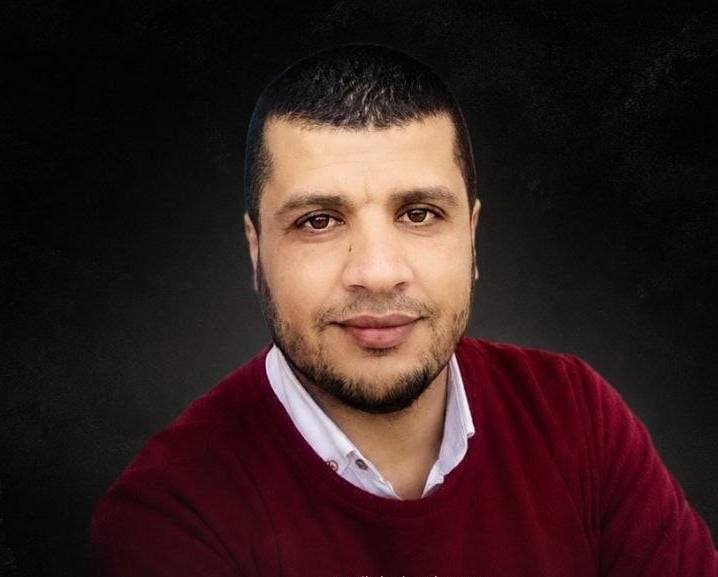
The media campaign targeting the Secretary-General of the Palestinian National Initiative Dr Mustafa Barghouti, sparked widespread political and national reactions after a clip was circulated and taken out of context relating to a speech, he delivered at a European meeting supporting Gaza. It was followed by accusations, doubts, and an escalation of rhetoric against him. Shortly after series of statements emerged rejecting the campaign against him, asserting it was a distortion, selective quoting, and misuse of his remarks.

The controversy began after Barghouti, speaking as a physician, stated “Israel has brutally and criminally killed at least 22,000 Palestinian children in Gaza.” He added however, that in recent months, the lives of “82,000 newborns who are now alive” had also been saved, and that for him, this “is not merely a humanitarian act, but an act of resistance.”

However, this statement was taken out of context and presented on some pages and accounts as a comparison between the number of martyred children and the number of births, which opened the door to a campaign accusing him of downplaying the tragedy in Gaza or dealing with it with insufficient sensitivity. In contrast, his defenders emphasized his remarks were about the Palestinian community’s ability to sustain life despite the annihilation, not about comparing death and birth.

Statements of Condemnation

The Hamas National Relations Department issued a statement condemning the media and incitement campaign against Barghouti, considering it to have been accompanied by “extraction, distortion, and misinterpretation of his statements to serve narratives and objectives that have no relation to the truth.”

The statement added that “extracting statements from their true context and misinterpreting them only serves to deepen the division and fragment national efforts at a time when our people are most in need of unity, integrated roles, and a focus on confronting the occupation and its ongoing crimes against our people.”

The department affirmed Barghouti “has been known for many years for his active national and political presence, and for his efforts in international forums to convey the Palestinian narrative and defend the rights of our people, in addition to his humanitarian, medical, and relief contributions,” considering this a “national asset that must be preserved and respected.”

It stressed that “differences of opinion or political assessment should not be transformed into insults, questioning of intentions, or distortion of national positions,” emphasizing that responsible dialogue and objective criticism must be based on complete facts, far removed from distortion and misrepresentation.

In the same context, the Palestinian National Commission for Popular Action issued a statement condemning the campaign. It stated that Barghouti is being subjected to “selective quoting and the distortion of his statements to serve narratives far removed from their true meaning.”

It added that Barghouti “has become a prominent national figure with international standing and symbolic significance,” stressing that differences of opinion “should not devolve into smear campaigns targeting national figures, especially at this critical juncture which demands strengthening national unity and directing efforts toward confronting the occupation and its ongoing crimes against our people.”

It also called for accuracy and objectivity, respect for political pluralism, and refraining from inflammatory rhetoric to preserve national unity and bolster the resilience of the Palestinian people.

Writers and Commentators: The Campaign Has Crossed the Line of Criticism

In addition to political statements, several Palestinian writers and commentators expressed their views, arguing that what happened to Barghouti crossed the line from criticism into deliberate destortion.

Writer Ahmed Bani Shaqour, in an article titled “When the Clean Is Attacked for Being Clean,” wrote that he read “an unjust and harsh attack on Dr. Mustafa Barghouti on a pro-establishment page,” which prompted him to write in his defense.

He said Barghouti “is not a political opportunist, nor a spokesperson for the authorities, nor a purveyor of slogans,” but rather “a son of the cause since the cost was high and privileges were nonexistent,” adding that he is “the doctor who did not abandon his profession for the first available position, the fighter who did not compromise his principles, and the Palestinian who did not change his compass.”

Bani Shaqour believes that Barghouti “disturbed them because he did not enter the market of deals, worried them because he does not sell his silence, and confused them because he is not adept at the language of justification,” concluding his article by saying: “When the clean is attacked, know that the battle is against him because he is clean.”

Background and Political Context of the Campaign

According to information circulating among observers, the campaign did not begin as a spontaneous objection to a statement made during an international event. Rather, it originated from pages and accounts known in recent years for attacking resistance forces and questioning their discourse. These include pages and individuals such as Ismat Mansour and Jamal Nazzal, as well as pages described by observers as fake accounts operating on behalf of security agencies within the Palestinian Authority.

In this context, the excerpted statement, according to these observers, became the entry point for a broader campaign that went beyond criticizing the wording to targeting Barghouti politically and morally.

This does not negate, according to observers, the right of any party to discuss or express reservations about wording, but it places the campaign in a context that transcends mere linguistic debate or disagreement over a specific expression.

From Criticizing the Statement to Targeting the Palestinian Voice

Observers believe that the core of the debate is not so much about a specific statement as it is related to Mustafa Barghouti’s standing in the Palestinian political and media landscape.

Since the outbreak of the war of annihilation on the Gaza Strip, Barghouti has emerged as one of the most prominent Palestinian figures in Arab and international media, combining his medical background with his political and rhetorical skills to deconstruct the Israeli narrative and defend the Palestinian narrative in a language that resonates with Western public opinion.

Therefore, a number of observers believe that targeting him cannot be separated from the battle over the narrative itself; that is, the struggle over who has the ability to represent the Palestinian voice in international forums, and who succeeds in conveying the Palestinian narrative to a global audience.

In this context, the selective use of a phrase from a speech that focuses primarily on the occupation’s crimes against the children of Gaza, and its subsequent transformation into a platform for accusing its author, reflects—according to these observers—a fundamental flaw.

In terms of priorities, the debate shifts from the original crime to the person who exposes it.

Ultimately, the campaign targeting Mustafa Barghouti reveals a highly sensitive internal Palestinian landscape, where narrative battles intertwine with political disputes, and where a single phrase taken out of context is enough to unleash a wave of doubt and incitement.

While his critics argue that some of his statements warrant discussion and scrutiny, statements and positions defending him assert that what transpired went beyond mere criticism to a smear campaign based on extracting words from their context and repurposing them in an internal battle that only serves to deepen the division.

Between the right to criticize and the duty of fairness, there is an urgent need to protect the national discourse from descending into accusations of treason and defamation, and to keep the focus on the core of the struggle: The occupation, the genocide, and the Palestinian narrative, which must be conveyed to the world in its entirety, not in a fragmented form according to Quds Press.

Continue reading
Reserve Officer: The Israeli Army is in ‘Moral Deterioration’

The Israeli army is facing a moral deterioration playing out among soldiers amid a high state of fear, a reserve officer said, as Israel continued its war in the Gaza Strip.

“I don’t want to write about the hardship of repeated reserve duty or about the damage it does to one’s body and soul, even though these important topics should be discussed more often,” the officer, who did not give his name, said in a letter published by Haaretz newspaper.

“Rather, I want to discuss values, a problem I’m regrettably contending with as I witness a moral deterioration playing out within the army. Morality is the essence of our human nature and of our link to the divine.”

The officer, who identified himself as a commander of a unit doing reserve duty in Gaza, said the army is fighting “an ongoing battle of trench warfare that is never satiated.”

“The objective of our mission is no longer clear, not even defined, leaving us no criteria with which to measure success,” he said.

“Because we are on a defensive mission, there is a high state of alert and fear of an enemy that might catch us by surprise. This mindset leads to many moral dilemmas.”

The Israeli officer said the state of alert since the Oct. 7 events caused the soldiers to shoot any Palestinians who approached them.

“Sometimes the shooting is justified, sometimes less so. In any event, opening fire happens because the individual soldier on the front line feels threatened or insecure,” he said.

“The blazing sun, the fatigue and the futility augment these feelings even when they are baseless. Even if it’s easy to judge them harshly while sitting in an air-conditioned office at the headquarters in Tel Aviv, one must recognize that these feelings exist.”

The officer admitted that killing so many unarmed people is taking its toll on the soldiers.​​​​​​​ “It’s taking a toll on mine,” he said.

Since October 2023, the Israeli army has killed more than 73,000 people in Gaza and injured over 173,000 others in a deadly war that has left the entire territory in ruins.

“Now, everything is permitted, and we have light fingers – too light – on the trigger,” the Israeli officer said.

“The unrestricted rules of engagement guarantee that no Gazan will reach the border fence, but they’re taking an increasing toll on us, on our values and on our mental state.” Anadolu

Continue reading
The Story Behind The War on Iran

By Ismail Al-Sharif

Whenever the United States moved closer to improving relations with Iran, the war criminal [Benjamin] Netanyahu would call for a war, relying on repeated claims that Tehran was seeking to acquire a nuclear bomb to use against him. However, these claims were never supported by conclusive evidence. Iran consistently denied seeking nuclear weapons, granted UN inspectors complete freedom to inspect its nuclear facilities, and its Supreme Leader issued a religious edict prohibiting the production of nuclear weapons.

Under President Obama, things seemed to be moving toward de-escalation. In 2015, the Joint Comprehensive Plan of Action (JCPOA) was signed, under which Iran committed to a framework for peaceful uranium enrichment, without any mention of Israel’s nuclear arsenal. Germany and France were tasked with monitoring the Iranian nuclear program through established monitoring and verification mechanisms. In return, the economic sanctions imposed on Iran were supposed to be partially eased. However, this commitment was not fulfilled.

The sanctions continued to tighten their grip on the Iranian people, and the war criminal Netanyahu continued his intense pressure on Washington to withdraw from the agreement, while also continuing assassinations targeting Iranian scientists.

For years, the nuclear weapons narrative was used as a pretext for targeting Iran, while the real objective to seek regime change there because of Tehran’s support for Hezbollah and Hamas. Despite the widespread destruction inflicted on these two movements, attempts to eliminate them have failed.

The major shift came with Trump’s rise to power in 2017, when he tore up the nuclear agreement and reignited tensions. This move was accompanied by a broad media campaign against Iran that focused on internal issues, particularly women’s rights, and accusations of Mossad infiltration into Iran to instigate unrest similar to what occurred in Ukraine, Armenia, and Georgia.

These movements became known as “color revolutions,” where the CIA encouraged affiliated organizations to adopt specific colors as symbols of protest; pink in Georgia and orange in Ukraine, in an attempt to replicate the same model in Iran. This strategy relies on exploiting genuine grievances to ignite unrest, then co-opting the protests, infiltrating their ranks, and pushing them toward escalation, so that they are met with government repression. The resulting public anger is then redirected toward a path aimed at overthrowing the government and installing one loyal to the United States.

With Biden assuming the presidency in 2021, succeeding Trump, the momentum toward a direct military confrontation with Iran diminished, but sanctions remained in place, and negotiations did not resume. Today, with Trump back on the scene, the Israeli entity sees the moment as opportune to reopen the issue.

The “maximum pressure” campaign led to a sharp decline in the Iranian economy, and thousands of impoverished people and students took to the streets to protest living conditions. With the intervention and support of Mossad and the CIA, some protests escalated into violent clashes, met with a harsh security response that resulted in the deaths of hundreds of protesters and police officers. These events were quickly used as a new pretext for escalating tensions with Iran.

Once the government regained control, the warmongers reverted to their initial argument: the claim of a military nuclear program, a scenario reminiscent of what happened in Iraq when allegations of weapons of mass destruction were used as justification for the invasion, before their non-existence was proven. Demands then intensified for halting the Iranian missile program, which, if implemented, would render Tehran unable to defend itself against Israel.

Israel does not tolerate the existence of a regional power challenging its hegemony. It seeks to expand its influence and topple any regime it perceives as a challenge. From this perspective, Iran is not the final target; attention is also turning to Türkiye. Former Prime Minister Naftali Bennett described Turkey as the “new Iran” during his address to the Conference of Presidents of Major American Jewish Organizations, calling for the weakening of other regional powers after Iran and asserting that defense alone is insufficient to guarantee protection, whether with or without European support.

His speech also included mentions of countries like Egypt, Qatar, and Pakistan as potential adversaries, within a strategy based on waging continuous wars. This approach aligns with what is described as the American expansionist approach, articulated by US Secretary of State Marco Rubio at the Munich Security Conference in clearly expansionist language and colonialist terms, aimed at consolidating the Israeli entity’s hegemony over the region within a broader distribution of roles in the global balance of power.

The war criminal Netanyahu has finally succeeded in dragging the United States into a confrontation with Iran. Just as the fall of Iraq constituted a turning point that disrupted the Arab-Israeli balance of power, opening the door to a wave of unrest and revolutions, and leading to the disintegration of the regional order and the escalation of sectarian conflicts; If Iran falls, it will not be a passing or isolated event, but a pivotal turning point leading to complete Zionist hegemony over the region, a hegemony that will not stop at the borders of Iran, but will later extend to other countries.

This opinion appeared in the Arabic Addustour newspaper.

Continue reading
Israel Violates Gaza Ceasefire 3338 Times, Kills 1027

CROSSFIREARABIA – Israeli occupation forces continued, Wednesday, to violate the ceasefire in the Gaza Strip through strikes and gunfire in different areas in the east and south of the Strip. Israeli warplanes continue to roam the skyline of Gaza while striking at different areas as it did on a school in the Tuffah neigborhood in northeast Gaza. Since 10 October, 2025, Israeli violated the ceasefire 3338 times resulting in the deaths of 1027 Palestinians and the injury of 3208 civilians according to the Gaza Health Ministry.

Continue reading