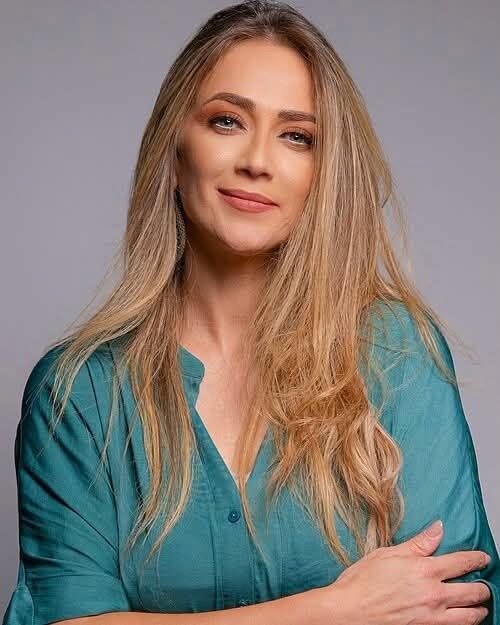
She is a Palestinian singer, producer, and a PhD researcher in neurology from the Haifa Institute of Technology, the Technion.
Dalal Abu Amneh was born in Nazareth on 9 August, 1983 and became captivated by science and music at a young age. In music, Dalal got to be known for her melodious voice and ability to perform various musical styles.
In this she forged a global Palestinian identity producing all of her musical projects while making three albums: “Ya Baladi,” “Ya Sitti,” and “Nour,” underlined in the spirit and heritage of the Palestinian and Arab people while at the same developing didactic vocal styles including classical Tarab, Andalusian singing, Sufi spiritual chanting, and her revival of Palestinian and Levantine folk traditions.
Dalal grew up in an artistic family. Her mother, Juhaina Al-Hawari, has a beautiful voice but has not pursued a professional musical career, but looked after her children. Her father, Ghazi Abu Amneh, plays the oud and owns a fish restaurant. She has four sisters: Nida, Salam, Jihan, and Faten. Salam and Jihan work in the arts and singing, while Nida and Faten work in visual arts due to their hearing impairments.
Dalal began singing at the age of four, participating in the Princess of Spring competition and winning the title in 1987 with her song “Maryam Maryamti.” By the age of 16, she was known for her masterful performances of classical Arabic songs and traditional roles, in addition to her renditions of Palestinian and Levantine folk songs. Leading musicians in the Arab world, such as Salah El Sharnouby and Asala Nasri, have praised her voice, which they said blends authenticity with modernity.
Dalal is commited to socially-conscious art and is working to develop Palestinian art scene in a way to preserve its authenticity while appealing to younger generations and western audiences to strengthen Palestinian identity and support the Palestinian cause.
Over the years, Dalal participated in major international and Arab festivals, such as the Jerash Festival and the Arab Music Festival at the Cairo Opera House and represented Palestine in several Arab operettas, including “Land of the Prophets” (2012) and “Call of Freedom” (2014).
She also regularly participates in cultural and artistic events locally, regionally, and internationally. In addition to her performances with her own band, Dalal is the principal singer of the MESTO World Orchestra, performing traditional Arab and Palestinian songs with western musicians and orchestral arrangements worldwide.
Dalal released several popular songs, including “Ana Qalbi wa Rouhi Fidaak” (My Heart and Soul Are Yours) in 2001, with lyrics by Adnan Abbasi, music by Alaa Azzam, and arrangement by Habib Shehadeh. It was recorded at Karam Matar Studios.
She also released “Khallini Fi Balak” (Keep Me in Mind) in 2003 and two albums: “Kareem Ya Ramadan” (Generous Ramadan) in 2007 and “An Baladi” (About My Country) in 2013, an album that explores Palestine from various perspectives and through diverse musical styles.
One of her songs, “Ain Al-Adhraa” (The Virgin’s Eye), was a radio hit, and “Bokra Jadeed” (Tomorrow is New) was among the five songs selected for the Euromed International Festival in 2006. Dalal, also known as Amna, combined her artistic career with her academic studies.
She graduated from the Bishop’s School (Clerical School) in Nazareth in 2001. She earned a bachelor’s degree in Cognitive Science and Psychology from the Hebrew University in Jerusalem, followed by a MA degree. She was then accepted to study medicine at the Technion in Haifa.
She became the first Palestinian Arab to study this specialized field, which combines computer science, medicine, biology, biophysics, psychology, and philosophy. In 2006, she enrolled in the graduate program at the Technion where she earned a MSC degree in Medical Sciences, specializing in neuroscience.
In 2011, she began working as a researcher and doctoral candidate at the same institute in the field of neuroscience, where she is developing a new technological method for treating chronic neurological diseases such as multiple sclerosis.
≈
She is a Palestinian singer, producer, and a PhD researcher in neurology from the Haifa Institute of Technology, the Technion.
Dalal Abu Amneh was born in Nazareth on 9 August, 1983 and became captivated by science and music at a young age. In music, Dalal got to be known for her melodious voice and ability to perform various musical styles.
In this she forged a global Palestinian identity producing all of her musical projects while making three albums: “Ya Baladi,” “Ya Sitti,” and “Nour,” underlined in the spirit and heritage of the Palestinian and Arab people while at the same developing didactic vocal styles including classical Tarab, Andalusian singing, Sufi spiritual chanting, and her revival of Palestinian and Levantine folk traditions.
Dalal grew up in an artistic family. Her mother, Juhaina Al-Hawari, has a beautiful voice but has not pursued a professional musical career, but looked after her children. Her father, Ghazi Abu Amneh, plays the oud and owns a fish restaurant. She has four sisters: Nida, Salam, Jihan, and Faten. Salam and Jihan work in the arts and singing, while Nida and Faten work in visual arts due to their hearing impairments.
Dalal began singing at the age of four, participating in the Princess of Spring competition and winning the title in 1987 with her song “Maryam Maryamti.” By the age of 16, she was known for her masterful performances of classical Arabic songs and traditional roles, in addition to her renditions of Palestinian and Levantine folk songs. Leading musicians in the Arab world, such as Salah El Sharnouby and Asala Nasri, have praised her voice, which they said blends authenticity with modernity.
Dalal is commited to socially-conscious art and is working to develop Palestinian art scene in a way to preserve its authenticity while appealing to younger generations and western audiences to strengthen Palestinian identity and support the Palestinian cause.
Over the years, Dalal participated in major international and Arab festivals, such as the Jerash Festival and the Arab Music Festival at the Cairo Opera House and represented Palestine in several Arab operettas, including “Land of the Prophets” (2012) and “Call of Freedom” (2014).
She also regularly participates in cultural and artistic events locally, regionally, and internationally. In addition to her performances with her own band, Dalal is the principal singer of the MESTO World Orchestra, performing traditional Arab and Palestinian songs with western musicians and orchestral arrangements worldwide.
Dalal released several popular songs, including “Ana Qalbi wa Rouhi Fidaak” (My Heart and Soul Are Yours) in 2001, with lyrics by Adnan Abbasi, music by Alaa Azzam, and arrangement by Habib Shehadeh. It was recorded at Karam Matar Studios.
She also released “Khallini Fi Balak” (Keep Me in Mind) in 2003 and two albums: “Kareem Ya Ramadan” (Generous Ramadan) in 2007 and “An Baladi” (About My Country) in 2013, an album that explores Palestine from various perspectives and through diverse musical styles.
One of her songs, “Ain Al-Adhraa” (The Virgin’s Eye), was a radio hit, and “Bokra Jadeed” (Tomorrow is New) was among the five songs selected for the Euromed International Festival in 2006. Dalal, also known as Amna, combined her artistic career with her academic studies.
She graduated from the Bishop’s School (Clerical School) in Nazareth in 2001. She earned a bachelor’s degree in Cognitive Science and Psychology from the Hebrew University in Jerusalem, followed by a MA degree. She was then accepted to study medicine at the Technion in Haifa.
She became the first Palestinian Arab to study this specialized field, which combines computer science, medicine, biology, biophysics, psychology, and philosophy. In 2006, she enrolled in the graduate program at the Technion where she earned a MSC degree in Medical Sciences, specializing in neuroscience.
In 2011, she began working as a researcher and doctoral candidate at the same institute in the field of neuroscience, where she is developing a new technological method for treating chronic neurological diseases such as multiple sclerosis.

marwan

 CrossFireArabia
 Heba
Heba