How Would You Like to Die?

Hilal Elver

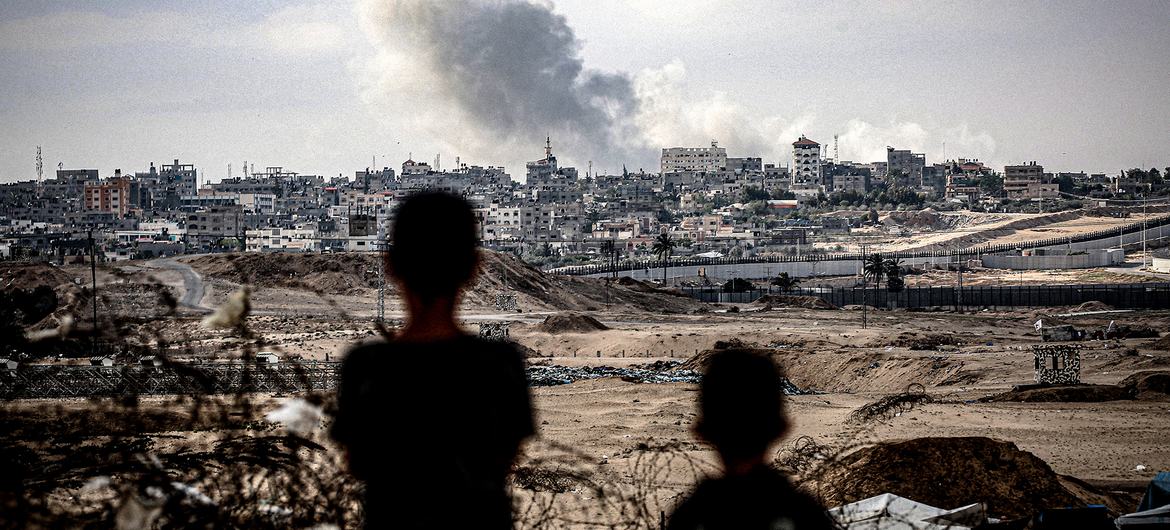
As we approach the second anniversary of the horrific and genocidal assault on the civilian population of the Gaza Strip, we are witnessing Israel’s systematic disregard for international law and human rights and its weaponization of humanitarian principles. In any armed conflict, the denial of food and water constitutes a war crime under international criminal law. But the mass starvation in Gaza—which quickly evolved into a man-made famine—is unlike any other crisis in modern times.

In Gaza, not only is access to food and water deliberately obstructed, but humanitarian aid itself has become a tool of warfare—used as leverage and denied as a means of collective punishment. The visibility of this crisis, the abundance of credible evidence of war crimes, the immense suffering of civilians—above all women and children—and the impunity of powerful actors make this both a test case for the erosion of humanitarian norms and a tragic outlier in the history of international law.

The blockade and starvation of Gaza are not new. They have a long history—and a uniquely bleak future compared to other conflict-related famines. Since 2007, Gaza has been under Israeli blockade. During this period, Israel systematically calculated the minimum caloric intake required for survival—creating a so-called “Gaza Diet.”[1]

Entering the war, Israel had detailed knowledge of the population’s basic needs and made a conscious, sustained choice to deny adequate access to food and clean water for over 21 months.

Unlike other conflicts, there is no escape from the devastation in Gaza. The entire territory is a war zone, and all 2.3 million Palestinians are treated as enemies[2]—collectively punished and militarily targeted. Humanitarian convoys wait at border crossings, fully loaded, but are denied entry. Food rots within sight of starving families, often just meters away.

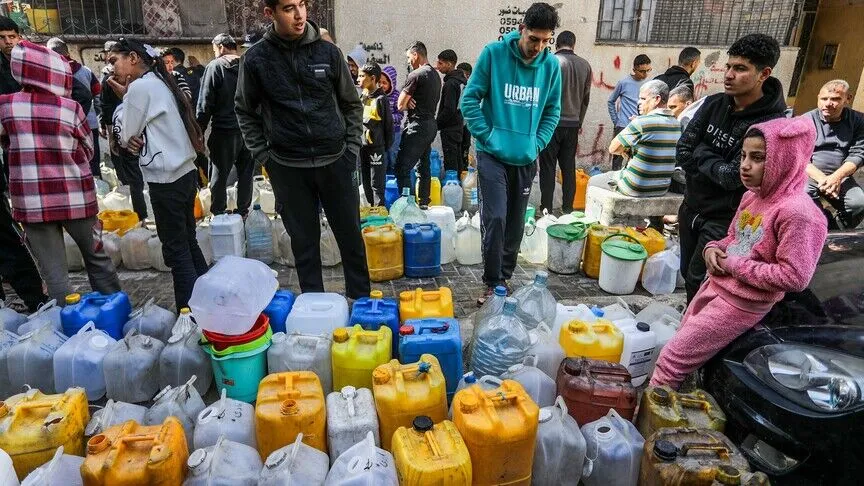
Due to Gaza’s specific circumstances, starvation spread rapidly—from the North to the Center and then to the South. By December 2023, with winter approaching, most homes and residential areas were destroyed. The majority of Gazans were living in tents or the ruins of buildings—without food, water, cooking facilities, heating, or sanitation. Evidence has long shown that catastrophic living conditions, a crumbling healthcare system, and severely inadequate and sporadic humanitarian aid produced mass malnutrition and imminent famine.


Deliberate targeting tactics

Israel has repeatedly denied UN and NGO reports about the use of starvation as a weapon. The US government also ignored clear warnings and overwhelming evidence. For months, most Western governments avoided using the words famine or genocide in relation to Gaza. The UN’s Integrated Food Security Phase Classification (IPC)[3], the authoritative global body on famine assessments, has yet to formally declare a famine in Gaza—despite mounting evidence—due to political pressure from perpetrators. Statements by UN Special Rapporteurs, based on scientific data, and multiple interim rulings by the International Court of Justice [4] warning of the “plausibility of famine” have been disregarded. Instead, Israeli forces have responded with further attacks on aid convoys[5] and on civilians trying to collect sacks of flour.[6] These were not collateral damages; they were targeting tactics.

Day by day, the situation has gone from bad to worse—to catastrophic. On March 2, 2025, during a broken ceasefire, Israel blocked all international humanitarian aid from entering Gaza, allowing only minimal deliveries through a militarized and dehumanizing distribution system it controls. In March 2025, the blockade entered a harsher phase, marked by stricter restrictions and the militarization of aid distribution. After two months without food and water, the United States, alongside private contractors and mercenaries under Israeli military supervision, launched a long-planned entity: the Gaza Humanitarian Foundation (GHF)[7].

This new structure replaced over 400 non-militarized UN distribution points with just four distribution centers—located in highly insecure areas. Humanitarian principles of humanity, neutrality, impartiality, and independence were completely abandoned. UN agencies and international humanitarian organizations refused to participate in this privatized, militarized, and lethally deceptive system.

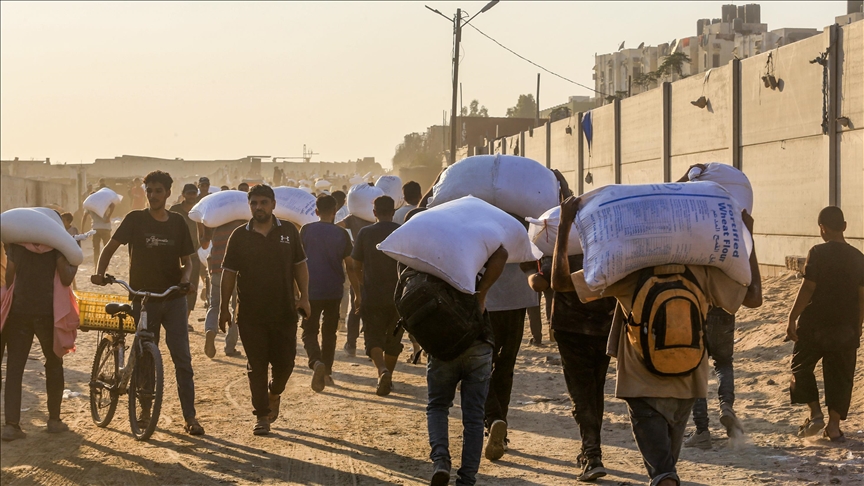
Dire results were feared from the outset. More than 1,000 people have died of Israeli army sniper attacks at these sites, and more than 5,000 have been injured. People walk for hours along dangerous, dusty roads, wait under the desert sun, and are given just 11 minutes to collect 25 kilograms[8] of flour before the GHF arbitrarily closes its gates. When they exit, the ordeal often continues. Many are shot—by Israeli forces, private security, or armed groups. Gaza’s civilians are forced to choose between being killed by snipers or dying of hunger. Today, simply following the path of supposed humanitarian aid amounts to a death sentence.


Israel knows no limits in committing war crimes

On July 20, 2025, Israeli tanks and snipers attacked a 25-truck World Food Programme convoy[9] at the Zikim crossing. More than 100 Palestinians waiting for food were killed. It is a demonic inversion of humanitarianism: starvation weaponized, aid turned into bait, and civilians punished for seeking sustenance.

Famine, though still undeclared, is now undeniably present in Gaza. Why does the IPC exist if it cannot act? In recent days alone, over 100 people have died of hunger[10], including infants. Humanitarian workers and medical staff are collapsing from exhaustion and malnutrition. Every day, 10–15 people die from starvation.

Starvation is a silent death. It hides its cruelty. It is a societal torture.[11] People lose the energy to ask for help. Children stop crying. It is also one of the most painful deaths—the body consuming itself. Children suffer first, and if they survive, they are left with lifelong physical and cognitive damage. The effects of the Gaza famine will persist for generations.

Even the death toll has become a political battleground. Israel accuses Gaza’s health authorities of inflating numbers, yet respected research institutions have reported far higher estimates. In July 2024, The Lancet [12] projected over 186,000 deaths—many from indirect causes such as starvation, dehydration, and exposure. Oxfam[13] now reports that in the past 100 days, the daily death rate in Gaza is over 250—higher than in any other 21st-century conflict.

Unless there is an immediate permanent ceasefire or a meaningful intervention by the international community, Gaza will become even more of a monstrous killing field—a real-life version of The Hunger Games. What once seemed like dystopian fiction is now a horrifying reality, unfolding in plain sight.

[1] https://visualizingpalestine.org/visual/the-gaza-diet/
[2] https://www.isdglobal.org/digital_dispatches/no-innocents-the-collective-blame-of-palestinians-online/
[3] https://www.ipcinfo.org
[4] https://www.icj-cij.org/node/203447
[5] https://www.aljazeera.com/news/2024/11/30/israel-kills-world-central-kitchen-aid-workers-in-gaza
[6] https://www.ohchr.org/en/press-releases/2024/03/un-experts-condemn-flour-massacre-urge-israel-end-campaign-starvation-gaza
[7] https://www.972mag.com/gaza-social-collapse-criminal-gangs/
[8] https://www.theguardian.com/global-development/2025/jul/22/food-aid-gaza-deaths-visual-story-ghf-israel
[9] https://www.wfp.org/news/gaza-convoy-incident-statement
[10] https://www.ft.com/content/6899af82-1a6f-4ec6-91ba-41e7a5f0012d?utm_source=chatgpt.com
[11] https://cjil.uchicago.edu/print-archive/siege-starvation-war-crime-societal-torture
[12] https://www.thelancet.com/journals/lancet/article/PIIS0140-6736(24)01169-3/fulltext
[13] https://www.oxfam.org/en/press-releases/daily-death-rate-gaza-higher-any-other-major-21st-century-conflict-oxfam

*Opinions expressed in this article are the author’s own and do not necessarily reflect Anadolu’s editorial policy.​​​​​​​

The author is a former UN Special Rapporteur on the Right to Food (2014-2020) and a member of the High Level Panel of Experts (HLPE) of the UN Committee of World Food Security (CFS).
Continue reading
Syria – The New Battleground?

By Dr Amer Al Sabaileh

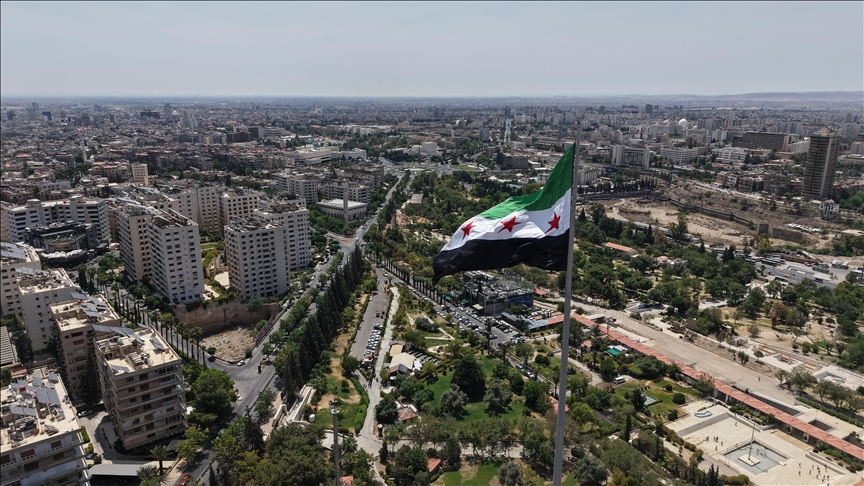
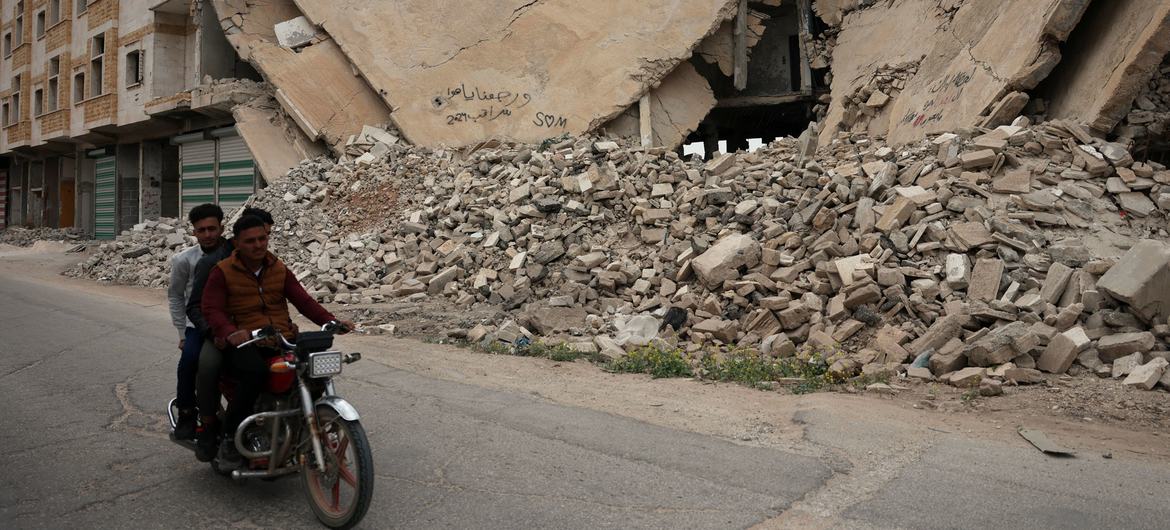
Southern Syria has returned to the center of regional attention with the recent outbreak of violent clashes. These developments, while not surprising, reflect the ongoing fragility of Syria’s political and security landscape. Since the collapse of the Assad regime, Syria has remained in a state of uncertainty, with internal power balances eroded and the rise of the Shar-Joulani administration in the absence of a viable and inclusive governance framework.

Over the past seven months, the country has witnessed massacres and targeted attacks against Alawites, Druze, Kurds, and Christians—clear signs of deep and worsening instability. This internal collapse is being exploited by external actors, particularly Israel, which views southwestern Syria as critical to establishing a demilitarized buffer zone along the Golan Heights. Despite the complexity of Syria’s internal landscape, Israeli strategic calculations in southwestern Syria remain a pivotal factor in shaping the region’s future.

While Israel initially entered the scene under the banner of “protecting the Druze,” this intervention risks inflaming sectarian tensions and sparking a prolonged conflict. At the same time, it has begun to impose a new reality on the ground—one that cannot be addressed without genuine understanding amongst key Syrian groups such as the Druze and Kurds, as well as broader arrangements with Israel itself. The latter has already sent unmistakable signals to Damascus through symbolic military strikes, indicating that future operations could escalate to directly undermine or even topple the current regime.

The ongoing clashes in Sweida and Damascus are likely to persist, especially in the absence of a clear military map for southern Syria. This suggests that Israeli strikes on military infrastructure in Damascus and beyond may continue. Furthermore, sectarian instability is set to deepen amid mutual distrust between the Druze, Bedouin tribes, and the central government—raising the probability of renewed violence. The recent developments have provided Druze militias with significant de facto autonomy, potentially opening the door for direct regional support, as they increasingly emerge as independent actors on the ground.

In parallel, this fragmentation heightens the risk of southern Syria becoming a multi-front proxy battlefield. Hezbollah—under internal pressure in Lebanon—alongside Iranian militias, may seek to open a new front against Israel, exploiting Syria’s geography to mount a tangible threat and divert Israeli focus away from Tehran.

These developments expose the deep institutional fragility of the Syrian state. The new transitional government remains unable to assert control or establish legitimacy in contested provinces, which paves the way for militias to expand their influence and for chaos to deepen. With the resurgence of extremist groups, the implications for long-term stability and reconstruction in Syria are deeply alarming.

Israel is moving forward with plans to establish a demilitarized buffer zone along its border with Syria, administered by friendly or at least non-hostile forces. The areas of Sweida and southern Daraa are of particular strategic importance, as Israel aims to prevent the advance of forces loyal to the new Syrian administration or the infiltration of Iranian proxies and Hezbollah operatives.

This unprecedented weakening of the Syrian administration may leave it increasingly prone to align with Israeli interests or offer major concessions simply to survive—an opportunity Israel will likely exploit to reshape not just Syria’s security geography, but its broader political map in accordance with long-term Israeli strategic goals.

From the Jordanian perspective, this evolving reality on Syria’s southern border presents a real and growing threat to national security. The concern goes beyond the spectre of chaos or fighting spilling across the border. It’s about a broader attempt to reshape the geopolitical landscape of the entire region—a transformation that will inevitably affect Jordan. Rising security threats are likely to be accompanied by political ones, as the drivers and dynamics of the Syrian conflict may cross borders. This makes it imperative for Jordan to adopt a proactive approach that prevents the spread of this new reality—both in its security and societal dimensions—into its own territory.

The author is a writer for The Jordan Times

Continue reading
Israeli Gunboats Fire at Gaza Fishermen

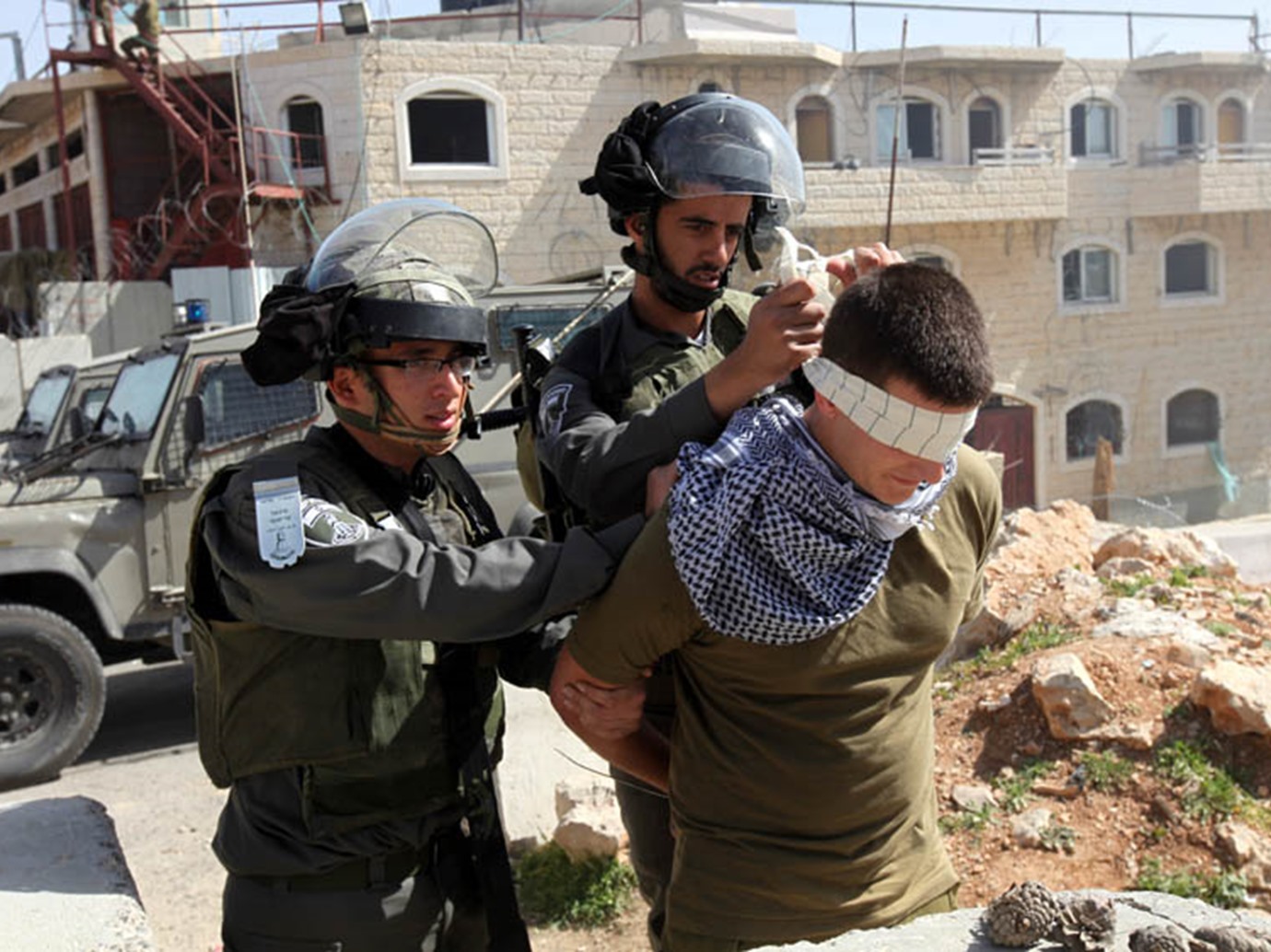
The Israeli occupation forces (IOF) arrested several Palestinian fishermen from the shores of Gaza City as they attempted to catch fish, Saturday evening, amid the ongoing famine and unprecedented starvation sweeping the Gaza Strip.

The fishermen were fishing in the Gaza port basin about 100 meters offshore when an Israeli warship approached and arrested them according to local sources.

Zakaria Bakr, coordinator of the Fishermen’s Committees at the Union of Agricultural Work Committees, said Israeli naval vessels arrested five Palestinian fishermen from their boats while they were fishing near the shore.

Bakr added that the Israeli vessels threw some of the fishermen into the sea after detaining them, while the others were taken to an unknown location. He also noted that Israeli forces fired heavily toward the shoreline according to the Palestine Information Center.

The Israeli military has imposed a full maritime blockade on Gaza from its northern to southern borders, preventing fishermen from accessing the sea. This has led to the killing of dozens since the start of the genocide campaign in October 2023.

A week ago, a spokesperson for the Israeli army announced the complete closure of Gaza’s coastline to Palestinians, now in the 21st consecutive month of war, citing “security reasons.” He said addressing the Strip’s inhabitants: “We remind you that strict security restrictions have been imposed on the maritime area adjacent to the Gaza Strip, and entry to the sea is prohibited.”

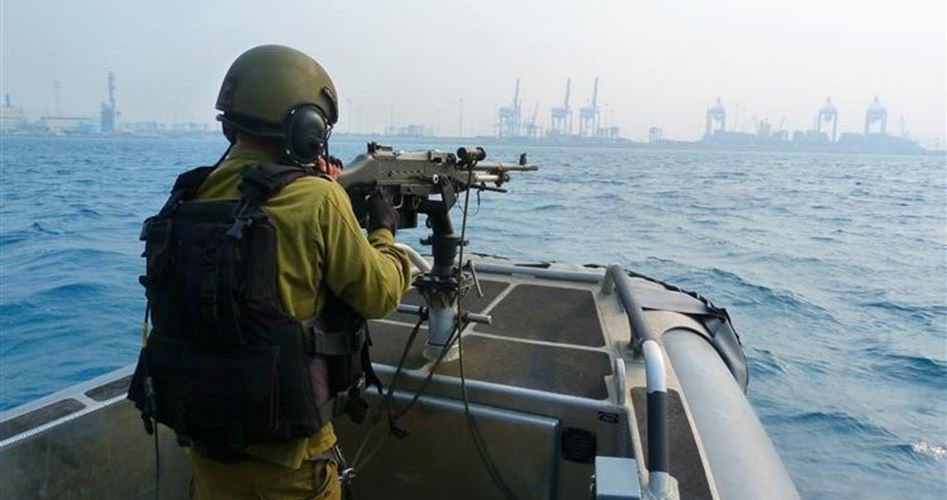
The Gaza coastline is now heavily patrolled by Israeli warships, which conduct daily shooting and shelling operations targeting Palestinians along the coastal strip. Some vessels come dangerously close to shore, especially with tens of thousands of displaced people sheltering in the Gaza port area.

Supported by unwavering US backing, Israel is waging a genocide against Gaza, which, according to the Ministry of Health, has so far resulted in more than 58,765 martyrs, over 140,485 injuries of varying severity, and more than 11,000 missing persons. The famine has already claimed dozens of lives, while over two million Palestinians endure forced displacement under catastrophic conditions.

Continue reading
The Argentinian Priest of Gaza

Fr. Dr. Rif’at Bader

Fr. Gabriel Romanelli, a young priest of the Society of the Incarnate Word founded in Argentina in 1984, was the first priest to arrive in Jordan for pastoral and spiritual service since 1996. I had the honor to be one of the first people to welcome him during my work in Madaba. He came to learn Arabic and he mastered the language.

Fr. Gabriel represents notable priests and pious pastors who live with their people. I recall that on September 30, 2023, he was in Rome to participate in the investiture of Patriarch Pierbattista Pizzaballa of Jerusalem as cardinal in the universal Catholic Church. A few days later, events erupted on October 7, 2023, and Fr. Gabriel remained in Rome for several days until he returned to Jerusalem. He was very sad when he saw the aggression taking place on Gaza while he was in Jerusalem, and he had a daily longing to go to Gaza to be with his people.

At the time, Fr. Yousef As’ad, an Egyptian affiliate with the same religious order, was there living with his people in Gaza. Since October 7, he had to do everything at hand, and he truly excelled in depicting the image of the good and faithful shepherd. What encouraged the people of Gaza to remain steadfast was the almost daily phone call by the late Pope Francis, except for days when communications were disrupted in Gaza. However, this phenomenon provided the people of Gaza with reassurance, courage, patience, and steadfastness.

We have seen wounded Fr. Gabriel Romanelli while he was checking on the wounded and caring for them. He was not concerned with his own wounds; he rather cared for the wounds of his people in Gaza. Gaza’s small number of Christians has dwindled due to the bitterness of time and the bloody events that have taken place in this distressed strip. The Christian presence in Gaza was bright, pioneering, and wonderful, yet it has dwindled to a few hundred people sheltering next to the Church of the Holy Family and the Church of Saint Porphyrius.

Where pain, wounds, and death prevail, then sectarianism and competitiveness diminish, while humanity emerges in its most glorious manifestations. We were very jubilant during feasts when seeing priests–despite the harshness of days—accompany their people, while going from one church to another conveying well wishes to pastors of churches and their blessed people.

The suffering and bloodshed to which the Christians were exposed in Gaza is only part of the suffering experienced by all shades of the Palestinian people, and experienced daily through this bloody conflict that dates back far beyond October 7, namely spanning 76 years of daily suffering and daily avid and athirst for freedom, peace, justice, and independence.

We greet the Palestinian people on their legendary steadfastness, which history will one day mark as being one of the stories of steadfastness and heroism experienced by people on daily bases. Congratulations are conveyed to the Palestinian people for their national unity as well as Christian- Muslim cohesion. This is the greatest message of confronting an occupation force, which has occasionally sought to create a schism between the religious shades of people by claiming that Christians are neutral.

Christians in Gaza are an integral part of the Palestinian people’s composition. Consequently, the martyrdom of three people in the church marks Palestinian national unity, whereby independence will one day be attained on national soil.

Fr. Dr. Rif’at Bader wrote this for the Jordan Times and it is reprinted here in crossfirearabia.com

Continue reading
Bombing Damascus, Arab Silence!

In a scene that reflects its utmost political and military arrogance, Israel, Wednesday, bombed the Syrian General Staff and the Republican Palace in the heart of the capital, Damascus.

This blatant attack crosses all red lines, interfering in Syria’s internal affairs as if it were the world’s superpower, openly defying international law and humiliating some Arab regimes with its silence and suspicious incompetence.

This is not a passing event, nor is it merely a “security message,” as Western media attempts to gloss it over. It is a blatant aggression against the sovereignty of an Arab state, striking its most important symbols of sovereignty in broad daylight.

The military strikes are a declaration of rebellion against international law and an insistence that Israel remains “above the law,” capable of destroying any Arab capital without fear of punishment or even blame.

What does Israel want?

It wants to brazenly say:


“I decide who lives, who is bombed, and whose voice is forcibly silenced.”

It seeks to impose the logic of force and dictate new rules in the region, titled: There is no place for an Arab state with independent decision-making, capable army, or a resistance project.

What is happening in Syria today has happened and is happening in Gaza, in southern Lebanon, in Iraq, in Yemen, and in every region trying to breathe outside the Zionist orbit.

The challenge is not only facing Syria…but all Arabs.

Anyone who thinks that these raids target Syria alone is delusional.

Every Arab country is now on the waiting list.

Today, Damascus is being bombed, and tomorrow… who will be next? Baghdad? Beirut? Yemen, Khartoum? Riyadh, Cairo? No one is immune to this arrogance as long as silence is the only response.

It is the Arab silence that has encouraged Israel to persist. The disagreements, divisions, and humiliating normalization are what have reassured Tel Aviv that no one will hold it accountable, or even condemn it.

What’s needed now: Break the silence and stop the collapse.

It’s time for the Arab nation to wake up from its slumber and realize that what is happening is not a “Syrian crisis” but a “collective Arab setback.”

Overt and gratuitous normalization with Israel must be halted immediately.

The Joint Arab Defense Charter must be activated, even if only verbally at first.

The steadfastness of Syria—its people, army, and institutions—must be supported, because the ultimate target is every Arab state. Everyone’s turn will come if Arab silence continues.

Israel is not destiny… and if the Arabs want to, they can.

Our history is full of moments of steadfastness and victory, but we need an awakening of conscience and a political will to halt this unbearable collapse.

Israel does not respect the weak, nor does it take into account those who remain silent.

Unless it is curbed now, every Arab state will one day find itself in its crosshairs, without support or dignity.

This opinion was written by Awni Al Rjoub in Arabic and published in Jo24.

Continue reading