Middle East in a Cracked Mirror

By Dr Khairi Janbek

Every time the “new Middle East” which by the way has exciting resonance, be it conspiratorially or optimistically, is raised, one sees the new concept as exactly resembling exactly the old Middle East or is of the same replica.

We have grown accustomed to seeing the big turmoil in the Middle East, wars and regime changes, and each time we fall into the trap of seeing a conspiracy to change the boundaries of the Middle East, boundaries created with accords between Britain and France after WWI and which all countries of the region decry and condemn yet ironically fighting tooth and nail to preserve.

But what is this bogey which insinuates conspiracies and evil behind the cloak of a new Middle East.

Infact it started off idealistically as a reformist movement, basically economic as well as political reform, but with constant instability in the region, the term started to take another meaning, basically new alignments and new political understandings for the countries of the Middle East.

Essentially the way one sees it, the term now refers not to geography or reform – economic or political – but rather who are going to be the major players in the regions, who will be pulling the strings and will they relate to each other despite their contradictions and convergences.

For much of the recent history of the region the Trinity of Turkey, Israel, and Iran were the frame which contained the Arab problems within the Arab world, but as we have been seeing in recent history, these major players became part of the problems of the Arab world through their interference, seeking expansion or guaranteeing what they claim to be their national security concerns.

Now, and in the Donald Trump era, the concept of a new Middle East is still on track regarding the notion of who will be the new forces pulling the strings in the area, as for all intents and purposes, Iran as it seems has been relegated to a more background position regarding the affairs of the region, and Turkey with a circumscribed role, especially that the PKK, the leitmotif of Turkish interference in the area have laid down their arms.

Of course, now Israel is the power par excellence and the major player, but it needs a balancing actor from the Arab world this time, and the most likely candidate is Saudi Arabia.

However a Saudi balancing actor to Israel, is just not an easy feat to achieve, because such an actor cannot be based on contradictions alone, but also requires convergence. And this supposed convergence relies on the point of principle, the two-state solution to the Palestinian problem.

Now one is really not aware of the reasons behind Netanyahu’s rejection of the two-state solution, but certainly he is a hostage of his political alliances that keep his government afloat, thus making him avoid going back to court, and even worse, a possible jail term. As certainly for his allies, the rejection of a two-state solution is a point of principle.

Consequently, one believes, without the common ground with Saudi Arabia, of putting back on the table the issue of the two-state solution, there won’t be a new Middle East of two major actors, but rather one temporary major actor, being Israel for a temporary new Middle East!
Continue reading
‘Mauritanians See Israeli Normalization Sinful’

By AlDaho Sohaib

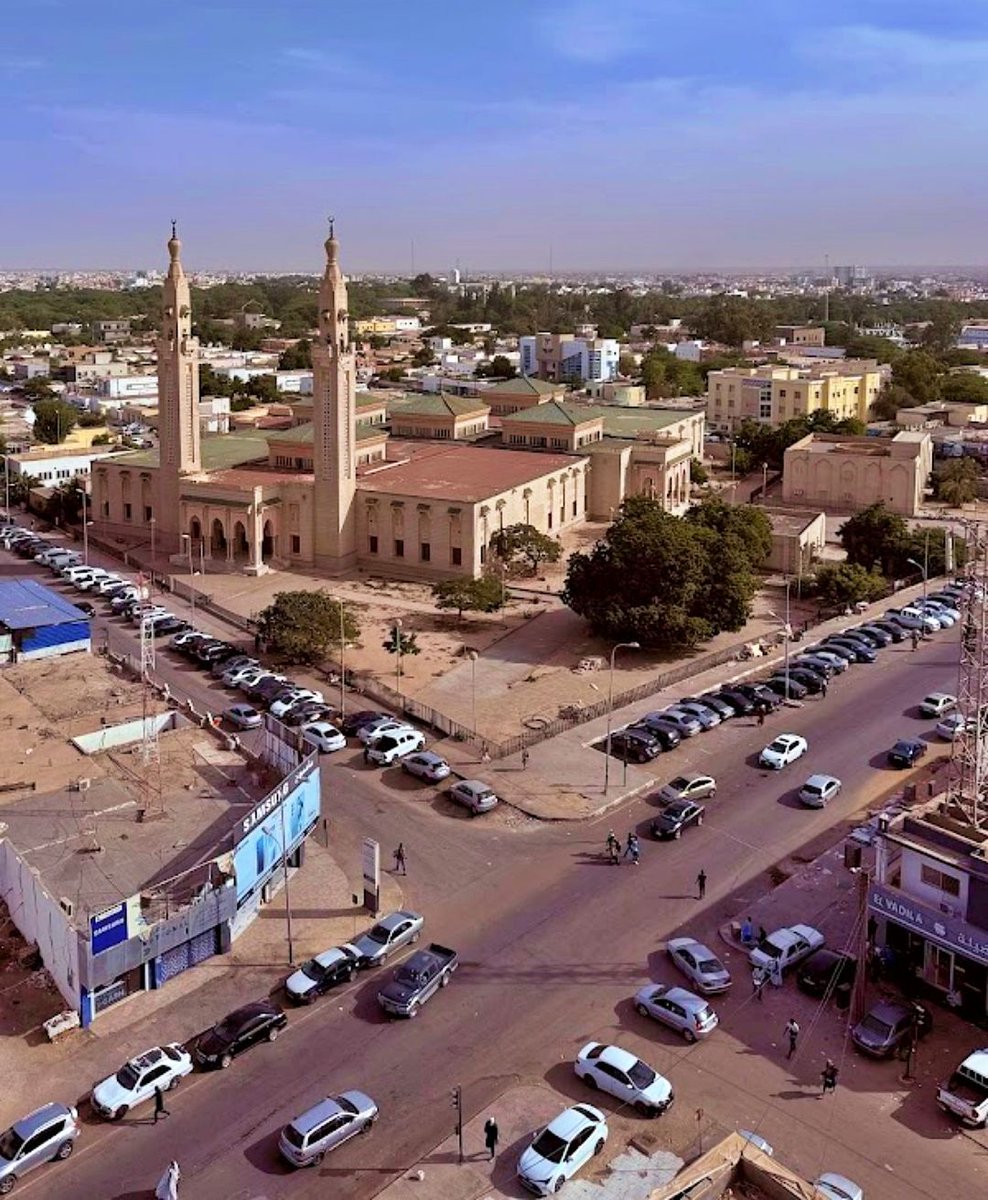
Mauritania is not a marginal country or a geographical anomaly. It is a country of silent history, long patience, and sovereignty that cannot be bought. It is the land of jurists who taught the deserts the meaning of light, and poets who made pulpits of wisdom from the sands.

Our president visited the United States, as Arab and African presidents do, not to beg or sign anything that violates conscience, but to knock on the doors of partnership and convey the voice of a small country with great pride. Has every visit to the West become an accusation? Is anyone who meets with an American official considered suspect in the eyes of those writing from behind the media veil?


Mauritania stands independently, making its own decisions, and choosing its partnerships, far removed from dependency or empty alignment.


We know that there are those who are unhappy to see Nouakchott sitting with Washington without tutelage and negotiating its interests without permission.


We say it without hesitation, and in a high-pitched voice: Mauritania is not about to normalize relations with the Zionist entity, not now or tomorrow.


Not only because it would be a betrayal of a principle, but because normalization, for Mauritanians, is an unforgivable sin, as long as Israel occupies Arab land, desecrates our holy sites, and persecutes our people in Gaza, the West Bank, and Jerusalem.


Anyone who knows this people knows that Palestine, in their conscience, does not represent a card in political discussions, but rather a constant, unwavering call.


The President of the Republic, Mr. Mohamed Ould Cheikh El Ghazouani, known for his political moderation and adherence to national principles, has never wavered from his position in support of Palestine, and neither he nor his government has issued any indication of a deviation from this line.


We write not to offend, but to preserve the weight of this position. We respond not because we are weak, but because we refuse to have the image of an entire nation reduced to a single, insinuating line, or to have a fleeting accusation pinned on his sovereign visit. Mauritania is built on principles, not on momentary positions.


It is read through its history, not through tweets written from behind a political veil.


If you want the truth, Mauritania has never sought testimony from anyone, and it will not accept anyone dictating whom to visit or whom to talk to.


It follows its own path, does not sway where the wind blows, nor does it follow an extended shadow.
It sits with the great, engages in dialogue with partners, and raises the Palestinian flag in its heart as well as in its streets. It does not need anyone to remind it of those who have always been with it, in good times and bad.


The writer is a member of the Mauritanian Parliament

Continue reading
What to Do About Hamas?

By Dr Khairi Janbek

The avowed declared intention of Benjamin Netanyahu, remains the destruction of Hamas, as he repeatedly says that the war against Hamas will not stop until it is totally disarmed and there will no more ‘Hamastan’.

This is while on the other side of the world is President Trump who is very much interested in a ceasefire and the release of the remaining hostages while blowing hot and cold in his habitual manner of ambiguity regarding the future of of the Islamic organization.

This may cause a divergence of views between Netanyahu and Trump in their up coming discussions, despite the fact that Trump went the extra mile as he threatened to withhold aid to Israel if Netanyahu is taken to court whilst Netanyahu responded by returning the compliment, saying that a couple-of-months ceasefire and the release of the living hostages as well as the dead bodies, are not mutually exclusive with the ultimate aim of destroying Hamas.

Admittedly, one always had one’s own doubts about the destruction of Hamas, probably because one always believed that the objectives of Israel’s foreign policy is to have a weakened PNA by Hamas and Hamas weakened by the PNA, which meant that neither should be destroyed, rather, to be weakened as circumstances required.

However, having said that, the most recent menacing Israeli government voices are talking about more dangerous developments, the first being taking control of the West Bank, which basically means either the end of the PNA or merely becoming an Israeli Bantustan administration, rendering the concept, let alone the fact, of a Palestinian state superfluous.

While the other development, is the call for Gaza , with or without Hamas, to be under a future Arab administration. Now which Arabs are going to be part of this administration is still unclear, but certainly the implications are clear, basically the financing of reconstruction which requires wealthy Arab participation, by default a participation of normalizing Arabs with Israel, with enough muscle to keep Hamas at bay, armed or otherwise.

In any case something may well be hammered in Washington when Trump meets Netanyahu, and the Arabs are bound to know its consequences.

Dr Janbek is a Jordanian writer based in Paris

Continue reading
Middle East End Game!

By Dr Khairi Janbek

For the last four decades, each time a tragic event or another took place in the Middle East, the slogan that gets thrown onto the arena is that of a “new Middle East”. No one is certainly not against a new Middle East per se, but against the one in which someone acts stupidly and then against the stupid acts of someone else to stop the first one from acting stupidly.

Such a series of stupid events makes one think that the notion of the Middle East is supposed to be worse for the peoples of the region except most probably, Israel. Into the fray, is the idea of Israeli Prime Minister Benjamin Netanyahu who wants to change the face of the region, giving the impression this region is the face and Netanyahu is the make-up artist whom to make this “face beautiful” for Israel and probably with those grudging consent of those around it.

Now, considering what has been achieved on the ground as far as Israel is concerned in relation to Netanyahu’s end game may well be too early to tell, but at least one can say that Israel has gained a respite with its seeming regional  supremacy.

The start was with crippling the threat capability of Hezbullah and although it has not been destroyed, the responsibility for dealing with this Iranian proxy is now left to the new Lebanese government, which means that the latter will have to bear the new/old responsibility.

Then Syria came along. After the demise of the Assad regime, all Syrian military capabilities became fair game for Israeli bombardement, but in fairness, they were already so during the past Assad regime. Now, however, Israel has gone further, occupying the buffer zone between the two states while expanding its security zone deep inside Syria. Here, the project being pursued is a push for a federal structure to make the country incapable of becoming a future threat to Israel.

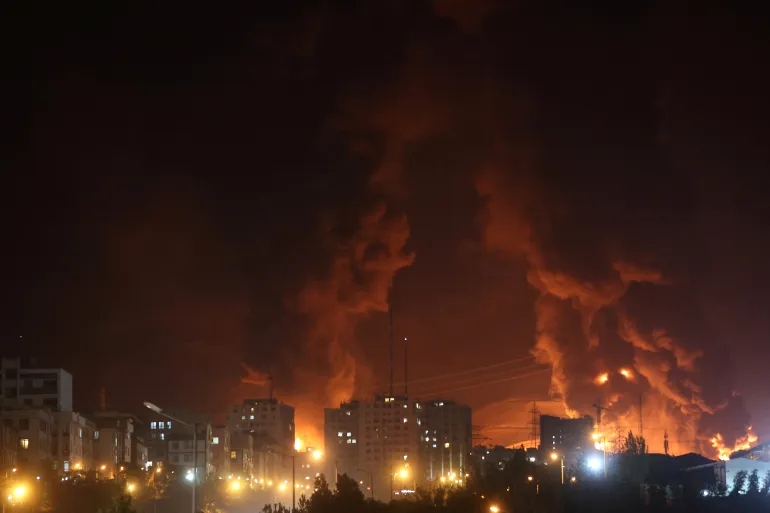
As for the 12-day campaign of bombardment and counter-bombardment by Israel and Iran with US cameo appearance, it is hard to reach any conclusions because of the great damage on both sides that is not really known as it verges on exaggerations, either for seeking international sympathy or as a show of awkward display of power.

Here, the end game was for Iran to be stopped from backing its proxies in Yemen, Iraq, and Lebanon and to eliminate its nuclear capability, if indeed it has reached such a level. Here, again, it is very hard to say to what extent the Iranian nuclear program has been set back, and to what extent Iran will go on the diplomatic path to stop its military support for its regional proxies.

Inevitably, we go back in circles, to the bleeding wound of Gaza, bleeding for the Palestinians, Arabs and Israelis. End game, ideal scenario and possible solution are all lost between the Israeli genocide policy, Arab impotence and naïveté , EU flip-flopping in accordance with the change of wind, and Trumpist absurd proposals and change of mind.

The issue here is far beyond Hamas, it’s Gaza and its people. As things stand the strip is divided into three regions under starvation. A massive refugee camp for people on their own land which for all intents and purposes, will no longer be their land. All in all, Israel is, with the consent of all, will be the supreme power in the region. 

Dr Janbek is a Jordanian writer based in Paris, France.

Continue reading
Iran-Israel: Making of a World War

By Dr Khair Janbek

We became accustomed for a while to the mutual bombardment of Iran and Israel for the first a couple of days. Then Israel started declaring that it had achieved its objectives whilst Iran maintained its own momentum, saying it is also teaching Israel a lesson.

But now the new flaring conflict is lasting longer than expected. We really don’t know for certain what are the objectives as the declared intentions keep changing on daily basis and the hidden objections tend to be irrelevant, at least for the time being because we have no clue about them.

What is certain is that neither Israel nor Iran are naïve to think that, a protracted campaign of mutual bombardment, is in their interest. The reality however, is that a war of attrition is not in their interest of either, and may serve the interests of the two other regional powers: Turkey and Saudi Arabia.

But would both Israel and Iran willingly allow Turkey and Saudi Arabia to replace their influence? This is not very likely, as we can clearly see both sides are trying their best to drag others into the conflict by turning it into a regional conflgeration, by dragging the US and the EU on one side, and the Russians, Chinese, and Pakistanis on the other.

One at this juncture must say that a regional conflict, even by unintended consequences may lead to a wider global conflagration, quickly bringing in world powers and states that will not sit by the sidelines.

On the face of it, anyone cannot miss the fact that bombarding Iran came on the first day of the end of the two-month grace period which the US gave to Tehran to reach an ‘ironclad’ nuclear agreement. So at least on the face of it, the whole issue is related to forcing Iran to come back to the negotiating table with the US albeit with a weakened position.

But then again, the contradictory statement of the administration in Washington could mean anything or nothing, implying for certainty that it had prior knowledge of the Israeli attack on Iran.

Another idea which was thrown into the arena in a flip-flop manner, is that of helping in the process of regime change, but if one can say anything, is that when the Iraq-Iran war erupted, it was still in the early days of the Islamic Revolution and there was strong opposition to the mullahs regime.

And rather than creating a possibility for a regime, the war created a united nationalist response against the then Saddam Hussein regime in Iraq. In a sense what started with a serious possibility of regime change ended up uniting the forces of the country.

Therefore, if the intention of the Israelis is regime change, then they better think twice about. Still, Iran is a country of more than 92 million people, with a territorial space of about 1.6 million kilometers so anything is possible. Just for interest, it is argued that Iran is 75 times the size of Israel.

So where do both parties go from here? One thing is for sure: One doesn’t know the extent of damage the two parties can do to each others’ nuclear arsenals. But if Israel feels it may not be able to destroy the Iranian nuclear infrastructure but can make it costly for them to re-start their programme, that would be naive because the Russians, the Chinese, and Pakistanis would be more than happy to offer their expertise.

One must add here however, that in the Near East, things can change very quickly.

Dr Janbek is a Jordanian writer based in Paris, France. He has contributed this article to crossfirearabia.com.

Continue reading