Yossi Hadar: ‘Netanyahu Lost The War to Hamas’

Israeli political analyst Yossi Hadar, in the Jewish Maariv newspaper, said Israeli Prime Minister Benjamin Netanyahu lost the war to Hamas, and instead of signing a prisoner exchange deal with it, he is trying to drag Israel into a war of attrition that will keep him in power.

The analyst harshly criticized Netanyahu for trying to dismiss Defense Minister Yoav Galant, describing it as a political move to preserve his position, ignoring the military failures in the Hamas attack of 7 October, 2023.

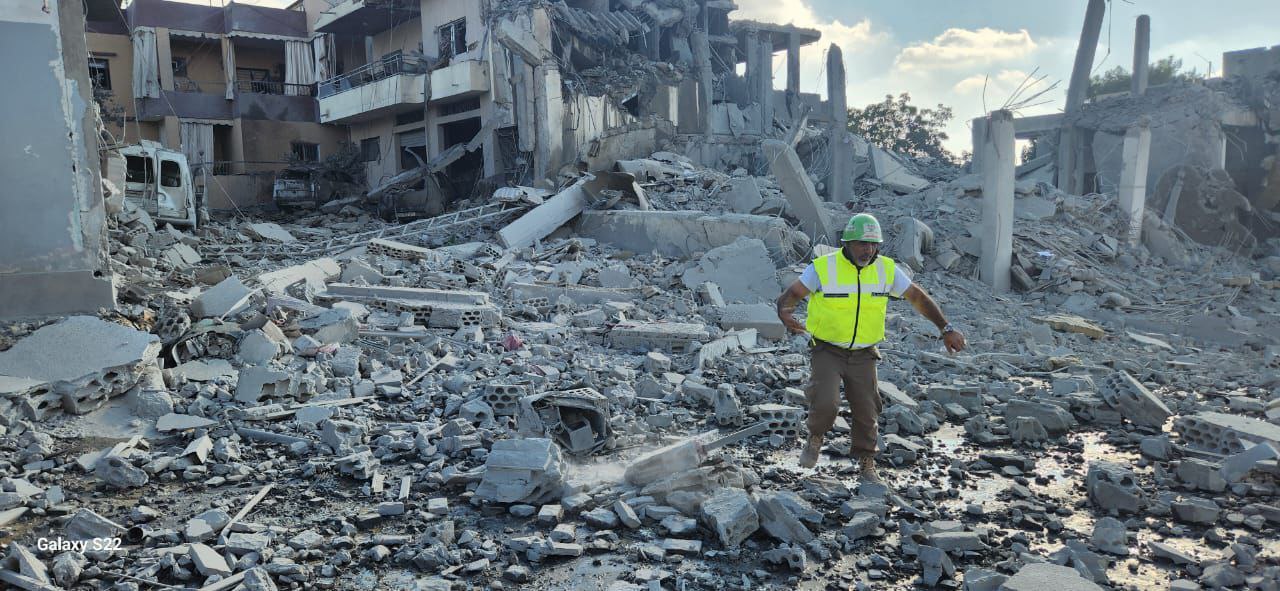
The writer began his article by referring to the operation attributed to Israel of blowing up the wireless devices in Lebanon and Syria, which resulted in the death of 32 Lebanese and the wounding of hundreds, according to the latest statistics.

“If the attribution of this operation to Israel is correct, it reveals another aspect of Israel’s enormous military capabilities, but at the same time it could bring us closer to a real war with Hezbollah, while the war in Gaza continues, the Houthis attacks on Israel, and Iranian threats continue, with operations growing in the West Bank and inside Israel,” he added.

The analyst accused Netanyahu of deliberately prolonging the war for political reasons, ignoring the serious security implications for Israel, and described him as the most failed prime minister in Israel, and that he “is leading an approach of political baseness and exhaustion and implementing a Machiavellian plot aimed at tightening control over the country by pushing the public to despair.”

Hadar stressed that Netanyahu’s escalation in the north is “the way Netanyahu seeks to maintain his rule, not in order to do something beneficial for the citizens of Israel, but only for his personal and political interests, just so he can continue to exhaust us.”

Political Maneuver

The writer then went on to assert that Netanyahu’s attempt to dismiss Galant is part of a political maneuver aimed at strengthening his power, rather than addressing the military failures that were evident in the 7 October attack, which puts Israel in a weak position in the face of the growing threats.

“All this does not prevent Netanyahu from hatching a plot to overthrow the defense minister at this critical moment for the security of the state, and in the midst of a war that could expand,” he said.

He explained Netanyahu’s move as a bid to replace his defense minister because of his opposition to the Haredi conscription law that the Orthodox parties insist on, in exchange for appointing the head of the Right-wing Israel Party, Gideon Sa’ar, because the latter will pass this law, referring to Sa’ar’s volatility, who was previously quoted as saying, “If you want Netanyahu as prime minister, don’t vote for me.”

Hadar also denied Netanyahu’s followers’ marketing of the reason for Galant’s dismissal as a “weak leftist,” saying that Galant himself offered, just four days after the 7 October attack, to attack Hezbollah as a preemptive move, but Netanyahu refused, in a state of panic over the events.

The writer recalled that Netanyahu is the one who divided Israel by leading “an attempted coup against the judicial system that he created before 7 October,” and he is the one who brought upon Israel “the catastrophe of 7 October,” and now he is dragging another catastrophe by dragging Israel into a war of attrition.

He said, “Instead of waging a short and intense war, he chose a dangerous and failed war of attrition that goes against all strategic logic, and dragged Israel into the worst state it has been since its founding, because what matters is only the logic of political survival,” according to Jordan24.

Continue reading
Lebanon Will Never Break

Dyab Abou Jahjah is a leading Lebanese author, speaker and an activist who lives in the southern part of the country with an open website. This is a reprinted comment he made recently on Lebanon and the Lebanese people, their sorrow but also their love for life and defiance.

This is a somewhat of a personal post, so please indulge me. As a Lebanese, especially coming from South Lebanon, today and yesterday are painful days. There is no denying it. We feel sorrow, and there is no shame in that.

But if there’s one thing about our people, it’s that we don’t break easily. If you ask about us, you’ll understand. We are the children of Canaan, our roots intertwined through faiths that have shaped us—whether in the name of Jesus or Muhammad. That connection makes us one with our Palestinian brothers and sisters, who, like us, have endured so much, yet remain unbroken.

We’re a people who love life. We laugh, we sing, we create art. Some might say we’re a bit romantic, even soft at times. But all our enemies—especially those who’ve tried to occupy us—know how we fight when we have to. There’s a strength in us that comes out in the hardest of times, a resilience that refuses to bend.

Israel’s anger towards us is because we don’t just speak in support of Palestine—we act. Whether we’re part of the resistance or find other ways to contribute, we do what we can. Even in moments when there’s not much we can do, we at least raise our voices and stand by justice. For those of us from South Lebanon, our connection to Palestine runs deep.

It’s something we feel in our bones, a bond that nothing can break. We’ve drawn their wrath, not just because we’ve resisted, but because we’ve made an impact. And though it may bring consequences, we won’t stop. Our support for Palestine is something personal, something that feels right in every sense—as a duty to our kin, to our faiths, and to the shared humanity that binds us.

We don’t glorify war, nor do we seek it. We value life, every bit of it. But when the choice is between humiliation or standing tall, even if it means death, we’ll face it with dignity. And in doing so, we’ll ensure that whoever invades our little country will perish or live to regret. May God protect Lebanon and Palestine, and may the eyes of the cowards never sleep.

Continue reading
Bibi-Gallant: Israeli Politics in Atrocious State

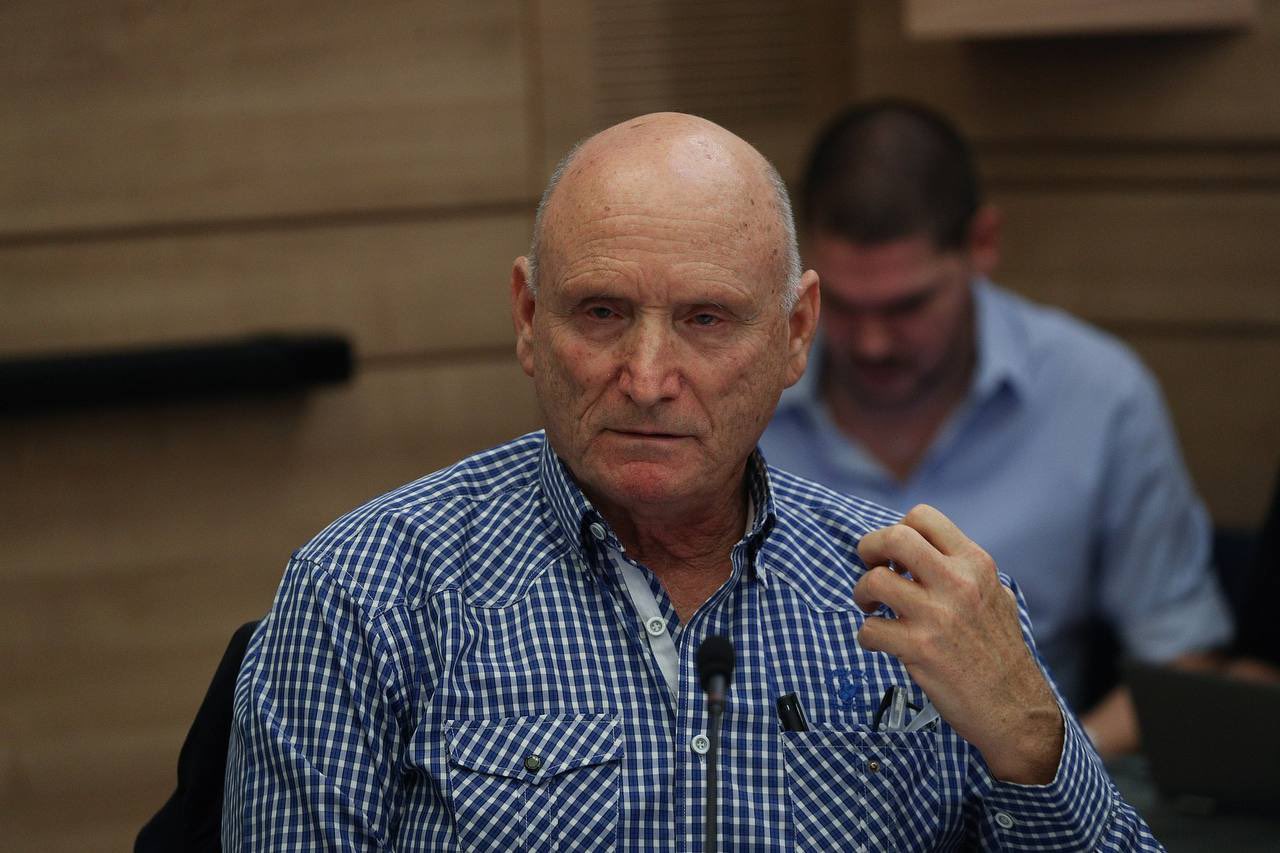
CROSSFIREARABIA – Former Israeli Justice Minister Haim Ramon lashed out at the Israeli Prime Minister Benjamin Netanyahu and Defence Minister Yoav Gallant over the estranged relations between the two men despite Israel’s critical war in Gaza and north of the country.

Netanyahu is under pressure to sack Gallant but somehow he can’t bring himself to do so, fearing a political backlash from his own Likud party. Yet he is under constant pressure from the extreme rightwing like Itamar Ben-Gavir and Bezalel Smotrich who keep threatening to leaving his government and thus bring it down if the war doesn’t continue and Hamas is brought down which many believe is an impossible task.

Meanwhile the United States wants to keep Yoav Gallant who they believe he is more moderate than his prime minister. This emanates from his utterings that the Israel army must not state in the Philadelphia axis but need to withdraw to the back of the Gaza Strip.

Another bone of contention is the fact that Gallant does not widen Israel’s war into Lebanon before the issue of the dwindling hostages – put now at 100-or-so – is resolved. Netanyahu wants the exhausted Israeli army to switch directions and go into Lebanon and thus widen the war and keep it going.

This is something that is against the interests of the United States which believes that the war must be contained within the framework of Israel and Gaza rather then moving to other territories and is continually push for a political solution.

Continue reading
First Mrs President!

By Saleem Ayoub Quna

June 28 of this year was not a good day for the leadership of the Democratic Party or their supporters in the US.

Across the board, they were disappointed and perplexed by the performance of incumbent (D) President Joe Biden, as he faced the more aggressive and outspoken (R) nominee Donald Trump, in their first TV debate, before empty chairs in the room, for the 2024 presidential elections.

The Trump camp and republican sympathizers, at the close of the debate, felt reassured that the gates to the White House, this time, were sliding more towards their direction!

As a matter of fact, for both sides, the results of the race, at that moment, were almost decided. It was simply a matter of time!

When asked about his options, President Biden kept saying that he was not going anywhere, and was looking for the next debate!

Not old movies!

As if watching one of those boring classical movies, where the end is so predictable, the American public and observers around the globe, were bracing themselves for the imperative sequence of this version of presidential race in similar disenchanted mood!

It took Joe Biden nearly a month, precisely on July 21 to, bravely, announce that he was withdrawing from the race to the benefit of his VP Kamala Harris.

The boring classical movie then suddenly took a new unexpected turn and the spectators started queuing again for new refreshments and popcorn!

Overnight, the morbid atmosphere within the ranks and file of the Democratic Party got energized; a reminiscent of a wounded eagle, which starts flapping its wings, after receiving a magic dose of injection, capable of waking up even a sleeping dinosaur!

Fundraising machines were set back in motion; volunteers started enlisting; chapters’ committees regrouped and the whole scene transformed into action, enthusiasm and optimism.

A dramatic shift that would surprise allies, rivals and neutrals alike! As for the republican rivals, represented by their notorious nominee, Donald Trump, the atmosphere took a gloomier turn as new polls started showing alarming percentages of approval and disapproval for one camp and the other!

The tie was dramatically shifting in favor of the new nominee of the Democrats, Mrs. Harris! The personality who remained, for four years, in the shade of Biden’s 50 years long legacy in politics.

Without much to talk about financial largesse or political experience, and coming from a mixed blend of immigrants to the US, Mrs. Harris today, is standing tall in face of Trump, the life-long tycoon of wealth and affluence.

A factor that will definitely add to the wrath and chagrin of Trump, who upon hearing the nomination of his substitute rival in the presidential race, in clear and typical insinuation to her ethnical origin, clumsily asked: “When did she become black”?

Well, Mr. ex-President, Trump, ready your staff next January to draft a descent congratulatory note to the first ever Mrs. 47th President of the US!

This opinion was especially written for Crossfire Arabia by Saleem Ayoub Quna who is a Jordanian author writing on local, regional and international affairs and has two books published. He has a BA in English Literature from Jordan University, a diploma from Paris and an MA from Johns Hopkins University in Washington. He also has working knowledge of French and German.

Continue reading
Gaza Genocide Fails to Move The Arab Street

The ongoing genocide on Gaza over the past 11 months have failed to move the Arab Street even one iota. This is an Israeli genocide but the Arab world continues to look on helplessly and hopelessly unable to fathom of what to do to stop it.

Despite the intensity of Israel’s war on the whole of the Gaza Strip since 7 October, 2023, and the consequent daily massacres perpetrated by the Zionist army, literally committed nonstop, the popular streets across the Arab world has largely been dormant, lethargic and ineffective, spectators to a deadly bloody match with vastly unequal partners.

Gone are the days…

People have been glued to their television sets, especially on Al Jazeera, stunned at the annihilation of Gaza by Israeli bombardment and missiles. But they have not been able to do anything except wonder in amazement at the scale of destruction of the Palestinian territory with men, women, children, toddlers, babies and infants standing alone to face the Israeli enemy only to be blown up to pieces.

Gone are the days when popular protest gripped the Arab world to-the-teeth and were a sense of nationalism, dignity, values and pride once held sway. This of course was not always this way.

https://twitter.com/GazaMartyrs/status/1826270375279288537

The pan-Arab street have always been ripe with anger and frustrations and political awareness of right and wrong expressed in almost daily demonstrations right from at least 1956 when Israeli, Britain and France carried their tripartite attack on Egypt at the nationalization of the Suez Canal.

Then countries like Kuwait, Jordan and others took part in the protests against the three-country attack crying foul of neocolonialism and subjugation. But then was the period of the pan-Arab nationalist movement that grew up in Beirut and spread to other Arab cities in the wake of the fall of Palestine in 1948 and the creation of the state of Israel.

No new dawn!

Despite statist policies and autocratic governments popular protests continued across the Arab world sporadically, whether in the 1960s, 1970s, 1980s and 1990s with the central question being Palestine.

This  culminated in the Arab Spring of 2011 when there was a new popular push forward and the promise of a new dawn across the region. With the economic squeeze increasing against the Arab masses Palestine was joined by calls for regime change and economic modernization to increase employment and lower the stinging rates of poverty.

Despite the fact that governments were brought down, here and there, starting with Tunisia, Egypt, Yemen and Libya, the Arab Spring – the great popular deluge of protests that was unprecedented in many ways – succumbed to the strong and powerful Arab state, together with its institutions, leaderships, bureaucracy and security apparatuses and military forces.

Whilst Arab governments were at first taken by surprise, they quickly recuperated, gained their power back and dominated the will of the majority and stomped the popular uprisings movement in their tracks; halting regime change there and then.

The popular Arab street may have erupted again in 2019 in particular in Lebanon, Sudan and Algeria but it once again failed in its demands to change the political status quo and reflected the dichotomies of awkward change. There was regime change in Sudan for instance, but the country degenerated into a civil war up till now with its power elites fighting each other over the seats of government.

Cool reaction

The present Gaza situation, and the Israeli onslaught on its people and resistance, must be understood within this context. The ebbs and flows of the popular street and its failure to change states, regimes and governments – starting from the radicals to the most conservatives – may explain why the present pan-Arab street is reacting in coolly to the present attacks on Gaza and which very quickly turned into a criminal genocide, in deed and practice.

People feel even if they continue to rally, and protests are continuing against the mass bombing of Gaza by countries like Morocco which has established a normalization deal with Israel, they will not be able to stop Israel from its daily war crimes in Gaza mainly because popular movements have limits. And that it is finally it is up to these states to make decision and pressure the United States and Israel to stop the genocide on Gaza.

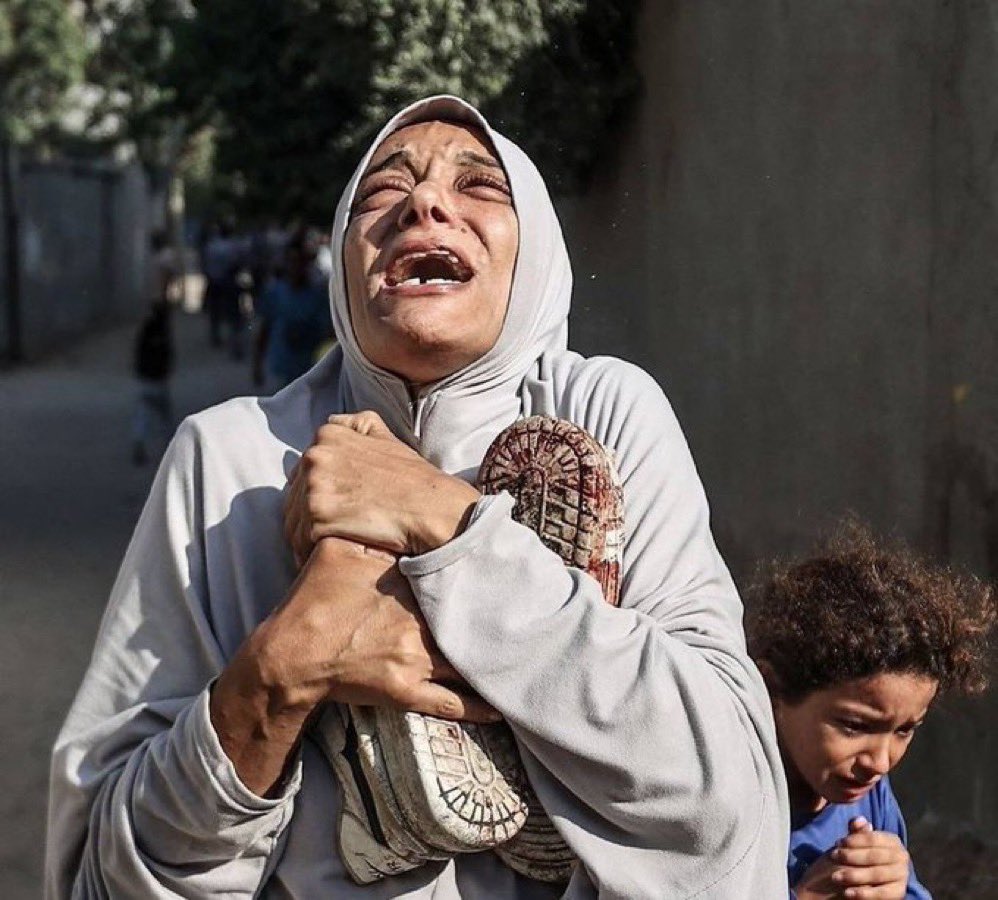
It’s a strange situation with emotions dampened and cushioned despite the horrific images of babies cut to pieces, children dying in hospitals, women and men crying at loved ones and which have jam-locked the the social media. Growing daily statistics of the dead, buildings bombed, homes ripped apart have become just numbers regurgitated daily by televisions anchors or skimped through in newspapers and websites.

In this onslaught on Gaza, the apathy of the Arab street has reached a very low point – to the nadir because people are in a whirlpool of helplessness. They tried before and they failed and now these people have long become divided between poor and rich states in the Middle East region where consumerism and the high life has taken the better of them and where ideologies and nationalism are reduced to second place and where religion is interpreted differently.

This time around, the “popular world” erupted for Gaza, in Europe, across America, including in US university campuses and elsewhere like Japan, demonstrating time and again, against the genocide, but sadly this has not been the case in the Arab world.  

Later on sociologists, anthropologists and political scientists would need to explain what happened this time around – almost total Arab silence against the Gaza genocide, why!

Continue reading