Hamas, Trump and The Ceasefire

By Dr Marwan Asmar

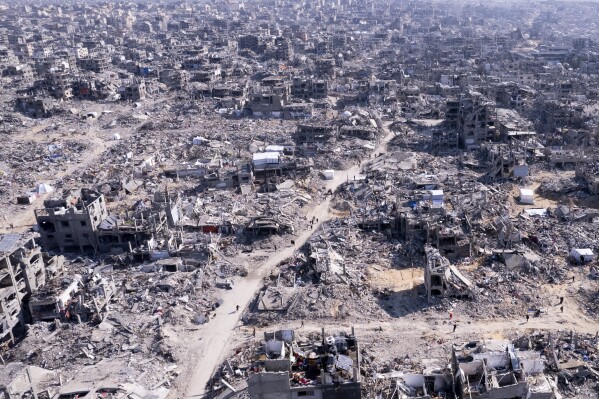
CROSSFIREARABIA – The USA wants a ceasefire on Gaza, yet it maintains its supplies of weapons to Israel which the latter uses to beat Palestinians with. This was the case with the former Joe Biden administration.

However, it is the Donald Trump administration that is now in the front brokerage seat, talking, and for the first time, to Hamas directly, face-to-face about ending the genocidal, destructive Israeli war on Gaza.

Benjamin Netanyahu is downright angry about this fact, yet he is making sure that he doesn’t upset Trump by his extremist utterances despite the fact that he is on record for wanting to continue the deadly war on the civilians of Gaza under the pretext of destroying Hamas and its military wing.

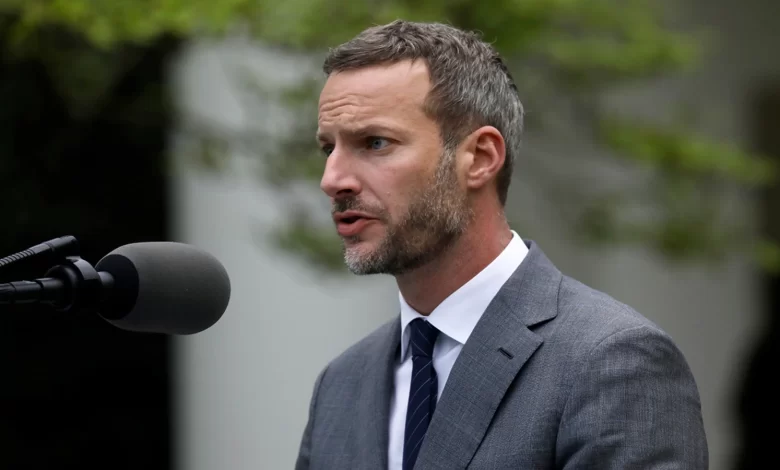
However, it has been clear, and at least for the past month that direct negotiations between US presidential envoy Steve Witkoff and his team including Adam Boehler have been taking place with top members of Hamas despite the fact that Israel has stepped up its war on Gaza with its mass killing of its starving 2.2 million-population.

The recent breakthrough achieved by the two sides, Monday, is awaiting final approval by the Israeli government which is sending out mixed signals of agreements and discord. However, there is circulating news that Netanyahu is finally ready.

The new deal agreed upon with the American team is that Hamas would agree on a 60-day-ceasefire where the Islamic movement would free 10 alive and dead prisoners (five of each) on the first day of the deal and 10 (also alive and dead) at the end of 60 days.

The American-sponsored deal includes the lifting of the Israeli siege on Gaza and allowing the entry of 100 aid trucks per day to enter the territory. Meanwhile Witkoff says that during those 60 days talks would continue to negotiate a ceasefire on a permanent basis.

However, Israel is still mulling on the fact because it says the ceasefire negotiations originally agreed on with Witkoff last January are different than what the present US-Hamas is talking about. The Israeli side, mainly Netanyahu, states that they want Hamas out of Gaza but first of all they must lay-down their arms and stashed weapons. Finally, the Gaza Strip must be a free area from any weapons.

These are intractable issues although Hamas and directly talking with the Americans, has previously stated it would entertain the idea of Gaza being run by an independent committee. Such flexibility may be one indication why the American administration is talking to Hamas officials and which is unprecedented as no US government, including Trump in his first presidential term, talked to an organization that is on their “terrorist list”.

The latest breakthrough to achieve a ceasefire on Israel’s war on Gaza, relaunched on 19 March maybe seen as another hope-to-be-dashed as in previous long-talks in Cairo and Doha turned out to nothing and were no more than “talking shops” with the Israelis, especially Netanyahu unwilling to end the war on Gaza, and not least of all of what was regarded as weak US president in the form of Joe Biden and his Middle East roving Secretary of State Anthony Blinken.

All this appear to be changing now for Trump wants to end all global wars and doesn’t want to pay American money around the globe as in the case with Biden and his support for Ukraine where billions of dollars were spent. He has already stopped the war with the Houthis after “massacring” the country for a little more than a month and costing the American treasury around a $1 billion.

The American president is talking to Iran on a new nuclear deal and is now talking to Hamas with a real possibility of achieving a deal to end the war and allow UN aid trucks to feed the hungry of Gaza who are once again dying of Israeli-imposed starvation.

To prove his point on wanting to achieve a ceasefire in Gaza, Trump sacked his National Security Advisor Mike Waltz for talking to Netanyahu behind his back last April when delicate talks was being pursued between Trump administration officials and Hamas.

Tide turns

The tide is turning against Israel. As well as less endearing developments in the White House against Israel, many countries around the world, including states in the European Union like Britain, France, Spain, Holland, Belgium, Norway, Sweden and many more are today calling for the stopping of the war on Gaza with many openly saying they would support the creation of an independent Palestinian state.

This is something which is making Israel’s government extremely jittery. Israeli Foreign Minister Gideon Sar is today, adopting a threatening attitude. He says if these countries take this step Israel would declare its sovereignty on many areas of the occupied West Bank.

All this, together with the latest negotiations, may finally persuade Israel to accept a deal rather than hold out and be prepared to be called an international pariah. Regardless however, many say that international pressure must be maintained from Trump in the United States as well as Europeans and the EU Union.


Continue reading
Netanyahu Lies to Trump

Israeli Prime Minister Benjamin Netanyahu reportedly promised US envoy Steven Witkoff to resume humanitarian aid to Gaza after the release of US-Israeli soldier Edan Alexander. But only five aid trucks entered the Strip, in what officials called a “mockery.”

Israeli broadcaster Kan reported that Netanyahu made the promise directly to Witkoff. Channel 12 said Witkoff and US official Adam Boehler gave their word to Hamas, leaving Netanyahu little room to back out. The deal was clear: release Alexander, and aid would follow. But that aid never came.

On Sunday, Israel announced it would allow nine humanitarian trucks into Gaza. But only five had crossed. Gaza’s Government Media Office slammed the move as “a mockery,” saying the territory needs at least 500 trucks daily to deal with the ongoing mass starvation.

A senior Hamas official was the first to reveal the deal. “It was a promise,” said Dr. Basem Naim, a political leader in Hamas to Drop Site News. “Witkoff himself said aid would resume immediately. But they threw the agreement in the trash.”

Alexander was captured from an Israeli tank on October 7, 2023, during Al-Aqsa Flood military operation. He had served in the Israeli army and holds dual US-Israeli citizenship. His release last week was the first time Hamas freed a male Israeli soldier since the genocide began.

Hamas said the release was a goodwill gesture toward the Trump administration. In return, they expected immediate humanitarian relief and progress toward a ceasefire.

Instead, Israel escalated its assault on Gaza.

The day after Alexander’s release, Israeli warplanes struck the European Hospital in Khan Younis. At least 28 people were killed. Israel claimed it was targeting Hamas military commander Mohammed Sinwar, though it presented no evidence.

Trump, speaking during a visit to the UAE, acknowledged the crisis. “A lot of people are starving,” he said. But Hamas dismissed his remarks. “We want action, not sympathy,” Naim said.

Gaza continues to suffer under a total blockade. The few trucks that Israel allowed in contained limited supplies, far below what’s needed. Medical centers report no fuel. Families are eating grass and drinking dirty water.

Trump’s team has pushed an alternative aid plan that bypasses Hamas and distributes food only in areas Israel controls. Aid groups warn the plan militarizes food and fails to meet emergency needs according to the Quds News Network.

Continue reading
US-Hamas Talks: Netanyahu’s Double-Wound

The current talks between US officials and Hamas leaders in Qatar is certainly a deep wound for the Israeli Prime Minister Benjamin Netanyahu who had long promised that he would finish off the Islamic organization in Gaza for good.

Indeed, it’s a double-wound for Netanyahu and his extremist government who had been under an illusion, perhaps a strong word to use, that US President Donald Trump would long share the Israeli extremist objectives of taking over Gaza, getting rid of its people en masse, and end Hamas rule in the 364-kilometer enclave.

Trump, especially over the past few weeks, had certainly given the Israelis that impression, especially when he blurted out at a devastating press conference with Netanyahu in the White House in early February 2025, that what he wants is to create a Middle East Riviera in Gaza that would include ‘voluntarily’ displacement of the 2.2 million Palestinians living there and swiftly end Hamas-rule. The president added what he wants to do is for the United States to take over Gaza and make it a top property front-beach development.

The whys, ifs, and hows didn’t matter whilst the details were left to be ironed out for later, while the focus zoomed on what Trump was saying which literally seemed to be straight off the top of his head as unrehearsed “blabber” non – certainly not members of the new administration – knew about as the new man in the White House dictated his shallow views and hearsay. 

To Netanyahu it was music to his ears and he couldn’t believe what he was hearing. He just stood, smiled, glared and looked into the cameras pleased with his friend. To say the least however, he was gob-smacked and taken off-guard.

Trump’s bombshell announcement created an almost mass hysteria among the Palestinians, Arab world and internationally with people aghast, not knowing what to say, what to do and how to respond. Trump had then just announced the trampling on decades of international law – behest through the United Nations resolutions condemning Israeli occupation of Palestinian territories of the West Bank and Gaza and its heinous and vile military rule.

Enters Hamas in US thinking

However, Netanyahu’s smirk was soon wiped off when it became clear that Trump was offering him Dutch-courage support while directly talking to Hamas officials at the same time. The Israelis become livid, especially when they got to know about the on-going meetings through third parties and leaked sources.

Today, Netanyahu is in a state of a quandary. For the first time he is finding that the political strings and threads are no longer in his court anymore as was the case with the former administration and despite the fact Trump just unfroze the MK-84 2000-pound bombs to Israel which Joe Biden slammed on Israel in May 2024 and adding that the security of Israel remains his top priority.

But today Netanyahu has become deeply-troubled with what is being regarded as double-talk and double-dealing! The bombs supply were to be a palliative to what is being “cooked” behind closed doors.

In Trump, and through his team led by Steve Witkoff and Adam Boehler, Netanyahu is finding out that the new republican president in the White House is not an easy man and despite the strong Israeli lobby in Washington he doesn’t necessarily mean what he says and he is always looking out for America as the No. 1 interest. It is high politics trickery designed to get things done.

For the first time in this 16-month war on Gaza which Israeli started after 7 October, 2023, Netanyahu is finding himself in a corner, no longer able to pay just lip-service to the multitude of talks held in Doha and Cairo over the months of 2024 and which led to nowhere but increased the destruction of Gaza and the killing of its people.

Although Trump maybe a very good friend to Israel – a claim registered in his earlier administration when he moved the US Embassy to Jerusalem, a first-ever move by a US president and openly-backed the continued occupation of the Golan Heights, the businessman-politician is not interested in wars and has moved immediately to stop the three-year-old Ukraine war with Russia and now is dilly-dallying with Gaza.

The current talks in Doha are aimed to extend the ceasefire to be executed in three stages reached on 19 January, just one day before Trump officially entered the White House.  While stage I has just ended, the Netanyahu government is foot-dragging, not wanting to move onto the second and third stage mainly because of ideological, domestic political reasons and his eminent threat of going to prison on corruption charges.

Netanyahu fears continuing the ceasefire deal would mean the end of his government that is controlled by extremists who want the war on Gaza to continue and have stated time and again that they would bring the government down if Netanyahu makes a deal that is less than re-occupying Gaza and stamping out Hamas which continues to be a fanciful dream.

Present talks

But the present US talks in Gaza with the Islamist organization that ruled the enclave since 2007, and under a tight Israeli siege that continues today, is creating a flurry of muted tense relations between Tel Aviv and Washington occasionally coming out in-the-open as was the case through a leaked phone call between Boehler, a new man in charge of the hostages file in the US administration and Israeli Strategic Affairs Minister Ron Dermer, a close Netanyahu ally.

His protest was made recently by refusing to go with his Israeli team to join the latest bout of negotiations in Doha to kick-start the second stage of the ceasefire and release more hostages at their current number of 60  including one US-Israeli soldier and four American bodies that have been killed by Israeli bombardment and kept during Israel’s war on the enclave in the last months.

At the present time four meetings were held between American and Hamas officials with the last headed by chief of the movement Khalil al-Hayya. To say the least, Israel is irritated, angry, and dumbfounded and what is happening. Netanyahu is simply flabbergasted at Trump which he always regarded as a deep personal friend of him and Israel. He  and Dermer had impressed on the US administration not to take Hamas directly but it is clear the latter has not and is not heeding to the suggestion and going their own separate way.

Through different media sources and to the annoyance of the Israelis Boehler has stressed that talks so far has been “very helpful” and indicated that a resolution of the freeing of the hostages held by Hamas in Gaza would be finalized in the next few weeks.

 The world is watching to see how this intricate situation will unfold. The Trump administration is trying to play down their meetings with the Hamas leaders, but this is not working, especially as  Boehler keeps talking to the media about how constructive the talks are going and the fact that these Hamas leaders are “pretty nice guys,” and these “guys are just like us,” as he recently told CNN.

The next few weeks will show more. When he came to office, Trump said that if Hamas doesn’t surrender, he would turn Gaza into hell. Judging from what is happening on the ground today such a comment is merely rhetorical.  

The above-analysis is written by Dr Marwan Asmar, chief editor of the crossfirearabia.com website.

Continue reading
Trump’s Envoy Boehler: Hamas Leaders Are “Actually Pretty Nice Guys, Guys Like US”

Trump’s hostage envoy, Adam Boehler said in a CNN interview that Hamas leaders are “actually pretty nice guys; guys like us.” He defended direct U.S. talks with the resistance movement, stating, “The U.S. is not an agent of Israel.”

Boeler’s statement was made commenting on a call by Ron Dermer, Israel’s Minister of Strategic Affairs and Benjamin Netanyahu’s Right-Hand Man. Dermer has reportedly made an angry phone call criticizing Trump’s decision to start direct talks with Hamas.

Boehler began negotiations with Hamas in Qatar last week. The talks focused on securing the release of Edan Alexander, a 21-year-old Israeli-American soldier prisoner, and the remains of four American settlers killed in Gaza.

Hamas reportedly told Boehler it is willing to return all Israeli prisoners in exchange for the release of Palestinian detainees. However, Israel has not agreed on the number of detainees to be freed according to the Quds News Network.

Israel’s Growing Concern

Israel’s Channel 13 reported that senior Israeli officials are angry over Washington’s approach. They believe Trump is negotiating behind Israel’s back and limiting Netanyahu’s ability to maneuver. One source stated, “If Trump reaches a deal with Hamas, Netanyahu won’t be able to refuse it, and the Americans know that.”

At first, Netanyahu dismissed the possibility of serious U.S.-Hamas negotiations. But as talks progressed, Israeli officials became increasingly concerned.

Boehler emphasized that meeting with Hamas does not mean friendship or alliance. He clarified, “I work for President Trump. This is his decision, and I am carrying it out.”

The U.S. reportedly told Hamas that releasing American prisoners would build trust with Trump, who could then push for a broader ceasefire deal.

Israel’s Channel 13 quoted Adam Boehler saying that Hamas wants to return all Israeli prisoners and free all Palestinian detainees in return.

Continue reading
Talking to Hamas: What is Trump up to?

There are not enough leaks about the “backchannel” that began late last month in Doha between Trump’s envoy for hostage affairs, Adam Boehler, and leaders of Hamas’ political bureau (reports indicate that the Hamas delegation was led by Khalil al-Hayya). However, what is striking is that these talks coincided with an escalation in threats from both Trump and Netanyahu toward Hamas, warning of a resumption of war and a more severe course of action. Moreover, Israeli security sources indicate that there is a plan to begin the practical implementation of the displacement scheme announced by Trump!

The key question here is what lies behind the Trump administration’s decision to open a secret channel with Hamas at this specific time, especially when negotiations between Hamas and Israel regarding the second phase are stalling. This is particularly intriguing given that the Trump administration has shown a tougher stance toward Hamas than his predecessor, Joe Biden. Moreover, the Doha meetings coincided with Trump receiving a number of former detainees held by Hamas and issuing a strongly worded message, what he described as a serious threat. What is the significance of these parallel and simultaneous steps taken by the Trump administration toward Hamas?

Those close to the Trump administration suggest that this move is nothing more than a “tactical shift” in the US approach without any fundamental changes. The goal is to ensure that Hamas receives the message directly and forcefully, without intermediaries or misinterpretation. This explanation is logical and, in fact, the most likely scenario, as there are no real initiatives or substantial shifts in the US administration’s position. This is especially evident in the fact that the only stance issued by the U.S. National Security Council rejected the Egyptian-Arab proposal, reaffirming President Trump’s commitment to his plan.

So what message did Boehler convey to Hamas leaders? Or, in other words, what is the deal being offered to them? It is clear that the U.S. offer revolves around extending the first phase, or even calling it the second phase, in exchange for the release of all prisoners held by Hamas, including Americans, as well as the safe exit of Hamas and Qassam Brigades leaders from Gaza and the establishment of a long-term ceasefire in the Strip. However, does this include details about the day after the war? It remains unclear whether the U.S. message addressed that issue. 

Nevertheless, the American stance remains unchanged, ending Hamas’ rule, disarming the movement, or effectively abandoning its military wing. It is also unknown whether the US has a specific policy if Hamas decides to transition into a political party that adopts peaceful resistance, for example.

Of course, the alternative Trump offers Hamas, should they reject these conditions, is the resumption of war, greater destruction in Gaza, and a forced displacement campaign against Palestinians. But the question that Hamas leaders are likely posing to Trump’s envoy is: What is the value of this threat if, in the end, what you are offering is nothing but the displacement of Palestinians? Why should we accept your terms, release the prisoners, lay down our arms, and leave Gaza if the outcome in both cases is the same? It is unclear whether Boehler had an answer to this question, or perhaps why Trump refuses the Arab plan, which is the most realistic and logical proposal presented so far.

On the other side, an important question arises: Is Hamas’ position unified between Doha and Gaza? There is significant room for interpretation and differences in the language coming from the Qassam Brigades on one hand and Hamas’ political bureau, particularly from one of the movement’s senior politicians, Mousa Abu Marzouk, on the other. It is also unclear whether Khalil al-Hayya is truly authorized to make such a crucial decision for the movement or what the limits of his mandate are. Is there any acceptance of the idea of a safe passage for the movement’s leaders in Gaza or laying down arms and transitioning into a peaceful movement? Or does Hamas still insist on maintaining both political and military strategies despite the severe imbalance of power and the massive destruction inflicted on Gaza and its people? All the choices are harsh and difficult.

Mohammad Abu Rumman is a columnist in the Jordan Times

Continue reading