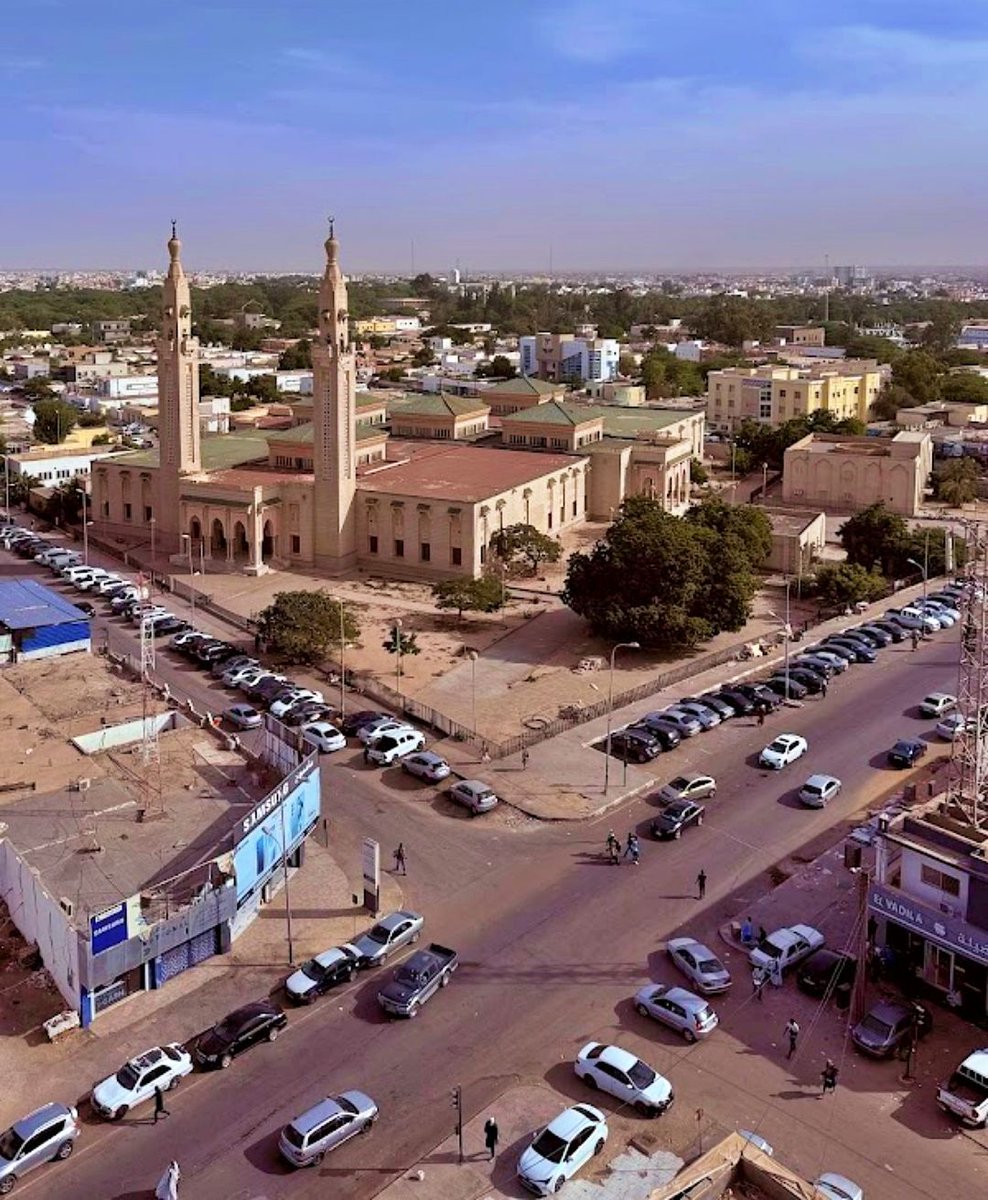
‘Mauritanians See Israeli Normalization Sinful’

By AlDaho Sohaib

Mauritania is not a marginal country or a geographical anomaly. It is a country of silent history, long patience, and sovereignty that cannot be bought. It is the land of jurists who taught the deserts the meaning of light, and poets who made pulpits of wisdom from the sands.

Our president visited the United States, as Arab and African presidents do, not to beg or sign anything that violates conscience, but to knock on the doors of partnership and convey the voice of a small country with great pride. Has every visit to the West become an accusation? Is anyone who meets with an American official considered suspect in the eyes of those writing from behind the media veil?


Mauritania stands independently, making its own decisions, and choosing its partnerships, far removed from dependency or empty alignment.


We know that there are those who are unhappy to see Nouakchott sitting with Washington without tutelage and negotiating its interests without permission.


We say it without hesitation, and in a high-pitched voice: Mauritania is not about to normalize relations with the Zionist entity, not now or tomorrow.


Not only because it would be a betrayal of a principle, but because normalization, for Mauritanians, is an unforgivable sin, as long as Israel occupies Arab land, desecrates our holy sites, and persecutes our people in Gaza, the West Bank, and Jerusalem.


Anyone who knows this people knows that Palestine, in their conscience, does not represent a card in political discussions, but rather a constant, unwavering call.


The President of the Republic, Mr. Mohamed Ould Cheikh El Ghazouani, known for his political moderation and adherence to national principles, has never wavered from his position in support of Palestine, and neither he nor his government has issued any indication of a deviation from this line.


We write not to offend, but to preserve the weight of this position. We respond not because we are weak, but because we refuse to have the image of an entire nation reduced to a single, insinuating line, or to have a fleeting accusation pinned on his sovereign visit. Mauritania is built on principles, not on momentary positions.


It is read through its history, not through tweets written from behind a political veil.


If you want the truth, Mauritania has never sought testimony from anyone, and it will not accept anyone dictating whom to visit or whom to talk to.


It follows its own path, does not sway where the wind blows, nor does it follow an extended shadow.
It sits with the great, engages in dialogue with partners, and raises the Palestinian flag in its heart as well as in its streets. It does not need anyone to remind it of those who have always been with it, in good times and bad.


The writer is a member of the Mauritanian Parliament
Continue reading
Bahrain Revives Its Pearling Legacy

Bahrain, with its shallow waters and rich oyster beds, has long been synonymous with pearls, which formed the backbone of the island nation’s economy for thousands of years. Diving for pearls, otherwise known as pearling, remains part of the country’s cultural DNA.

“I always say that all Bahrainis have pearl diving in their blood,” Mohamed Alslaise, a pearl diver and field researcher for the Bahrain Institute for Pearls and Gemstones (DANAT) tells UN News. “Almost all the families that moved from the Arabian Gulf or Iranian coast to Bahrain were divers.”

Mr. Alslaise is passionate about preserving and reviving this age-old tradition, notes that many families in the Gulf nation have a member who was either a pearl diver or contributed in some way to the pearl diving industry.

Pearling in the Persian Gulf shaped Bahrain’s economy for thousands of years but, following a peak around the turn of the 20th century, the perfection of cultured pearls by Japan in the 1930s caused a sharp and devastating decline in the industry.

Khaled Salman, a diver since the 1970s, explains that while diving continues, it’s no longer done in the old way.

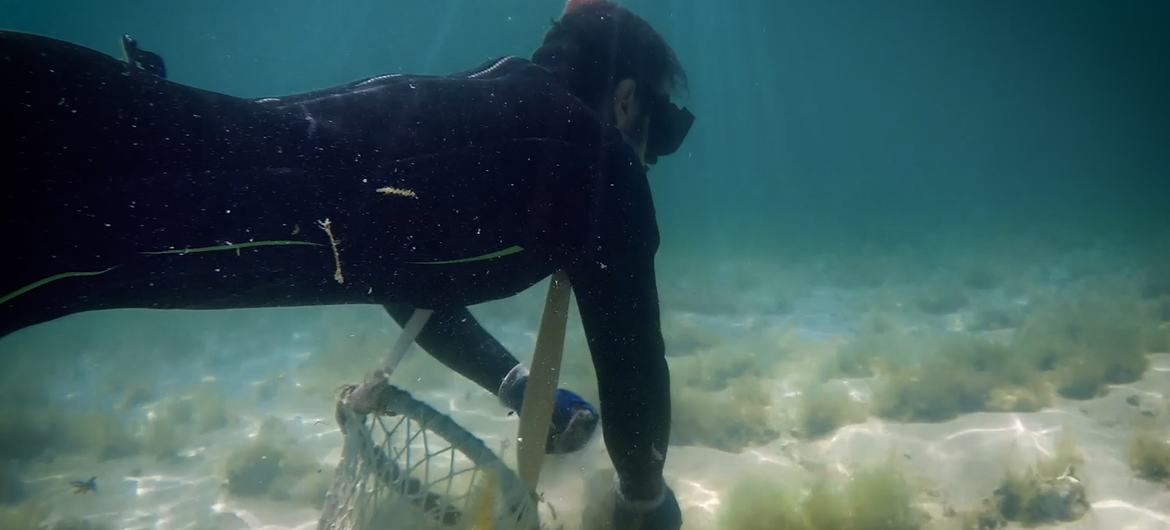
Bahraini diver, Mohamed Alslaise extracting pearls from oysters.

UN Video/Hisae Kawamori

Bahraini diver, Mohamed Alslaise extracting pearls from oysters.

“Nowadays, larger quantities are extracted due to advancements in technology, allowing divers to stay underwater for longer periods. In the past, a diver would stay underwater for four minutes, but now scuba divers can remain underwater for an hour or more.”

Due to lower pearl prices, Salman notes, “Many people don’t sell the pearls they extract; they store them until prices rise and then sell them to traders in Bahrain.”

Some pearls are used in local industries, while others are marketed outside Bahrain. He also highlights three types of pearls: synthetic, cultured, and natural, adding that “distinguishing between these types requires experience and modern equipment.”

The decline in pearling also affected Bahrain’s shipbuilding industry. Abdulla, a designer of wooden ships and boats for over 35 years, shares his perspective: “Bahrain is famous for its shipbuilding industry, which was integral to pearling. There are several types of ships, varying by design, but now smaller ships are used for pearling due to decreased demand.”

The wood for shipbuilding is imported from Africa and Singapore, and, says Abdulla, the lifespan of a ship can extends beyond 100 years.

Abdulla, a designer of wooden ships and boats for over 35 years.

UN Video/Hisae Kawamori

Abdulla, a designer of wooden ships and boats for over 35 years.

Folklore, songs and tradition

“Most Bahraini traditions are connected to the pearl diving industry. For instance, the pearl diving songs,” says Mr. Alslaise. “The folklore of pearl diving has been passed down for generations. We still sing the same songs, which were originally sung to boost morale on the boats.”

Bahrain’s historic pearling site, known as the Pearling Pathhas been inscribed as a World Heritage Site by the United Nations Educational, Scientific, and Cultural Organization (UNESCO). The site testifies to the pearling tradition and the wealth it generated in the Gulf region for millennia.

According to UNESCO, the area consists of 17 buildings in Murharraq city, three offshore oyster beds, part of the seashore and the Qal’at Bu Mahir fortress on the southern tip of Muharraq Island, from where boats used to set off for the oyster beds.

There are shops, storehouses, a mosque, and the homes of wealthy merchants in the area. According to UNESCO, the location is the only complete example of the pearling cultural tradition and the wealth it produced during the period when the Gulf economy was dominated by trade from the second century until Japan developed cultured pearls.

It also constitutes an outstanding example of traditional utilization of the sea’s resources and human interaction with the environment, which shaped both the economy and cultural identity of the island’s society.

A band performing a pearl diving song in Bahrain. The folklore of pearl diving has been passed down for generations.

UN News/ Abdelmonem Makki

A band performing a pearl diving song in Bahrain. The folklore of pearl diving has been passed down for generations.

Pearling is back 

“I am one of the people who fell in love with pearl diving without any guidance from my parents or family,” Mr. Alslaise. “The generation before us was not allowed to dive when they were young because, after oil was discovered, all the jobs shifted to the oil industry.”

According to Mr. Alslaise, since 2017, when Bahraini authorities introduced pearl diving licenses, many people who signed up had no prior knowledge of pearl diving.

“Now, seven years down the line, many Bahrainis have reconnected with this heritage. Over 1,000 divers are now registered and dive regularly to create an income for themselves.”

Continue reading
Thank You Africa

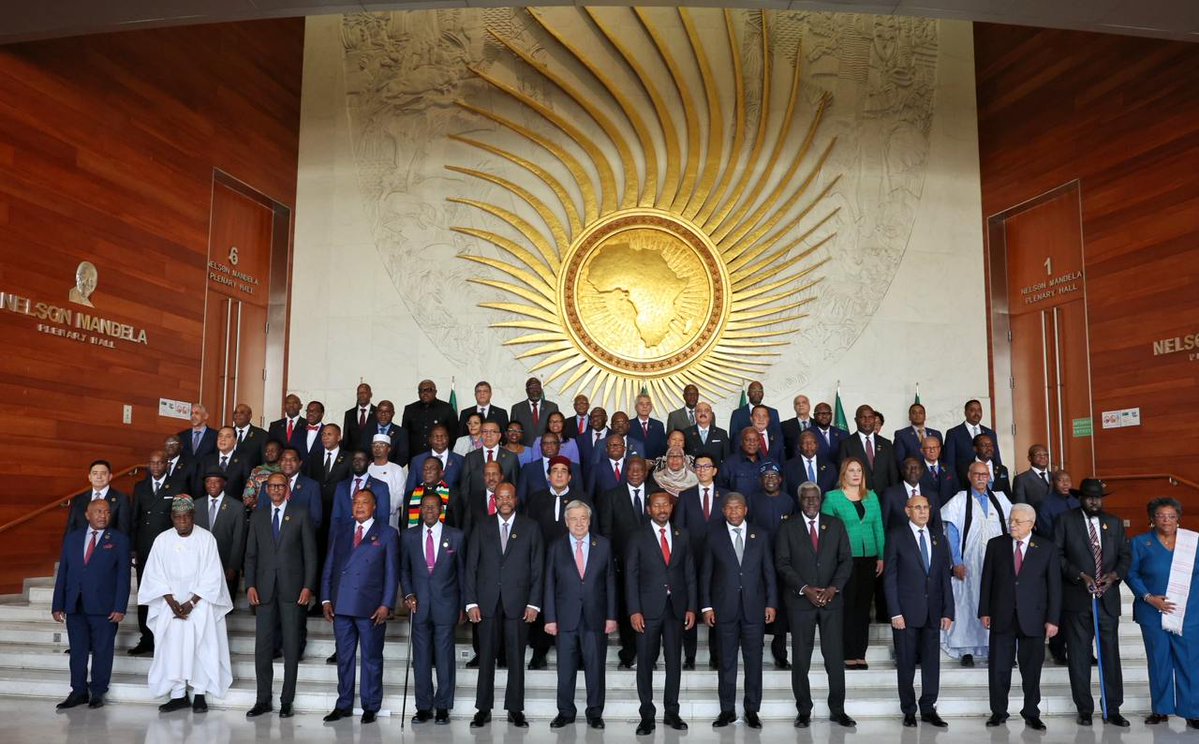
Final statement of the 38th African Union Summit:

“Israel is committing genocide against the Palestinians and must be prosecuted internationally. We call for an end to cooperation and normalization with Israel until it ends its occupation and aggression against Palestine.”

The Summit was held in the Ethiopian capital of Addis Ababa.

Continue reading