Trump’s War Through Politics

By Dr Amani Al-Qarm

About 2,500 years ago, there was a Chinese general named Sun Tzu, renowned for his military genius and unique philosophy on achieving decisive victory. He compiled his vision in a famous book called “The Art of War.” Sun Tzu states in his book that subduing the enemy without fighting is better than winning a hundred battles, and that a skilled commander feeds on his enemies.

This means exploiting the enemy’s resources, weaknesses, and even strengths, striking at their strategy and alliances, and besieging them to achieve victory, rather than relying solely on one’s own resources. In other words, achieving victory at the lowest cost is preferable to destroying a country, and capturing the head of state is better than killing him.

The Trump administration’s slogan, “Peace Through Strength,” is not new to American administrations, but it was perhaps more blatant and explicit during Trump’s presidency, as was the case with everything else under his rule: no embellishment, no lofty phrases, no justifications to appease hypocritical Western arrogance, such as democracy and human rights. There are only declared and clear objectives: oil, minerals, money, and control without cost.

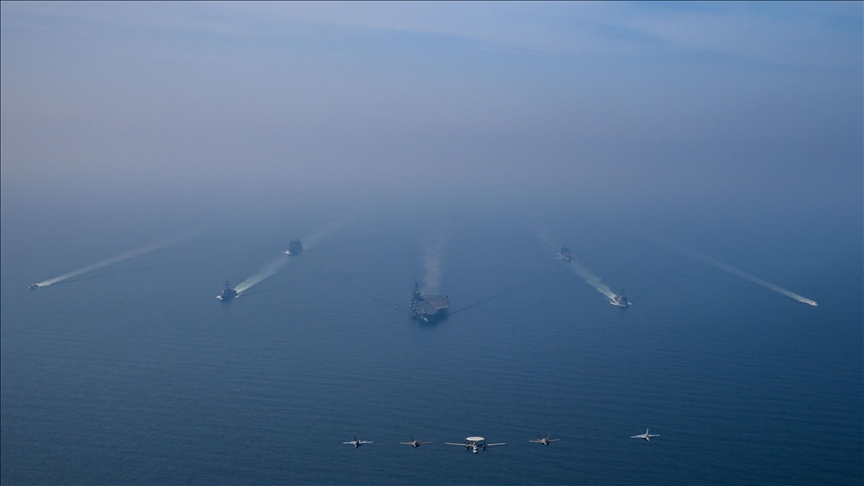
The entire world is watching the current unique American approach to dealing with the Islamic Republic of Iran. Just when the world expected an American strike on Iran, the door was opened for negotiations under the auspices of the massive aircraft carrier USS Lincoln and its destroyers and missiles stationed in the Arabian Sea.

This leaves allies and adversaries alike bewildered and unable to predict the outcome, while Trump maintains the element of surprise and the timing of the strike. It seems that Trump is not content with the slogan “Peace Through Strength” alone, but has added to it some of the principles of General Sun Tzu’s doctrine. Trump Feeds on His Enemies:

Iran is in a state of weakness unprecedented in decades. Internally, the country is seething with poverty and oppression, and the recent protests are unlike any before. Internal affairs are no longer purely domestic; they now carry external costs, given the threats the US president has made against the Iranian regime throughout the past month.

Furthermore, the country is strategically exposed. Its alliances have been shattered, and it and those who deal with it economically and militarily are besieged. The time is ripe to pounce on the prey. And because, as Tzu said, subduing the enemy without cost is better than winning a hundred battles, Trump has opened the door to negotiations to achieve his objectives.

What does Trump want from Iran? Is he negotiating to restore relations between the two countries? Or to liberate the Iranian people? Of course not. He seeks victory without a fight. The collapse of the country as a result of war would transform it into scattered chaos throughout the region, as has already been witnessed in Iraq, Libya, Yemen, and Syria.

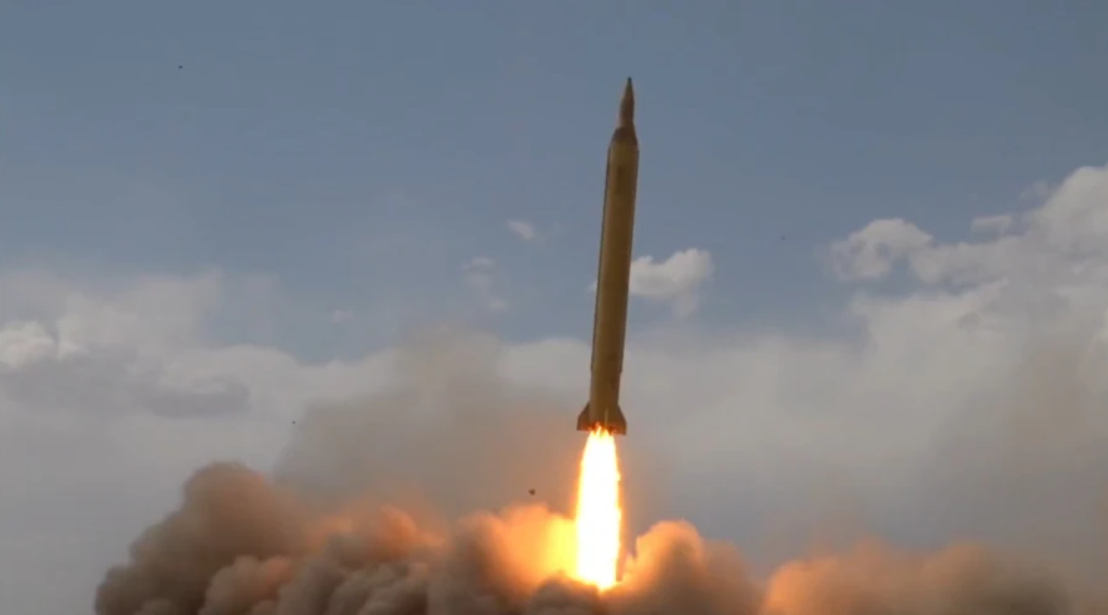
Therefore, containing it to the greatest extent possible and completely changing its hostile behavior since 1979 is preferable to destroying it. And to strip it of everything it considers its sources of power: eradicating any nuclear ambitions, eliminating its missile program, and reducing its regional role to the bare minimum, while also constantly reminding it that America is serious and ready to confront it. From America’s perspective, qualitative and nuclear superiority should belong only to Israel in the region.

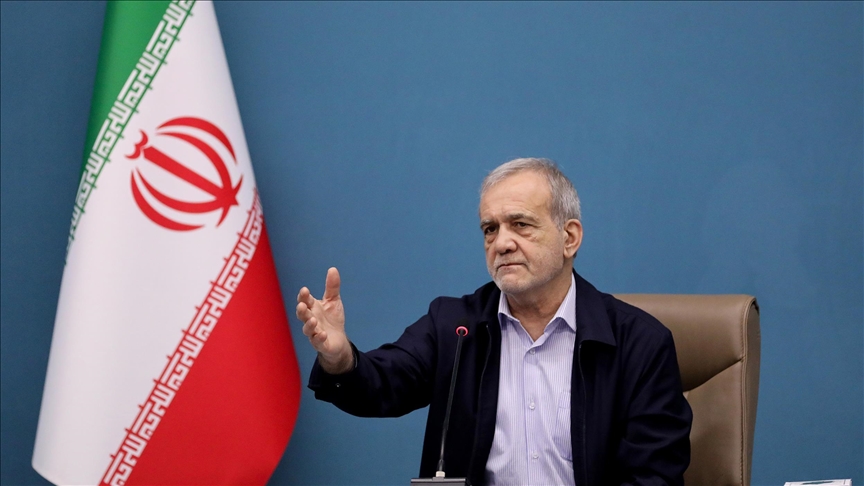
What happens next depends on Iranian behavior. Will it submit and be pragmatic, as it has been in the crises that have characterized its relationship with the United States since 1979, or will the Iranian regime feel that this crisis is existential, thus raising the voice of ideology where there is no turning back?

This article is republished from the Arabic Al Rai Al Youm website.
Continue reading
Yemeni Missile Stops Air Traffic Over Tel Aviv

Air traffic at Tel Aviv’s Ben Gurion International Airport was suspended Friday following the launch of a missile from Yemen, according to Israeli Channel 12.

“Following the sirens that sounded a short while ago in several areas in Israel, a missile launched from Yemen was intercepted by the IAF,” the army said in a statement.

Alarms were sounded in various areas across the country, including in major cities such as Tel Aviv, Ramat Gan, Petah Tikva, Jerusalem, Holon, Rishon LeZion, Bnei Brak, Modi’in and Rehovot, the Yedioth Ahronoth newspaper reported.

The army and Israeli media did not note any damage from the missile but this was the third missile to have fired from Yemen since Wednesday and was intercepted by Israel’s Arrow-3 System according to the Jerusalem Post.

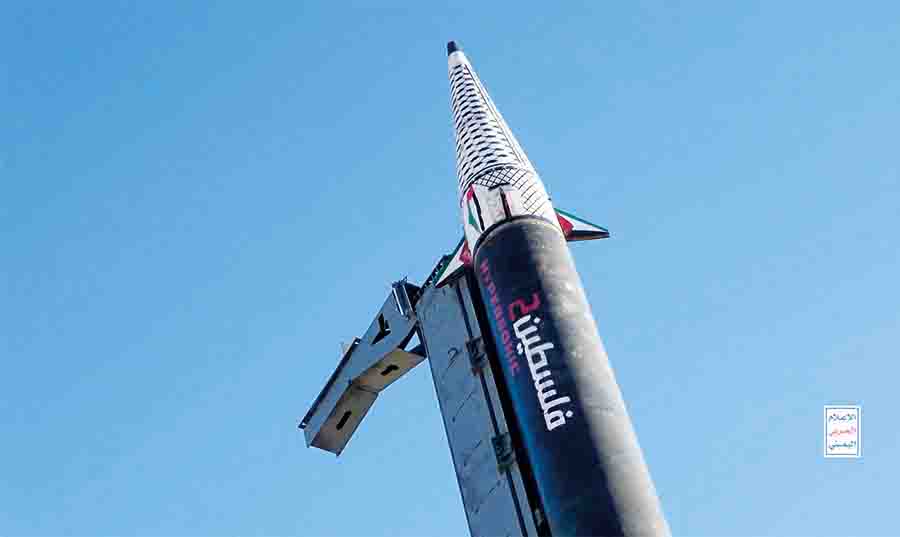
The Yemeni Houthi group announced it launched a military operation targeting the Ben Gurion Airport with a hypersonic ballistic missile.

Houthi military spokesperson Yahya Saree said the group carried out a “qualitative” military operation targeting the airport with a missile called “Palestine-2.”

“Our operations will continue until the aggression on the Gaza Strip stops and the siege is lifted,” Saree emphasized in a televised speech.

The Houthis have intensified missile and drone strikes on Israel since Israeli forces resumed attacks on the Gaza Strip in March after two months of a shaky ceasefire.

Since November 2023, the group has targeted commercial shipping in the Red Sea, the Gulf of Aden and the Arabian Sea in support of Palestinians in Gaza, where nearly 59,000 victims have been killed in an Israeli onslaught according to Anadolu.

Continue reading
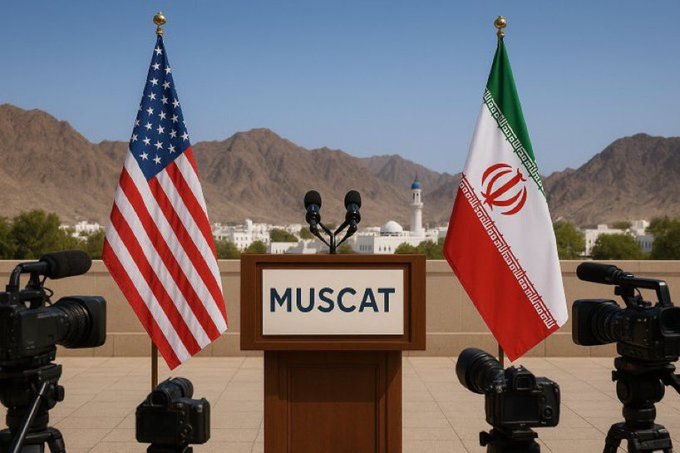
Iran-US Talks in Muscat: Winners and Losers

EDITOR’S NOTE: This editorial, written by Abdul Bari Atwan, chief editor of the Arabic Al Rai Al Youm website, on Saturday, 12 April, relates to the first talks of the Tehran-Washington negotiations that started in Muscat, Oman relating to the Iran nuclear file.

Iran succeeded in scoring a major goal against the United States in the clash of wills that began today, Saturday, in the Omani capital, Muscat, by insisting that the negotiations be “indirect,” contrary to what its American adversary wants: Namely “direct” negotiations as announced by US President Donald Trump at the White House in his meeting with Israeli Prime Minister Benjamin Netanyahu last week, who was surprised by this shocking announcement.

The US delegation, led by Trump’s Advisor Steve Witkoff, is participating in these talks from a weak and defeated position, especially after the failure of the US plan to impose tariffs on more than 200 countries worldwide. America has become friendless, and even turned its friends into enemies, especially in Europe and Southeast Asia like South Korea and Japan.

Strategies of negotiations

Iran, represented in the negotiations by veteran Foreign Minister Abbas Araqchi, the man who led the negotiations for the first nuclear agreement with the six major powers in 2015 and possesses extensive experience in the art and strategies of negotiation, did not submit to the “threats and intimidation” adopted by President Trump.

They imposed their conditions in full on their American opponents and insisted on limiting the negotiations to the nuclear issue, not addressing other issues such as missile and drone systems, and severing ties with the arms of the resistance in Gaza, Lebanon, Yemen, and Iraq. And they got what they wanted.

The one who called for a return to a diplomatic solution to the Iranian-American crisis and backed down from his threats of a devastating military strike was President Trump. This happened when he realized the threats of military strikes, coupled with the dispatch of three American aircraft carriers and squadrons of giant B-52 bombers, backfired.

These did not intimidate the Iranians, but prompted a response from Iran’s Supreme Leader Ali Khamenei, who declared a state of emergency in the Iranian military, placed giant missile platforms, advanced submarines, and ground and naval forces on high alert, and threatened to destroy all of the 10 military bases surrounding his country and housing 50,000 soldiers, close the Strait of Hormuz, and prevent Gulf oil exports to the entire world.

The Iranians do not trust President Trump, who tore up the nuclear agreement in 2018, and is well aware he has become an Israeli puppet. He also realizes that America, defeated in Ukraine, did not simply march to Moscow waving white flags, ready to sell Ukraine and its people to the Russians and surrender to all of its conditions, including the annexation of a fifth of Ukrainian territory to Russia, without consulting its European allies, whom it has become embroiled in this war.

When President Trump demands that the Muscat negotiations reach a quick agreement within two months, this is due to his bitter experience in the Vienna negotiations, which lasted a year-and-a-half and ended in failure due to Iran’s cunning use of the “yes, but” theory, without offering any concessions.

Globally hated…

We do not believe that this theory will be abandoned in the Muscat negotiations, especially since America, which is now globally hated and has lost all of its allies in the West and the East, has become weak, and is on the brink of bankruptcy due to the huge deficit in its annual general budget ($1.4 trillion) and its public debt that has reached more than $42 trillion.

What will encourage Iran to harden its position in these negotiations is China’s strong and defiant stance in the trade war against the United States. Its president, Xi Jinping, declared he will respond in kind to America and its president, and will fight this war to the end, no matter how costly the results.

He has decided to raise customs duties on American goods by a historic rate of more than 125 percent, and has given the green light to his allies in the BRICS group to declare war on the dollar and the global SWIFT financial system, through which America controls the global economy and financial movement.

Trump, wounded by the failure of his gamble to ignite a trade war, and the internal and global revolt against it, with the beginning of the decline in the value of the dollar and the escalation of the recession in the American economy as its first fruits, was forced to stop this war less than three days after its announcement under the cover of a three-month freeze on the application of customs duties.

Crushing military strike

Hence, his threats, i.e. Trump’s necessity of quickly to reach a nuclear agreement didn’t have any effect despite the threat of a crushing military strike. Iran’s respond to Trump forced him to make a major, unprecedented concessions to save face.

Iran, which has suffered significant losses in Lebanon, with the weakening of its powerful military arm in that country (Hezbollah), and in Syria with the fall of the President Assad’s regime, undertook rapid reviews internally and regionally, abandoning many of its policies pursued in recent years, after realizing that the knife is approaching its neck, and that the American-Israeli conspiracy does not only seek to destroy it and remove its military claws and fangs, but also to change the Islamic regime there.

The results of these reviews reflected in the transition from a phase of patience and long-suffering to a phase of confrontation in its military and political aspects, and the strengthening of its allied military arms, starting with the striking Yemen whose arm there is waging heroic wars not only against aircraft carriers and American warships in the Red and Arabian Seas, but also by intensifying ballistic missiles and drone bombardment of the occupied Palestinian interior in Jaffa, Haifa, and Eilat, accelerating the recovery process for Hezbollah in Lebanon, and finding other ways to deliver military supplies to it.

After the historic Syrian corridor was closed with the fall of the Assad regime, America became a farce in the first months of Trump’s rule. It’s no surprise that Iran and its allied proxies are among the biggest beneficiaries and gloaters. He who laughs last laughs loudest… and the days will tell!

Continue reading