US Vice-President Cancels Visit to Israel

US Vice President JD Vance was expected to travel to Israel on Tuesday, but decided against it due to Israel’s expansion of its military operation in the Gaza Strip, according to an Axios report.

The report cited a senior US official as saying that Vance made the decision “because he didn’t want his trip to suggest the Trump administration endorsed the Israeli decision to launch a massive operation at a time when the U.S. is pushing for a ceasefire and hostage deal.”

Vance officially cited “logical” reasons for his decision, the report added.

According to Israeli officials, Axios said, the Trump administration had informed the Israeli government on Saturday that Vance was “considering stopping in Israel” after attending the pope’s inauguration.

Discussions had also taken place on Sunday between US and Israeli officials regarding preparations for his visit. Soon thereafter, Axios said, Israeli media reported on Vance’s expected arrival on Tuesday.

Reports Denied

Several hours later, the report added, a White House official denied the reports.

In a statement to reporters traveling with the VP, the official reportedly said. “While the Secret Service has engaged in contingency planning for the addition of several potential countries, no additional visits were at any point decided upon, and logistical constraints have precluded an extension of his travel beyond Rome.”

“He will return to Washington on Monday,” the statement added.

https://www.palestinechronicle.com/israel-greenlights-gaza-aid-amid-american-pressure-cabinet-dissent/embed/#?secret=4bl8Jhe4Zw#?secret=UxS9CRr0Ds

A US official, however, told Axios that logistics were not the issue and that “concerns were raised that a trip to Israel at this time would be perceived by Israel and countries in the region as validation for Israel’s expanded operation.”

“At that point, Vance decided not to go,” Axios said.

Vance’s decision, the report noted, sheds light on how the US administration’s views on the current Israeli policy in Gaza amid the administration’s attempts to cut a deal to halt Tel Aviv’s ongoing operation in the enclave.

Mass Displacement

Since March 2, Israel has shut Gaza’s border crossings, preventing all humanitarian aid, including water, food, and medical supplies, into the enclave, exacerbating an already severe humanitarian crisis in the enclave.

On Sunday, the Israeli army began a broad ground offensive dubbed ‘Gideon’s Chariot’ in the besieged territory aimed at displacing two million Palestinians in Gaza to the south and destroying most of the territory.

Under pressure from the US administration and European allies, the Israeli security cabinet decided late on Sunday to allow some aid into the enclave.

Axios said that US envoy Steve Witkoff had given both Hamas and Israel “an updated proposal” for a ceasefire last week “and is pressing the parties to accept it.”

Over 53,000 Killed

Since Israel’s reneging on the ceasefire on March 18, it has killed and wounded thousands of Palestinians throughout the Gaza Strip through a bloody and ongoing aerial bombardment.

On October 7, 2023, following a Palestinian Resistance operation in southern Israel, the Israeli military launched a genocidal war against the Palestinians, killing over 53,000, wounding more than 118,000, with over 14,000 still missing.

Despite habitual condemnation by many countries around the world of the Israeli genocide, little has been done to hold Israel accountable.

Israel is currently under investigation for the crime of genocide by the International Court of Justice, while accused war criminals — including Prime Minister Benjamin Netanyahu — are now officially wanted by the International Criminal Court.

The Israeli genocide has been largely defended, supported, and financed by Washington and a few other Western powers according to The Palestine Chronicle.
Continue reading
More Israelis Than Israelis

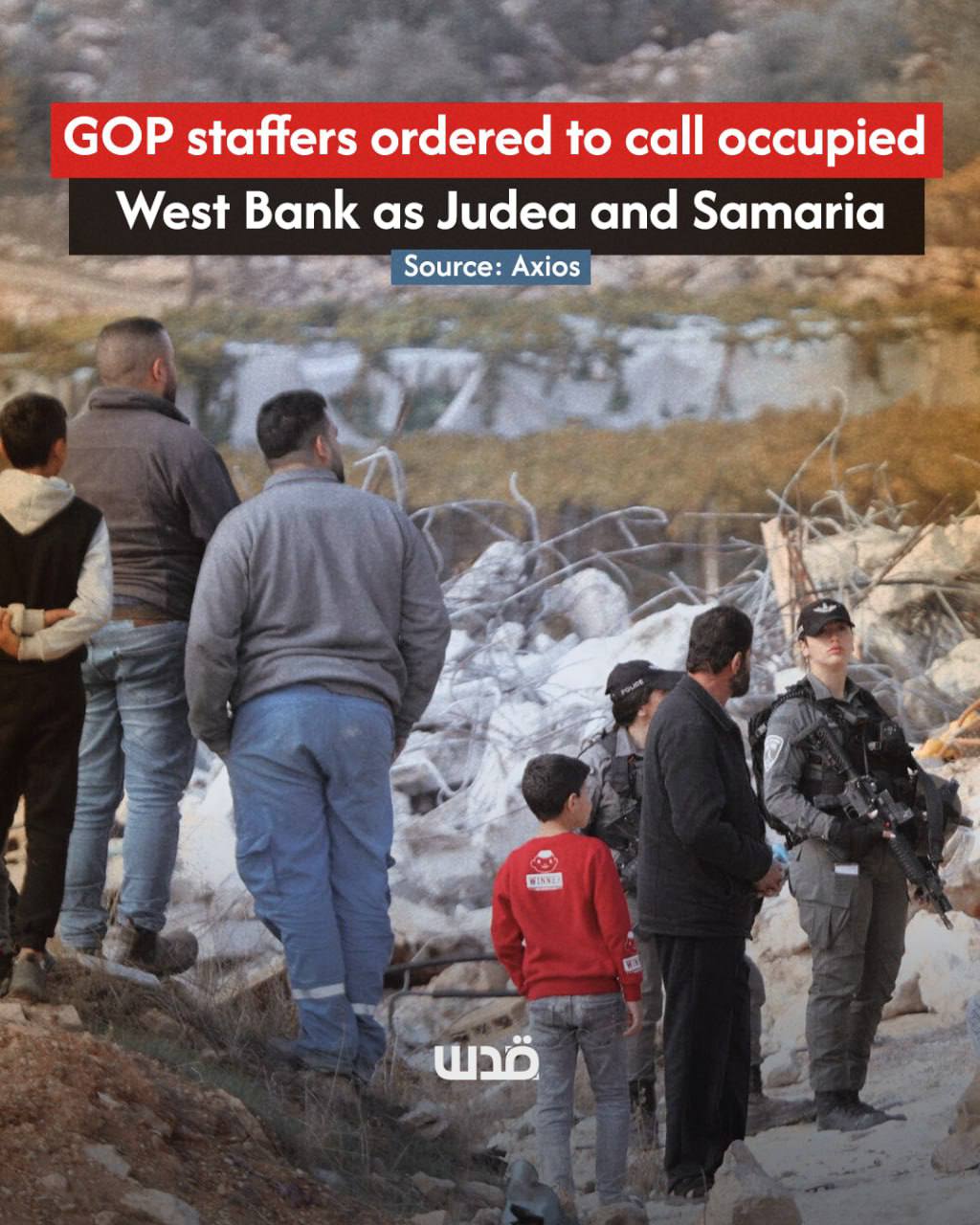
ouse Foreign Affairs Committee Chair Rep. Brian Mast ordered committee staff to refer to the Israeli-occupied West Bank as “Judea and Samaria,” according to a copy of an internal committee memo obtained by Axios.

Mast wrote that “in recognition of our unbreakable bond with Israel, the House Foreign Affairs committee will, from here forward, refer to the West Bank as Judea and Samaria in formal correspondence, communication and documentation.”

Continue reading
Trump, Gaza Ceasefire & Hostage Deal

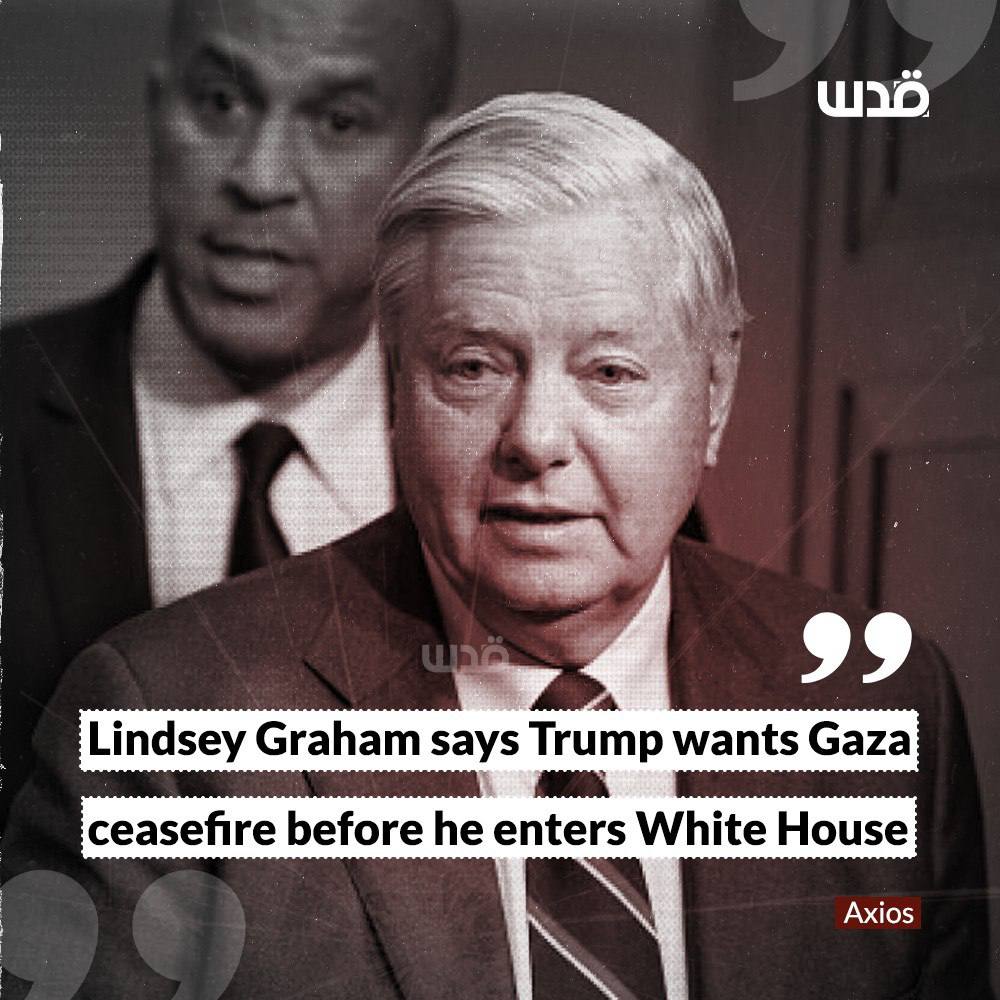
US Republican Senator Lindsey Graham told Axios that US President-elect Donald Trump wants to see a Gaza hostage deal and ceasefire before he returns to the White House in January. “Trump is more determined than ever to release the hostages and supports a ceasefire that includes a hostage deal. He wants to see it happening now,” Graham told Axios. 

“I want people in Israel and in the region to know that Trump is focused on the hostages issue. He wants the killing to stop and the fighting to end,” he said.  “I hope President Trump and the Biden administration will work together during the transition period to release the hostages and get a ceasefire,” he added.

Continue reading
US Loses Trust in Israel Over Iran

The White House’s distrust of Israeli Prime Minister Benjamin Netanyahu’s government has grown increasingly in recent weeks as Tel Aviv carries out multiple wars across the region, according to a report published Tuesday.

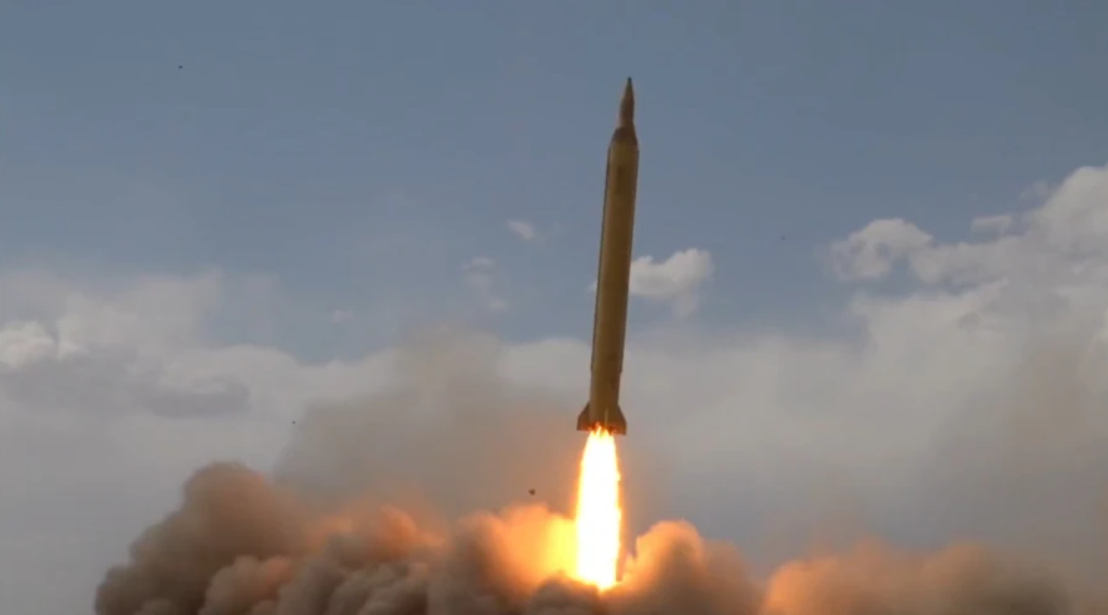
Washington’s wear in trust comes as Israel prepares its response to Iran’s ballistic missile attack last week. Tehran said it carried out the strikes in retaliation for the July assassination of Hamas political leader Ismail Haniyeh in Tehran and the killing of Hezbollah Secretary-General Hassan Nasrallah in Beirut last month.

Four US officials told the Axios news website that Washington is not opposed to Israel carrying out its reprisal but wants it to measure its attack according to Anadolu.

“Our trust of the Israelis is very low right now, and for a good reason,” one of the officials said.

Jake Sullivan, US President Joe Biden’s national security advisor, told his Israeli counterpart Ron Dermer last week that the US expects “clarity and transparency” from Israel as it plans its response, in part because any Israeli attack has implications for the security of US forces and interests in the region.

Skeptical

Sullivan signaled during the call that if the Biden administration is not informed beforehand, it would not automatically step in to thwart another ballistic missile attack from Iran, Axios said. Dermer reportedly said Israel wants to keep the US in the loop, but the officials are skeptical that is the case.

The US had been left in the dark about Israel’s assassination of Haniyeh, which took place just days after Netanyahu assured Biden that he would work to advance a Gaza cease-fire and hostage deal, as well as the strike that killed the Hezbollah leader and a series of explosions that targeted the militia’s communication devices.

US Defense Secretary Lloyd Austin was reportedly livid when he was informed of the strike that killed Nasrallah within minutes of the time when the jets dropped dozens of bombs on Beirut’s southern suburbs. He was irked by the fact that the notification time was not sufficient to adequately increase the security of US forces in the region.

Officials said Israeli Defense Minister Yoav Gallant told Austin that he was instructed by Netanyahu not to give Washington an advance warning.

Gallant’s visit to the Pentagon, which was to take place Wednesday, was called off at the last minute, according to the Pentagon. It did not give a reason, but Israeli media reported that Netanyahu is barring his defense minister from flying to Washington until Biden calls him directly.

Netanyahu’s further decision to walk away from a US-backed 21-day cease-fire proposal in Lebanon further eroded US trust, as has Israel’s decision to order all civilians in northern Gaza to flee south as it prepares a new offensive on the region.

US officials have said they are concerned that the directive is setting the stage for a potential siege and that Palestinian civilians would not be allowed to return.

“They tell us what we want to hear — the problem is lack of trust,” a US official told Axios as reported by the Turkish news agency.

Continue reading