Jabalia Steadfast in Face of Israeli Bombs

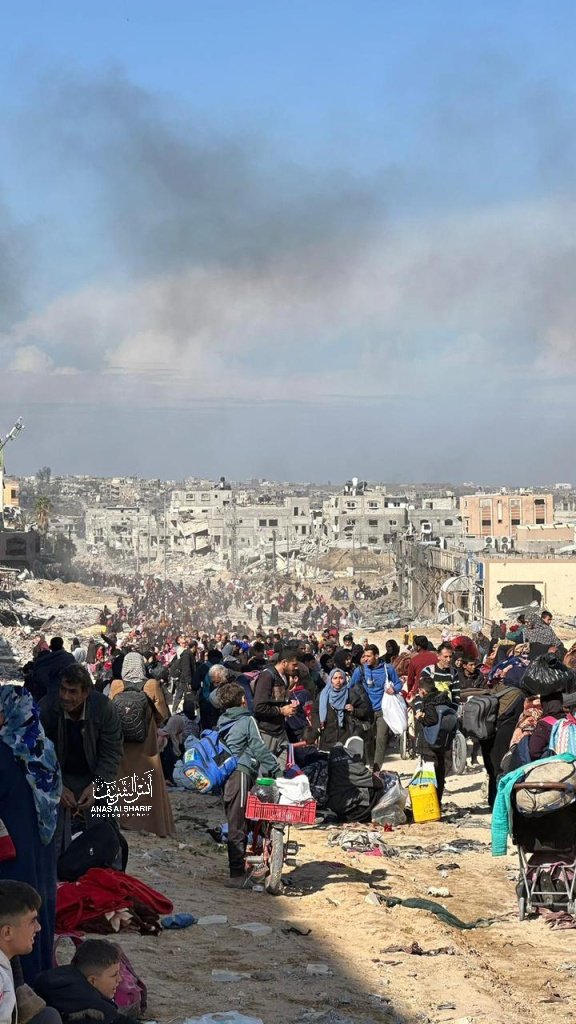
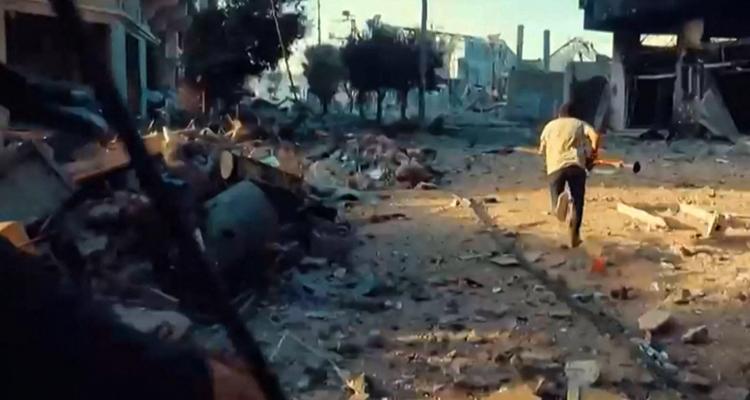
With the intensification of the Israeli bombing of northern Gaza and with a siege of more than 80 days now, especially of Jabalia, its camp and Beit Lahia, the resistance is using all available tools to counter the Israeli aggression despite  turning north Gaza into an eyesore of destruction and not a place for survival.

The resistance continues to show unparalleled bravery standing up Israeli soldiers who can be seen carrying their dead and wounded on a daily basis.

The Jabalia camp, one of the largest refugee camps in the Gaza Strip, reflects, with its history and reality, a miniature image of the Palestinian-Israeli conflict.

Analysts point out the operations launched from Jabalia reflect the roots of the Palestinian struggle rooted in the camps since the Nakba in 1948.

“We are the ones who used to chase the Israeli patrol in our camp here (Jabalia) with the sticks”… This was one of the expressions used by martyr leader Nizar Rayyan inside the Jabalia camp. He was martyred in the first wars that the resistance fought with the Israeli occupation forces in 2008-2009, showing the bravery of the people of Jabalia and their legendary steadfastness in confronting the occupier.

 “Just as we rubbed your noses in Ashdod, we will rub your noses in Jabalia,” Rayyan used to say.

While the 444 days of this rabid war on Gaza Strip should have been enough to end the resistance – according to Israeli and American thinking – the Al-Qassam and Al-Quds Brigades fighters in Jabalia say this is wishful thinking even if thousands of Mujahideens are killed, and the weapons run out as the recent stabbing operations show. These operations shouldn’t be interperated to mean as some suggest that weapons are running out for the enemy’s daily losses are not decreasing while the capabilities of the resistance are rising.

The Al-Qassam Brigades, Hamas military wing, announced Sunday, it targeted nine soldiers inside a house with a “TBG” shell west of Jabalia camp, confirming they have either been killed and/or wounded whilst stating it destroyed an Israeli troop carrier with a “commando” explosive device in the Al-Alami area in the center of Jabalia camp.

The brigades added that “a Zionist officer was sniped in Abu Al-Aish Street in the center of Jabalia camp, north of the Strip,” and said it targeted a second Israeli troop carrier with a “commando” explosive device west of Beit Lahia, north of the Strip.

As well last Friday, the Al-Qassam Brigades announced it carried out a complex operation in Jabalia camp; where one of its fighters advanced towards an Israeli sniper and his assistant, and stabbed them to death, adding the fighter wore the uniform of one of the dead, and an hour after the operation, he advanced towards an Israeli force of six individuals, and blew himself up with an explosive belt, killing and wounding its members.

Last Saturday, Al-Qassam Brigades announced on its Telegram channel its fighters carried out a complex operation, stabbing three Israeli soldiers to death, seizing their personal weapons, then storming a house where a foot force had taken cover, killing two of its soldiers at the house gate.

On Sunday, the Al Jihad Al-Quds Brigades stated that one of its heroic martyrs stormed a Zionist troop carrier and carried out a special operation by detonating a suicide bomb among the soldiers who were at the entrance to the Al-Awda Towers in Ezbet Beit Hanoun.

Military analyst Major-General Fayez Al-Duwairi says “zero distance” is a golden opportunity for resistance fighters in their confrontation with the occupation forces, given the big difference between the equipment of the Israeli army with its high capabilities, and the weapons made by al- mujahideen locally.

He added the more the intensity of the ground aggression and Israeli incursions into the Gaza Strip areas increases, the greater the resistance’s opportunity to engage directly with enemy forces.

Since the start of the Battle of Al-Aqsa Flood, the resistance fighters have shown the most prominent of their weapons to target the Israeli enemy, including Al-Yassin 105 shells, tandem shells, sniper weapons, Shawaaz bombs and machine guns according to the Palestine Information Center.

However, the use of the stabbing weapon and explosive belts  which emerged in recent days to carry out martyrdom operations, indicates that the weapons used by the resistance are no longer as accessible as they were in the past, due to the tight siege imposed by the occupation, and the intensity of the operations carried out by the resistance fighters, which has led to the depletion of the battalions’ weapons stockpile.

The heroic operations carried out by the resistance fighters in northern Gaza over the past 80 days have resulted in the killing of more than 70 soldiers and officers in the occupation forces, in the Jabalia camp and camp alone, including the bombing of more than 100 military vehicles, 17 sniper operations, and 26 clashes with a foot force.

In a Yedioth Ahronoth interview with an Israeli officer he said the confrontation in northern Gaza these days is through the alleys, face to face with Palestinian fighters who do not fear death and refuse to be arrested.

Major-General Mohammed Al-Samadi believes that the significance of the stabbing operations and martyrdom operations in Jabalia confirms that the resistance is cohesive and strong, and adapts according to combat developments, and carries out hit-and-run operations, and carries out operations through small groups, including the lone wolf operations carried out by one of the mujahideen against the occupation forces, causing casualties and injuries in their ranks.

Al-Samadi added in an interview with Al Jazeera the resistance in northern Gaza has killed 17 soldiers through sniper operations, and that one fighter in the resistance factions can kill a group of individuals in the occupation forces, indicating that the occupation suffers from weak morale among its fighters, and also suffers from an intelligence failure in knowing the resistance’s tactics.
Continue reading
Hamas Spells Out Daring Operation in Gaza

The Al-Qassam Brigades, Hamas’ military wing, announced a daring operation in Beit Lahia, northern Gaza. Fighters freed Palestinian civilians held by Israeli forces inside a fortified building.

The operation began with the killing of three Israeli soldiers guarding the building. Resistance fighters then stormed the structure, neutralized the remaining forces, and seized their weapons. The freed civilians had been kidnapped and held inside the building by Israeli troops.

This comes amid a wave of resistance operations across Gaza. In recent days, Hamas and other factions carried out complex attacks, including suicide operations. These actions follow widespread detentions by Israeli forces across Palestinian territories since October 7, 2023 according to the Quds News Network.

The Palestinian Prisoners’ Club reports over 10,800 arrests from the West Bank, Jerusalem, and areas occupied in 1948. Many detainees include women, children, and re-arrested former prisoners. The numbers exclude thousands kidnapped from Gaza during the ongoing genocide.

In Gaza, reports describe systematic torture, executions, and amputations in Israeli detention centers. One notorious facility, “Sdi Teiman,” has been a hub of brutal abuse. Survivors speak of killings, rape, and starvation.

Israeli authorities hold many Gaza hostages under the “unlawful combatant” label, denying them basic legal rights. This defies international agreements, including the Fourth Geneva Convention.

Continue reading
How Israel is Destroying a Hospital

The hospital bears the name of one of the leaders of the Palestinian revolution and the most prominent symbols of the Fatah movement

– Since the start of the military operation in northern Gaza on 5 October, the hospital was subjected to dozens of attacks

– The hospital director said the Israeli army treats this health facility as a “military target”

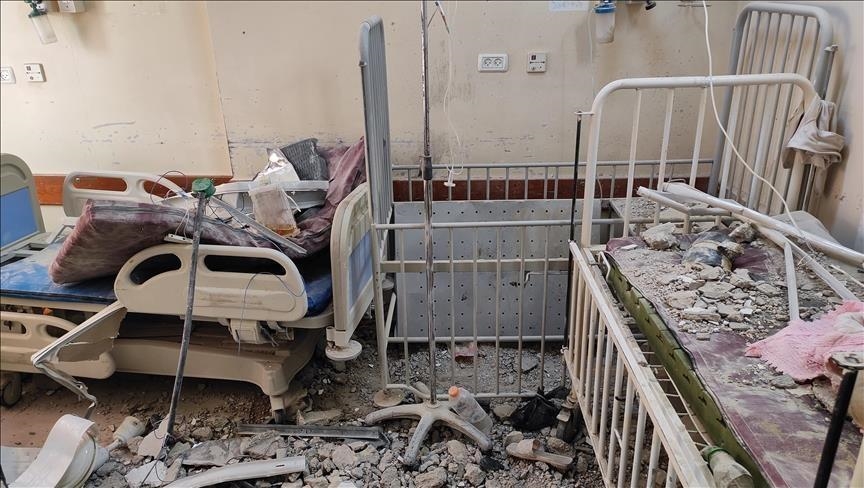
In the heart of the town of Beit Lahia in the northern Gaza Strip, where the Israeli army is committing crimes of genocide and ethnic cleansing, the Kamal Adwan Hospital continues to operate with minimal of capabilities as the last stronghold of steadfastness in the face of the Israeli war machine.

The hospital bears the name of one of the leaders of the Palestinian revolution and the most prominent symbols of the Fatah movement, and constitutes a last resort for patients and the wounded in the north who have not found an alternative that provides them with the minimum of medical and humanitarian services.

Since the Israeli army’s attack on the northern governorate on 5 October, which coincided with a comprehensive military siege, the hospital has been subjected to dozens of targeting operations with missiles and gunfire, as a health official said the Israeli army treats it as a “military target”.

Despite this, the hospital’s medical staff, consisting of two doctors at most and a small number of nurses, continued to perform their humanitarian duty, and refused to obey the army’s multiple orders to evacuate its buildings and leave the governorate despite the ongoing crimes against them.

Beit Lahia, like many other parts of the Gaza Strip, was subjected to a policy of “urban annihilation” of its architectural and cultural fabric through the implementation of comprehensive erasure operations and the complete destruction of homes, residential neighborhoods and infrastructure, and the elimination of the means of survival for Palestinians, according to a statement by the Euro-Mediterranean Human Rights Monitor.

  • Timeline

The Kamal Adwan Hospital, the largest hospital in the Northern Governorate, which used to provide services to more than 400,000 people, is currently operating under conditions and lacking capabilities due to the Israeli targeting of it since October 2023, which Anadolu Agency monitored as follows:

Since the beginning of the war, the Israeli army continued to launch intensive raids on the hospital’s surroundings, in addition to blowing up buildings and residential areas next to it, which resulted in much damage in addition to deaths and injuries inside and outside the hospital.

  • 2023:

– 14 October: An Israeli warning to evacuate the hospital of displaced persons, medical staff and patients.

– 4 December: An Israeli bombardment of the northern gate of the hospital results in the killing of 4 Palestinians

– 6 December: The Gaza Ministry of Health announces the forcible removal of Kamal Adwan Hospital from service and “with tank muzzles”.

– 8 December: Israeli tanks besiege the hospital, and army snipers climb onto surrounding buildings and fire towards the courtyards and patients’ rooms.

– 12 December: The Israeli army stormed the hospital after a tight siege and forced about 2,500 displaced people to evacuate the hospital after two days and arrested a number of medical staff

– 16 December: The army withdrew from the hospital after destroying the southern part of it, displacing the displaced people inside it, abusing its patients and suppressing the medical staff

  • 2024

– Mid-January: Kamal Adwan Hospital partially resumed operations according to human rights reports

– March: Dozens of children died, some of them in Kamal Adwan Hospital due to famine in the north and a shortage of medical supplies and medicines.

– 19 May: The hospital went out of service again after heavy Israeli shelling targeted its surroundings and army vehicles advanced towards it and besieged it for days

– 28 May: Israeli shelling of a building in the hospital and the destruction of the electricity generators inside it.

– June: The hospital partially resumed operations with limited medical facilities and supplies

– 8 October: The Israeli army orders hospitals in the Gaza Strip, including Kamal Adwan, to evacuate within 24 hours, amidst a siege by military vehicles

– 19 October: The Israeli army shells the entrance to the Kamal Adwan Hospital laboratory, killing a Palestinian and wounding others

– 20 October: The Israeli shelling of the hospital resumes, and heavy gunfire is directed at its buildings, targeting its water tanks and electricity network

– 22 October: Israeli warnings to evacuate the hospital are renewed

– 25 October: The Israeli army storms the hospital and detains hundreds of patients, medical staff and displaced persons who have taken refuge inside its buildings

– 26 October: The army withdraws from the hospital, leaving behind Palestinian deaths and widespread destruction inside and outside, a day after storming it

– 31 October: The Israeli army shells the hospital, burning medicines and medical supplies it received from the World Health Organization days earlier

– 3 November: Israeli artillery shelling injures a number of children in the hospital’s nursery and shooting at its generators and water tanks

– 4 November: Israeli shelling of the hospital’s facilities and the injury of a number of Palestinian medical staff and patients

– 6 November: The death of wounded due to the lack of surgical specialties in the hospital, which began operating without electricity due to a lack of fuel

– 11 November: An Israeli drone shelled the hospital’s reception and emergency department, injuring 3 medical staff

– 22 November: Renewed Israeli shelling of Kamal Adwan Hospital, injuring a doctor and patients, and disrupting the electricity generators and the oxygen station

– 3 December: Israeli shelling of the hospital with bombs launched by “Quadcopter” drones, injuring 3 medical staff

– 4 December: The army shelled the hospital four times and the oxygen station stopped, threatening the lives of patients inside it

– 5 December: The Israeli army targeted the hospital several times, killing two Palestinians, one of whom was a child, and injuring two others

– 6 December: The Israeli army stormed the hospital for hours and forced Patients and medical staff evacuated and a number of them were arrested

– 7 December: The Israeli army targeted the hospital with a number of shells, resulting in the injury of medical staff and patients, the destruction of water, oxygen and fuel tanks, a power outage and the outbreak of fires in its facilities

– 14 December: Explosive robots were detonated in the vicinity of the hospital, damaging its buildings and causing panic among patients and displaced persons

– 16 December 16: Israeli Quadcopter drones targeted the hospital

Continue reading
Israeli Warplanes Bomb Hospital Vicinity

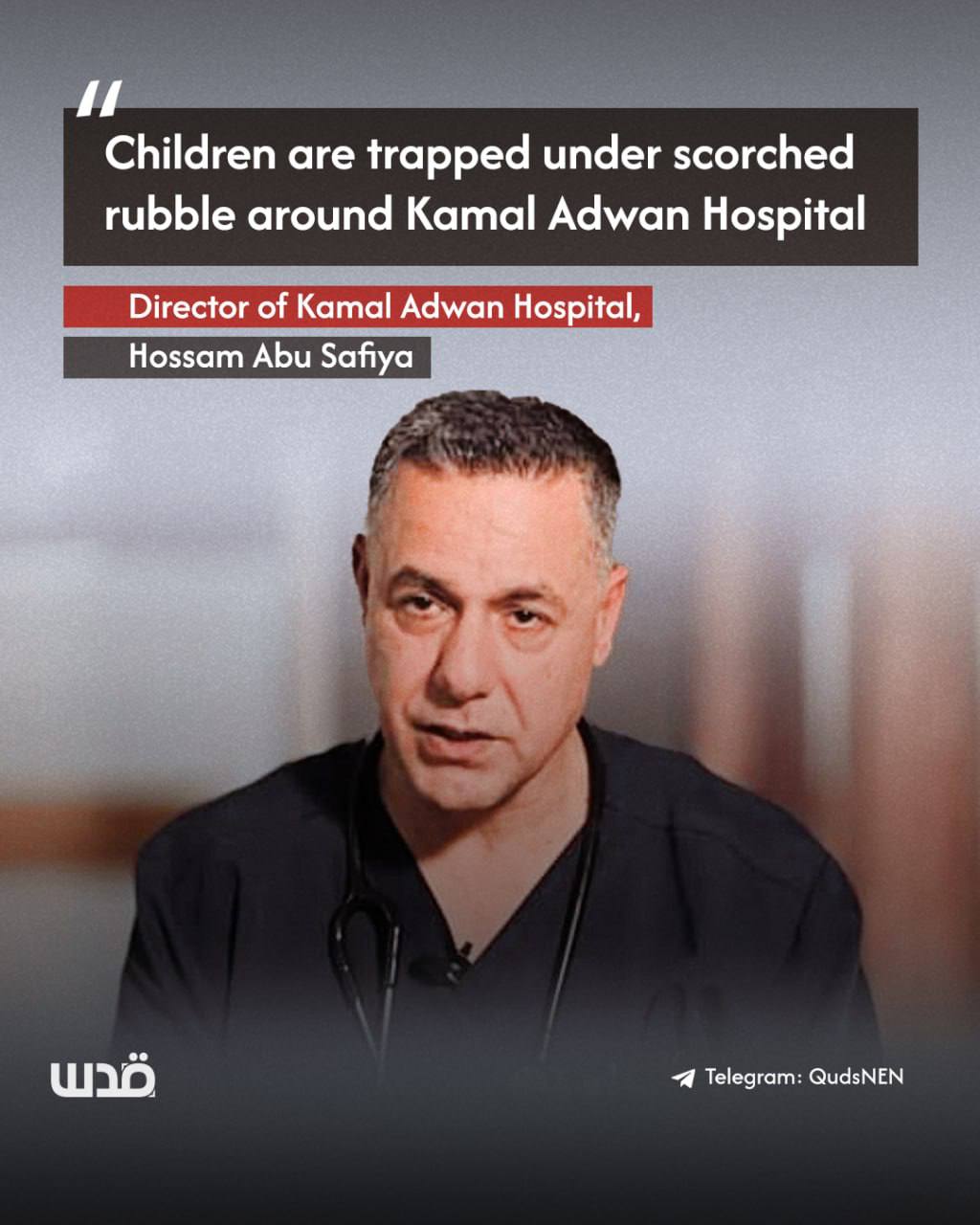
Hossam Abu Safiya, Director of Kamal Adwan Hospital, confirmed that Israeli warplanes targeted the hospital and its surroundings, hitting more than eight residential buildings.

He confirmed that there are still casualties, including children, trapped under the rubble of their homes following the Israeli airstrikes carried out by the Israeli occupation forces earlier today.

He also maintained that the Intensive Care Unit (ICU) at Kamal Adwan Hospital, the only one in northern Gaza, was put out of service due to a direct strike by Israeli occupation forces earlier today.

Continue reading