Brik: Netanyahu Has No Vision, Should Resign

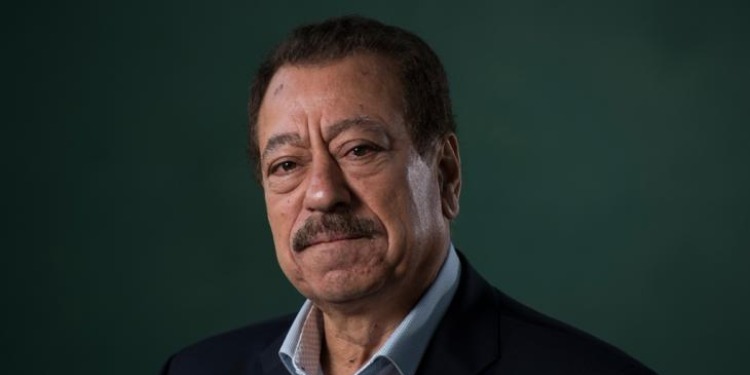
Retired Israeli Major-General Yitzhak Brik said that fatigue is evident among the ranks of Israeli soldiers and many of them no longer have the desire to fight, as stated in the Hebrew media.

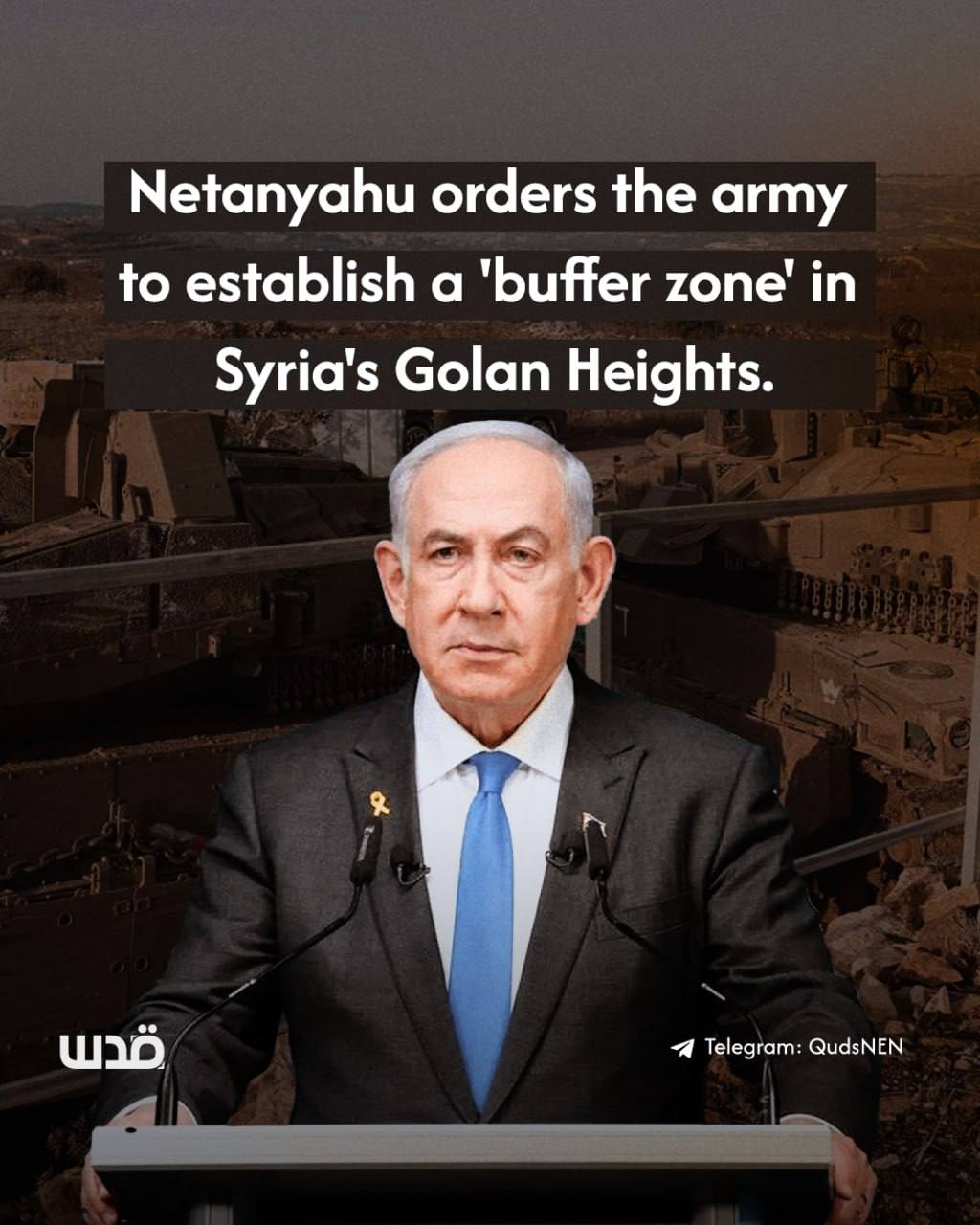
Brik stressed that Israeli soldiers have lost confidence in Prime Minister Benjamin Netanyahu, the political leadership and the Chief of Staff, noting that Netanyahu and Herzi Halevi are leading a war without a strategic vision and should resign.

Brik added that Halevi does not adhere to his stands in order to please the officials at the top and maintain his rank, noting that the Jewish people throughout the generations have not had a leader who gave up 101 hostages twice.

Brik stressed Netanyahu gave up the hostages out of a narrow self-interest to preserve his government and position.

Brik pointed out Netanyahu gave up the hostages twice, the first time when he allowed them to be kidnapped and the second time by his wrongful decision not to release them according to Jo24.

Continue reading
Trashing….

CEOSSFIREARABIA – At first France said it would adhere to the decision of the International Criminal Court and arrest Israeli Prime Minister Benjamin Netanyahu if he landed in Paris because he is wanted as a war criminal.

This angered Netanyahu. In a private telephone call with President Emmanuel Macron, the two leaders had a terse conversation on the international legality of the ICC decision. Netanyahu questioned its validity in the strongest manner.

While this was going on, France was interested in reaching a ceasefire deal on Lebanon and Hezbollah. Israel started another battle on its northern borders come mid-September and was busily attacking south Lebanon up to Beirut’s south district, seen as a Hezbollah stronghold.

The French government soon started its diplomacy and started to push for a ceasefire. Thus the context became that if France waived the Netanyahu arrest and that of his ex-Defense Minister Yoav Gallant, should they travel to France, a deal can be reached on Lebanon.

And thus a 60-day ceasefire was finally reached; this was a ceasefire that could be extended.

Meanwhile France needed to provide its pretext for “arresting/not arresting Netanyahu” if he landed in France. Excuses had to be made: Israel wasn’t privy to ICC decisions because it was not a signatory to the world body as well it was felt that that Netanyahu couldn’t be arrested because he was a sitting prime minister.

This meant that the whole issue was becoming very confusing. But the ICC decision was binding on all 124 of its members in the world that includes France which is bound to follow the decisions of the international court with no excuses!

This political diplomacy maybe water on a duck’s back because Netanyahu is still promising that he will go after Hezbollah soon ant that means an Israeli war on Lebanon is likely to start again in the near future.

But is this likely as well, since the north of Israel is clearly devastated and neither the Israelis nor their army would prefer to see war re-starts again. For the time being however, its touch and go.

Continue reading
Netanyahu Angry With Macron Over Arrest Warrants

Israeli Prime Minister Benjamin Netanyahu reportedly spoke with French President Emmanuel Macron over the phone, requesting that the Paris government not enforce the arrest warrant issued against him by the International Criminal Court (ICC).

According to a report by RMC radio, Macron and Netanyahu discussed the ICC’s arrest warrant in a phone call held last week.

During the call, Netanyahu reportedly expressed his anger and asked France not to enforce the court’s decision.

While Macron has not made an official statement on the matter, information obtained by RMC from various sources suggests that Macron told Netanyahu during the conversation that France would uphold international law and noted that judges could grant immunity to heads of state.

On Nov. 21, the ICC issued arrest warrants for Netanyahu and his former Defense Minister Yoav Gallant for war crimes and crimes against humanity in Gaza.

French Prime Minister Michel Barnier, in remarks made today during a session in parliament, said that France would fulfill its obligations under international law with regard to the ICC’s arrest warrant for Netanyahu according to Anadolu.

Continue reading
Experts: ICC Arrest Warrants is Start For More Israeli Sanctions

The International Criminal Court’s (ICC) arrest warrants against Israeli Prime Minister Benjamin Netanyahu and former Defense Minister Yoav Gallant could open the floodgates for more legal challenges for other Israeli officials, as well as Western nations supporting the ongoing genocide in Gaza, experts say.

On Nov. 21, ICC Pre-Trial Chamber 1 issued warrants for Netanyahu and Gallant accusing them of using starvation as a method of warfare in Gaza, along with the crimes against humanity of murder, persecution and other inhumane acts.

Israeli academic and law professor Neve Gordon believes this could be the tip of an iceberg of cases and warrants against other top Israeli military officials and leaders.

“It is clear that while Netanyahu and Gallant were at the very top of the decision-making and policymaking apparatus, but there are several other high-ranking politicians and military personnel that are implicated in the starvation and in the systematic attacks on health care,” Gordon, an international law professor at Queen Mary University of London, told Anadolu.

“I will not be surprised if in the coming months or even coming years, there will be warrants against the chief of staff, maybe some other generals, the current defense minister, and maybe other ministers.”

Legal expert Michael Becker pointed to ICC Prosecutor Karim Khan’s statement and reference to ongoing lines of inquiry as an indicator of what could come next.

“It could mean additional charges sought against Netanyahu and Gallant. It could also mean new requests for arrest warrants against other potential defendants,” he said.

“There’s probably no shortage of possible candidates that the court might be interested in pursuing.”

For the initial stage, he said the ICC made “a concerted effort to focus their efforts on the leadership, and those people most responsible for making policy decisions about how to conduct the operation in Gaza.”

“It is, of course, possible that other people could end up being the target or the subject of arrest warrants,” Becker, assistant professor of international human rights law at Trinity College Dublin, told Anadolu.

Also, he added, the warrants issued do not cover all the charges sought by the prosecutor, most notably the crime against humanity of extermination.

“We might see the prosecutor try to challenge that determination as the process goes on, in order to get that charge included,” he explained.


Legal troubles for Israel’s allies

Experts say the ICC warrants could also lead to legal troubles for Western governments that are selling arms to Israel and supporting it militarily.

“The pre-trial chamber has opened an avenue for a whole series of other legal petitions in domestic courts, particularly in Europe, where countries continue to send arms to Israel,” said Gordon.

Given the ICC’s charges against the Israeli leaders, these countries are violating their own laws because most of them have a memorandum of arms trade setting out certain conditions, he explained.

Each country “legally restricts itself from trading arms with entities that carry out serious violations of international humanitarian law.”

“There is a high possibility, according to the ruling by the pre-trial chamber, that Israel has carried out crimes against humanity,” he continued.

“Therefore, by continuing to trade arms with Israel, these countries are in danger of being complicit with crimes against humanity, and that is against their own laws.”

This gives human rights organizations and NGOs in these countries the space to file cases against their governments in domestic courts, he said.

“This can actually lead to an arms embargo on Israel, not by the US, but by Germany, Italy, UK, Spain and France, which are the major European countries that trade arms with Israel,” said Gordon.

As opposed to the US and Israel itself, most of Tel Aviv’s European allies are members of the ICC, part of 124 countries around the world that are now legally obliged to arrest Netanyahu and Gallant should they set foot on their territory.

Most of Israel’s European allies, such as France and Italy, have said they would uphold international law and execute the warrants. Other European nations that have said the same include Ireland, Sweden, Switzerland, the Netherlands, and Belgium.

The UK has also vowed to “always comply with its legal obligations as set out by domestic law and indeed international law,” but has not explicitly said it would arrest the duo.

Germany has pledged continued support for Israel, with a government spokesperson saying the country generally supports the ICC, but it has not yet decided whether it would actually implement the arrest warrant for Netanyahu and Gallant.


Parallel investigations in West Bank, East Jerusalem

In his statement on the warrants, ICC Prosecutor Khan said his office is also “taking forward additional lines of inquiry in areas under the Court’s jurisdiction, which include Gaza and the West Bank, including East Jerusalem.”

Palestinians in the occupied West Bank have been subjected to ever-escalating Israeli violence and repression in parallel to the genocide in Gaza, with at least 797 killed and more than 6,000 wounded since last October. According to the Israeli advocacy group Peace Now, there are more than 720,000 illegal settlers in the occupied West Bank, including East Jerusalem.

“I think that one of the things that we have been witnessing particularly since October 2023 is the kind of efforts to displace communities in the West Bank from their ancestral lands, particularly in the South Hebron Hills and in the Jordan Valley, not far from Ramallah,” said Gordon.

“I think there is a chance that the prosecutor will look at the kinds of efforts to displace Palestinians and replace them with Jewish settlers, which is part of the settler colonial logic of cleaning the land from its indigenous inhabitants.”

Earlier this month, Israel’s far-right Finance Minister Bezalel Smotrich openly called for annexation of the occupied West Bank, drawing worldwide condemnation.

Smotrich, defying international law, declared that “the only way to remove the threat of a Palestinian state from the agenda is to apply Israeli sovereignty over the settlements in Judea and Samaria (West Bank),” vowing that 2025 will be the year for Israeli sovereignty over the occupied Palestinian territory.


Impact on ICJ case

Becker, a former staffer at the International Court of Justice (ICJ), pointed out the interplay between the ICC charges and those in South Africa’s genocide case against Israel at the ICJ.

He said the ICC prosecutor’s decision to focus on the war crime of starvation when he filed for warrants in May arguably was encouraged or facilitated by the ICJ’s provisional measures order in March.

“Out of the three different provisional measures, the risk of starvation and famine was really the focus of that March order. So, it was interesting to see that was what the prosecutors seem to be focused on,” he said, adding that starvation was again a focal point in the warrants.

While any concrete progress at both courts could take years, the ICC warrants could impact the ICJ case in other ways, he said.

The language used in the pre-trial chamber’s decision to justify the warrants “tracks exactly some of the language from the Genocide Convention, even though the charges that the prosecutor has sought are not charges of genocide,” he explained.

“That’s important in the sense that it might give the ICJ further grounds, or the ICJ might find themselves operating on firmer ground, if they also find that Israel’s actions in Gaza have created conditions of life intended to destroy a part of the population, because that’s the language we see in the pre-trial chamber and that tracks language from Article II of the Genocide Convention.”


‘Disincentive for Israel to de-escalate’

On the question of whether the ICC warrants or threat of more legal troubles could stop Israel’s assault on Gaza, Becker fears it could end up having an “opposite effect.”

“If Israel’s defense all along, as it has been, is that we’re not doing anything wrong and we are complying with international law, Israeli officials might say we actually now have no incentive to change our tactics,” he said.

The thinking there could be that if they do make changes, they would “risk that being framed as some kind of admission that what we were doing before was wrong.”

“So, perversely, I think that the ICC arrest warrants might actually be a disincentive for Israel to de-escalate,” he added.

Since last Thursday, Israel has killed at least 150 Palestinians as it continues its relentless attacks on Gaza, raising the overall death toll to nearly 44,200, most of them women and children.

More than 105,000 Palestinians have also been wounded in Israeli attacks, while a crippling siege on water, power, fuel, and all humanitarian essentials has left more than 2 million Palestinians facing death and starvation.

Continue reading