What Next For Moscow After Fall of Damascus

Events are rapidly unfolding before after the fall of the Syrian capital, Damascus, into the hands of the armed opposition forces that entered it without resistance because the Syrian army, under orders from its supreme commander, decided not to resort to bloody confrontations to prevent bloodshed and accept defeat in the face of a tripartite aggression well-planned in the dark rooms of Washington, Ankara and Tel Aviv.

The Russian authorities’ announcement, Sunday, of the arrival of Syrian President Bashar al-Assad and his family to Moscow and granting them political asylum, confirms that the sudden developments currently taking place may be the tip of the iceberg.

There may be many surprises to come on all levels, as Syria is a jungle of weapons, and it is unlikely that the sudden surrender is just a maneuver, just like what happened in Iraq after the collapse of the Iraqi army in the face of the American invasion, and the goal now is to reposition, bow to the storm, and prepare to resist the occupation.

https://twitter.com/abdelbariatwan/status/1865843698195378221

The fall of Damascus is a fatal stab to Russia and its leadership, which the new authority in Syria has no affection for, and sees it as a strategic partner of the isolated Syrian regime. Its warplanes have not stopped bombing Idlib, Aleppo, Hama and Homs, and this Russian airstrike played a major role in the Syrian Arab Army regaining most of the cities and villages that were seized by the opposition forces supported by America, Europe and Turkey.

We do not know what President Bashar al-Assad’s plans are in the coming period. Will he resort to calm and withdraw from political work, in compliance with the conditions of political asylum, or will he make Moscow a base to manage a resistance that he will form and lead from his new exile.

News circulated in the past few days that countries supporting the deposed Syrian president, led by Russia, suggested he form a government in exile to confirm his non-recognition of the new government that may be formed in the coming few days to run the country, avoid a political vacuum, and prepare for holding general elections.

We do not know the extent of the accuracy of this news, and perhaps it is too early to try to extrapolate what events are coming in Syria, as only one day has passed since the fall of Damascus and President Assad’s flight to Moscow and his granting of political asylum.

However, what can be pointed out is that the picture seems blurry in Syria at the present time, as Damascus and the major Syrian cities have been exposed to a war led by armed Syrian opposition factions on behalf of America, Turkey and other Arab countries, unlike the direct American war in Iraq in 2003, in which more than 160,000 American soldiers participated, and Paul Bremer was installed as military governor of Iraq in a transitional phase.

Unfortunately, we can’t disagree with Benjamin Netanyahu when he said: “The fall of Damascus and the collapse of the ruling regime there is considered a historic day and a great victory for Israel.”

Damascus is the crown jewel of the axis of resistance, the main supporter of the Palestinian cause, and the stubborn opponent of normalization. The question remains: Will Netanyahu’s celebrations of this fall last long? We leave the answer to the coming days and months.

Abdel Bari Atwan is the Chief Editor of Al Rai Al Youm

Continue reading
Can Trump Get a Gaza Deal From Netanyahu?  

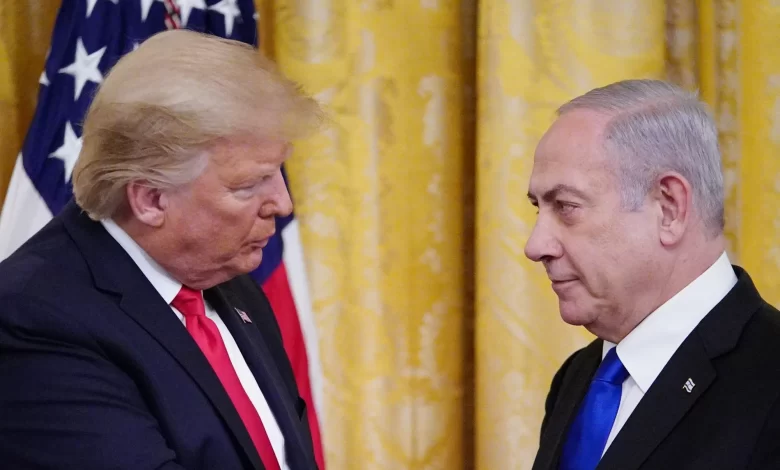
The Israeli newspaper Maariv stated that the incoming US President Donald Trump is putting intense pressure on Israeli Prime Minister Benjamin Netanyahu to bring the exchange deal of prisoners closer.

It added that the talks are proceeding not only  on one or two channels. But negotiations on Gaza are moving along three channels:  

Exchange deal

A military channel aimed at ending the war, a political channel aimed at maturing into an exchange deal, and a humanitarian channel for talks related to restoring the Gaza Strip and returning life to normal.

It stressed that the three channels are complementary to each other and are in the hands of the Egyptians.

It stressed that the main points of the agreement stipulate that the Israeli army must stop the war in stages and gradually withdraw from the Gaza Strip. The Rafah crossing will be opened to allow hundreds of aid trucks to enter every day, and Israel will release hundreds of security prisoners and receive prisoners. The implementation of the interim agreement will be supervised by America and other countries, as in Lebanon.

What plan?

According to the newspaper, in recent weeks, the Egyptians have been working away from the spotlight to bring Hamas and the Palestinian Authority closer together develop a plan to establish a new government entity in the Gaza Strip once a ceasefire is declared.

The proposal talks about a body to manage the civilian affairs of the Gaza Strip and will be staffed by 10 to 15 professionals who are not affiliated with any movement, and with an already official name: “The Social Committee to Support the Residents of Gaza”.

Its no coincidence the Egyptians have given it this title, nor the “unity government”, although it will operate under the Palestinian Authority in Ramallah. The Egyptians chose this name to be accepted by the Israeli government.

The newspaper stressed the agreement document the Egyptians extracted from Hamas and the Palestinian Authority is an achievement in itself and the Israeli government will have to decide soon whether handing over the Gaza Strip to this committee is acceptable to it or not according to Al Rai Al Youm.

Continue reading
Poland to Arrest Netanyahu For The ICC

Polish Deputy Foreign Minister Andrzej Szejna said Thursday, his country is ready to cooperate with the International Criminal Court regarding the implementation of arrest warrants against Israeli Prime Minister Benjamin Netanyahu.

 “The Polish Foreign Ministry has adopted an interpretation that states that Poland, like the other 124 member states of the Rome Statute, is obligated to cooperate with the International Criminal Court to implement the court’s orders and in its name, not in the name of the states,” Szejna added.

“Immunity and sovereignty that are usually used in international relations between states do not apply to this case,” he stressed.

 “Poland considers the International Criminal Court an essential element of international criminal justice and international relations based on law,” the Polish Foreign Minister added.

“Poland’s position is clear. Poland respects the decisions of the International Criminal Court and will implement them,” he continued.

The Commission of the European Union previously stated that it “supports the International Criminal Court, and all EU countries are obligated to implement the arrest warrants issued against Benjamin Netanyahu and former Defense Minister Yoav Galant.”

The ICC issued arrest warrants against Netanyahu and Galant, accusing them of “committing war crimes and crimes against humanity in oIsrael’s] war on the Gaza Strip.”

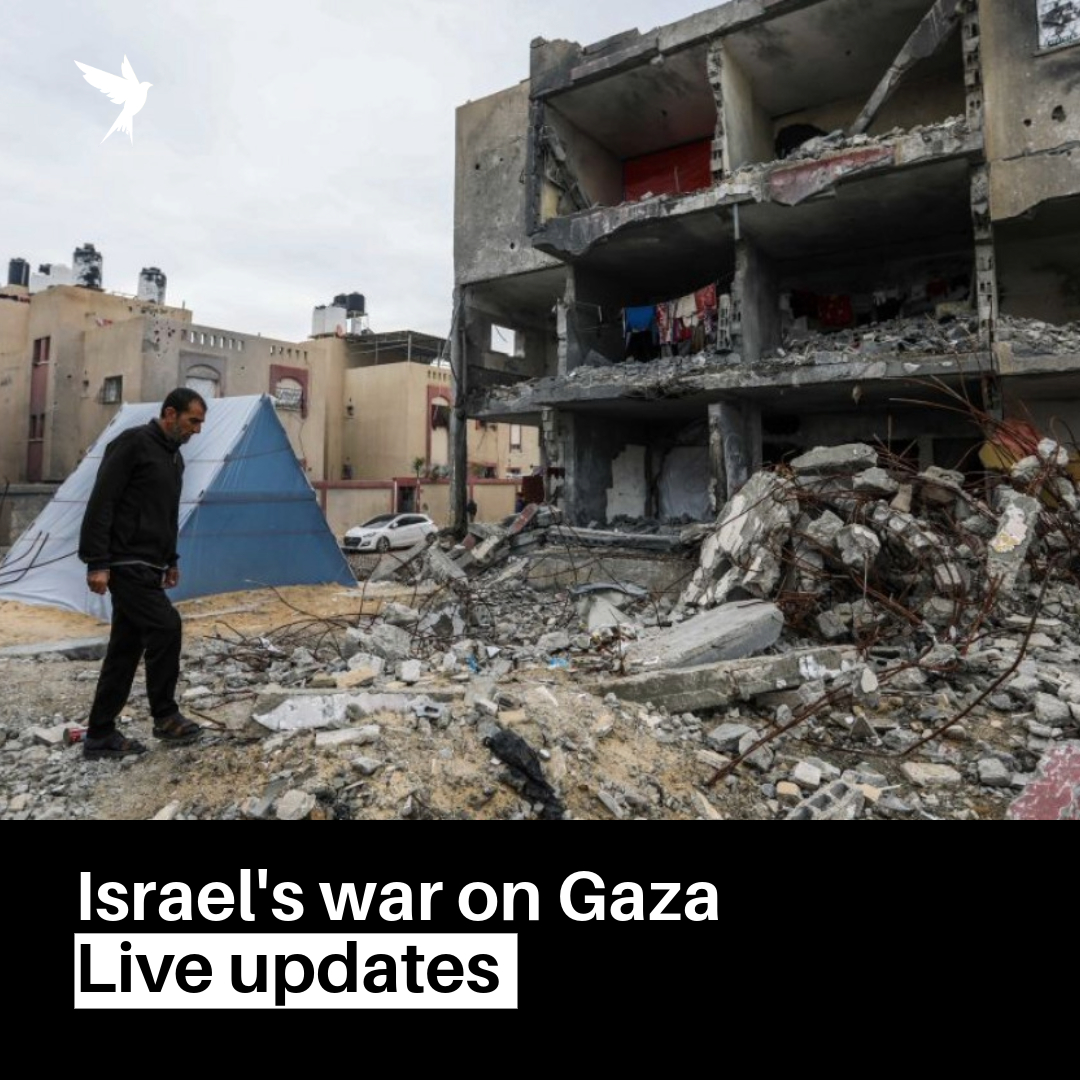
The Israeli occupation army, supported by the United States and Europe, continues its aggression on the Gaza Strip for the 426th consecutive day, as its warplanes bomb the vicinity of hospitals, buildings, towers and homes of Palestinian civilians, destroying them over the heads of their residents, and preventing the entry of water, food, medicine and fuel.

The ICC Prosecutor Karim Khan is urging its member countries to implement the arrest warrants against Netanyahu and Galant.

The Israeli aggression has left more than 150,000 Palestinian martyred and wounded, most of them children and women, and more than 10,000 missing, amid massive destruction and famine that killed dozens of children and elderly people, in one of the worst humanitarian disasters in the world according to the Palestine Information Center.

Continue reading
Will He Ever be Prosecuted?

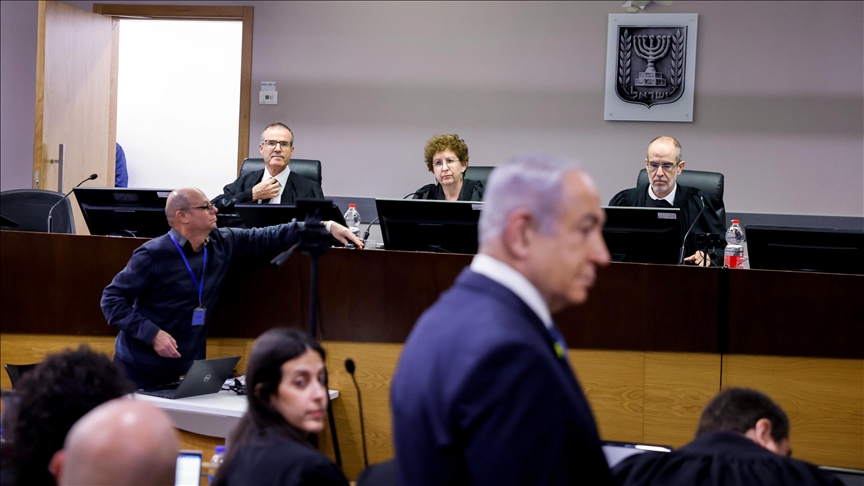
The State Attorney’s Office has informed the Jerusalem District Court that it opposes Prime Minister Benjamin Netanyahu’s request to slow the pace of his testimony in his criminal trial, a process that is already moving at a faster rate for other witnesses.

The prosecution argues that it is crucial for the trial, now approaching its fifth year, to conclude swiftly. Allowing Netanyahu’s request, they contend, would limit his testimony to just nine hours per week, which they believe would unduly prolong the proceedings.

“The public interest in this case requires striving for the trial to conclude as quickly as possible in order to protect the public interest, the fairness of the process, and the fundamental principle that everyone is equal before the law,” argues the State Attorney’s Office.

Continue reading
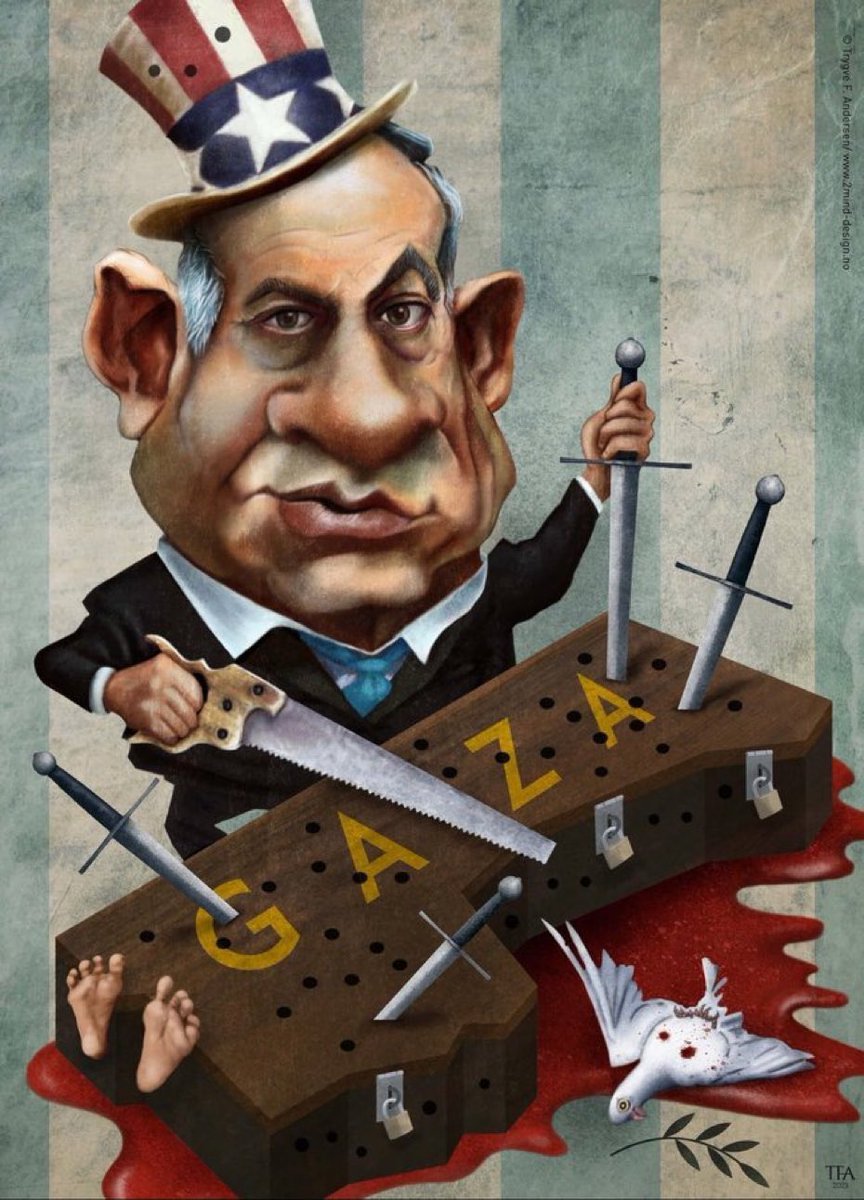
Netanyahu: Ideologue, Pragmatist or a Proxy?

Dr Khairi Janbek

PARIS – When talking about the Israeli prime minister Netanyahu, we must not miss the point that in effect he is a politician, thus, he is both an ideologue and a pragmatist. He is an ideologue when he feels he can go all the way with brinkmanship and get away with it, and he is a pragmatist, when realizes that he should stop and talk. However, by and large that usually depends on the position of the USA primarily, and on the regional situation in the second degree.

He was a pragmatist, when he originally gave his implicit support to Hamas as a guardian of peace in Gaza, and the guarantor of border security with Israel, and he was an ideologue when he demanded that the PNA accepts that Israel is a Jewish state, and accept moreover, that any form of a Palestinian state ought to be demilitarized and just a guardian of the border with Israel.

https://twitter.com/LegitTargets/status/1847287962024747060

He was an ideologue when avenging the 7 October events and a pragmatist in letting the hostage crisis drag on. He chose to head a government in which he can present himself as the only one whom the world can talk to when compared to his extremist colleagues, through his masque of pragmatism, rather than go into a government with partners whom will make him look as the only ideologue among pragmatists.

Again, this Netanyahu dualism, be that the ideologue who has the freedom to do as he sees fit, or the pragmatist who gets to know his boundaries one cannot say is clear, at least for the moment. For all intents and purposes, the red apple of the so-called Abrahamic Accord, Saudi Arabia, remains illusive, as the Saudis have indicted in no uncertain terms, that any prospects of normalization are conditional on at least, reviving the two-state solution. But at the same time, Netanyahu still has working relationships with the UAE and Bahrain in the Gulf as well as Qatar.

As for the older cold peace partners, Jordan and Egypt, Netanyahu is content that at least the situation is stable as it could be.

Now, will Netanyahu be able to pull a rabbit out of the hat when it comes to Trump, or does he really feel that he can take Trump for granted? The current thought in the Middle East fluctuates between those two guesses. But in reality with a paradigm shift, perhaps we can see things clearer. For a start, we are currently living in the age of separation of economics and business from the world of politics, also the separation of interests from principled positions. This age is not created by either Netanyahu or Trump but it certainly suits their relationship fine.

One thing for certain, Netanyahu can rely on Trump’s support as an intransigent ideologue, for Israel is undoubtedly the advanced military post of the USA, but also as a pragmatist, he has to understand to what extent he can be a tool of US foreign interests especially that Trump is very much fond of the concept of proxies and does not like infringements on his business deals.

Dr Khairi Janbek is a Jordanian historian based in Paris and the above opinion is written exclusively for crossfirearabia.com. 

Continue reading