Who is The ‘True’ Terrorist Here?!

By Mohammad Abu Rumman

“This is not a geopolitical battle; it is a spiritual battle. A battle of the ages. It is not horizontal. It is not left or right, liberal or conservative. It is a vertical battle… a battle of heaven against hell, good against evil. People must see it in this context, or they will completely fail to understand it.”

With these words, Mike Huckabee, the U.S. ambassador to Israel, described the ongoing war of extermination in Gaza during an interview with NBC. He criticized the move by several European states to recognize Palestine at the United Nations this month, adding: “You do not stand with Israel merely because you agree with its government… but because it defends the traditions of Abraham, Isaac, and Jacob.”

This rhetoric aligns seamlessly with statements made by members of Netanyahu’s government. Finance Minister Bezalel Smotrich, for example, openly called for the “complete destruction of Gaza” and the forced displacement of its residents to other countries, invoking biblical injunctions about “erasing the memory of Israel’s enemies.” What is striking is that such discourse is no longer viewed as fringe or shocking in Western and global media and political circles. It has become commonplace—voiced by ministers, politicians, and even Netanyahu himself—steeped in extremism and religious absolutism toward “the other.” In this case, the “other” is the Palestinians as a whole, along with anyone who dares oppose the Israeli far right.

Here, the urgent question arises: how should terrorism and extremism be redefined today? Who is the true terrorist? And what form of terrorism most threatens regional security and societal peace?

Following the September 11 attacks in 2001, the United States declared its “war on terror,” rallying dozens of states against al-Qaeda and later ISIS. ISIS was undeniably a brutal extremist group that committed massacres, established a so-called caliphate, and tore down borders between Syria and Iraq. Yet it remained an isolated, besieged organization—globally reviled, stripped of legitimacy, and unsupported by institutions or states. What we witness today, by contrast, is state terrorism practiced openly, backed by major powers, and legitimized through religious rhetoric presented as divine will. The irony is palpable: Israel engages in territorial expansion, rejects recognized borders, launches cross-border military strikes, and has a prime minister who frames his mission in explicitly spiritual and historic terms—the realization of Greater Israel.

Skeptics may argue that labeling Israel a terrorist state changes nothing; it clashes with power dynamics and U.S. strategic interests. Perhaps. Yet it remains essential to reshape Arab, Islamic—and indeed universal—awareness of these realities, and to recalibrate the very language and definitions we use. These should form part of today’s Arab political, media, and diplomatic discourse. If an international coalition against terrorism is to exist, the actor most deserving of that designation is Israel’s government—not transient groups like ISIS or al-Qaeda. Huckabee’s words and the declarations of Netanyahu’s ministers are not aberrations; they are clear manifestations of this reality: state terrorism, sanctified by religion and legitimized internationally. If there is a rogue state whose leaders should stand before the International Criminal Court for genocide and mass killings, it is Israel.

This framing is of enormous significance for international, regional, and even domestic debates. Otherwise, Arab political and intellectual circles will continue to be dragged along by narratives that consistently place the blame on extremist movements emerging here or there—movements that are, in truth, the predictable outcomes of political dysfunction. Whether born of Israeli aggression or Arab authoritarianism, such groups are less causes than consequences. To blame them alone is to misread the sequence of cause and effect.

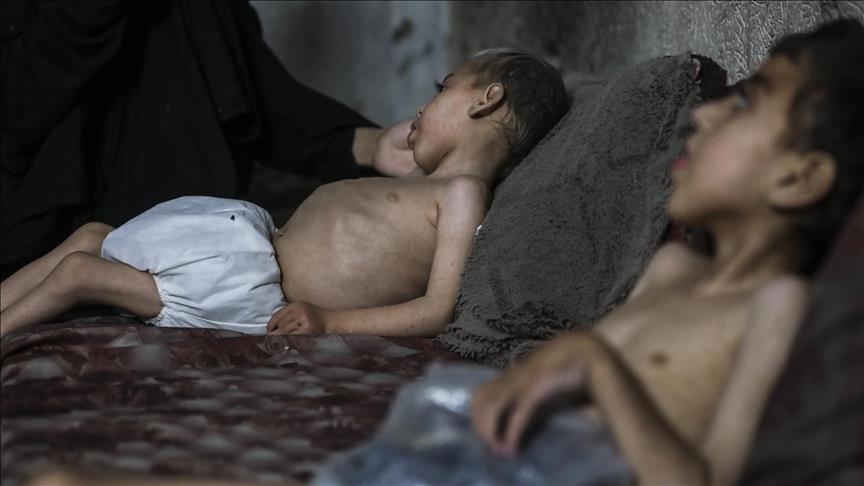
Today, amid the genocidal war on Gaza, a new political generation is coming of age. It witnesses, daily and directly, the starvation, slaughter, and devastation visited upon children, women, and civilians. It also sees the deafening global silence, alongside Arab paralysis and strategic impotence. What reactions can we reasonably expect from such a generation? This is not an attempt at justification, but rather an explanation of what is taking shape: a coming wave of anger among youth, or a wave that others may channel into particular political or religious agendas. That wave is already being born—out of the crucible of Gaza.

The writer is a columnist in The Jordan Times
Continue reading
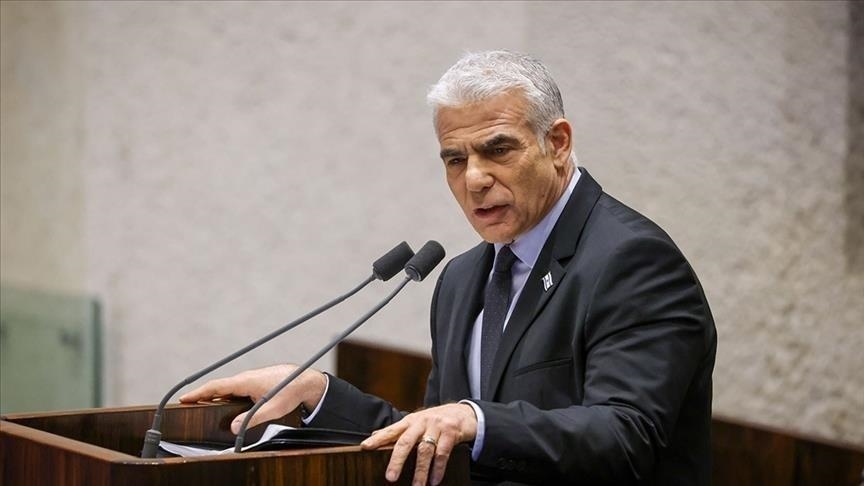
Lapid: Gaza Take Over Disastrous For Israel

Israeli opposition leader Yair Lapid on Friday sharply criticized the Cabinet’s latest decision on Gaza, calling it “a disaster that will lead to many more disasters.”

In a statement, Lapid accused Prime Minister Benjamin Netanyahu of capitulating to the extremist demands of far-right ministers Itamar Ben-Gvir and Bezalel Smotrich.

The criticism from Lapid, head of the Yesh Atid party, comes after Israel’s Security Cabinet approved a plan by Netanyahu to take control of Gaza City, according to Anadolu.

“In complete contradiction to the opinion of the military and security ranks, without considering the erosion and exhaustion of the fighting forces, Ben Gvir and Smotrich dragged Netanyahu into a move that will take months,” said Lapid.

He added that this will “lead to the death of the hostages, the killing of many soldiers, cost tens of billions to the Israeli taxpayers, and lead to a political collapse.”

He warned that Israel will be “trapped in the field without a goal, without defining the picture of the day after, in a useless occupation that no one understands where it is leading.”

Israel has been facing mounting outrage over its destructive war on Gaza, where more than 61,200 people have been killed since October 2023.

Last November, the International Criminal Court issued arrest warrants for Netanyahu and his former Defense Minister Yoav Gallant for war crimes and crimes against humanity in Gaza.

Israel also faces a genocide case at the International Court of Justice for its war on the enclave.

Continue reading
Israel Faces Diplomatic Breakdown as Famine Cripples

Israel is heading toward a major diplomatic breakdown as famine spreads in Gaza, the daily Yedioth Ahronoth reported on Friday.

The newspaper revealed that Prime Minister Benjamin Netanyahu’s government ignored mounting international warnings about an unfolding humanitarian catastrophe in the besieged Palestinian enclave.

The report states that on March 2, Israel’s Security Cabinet made a decision to halt the entry of food aid into Gaza. This move came despite clear assessments from Israel’s own security establishment about the worsening famine, as well as urgent warnings from Gen. Ghassan Alian, the coordinator of Government Activities in the Territories, and several international relief organizations.

Unnamed political and security sources told the Yedioth Ahronoth that the decision “was not rooted in strategic considerations but was driven by political pressure from National Security Minister Itamar Ben Gvir and Finance Minister Bezalel Smotrich,” both known for their far-right policies according to Anadolu.

The daily noted that the Israeli government was fully aware Gaza was “on the brink of famine,” yet continued to block aid entry endangering the lives of countless Palestinian civilians.

The EU reportedly issued a stern warning to Israel regarding the consequences of the deepening crisis, even hinting at suspending its partnership agreement with Tel Aviv.

This came after a similar warning from the administration of US President Donald Trump, a staunch supporter of Israel, urging Netanyahu to act, while the prime minister “wasted time and hesitated to make decisions,” the report added.

Yedioth Ahronoth concluded that “Israel has steered itself into both a humanitarian disaster in Gaza and an impending diplomatic collapse on the global stage.”

Rejecting international calls for a ceasefire, the Israeli army has pursued a brutal offensive on Gaza since Oct. 7, 2023, killing more than 60,000 Palestinians, most of them women and children. The relentless bombardment has destroyed the enclave and led to food shortages.

Last November, the International Criminal Court issued arrest warrants for Netanyahu and his former Defense Minister Yoav Gallant for war crimes and crimes against humanity in Gaza.

Israel also faces a genocide case at the International Court of Justice for its war on the enclave.

Continue reading
The Gaza Death Trap

While everyone waits for the full-blast war on Gaza which Israel promises to continue, Tel Aviv must know this will not be an easy matter not least of all by the Benjamin Netanyahu government whose ministers are split over allowing the army to resume its “fighting” position in Gaza.

Not everyone holds the view of extremist Finance Minister Bezalel Smotrich. He wants to resume, or continue, a large scale offensive on Gaza and reoccupy the enclave forever! For these opposing ministers as well as a large number of army soldiers and officers are not in favor of going back to fighting in Gaza because (a) of the bloody situation and danger soldiers were subjected to since 7 October, 2023, and because they want the rest of the remaining hostages – 59 and about 24 still thought to be alive – to be returned.

They fear – and reflecting major sections of society who have been demonstrating daily in Tel Aviv and other major Israeli cities under the of banner “bring them home,” – that increasing the wheels of war on Gaza would be signing the death warrants of the remaining hostages, originally marked at 250 and over 40 of them killed by indiscriminate Israeli bombing of the different areas of enclave over the past 17 months or so of fighting.

In the eyes of Smotrich, and he doesn’t mince his words, the return of the hostages is now secondary and what is crucial is to destroy Hamas and end its presence in the Gaza Strip.

But this is not happening. Since the resumption of the Israeli war on Gaza on 19 March, 2025 the resistance led by the Islamic organization and the other Palestinian factions have also resumed their fighting. While it is true, Hamas was slow in getting back to the war, preferring to give the ceasefire and peace talks a chance, and which led many to say the resistance are finished, this was far further from the truth.

Fighting again

Exactly one month later after 19 March, the Palestinian resistance led by Hamas and Islamic Jihad, re-started their fight against the Israeli army and the targeting of its soldiers; the Zionist army had maintained an active presence in the different areas of the Gaza Strip since the ceasefire took effect on 19 January, 2025 when the newly-elected US president was installed in the White House.

After much waiting and the gradual realization that Israel was no longer interested in the ceasefire nor in ongoing talks in Doha and Cairo, Hamas and Islamic Jihad reignited their war tactics on the Gaza battlefield. They realized Netanyahu, as prime minister of an extreme right-wing government, was no longer interested in maintaining a ceasefire.

Analysts maintained that Netanyahu was encouraged by Trump’s conflicting and dangerous stance on Gaza on top of which was the dramatic and subsequently abhorred idea of expelling the 2.1 million population of Gaza to build the Strip as the newly-plushed Middle East Riviera.

Although he quickly backed down due to Palestinian, Arab and even world pressure, Netanyahu interpreted this hugely-wrongful idea as greenlight to continue to hammer Gaza from the air and reimpose the starvation policy of its population.

Although the people got the backend of the Israeli willful mad firepower while shutting down the curtain on aid entering the 364-kilometer enclave, Hamas and the other Palestinian groups begun to regroup and re-started its military operations against the Israeli army in Biet Hanoon in the northern Gaza Strip to Gaza City in the center, Shujaiyia to the west, Khan Younis lower down and Refah, further south on the border with Egypt.

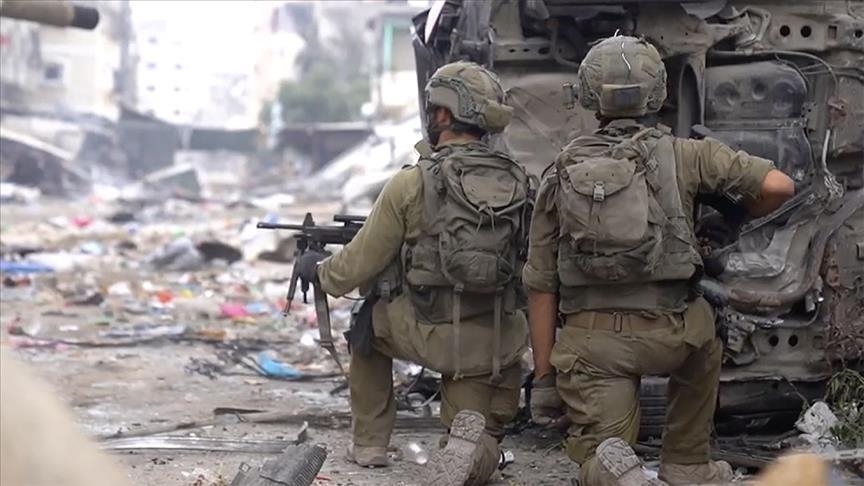
Like before, since 7 October, 2023, the resistance has now embarked on the increasing use of ambushes and booby-trap operations of luring Israeli soldiers and targeting Israeli tanks, armored vehicles and bulldozers while firing at them through locally-made, cheap but effective and deadly missiles that resulted in many of these soldiers being killed and badly-injured – numbers in the thousands – while many of the tanks and bulldozers either blown up and/or put out of action.

Towards the end of April onwards, this strategy was reactivated at full length and on different days sniping Israeli soldiers and targeting armoury would rise in multiple and different operations through the Gaza Strip. What is today of major worry to the Israeli army is that these geographical areas which were supposed to be “cleaned up” from Palestinian operatives are becoming active once again which means that for the Israeli army its back to square one.

The Israeli army had literally destroyed many of the major cities, towns, neighborhoods, villages of Gaza not once but many times. They entered places like Khan Younis, Jabalia, Shujaiyia, Nuseirat, Rafah and many more multiple times and declared them free from Palestinian resistance groups but these fighters just continue to emerge as seen recently and to the chagrin and frustration of the Israeli army.

Such frustration has led Israeli politicians like Netanyhu, and arch anti-Palestinian politicians like Itamar Ben-Gvir, Minister of National Security and hated by some Israelis for his extreme rightwing views to call for the re-occupation of Gaza, something that Netanyahu is actively contemplating. The prevailing view that once the army gets into Gaza once again, and on a mass scale, they can never leave! There are many in the army who have long rejected such an idea because they know of the “bloody situation” their soldiers would face.

However, the Israeli government and its army continues to operate under a set of illusions it is refusing to budge away from simply because Hamas and the Palestinian resistance presence is still operating in Gaza and in a robust mode to fight and kill Israeli soldiers and destroy their tanks and military hardware.

This is in addition to the fact the Israel and its army is getting nowhere near to freeing the rest of the hostages and who are likely to die if Israel embarks on a bigger war on Gaza and which Netanyahu and his extremist government are determined to do despite the warnings of the Israeli army which admits the rest of the hostages could die in any bigger military offensive.

Trump in region

Throughout this war there was always one external factor that played a permanent role in fuelling the Israeli genocide of Gaza and that was the United States through its provision of military support to Tel Aviv first under the Joe Biden administration and now under Trump.

If he could be persuaded to stop the supply of weapons to Israel, Netanyahu will finally stop the war on Gaza. Trump is on record, especially when he was running for the White House he would stop the war in Ukraine and Gaza. But will he? First of all, the Israeli lobby is entrenched in the US government.

However, there is one important factor that can pressure the Trump administration and that is the Arab countries. Trump is soon visiting Saudi Arabia and the Gulf countries including Qatar and the United Arab Emirates. If enough pressure can be applied from these quarters then surely the US president can move on the Gaza issue and halt any plans that Netanyahu is concocting for the enclave.

The Trump visit is being made in mid-May and its already played as a “bilateral” tour between the United States and these states whilest focusing on investment. And this is where their influence can be made with investment, economics and politics moving on one pedestal.

So the ball at the present time is in the hands of the Arab Gulf countries!

This comment is written by Dr Marwan Asmar, chief editor of the crossfirearabia.com website. 

Continue reading
Avi Ashkenazi: Hamas is Pushing Israeli Army Into a Quagmire

An Israeli military analyst said Friday, Hamas is waging a “guerrilla war” against the Israeli army in Gaza, and that decisions made by the current government are pushing it toward a quagmire.

Avi Ashkenazi, a military analyst for the Maariv newspaper, explained Hamas is trying to maintain its military strength, and its fighters know this territory; it is their stronghold.

“They (Hamas fighters) are not waging a defensive battle, but rather an offensive one through guerrilla cells. They monitor the Israeli forces from afar, know where they operate, their routines are, and look for their weak spots” he added.

“The cells prefer to operate in the afternoon, during daylight, when the sun is shining. When they realize the right time, they emerge from several openings of a single tunnel and begin the attack with an anti-tank missile, followed by sniper fire or the dropping of grenades,” Ashkenazi continued.

“The problem does not lie in the tactical management of the campaign by the army, but rather lies solely at the political level.”

“The political class is waging a war for political survival, and its decisions are pushing the army into a quagmire, even though Gaza has not seen a single drop of rain in weeks.”

“Israel must reach an agreement to release the hostages (held by Palestinian factions in Gaza) as soon as possible, even if the price is high, which is the release of (Palestinian) prisoners, and even if it means retreating to the border fence of Gaza, even if it means providing guarantees that the war will not resume,” he added.

“Hamas is Hamas, and sooner or later it will violate one of the terms of the agreement, which will allow Israel to move to complete the war’s objectives and deprive it of the ability to govern and militarize,” he continued.

“The wild and impudent words directed by Finance Minister Bezalel Smotrich to IDF Chief of Staff Eyal Zamir during the cabinet meeting illustrate the impasse facing some members of the political leadership,” Ashkenazi pointed out.

“The inability of the political echelons to make decisions makes it difficult for the army to manage the campaign (the war of extermination) well, quickly, and sharply.

When this happens in this type of campaign, where there is a large army (Israel) on the one side and a guerrilla organization (Hamas) on the other, the large army becomes vulnerable,” Ashkanazi stressed.

On Tuesday, the Israeli security cabinet meeting witnessed severe tensions between Smotrich and both Zamir and Shin Bet head Ronen Bar. The Hebrew media reported that the dispute began when Smotrich sharply criticized the army’s refusal to assume responsibility for distributing aid, arguing the army lacked the authority to choose its own missions.

He told Zamir: “Those who cannot carry out their missions should go home.” Zamir responded by rejecting these statements, prompting several ministers to ask Smotrich to lower his tone.

Throughout the ongoing genocide perpetrated by Israel in Gaza since October 7, 2023, Tel Aviv has been attempting to impose total control over the Gaza Strip by dismembering it and displacing its population, in addition to its attempts to eliminate Hamas and recover the prisoners in Gaza.

However, Israel has been unable to fully achieve these goals over the months of war, exposing Benjamin Netanyahu’s government to criticism both from the extreme right, which wants to tighten the noose on the Strip, and from leftists, who aspire to recover the prisoners from Gaza, even if the price is a ceasefire.

Tel Aviv estimates that there are 59 Israeli prisoners in the Gaza Strip, 24 of whom are still alive. Meanwhile, more than 9,500 Palestinians are languishing in its prisons, suffering torture, starvation, and medical neglect, many of whom have died, according to Palestinian and Israeli human rights and media reports.

With full American support, Israel has been committing genocide in Gaza since October 7, 2023, leaving more than 168,000 Palestinians dead and wounded, most of them children and women, and more than 11,000 missing according to Anadolu.

Continue reading