Vandalizing The Olive Tree

The current olive harvest season in the occupied West Bank has seen the highest level of illegal settler attacks in five years, a UN agency said Saturday.

The UN Office for the Coordination of Humanitarian Affairs (OCHA) said in a statement that 126 attacks were recorded in 70 Palestinian towns and villages, while over 4,000 olive trees and saplings were vandalized.

“The 2025 olive harvest season has so far witnessed the highest level of damage and number of affected communities due to settler attacks since 2020,” it added.

OCHA noted that 60 of the documented attacks involved direct assaults on Palestinian civilians, with at least 17 people injured and 19 vehicles vandalized in the past week alone according to Anadolu.

The UN agency said illegal Israeli settlers from newly established outposts have also imposed access restrictions on Palestinian farmers in multiple locations, preventing them from reaching their groves during the harvest.

On Saturday, illegal Israeli settlers attacked Palestinian olive pickers in the village of Burin, south of Nablus, and assaulted several of them, the official news agency Wafa reported.

Illegal settlers stormed farmland between Burin and the nearby town of Huwara, beat multiple harvesters and forced them to leave the fields, the broadcaster said.

Wafa added that the attackers also scattered the olives the farmers had already collected, leaving them on the ground.

The attack came amid a sharp rise in settler violence against Palestinian farmers during the annual olive harvest, which typically begins in mid-October each year.

According to the official Colonization and Wall Resistance Commission, 259 attacks on Palestinians carried out by the Israeli army and illegal settlers during the olive harvest season.

Israeli attacks have escalated across the occupied West Bank since October 2023, killing more than 1,062 Palestinians and injuring 10,300 others, according to Palestinian figures.

In a landmark opinion last July, the International Court of Justice declared Israel’s occupation of Palestinian territory illegal and called for the evacuation of all settlements in the West Bank and East Jerusalem.

Continue reading
The Teacher Tests World Audiences to Think Palestine

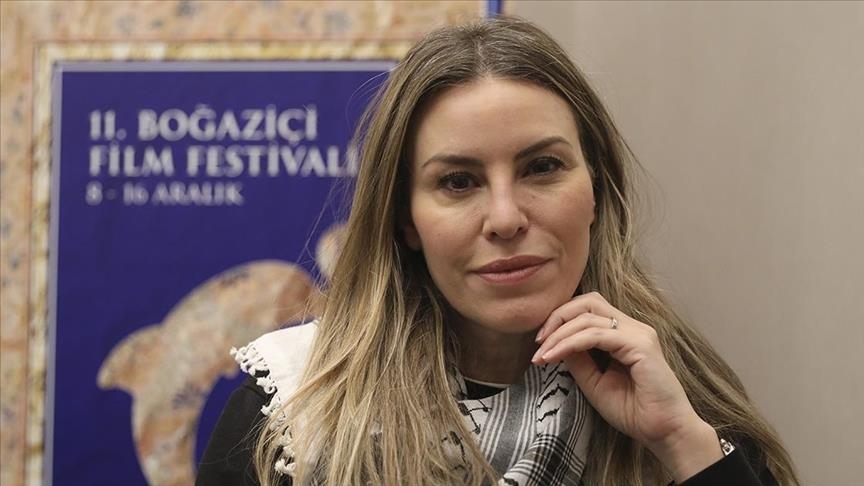
Oscar-nominated and BAFTA award-winning Palestinian-British filmmaker Farah Nabulsi is calling for global empathy for Palestinians through her debut feature film, The Teacher.

In an interview with Anadolu, Nabulsi said her goal is to challenge audiences to reflect on the hardships Palestinians face under occupation. “I really want people to ask themselves: Is this a reality they would accept for themselves? And if it isn’t, why have Palestinians been expected to?”

Nabulsi shared her experiences filming The Teacher, which premiered at the Toronto Film Festival on Sept. 9, 2023.

“Given the current reality in Palestine, as Israel conducts a genocide in Gaza, I hope this film offers a deeper human context to that reality. The sociopolitical is important but often missing from the discourse.”

Born and raised in the UK, Nabulsi said a visit to Palestine a decade ago profoundly changed her perspective.

“Despite thinking I knew about the injustice and discrimination, witnessing it firsthand—checkpoints, demolished homes, detained children—was shocking,” she recounted.

“This injustice hit me deeply,” she continued, explaining that storytelling became her way to process and respond.

Drawing inspiration from real life

Nabulsi said the script for The Teacher was shaped by her conversations with Palestinians and her observations during her time in Palestine. The film addresses settler violence, home demolitions, and the treatment of children in military courts.

Referring to a 2011 exchange where an Israeli soldier was released by Hamas in return for over 1,000 Palestinian prisoners, Nabulsi highlighted the disparity in the perceived value of human life.

“It’s this idea that Palestinian lives are not valued like Israeli Jewish lives. That imbalance inspired the story,” she said.

“I never could have imagined, though, the exponential magnification of that imbalance, as we now witness hundreds of thousands of Palestinians being killed, maimed, starved, and subjected to malnutrition and disease in Gaza.”

Filming amid real-life injustices

Filming in the occupied West Bank brought emotional and logistical difficulties, Nabulsi said.

“I didn’t realize how emotionally taxing it would be to witness these injustices while shooting scenes replicating them,” she said.

“It’s different from reading about it or watching it on the news. When your cast and crew have lived through these realities, you feel a responsibility to do justice to their experiences. It takes a mental and emotional toll.”

The film was shot near the village of Burin, close to Nablus in the occupied West Bank, where challenges arose during production.

“We heard that illegal Israeli settlers had descended onto the village, torching olive groves—something depicted in the story itself. On another occasion, I encountered a family with six children standing before the rubble of their freshly demolished home, an act mirrored in the film.”

Nabulsi said she hopes her work will inspire audiences to empathize with Palestinians and support their pursuit of freedom.

Continue reading