Ziad Al Rahbani: Musical Icon
 CrossFireArabia
- July 28, 2025
Ziad Al Rahbani, dubbed as the soul of Lebanon dies at the age of 69.
Sondoss Al Asaad wrote:
He was a revolutionary artist who combined musical and theatrical genius, boldly addressing themes of identity, politics, and resistance. His first literary work was published at the age of 12 in the late 1970s.
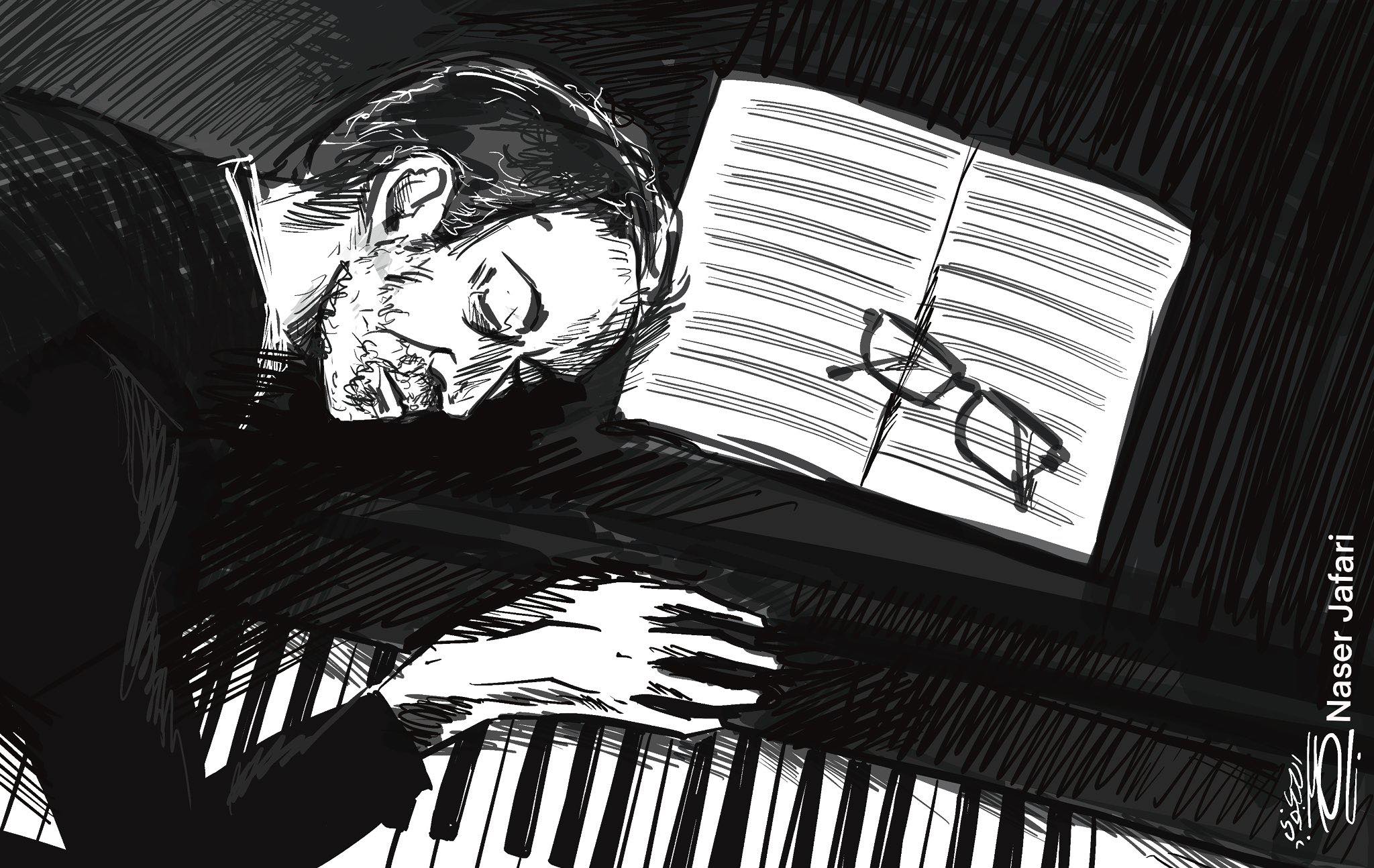
Jordanian Cartoonist Nasser Al Jafari sketched out this cartoon in the honor of the late artist.
“This is what musician , researcher Louis Brehony wrote about him in the Palestine Chronicle: It is with shock at the earliness of his departure Lebanon bids farewell to Ziad al-Rahbani, a pillar of radical musicianship, at the age of 69. A committed communist who aligned himself with the Palestinian cause, Ziad left his indelible musical fingerprints on a wide region. An essential influence to generations of listeners, musicians and activists, Ziad ruffled the feathers of the wealthy, embarrassed conservatives and irritated liberals. Son of Lebanese icons Fairuz and Assi Rahbani, his musical tenacity and critique of a system in crisis demanded that others sing for its downfall.
Born into relative privilege among Maronite Christians and well-known musicians, Ziad understandably trod a creative path from an early age. His composer father Assi and uncle Mansour were the famous Rahbani brothers, writing epochal works for his mother Fairuz, to this day Lebanon’s most renowned vocalist. Ziad grew up sitting in on rehearsals and met huge figures in Arab music, including Egyptian composer Mohammed Abdel Wahab and Palestinian Sabri Sherif, who produced Fairuz’s albums dedicated to Palestine. Ziad eventually inherited the Rahbani mantle and, from the 1980s, became Fairuz’s main songwriter.
As a teenager, Ziad joined Rahbani brothers’ productions and quietly applied his skills as a composer and keyboardist. Though his approach towards his parents’ legacy was not the scorched earth policy some describe, Ziad began to forge his own path. Attracted to leftist politics at a time when the Lebanese Communist Party (LCP) allied itself to Palestinian resistance, Ziad’s empathy with the poor and downtrodden quickly expressed itself through music. He found his raison d’être in musical theatre, and works like Film Amriki Tawil (Long American Film, 1980) and Shi Fashil (Failure, 1983) broke social taboos, sharply attacking class discrimination and spotlighting characters from the working class…’