‘This Key is The Only Thing Left of Our Destroyed House’

Editor’s Note: On the first anniversary of the bloody 7 October, 2023, I reprint the story I wrote on Mariam Abu Daqqa that was scribbled early this year and published in countercurrents. I then wrote Journalist Abu Duqqa gave us an insight of how she felt about her demolished house in Gaza which the Israelis long destroyed. Together with her family, she lived in a six-story building of six apartments hosting scores of family members, relatives and neighbors. All this, is now rubble and wreckage. Abu Daqqa continues to report on the mayhem in Gaza despite the fact more than 120 of her colleagues were targeted and killed since 7 October, the biggest crime in the history of mankind.  Today the number of journalists killed have shot up to 175.

“This small key which I hold in my hand, used to be a key to my apartment,” she tells the camera in a daze.

“This is what has remained from our house, a key to a home that no longer exists,” she laments in an absent-minded way.

“Our house had been targeted long time and was finally struck and demolished into the ground,” she says this almost tracing the steps of when it collapsed into the ground and how they escaped.

“Our house was part of a three-story building of six apartments with our storerooms in the basement where we kept the rest of our belongings, odd stand, table, chair, bric-a-bracs and other things which we thought that we might need one day. 

“Too late now. No more, everything had been targeted, destroyed, perished into thin air. What remained of it is this key – the house of memories, of childhood, the home of the family, our forgotten laughter and happy times,” Mariam talks in reverie.  

“From the day I knew our home was targeted I kept thinking, and on a daily basis, just thoughts that came to my mind about how are we going to live after the war, ‘where will we live, is it here, somewhere else, where, which part of town.’

Idol thoughts but very real, everything of ours is destroyed, blocks of apartments long gone and what remained turned into debris and wreckage. I don’t think that we will even find a house to rent. Thinking about this is difficult and painful, a creepy character in my head bellows in the back of my mind.

Who is going to rebuild our houses and all the other houses. I try and think about working hard again to make money to rebuild our home but what about the others all, the great majority of the people of Gaza have left their homes hastily and with just this key….”

The scale of destruction in Gaza is phenomenal. Figures can’t tell the truth. One has to see the images to fathom what the Israelis did right across the strip to be able to comprehend the extent of their vengeance – mass murder, mass destruction of property, a genocide for years to come. 

Continue reading
$17.9B Aid to Israel Makes US Complicit in Slaughter

The amount of military aid America has provided to Israel in the past year makes it undoubtedly complicit in the genocide and slaughter of tens of thousands of Palestinians.

The US has spent a record $17.9 billion on military aid to Israel since the start of the war on Gaza, according to a report by Brown University’s Costs of War project, released on the anniversary of the ongoing Israeli genocide war on Gaza on 7 October 2023.

According to Brown University, an additional $4.86 billion has been allocated to bolster military deployment in the Middle East, including the campaign against Yemen.

Yet, despite all of this, American presidential candidates are proudly pledging to uphold their unconditional and unwavering support for Israel as a way to promote themselves in the upcoming elections.

Continue reading
Abu Obeida Outlines a New ‘Attrition Phase’ of Resistance

Retired military Maj-Gen Fayez al-Duwairi said Abu Obeida’s speech, Hamas Qassam Brigades spokesman – heralds a new phase of resistance against the Israeli occupation.

Abu Obeida gave a speech on the occasion of the first anniversary of Operation Flood of Al-Aqsa and coincided with the military operation carried out by the Palestinian resistance factions against the Israeli occupation forces in the so-called Gaza envelope.

Duwairi explained that as stressed in Abu Obeida’s speech this coming phase of the battle is the stage of attrition, which means the resistance still has the ability to continue to confront the Israeli occupation  army in the next phase.

Duwairi explained Abu Obeida’s announcement about the continuing attrition operations shows the Palestinian resistance is benefiting from its redeployment in the main axis of Rafah, Netzarim, buffer zones and in the incursion operations in areas such as Jabalia.

“We are facing a new phase of military operations that will pose a major challenge to the Israeli occupation in the long term,” he added.

Al-Duwairi addressed the issue of external support for Israel, stressing on the relationship between the occupation and some Western countries, led by the USA, plays a decisive role in the continuation of Israel’s s aggression on the Strip.

Al-Duwairi pointed out that Abu Obeida’s speech included clear criticism of Arab countries, accusing them of abandoning the Palestinian people, and sent a support message to the resistance in the West Bank, praising the efforts of the fighters there and calling for an escalation of operations against the occupation.

Regarding the file of Israeli prisoners held by the resistance, Al-Duwairi indicated Abu Obeida’s speech reveals the possibility of this file entering a “dark tunnel”, which further complicates the situation and makes the fate of the prisoners unknown.

Al-Duwairi believes that the next stage will witness an escalation in military and attritional operations against the occupation, in light of the field changes and internal and external pressures facing the Israeli entity.

This is Abu Obeida’s 28th speech since the Al-Aqsa flood, and comes three months after his last speech on 7 July.

Today, Monday, marks the first anniversary of the start of Israel’s war on Gaza which resulted in more than 139,000 Palestinian martyrs and wounded, most of them children and women, and more than 10,000 missing, amid massive destruction and famine that killed dozens of children and elderly people.

Despite the passage of one year since the start of the war, Israel has failed to achieve any of its declared goals, especially recovering prisoners from the Strip and eliminating the capabilities of Hamas and the rest of the resistance factions as stated in Al Jazeera.

Continue reading
Is an Israel-Iran War Coming?

By Dr Khairi Janbek

In the late 1990s, the grandiose talk of a new order for the Middle East emerged which turned out to be nothing more than a euphemism for Disney Land Arab countries, poverty and conflict-stricken regional reality, with a mixture bordering on more than buffer zones.

Now we have a less ambitious notion and that is a new balance of power in the Middle East, another euphemism for Israel calling the shots and all its neighbors being called on to abide.

But how does this new notion translate in practical terms? Well basically, to all concerned and less concerned waking up every morning asking the question: Will Israel strike Iran or will it not? 

Of course, this is a horrific question if indeed Israel does hit Iran as it carries with it many important existential perils for the whole region and beyond.

One believes whatever is on Benjamin Netanyahu’s mind to achieve advantageous results must be carried out before the date of the US elections this November because no matter what he has been told by the US prospective candidates, at the end of the day, a sitting president doesn’t act like a president-elect.

Now what would a direct confrontation and open warfare between Israel and Iran entail? Well primarily, direct confrontation takes precedence over war by proxies, which means Israel will have to go directly into destroying the military capabilities of Iran in a hugely destructive war.

This would ultimately open the possibilities for its own destruction which means dragging the US and western powers into the conflict, no matter how reluctantly they maybe to defend it, and/or basically go into a slippery-slope open warfare reaching Syria and Iraq and Iran and whatever is on its plate regarding Gaza and Lebanon.

The current wisdom dictates a large scale war does not seem to be likely on the agenda, but that does not exclude a cycle of tit-for-tat strikes between Israel and Iran.  Clearly Israel knows that for the economy of the west which is seriously preoccupied with prices and inflation, to target the Iranian oil facilities is a red line.

Moreover, to target the Iranian nuclear facilities would open the door for Tehran to retaliate against the Israeli nuclear facilities which will have dire consequences for the whole region and the world.

Therefore, if Israel is seriously thinking of dealing a blow to Iran, it will either resort to targeting personalities from the hierarchy of the country, and/or will be a just a face saving act with superfluous consequences.

Dr Khairi Janbek is a Jordanian writer based in Paris and the above opinion is that of the author and doesn’t reflect crossfirearabia.com.

Continue reading
What is The ‘Generals’ Plan’ For North Gaza?

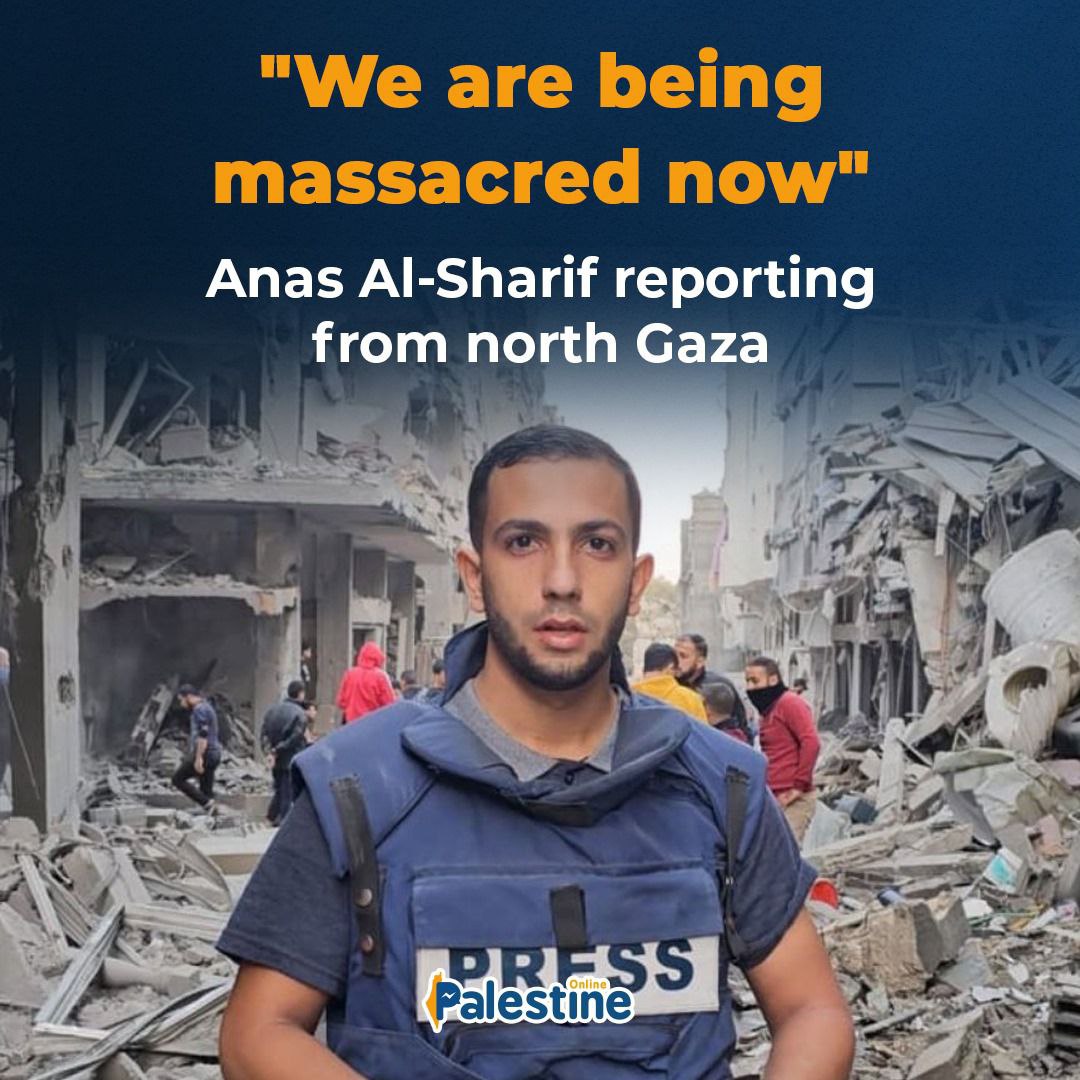
Two military experts said the military operation launched by the Israeli occupation army in the northern Gaza Strip is different from previous onslaughts and is aimed at implementing the so-called “Generals’ Plan” that has been adopted at the political level in Israel.

Military expert Maj-Gen Fayez Al-Duwairi, explained that the latest military operation is different from previous invasions, which were within a time frame that sought to gather information about fighters and leaders of the political and military resistance and searching for tunnels and detained prisoners.

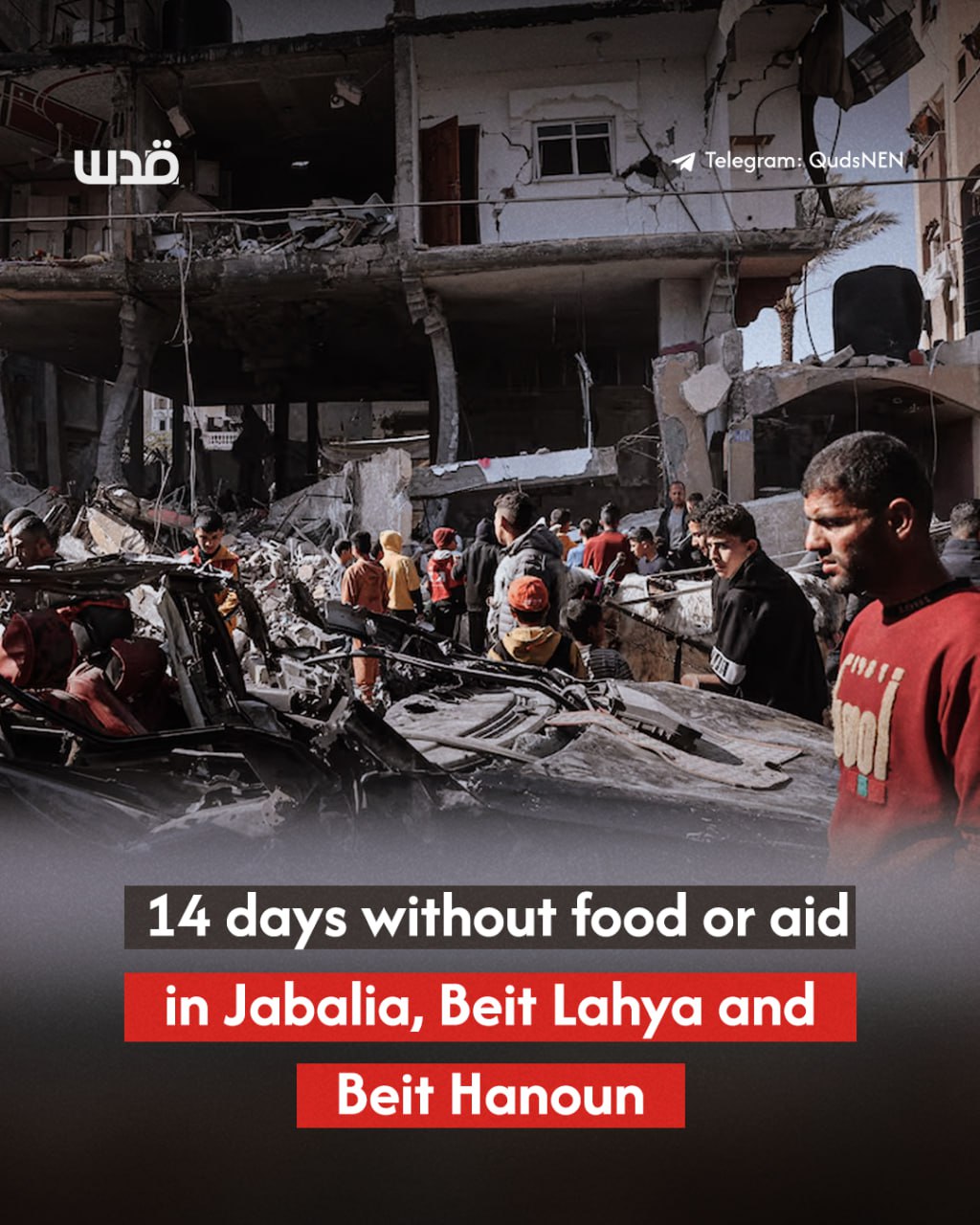
He explained the new military operation is related to the “Generals’ Plan” that aims to gain absolute control over the northern Gaza Strip and empty it of its population up to the Netzarim axis, where the numbers range between 350,000 and 700,000.

He added the operation also comes within the framework of what Israeli Prime Minister Benjamin Netanyahu spoke regarding his aim to redraw the Middle East and with the ongoing Israeli reports about re-establishing settlements in the northern Gaza Strip.

Late last month, Israeli Army Radio reported that Netanyahu and Defense Minister Yoav Galant approved a study of possible operations in Gaza based on the “Generals’ Plan,” which calls for  blockading the northern Gaza Strip, halting  humanitarian aid and evacuating its residents.

CNN quoted a former Israeli military official as saying the plan aims to turn the northern Gaza Strip into a closed military zone, besiege Hamas fighters and “force them to surrender or starve.”

Al-Duwairi said that implementing the “Generals’ Plan” requires military action on the ground to evacuate civilians who are concentrated in the Jabalia, Shujaiya, Zeitoun, and Sheikh Radwan neighborhoods according to Al Jazeera.

Continue reading