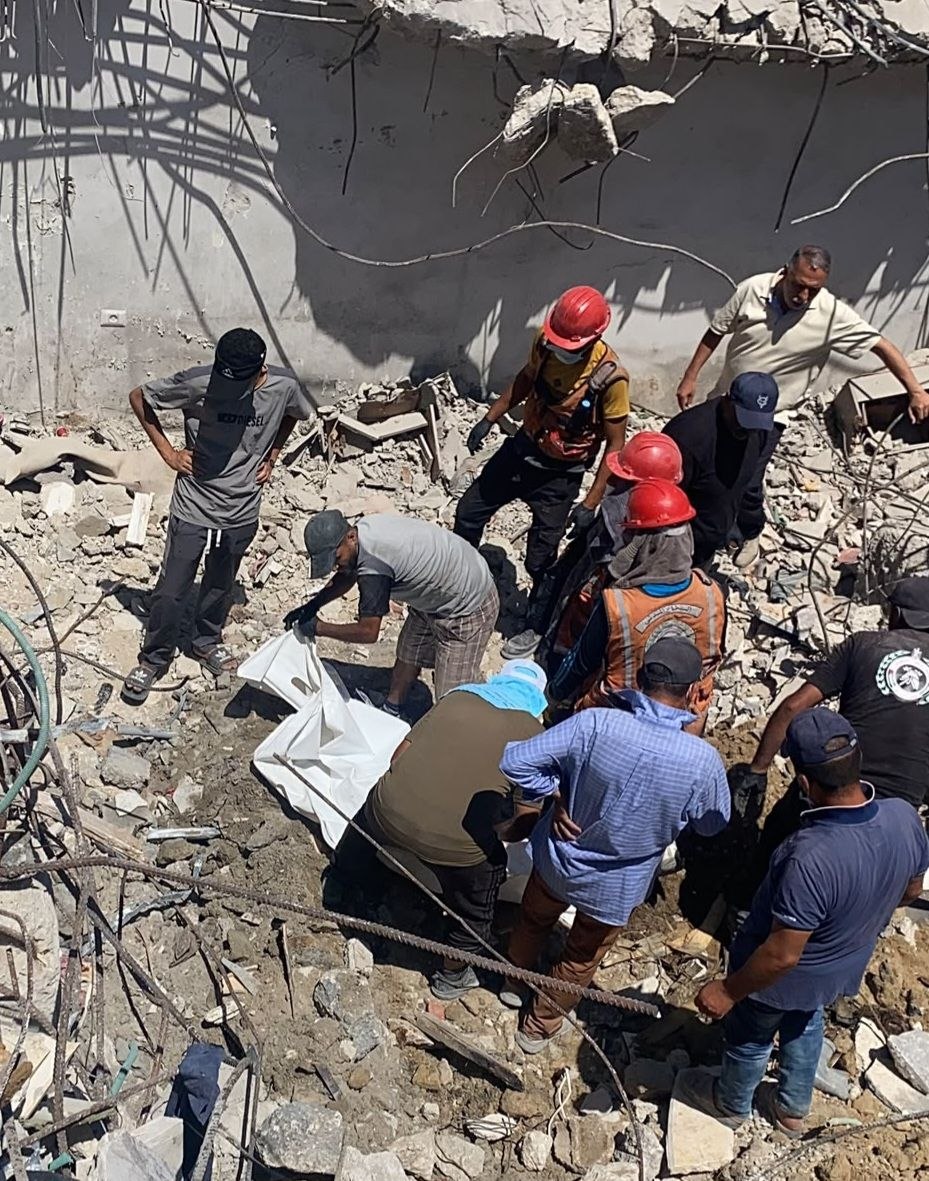
Through the lens of a dedicated Gazan photojournalist, each frame tells a story—stories of resilience, struggle, and hope that are often hidden behind the walls of Gaza. These images, steeped in the silent testimony of daily life amidst conflict, capture moments that the world has yet to fully recognise.
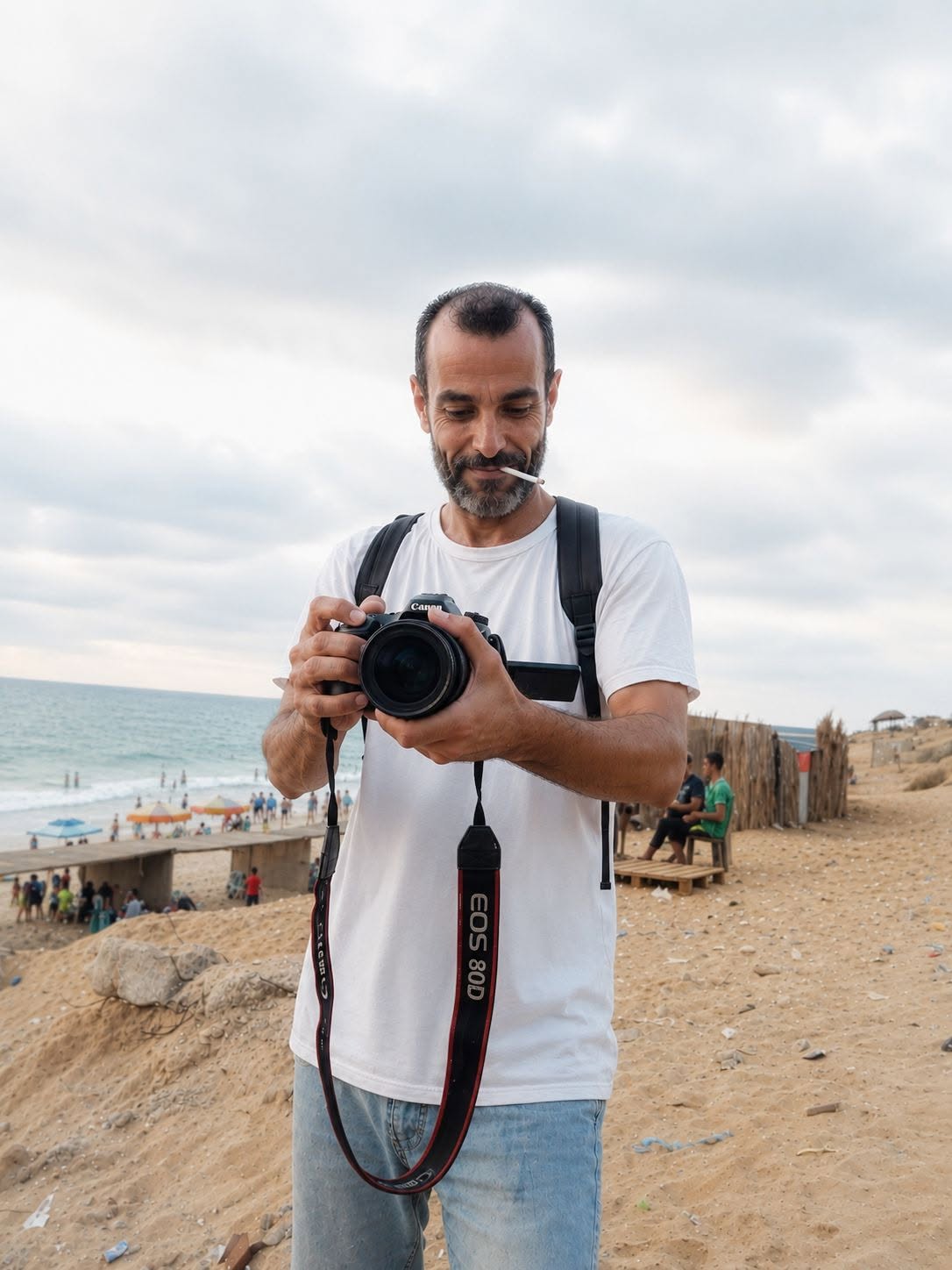
“In this series, every photograph is not just a visual record; it’s a portal into the untold experiences of life under siege. It invites us to explore the profound realities woven into the fabric of an ongoing struggle,” said Gazan photojournalist Mustafa Hassona in an interview with The Jordan Times during the Xposrue exhibition in Sharjah.
Featured in both local and international media, Hassona’s photography offers a vital chronicle of the Gazan community’s enduring spirit. His work shines a light on stories of loss, perseverance, and the relentless pursuit of a better future.
Hassona’s achievements include being named The Guardian’s Best Photographer in 2015 and 2018, as well as winning the POYi 73 prize.
Endurance of a Child
Discussing his photos, Hassona revealed the subtle emotions captured in the faces of everyday Gazans. One of his most iconic images depicts a young child, clutching a plastic chair amidst the wreckage of war—his only shield against the brutality that surrounds him.
“When missiles tore through homes and lives, this flimsy piece of furniture became the child’s last line of defence in a world that had already abandoned him,” Hassona recalled, his voice filled with both sorrow and admiration for the child’s enduring strength.
Amidst the Rubble: The Indomitable Spirit of Gaza’s Female Doctor
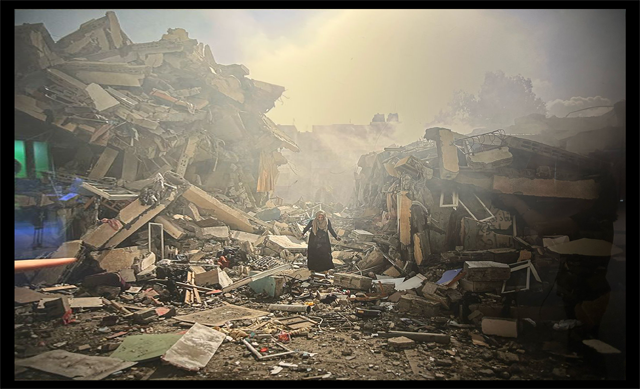
One poignant story Hassona captured revolves around a Palestinian doctor who, after spending much of her life in Belgium, returned to Gaza following her daughter’s marriage in the enclave. Liquidating all her assets abroad, she purchased an apartment in the Al Zahra Building Complex, a sprawling development of 70 high-rise buildings. For her, this wasn’t just a property purchase—it was a powerful act of reclaiming her identity.
Amid the ruins of her once-thriving community, she grieved the loss of a vibrant neighbourhood and the warmth of family gatherings, now buried beneath the rubble. “With only a single bag containing her certificates as a tangible link to her past, her story reflects the ongoing struggle of Gazans—a narrative marked by sacrifice, loss, and an unyielding hope to rebuild what has been shattered,” said Hassona.
“Her story is one of unyielding courage and resilience, a testament to the strength of Gaza’s people in the face of insurmountable adversity.”
The physical and mental health conditions of the Palestinian detainees and prisoners released during the seventh round of the ceasefire exchange agreement between Israel and Hamas in the Gaza Strip are shocking.
Israel’s release of hundreds of Palestinian prisoners and detainees, who arrived in the Gaza Strip recently in exceptionally poor health, illustrates its ongoing use of torture to terrorise and persecute prisoners and detainees and break their will until the very end of their detention. The effects of torture were clearly evident, with the emaciated bodies of the released individuals reflecting the severity of systematic crimes and inhumane treatment that exceed all legal and moral bounds.
The repeated release of such visibly unhealthy individuals from Israeli prisons reveals that the heinous torture and willful medical neglect they endure have escalated to appalling levels. Euro-Med Monitor notes that the atrocities occurring in these prisons are among the worst violations recorded by human rights organisations worldwide.
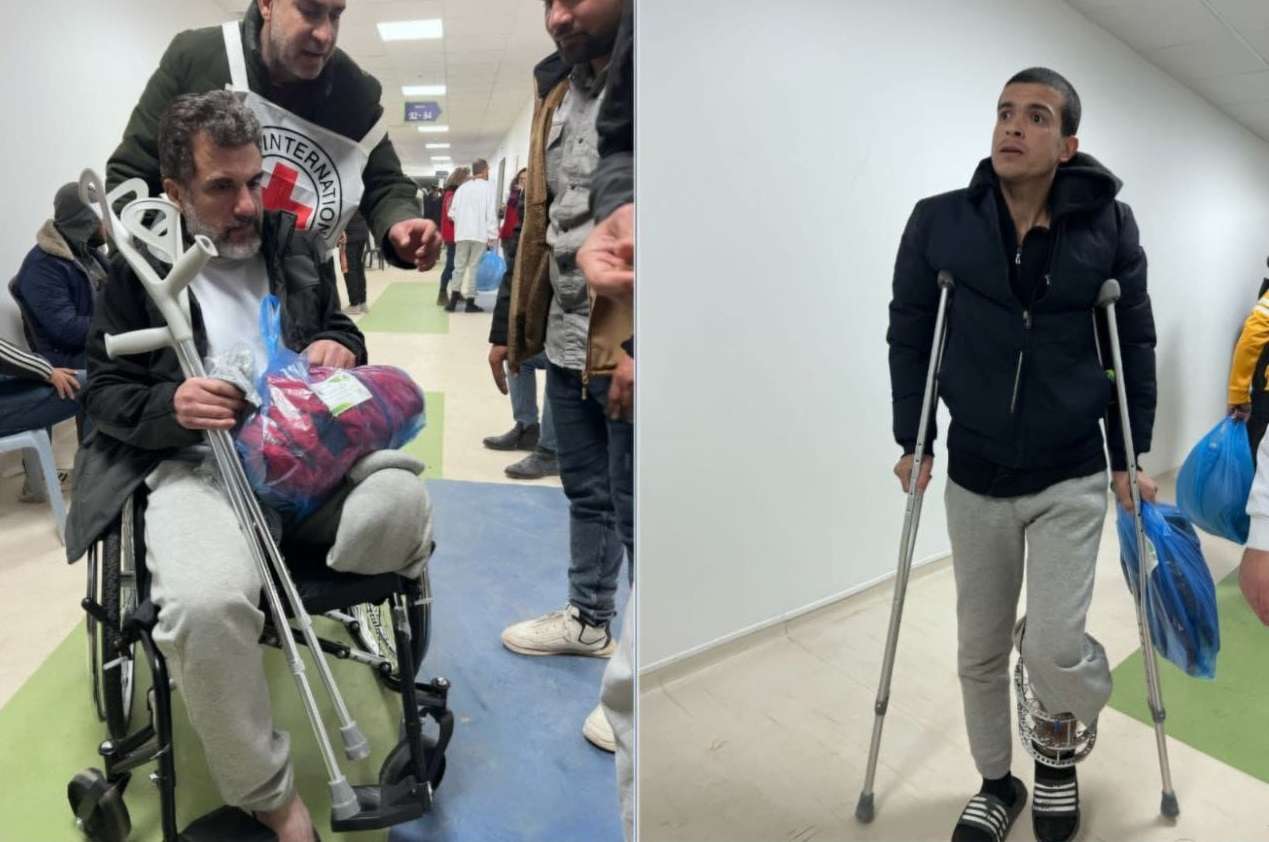
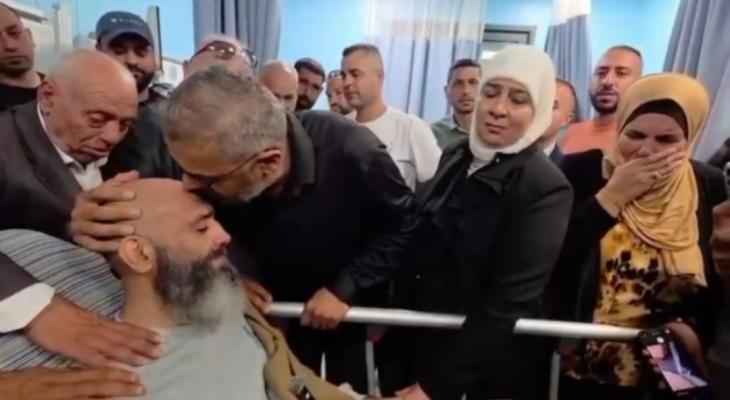
In a blatant violation of the mandatory rules of international law—which forbid torture in all its forms and under all circumstances, without exception, and consider its commission an international crime that does not expire by statute of limitations—hundreds of released prisoners and detainees arrived in the Gaza Strip after midnight in exceptionally poor health. It became evident after their transfer to the Gaza European Hospital in the southern section of the Strip that dozens of them required urgent medical care because their bodies showed signs of torture and inhumane treatment, including deprivation of necessary medical care and treatment.
Along with severe weakness and exhaustion, the Euro-Med Monitor field team documented severe injuries among detainees and prisoners, including limb amputations and severe swelling brought on by torture. Some appeared incapable of walking without the assistance of friends, and others required immediate medical attention because their health was rapidly deteriorating.
Even though the majority of detainees were not charged with any specific crimes, many of them claimed that they were beaten, mistreated, and threatened right up until the very last minute before their release. Since being kidnapped from the Gaza Strip at various points following 7 October 2023, they were arrested or detained, tortured, and subjected to degrading treatment as part of a systematic policy designed to cause them severe physical and psychological harm. This policy is a part of Israel’s crime of genocide, which aims to destroy the Palestinian people in the Strip, either entirely or partially, by weakening the foundations of their survival and leading them to submission or extinction.
Furthermore, the Euro-Med Monitor team documented Israel’s ongoing use of psychological torture and humiliation against recently released prisoners through the enforcement of laws that directly incite violence and genocide. This official systematic incitement is a fundamental tool of Israel’s policies against Palestinians, particularly those in the Gaza Strip. One example of these measures is the prison authorities’ requirement that newly released inmates and detainees wear vests with official Israeli Prison Service slogans and threatening phrases in Hebrew, including religious quotations that express the principle of revenge and pursuit until liquidation. Additionally, they are forced to wear plastic wristbands with derogatory words printed on them to psychologically degrade them and highlight the fact that they are still being singled out despite being “free”.
The phrase “I will pursue my enemies and overtake them; I will not return until I have destroyed them” is printed on the vests of Palestinian detainees and prisoners who have been released, and is taken from a biblical passage (Psalm 18:37) that expressly calls for killing and genocide. This is a form of direct and public incitement to genocide, which is forbidden by Article 3 of the Convention on the Prevention and Punishment of the Crime of Genocide.
By depriving the Palestinians of their humanity and treating them as a legitimate target for killing and targeting, Israel’s actions go beyond psychological warfare and constitute a dangerous extension of institutional hate speech and a consolidation of the intention to commit genocide.
The violations which Palestinian prisoners and detainees are subjected to by Israel, whether while these individuals are being held or being released, gravely violate international law and represent a blatant disregard for its mandatory regulations that forbid torture and cruel or inhuman treatment without exception. The Third and Fourth Geneva Conventions provide complete protection for prisoners and detainees, and forbid torture, humiliation, or retaliation, making these crimes punishable by international law.
The death of detainee Raafat Adnan Abdul Aziz Abu Fanouneh (34), who was tortured and abused following his arrest in the Gaza Strip in October 2023, was announced yesterday (Wednesday) in Israel’s Shamir Medical Centre (formerly Assaf Harofeh). A minimum of 60 prisoners and detainees—as these are the only victims whose identities are known—have perished in Israeli occupation prisons since the beginning of the genocide, including at least 39 individuals from the Gaza Strip. This is the highest number ever.
Israel continues to commit the crime of enforced disappearance against hundreds of Palestinian prisoners and detainees, failing to disclose their whereabouts or medical conditions to their loved ones, which raises serious concerns about the safety and lives of the people being held. Israel also continues to conceal any information about them from the press, despite credible evidence that dozens of additional prisoners and detainees have been killed inside Israeli prisons and detention facilities.
In addition to being crimes against humanity and full-fledged war crimes, the crimes committed by the Israeli occupation army and other Israeli security forces against Palestinian prisoners and detainees from the Gaza Strip also amount to acts of genocide against the Palestinian people in the Strip, because they are carried out in a systematic and brutal manner. These acts include the killing of Palestinians and the infliction of severe physical and psychological harm, including torture, other forms of ill-treatment, and sexual violence, including rape, and are carried out with the goal of eradicating the Palestinian people as a whole.
All countries and pertinent international organisations must take swift and decisive action to end Israel’s widespread and systematic crimes of killing, torture, and other serious violations against Palestinian prisoners and detainees. Detainees who have been arbitrarily arrested must be released without conditions, right away. Additionally, local and international organisations must be given immediate permission to visit detainees, who must be allowed the opportunity to choose their own lawyer.
Israel’s notorious arbitrary detention practices, such as administrative detention and detention under the “Unlawful Combatants Law”, must be stopped. These practices are a blatant violation of international law and are employed as a systematic, repressive tool to weaken the Palestinian will, tear apart the social fabric that holds them together, and deny Palestinians their fundamental legal rights.
To ensure justice for Palestinian victims and that the Israeli occupation is held responsible for its violations, human rights and media organisations must step up their efforts to pressure Israel’s government to stop its ongoing crimes. In addition, these groups must work to highlight the suffering of Palestinian prisoners and detainees and to share these individuals’ testimonies about the horrific crimes they face.
The International Criminal Court must investigate the crimes, submit specialised reports regarding the crimes committed against Palestinian prisoners and detainees in Israeli prisons and detention facilities, particularly after 7 October 2023, and issue arrest warrants for all perpetrators. All concerned nations must make sure the perpetrators of these crimes are prosecuted and brought before the Court to stand trial.
Israel must immediately cease its crime of enforced disappearance against Palestinian prisoners and detainees from the Gaza Strip; reveal all secret detention camps; reveal the names, whereabouts, and fates of all Palestinians it is holding from the Strip; and take full responsibility for the safety and well-being of these individuals. These demands must come from the international community.
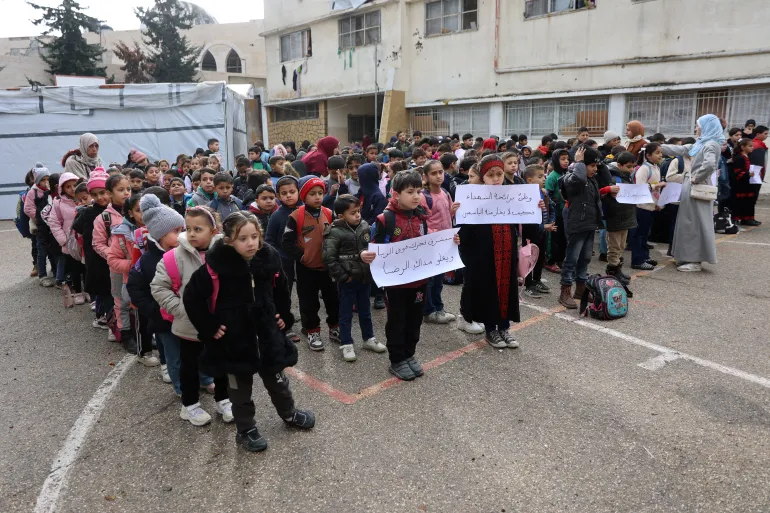
For the first time in 16 months pupils in Gaza are returning to schools despite the destruction of most of the educational system in Gaza.
The UN, Thursday, reported that more than 100,000 students have enrolled in schools across the Gaza Strip since the new academic year began Feb. 23.
“As of yesterday, more than 100,000 students have enrolled in school following the start of the new academic year on 23 February,” UN spokesman Stephane Dujarric said at a news conference as reported in Anadolu.
The “back-to-school” item is trending on the social media with much images of pupils and teachers return to what is left of their schools since Israel waged a genocidal war on the enclave soon after 7 October, 2023.
He stated that “to date, 165 public schools have reopened in Gaza. For most students, this will be their first time returning to in-person learning in 16 months.”
Available figures show 85% of schools in Gaza have been wrecked and no longer able to operate because of the Israeli bombardment.
The Gaza Media Office have reported at least 12,800 students, and 800 teachers and administrative staff, were killed, and 1,166 educational establishments destroyed in this Israeli war with estimating damage to the education sector at more than $2 billion.
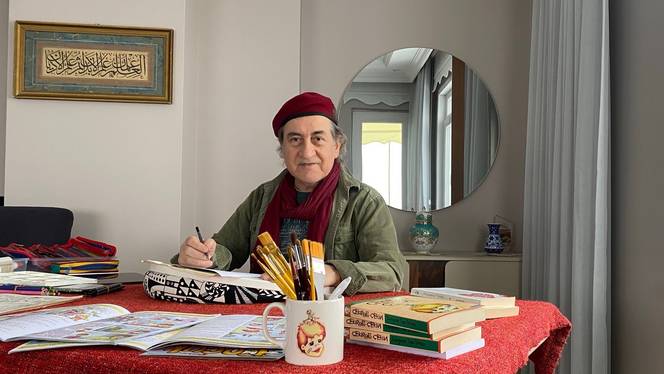
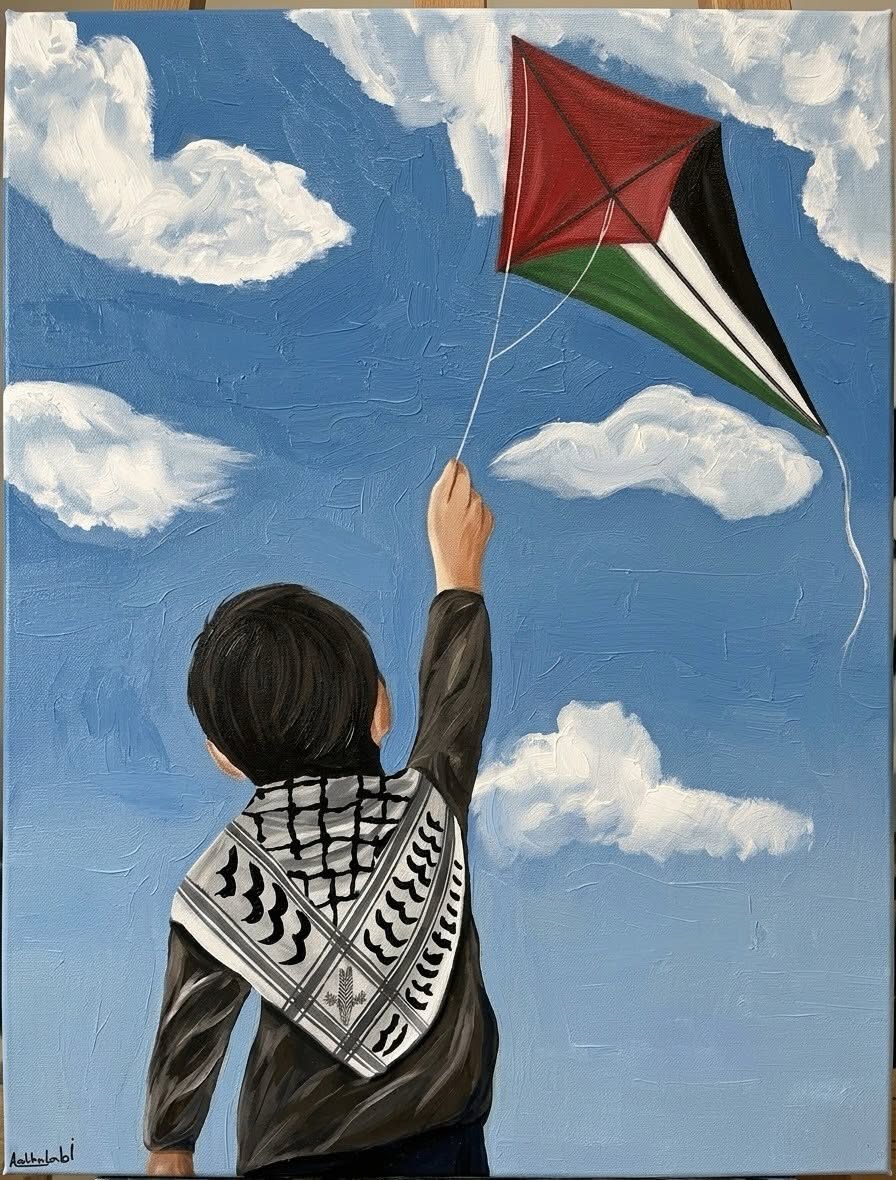
Erkul’s illustrations blend satire with activism, highlighting injustice of the Palestinians. Whether addressing war, disaster, or political hypocrisy, Erkul’s art amplifies the voices of the silenced.
By Yusuf Kamadan
A slice of watermelon pierced by knives. A faceless figure in a suit, draped in the American flag, steering a cart off a cliff and into the flames. A set of scales, balancing Hitler on one side, Netanyahu on the other. A shapeless globe, caught in the grip of a monstrous, many-limbed octopus.
These are the unmistakable images of Muammer Erkul, the Turkish illustrator and journalist whose work—at once bold, unflinching, and darkly satirical—has spread widely across the social media. His drawings do not whisper; they speak loudly.
The satire is biting, but the implications are serious. At a time when many artists sidestep controversy, wary of political consequences, Erkul embraces it.
“I have an idea and I want to convey it to the other party. I want to pass on my feelings. One of the most effective ways to do this is to draw a cartoon,” he says.
His illustrations have become a kind of visual journalism, a counter-narrative to the political abstractions that often obscure the human cost of war.
With sharp lines and unflinching commentary, Erkul captures the resilience of Palestinians amid oppression.
Since the 1970s, Erkul has carved out a space for himself in Turkish newspapers and magazines, his work known for its wit, precision, and unrelenting social critique.
His drawings do not merely document suffering; they bear witness.
Scenes of bombed-out homes, grieving mothers, children clutching stones — his work captures the devastating realities of occupation while also portraying the quiet, stubborn resilience of a people who refuse to be erased.
“Millions of Palestinians have lost everything — their homes, their families, their lives,” Erkul says. “More than 150,000 bodies have been destroyed, and 50,000 of them have been martyred—most of them children and women.”
His words, much like his art, do not flinch from the brutal arithmetic of war. Beyond his artistic talent, Erkul has always used his work as a platform to address important issues.
Erkul’s art merges satire with activism, amplifying the voices of the oppressed through powerful imagery.
Why cartoons?
For Erkul, caricature is more than just a humorous art form; it is a means of resistance.
“Caricature is the easiest and most effective way to explain some things,” Erkul says. “A cartoon is drawn in a day and understood in an instant. It’s like the longest-range missile, and it sticks to its target.”
In an age of social media, where information moves at a breakneck pace, this immediacy is crucial. A single drawing, shared widely, can cut through the noise in ways that editorials and essays often cannot.
“I have an idea, and I want to convey it,” he says simply. “One of the most effective ways to do this is to draw a cartoon.”
Erkul has long been engaged in magazine publishing, serving as the editor-in-chief of Divanyolu, a cultural and literary magazine, until 2018.
Following the devastating 2023 earthquake, he shared his artwork on social media and made it freely available to magazines, believing that art can serve as a powerful tool for remembrance.
Reflecting on the disaster, Erkul described it as one of the most catastrophic earthquakes in history, emphasising its unprecedented scale and impact.
He recalled the initial shock and fear that gripped him, along with the overwhelming sense of helplessness. Wanting to contribute in a meaningful way, he turned to his art, realizing that while the disaster would eventually fade from public memory, visual documentation could ensure that future generations would not forget.
Early in his career, his cartoons blended humor with cultural commentary, but over time, his focus sharpened, his pen increasingly turned toward the struggles of the Palestinian people.
A single cartoon can convey what words cannot — Erkul’s work strikes at the heart of injustice with visual precision.
“Art is not neutral; it must take a side”
Erkul is not just chronicling injustice, he is building solidarity.
His illustrations are not just critiques; they are rallying cries. Erkul’s work does more than capture the suffering of Palestinians — it interrogates the machinery that sustains it.
His cartoons often expose the uneasy entanglements between Western nations and Israeli aggression.
“Everyone knows the closeness of the US and Israel,” he says. “But never in any period of history has this secret game been played so openly. It’s a chicken-and-egg story — an Israeli egg hatches from an American chicken, an American chick hatches from an Israeli egg, grows up, and lays Israeli eggs again.”
He believes artists have a responsibility to engage, to use their platforms to amplify the struggles of the voiceless. In his view, art is not neutral. It must take a side.
For Erkul, that side has always been clear: art is not just a means of entertainment; it is an act of defiance against injustice.
Art is not neutral; Erkul uses his pen as a tool of defiance against global injustice.
In his view, every artist has a responsibility to stand for justice and use their craft to fight against oppression.
His work is particularly significant in an era where digital media spreads messages rapidly, ensuring that his depictions of Palestinian suffering and resilience reach a global audience.
His legacy is not just one of artistic achievement, but of moral conviction.
His pen, like the voices of Palestinian poets, filmmakers, and musicians, is a tool for preserving memory, for fighting erasure. He firmly believes that the more artists engage with these issues, the stronger the message becomes.
“The more cartoonists and artists we have, the stronger our ideas will be,” he says.
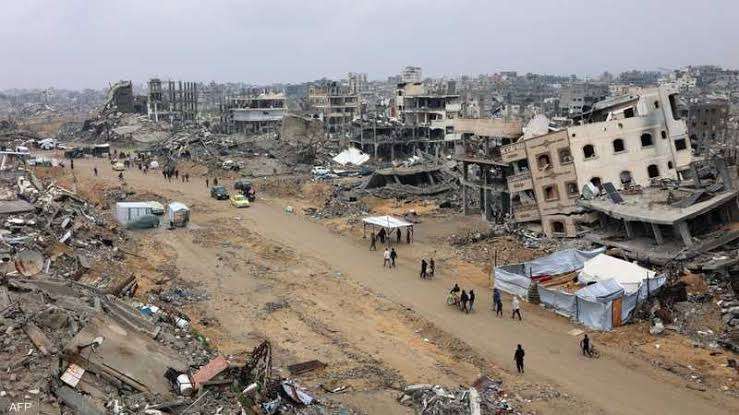
With the approach of the Cairo Summit to discuss the Palestinian issue and the reconstruction of Gaza, Arab leaders find themselves facing three main scenarios to make decisive decisions that determine the future of Gaza and the fate of the Palestinians the day after the cessation of the war. The dilemma is no longer limited to reconstruction only but also includes the political and administrative arrangements that ensure the stability of the sector and prevent the recurrence of the devastating conflict.
From the American side, it seems that the Trump administration is adopting a more stringent approach, as it recently stated the necessity of displacing Palestinians from Gaza as a “solution” to ensure regional security, which reflects its traditional position biased towards Israel and complicates any Arab efforts to find an independent solution for the sector.
This American position raises great concerns in Arab and international circles, given the disastrous consequences it carries for the Palestinians and the entire region, especially in light of the widespread international rejection of forced displacement policies.
The first scenario involves adopting a comprehensive regional solution led by Arabs, aiming to place Gaza under temporary Arab administration, which may include Egypt and perhaps some Gulf states, in coordination with the Palestinian Authority. In this scenario, a transitional body would be established to administer the Strip, which would undertake reconstruction operations, organize basic services, and reorganize the security situation in a way that prevents the recurrence of the conflict.
This body could also work to pave the way for comprehensive Palestinian elections to be held later, so that Gaza would be part of a unified Palestinian entity.
This temporary administration would work to restructure institutions within the Strip, ensure the regular provision of health and education services, and rehabilitate infrastructure damaged by the war. It would also undertake the tasks of securing the crossings and ensuring the flow of humanitarian aid, while imposing strict control to prevent the infiltration of any elements that might contribute to destabilization.
It is expected that the contributing Arab states would have different roles, as Egypt could handle security aspects, while the Gulf states would contribute to financing and reconstruction. This option requires Arab and international consensus, as well as internal Palestinian acceptance, which may be difficult in light of the differences between the factions.
Israel may not view this scenario favorably, as it strengthens the Arab role in Gaza and limits its influence there. In addition, the success of this scenario depends on the Arabs’ ability to impose a unified vision and work to reduce external interventions that may hinder this solution. Ultimately, this scenario remains a realistic option, but it is fraught with challenges that require active diplomacy and strong political will.
As for the second scenario, it is to support the restructuring of the Palestinian Authority and grant it full control over Gaza after reaching internal understandings with the various factions, including Hamas. In this framework, the security services are integrated into a unified framework under the supervision of the Authority, and the administrative institutions are unified, with an Arab and international commitment to provide financial and logistical support to ensure the success of this transition.
One of the main pillars of this scenario is rebuilding trust between the various Palestinian factions, which requires intensive efforts from regional and international mediators, especially Egypt and the United Nations. This proposal also requires providing guarantees that the faction leaders will not be targeted or excluded from the political scene, which necessitates establishing a joint governance mechanism for a transitional period.
This scenario depends primarily on the ability of the Palestinian Authority to impose its effective control over the Strip, which is doubtful, especially in light of the deep differences between the West Bank and Gaza, and the lack of trust between the Palestinian parties.
In addition, Hamas’s acceptance of this proposal may be conditional on effective participation in governance, which may not be acceptable to Israel or some regional powers. Moreover, this solution faces obstacles related to the extent of the international community’s ability to commit to funding reconstruction, and to ensuring that Israel does not obstruct any efforts aimed at strengthening the Palestinian Authority’s control over the Strip.
The third scenario, which may be the most complex, is to impose an international solution under the auspices of the United Nations, whereby international peacekeeping forces are deployed to oversee the administration of Gaza for a transitional period, during which the Strip is rebuilt, and the political conditions are prepared to find a comprehensive Palestinian settlement.
In this scenario, the infrastructure is rehabilitated, security guarantees are provided to prevent the outbreak of new confrontations, while the way is opened for an internal Palestinian dialogue under international auspices to reach an agreement on the future of governance in Gaza.
This scenario also includes international supervision of the rehabilitation of civilian institutions in Gaza, ensuring the distribution of aid, and preventing the use of resources in any military activities that may lead to a renewal of the conflict.
It could also contribute to reactivating the peace process between the Palestinians and the Israelis through an international mechanism that ensures the implementation of any understandings reached.
However, this option faces several obstacles, most notably the rejection by some Palestinian forces of any direct international intervention in Palestinian affairs, and Israel may refuse to deploy international forces near its borders, preferring to keep Gaza under siege or in a state of instability that keeps it weak and unable to pose a security threat.
Moreover, any international intervention will require consensus among the major powers, which may be difficult to achieve in light of global political tensions. Each of these scenarios carries its own challenges, and the optimal choice remains linked to the extent of the Arabs’ ability to unify their positions and make bold decisions that go beyond narrow political calculations.
The main challenge lies in reaching a solution that spares Gaza further destruction, establishes a new phase of stability and development, and ensures that the Palestinian issue is not exploited in regional conflicts. The question remains: Will the Cairo Summit be able to overcome Arab differences and present a unified vision to save Gaza and its future?
Hasan Dajah is professor of Strategic Studies at Al-Hussein Bin Talal University

 CrossFireArabia