Israel’s ‘New Battle’ With Hamas

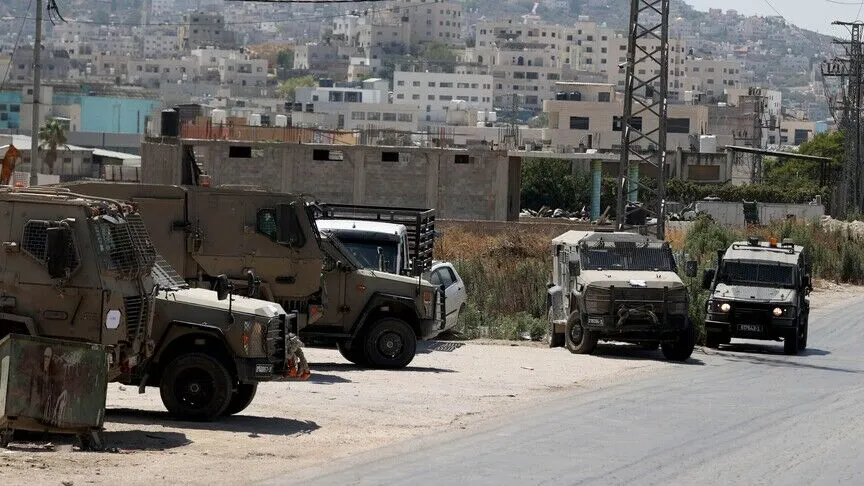
CROSSFIREARABIA – Now the remains of Ran Gvili, the last Israeli hostage in Gaza recovered, many thought Israel would move to open the borders and quickly allow for the rebuilding of the enclave.

But not so. Israeli Prime Minister Benjamin Netanyahu now says before that can happen Hamas must disarm and dismantle itself. He says if the Islamic movement doesn’t give up its arms voluntarily it will be forced to, no less by Israel and its army. 

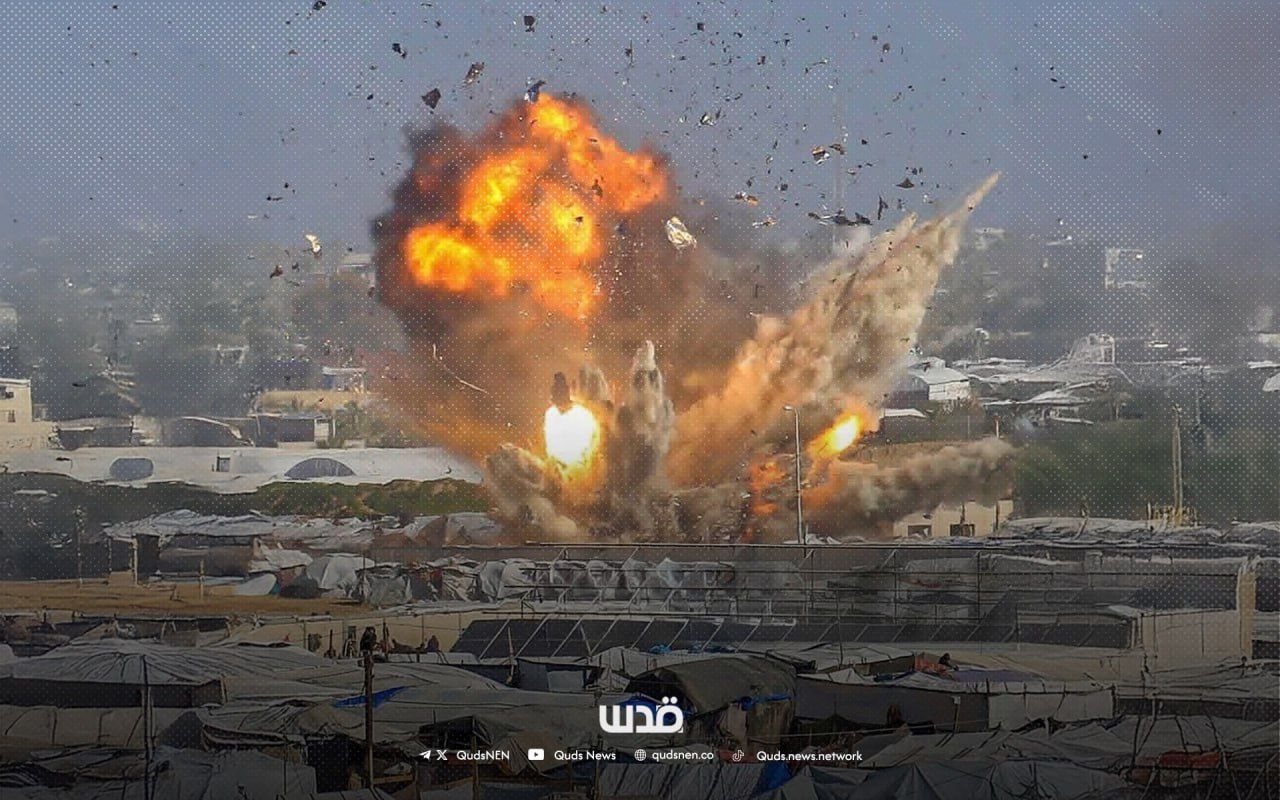
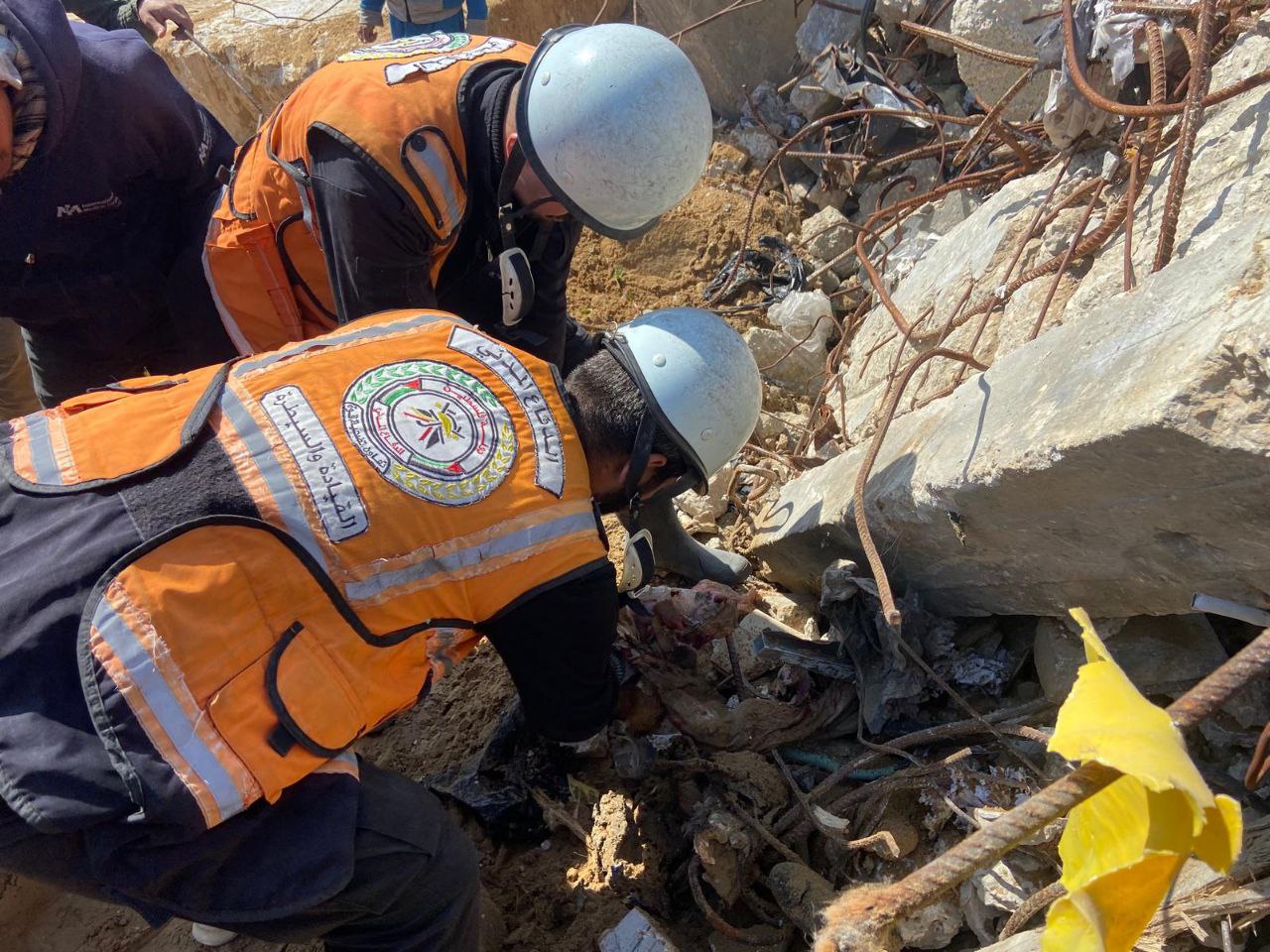
But this is laughable. Netanyahu has been consistently saying throughout this genocide that his army is moving towards destroying the movement and its army of fighters and operatives. Instead, Israel destroyed the whole of Gaza, turning the strip into a huge rubble and debris site.

The only thing that Israeli couldn’t do was to destroy the Palestinian resistance, Hamas and the other different factions. Hamas and its fighting forces is said to be alive and kicking according to different  estimates including the Americans but Israeli intelligence currently put the Hamas fighters at 20,000. 

This must be depressing for Netanyahu who spent over $66 billion on trying to defeat Hamas. All he did however is massively destroy the enclave creating around 60 million tons of debris and wreckage according to UN estimates and killing 71,000 civilians while 10,000 remaining buried underground. 

For all his bombast about slowly destroying Hamas, Netanyahu did nothing of the sort. While he may have killed some of its top leaders like Ismael Haniyah and Yehiya Sinwar who died in direct battlefield combat and not in an underground bunker away from his men as the Israelis like to claim, fighters are being replenished from human mass in Gaza whose population is estimated at around 2 million people.

Based on commentary from Israel’s Channel 13 Netanyahu has provided  US President Donald Trump with Israeli military intelligence to say that Hamas still has 60,000 kalashnikovs inside the Gaza Strip. These are yet to be destroyed. 

While Netanyahu may have provided the figures for political reasons, it maybe travesty on his part because it shows that despite the mass Israeli massacres in two years of war against the Gaza Strip, Tel Aviv is not able to get rid of Hamas nor of the other Palestinian resistance groups.

Kalashnikovs are not the only weapons. While intelligence estimation suggests that long and short-missiles may have been heavily reduced, Hamas still has thousands of rockets in its stockpiles and is still an effective fighting force despite the fact that Israel, in its “yellow line” still controls more than 53 percent of the Gaza Strip.

Now under Stage II of Trump’s peace accord on Gaza, Hamas is supposed to give its weapons to the Palestinian Authority, but Israel is fearful this may not happen and are on military alert and are still trigger-happy having killed 490 people since the ceasefire was killed on 10 October, 2025.

But these weapons frequently fall into the hands of the resistance as it is estimated that 15 percent of the weapons, missiles, bombs and mortar fired onto the different parts of Gaza don’t go off. What tended to happen in the past two years is that these would fall into the hands of the Hamas fighters, “repackaged” and fired back at Israeli soldiers and cities. Some may off course stay in the Hamas stockpiles.

What this means is the fight between Israel and Hamas will continue despite the Trump peace machinations. A bit of good news maybe coming out of that as Israel, under pressure from the White House, has promised to open the crucial southern Rafah Crossing between Gaza and Eygpt. While Israel has been resisting this, it has finally agreed to open the border both ways so that people can go in and out of Gaza. The short-coming of that is that Israel is refusing to allow the entry of aid trucks for the starved enclave.

Continue reading
Gulf Escalation: A Blaze Awaits The Region

By Dr Marwan Asmar

With the Abraham Lincoln destroyer entering Middle East waters, everyone is gearing up for another US–Israeli war on Iran—the second in less than eight months.

Anxiety is gripping the region from the Gulf to Iran and all the way to Israel. Foreign states are warning their citizens in these countries to leave, while some airlines have suspended flights to the region. Once again, the Middle East is on a war footing, with fears that a wide conflict could erupt at any moment.

With an additional 7,000 US troops moving to the region, along with jets and fighter planes, the buildup is being described as the biggest “get-ready” military move since 2003, when the US launched its major war on Iraq and reshaped the region. Today, Middle Eastern countries are jittery about the current situation and the possibility of looming instability.

US President Donald Trump is not helping matters. He says he is weighing all options but keeps everyone guessing about his next move. He has warned that if the Iranian government continues its iron-fisted crackdown on protesters, the US could intervene militarily and wage another war on Tehran—much to the delight of the Israeli government, which is reportedly playing a behind-the-scenes role in encouraging unrest in Iran.

Although Trump is raising the war tempo and increasingly saber-rattling through military entrenchment, he is also sending mixed signals. He is not as boisterous as he was when he launched US strikes on Iran’s nuclear facilities in June 2025. What he really wants is to push Iran back to the negotiating table and secure a lasting deal on its nuclear programme. He claims Iran’s facilities have been dealt a significant blow and may never recover, but this seems unrealistic, given how far Iran has advanced in nuclear enrichment.

While Trump describes Israel as a “role model” ally and urges Arab countries to follow suit—a claim many find laughable—Washington appears to be diverging from Tel Aviv over objectives on Iran and may even be at odds with it. Analysts say Israel wants strikes, even multiple ones, to change Iran’s regime and is less concerned about the chaos that could follow.

The United States, by contrast, appears more cautious. US officials do not necessarily want a new regime in Iran, uncertain of what might replace it. They prefer the logic of “the devil you know rather than the devil you don’t.” Washington wants a regime it can work with, despite ideological differences, notwithstanding Trump’s bombastic rhetoric, which Tehran may exploit if it chooses to play the “Mr Nice Guy.”

One analyst suggests Trump wants tangible gains from Iran, preferably access to its oil resources through US petroleum companies, but this may be a pipe dream.

If that fails, Trump is likely to push for a revamped nuclear deal to replace the 2015 agreement, which reached its term in September 2025 and is up for renewal. He wants a deal stamped with a distinctly “Trumpian” identity, even though many issues are already settled. Needless to say, Trump wants to claim credit for clinching the deal.

Today, the region stands on the edge of a precipice. It is touch-and-go. Many experts argue that a Middle East war is not imminent because it is neither politically nor economically feasible. Yet logic often takes a back seat in Trump’s world, especially with Israel pushing for a new wave of attacks on Iran, this time targeting its ballistic missile programme.

Iran, however, says it is ready. It has warned it will strike US bases in the region and beyond if it detects even a hint of an imminent attack. Iranian political and military leaders insist they will not remain sitting ducks for Washington or Tel Aviv. As a result, the region is caught in an escalating poker game.

While many believe Iran and its regional allies, such as Hezbollah and Hamas, have been significantly weakened over the past two years, neither the US nor Israel can be certain of Iran’s real capabilities. This uncertainty leaves them unsure about their next move—or Iran’s.

All this makes both Israel and the United States nervous about unpredictable scenarios across the region. Everyone is waiting, tapping their fingers, bracing for what may come next.

This article was originally published in Countercurrents.org

Continue reading
Historical Kick: Weighing The Hit Against Iran

EDITOR’S NOTE: This is a reprint of an article written by me and posted in 2008 about Israel gearing up to hit Iran’s nuclear facilities. Perceptive is the fact it took Israel and and the USA 17 years, in June 2025, to make a direct hit on Iran and its nuclear facilities. Today, US President Donald Trump, and with the current protests in Iran, is weighing the options for another direct on Iran. However Tehran said it will retaliate with more launches on Tel Aviv and other Israeli cities just as it did last year as well on as US military bases. The reprint is made here with the same title, Weighing the hit against Iran as it appeared in the Media Monitors Network.

Will Israel hit Iran’s nuclear facilities, or won’t they? You would think everyone would be talking about it on the international level, and it might be the case judging from the newspaper articles that are being churned out about a possible nuke followed by regional conflagration.

In Jordan news is in full throttle: Yes Israel is contemplating a hit on Iran and it is in line with its power-hungry policies to dominate the region even if it eventually destroys itself.

Newspapers here see Israel as careless and would not only be prepared for that slippery-slope of a nuclear exchange but would use her nukes as a deterrent force to stop Iran from gaining her own nuclear capability.

Iran is not afraid, saying time and again, her nuclear development is for peaceful purposes and it will have a nuclear capability come what may regardless of what Israel is trying to do and of the international nuclear inspectors monitoring her activities which is more than can be said of Israel whose nuclear reactors and capabilities remain a state secret.

On a more personal level, I briefly talked to my wife about the possible hit in Iran, which I thought was well probable after reading the recent articles, and she just looked and said the issue is being blown out by media talk: There “won’t be war” and it is “media hype”.

Someone else just made fun of the issue. All this was going on when International Atomic Energy Agency chief Mohammad Al Baradei was warning that if a strike does happen then it will surely turn the region into a ball-fire.

Ball-fire or not, the journalists and media were having a field day, now they say is the best time to strike because US President George W. Bush is nearing his tenure in office and Israeli Prime Minister Ehud Olmert is in trouble over allegation of corruption charges and accepting bribes, and so the theory states if he is going to go then he wants to go in style.

But such reports and opinions are being made when the actual devastation and the far-reaching consequences of a potential strike and the subsequent military and nuclear exchange is underplayed and even treated as a daily occurrence where people will just pick up the pieces and continue with their lives.

People, including the media are not fully aware of what a nuclear exchange would mean, in terms of the scale of human losses, of radiation, devastation, the so-called nuclear winter of darkness, the nuclear holocaust that would actually make the area, the region and the geography completely uninhabitable for many years to come.

While this maybe the case in the West with the media there long tackling these issues, especially at the height of the Cold War in the 1980s, here the media has taken more of a sedate view about tackling these subjects especially since more important issues were on the scene.

That is up till now. Seeing the issue as an extension of the Arab-Israeli conflict, today the media is using the possible strike as a point of titillating us into fright regardless of the cynicism of many people like my wife who keep saying its media scare-mongering. But, and regardless again, what is required is a real cold analysis of the situation as it exists.

Would Israel be willing to take a chance and strike, whether military or nuclear, knowing full-will that the present Iran has the long-range missile capability, and knowing also the United States is not too sure and can’t make up its mind about the strike while playing lip service to negotiation and diplomatic talk.

Iran is not Iraq; this is not 1982 when Israeli F 16s flew over the region and bombed the Ozreiq reactor being built by under Saddam Hussein. Despite the fact the Americans are in Iraq, and the Israelis are flexing their muscles against the Palestinians and frequently threatening the Lebanese and Syrians, the security and military environment in the region is changing,

New powers like Iran, Syria, Turkey and non-state actors like Hizbollah and maybe Hamas are increasingly making headways in the region and internationally, and therefore a direct hit on Iran by Israel would not be received at all well by the Europeans who already recognize Israel’s intransigence on the Middle East process regardless if they want to do something about it or not.

Today, Israel’s image is increasingly at stake, an image that has come to be increasingly tarnished since the start of the Intifada in the year 2000, and Israel would definitely not want to rock the boat by seeking to pot practice with its own nuclear war heads and missiles–guessed at 200 in the late 1990s–on states like Iran.

The other important thing to remember is that Israel values its own existence and survival; that’s why it will not practice adventurist measures to the point where it may destroy itself through nuclear striking other nations even though such would be surgical strikes or limited which are nullified for all intense and purpose.

Hence survival is not only a security argument but an ideological one that involves an entity, identity and statehood. An Israeli state even if it does survive a nuclear exchange would probably be sitting in an ocean of radiation still far to be within the parameters of Europe, and certainly too far to remain as the United States valuable ally because if all things are destroyed there would be no need to have a “trusted friend” in the Middle East.

These continue to be in the realm of possibilities and conjectures. However, and against the argument of nuclear hit on Iran is the fact that American troops are in Iraq, in the middle of what would become a “nuclear ball-fire”. This is, unless of course, Israel refuses to give warning and go for the element of surprise and unleashes its weapons against Iran in the hope of preemption, a doctrine the US used for launching its 2003 war to remove Saddam Hussein and destroy his so-called weapons of mass destruction which were subsequently proved false.

Continue reading
For Israel The ‘Yellow Line’ is Occupation

By Ismail Al Sharif

Two months after the signing of the ceasefire, that remains merely ink on paper, the region is yet to witness a fundamental shift to the second phase: A transition from a strategy of destruction to a withdrawal mechanism, and from the logic of military operations to a framework of international administration, paving the way for a political process to ultimately lead to the establishment of a sovereign Palestinian state.

However, the realities on the ground today proves this path is nothing more than a theoretical assumption quickly crumbling in the face of a complex reality.

Two months after the supposed ceasefire, a completely different truth emerges; Israel continues its ethnic cleansing of the Gaza Strip. Palestinian civilians are dying from the bitter cold, just as they previously perished from the bombardment, while unilateral decisions are being made whilst deepening the chasm of mistrust between the parties supposedly partnering in ending this humanitarian tragedy and implementing the Donald Trump plan, who claims to have ended a three-thousand-year-old war.

What was supposed to be a temporary withdrawal line for the Israeli army has, according to its generals, become a new de facto border called the “Yellow Line,” swallowing up more than half of the Gaza Strip.

Early this month, the army’s chief of staff Eyal Zamir addressed his troops, asserting Israel “now exercises effective control over vast areas of the Strip” and its military units “will maintain their positions on these defensive lines.” He explicitly declared “the Yellow Line represents a new border of an advanced line of defense to protect Israeli society, and serves as a framework for the ongoing military operational activity.”

From these comments it can be understood the ceasefire line is no longer a temporary, transitional measure, but has effectively become a forcibly-imposed border, a permanent defensive zone, and a legal framework that legitimizes a long-term Israeli military presence within territories that, until recently, were an integral part of the Palestinian territories.

These pronouncements are not merely political rhetoric. The “Yellow Line” is now embodied on the ground by massive, yellow-painted concrete blocks that bisect the Gaza Strip to a depth of between 1.5 and 6.5 kilometers. Before the recent escalation, the Strip extended about 41 kilometers in length and between 6 and 12 kilometers in width. As it stands however, Israel has tightened its grip on more than half of this area in one of the world’s most densely-populated regions. This has exacerbated overcrowding, drastically reduced usable land, and devastated the agricultural sector, thus intensifying the humanitarian catastrophe, entrenching mass forced displacement, deepening the destruction, and contributing to the complete collapse of the institutional infrastructure.

The Zamir statements cannot be separated from the context of the pronouncements of war criminal Benjamin Netanyahu, who, from northern occupied Palestine, spoke of the expansion of his northern and northeastern borders by establishing a demilitarized buffer zone from the Syrian capital, Damascus, to the occupied Golan Heights. This is being made with the advance of his military forces into the UN-monitored buffer zone and the occupation of the Syrian side of Mount Hermon (Jabal al-Sheikh). Also, Israel is presently establishing establishing a “buffer zone” in the territory of southern Lebanon, destroying border villages and/or leaving them completely depopulated and deploying military reinforcements at strategic border points to impose a new security and geopolitical reality by force.

According to the Trump’s plan the second phase was supposed to begin after Hamas fulfilled its commitment to release all Israeli captives, both alive and deceased, and after Netanyahu announced his readiness to move to this phase.

However, this transition was contingent on two fundamental conditions: The deployment of international peacekeeping forces and the complete disarmament of Hamas. Herein lies the complexity of the issue; Netanyahu has publicly expressed skepticism about the ability of any international force to carry out the disarmament mission and has categorically stated that Hamas’s disarmament will be achieved through coercive military means and under the direct supervision of Israeli forces.

In contrast, Hamas maintains its categorical refusal to disarm except within a comprehensive framework that includes the formation of a unified Palestinian ‘technocratic” government and a complete withdrawal of Israeli occupation forces. At a minimum, Hamas has expressed its willingness to store its weapons within an agreed-upon mechanism as part of a comprehensive political process, as confirmed by Bassem Naim, a member of the movement’s political bureau, in recent statements.

The current situation reveals that Israel is treating the existing circumstances as a strategic opportunity to expand its geographical borders and exert maximum pressure on the Palestinian people, paving the way for what it calls “voluntary displacement” under a humanitarian pretext—a pretext it itself created.

Simultaneously, it is deliberately and systematically obstructing the transition to the second phase of the Trump agreement by continuing its policies of occupation, killing, and destruction under the guise of a ceasefire.

It is clear this arrangement serves its strategic interests and intersects with broader Western interests, with the ultimate result being the aborting of any chance of establishing a sovereign Palestinian state, and keeping the Gaza Strip – as it has always been – a besieged enclave, which Israel exploits to achieve its political agenda and strengthen its internal cohesion, and turning it into a field laboratory in which various military weapons, biological tools and advanced technological techniques are tested, but with a reduction in the population, which allows it to continue what is strategically known as “managing the conflict” in the long term.

This article by Ismail Al Sharif was originally written in Arabic for the Addustour daily and published in Crossfirearabia.com.

Continue reading
White House Rebukes Israel on Violation of Ceasefire

The White House views Israel’s assassination of Al-Qassam leader, Raed Saad, as a violation of the Gaza ceasefire brokered by US President Donald Trump, two US officials told Axios.

The officials said the White House sent a stern private message to Israeli Prime Minister Benjamin Netanyahu after the strike.

Israel murdered Raed Saad on Saturday in Gaza City. Israel calls Saad the deputy commander of Hamas’ military wing. The attack murdered four people in total.

US officials said Israel did not notify or consult Washington before the strike.

“The White House message to Netanyahu was clear,” a senior US official said. “If you want to ruin your reputation and show you do not abide by agreements, be our guest. But we will not allow you to ruin President Trump’s reputation after he brokered the Gaza deal.”

An Israeli official confirmed that the White House expressed anger. The official claimed the message was softer and cited concerns from “certain Arab countries.” US officials rejected that account and said the White House was unequivocal that Israel violated the ceasefire.

The development comes as Israel continues to reject moving to the second phase of Trump’s ceasefire agreement to end the genocide in Gaza.

Israeli media reported ongoing resistance inside Netanyahu’s government to advancing the next phase. An Israeli security source told the public broadcaster that implementing the second phase “remains far from achievable.”

Netanyahu is expected to meet President Trump at Mar-a-Lago on December 29.

Meanwhile, Israeli forces continued daily ceasefire violations on Monday. Naval boats opened heavy fire toward Gaza’s coast. Israeli aircraft launched an airstrike alongside intense artillery shelling east of Khan Younis. Artillery fire also hit areas east of al-Bureij refugee camp in central Gaza.

Hamas condemned the Israeli violations and called on mediators and guarantor states to intervene. The movement said Israel seeks to undermine and sabotage the agreement.

Hamas leader Khalil al-Hayya reaffirmed commitment to the ceasefire in a recorded speech marking the movement’s 38th anniversary. He said starting the second phase is a top priority to secure full Israeli withdrawal.

Al-Hayya said any international forces in Gaza should focus only on maintaining the ceasefire and separating the two sides at Gaza’s borders. He stressed that resistance and its weapons remain a legitimate right under international law and are tied to establishing a Palestinian state.

Al-Qassam Brigades said Israel’s assassination of Saad represents a blatant breach of the ceasefire. The group said Israel crossed all red lines by targeting its leaders and civilians and by continuing military aggression.

Al-Qassam said Israel is disregarding President Trump’s plan and held him and the mediators responsible. The group affirmed its right to respond and defend itself by all means.

The first phase of the Gaza ceasefire began on October 10 after two years of Israeli genocide that killed more than 70,000 Palestinians and destroyed most civilian infrastructure.

Despite the agreement, Israel continues airstrikes, alters the agreed withdrawal line known as the Yellow Line, and restricts vital humanitarian aid to Gaza’s population according to the Quds News Network.

Continue reading