International newspapers and research centers are openly warning that “the belief in the possibility of quickly eliminating the Islamic Resistance Movement (Hamas) is an illusion and a political and military naiveté. This is coming at a time when the international boycott of Israel is expanding and the humanitarian situation in the Gaza Strip is worsening.
Impossibility
The New York Times quotes Israeli military officers and experts as saying “the complete elimination of Hamas is unrealistic in the near term.” They note that “the movement still possesses a strong presence and combat capabilities that allow it to continue the confrontation for years.”
They maintain: “Betting on eliminating Hamas within a short period reflects an oversimplification of a complex equation.”
Great Civilian Losses
The British newspaper The Guardian states that field reports revealed that Israeli airstrikes are causing large numbers of civilian casualties in Gaza, while Hamas losses remain limited compared to what Israel officially announces.
The newspaper also notes: “The movement is resorting to unconventional tactics such as mines and ambushes, which increases the difficulty of the Israeli mission.”
International Boycott
The British newspaper The Financial Times confirms: “Boycott campaigns against Israel are growing at an unprecedented rate, encompassing the fields of sports, culture, and academia.”
The newspaper highlights a massive advertising campaign in Times Square in New York City, explicitly calling for a boycott of Israel and accusing it of committing “genocide” in Gaza.
In the same context, the Hebrew newspaper Israel Hayom reveals that the Italian authorities have decided to exclude Israel from participating in a tourism exhibition in Rimini, on the grounds that its presence would be “inappropriate” given the ongoing war and humanitarian crisis.
Worsening Humanitarian Tragedy
On the humanitarian front, the Hebrew newspaper Haaretz devotes extensive space to documenting the suffering of women and the most vulnerable groups in Gaza.
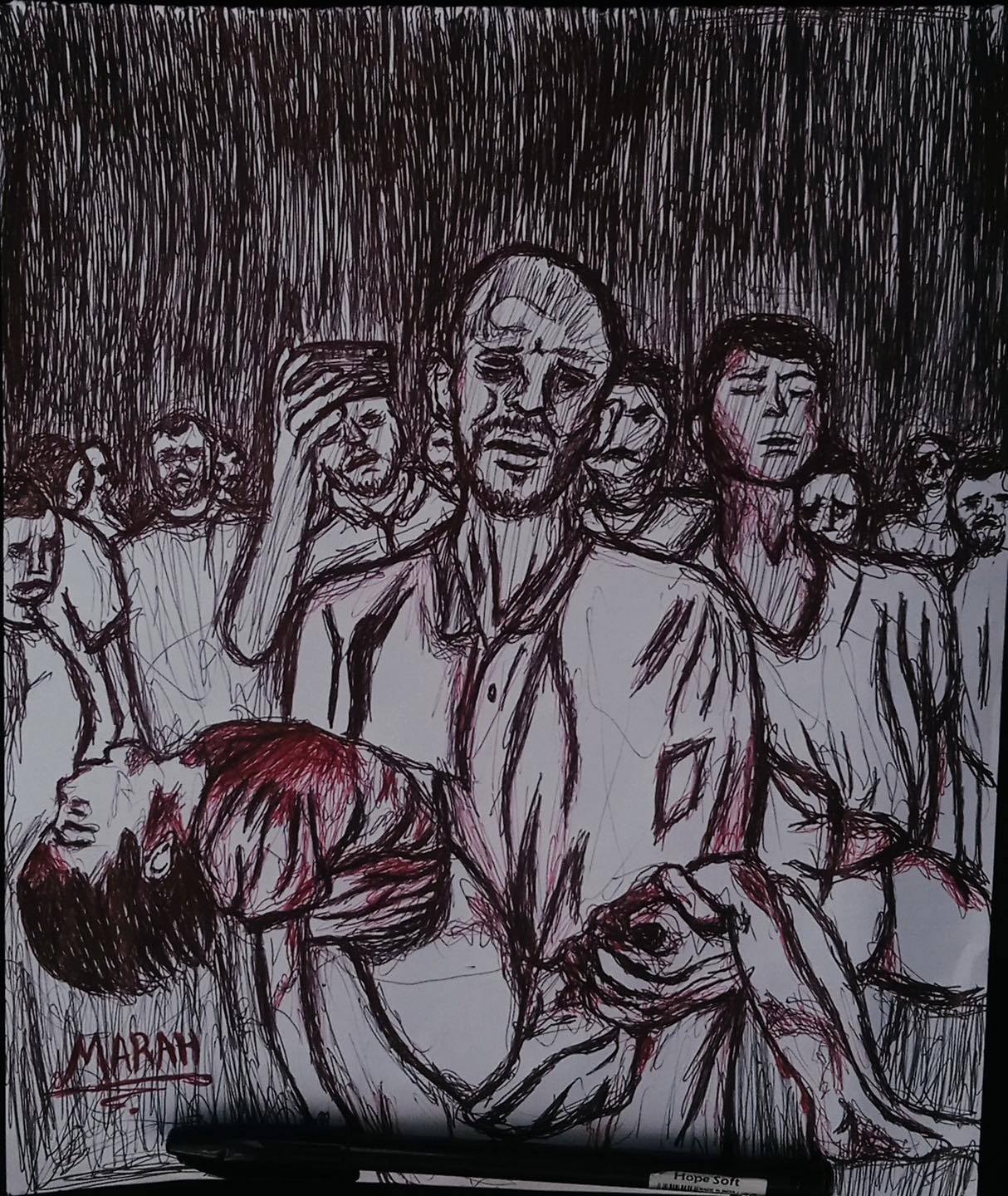
It notes the rise in miscarriages, the prevalence of malnutrition among mothers and infants, and a severe shortage of basic health services whilst warning that repeated displacement and poor living conditions are exacerbating the humanitarian catastrophe.
Future Scenarios
International analysts believe Hamas is still capable of reorganizing its ranks and relying on guerrilla warfare and unconventional methods, making it difficult for Israel to resolve the confrontation militarily.
It also predicted the conflict over Gaza would continue for a long time, with the increasing humanitarian and political costs for Israel and the increasing diplomatic and legal pressure on it in international forums.
Since October 7, 2023, the occupying forces, with direct support from the United States and Western countries, have continued to wage a devastating war in Gaza, resulting in the death and injury of more than 231,000 Palestinians to date, according to the Palestinian Ministry of Health in the Strip according to JO24.
Edan Alexander, an Israeli-American soldier released from imprisonment, announced he will return to Israel next month to rejoin the Israeli military as it continues its genocide in Gaza.
Alexander spent 584 days in inprisonment, which he called “the hardest period of my life.” At a press conference, he said, “My story does not end with survival, it continues in service until victory!”
He added, “Next month, God willing, I will return to Israel and once again wear the IDF uniform, and I will proudly serve alongside my brothers.”
Alexander’s release came as part of mediation efforts to reach a ceasefire, open Gaza’s crossings, and allow humanitarian aid into the besieged territory. Hamas resistance movement had described the release as a gesture of “positivity and high flexibility” and urged international actors, including the US, to build on it to secure a full agreement.
Alexander grew up in the United States and joined the Israeli military at 18. He volunteered as a colonizer and served in the Golani Brigade out of ideological commitment according to the Quds News Network.
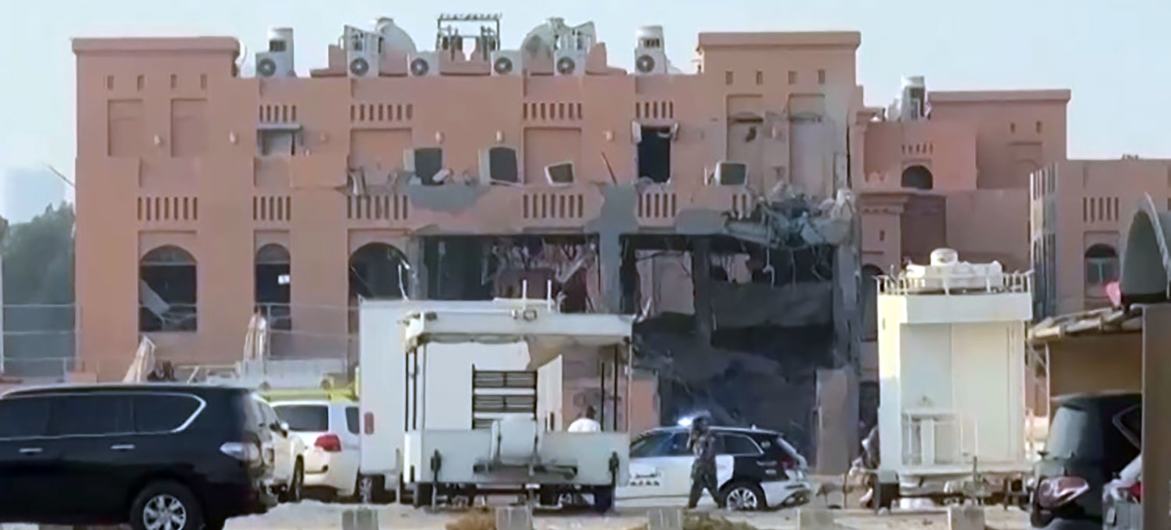
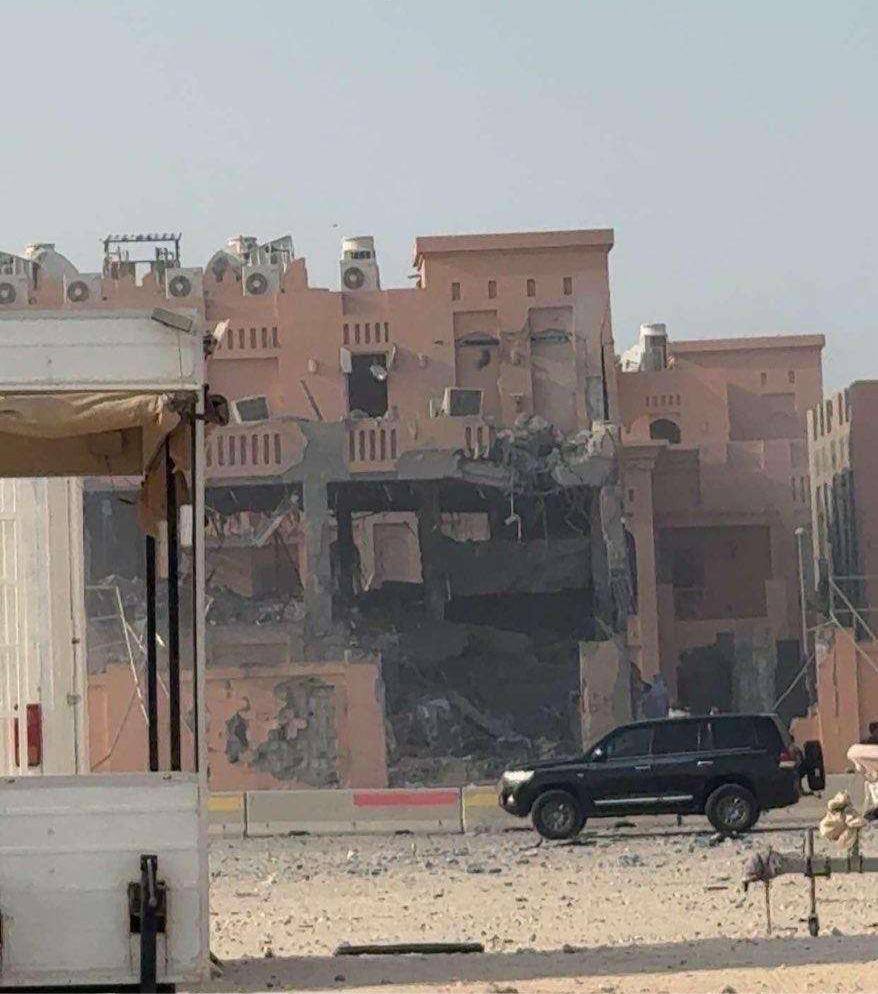
“This is a message to the entire Middle East,” Israeli Knesset Speaker Amir Ohana said in response to the Israeli airstrike that targeted Hamas leaders in the heart of the Qatari capital, Doha.
However, this statement is not merely a comment on the military operation strike into a declared strategic message, telling the entire region, and primarily the Gulf, that Israel, in partnership with Washington, has become the master of the decision-making process in the region.
Ohana’s statement is an explicit and direct threat that leaves no room for interpretation, reflecting the new deterrence doctrine adopted by Tel Aviv: No red lines, no geographical immunities, and no Western allies outside the confines of Israeli dictates. Simply put, anyone who disagrees with us becomes a legitimate target, even if they are in the heart of a friendly capital that hosts the largest American military base.
This makes for a dangerous conclusion: Israel no longer views the Gulf states as partners in stability, but rather as “open arenas for fiery messages.” Washington is blessing the silence, participating in complicity, and mocking the Arabs.
Naked dominance
And don’t forget the Israeli crime in the heart of the Gulf marks the beginning of a new era of naked dominance. It’s not a traditional security operation, but a pivotal turning point in the rules of regional engagement, in which Qatar has been embarrassed both on the Arab level and internationally.
Israel has now publicly placed itself in a circle (no longer concealing its intentions) – through bombing and military strikes – that it no longer sees a distinction between political geography and the theater of operations. More dangerously, the heart of the Gulf today has become openly subject to Tel Aviv’s fire. And who can challenge it?
The strike wasn’t an intelligence leak or a silent targeting, but a direct airstrike in an area teeming with embassies, schools, and residential buildings, in a country that is a major ally of Washington and a pillar of American security in the Middle East.
Thus the message has become clear to everyone: No one is above attack… no state, no sovereignty, no partnership.
The US administration, led by Donald Trump, evaded with a series of conflicting statements about its prior knowledge of the operation. But whether it knew and blessed it, knew and remained silent, knew too late, or did not know at all, the outcome is the same: The American cover was removed, Gulf confidence eroded, and billions perished. The statements of the US embassy in Doha did not go beyond expressions of caution to American citizens, while White House statements swayed between “regret over the location” to “understanding the goal of eliminating terrorism.”
I believe the opposite message was conveyed to the Gulf capitals: Your security is not a priority, and your sovereignty does not equate to a clear position from Washington. The question that now arises however is: Why Qatar? Why now? Why was the strike carried out in Qatar and not in Turkey, or Iran for example? This is despite the fact that the Hamas leaders that were targeted had just returned from Istanbul, suggesting Tel Aviv chose the location not arbitrarily but with deep political awareness. Tel Aviv did not pull the trigger in Istanbul, even though the targeted leaders passed through it only hours earlier.
Turkey, with all its military, political, and international complexity, is not a testing ground for Israeli madness. There are red lines that even Tel Aviv dares not cross… and Turkey is one of them. The potential Turkish military response, the internal Turkish explosion during a highly sensitive election season, and the delicate balance of power within NATO rendered Turkish territory “operationally closed” even to the most violent wings of Israeli decision-making. But when the targeted figures left Istanbul for Doha, everything changed.
Qatar, like other threatened Arab states, in the Israeli security and intelligence mindset, is merely an intermediate gray area, neither neutral nor classified as an “enemy,” potentially a shocking target at a low cost. This is something all Arab decision-makers should be aware of.
From Tel Aviv’s perspective, Qatar is balancing contradictory roles, managing mediation, funding aid, and hosting parties that anger Israel without possessing a genuine deterrent umbrella. There are no international calculations that could prevent a surgical strike carried out within hours. Merely hosting an American base does not make Doha “immune,” but may even further tempt Tel Aviv, proving that decision-making in the region is no longer solely in Washington’s hands but in Tel Aviv as well.
In short, Israel needed a platform to send the biggest message since the Gaza war… so it chose the weakest link, amid the silence of its strongest ally.
Here, we can pause a moment at the Knesset member’s statement that the operation was “a message to the Middle East.” This is not a slip of the tongue, but a strategic doctrine upon which future decisions are based. Israel is telling all countries in the region that whoever harbors Hamas, or even engages in dialogue with it, will be next.
If the Arab states fail to take a firm political stand, the Doha precedent will be repeated elsewhere. It may not be Hamas’s mediation that stands accuse but rather the concepts of neutrality, balance, and even dialogue with parties Tel Aviv disapproves of and which then could become sufficient justification for a strike. It’s a policy of punishment.
This scene is posing existential questions for Arab capitals. If Qatar, Washington’s most important ally, is being bombed over the heads of its own people, after Syria, Lebanon, and Gaza… should we wait for Iraq’s turn? Riyadh? Abu Dhabi? Kuwait? And others? Does the American umbrella truly protect us, or is it used only when our interests intersect with Israel’s?
And what is the point of hosting American bases if they do not prevent airspace violations? Or provide protection?
What happened in Doha is pushing the region to crossroads: Either continuing its position of dependency and timid mediation, or repositioning strategically and developing independent air defenses, which is logistically difficult, or seeking alternative alliances (Ankara, Beijing, Moscow, Tehran?), and establishing red lines that Tel Aviv will not cross.
Qatar now faces difficult choices: Will it withdraw from the Hamas mediation? Will it demand real security guarantees? Will it go further, toward symbolic deterrence or unconventional partnerships? Or will it pay the price of protection once again?
Beware: A war of wills is beginning now. The Israeli airstrike in Doha was not just a blow to Hamas, but also a slap in the face to the sovereignty of the Gulf and the region, an undermining of the prestige of international law and its signed, ratified, and binding agreements, and an insult to the concept of the alleged strategic partnership with America.
This is the beginning of a new era, one in which Israel and Washington declare that the security of the region is no longer an Arab decision. The question now is: Will the Arabs as a whole wake up before “Ohana’s message” reaches other capitals? Perhaps.
The author is a political writer based in Amman Jordan and contributed this article to the Al Rai Alyoum Arabic website
ُُُThe Israeli attack targeting the Hamas delegation in Doha represents a “turning point” that will have very dangerous consequences warned Secretary-General of the Palestinian National Initiative Movement Dr. Mustafa Barghouti. He stated Israel has been exposed for what it truly is: The one obstructing an agreement, not the Palestinian side, and is deliberately escalating every time.
The State of Qatar condemned the Israeli attack, which targeted the residential headquarters of several members of the Hamas Political Bureau, stressing it will not tolerate this reckless Israeli behavior.
The Qatari Foreign Ministry said in a statement: “The criminal attack is a violation of all international laws and a serious threat to the security and safety of Qataris and residents.”
Barghouti said the Israeli aggression, which failed to achieve its goal in the war on Gaza, targeted Qatar, which was undertaking mediation efforts, and targeted Hamas leaders while they were discussing the American proposal. This means that “this proposal was not serious, and Israel does not want any agreement. It persists in its genocidal war against the Gaza Strip and its ethnic cleansing of the Palestinian people.”
In an interview with Al Jazeera, Barghouti did not rule out the possibility that the United States was involved in what happened today, saying no one could believe that Washington was actually playing the role of mediator.
What is required by Arabs and Muslims?
Barghouti said he hoped the attack on Doha would lead to a major shift in the position of Arab and Islamic countries, especially since the one that was being attacked was the State of Qatar, known as a peaceful country that has never attacked any party and has devoted all of its resources to reaching peace agreements. Without its role, a large number of Israeli and Palestinian prisoners would not have been released in previous agreements.
Regarding what is currently required of Arab countries in light of Israel’s continued implementation of its plan, which could lead to the mass displacement of Palestinians from Gaza, Barghouti explained Arab and Islamic countries, especially those that have normalized relations with Israel, are required to halt and sever all relations with Israel, impose comprehensive sanctions, and boycott it completely.
He added that in the light of the Israeli aggression on Doha, Arab and Islamic countries must ask themselves know how to protect their own national security, not just of the Palestinians.
Barghouti called for imposing sanctions and completely isolating Israel. He noted that Israeli Prime Minister Benjamin Netanyahu (wanted by the International Criminal Court) has “lost his mind and acts like the leader of a crazy gang out of control.” Barghouti said that he continually attacks Palestinians, Lebanon, Syria, Yemen, Iran, and now Qatar.
He also indicated that the Israeli occupation’s failure to achieve its goal behind the attack on Hamas leaders in Doha will have domestic repercussions for Netanyahu and his government according to Al Jazeera.
As the Israeli army attempts to enter and control Gaza City, it is receiving constant and horrendous shocks from the Palestinian resistance groups after 23 months of fighting. It is sobering for Israeli soldiers as four simultaneous ambushes were carried out against in an area of eight kilometers supposedly flattened by American-supplied mass bombs.
The latest carried Tuesday night by Hamas and Islamic Jihad fighters is sending shockwaves in Israel and among its army because of the intensity of the clashes and firepower where it is reported that Israeli tanks and armed carriers were blown up in face-to-face fighting with machine guns and other explosives.
The toll is still being counted but Hamas are promising this is just the beginning.
On the Israeli side at least one soldier was killed, 11 others injured and four soldiers missing. They are feared to be taken hostages by Hamas although the Israeli army wouldn’t confirm this with latest reports that them may have reestablished contact. But this is yet to be verified.
Many media outlets, primarily Israeli, are speculating the Israeli army may have activated its Hannibal Directive and killed at least one its soldier rather than allowing him to be taken alive by resistance fighters.
The latest clashes, carried out in Al Zaytun and Sabra neighborhoods, on the southern outskirts of Gaza City is being described by the Israeli media as another 7 October when 1200 Israelis were killed and 250 hostages were taken by Hamas fighters back to Gaza City.
This description is setting additional shockwaves among Israeli society and fear that the remaining hostages in Gaza, dubbed at least 20 will not come out alive, nor the 30 killed will not be handed back.
The latest ambushes are suggesting as well Hamas and other Palestinian resistance groups are still in their top fighting form despite the repeated utterings by Israeli Prime Minister that his army is “cleaning up” the areas of Gaza from these fighters and in spite of the fact that most of the enclave has been turned into rubble with more than 63,000 killed by the Israeli war machine.
While Israel controls 75 percent of the Israeli army, they are yet to enter Gaza City. The latest incursion into the Al Zaytun neighborhood is number seven. Their previous incursions, totaling six have ended in failure. As a result of the latest ambushes, Israeli soldiers have withdrew yet again further south to the Natzarim Crossing which they now control and effectively split Gaza into two halves.
The Battle for Gaza City is still in its early stages however and Israel is in for more surprises. The Israeli Chief of Staff Eyal Zamir who is already deeply dismayed about attempting to control Gaza City because of insurmountable logistical reasons and powerful armed Palestinian groups, is sure to be greatly worried from the latest ambushes.
He has already warned the Netanyahu that Israel could lose 100 soldiers in the battle which is yet to start to control Gaza City and prefers a political solution. But this is not in the offing or an option for the political leaders who insist that the military plod on regardless of their safety and security.
By western estimations, the Palestinian resistance groups – mainly Hamas and Islamic Jihad – continue to have anything between 25,0000 to 50,0000 fighters and will likely maintain their maintain their momentum and keep emerging from underground tunnels. Experts have said this is indeed a miracle for many of these tunnels, including the one under Al Zaytun, are still intact and continue to replenish the resistance.
At the moment many of the Palestinian fighters, including from leftist factions like the Popular Front for the Liberation of Palestine and the Democratic Front for the Liberation of Palestine have relocated and the Zaytun Battalion has rebuilt itself which the Israeli army claimed it destroyed in the previous 22 months. The scorching ambushes that occurred recently, and whose Israel is keeping a tight censorship lip about the actual number of its deaths and injured, are just the beginning and there is likely to be more in the coming days.
Zamir is well aware of the tough fight that lies ahead and that is why his is claiming to be following a strategy of moving slowly and “surely”. But judging from the latest fight this strategy is failing before it gets off-the-ground as the decision to enter the formidable was taken two weeks ago.


 CrossFireArabia