Expert: Israel Fails to Achieve Lebanon Goals

Military strategic expert Nidal Abu Zeid said the occupation army’s statements that it achieved 90% of the objectives of its military operation in southern Lebanon are unrealistic. How wounders whether they are really preparing to end their military operations in southern Lebanon. 

He said the most prominent objectives, return of the residents of the northern settlements, have not been achieved. On the contrary he pointed out there has been a displacement movement of residents of many areas in the northern Israeli settlements due to continuing military strikes by Hezbollah.

Abu Zeid added to Jordan 24 that the occupation is preparing, through the media, to end the war with Hezbollah after the latter targeted three crucial military factories, namely the Rafael factory for manufacturing armor, Yudifat factory for manufacturing aircraft spare parts, and the Lama factory for manufacturing parts for air defense systems, 135 km from the Lebanese border.

 He pointed out Hezbollah’s target bank has details and accurate information about important Israeli sites and is working on them on a “gradual equation.”

Regarding what is happening in Gaza, Abu Zaid pointed out the Israeli army established a new axis in north Gaza, parallel to the Netzarim axis and the Philadelphi axis. 

Thus it is dividing Jabalia from Gaza city, which means re-engineering the geography and demographics of Gaza to enable its occupation forces to repeat the West Bank model by ensuring the ability to move within the Strip in the way it wants.

Continue reading
18,000 Lebanese Force-cross Into Iraq

Over than 18,000 Lebanese have entered Iraq since the start of Israeli airstrikes on the country since late September, Iraqi authorities stated, Sunday.

“Efforts are underway to receive Iraq’s guests from Lebanese citizens in batches,” Alaa al-Din al-Qaisi, a spokesman for Iraq’s Border Ports Authority, said in statements carried by the official news agency INA.

News about the influx of Lebanese citizens is making headways on the social media with whole families being forced out of the country due to the high intensity of fighting on the areas at the rim of southern and southwestern Lebanon.

Al-Qaisi said the influx follows orders from Iraqi Prime Minister Mohammed Shia Al-Sudani to allow visa-free entry on Lebanese citizens, pointing out that over 18,000 Lebanese nationals arrived in Iraq since 27 September.

A massive Israeli air campaign in Lebanon has been ongoing since late September against what it claims are Hezbollah targets, an escalation in year-long cross-border warfare since the start of the Gaza war.

More than 3,100 people have been killed and over 13,800 injured in Israeli attacks since October 2023, according to Lebanese health authorities according to the Anadolu news agency.

Continue reading
Analysis: Hezbollah’s War Strategy Against Israel

Military and strategic expert Fayez al-Duwairi said the resistance’s performance witnessed a qualitative development. He pointed to a recurring pattern pf targeting the Israeli depth reaching a distance of 145 kilometers from the Lebanese border.

He explained that this development is accompanied by an increasing focus on targeting strategic military bases in Israel.

Al-Duwairi continued the resistance has begun to target the main strengths of the Israeli army, specifically the armored forces on the Blue Line and the air bases from which the aircrafts take off from.

He stressed targeting air bases is a strategic priority for them, as hitting a vital part of any base can disable them for hours, which reduces the number of sorties.

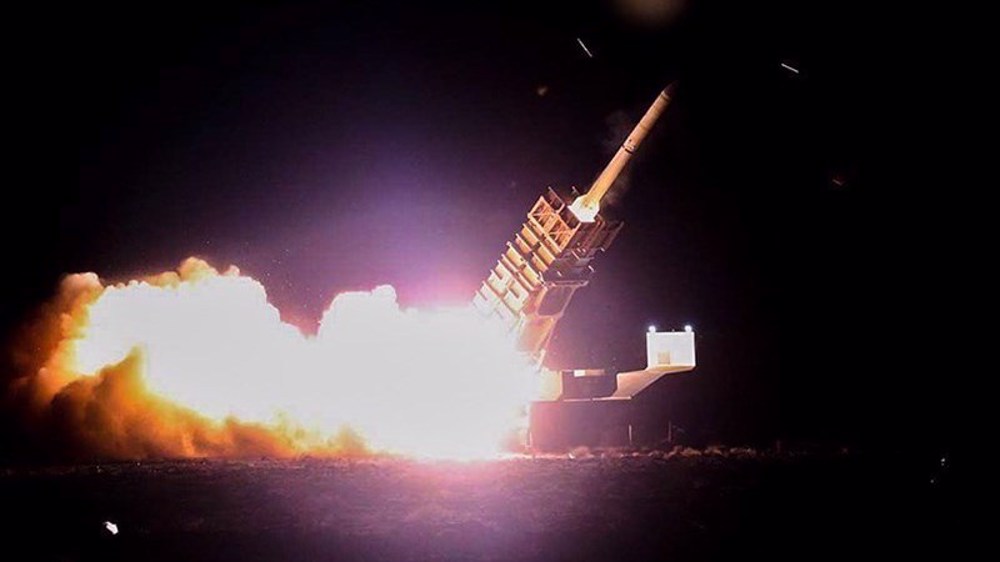
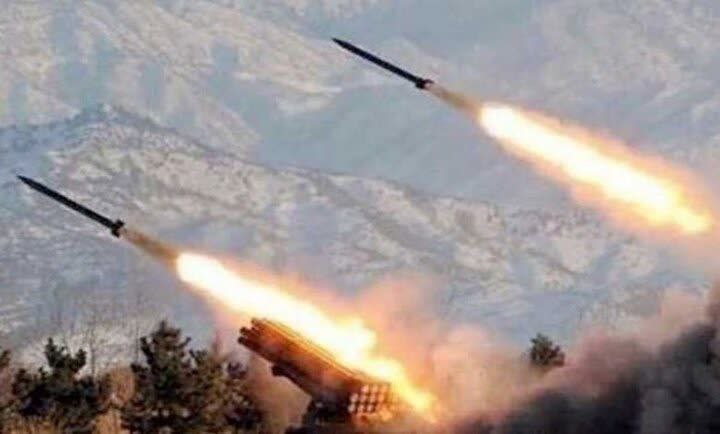
In his assessment of missile capabilities, the military expert explained the current range of missiles requires them to be launched from a depth of no less than 160 kilometers, pointing to the diversity of the missile systems used, as the Fateh missiles, for example, have a range of 300 kilometers, while the payload of the explosive warheads ranges between 70 and 500 kilograms.

Dense Barrages

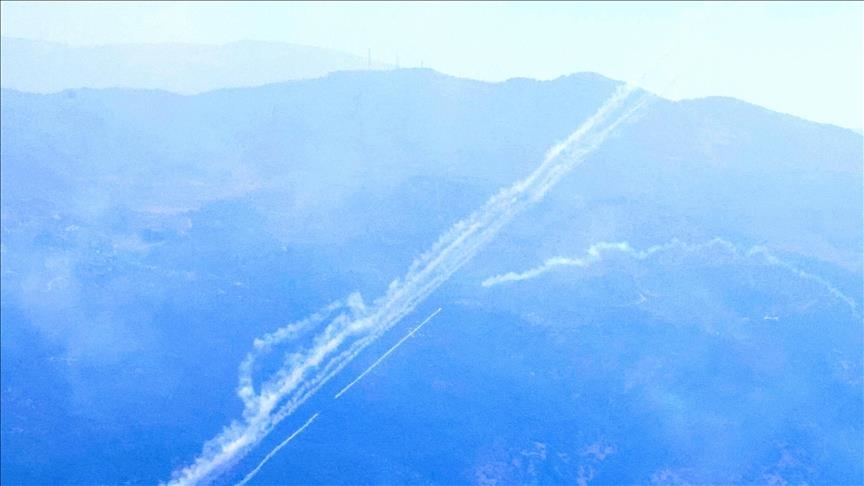
Regarding the tactics used, Al-Duwairi pointed out Hezbollah’s strategy is to flood the skies of Israel with dense barrages of missiles, simultaneously with sending drones.

He pointed out that this tactic exploits the weaknesses of the Israeli Iron Dome system, which has only 10 batteries, while it needs 14-17 batteries to cover the all of the Israeli-occupied Palestine.

The military expert warned of the limited efficiency of the Israeli defense system, which does not exceed 65%, even with its reinforcement by the Iron Beam and the David’s Sling systems.

He explained the resistance exploits these loopholes by launching short-range missiles to flood the batteries, followed by long-range missiles or drones, which are tactics that have proven successful on several occasions.

Al-Duwairi stressed that the success of this strategy depends on precise coordination between different types of weapons and the appropriate timing of attacks, noting that the resistance is demonstrating an increasing ability to manage military operations with high efficiency.

Continue reading
Expert: Israel Army Suffers as it Fights on 2 Fronts

Military expert Dr. Nidal Abu Zeid confirmed that the Israeli occupation army has begun to suffer from problems related to ammunition and manpower, as a result of fighting on two fronts simultaneously. He added this contradicts its combat doctrine. 

Abu Zeid added to Jordan24 that the issue of manpower shortage came as a result of the heavy losses suffered by the occupation forces on the southern Lebanon front. 

This is in addition to the fact that only one in three males joins the army plus the fact that 15% of soldiers drop out during military service and do not serve in the reserves while the number of those who obtained exemptions from conscription for medical and psychological reasons has jumped from 4 to 8%, according to figures published by Israeli websites.

Abu Zeid pointed out Hezbollah’s success in bombing the Tzrifin military base, which is 120 kilometers from Lebanon with the Fateh 110 missile, which was used for the first time, is a step that falls within the framework of the equation of proportionality. 

He added the base includes camps for training and military education and headquarters for senior officers in the artillery and communications corps and the military unit affiliated with the spokesman for the occupation army. Unit 108, which specializes in maintaining electronic and technical systems and equipment in the air force of the occupation army, also operates in the base.

Regarding the developments in the Gaza Strip, Abu Zeid pointed out that the occupation army withdrew its 252 Reserve Division, which was deployed in two brigades in the Netzarim axis, and returned its 99 Infantry Division (reserve) to the Netzarim axis, which indicates that the occupation no longer has the luxury of military options.

He added that so the Israeli army is returning the divisions it withdrew from months ago to the same combat axes after restoring some of its losses, and this is something that has operational caveats as it ultimately leads to the construction of fragile military units and leads to the soldiers losing their fighting spirit, which explains the low level of combat operations in the Gaza Strip.

Continue reading
Duwairi: Hezbollah and Its Battle Management Versus Israel

Military expert Major-General Fayez Al-Duwairi said Hezbollah regained its political balance after it revamped its tactical and operational balance a few weeks ago at the level of managing the battle with Israel. He pointed to the party’s dual employment of its qualitative missiles on the horizontal and vertical levels.

Al-Duwairi explained on Al Jazeera Hezbollah’s Nasr and Aziz units are responsible for managing the defensive battle efficiently in the area south of the Litani River.

The Litani River extends 170 kilometers from its source in the east to its mouth in the west, and is about 30 kilometers from the Lebanese-Israeli border.

The strategic expert explained this party wanted to reveal the Imad 5 facility “to present a specific vision regarding the employment of qualitative missiles”, which he considered as “a translation of restoring the balance”.

Hezbollah’s war media section published a video clip, Sunday evening, showing a missile launch facility called Imad 5, which included missile launchers and equipment inside an underground military facility.

The military expert warned of what he called “Hezbollah’s dual use of missile power”, as it sometimes resorts to direct missile targeting, and sometimes launches missiles to serve another military approach.

Missile barrages

According to Al-Duwairi, Hezbollah resorts to launching missile barrages that coincide with or slightly precede its drones, as the Iron Dome radars pick up the missile signal and focuses on it, while the drones penetrate deep into Israel, sometimes reaching up to 150 kilometers.

Hezbollah’s drones have become an obsession for the Israeli army with Al-Duwairi saying the party focuses on “the evening barrage launch to paralyze the widest possible geographical area of ​​Israel and force about two million people to enter the underground shelters.”

Hezbollah recently begun a horizontal escalation consisting of launching 100 rockets per day, in addition to a vertical escalation through the use of rockets it never used before, the military expert said.

Duwairi added Hezbollah’s qualitative rockets are evident through their range, accuracy, and ability to reach the target, noting the party has “a bank of targets arranged according to priorities in terms of the impact of these targets on the course of the battle and Israel.”

For these reasons, the party is focusing on Israeli military bases and the facilities that serve them, such as technical and military industries and weapons depots, in addition to economic facilities.

Hezbollah has been focusing in recent days on targeting the Glilot base of the 8200 Military Intelligence Unit in the suburbs of Tel Aviv, and the Palmachim Air Base (south of Tel Aviv).

It is also focusing on the Shraga and Sanat Gen logistics bases north of Acre, in addition to the Misgav base (northeast of Haifa), the Ramat David base and airport (southeast of Haifa), and the Zevulun military industries base (north of Haifa).

However, the military expert adds “Hezbollah is very cautious and does not want to go too far in its policy of targeting Haifa versus the southern suburbs of Beirut” for fear of a corresponding Israeli overreach.

Al-Duwairi explained Hezbollah is bombing military targets in return for an Israeli targeting of the party’s social infrastructure and incubator.

He explains the party cannot defeat the Israeli army in a conventional war, but “just by its survival and ability to withstand, and prevent Israel from achieving its goals and deterring it, it is considered victorious.”

Since 23 September, Israel has expanded its war on Hezbollah to include most areas of Lebanon, including the capital Beirut, through unprecedentedly violent and intense air strikes, and it has also begun a ground incursion in the south, relying on five military divisions operating along the border with Lebanon.

Continue reading