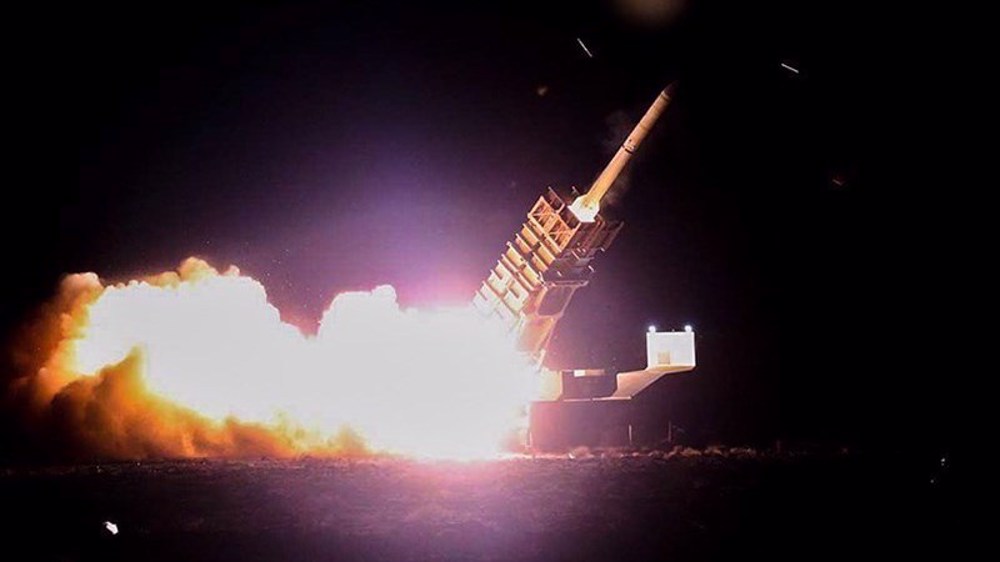
Hezbollah’s New Chief: ‘We Will Not Retreat’

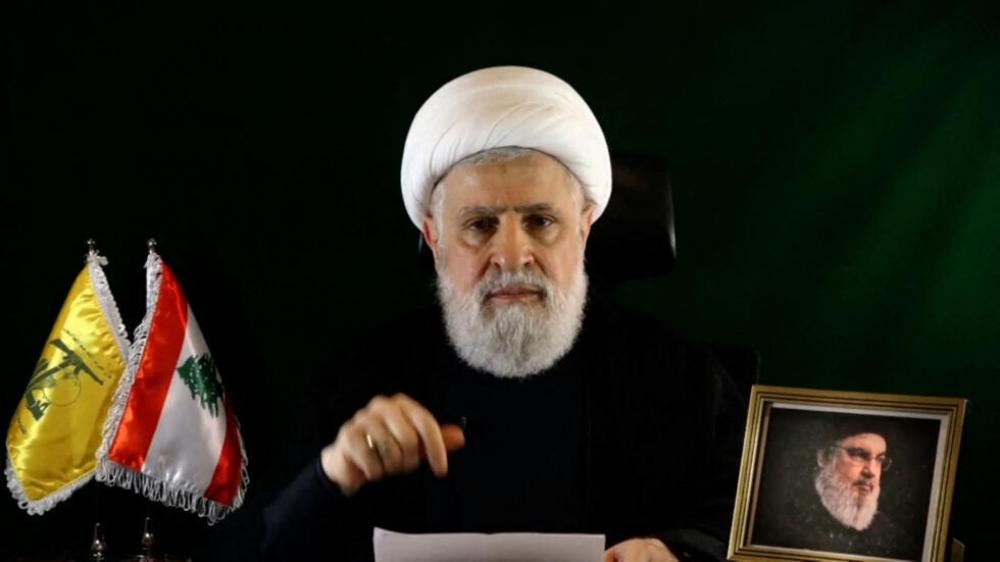
The new Hezbollah leader Sheikh Naim Qassem said in his first speech, after becoming secretary-general he “will continue on the path of the martyr Hassan Nasrallah, and implement the war plan he developed with the leadership of the resistance, and deal according to the developments of each stage.”

In a videotaped speech, Wednesday, Qassem stressed “supporting Gaza is a duty to confront the danger of the occupation on the entire region from the gate of Gaza, and its people as they have the right to be supported by everyone. 

The question should not be directed to the party about the reasons for its support for Gaza, but to others about the reasons for their lack of support of the people of Gaza,” he added.

Hezbollah “does not fight on behalf of anyone, but to protect Lebanon, liberate our land, and support Gaza,” stressing that “Iran supports our project and does not want anything from us, and our convictions are shared,” he stressed.

“For 11 months, we said we do not want war, but we are ready if it is imposed on us, and we in Lebanon do not fight on behalf of Iran or to implement its project, but to protect and liberate our land,” Qassem continued. 

Qassem described the head of the Hamas political bureau  martyr Yahya Sinwar as “an icon of heroism for Palestine and the free people of the world, and he resisted until his last breath.”

“The Lebanese resistance was created to liberate the land and confront the occupation and its expansionist intentions,” noting “the resistance expelled the occupation from Lebanon, not international resolutions,” he added.

Qassem stated “the field proves and confirms the party’s recovery from the attacks it was subjected to because it is a large and cohesive institution with great capabilities and a true jihadist history, and it was growing stronger year after year and gaining more experience.”

Qassem stressed “the enemy must know that its bombing of our villages and cities will not make us retreat, and the resistance is strong and was able to deliver a drone to Netanyahu’s room.”

Qassem criticized western collusion, saying: “This war is not only [Israeli], but an [Israeli]-American-European global war in which all the capabilities to eliminate the resistance and the peoples of the region are used in all brutality, genocide and criminality.”

Since September 23, the occupation forces have expanded the scope of the genocide they have been committing in Gaza since October 7, 2023, to include most areas of Lebanon, including the capital Beirut, through unprecedentedly violent and intense airstrikes, and have also begun a ground incursion into the south, disregarding international warnings and UN resolutions.

The Israeli occupation army, supported by the United States and Europe, continues its aggression on the Gaza Strip for the second year in a row, as its aircraft bomb the vicinity of hospitals, buildings, towers and homes of Palestinian civilians, destroying them over the heads of their residents, and preventing the entry of water, food, medicine and fuel.

The aggression has left about 145,000 Palestinian martyrs and wounded, most of them children and women, and more than 10,000 missing, amid massive destruction and famine that has killed dozens of children and elderly people, in one of the worst humanitarian disasters in the world.

Continue reading
Sheikh Naim Qassem Officially Hezbollah Chief

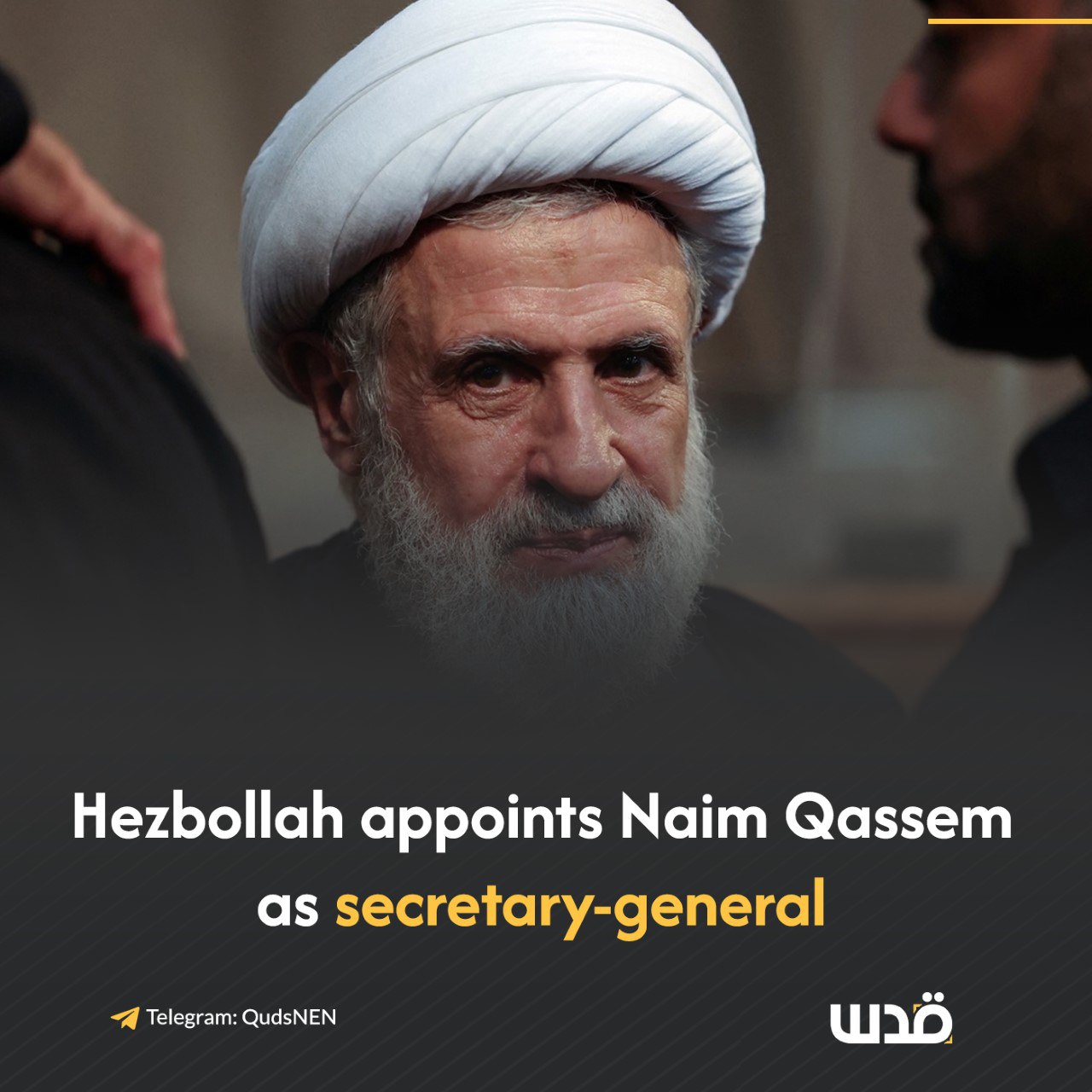
Lebanon’s Hezbollah has named Sheikh Naim Qassem as their Secretary-General, succeeding the movement’s long-running leader Sayyed Hassan Nasrallah who was assassinated in a targeted Israeli airstrike in Beirut last month.

Hezbollah has appointed its deputy secretary general Naim Qassem as chief on Tuesday to succeed his predecessors Hashem Safieddine and Hassan Nasrallah who were killed in separate Israeli strikes on Lebanon.

Qassem, a longtime deputy to Nasrallah, has served as the group’s acting leader since Nasrallah’s death.

Who’s Naim Qassem?

The 71-year-old is Hezbollah’s deputy secretary-general, and has often been referred to as the movement’s “number two”.

He was born in the Nabatieh governorate’s Kfar Kila, a southern Lebanese village that has suffered through many Israeli attacks, especially since last October.

Qassem was elected deputy secretary-general in 1991, under then-Secretary-General Abbas al-Musawi, who was also assassinated by Israel.

He has played an important public-facing role in Hezbollah over the years, and is also a member of the group’s Shura Council.

He famously published a book called, Hezbollah, the Story from Within, in 2005, which was translated into several languages.

Qassem has long been one of the leading spokesmen for Hezbollah, conducting many interviews with foreign media according to the Al Quds News Network.

Continue reading
Halevi: Israel Suffers ‘Heavily, Painfully’ in Lebanon

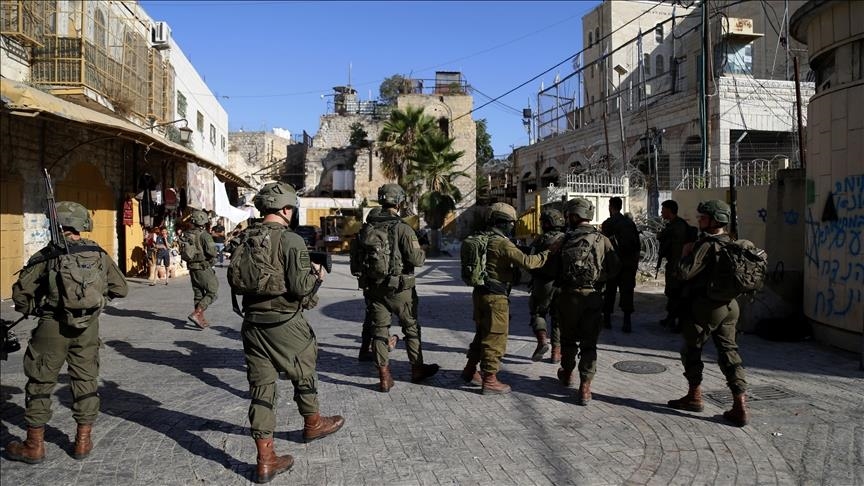
Military expert Colonel Hatem Karim Al-Falahi said the Israeli occupation’s entry into southern Lebanon must be understood within the directions “previously set by Hezbollah in its defensive plan for any ground battle.” He also listed the reasons for the high losses among the Israeli forces.

Al-Falahi said the defensive operation is important in military sciences as it means waiting for the enemy to find a better opportunity. He indicated this operation must take into account the nature of the changing reality, and respond to all possibilities, either completely or partially.

He pointed out the Israeli high losses in southern Lebanon are due to several reasons, including the nature of the geography, which is different from the battles of the Gaza Strip. This is in addition to the deployment of military teams exhausted by the fighting in the streets, homes and neighborhoods of Gaza, he maintained.

Weak

Al Falahi on Al Jazeera explained that the combat capabilities of the Israeli military “appear weak in an environment friendly to Hezbollah fighters that has known defensive arrangements for a long time.”

He pointed out five Israeli military divisions are participating in the ground incursion operations in southern Lebanon: 210, 98, 91, 36, 146, and each division includes more than one military brigade, and according to military standards has more than 10,000 soldiers.

The occupation’s losses in Lebanon has come as a result of the direct clashes and/or targeting with artillery or mortar shells on the border strip with Hezbollah fighters, starting from Ras al-Naqoura to the Shebaa Farms.

The occupation has revealed that 88 Israeli soldiers were injured in the battles in Lebanon in the past 48 hours, while Chief of Staff Herzi Halevi acknowledged that Israel is suffering “heavily and painfully”.

Continue reading
Hezbollah Orders 25 North Israeli Settlements to Evacuate

Hezbollah issued orders Saturday evening for the immediate evacuation of 25 settlements in northern Israel, warning residents that these areas are now “legitimate military targets.”

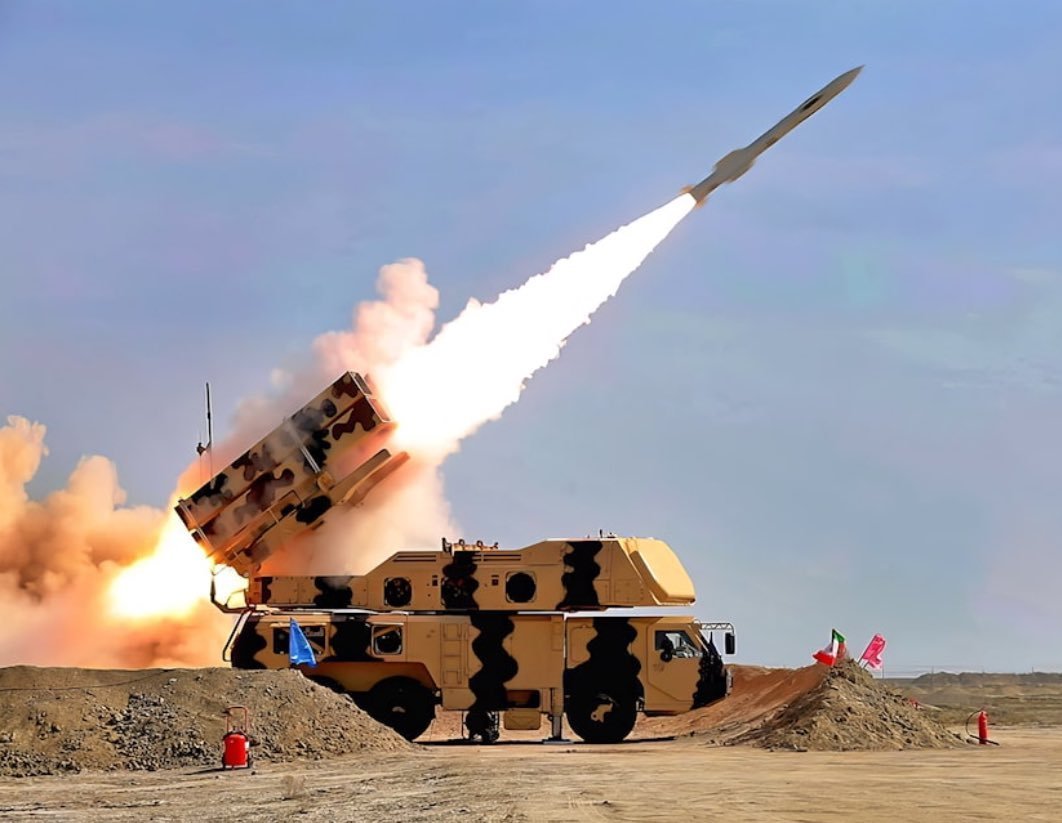
In a video message posted on Telegram, Hezbollah addressed residents directly, stating, “You are requested to evacuate immediately. Your settlements have become a place for the deployment and stability of enemy military forces that are attacking Lebanon. As a result, they have become legitimate military targets for the air and missile power of the Islamic resistance,” as reported by Anadolu.

The settlements included Kiryat Shmona, Yasod HaMa’ala, Ayelet HaShachar, Hatzor HaGalilit, Karmiel, Ma’alot Tarshiha, Even Menachem, Nahariya, Rosh Pina, Shamir, Sha’al, Miron, Kabri, Abirim, Dalton, Nefat Ziv, Qatzrin, Kfar Hananya, Manot, Beit HaAmik, Kfar Vradim, Harashim, Birya, Kfar Tzvi and Bar Yohai.

Israel has mounted a huge air campaign in Lebanon since last month against what it claims are Hezbollah targets, in an escalation from a year of cross-border warfare between Israel and Hezbollah since the start of Israel’s brutal offensive on the Gaza Strip.

Continue reading
Israeli Base Under Attack

Military expert Major General Faiz Al-Duwairi highlighted the increasing targeting of Israel’s Ramat David base by Hezbollah. This base, crucial for northern occupied Palestine, houses around 60% of Israel’s aircraft used in attacks on Lebanon, posing a strategic threat if its operational capacity is diminished.

Ramat David is an airbase 20 kilometers southeast of Haifa.

Continue reading