Ceasefire Gaza: Israel Maintains Grip on The Ruined Strip

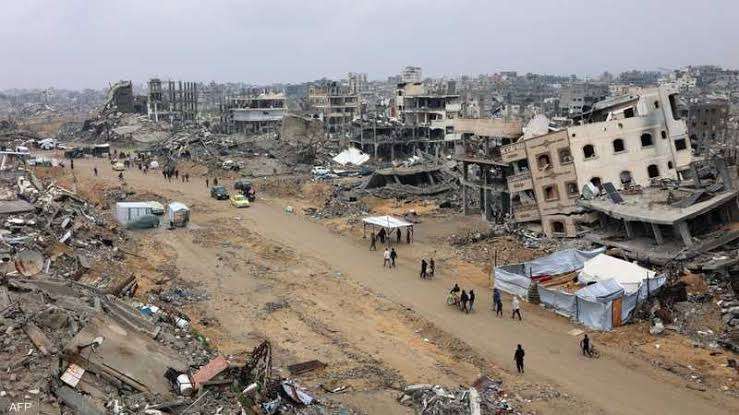
Despite the declaration of a ceasefire on 19 January 2025, Israel continues to commit genocide in the Gaza Strip by denying Palestinians the basic necessities for survival and imposing conditions of life calculated to bring about their physical destruction.

Israel is not content with the mass killings and devastation it inflicted on Gaza over the past 15 months. Now, it is enforcing measures to effectively kill the population through an illegal, total siege that blocks the flow of basic supplies and humanitarian aid, prevents the repair of essential infrastructure, and denies services indispensable for survival.

Israel is fully aware of the catastrophic impact of its unlawful actions on Palestinians in Gaza, including the severe and lasting consequences for marginalized communities and people with critical medical conditions. Yet, in the absence of meaningful international pressure to end its ongoing crimes, these violations continue unabated.

Although the mass killings in Gaza have halted since the ceasefire, Israeli occupation forces continue to kill Palestinians without legal grounds, using false justifications.

Euro-Med Monitor has documented the killing of at least 110 Palestinians since the ceasefire, with an average of about six deaths per day. These victims include both new fatalities, killed directly by the IOF, and individuals who succumbed to their prior injuries after Israel denied the right to travel abroad for treatment. Additionally, 901 Palestinians have been injured since the ceasefire, averaging 47 injuries per day.

Thousands remain missing beneath the rubble, yet recovery efforts are still hampered by Israel’s deliberate delays in allowing the necessary equipment into the enclave. Recovery operations are currently being carried out with manual tools or basic equipment that is not suitable for dealing with thousands of tonnes of rubble. As of right now, 571 dead bodies have been recovered in the Strip, at a rate of 30 per day.

Since the ceasefire, only a handful of injured and ill Palestinians from Gaza have been permitted to travel abroad for treatment, leaving thousands at risk of death due to Israel’s ongoing denial of their right to receive treatment.

In addition to ensuring a severe shortage of specialised medical personnel, generators, fuel, and oxygen stations, Israel has obstructed the rehabilitation of destroyed hospitals and blocked the entry of medical supplies, medications, and equipment.

Further, in addition to blocking equipment needed for maintenance and restoration, the ongoing and illegal restrictions by Israel are preventing the entry of temporary shelters, tents, and basic supplies for the hundreds of thousands of Palestinians whose homes it has destroyed. This has worsened their suffering under harsh weather conditions, as there are no adequate shelters available because Israel demolished most of the homes and shelters in the Strip.

Israel is deliberately obstructing the restoration of essential infrastructure, including water and sewage systems, endangering civilian lives and worsening environmental and health crises.

Israel also imposes strict restrictions on essential food production supplies, threatening large-scale famine in Gaza. Food stocks are depleting, and residents are unable to farm, fish, or secure food for their families. Through these measures, Israel seeks to make the Palestinian population entirely dependent on its decisions regarding humanitarian aid,  which has become the remaining primary source of food for the people of Gaza.

The conditions imposed by Israel deliberately create living circumstances aimed to destroy the Palestinian population in Gaza, particularly when considered in the context of the widespread poverty, destruction, hunger, malnutrition, and the health and environmental disasters resulting from Israeli military actions since October 2023.

These actions violate Israel’s obligations under international humanitarian law and human rights law, including its duties as an occupying power to provide for the basic needs of the population. They also violate the rulings of the International Court of Justice, which require Israel to take prompt, decisive action to enable the delivery of humanitarian aid and urgent basic services to alleviate the dire circumstances that Palestinians in the Gaza Strip face.

According to the 1948 Convention on the Prevention and Punishment of the Crime of Genocide, which forbids imposing living conditions on a group with the intent to destroy it in whole or in part, Israel’s policy is nothing more than a consecration of the crime of genocide. Despite the ceasefire, Israel has not fundamentally changed its behaviour and policy to undo the devastating conditions it has imposed on the Palestinians in Gaza. Instead, Israel has continued to create conditions that are likely to ultimately result in the physical destruction of the Palestinian people, given the effects of its actions on all facets of their lives and the length of time they have endured these conditions.

In addition to taking effective measures to protect Palestinians from plans for forced displacement and slow killing, immediate international action is required to stop the crime of genocide in the Gaza Strip and to appropriately address the immediate needs of the population. As a critical part of ensuring their survival and dignity, adequate temporary housing must be provided to the Strip’s residents.

The entry and access of humanitarian aid should be guaranteed, along with the removal of any restrictions or blockades preventing the civilian population from receiving relief, hospital services, and access to water and education. The consideration of the needs of women, children, and members of the most vulnerable groups must also be guaranteed, as well as the prompt reconstruction of Gaza’s basic infrastructure; provision of social and psychological support to address the devastating psychological effects of the conflict, particularly on children and attack survivors; and the imposition of genuine pressure to lift the blockade imposed on the Strip so that the Palestinian people can reclaim their lives and human dignity.

The international community and the United Nations must act urgently to hold Israel accountable for its ongoing crimes against Palestinians. This includes enforcing effective sanctions, halting all military, financial, and political support, and immediately suspending all arms sales, transfers, and purchases, including export licenses and military aid. Israel must be held accountable at all levels, both domestically and internationally. Additionally, the International Criminal Court’s arrest warrants against the Israeli Prime Minister and former Defence Minister must be executed without delay and brought before international justice.
Continue reading
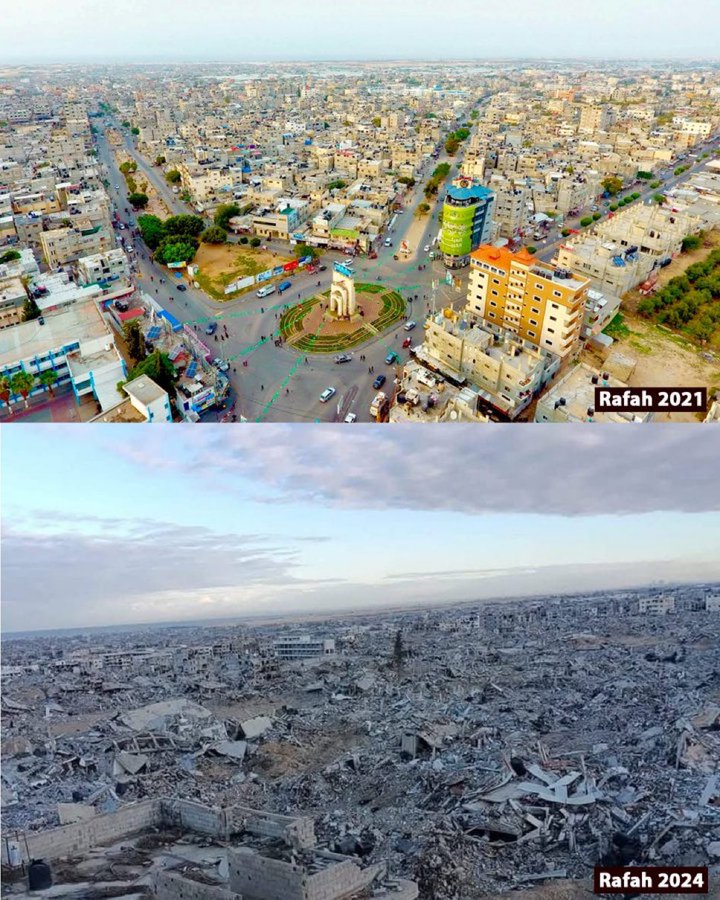
What Will The Future Hold For Palestine in 2025?

In 2024, there were a host of startling developments occurring in the Middle East and the wider world that impacted Palestine, most of them unforeseen 12 months ago: the continuation of the unrelenting Israeli genocide in Gaza, the battlefield defeat of Hezbollah and the devastation in Lebanon, the overthrow of Bashar Assad in Syria, the isolation of Iran, the election of Donald Trump, and a series of seminal rulings by the International Court of Justice (ICJ) and the International Criminal Court (ICC).

All of these seismic events make the assignment of imagining what Palestine’s future will be in 2025 a precarious task. Yet, with caution thrown to the wind, we can make some educated guesses on six leading features.


Leading scenarios for Palestine’s future

Donald Trump’s return to the US presidency will certainly encourage Israel’s accelerating subjugation of the Palestinians. His major appointments on the Middle East – including his secretary of state, his ambassador to Israel, and his two regional envoys – are all diplomatic gifts to Israel’s far-right nationalist government. His political instincts are all about respecting the strong and disparaging the weak. The only restraint that Trump may impose on Israel would result from his quest for a substantive deal with Saudi Arabia, which is publicly demanding a credible path to Palestinian statehood.

A genuine Palestinian state is further away than ever. In 2025, more Palestinian land will be confiscated, more illegal Israeli settlements will be built, and settler violence, already at record levels, will only intensify. While Trump might restrict Israeli Prime Minister Benjamin Netanyahu from formally annexing parts of the West Bank, de facto Israeli annexation will continue unabated. The ability of the Palestinian Authority to shape events in its favor will likely shrink even further. As for the comatose peace process, the Palestinians long ago arrived at a traffic intersection, and the red light never changed. It remains red today, its only color.

The genocidal war on Gaza will finally end with a formal ceasefire, the release of Israeli hostages, and some Palestinian detainees. However, the unimaginable toll of deaths and suffering among the Palestinian civilians in Gaza will continue, as starvation, infectious diseases, a decimated economy, and a devastated landscape afflict the population. Hamas won’t be completely defeated, but it has suffered a grievous blow in the short run. Israel will push hard to build settlements in the north and for clan warlords to run the rest of Gaza, which Trump might allow. Another great test will be the raising of the $40-60 billion needed for the reconstruction of Gaza; this will create tension between Trump and his Gulf states allies, who will resist paying the lion’s share of the consequences of a war they opposed.

Will the international community face the Palestine issue in 2025?

Respecting Palestine, the United Nations will face some of its most perilous challenges in 2025. The one-year deadline set by the General Assembly for Israel to completely end its occupation of Palestine arrives next September, with Israel and the US committed to defying the obligation. In addition, Israel – with Trump’s backing – is seeking to dismantle UNRWA, the UN agency that delivers education, health, and social services to Palestinian refugees in the Levant. The challenge for Europe and the Arab world will be whether they will defend the UN, its core commitment to successfully resolving the oldest item on its political agenda (Palestine), and the preservation of its largest agency.

Israel’s diplomatic isolation will continue, even as its relationship with its superpower patron will deepen. Its outlier status at the United Nations – particularly at the General Assembly and the Human Rights Council – will see even more lopsided votes against its 57-year-old occupation, its denial of Palestinian self-determination, and its abuse of international law. The arrest warrant issued by the International Criminal Court against Benjamin Netanyahu and his former Defense Minister Yoav Gallant will make him politically radioactive, with heads of state and government that have signed the 1998 Rome Statute refusing to meet him. Pressure will grow within Europe to rethink various trade and cooperation agreements with Israel as a reaction to the war and its horrendous humanitarian consequences.


Role of international law more important for Palestine than ever

The role of international law in pronouncing on the question of Palestine will become even more momentous in 2025. After the signature rulings by the ICJ and the ICC in 2024, we are likely to see a growing movement to insist upon a rights-based approach to peacemaking in Palestine, replacing the discredited (but still very much alive) realpolitik approach of the Oslo process.

The momentum created by the recent genocide reports by Amnesty International and Human Rights Watch will continue to echo through UN corridors and foreign ministries. But there are also headwinds: Republicans in the US Senate are determined to sanction the ICC for issuing the arrest warrant against Netanyahu, meaning that the viability of the court will require a stout defense by the 124 members of the Rome Statute, particularly from Europe.

As we learned from the past year, there will almost certainly be unexpected surprises in 2025. And while there will continue to be dark times for the Palestinians in the year ahead, the war in Gaza has also sparked a global movement of solidarity – particularly among the young – that will continue to inspire courageous thinking and bold acts. Its lasting impact should never be underestimated.

Michael Lynk he author is a professor emeritus of law at Western University, London, Ontario, Canada. He served as the 7th United Nations special rapporteur for human rights in the occupied Palestinian territory between 2016 and 2022. Opinions expressed in this article are the author’s own and do not necessarily reflect Anadolu’s editorial policy.

Continue reading
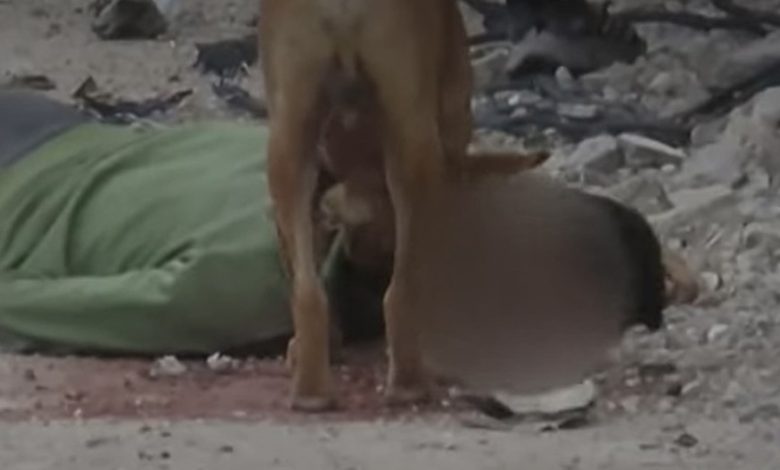
Stray Dogs Feed on Bodies of Dead Palestinians – Al Jazeera

Footage aired by Al Jazeera showed stray dogs scavenging the bodies of lifeless Palestinians in northern Gaza, with Israeli soldiers present in the vicinity.

The distressing scenes prompted widespread outrage, with Palestinian resistance group Hamas condemning the incidents as emblematic of the “cruelty, sadism, and inhumanity” of the Israeli military and its leadership.

In a statement released, Tuesday, Hamas described the video as further evidence of a “systematic extermination” campaign in Gaza, where humanitarian teams have been denied access to retrieve bodies and assist victims. The video depicted stray dogs mauling bodies in areas where rescue efforts have been obstructed.

The group also accused the Israeli army of deliberately attacking civilians and targeting vital infrastructure, citing ongoing strikes on Kamal Adwan Hospital in Beit Lahia town. These strikes have damaged water tanks, fuel supplies, and oxygen facilities essential to medical care.

Hamas labeled the Israeli acts as “war crimes committed openly before the world” and called for urgent international intervention to halt genocidal actions in Gaza.

The group urged the international community to mobilize humanitarian aid and ensure the protection of civilians, emphasizing the need for accountability for war crimes committed during Israel’s ongoing genocide according to Anadolu.

Since 5 October, Israel launched a large-scale ground operation in northern Gaza to allegedly prevent Hamas from regrouping. Palestinians, however, accuse Israel of seeking to occupy the area and forcibly displace its residents.

Since then, no sufficient humanitarian aid, including food, medicine, and fuel, was allowed into the area, leaving the remaining population there on the verge of imminent famine.

The onslaught was the latest episode in a brutal Israeli war on the Gaza Strip that has killed more than 45,000 people, mostly women and children, since Oct. 7, 2023.

Last month, the International Criminal Court issued arrest warrants for Israeli Prime Minister Benjamin Netanyahu and former Defense Minister Yoav Gallant for war crimes and crimes against humanity in Gaza.

Israel also faces a genocide case at the International Court of Justice for its war on Gaza.

Continue reading
Amnesty Damns Israel

Israel attacked on Thursday a report by human rights group Amnesty International accusing Tel Aviv of committing genocide against Palestinians in the Gaza Strip.

The UK-based organization said early Thursday that it has found “sufficient basis to conclude that Israel has committed and is continuing to commit genocide against Palestinians in Gaza.”

“Israel has unleashed hell and destruction on Palestinians in Gaza brazenly, continuously, and with total impunity,” the rights group said.

The Israeli Foreign Ministry called the Amnesty report “deplorable and fanatical,” and “entirely false and based on lies.”

The ministry claimed that Israel’s deadly offensive in Gaza, where nearly 44,600 have been killed, mostly women and children, was in “self-defense and in accordance with international law.”

Israel launched a genocidal war on the Gaza Strip following an attack by Hamas in October 2023, despite a UN Security Council resolution demanding an immediate cease-fire.

The second year of the genocide in Gaza has drawn growing international condemnation, with officials and institutions denouncing the attacks and blocking of aid deliveries as a deliberate attempt to destroy the population according to Anadolu.

Last month, the International Criminal Court (ICC) issued arrest warrants for Israeli Prime Minister Benjamin Netanyahu and former Defense Minister Yoav Gallant for war crimes and crimes against humanity in Gaza.

Israel also faces a genocide case at the International Court of Justice for its deadly war on Gaza.

Continue reading
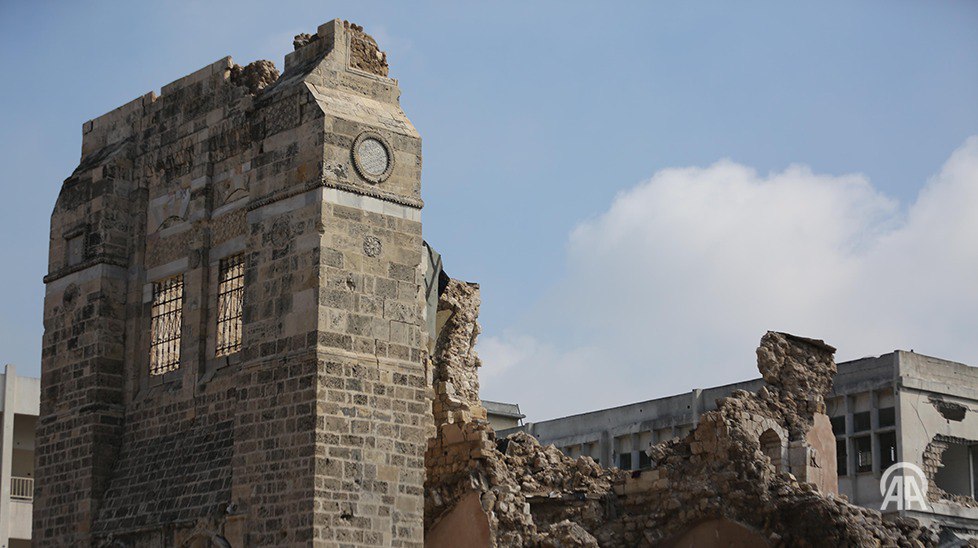
Israel Destroys 206 Heritage Sites in Gaza

The Israeli army has destroyed and vandalized 206 priceless archaeological and heritage sites amid its genocidal war on the Gaza Strip, a Palestinian official said on Tuesday.

“Palestinian archaeological and heritage sites were not spared from destruction, vandalism, looting and theft by the Israeli occupation army,” Ismail Thawabteh, the head of Gaza’s Government Media Office, told Anadolu.

He said some of the sites were completely destroyed, while others took severe damage.

“Israel’s targeting of these sites reflects a systematic strategy to obliterate the Palestinian identity,” he added.

Prominent among archaeological sites targeted by the Israeli army in Gaza are the Great Omari Mosque, Byzantine Church in Jabalia, Shrine of Al-Khadir in the central Gaza city of Deir al-Balah, and Blakhiya Byzantine cemetery (the Anthedon of Palestine) in northwestern Gaza City.

Also on the list are also the Greek Orthodox Saint Porphyrius Church, 400-year-old Al-Saqqa House, and Sayed al-Hashim Mosque, one of the oldest mosques in Gaza.

Some of the ancient and archaeological sites destroyed by the Israeli army date back to the Phoenician and Roman eras, while others date from between 800 BC and AD 1400, and some more recent ones were built 400 years ago.

Gaza is an ancient and historic city that came under the rule of several empires and civilizations, including the Egyptian pharaohs, the Greeks, Romans, and Byzantines, and then Ottoman rule in the Islamic era, among others.

“These criminal acts aim to harm the Palestinian people, their history and culture,” Thawabteh said.

Israel, he said, seeks “to obliterate the Palestinian cultural heritage, break the will of the Palestinians and consolidate the occupation as part of a plan to empty the land of its people and impose a new reality,” according to Anadolu.

Since launching its genocidal war on Gaza following a Hamas attack in October 2023, Israel has killed over 44,400 Palestinians, most of them women and children, and injured more than 105,000, according to official figures.

The second year of the genocide in Gaza has drawn widespread international condemnation, with starvation tactics and blocking humanitarian aid deliveries denounced as deliberate attempts to destroy the entire population.

Last month, the International Criminal Court (ICC) issued arrest warrants for Israeli Prime Minister Benjamin Netanyahu and former Defense Minister Yoav Gallant, accusing them of war crimes and crimes against humanity in Gaza.

Israel also faces a genocide case at the International Court of Justice (ICJ) for its actions in Gaza, which have drawn mounting international condemnation.

Continue reading