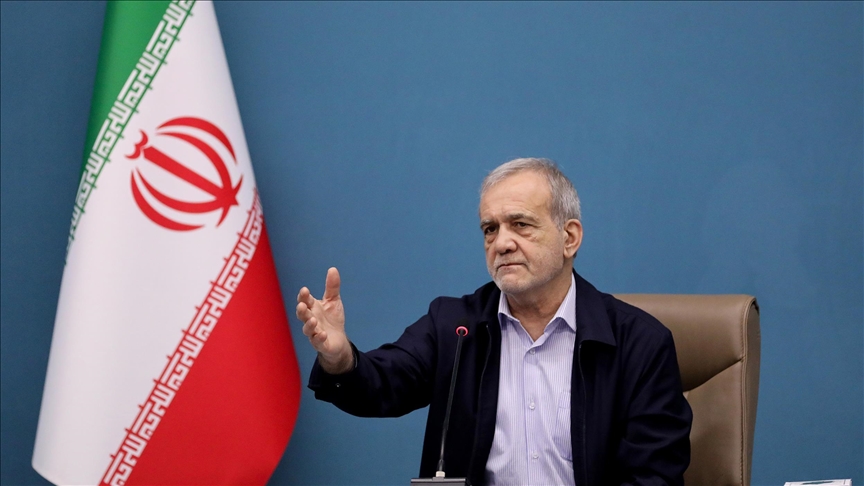
Iran said Wednesday evening that Friday’s nuclear talks with the US are scheduled to be held in the Gulf state of Oman, confirming the timing and location of the planned negotiations.
On US social media company X, Iranian Foreign Minister Abbas Araghchi said the talks would take place in the capital Muscat at around 10 am (0600GMT) local time.
“Nuclear talks with the United States are scheduled to be held in Muscat on about 10 a.m. Friday,” Araghchi wrote, expressing gratitude to Oman for facilitating the meeting.
“I’m grateful to our Omani brothers for making all necessary arrangements,” he added.
His comments come as a White House official also confirmed Wednesday to Anadolu that the talks would be held in Oman, despite earlier reporting by Axios that the US refused a change in the site of the talks, previously set to be held in Istanbul, Türkiye.
Prior to that, Iranian media reported that Iran and the US were slated to hold indirect negotiations in Muscat on Friday, with a focus on nuclear-related issues.
Before Muscat, Istanbul had been proposed as the venue, following Türkiye’s successful intervention to help ease tensions between the two countries.
Iran calls non-nuclear issues ‘non-negotiable’
As for what will be discussed, Iran’s semi-official Mehr News Agency cited a source saying that Washington seeks to “raise issues outside the nuclear framework, including defense matters.”
“These demands are not only unrelated to the nuclear issue but are directly tied to national security and the country’s deterrent capability and are fundamentally non-negotiable,” the unnamed source said.
He added that Iran is “ready to negotiate within a defined framework based on mutual respect on nuclear matters,” but that the “insistence on excessive demands and raising issues beyond the agreement is the main factor behind any potential deadlock.”
Oman has previously served as a mediator in indirect contacts between the two sides.
The planned talks come amid rising tensions between Washington and Tehran, fueled by an American military buildup in the Gulf and repeated threats of military action by US President Donald Trump.
In recent days, several countries have stepped in and offered to mediate between Tehran and Washington to ease tensions, with Türkiye playing a particularly active role.
The US and its ally Israel accuse Iran of seeking to produce nuclear weapons, while Tehran says its nuclear program is designed for peaceful purposes, including electricity generation.
Al Jazeera reported nine regional and Islamic countries pressured the Trump administration not to cancel and have the nuclear talks venue moved to Oman.
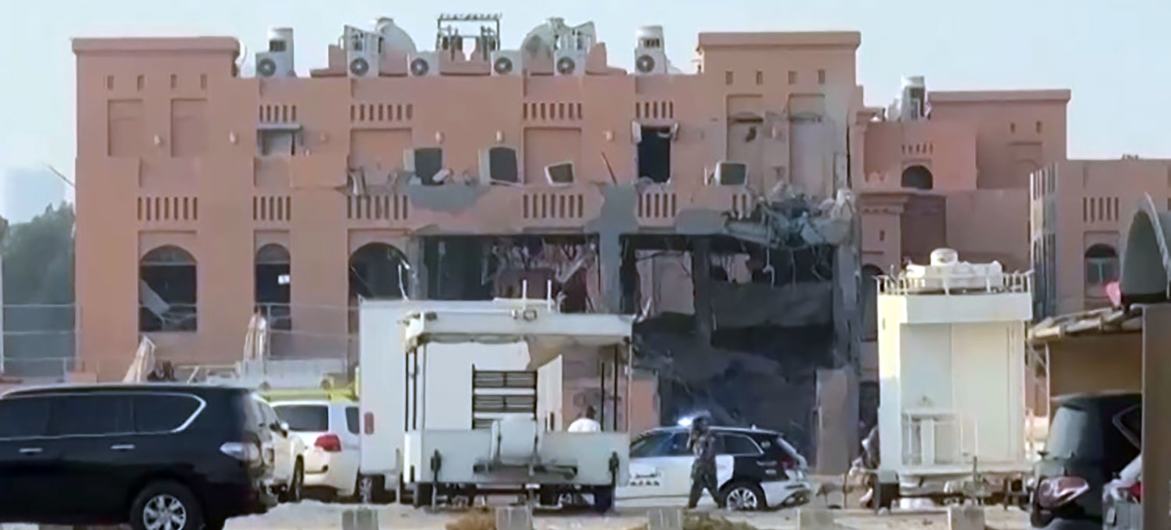
“This is a message to the entire Middle East,” Israeli Knesset Speaker Amir Ohana said in response to the Israeli airstrike that targeted Hamas leaders in the heart of the Qatari capital, Doha.
However, this statement is not merely a comment on the military operation strike into a declared strategic message, telling the entire region, and primarily the Gulf, that Israel, in partnership with Washington, has become the master of the decision-making process in the region.
Ohana’s statement is an explicit and direct threat that leaves no room for interpretation, reflecting the new deterrence doctrine adopted by Tel Aviv: No red lines, no geographical immunities, and no Western allies outside the confines of Israeli dictates. Simply put, anyone who disagrees with us becomes a legitimate target, even if they are in the heart of a friendly capital that hosts the largest American military base.
This makes for a dangerous conclusion: Israel no longer views the Gulf states as partners in stability, but rather as “open arenas for fiery messages.” Washington is blessing the silence, participating in complicity, and mocking the Arabs.
Naked dominance
And don’t forget the Israeli crime in the heart of the Gulf marks the beginning of a new era of naked dominance. It’s not a traditional security operation, but a pivotal turning point in the rules of regional engagement, in which Qatar has been embarrassed both on the Arab level and internationally.
Israel has now publicly placed itself in a circle (no longer concealing its intentions) – through bombing and military strikes – that it no longer sees a distinction between political geography and the theater of operations. More dangerously, the heart of the Gulf today has become openly subject to Tel Aviv’s fire. And who can challenge it?
The strike wasn’t an intelligence leak or a silent targeting, but a direct airstrike in an area teeming with embassies, schools, and residential buildings, in a country that is a major ally of Washington and a pillar of American security in the Middle East.
Thus the message has become clear to everyone: No one is above attack… no state, no sovereignty, no partnership.
The US administration, led by Donald Trump, evaded with a series of conflicting statements about its prior knowledge of the operation. But whether it knew and blessed it, knew and remained silent, knew too late, or did not know at all, the outcome is the same: The American cover was removed, Gulf confidence eroded, and billions perished. The statements of the US embassy in Doha did not go beyond expressions of caution to American citizens, while White House statements swayed between “regret over the location” to “understanding the goal of eliminating terrorism.”
I believe the opposite message was conveyed to the Gulf capitals: Your security is not a priority, and your sovereignty does not equate to a clear position from Washington. The question that now arises however is: Why Qatar? Why now? Why was the strike carried out in Qatar and not in Turkey, or Iran for example? This is despite the fact that the Hamas leaders that were targeted had just returned from Istanbul, suggesting Tel Aviv chose the location not arbitrarily but with deep political awareness. Tel Aviv did not pull the trigger in Istanbul, even though the targeted leaders passed through it only hours earlier.
Turkey, with all its military, political, and international complexity, is not a testing ground for Israeli madness. There are red lines that even Tel Aviv dares not cross… and Turkey is one of them. The potential Turkish military response, the internal Turkish explosion during a highly sensitive election season, and the delicate balance of power within NATO rendered Turkish territory “operationally closed” even to the most violent wings of Israeli decision-making. But when the targeted figures left Istanbul for Doha, everything changed.
Qatar, like other threatened Arab states, in the Israeli security and intelligence mindset, is merely an intermediate gray area, neither neutral nor classified as an “enemy,” potentially a shocking target at a low cost. This is something all Arab decision-makers should be aware of.
From Tel Aviv’s perspective, Qatar is balancing contradictory roles, managing mediation, funding aid, and hosting parties that anger Israel without possessing a genuine deterrent umbrella. There are no international calculations that could prevent a surgical strike carried out within hours. Merely hosting an American base does not make Doha “immune,” but may even further tempt Tel Aviv, proving that decision-making in the region is no longer solely in Washington’s hands but in Tel Aviv as well.
In short, Israel needed a platform to send the biggest message since the Gaza war… so it chose the weakest link, amid the silence of its strongest ally.
Here, we can pause a moment at the Knesset member’s statement that the operation was “a message to the Middle East.” This is not a slip of the tongue, but a strategic doctrine upon which future decisions are based. Israel is telling all countries in the region that whoever harbors Hamas, or even engages in dialogue with it, will be next.
If the Arab states fail to take a firm political stand, the Doha precedent will be repeated elsewhere. It may not be Hamas’s mediation that stands accuse but rather the concepts of neutrality, balance, and even dialogue with parties Tel Aviv disapproves of and which then could become sufficient justification for a strike. It’s a policy of punishment.
This scene is posing existential questions for Arab capitals. If Qatar, Washington’s most important ally, is being bombed over the heads of its own people, after Syria, Lebanon, and Gaza… should we wait for Iraq’s turn? Riyadh? Abu Dhabi? Kuwait? And others? Does the American umbrella truly protect us, or is it used only when our interests intersect with Israel’s?
And what is the point of hosting American bases if they do not prevent airspace violations? Or provide protection?
What happened in Doha is pushing the region to crossroads: Either continuing its position of dependency and timid mediation, or repositioning strategically and developing independent air defenses, which is logistically difficult, or seeking alternative alliances (Ankara, Beijing, Moscow, Tehran?), and establishing red lines that Tel Aviv will not cross.
Qatar now faces difficult choices: Will it withdraw from the Hamas mediation? Will it demand real security guarantees? Will it go further, toward symbolic deterrence or unconventional partnerships? Or will it pay the price of protection once again?
Beware: A war of wills is beginning now. The Israeli airstrike in Doha was not just a blow to Hamas, but also a slap in the face to the sovereignty of the Gulf and the region, an undermining of the prestige of international law and its signed, ratified, and binding agreements, and an insult to the concept of the alleged strategic partnership with America.
This is the beginning of a new era, one in which Israel and Washington declare that the security of the region is no longer an Arab decision. The question now is: Will the Arabs as a whole wake up before “Ohana’s message” reaches other capitals? Perhaps.
The author is a political writer based in Amman Jordan and contributed this article to the Al Rai Alyoum Arabic website
A documentary recounting Israel’s harrowing siege on Gaza’s largest health complex, Al-Shifa Hospital, killing some 170 Palestinians, premiered on Saturday in Istanbul.
Co-produced by Al Jazeera 360 and the On the Record for Humanity initiative, the premiere of Al-Shifa Hospital – 14 Days of Horror was held at the Lutfi Kirdar International Convention and Exhibition Center, with Anadolu as the global communications partner.
A Palestinian doctor highlights the aftermath of Israeli occupation at Al-Shifa Hospital. It was also reported that more than 400 were killed including children, women, medical staff and patients. pic.twitter.com/N6bwkfNGwG
The premiere, attended by Turkish Justice Minister Yilmaz Tunc, Anadolu Agency Editor-in-Chief Yusuf Ozhan, Anadolu Publications and Productions Coordinator Oguz Karakas, and other important media figures, began with an exhibit of photographs taken by Anadolu photojournalists who have been documenting the genocide in Gaza since Oct. 7, 2023.
‘Palestine has won this war psychologically’
At the opening, Ihsan Aktas, one of the founders of On the Record for Humanity, said they founded the initiative to raise global awareness of Palestine following the Israeli attacks that began last year.
He added: “At this point, Palestine has won this war psychologically. Today, the number of Palestinian flags waving around the world tops the number of American and Israeli flags.”
Aktas praised news agencies like Anadolu and Al Jazeera for exposing Israel’s war crimes and highlighted the strong support from the Turkish public and media for the documentary.
He stressed Anadolu’s crucial role in spotlighting the humanitarian crisis in Gaza, commending CEO Serdar Karagoz and Tunc for their essential support in amplifying their message.
Reminder to world to hold perpetrators accountable
Producer Samhy Mostafa said: “Al Jazeera 360 is a platform that brings all of Al Jazeera’s programs together under one roof, offering access to Al Jazeera’s vast library.”
What's left of Al-Shifa hospital complex after Zs retreat. Total destruction and hundreds of dead bodies of men, women and children executed pic.twitter.com/dCENwvO9qU
“It provides serious and positive media content that reflects and presents the truth as it is, continuing to bypass restrictions imposed by some social media platforms,” he added.
He also said: “This documentary exposes the suffering at Al-Shifa Hospital and aims to remind the world of the need to confront injustice and hold perpetrators accountable.”
After opening speeches, the documentary Al-Shifa Hospital – 14 Days of Horror was screened.
The premiere concluded with a panel moderated by journalist Enes Yalman, featuring director Obada Al Baghdadi, Gaza doctor Fadia Malhis, Al Jazeera journalist Ibrahim Saber, Academic Garbage Collection Center Secretary General Bekir Cantemir, and Haberturk TV General Manager Mehmet Akif Ersoy.
Al-Shifa Hospital siege
On the morning of March 18, Israeli forces raided Al-Shifa Hospital in Gaza, where more than 7,000 patients and displaced Palestinians had taken refuge.
During the raid and subsequent siege, more than 800 Palestinians were detained and interrogated by Israeli forces, and over 170 were killed.
After the Israeli army withdrew, mass graves containing burned human remains were discovered.
Israel has continued its brutal offensive on the Gaza Strip following a Hamas attack on Oct. 7, 2023.
"We give him painkillers so that he doesn't feel it and he (passes) in peace…and then he goes into the tent where we gathered the corpses"
Dr. Basel Abu Amru shares the horrific challenges he and other medical workers faced at Al-Shifa hospital during the Israeli aggression. pic.twitter.com/jkcrLU2aeU
The onslaught has resulted in over 40,000 Palestinian deaths, mostly women and children, and over 93,000 injuries, according to local health authorities.
The ongoing blockade of Gaza has led to severe shortages of food, clean water, and medicine, leaving much of the region in ruins.
Israel faces accusations of genocide at the International Court of Justice for its actions in Gaza.
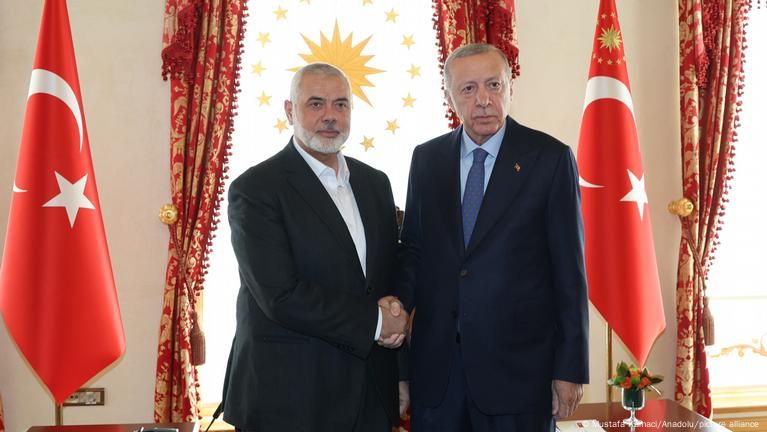
Turkish President Recep Tayyip Erdogan condemned Wednesday the assassination of Hamas Political Bureau Chief Ismail Haniyeh in Tehran as reported in Anadolu.
“I strongly condemn and curse the treacherous assassination carried out in Tehran against Hamas Political Bureau Chief Ismail Haniyeh,” Erdogan said on X.
Spokesperson for Turkiye's ruling Justice and Development Party (AK Party), Omer Celik: “This assassination showed once again that the Netanyahu government is a network of genocide and massacre. The just cause of the brotherly Palestinian people will defeat these murderers sooner… pic.twitter.com/SbXsze8zpR
It was “a despicable attempt to undermine the Palestinian Cause, the glorious resistance of Gaza, and the rightful struggle of our Palestinian brothers, aiming to demoralize, intimidate, and suppress them,” he added.
Erdogan emphasized that this assassination mirrors previous attacks on Palestinian figures like Sheikh Ahmed Yassin and Abdul Aziz al-Rantisi, asserting that “Zionist barbarism will once again fail to achieve its goals.”
Iranian media have reported that Hamas leader Ismail Haniyeh was killed by an “airborne guided projectile” that hit the residence where he was staying in the north of the capital Tehran on Wednesday.
He called for a united stance from the Islamic world to end the oppression in Gaza and reaffirmed Türkiye’s commitment to supporting the establishment of a sovereign Palestinian state with East Jerusalem as its capital.
Erdogan concluded with a prayer for Haniyeh, extending condolences to his family and the Palestinian people.
Turkish President Erdoğan: "I strongly condemn and denounce the treacherous assassination of Ismail Haniyeh, the head of Hamas' political bureau, in Tehran. It is a despicable act targeting the Palestinian cause, and Israeli terrorism in the region must come to an end." pic.twitter.com/SwwYfVg4zj
Hamas announced early Wednesday that Haniyeh was killed in an Israeli airstrike on his residence in the Iranian capital Tehran.
The Iranian state television also reported Haniyeh’s death, noting that an investigation into the assassination is ongoing and that the results will be announced soon.
Israel has made no immediate announcement about the assassination according to the Turkish news agency.
Türkiye, Friday, slammed Israel’s recent attacks on journalists, underlining their commitment to supporting media professionals reporting on the Palestinian plight.
“We wish a speedy recovery to the TRT News cameraman who was injured in occupiers’ attack, and we extend our get-well wishes to the TRT family,” the Turkish Foreign Ministry said in a written statement according to Anadolu.
“We see that Israel has not realized for months that it cannot conceal the truth by attacking journalists,” the ministry said.
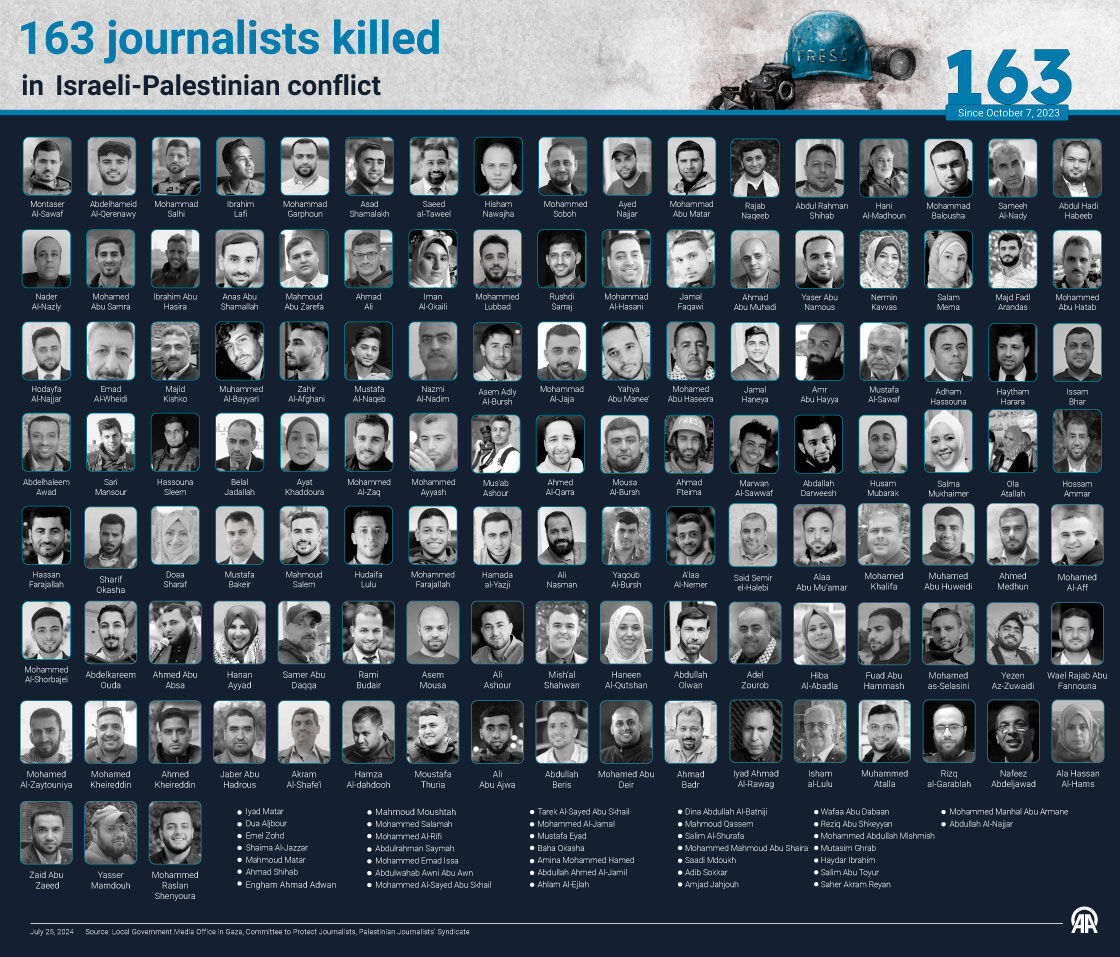
Israeli attacks on the Gaza Strip kill 163 journalists since October 7, 2023
“Brave and honorable journalists will continue to resolutely report the oppression happening in Palestine to the whole world, and our Ministry will stand by them in this struggle,” it added.
Israeli police prevented hundreds of Palestinian youths from entering Al-Aqsa Mosque in occupied Jerusalem for Friday prayers, witnesses told Anadolu.
Police officers stationed at the mosque’s outer gates turned away hundreds of youths seeking to pray, the witnesses said, adding that the police assaulted some of them.
The witnesses said that police beat one young man near Lion’s Gate, injuring his head. They also claimed that a member of the Turkish television network TRT was assaulted by police in the same area without any reason.
🔴Journalist Mutasim Garrab and 4 other people lost their lives as a result of Israeli attacks. This sad event increases tension in the region. 🔻https://t.co/kFoqSQUG5u
The Israeli police did not provide reasons for barring the large number of youths from entering the mosque or for the assaults. However, restrictions on youths entering the mosque have been tightening over the past few weeks.
The Islamic Waqf in Jerusalem, an organization under Jordanian authority responsible for managing the mosque’s affairs, stated that 35,000 people managed to perform prayers at Al-Aqsa Mosque despite Israeli restrictions.
Tensions have been running high across the occupied West Bank, including Jerusalem, amid a deadly Israeli offensive that killed nearly 39,200 people in the Gaza Strip since Oct. 7, 2023.
At least 590 Palestinians have since been killed and nearly 5,400 others injured by Israeli army fire in the occupied West Bank, according to the Health Ministry.
Feels a bit mad that AFP's Christina Assi was wounded in an Israeli airstrike on Lebanon and there has been basically no accountability for any journalist deaths or attacks committed by the Israeli state since the war began, and they are still competing in the Olympics… https://t.co/vzJt6QVc3q
In a landmark opinion on July 19, the International Court of Justice declared Israel’s decades-long occupation of Palestinian land “illegal” and called for the evacuation of all existing settlements in the West Bank and East Jerusalem according to the Turkish news agency.


 CrossFireArabia