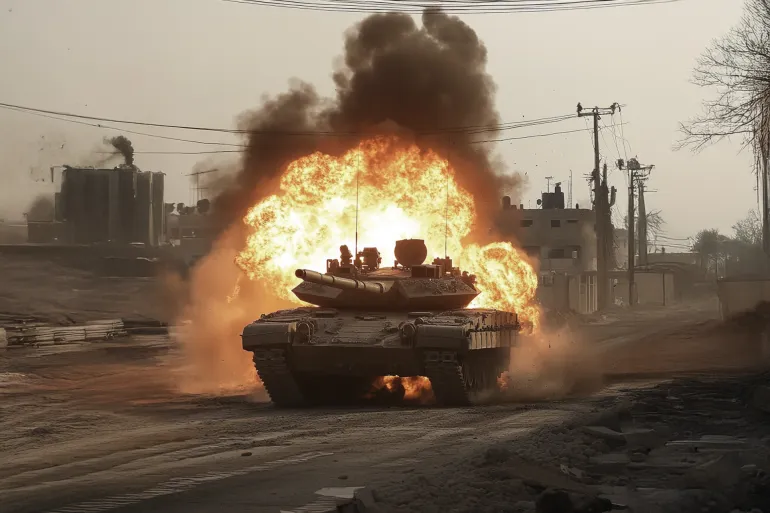
Hamas Destroyed 110 Israeli Military Vehicles in North Gaza

This includes the destruction of 54 Merkava tanks in 52 days

It is being called the “massacre of tanks.”  The destructive toll of Israeli tanks and military vehicles Al Qassam Brigades inflicted in the northern Gaza Strip over the past 52 day has reached reached 110.

Hamas and other Palestinian groups have been in the forefront of a battle

against the Israeli occupation army in the northern Gaza since 5 October, and despite the stifling Israeli siege and the violent bombardment of the area that does not stop day and night, and squadrons of drones over the skies of the area.

 Despite this however, Palestinian  resistance fighters succeeded in carrying out dozens of attacks on the occupation forces.

Al Jazeera monitored  the  military statements of the Qassam Brigades since the beginning of the Israeli military operation and showed the Qassam Brigades targeted 54 Merkava tanks, 27 armored personnel carriers, 26 military bulldozers (D9), and 3 Hummer jeeps.

According to the Hamas data, Al Qassam fighters carried out 40 attacks on Israeli vehicles with Yassin 105 shells, 39 attacks with explosive devices, and 13 attacks with tandem shells.

Qassam fighters pursued Israeli tanks and vehicles in Jabalia city and camp, Beit Lahia, Beit Hanoun, Al-Tawam area, Tel al-Zaatar, Al-Fallujah, Al-Saftawi Junction, Al-Hawoz Al-Turki area, Al-Qassasib neighborhood, eastern cemetery of Gaza City, Al-Khazindar area, Al-Atatra, and the Sheikh Radwan neighborhood.

On 5 October, the occupation army began a ground invasion of the northern Gaza Strip under the pretext of “preventing Hamas from regaining its strength in the area.” The Palestinians say Israel wants to occupy the northern Gaza Strip and turn it into a buffer zone after displacing its residents.

With American support, Israel has been waging a war on the Gaza Strip since 7 October, 2023, which has left more than 146,000 Palestinian martyrs and wounded – most of them children and women – and more than 10,000 missing, amid massive destruction and famine that has killed dozens of children and elderly people, in one of the worst humanitarian disasters in the world.
Continue reading
UN Official: Families Flee With Just ‘The Shirts on Their Backs’

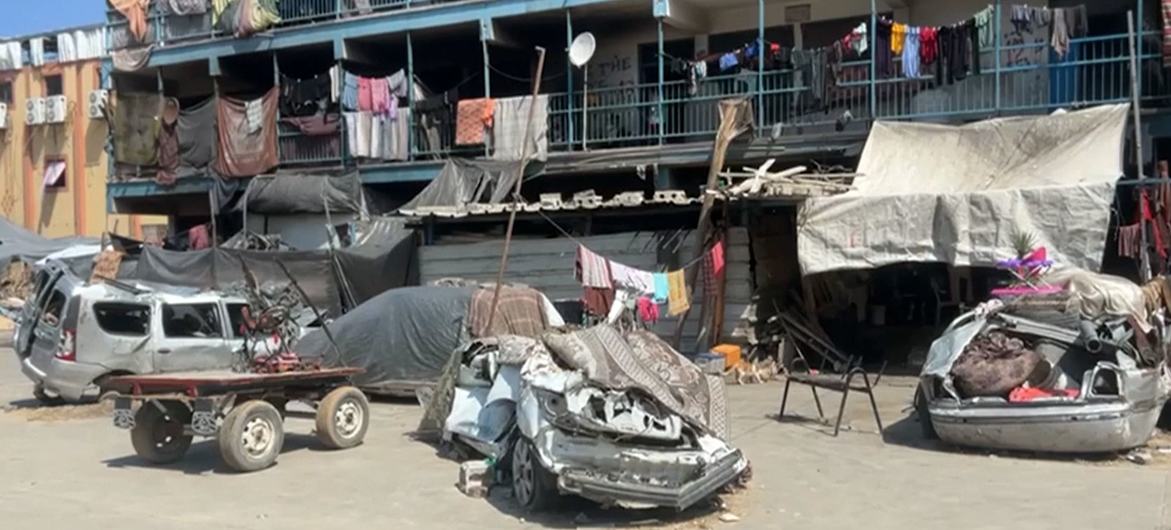
Families fleeing from besieged areas of northern Gaza are leaving homes and shelters with just the shirts on their backs, Louise Wateridge, Senior Emergency Coordinator for UNRWA, the UN agency for Palestinian refugees, told UN News on Saturday.

Speaking from an UNRWA school in Gaza City, which is in the north of the Strip, Ms. Wateridge said that, for almost 50 days, UN humanitarian missions have attempted to deliver supplies to northern Gaza, including besieged areas such as Jabalia, but access to those in desperate need has been extremely limited.

Louise Wateridge: I have heard absolutely horrific stories today, speaking to families who fled Jabalia for their lives. They say there was just nothing left. It was absolutely flattened. There was death around them. They ran out of food. They had no access to water.

They reached UNRWA schools like this one, searching for safety but, days after arriving, airstrikes which killed many of the people sheltering here. And we’ve seen six such incidents on UN school shelters.

Since this siege began, we have had this horrible situation where people are forced to flee for their lives from the besieged north; they come to Gaza City looking for safety, but the danger just keeps following them. Death and destruction are their shadows.

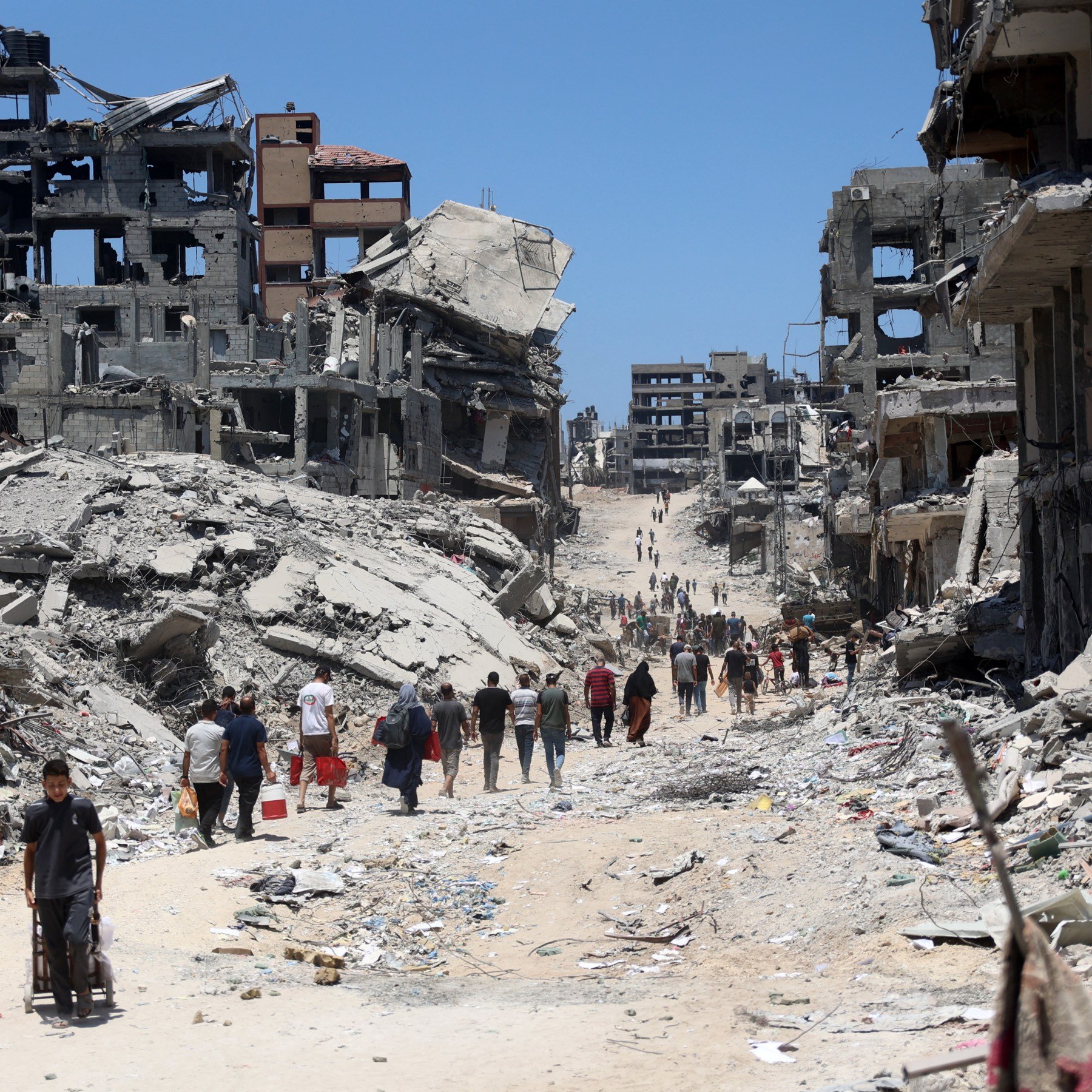
Louise Wateridge: As far as the eye can see, every building is damaged and destroyed. You might see a stairwell riddled with bullet holes, or an exposed living room hanging out of a third-floor apartment, signs that there was once life here.

Around 300,000 people are now in Gaza City and it’s just rubble. That’s why people are forced to shelter in these UN facilities, because there is just nowhere else to go.

With winter coming, people are trying to find some kind of cover and safety, and protect themselves from the elements. They need tarpaulins, tents and shelter. They don’t have blankets or mattresses. They are just out in the in the open.

Louise Wateridge, UNRWA Spokesperson (middle) following the administering of polio vaccination in UNRWA's Deir El Balah health center.

UN News

Louise Wateridge, UNRWA Spokesperson (middle) following the administering of polio vaccination in UNRWA’s Deir El Balah health center.

UN News: How difficult is it to get aid in?

Louise Wateridge: For almost 50 days, access to besieged areas of north Gaza has either been denied or impeded. People have no access to food or water. We’ve heard people say they drank water from puddles to survive.

The eight UNRWA water wells in Jabalia are all damaged and destroyed. The hospitals have been hit on multiple occasions, and all of the UNRWA health clinics are out of medication.

Many humanitarian workers have been injured and killed themselves since the start of this war. Are they still at risk?

Louise Wateridge: Yes, every day. There is absolutely nowhere safe in Gaza.

247 UNRWA colleagues have been killed in this war.

Time and time again, day in and day out, our colleagues and their families are being injured and killed.

Every day my team and I wake up, the first thing we do is text each other to make sure everybody made it through another night.

For some weeks, we have had colleagues scattered across the Gaza Strip. Sometimes you lose contact with each other for days, if not weeks on end, and we don’t know how they are.

Sometimes we find out our colleagues have been killed and we haven’t known for a few days. Sometimes they come back online. It’s desperate.

Multiple United Nation convoys have been shot at. I was in a convoy in July that was shot at delivering supplies to northern Gaza.

It’s becoming more dangerous and more difficult for humanitarians to do their jobs by the day.

UN News

Continue reading
Jabalia: Israeli Soldiers’ Cemetery

Ahmed Mansour writes:

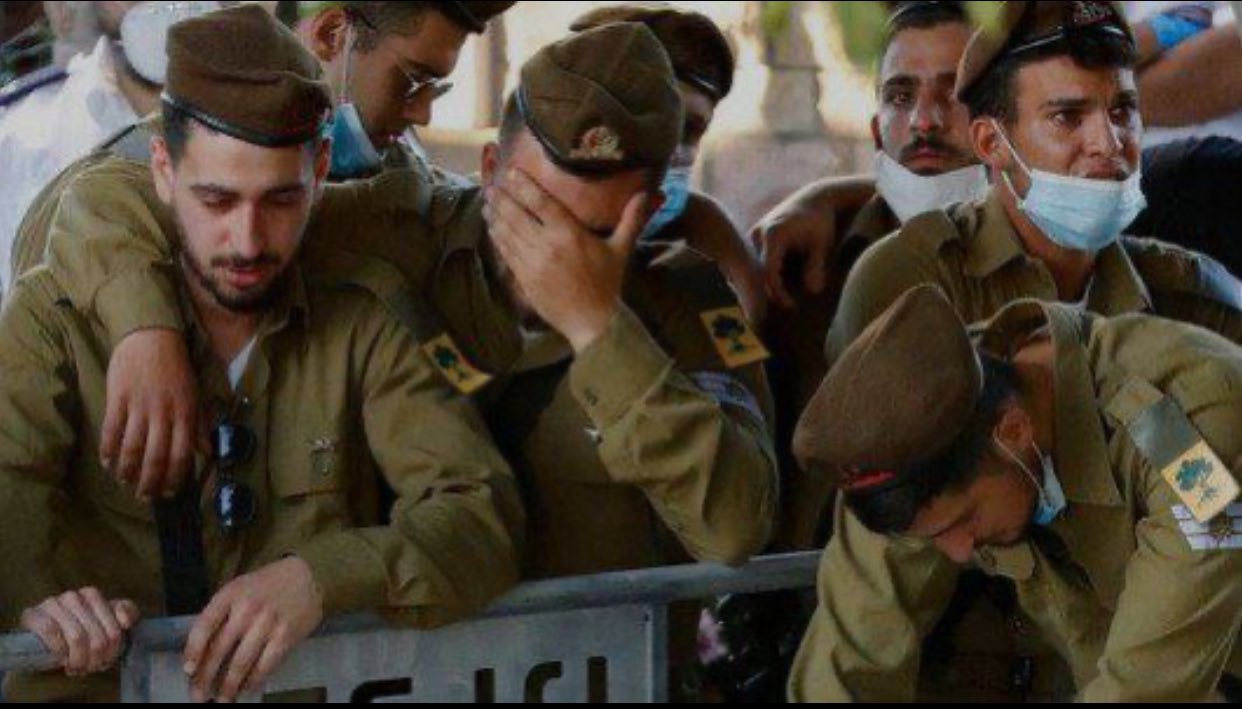
Jabalia has become a cemetery for the soldiers of the Israeli occupation army because of the intensity of the fighting and the high number of deaths.

Amit Halevi, member of the Knesset for the Likud Party says: The military operation in Jabalia should not have been launched, and Israel Katz (new Defense Minister) should instruct the army to change its plans. We lost 24 soldiers and officers there in a month and a half. Have we gone crazy?”

These are the official numbers that are recognized, but the Israeli losses are always many times what they announce.

Israeli army radio said that 27 Israeli soldiers were killed in Jabalia in the northern Gaza Strip since the start of the latest ground operation that started on 5 October, 2024.

Continue reading
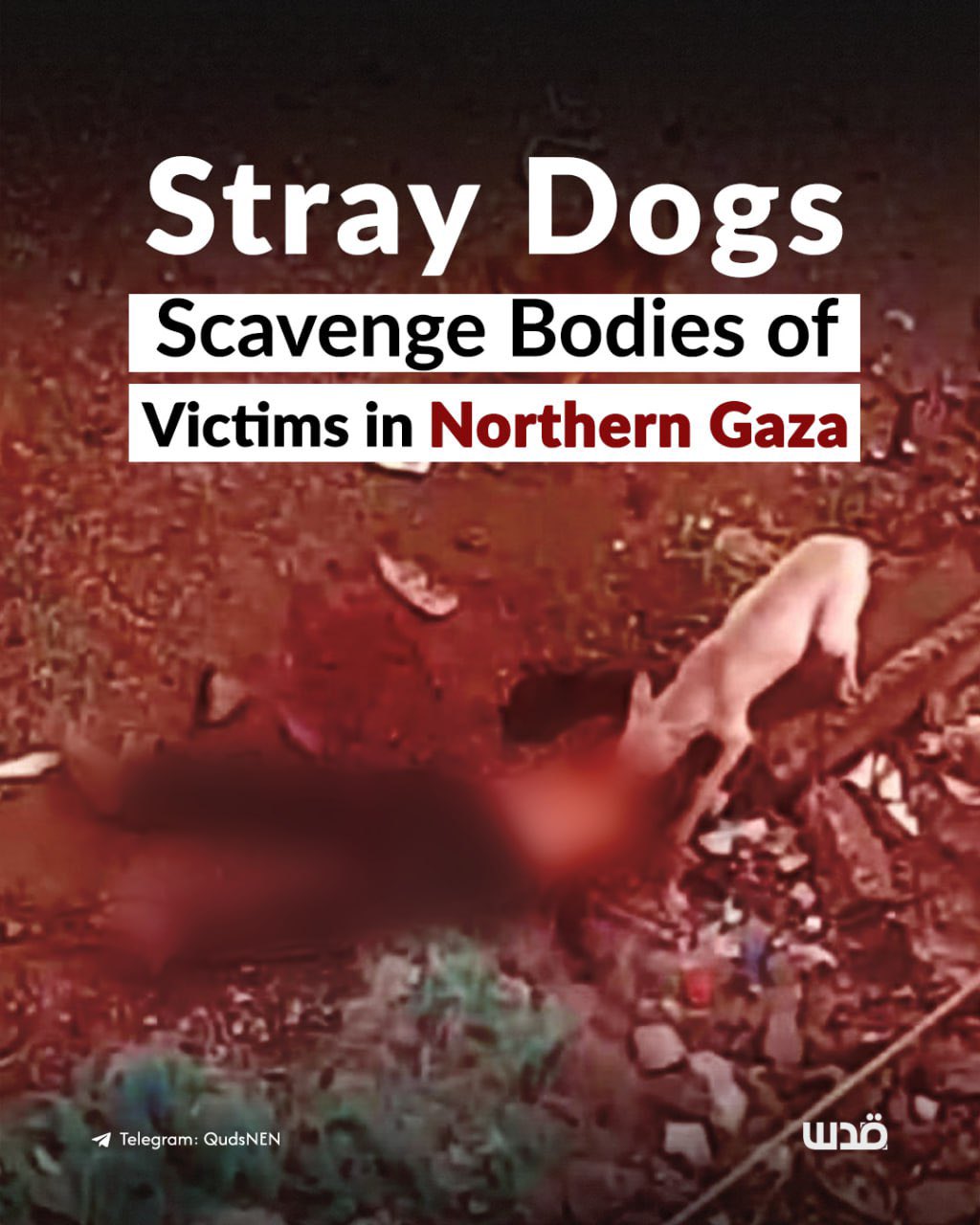
Stray Dogs Scavenge The Dead in Jabalia

Israeli occupation forces gunned down dozens of displaced Palestinians in Beit Lahia and Jabalia in northern Gaza. The intentional blockade of healthcare services and humanitarian aid has left the bodies of victims abandoned in the streets. Witnesses report stray dogs scavenging the remains, underscoring the escalating humanitarian crisis in Gaza.

Continue reading