Israel’s War on Palestine

Israel’s intensification of its military assault against the northern West Bank and its forced displacement of its Palestinian communities marks a dangerous grave violence and human rights violations.

The Israeli army has been conducting the military operation “Iron Wall” in the northern occupied West Bank since January 21, killing until date more than 56 Palestinians and displacing thousands.

The assault came amid rising tensions in the occupied West Bank, where at least 917 Palestinians have been killed and nearly 7,000 others injured in attacks by the Israeli army and illegal settlers since the start of the Gaza war on October 7, 2023, according to the Palestinian Health Ministry.

Since the start of the operation several refugee camps have been nearly emptied of their residents, the largest displacement in the occupied territory since the 1967 Mideast war.

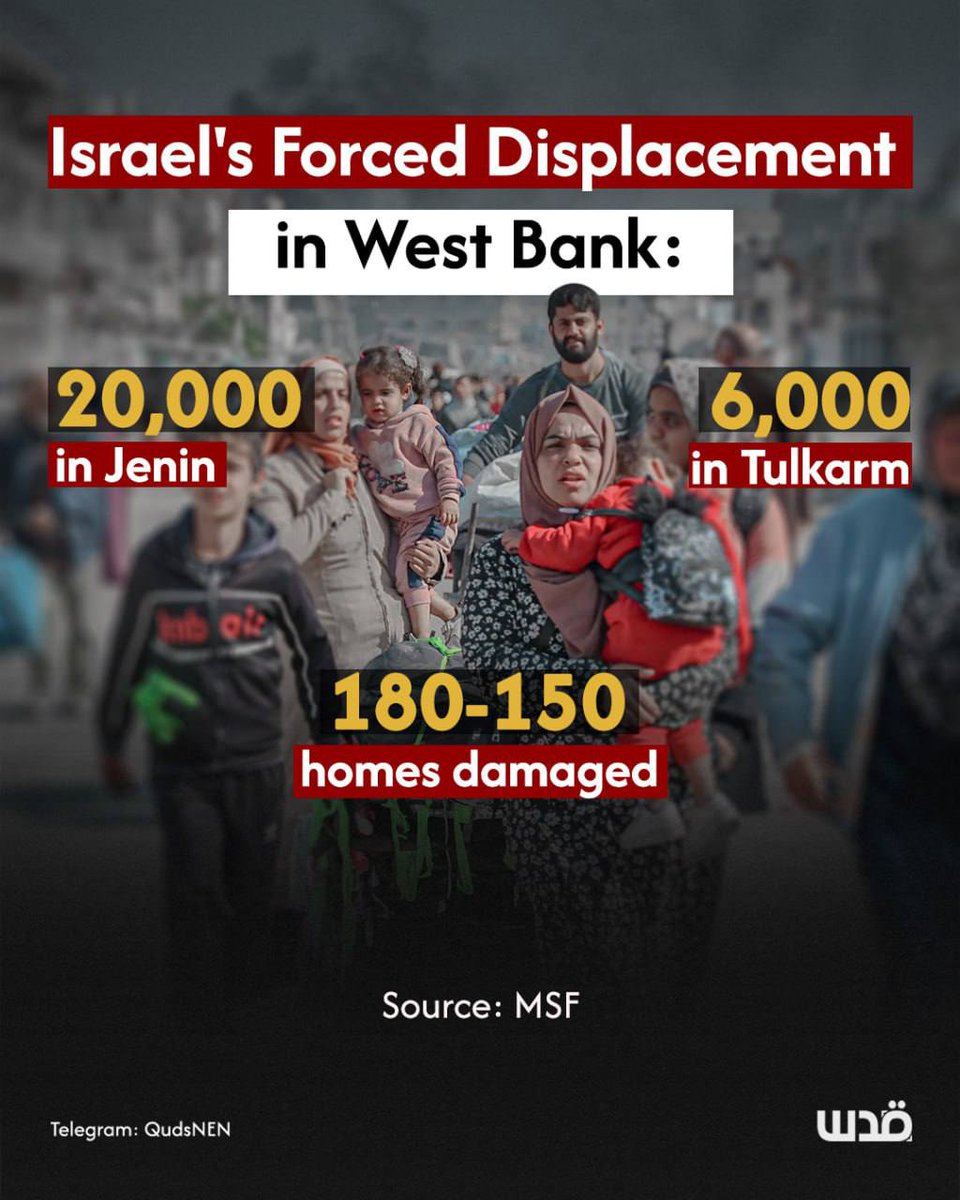
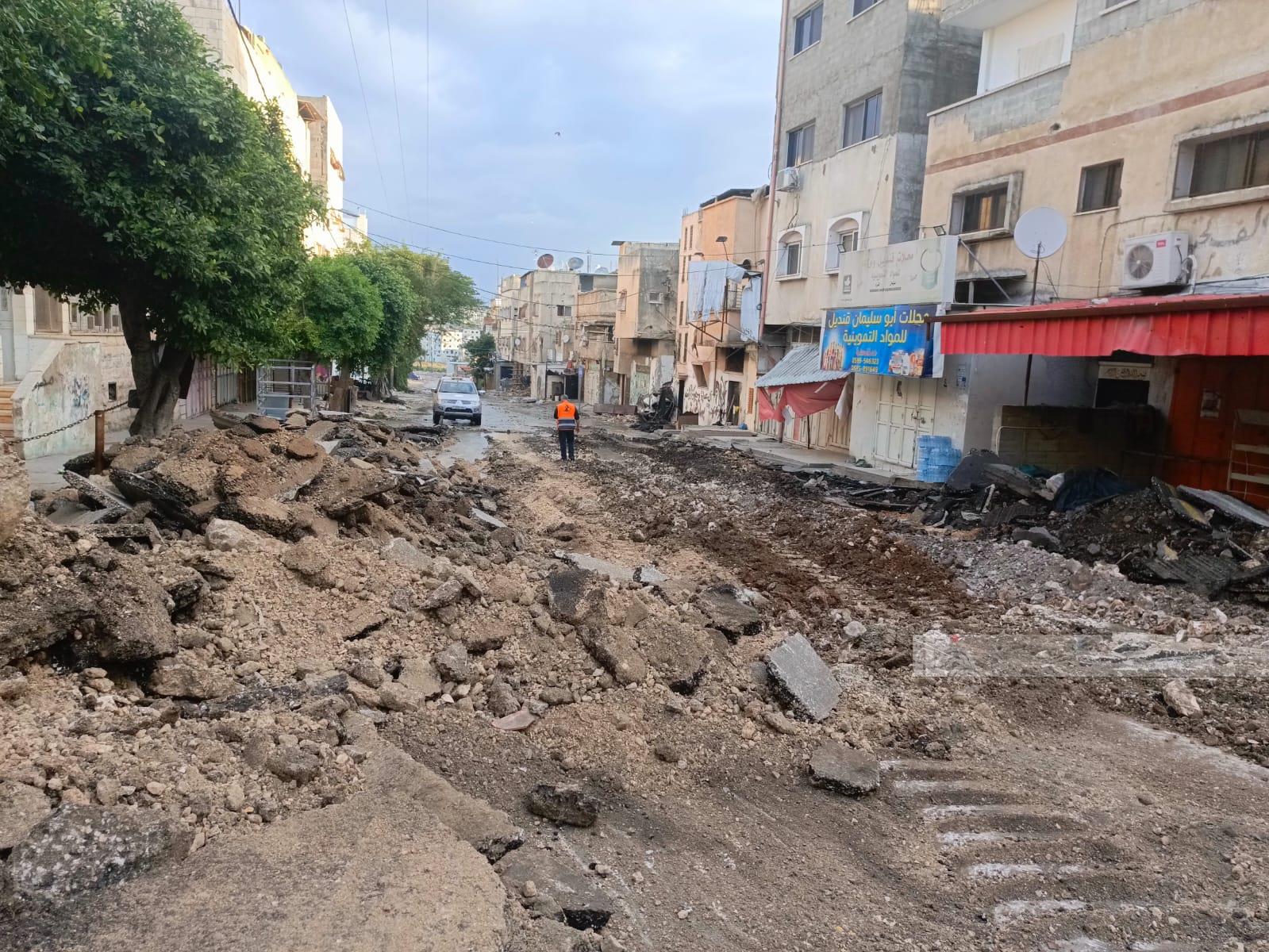
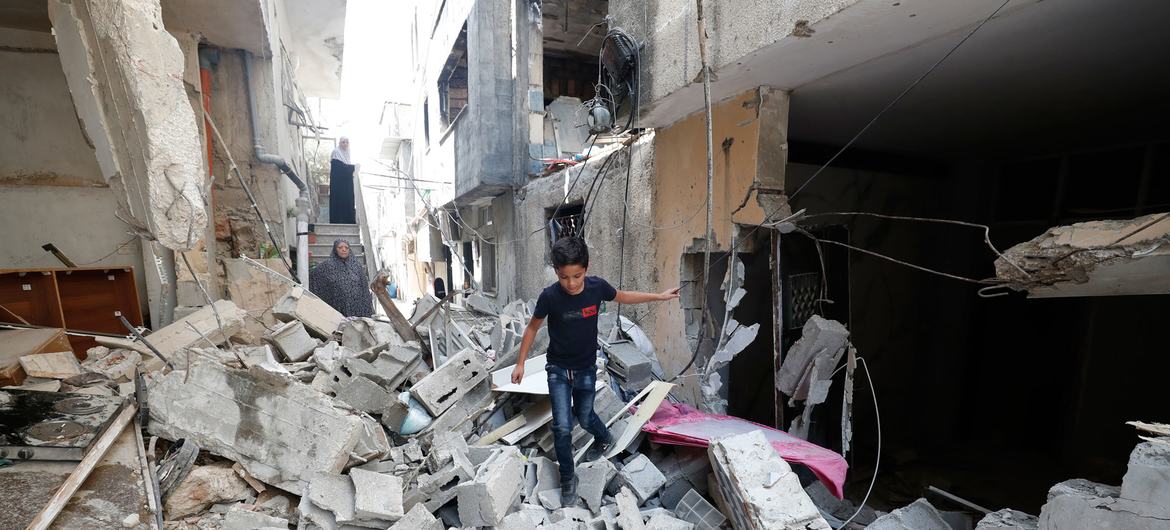
Starting in Jenin Camp, the operation has expanded to Tulkarm, Nur Shams, and El Far’a refugee camps witnessing a comprehensive, Israeli -driven war of destruction that led to the forcible displacement of more than 40,000 Palestinian refugees. 

Repeated and destructive operations have rendered the northern refugee camps uninhabitable, trapping residents in cyclical displacement. However, in 2024, more than 60 per cent of displacement was a result of Israeli Forces operations, an increasingly dangerous and coercive environment absent any judicial orders. 

Daily reports from displaced residents described a pattern where they were led out of their homes by Israeli security forces and drones under the threat of violence.

They were then forced out of their towns with snipers positioned on rooftops around them and houses in their neighborhoods used as posts by Israeli security forces according to the UN Human Rights Office.

“Leave this place and forget the camp. You will never return. Move now before we destroy it completely,” the Israeli security forces threatened the residents.

Other eyewitness testimonies also recounted similar statements by Israeli security force members who reportedly told displaced residents to “forget” and “say goodbye” to their homes, stressing they would not be allowed to return.

One resident reported being told to “go to Jordan.”

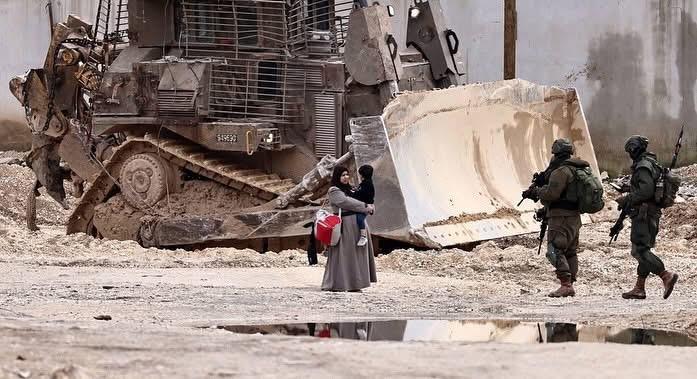
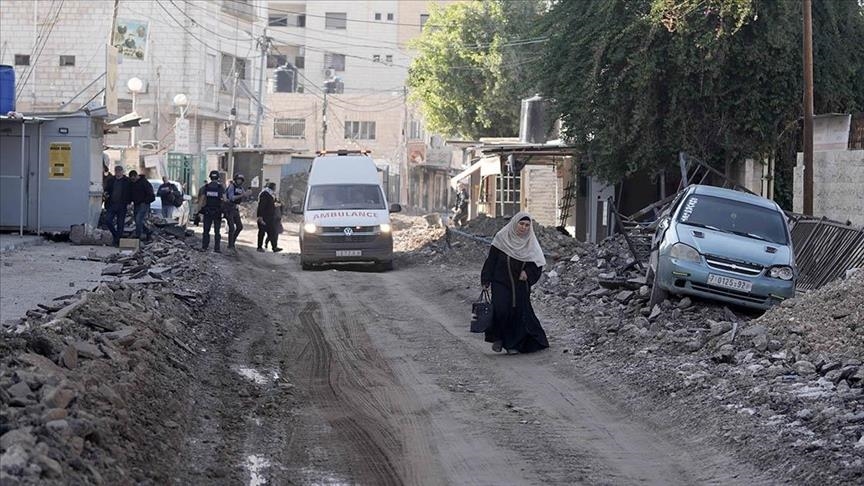
Besides, Jenin refugee camp roads were bulldozed recently with new signs apparently giving several streets Hebrew names, UN Human Rights Office said.

This is happening while statements by Israeli officials persist in communicating open plans to annex the region, empty it of Palestinians, and expel them out of the occupied Palestinian territory.

The use of air strikes, armored bulldozers, controlled detonations, and advanced weaponry by the Israeli Forces has become routine, militarised approach that is inconsistent with the law enforcement context of the Occupied West Bank, where there have been at least 38 airstrikes in 2025 alone.

Moreover, on February 19, the Israeli army has prevented thousands of displaced Palestinians from returning to their homes in the Jenin refugee camp and the

Camp stands empty today, evoking memories of the second intifada.

This scene stands to be repeated in other camps. 

On the other hand, accompanied by soldiers, Israeli Prime Minister Benjamin Netanyahu entered a Palestinian home in the Tulkarem refugee camp in the northern West Bank on February 21, announcing a new military operation in the occupied West Bank.

“We are destroying entire streets, eliminating militants, and I have instructed reinforcements in the West Bank along with additional military operations,” Netanyahu said in a recorded statement from Tulkarem, released by his office.

Earlier on the same day, the Israeli army announced the deployment of three additional battalions to the occupied West Bank following Netanyahu’s directive for a “strong operation.”

All this is a part of a plan to uproot Palestinian refugee camps, similar to the events that took place in Gaza and reminiscent of the 1948 Nakba.

This lines up with Israel’s vision of a war declared since a long time on the UNRWA, the United Nations Relief and Works Agency for Palestine Refugees which has reached the climax during the war on Gaza.

Under the Knesset laws implemented on January 30, UNRWA no longer has any contact with the Israeli authorities, making it impossible to raise concerns about civilian suffering or the urgent need for the delivery of humanitarian assistance which puts at grave risk the lives of Palestine Refugees and the UNRWA staff that serve them too.

UNRWA reiterates that civilians and civilian infrastructure must be protected at all times and that collective punishment is never acceptable.

There are about 912,879 registered Palestinian refugees in the occupied West Bank, around a quarter of whom live in 19 refugee camps mostly densely populated camps, located next to major towns and others are in rural areas, according to UNRWA.

Israel views these camps as incubators of armed Palestinian struggle, as it seeks to eradicate the refugee issue and the right of return.

Any forcible transfer in or deportation of people from occupied territory is strictly prohibited and amounts to a crime under international law.

Rather than abide by these rules, Israel has openly defied international law time and again, inflicting maximum suffering on civilians in the occupied Palestinian territory and beyond.

Displaced Palestinians must be allowed to return to their homes and Israel must comply with its obligations under international law, which include ending its unlawful presence in the Occupied Palestinian Territory as rapidly as possible and evacuate all occupied West Bank settlements.

In the meantime, as the occupying power, Israel must ensure the protection of Palestinians, the supply of their basic needs, and the respect of their full range of human rights.

Najla M. Shahwan is a Palestinian author, researcher and freelance journalist. Author of thirteen books in literature and a children story collection. Chairwoman of the Palestinian Center for Children’s Literature (PCCL). Founder of Jana Woman Cultural Magazine. Recipient of two prizes from the Palestinian Union of Writers.
Continue reading
UN Slams Israel’s ‘Unprecedented Displacement’ on The West Bank

The UN human rights office, OHCHR, on Friday condemned the intensifying Israeli military operation in the northern West Bank, warning that nearly 40,000 Palestinians have been displaced already amid an “alarming wave” of violence and destruction.

Since the start of the offensive on 21 January, Israeli forces have killed at least 44 Palestinians, including five children and two women, in Jenin, Tulkarem and Tubas governorates, and four refugee camps in those areas, according to OHCHR.

Many of those killed were unarmed and posed no imminent threat, said the UN rights office, calling the killings “part of an expanding pattern of Israel’s unlawful use of force in the West Bank where there are no active hostilities.”

‘Unprecedented’ displacement

OHCHR also highlighted an unprecedented scale of mass displacement not seen in decades in the occupied West Bank.

It cited reports from displaced residents of a pattern where they were led out of their homes by Israeli security forces and drones under the threat of violence.

They are then forced out of their towns with snipers positioned on rooftops around them and houses in their neighbourhoods used as posts by Israeli security forces,” the office said.

Testimonies collected by OHCHR describe Israeli forces threatening residents who were told they would never be allowed to return. One woman, who fled barefoot carrying her two young children, said she was denied permission to retrieve heart medication for her baby.

In Jenin refugee camp, bulldozed roads were photographed with new street signs reportedly now written in Hebrew.

“In this regard, we reiterate that any forcible transfer in or deportation of people from occupied territory is strictly prohibited and amounts to a crime under international law,” OHCHR stated.

Legal obligations

The office stressed that displaced Palestinians must be allowed to return to their homes and called for immediate, transparent investigations into the killings.

“Military commanders and other superiors may be held responsible for the crimes committed by their subordinates if they fail to take all necessary and reasonable measures to prevent or punish unlawful killings,” it stated.

OHCHR also reiterated Israel’s obligations under international law, including ending its unlawful presence in the Occupied Palestinian Territory as rapidly as possible and evacuating all West Bank settlements immediately.

“In the meantime, as the occupying power, Israel must ensure the protection of Palestinians, the provision of basic services and needs, and the respect of Palestinians’ full range of human rights,” the office said.

WFP aid trucks cross into Gaza via the Zikim and Kerem Shalom border crossings.

© WFP

WFP aid trucks cross into Gaza via the Zikim and Kerem Shalom border crossings.

Humanitarian update

Meanwhile in Gaza, the UN World Food Programme (WFP) reported on Friday it had reached more than 860,000 men, women and children with food parcels, hot meals, bread and cash assistance since the start of the fragile ceasefire.

UN Spokesperson Stéphane Dujarric told journalists at a regular news briefing in New York that over 19,000 metric tonnes of WFP food have entered Gaza.

The agency has also distributed nutrition packs to some 85,000 people, including children under five, and pregnant and breastfeeding women, and provided more than 90,000 people with cash assistance in the past two weeks.

Efforts are also underway to establish more food distribution points, especially in North Gaza, to reduce travel distances, transport costs and protection risks for families,” Mr. Dujarric said.

Fuel deliveries, schools reopening

In addition, the World Health Organization (WHO) distributed 100,000 litres of fuel to hospitals in Gaza City on Friday, having delivered about 5,000 litres of fuel to Al Awda Hospital, in North Gaza governorate the day before.

In southern Gaza, education partners in Rafah are preparing for the reopening of at least a dozen schools as displaced families return to their home areas, Mr. Dujarric said.

“As you know, schools across the Strip had been used as shelters for Palestinians displaced during 15 months of hostilities. In Khan Younis and Deir al Balah, partners are providing cleaning materials to restart learning activities,” he added.

UN News

Continue reading
Israel Displaces 40,000 Palestinians in West Bank

The forced displacement of Palestinian communities in the northern West Bank is escalating at an alarming pace. 

Since the start of operation “Iron Wall” by the Israeli Forces on 21 January, several refugee camps have been nearly emptied of their residents. The operation, ongoing for nearly three weeks, is now the single longest in the West Bank since the second intifada. 

Starting in Jenin Camp, the operation has expanded to Tulkarm, Nur Shams, and El Far’a refugee camps and led to the displacement of 40,000 Palestine Refugees. 

The Israeli Forces began carrying out large-scale operations in the occupied West Bank in mid-2023. Since then, thousands of families have been forcibly displaced.  Repeated and destructive operations have rendered the northern refugee camps uninhabitable, trapping residents in cyclical displacement. In 2024, more than 60 per cent of displacement was a result of Israeli Forces operations, absent any judicial orders. 

Forced displacement in the occupied West Bank is the result of an increasingly dangerous and coercive environment. The use of air strikes, armoured bulldozers, controlled detonations, and advanced weaponry by the Israeli Forces has become commonplace – a spillover of the war in Gaza. Such militarised approaches are inconsistent with the law enforcement context of the occupied West Bank, where there have been at least 38 airstrikes in 2025 alone. 

Palestinian armed groups are also increasingly active in the northern West Bank, deploying improvised explosive devices inside refugee camps, including near UNRWA facilities and civilian infrastructure. They have engaged in violent clashes with both Israeli and Palestinian Forces. From December 2024 onwards, Palestinian Forces operations further exacerbated displacement from Jenin camp. 

UNRWA reiterates that civilians and civilian infrastructure must be protected at all times and that collective punishment is never acceptable.

Jenin Camp stands empty today, evoking memories of the second intifada. This scene stands to be repeated in other camps.  Under the Knesset laws implemented on 30 January, UNRWA no longer has any contact with the Israeli authorities, making it impossible to raise concerns about civilian suffering or the urgent need for the delivery of humanitarian assistance. This puts at grave risk the lives of Palestine Refugees and the UNRWA staff that serve them.

UNRWA

Continue reading
Israel Forces Out 20,000 Jenin Residents

Israel has forcibly displaced more than 20,000 Palestinians from the Jenin refugee camp in the northern West Bank, a Palestinian official said on Sunday.

“The (Israeli) occupation has entirely destroyed the Jenin refugee camp and forcibly displaced over 20,000 residents, leaving behind their homes, documents, and personal belongings,” Jenin Deputy Governor Mansour al-Saadi told the Voice of Palestine radio.

The displaced residents are expected to seek shelter in other cities across the West Bank, as destruction caused by the Israeli assault makes their return impossible.

The Israeli attacks and destruction are “a conspiracy against the refugee issue, aimed at erasing it entirely,” Saadi said.

The Palestinian official characterized the Israeli offensive on Jenin city and its refugee camp as “collective punishment” targeting nearly 400,000 residents of the city.

He highlighted the severe economic losses caused by the ongoing assault as well as the disruption of the education system.

He appealed to international human rights and legal organizations to “enter the camp and document the extent of the Israeli crime given the strong likelihood that the bodies of dead and injured individuals remain buried under the rubble of destroyed homes.”

The Israeli escalation follows a broader Israeli military offensive that began on Jan. 21 in Jenin and its refugee camp, as well as surrounding towns, killing at least 25 people, according to the Palestinian Health Ministry.

The army expanded its assault into Tulkarem on Jan. 27, killing five more people. On Feb. 2, another assault was launched in the town of Tammun and the Far’a refugee camp in the Tubas city.

The escalation follows a ceasefire and prisoner exchange deal in Gaza on Jan. 19, after more than 15 months of Israel bombardment, which has killed nearly 48,200 Palestinians and devastated the enclave.

Since the war began on Oct. 7, 2023, Israeli forces and settlers have killed at least 906 Palestinians across the occupied West Bank, according to the Health Ministry.

Continue reading