US Right-wingers Blast Netanyahu

Former Trump strategist and a key voice in the Make America Great Again (MAGA) orbit, Steve Bannon, has delivered a scathing broadside against Israeli Prime Minister Benjamin Netanyahu, questioning whether Israel was dictating American foreign policy as President Donald Trump weighs military action against Iran.

“Who in the hell are you to lecture the American people?” Bannon said on his widely followed War Room podcast, referring to Netanyahu.

“Who are you to lecture the American people? The American people are not going to tolerate it. Not going to put up with it.”

Bannon, an influential voice in the American right, who served as chief strategist during Donald Trump’s first administration, was seen entering the White House on Thursday morning for a reported lunch with the president.

He has emerged as one of the loudest critics of US support for Israel’s military campaign, which has escalated alongside fears that Trump may green-light direct strikes on Iran.

Alongside right-wing firebrands like Tucker Carlson, Bannon has warned that Trump risks shattering the “America First” base that helped power his rise and could lose the presidency if he’s seen as starting a new Middle East war.

“President Trump may come to that conclusion, but it’s not something he would just say… ‘Oh yeah, let’s go bomb ‘em and take care of it.’ He’s going to do it because he’s got to weigh the options now that you’ve gotten us into it,” Bannon said.

“Quit coming to us to finish it,” he added, directing his remarks squarely at Netanyahu.

Related – TRT Global – Tucker Carlson corners Ted Cruz on Iran stance, exposing Conservative tensions

‘We just got out of 20 years of it’

Bannon accused the Israeli prime minister of sabotaging previous negotiations over Iran’s nuclear deal to push his own agenda of “regime change and regime destruction.”

“That’s what he was pitching the other night,” Bannon said.

“That’s exactly where we are, and people should be truthful with each other, particularly in these tough decisions. That’s what allies do. Allies don’t manipulate and don’t inextricably draw people into situations from which the other party has to get them out of.”

Netanyahu has defended his stance, warning MAGA-aligned critics of intervention:

“Today, it’s Tel Aviv. Tomorrow, it’s New York… I understand ‘America First.’ I don’t understand ‘America Dead.'”

But that message has sparked deep divisions inside Trump’s base and fury from key voices on the right who see the war as political suicide.

“It’s just propaganda, propaganda, propaganda and Lindsey Graham, Lindsey Graham, Lindsey Graham,” Bannon fumed, referring to the pro-war senator from South Carolina.

Before Israel launched its aggression, Bannon said he urged Netanyahu to “read the room” and rethink his threats.

“It’s gonna drag us into a regional war,” Bannon said.

“We just got out of 20 years of it….but…if they go it alone, it’s the end of the American relationship with Israel. It’s just the end of it.”

TRT World

Continue reading
Deflecting Netanyahu’s Problems

By Jonathan Fenton-Harvey 

Just a day before launching airstrikes on Iran, Israeli Prime Minister Benjamin Netanyahu, facing bribery and fraud charges, narrowly survived a Knesset vote that could have collapsed his government. Alongside the legal charges, Netanyahu’s domestic popularity has plummeted over corruption, economic woes and failures to return Israeli hostages from Gaza. But for Netanyahu, the war offered more than military momentum: It has given him a temporary reprieve.

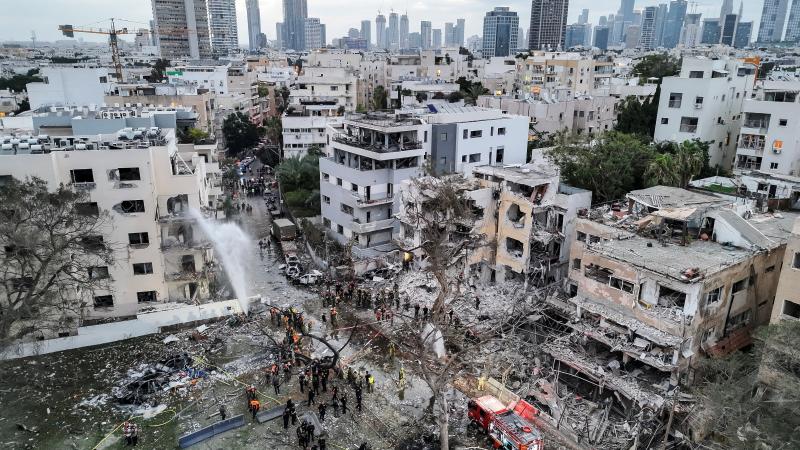
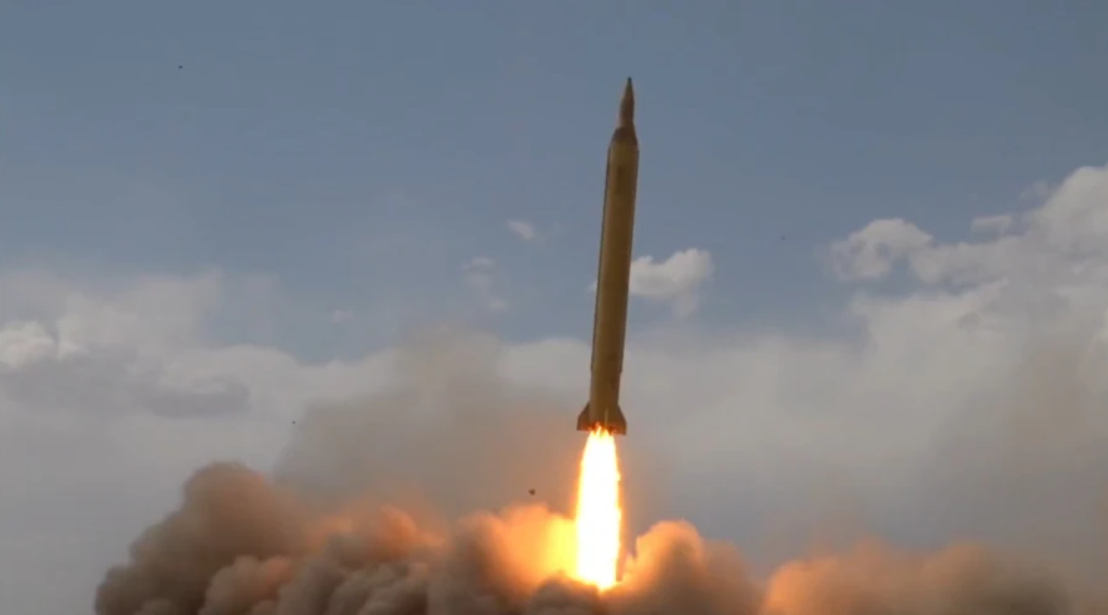
Within days, Israeli airstrikes reportedly weakened Iranian nuclear and military infrastructure, eliminated senior military figures, and killed hundreds of civilians. On X, Israeli Defense Minister Israel Katz claimed “civilians in Tehran will pay a collective price,” signaling a destructive intent. As Iran has hit back, firing missiles at Israeli infrastructure and cities, diplomacy over Iran’s nuclear program has all but collapsed.

Even if a ceasefire occurs, Israeli-Iranian tensions have escalated to near irreversibility as long as both the current Israeli and Iranian governments remain in power. Israel presents the assault on Iran as a necessary move to neutralize its nuclear ambitions, a claim repeated over the years, despite the lack of convincing evidence that Tehran was close to building a nuclear bomb. In reality, the war is driven more by Netanyahu’s personal survival than just Israel’s.

As with Israel’s prolonged onslaught on Gaza, this conflict appears designed to consolidate domestic support – attempting to rally the population around the image of an existential enemy – just as it did with Hamas and the Palestinians in Gaza. That same logic extended into Lebanon, where Israel’s assault weakened Tehran’s ally Hezbollah and coincided with a jump in public approval for Netanyahu’s Likud party. But with neither Gaza nor Lebanon yielding lasting political dividends, Iran has become the next catalyst in Netanyahu’s survival strategy.  

A fragile government

For Netanyahu, projecting external threats has not only been a means of consolidating power, but also unity. His government, already fragile, is also caught between deeply divergent factions – secular versus ultra-Orthodox, nationalist versus technocratic. This internal fragmentation of Israeli civil society raised the specter of a looming civil war, warned of even before the Gaza war. But Israel’s wars and the projection of external enemies aim to unify Israeli society, at least for now.

There is also the international dimension. Netanyahu and other officials are wanted by the International Criminal Court over war crimes in Gaza, while Western backers face domestic pressure to end arms sales to Israel. The Israeli initiated Iran conflict has provided Netanyahu with yet another political lifeline as Western governments have clearly aligned with Israel. The G7 and the EU have expressed support for Israel, while the US, UK, Germany and France had pledged to uphold Israel’s security.

Even though Western public opinion on Israel has shifted recently – including legal cases and political pressure – arms sales are still expected to continue, or even increase. Moreover, the focus on Iran has also taken away spotlight from Israel’s actions in Gaza, which continues to endure Israeli airstrikes and blockade-induced starvation.  

Shielded internationally

Before the escalation, US President Donald Trump, however, had taken an unexpected turn. His truce with Yemen’s Houthis and openness to renewed nuclear talks with Iran suggest a willingness to pursue diplomacy – even if it angers Israel. Trump appears caught between appeasing his pro-Israel support base and his America First-driven MAGA base – the latter of which prompted him to override Israeli objections in favor of US interests, namely economic engagement with Iran. Netanyahu is certainly banking on Trump siding with Israel in the event of a deeper escalation with Iran. Trump’s own “urging” of Iranians to leave Tehran signals an alignment with Tel Aviv, even if he may seek to continue keeping the door open for future diplomacy with Iran. Ultimately, the cost of Netanyahu’s bid to maintain his own grip on power is regional instability.

The war has bought Netanyahu time. Less ideologically hardline voices have resigned from his coalition government over failures in Gaza, allowing him to consolidate power around extremist figures like Bezalel Smotrich, Itamar Ben Gvir and Israel Katz. Yet this hardline government, which Netanyahu has fostered to maintain his own position, is further contributing to Israel’s diplomatic and economic isolation. That’ll undoubtedly add to the economic costs of the war on Gaza, which has cost around 10% of its GDP and scared foreign investors off, creating future fiscal instability in Israel.

However, the Netanyahu-led multi-front offensives in Syria, Lebanon, Yemen and now Iran also reflect a notable historic pattern: regimes tend to lash out when they feel increasingly threatened or cornered. Netanyahu’s calculus, partly driven by a sense that Israel is facing compounding global scrutiny for its military operations, may further harm its global image – even if Western governments continue to support Israel’s actions for the time being.

For his own political survival, Netanyahu will resist efforts to halt the violence, unless sustained international pressure forces Israel to halt its operations. Because he knows that, if he ends the wars, he’ll almost certainly face renewed calls for his indictment in Israel, or be unseated in the next Israeli elections, due by October 2026. As such, he has every incentive to prolong the violence unless international pressure forces a change in course. If Trump or other key powers push for de-escalation and accountability, it could shift the trajectory toward regional stability, especially as Iran weighs withdrawing from the Nuclear Non-Proliferation Treaty. Otherwise, Netanyahu’s own instincts risk plunging the region – and inadvertently Israel – into deeper regional instability that could ultimately harm Israel itself.  

The author is a researcher and journalist focusing on conflict and geopolitics in the Middle East and North Africa, primarily related to the Gulf region. He has contributed this article to Anadolu

Continue reading
Gaza Cracks Trump’s Image as ‘Peacemaker’

By Giorgio Cafiero

The Gaza ceasefire had been extremely fragile ever since its implementation on Jan. 19. Many analysts doubted that phase two would begin, and the main question was about when, not if, the ceasefire would fall apart. It came as no surprise when Israel completely ended the ceasefire on March 18 and resumed its genocidal war on Gaza, killing roughly 600 [1] Palestinians within the first four days after the truce collapsed.

It is beyond disturbing to think about what will come next for the 2.2 million people in Gaza, especially given that Israeli authorities imposed [2] a blockade on all humanitarian aid on March 2. While briefing the UN Security Council on the day Israel resumed its war, UN Emergency Relief Coordinator Tom Fletcher said [3] “food is rotting and medicines are expiring.” The Israelis quickly undid all humanitarian progress achieved by international actors during the 42-day ceasefire. “Essential survival resources needed are now being rationed,” warned [4] Fletcher.

For all the misleading and outright inaccurate reporting in the Western media, it is clear that Hamas wanted phase two to begin, which was supposed to take place on March 1. However, Israel wanted phase one extended and was against moving into phase two. Had the second phase begun, Hamas would have handed over all the remaining Israeli captives. Now, amid this intense warfare, Hamas claims it is considering US Special Envoy to the Middle East Steve Witkoff’s “Bridge Proposal,” which aims to extend the collapsed ceasefire into next month, beyond Ramadan and Passover, to permit negotiations for a permanent ceasefire to end this war.

It is not difficult to understand why this genocide resumed on March 18. Israeli Prime Minister Benjamin Netanyahu and his allies in the government were crystal clear that they did not support the ceasefire and wanted Israeli military operations against Gaza to resume. It was only pressure from the incoming Donald Trump administration during the final days of Joe Biden’s presidency that led Tel Aviv to agree to the tenuous ceasefire. Now that the Trump administration removed that pressure on Israel and the American president went all-out with his rhetoric about “hell” in Gaza, Netanyahu received the green light from the White House to continue the genocide.


Trump’s desires and reality

What US President Donald Trump realistically sought to achieve with his obscene rhetoric about a “clean out” [6] of Gaza and outlandish talk of transforming the war-ravaged enclave into the “Riviera of the Middle East” [7] is a question for another article. Nonetheless, it is easy to conclude that such language emboldened the most right-wing and aggressive Israeli elements, including those in the government. These extremists have spent decades fantasizing about a second Nakba and establishing a Palestinian state outside Palestine.

Put simply, for Netanyahu and those around him to champion this plan of mass ethnic cleansing and forced displacement of millions of Palestinians into Egypt, Jordan, and perhaps also some Gulf Arab countries, continuing the war on Gaza is a necessary part of this process. After all, human history has shown that people don’t volunteer to leave their ancestral homeland but typically only do as a result of massive bloodshed.

The Israeli leadership understands this about the Palestinians and their quest to remain on their land. So much was on display with the leaflets [8] that Israel’s military recently dropped on Gaza, which threatened to make Trump’s plan for a “clean out” of Gaza the new reality.

To be sure, Israel’s domestic politics and Netanyahu’s own legal situation were relevant factors too. By restarting the war on Gaza, Netanyahu was able to secure stability within his own coalition. Now, not only is there no reason for him to fear more cabinet members quitting the coalition, but former Israeli National Security Minister Itamar Ben-Gvir who left in January because of the ceasefire has returned [9] due to the genocide’s resumption.

Meanwhile, Netanyahu’s testimony in his corruption trial, set for the day that the war on Gaza recommenced, was postponed, [10] highlighting how “security developments” [11] shield him from legal consequences for his alleged [12] breach of trust, bribery, and fraud.

A key question is, where does this all leave Trump? After all, he campaigned on being a “peacemaker” president. While delivering his inaugural address just over two months ago, Trump declared, [13] “We will measure our success not only by the battles we win but also by the wars that we end — and perhaps most importantly, the wars we never get into.”

At this point, Trump might find himself trapped in Gaza, preventing him from reducing the US military footprint in the Middle East. Trump is escalating conflicts in the region—from Gaza to Yemen and possibly soon Iran—that could keep the US bogged down in this part of the world, which is the opposite of his promises regarding US foreign policy if elected to a second term. It remains to be seen how Trump’s support for Israel’s actions in Gaza and his escalation in Yemen—closely tied to Palestine—will impact his standing among his MAGA base.

The author is the CEO of Gulf States Analytics

[1] https://www.euronews.com/2025/03/22/israel-orders-idf-troops-to-advance-deeper-into-gaza-as-renewed-operation-expands

[2] https://edition.cnn.com/2025/03/02/middleeast/israel-halts-gaza-humanitarian-aid-intl-hnk/index.html

[3, 4] https://news.un.org/en/story/2025/03/1161246

[5] https://www.reuters.com/world/middle-east/israel-intensifying-gaza-strikes-press-hamas-into-freeing-hostages-defence-2025-03-21/

[6] https://edition.cnn.com/2025/01/27/middleeast/trump-clean-out-gaza-middle-east-intl/index.html

[7] https://www.nbcnews.com/news/world/trumps-gaza-israel-plans-riviera-rcna190748

[8] https://www.newarab.com/news/israel-drops-leaflets-saying-no-one-will-care-if-gazans-vanish

[9] https://www.aljazeera.com/news/2025/3/18/israels-ben-gvir-to-rejoin-netanyahus-government

[10,11,12] https://www.middleeasteye.net/live-blog/live-blog-update/report-netanyahus-testimony-corruption-trial-postponed-due-gaza-war

[13] https://www.whitehouse.gov/remarks/2025/01/the-inaugural-address/

Continue reading