Who is The ‘True’ Terrorist Here?!

By Mohammad Abu Rumman

“This is not a geopolitical battle; it is a spiritual battle. A battle of the ages. It is not horizontal. It is not left or right, liberal or conservative. It is a vertical battle… a battle of heaven against hell, good against evil. People must see it in this context, or they will completely fail to understand it.”

With these words, Mike Huckabee, the U.S. ambassador to Israel, described the ongoing war of extermination in Gaza during an interview with NBC. He criticized the move by several European states to recognize Palestine at the United Nations this month, adding: “You do not stand with Israel merely because you agree with its government… but because it defends the traditions of Abraham, Isaac, and Jacob.”

This rhetoric aligns seamlessly with statements made by members of Netanyahu’s government. Finance Minister Bezalel Smotrich, for example, openly called for the “complete destruction of Gaza” and the forced displacement of its residents to other countries, invoking biblical injunctions about “erasing the memory of Israel’s enemies.” What is striking is that such discourse is no longer viewed as fringe or shocking in Western and global media and political circles. It has become commonplace—voiced by ministers, politicians, and even Netanyahu himself—steeped in extremism and religious absolutism toward “the other.” In this case, the “other” is the Palestinians as a whole, along with anyone who dares oppose the Israeli far right.

Here, the urgent question arises: how should terrorism and extremism be redefined today? Who is the true terrorist? And what form of terrorism most threatens regional security and societal peace?

Following the September 11 attacks in 2001, the United States declared its “war on terror,” rallying dozens of states against al-Qaeda and later ISIS. ISIS was undeniably a brutal extremist group that committed massacres, established a so-called caliphate, and tore down borders between Syria and Iraq. Yet it remained an isolated, besieged organization—globally reviled, stripped of legitimacy, and unsupported by institutions or states. What we witness today, by contrast, is state terrorism practiced openly, backed by major powers, and legitimized through religious rhetoric presented as divine will. The irony is palpable: Israel engages in territorial expansion, rejects recognized borders, launches cross-border military strikes, and has a prime minister who frames his mission in explicitly spiritual and historic terms—the realization of Greater Israel.

Skeptics may argue that labeling Israel a terrorist state changes nothing; it clashes with power dynamics and U.S. strategic interests. Perhaps. Yet it remains essential to reshape Arab, Islamic—and indeed universal—awareness of these realities, and to recalibrate the very language and definitions we use. These should form part of today’s Arab political, media, and diplomatic discourse. If an international coalition against terrorism is to exist, the actor most deserving of that designation is Israel’s government—not transient groups like ISIS or al-Qaeda. Huckabee’s words and the declarations of Netanyahu’s ministers are not aberrations; they are clear manifestations of this reality: state terrorism, sanctified by religion and legitimized internationally. If there is a rogue state whose leaders should stand before the International Criminal Court for genocide and mass killings, it is Israel.

This framing is of enormous significance for international, regional, and even domestic debates. Otherwise, Arab political and intellectual circles will continue to be dragged along by narratives that consistently place the blame on extremist movements emerging here or there—movements that are, in truth, the predictable outcomes of political dysfunction. Whether born of Israeli aggression or Arab authoritarianism, such groups are less causes than consequences. To blame them alone is to misread the sequence of cause and effect.

Today, amid the genocidal war on Gaza, a new political generation is coming of age. It witnesses, daily and directly, the starvation, slaughter, and devastation visited upon children, women, and civilians. It also sees the deafening global silence, alongside Arab paralysis and strategic impotence. What reactions can we reasonably expect from such a generation? This is not an attempt at justification, but rather an explanation of what is taking shape: a coming wave of anger among youth, or a wave that others may channel into particular political or religious agendas. That wave is already being born—out of the crucible of Gaza.

The writer is a columnist in The Jordan Times
Continue reading
US Envoy Lashes Out at Israeli Settlers For Church Vandalism

US Ambassador to Israel Mike Huckabee visited the Palestinian town of Taybeh on Saturday, days after a historic church there was attacked and vandalized by illegal Israeli settlers.

During his visit, Huckabee toured the site of Al-Khadr Church in the town, northeast of Ramallah in the central West Bank.

“Desecrating a church, mosque or synagogue is a crime against humanity and God,” the diplomat said on his X account.

He also emphasized that “when American citizens – Jewish, Muslim or Christian – are terrorized or victims of crime, I will demand those responsible be held accountable with real consequences.”

According to local reports, illegal settlers stormed the area around the centuries-old church last week, set fires in its surroundings, and brought livestock into the church compound as reported in Anadolu.

The town, home to many American citizens, has faced a surge in settler violence in recent weeks.

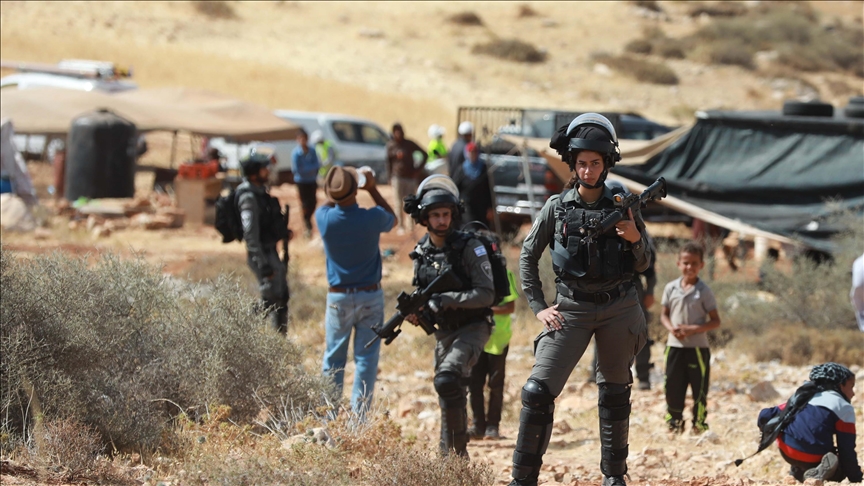
Attacks by illegal settlers have also targeted nearby Bedouin communities, as part of a broader escalation across the West Bank.

Palestinian authorities documented at least 2,153 illegal settler attacks in the occupied territory in the first half of this year alone, resulting in the killing of four Palestinians.

Since the start of Israel’s genocidal war on Gaza, nearly 1,000 Palestinians have been killed and more than 7,000 injured in the West Bank by Israeli forces and illegal settlers, the Palestinian Health Ministry said.

In a landmark opinion last July, the International Court of Justice declared Israel’s occupation of Palestinian territory illegal and called for the evacuation of all settlements in the West Bank and East Jerusalem.

Continue reading
Changing The Middle East Face Through War

Dr Marwan Asmar

Israeli Prime Minister Benjamin Netanyahu finally got what he wanted: ‘A war with Iran.” But this war – now in its fifth day, is already proving very costly for Israel because of the Iranian military firepower meted out on Jewish cities, towns and military installations.

Such a war that begun Friday, 13 June, 2025, will be remembered as one of the greatest events in the calendar of the Middle East. The start of the reaping of the Muslim pride, for up until it was always US-backed Israeli ‘superman superiority’ – versus Islamic weakness and meekness.

Netanyahu may have made a devastating calculation by attempting to go after the Iranian vast nuclear infrastructure while in reality creating mayhem in Iranian cities, people and assassinating 10 of its top military leaders in the early hours of Friday morning.

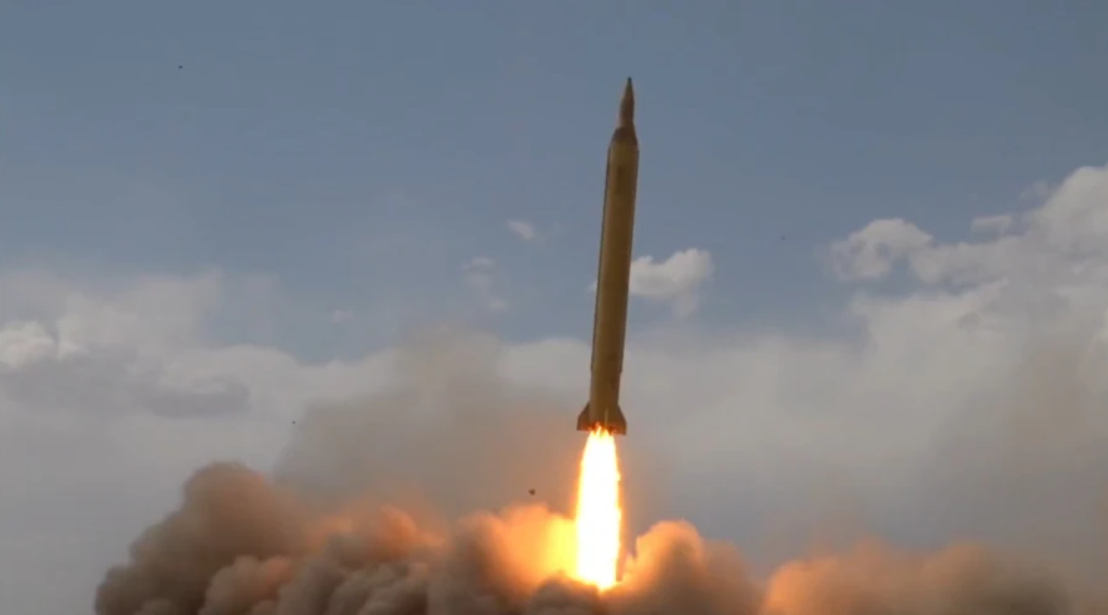
This was all to change on the evening of that day as Iranian long-range missiles began to hurl down on central Israel and more precisely the Greater Tel Aviv area that includes other cities, towns and settlements with a population of 4 million people.

The start of the strikes on Israel stands today as unprecedented, a first-time development since the creation of the Zionist entity in 1948 and struck a series of bullet sounds among the Israeli population who has been huddling up-and-down the shelters since the conflict begun and best summarized by the US Ambassador to Israel Mike Huckabee who said one night after the bombs that:

“It was a tough night in Israel,” referring to the fact that he had to go down to the bomb shelter five times because of the incoming Iranian missiles that would not let up.

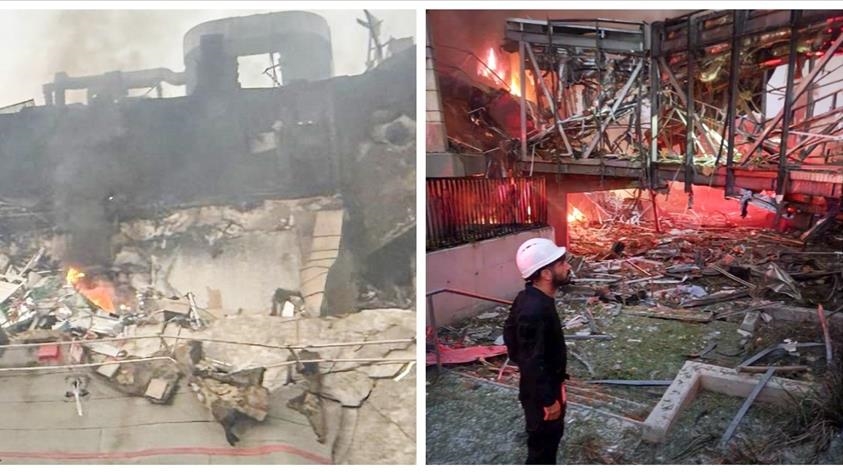
Shock, mayhem, hysteria quickly consumed Israelis as they started seeing first-hand, the destroyed buildings and quashed cars in the middle of Tel Aviv and its surrounding areas like Bat Yam, Ramat Gan, Rehovot, Petah Tikva and Herzliya.

Very quickly as well, missiles, and indiscriminately so, began to fall in these places, long seen as the pride of joy of Israeli technology, military industrialization and top business. These were crumbling in front of their eyes as reported by the Israeli newspapers and media channels.

Shocking was the fact, the incoming missiles, which made Israeli defenses like the Iron Dome and the David Sling look pitiful, were striking buildings and high-scrappers including the prestigious Weizmann Institute of Science with reporters of three its top flights struck and is now in fear of complete collapse.

Despite this, Netanyahu says he is sure of a complete victory, adding that Israel is on the verge of completely changing the face of the Middle East, including his claims of bombing Iranian military facilities, but in reality striking at civilian infrastructure and people.

However, for the first time Gazans and Palestinians are jubilating at the sight of what seems to be the non-stop Iranian missiles falling on Israeli areas where sirens go off and on in all middle of the night and day whilst in glee at the ruined and destroyed buildings. “Let them see how its like to be hit by a missile,” is a frequent comment voiced not only by Palestinians but also by many others in the world.

It is true the face of the Middle East is, and for the first time, is truly changing the face of the Middle East, but not according to the wishes of Netanyahu but to the people of the area of Gazans, Palestinians Arabs and Persians where they have watched the Israeli army bomb the enclave over the past 21 months or so.

This is indeed a historic moment led by Iran and soon to be joined by members of the Muslim world including Turkey, Pakistan, Malaysia and Indonesia. The unexpected war in the Middle East, as brought on by Netanyahu and his extremist and racist government, is upsetting the plans of the Trump plan for the Middle East who is portraying himself as a so-called “man of peace” – a fake image in the light of the fact that the US has been the top military supplier for Israel to carry out its Gaza genocide.

The conflict with Iran – that is not likely to end any time soon because of the arsenal that waits in the ready and to be unleashed – has effectively put an end to the idea of transferring Palestinians from Gaza to other lands. They are likely to stay firmly on their places despite the mass destruction of the enclave.

However, there is a clear slippery-slope to this war that is still in the initial stages with outside powers ready to take sides developing into a real possibility of World War III, if cool hands don’t take the lead and let real and effectively diplomacy take the reign of power to stop what was seen in the 1960s, 1970s and even 1980s the concept of Mutual Assured Destruction.  

The world today is on a precipice….


Continue reading
US Embassy Says it Cannot Evacuate Americans in Israel

The US Embassy in Israel says it cannot evacuate or directly assist American citizens in leaving the occupation state. The announcement comes amid a regional war sparked by US-backed Israeli attacks on Iran.

“The U.S. Embassy is not in a position at this time to evacuate or directly assist Americans in departing Israel,” it said in a statement.

Despite US-Israeli coordination in launching the surprising attack on Iran, the Trump administration failed to issue advance warnings to American settlers in Israel reports the Quds News Network.

Citing security concerns, the US Embassy in the occupation state will remain closed on Monday. All US government employees and their families have been told to shelter in place until further notice.

The Israeli government has ordered airlines not to allow Israeli citizens inside the country to board rescue flights. These flights are only for Israelis currently abroad, reported The Marker.

Officials claim the move aims to prevent overcrowding and reduce the risk of mass casualties. But in practice, the policy means settlers and civilians still in Israel cannot leave, even as tensions with Iran escalate.

Last month, US Ambassador to Israel Mike Huckabee said that 700,000 American citizens live in Israeli settlements across occupied Palestine. He was referring to settlers, who hold Israeli citizenship and serve in the Israeli military.

Critics argue that these settlers are being used as human shields. Entire communities, including women and children, are placed deep inside conflict zones. Their presence serves both as a military buffer and a justification for expansion.

In contrast to its silence in Israel, the US State Department issued a clear warning to citizens in Iran, urging them to leave immediately.

“U.S. citizens should not travel to Iran for any reason and should depart Iran immediately if you are there,” said the statement.

Continue reading
Trump, Gaza and The New Political Ploy


Dr Sami Al-Arian

The infamous 19th-century imperialist and racial supremacist, Cecil Rhodes, once remarked: “It is our duty to seize every opportunity to acquire more territory and we should keep this one idea steadily before our eyes that more territory simply means more of the Anglo-Saxon race.” He then added: “Just fancy those parts that are at present inhabited by the most despicable specimens of human beings, what an alteration there would be if they were brought under Anglo-Saxon influence.”

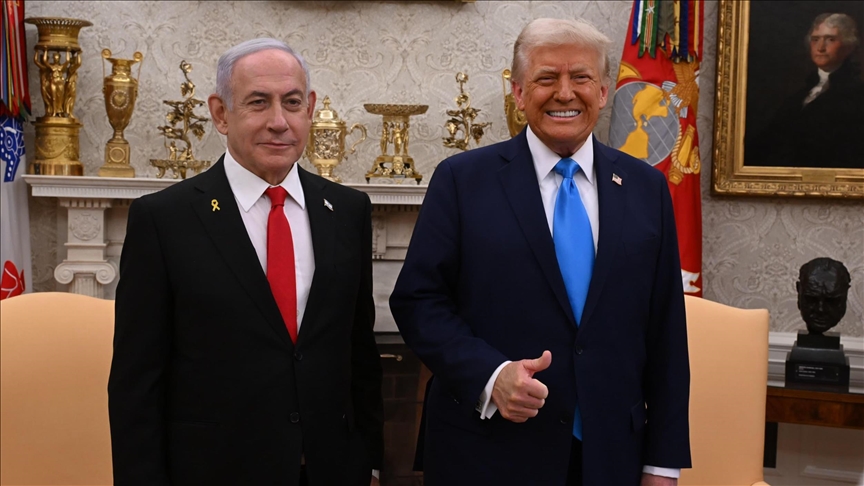
More than a century later, US President Donald Trump expressed similar attitudes during his meeting on Feb. 4, with the Israeli prime minister and indicted war criminal Benjamin Netanyahu, when he said: “We will take over the Gaza Strip, will own it long-term and will redevelop it … I do see a long-term ownership position.” In a settler-colonialist spirit, Trump callously continued, “I don’t think people should be going back to Gaza. I think that Gaza is not a place for people to be living.” He neglected to mention, of course, the exception for Jewish settlers in prime real estate along the Gaza beach. He then added, “They’re living in hell,” without any hint of irony, considering the 15-month US-sponsored genocide, supported by funds, bombs, and diplomatic protection.

Strategic agenda and regional dynamics

There were many items on the agenda between Trump and Netanyahu, including Iran’s nuclear program, the future of Gaza and the West Bank, and normalization with Saudi Arabia.

To be sure, Trump was not an unknown quantity. In his first term, he demonstrated total hostility towards the Palestinians and embraced the most radical positions espoused by extremist Zionists. These included recognizing Jerusalem as Israel’s capital and relocating the US Embassy there, the annexation of the Syrian Golan Heights (occupied by Israel since 1967), the closure of the Palestine Liberation Organization (PLO) office in Washington, DC, ending all humanitarian aid to the Palestinians through the UN refugee agency (UNRWA) or US agencies, and integrating Israel within US Central Command (CENTCOM), the US military command responsible for a region stretching from Egypt to Afghanistan.

Furthermore, throughout his presidency Trump completely disregarded the so-called two-state solution — a long-touted US goal — in favor of Netanyahu’s approach of normalizing relations with Washington’s Arab client regimes while pursuing an aggressive settlement expansion policy intended to establish a de facto Greater Israel. In effect, it appears that “Trump 2.0” is trying, in his own way, to fulfill his promises of securing a greater Israel for his right-wing Zionist donors [1], benefactors [2] and appointees [3]. The proposal to forcefully remove over 2 million Palestinians from Gaza does not appear serious or achievable, since the Palestinians will never cooperate in their own displacement, nor would neighboring countries be willing to support a dangerous plan that would destabilize the region. In the past, Trump proposed similar hyperbolic ideas that failed to materialize, including his calls [4] for constructing a Riviera on the beaches of North Korea.

Netanyahu came to the White House with several objectives in mind. He sought Trump’s support to continue his war of extermination in Gaza after freeing many Israeli captives at the end of the first stage of the ceasefire deal. His political allies pressured him to resume the war in order to achieve his elusive objective of dislodging Hamas and eradicating the resistance — an aim he has not accomplished during the 15-month onslaught. It would appear that Trump wants to achieve this goal using political means through his outrageous proposal rather than through military pressure. If that is the case, this would be Trump’s way of handing Netanyahu the fig leaf he needs to silence his hard right critics and conclude the second stage of the ceasefire deal.

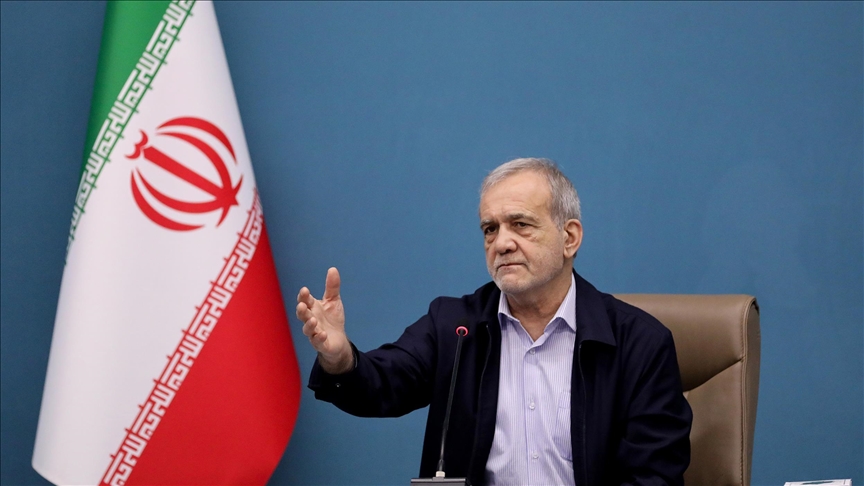
On Iran, Trump has doubled down on his policy of applying extreme pressure through economic sanctions in order to get the Iranians to negotiate a deal on their nuclear program. In return, the Iranian Foreign Minister Abbas Araghchi has called [5] for “maximum wisdom” to be applied to relations between Washington and Tehran, instead of the “maximum pressure” policy Trump has espoused. Since these are the early stages of diplomatic maneuverings, it’s very doubtful that Netanyahu received a green light from Trump to use military strikes against Iran in the near term.

On the West Bank, the Zionist regime has been escalating its aggressive settlement policy as well as its unprecedented attacks on several Palestinian cities, particularly against refugee camps in Jenin, Nablus, Tobas and Tulkarem.

Towards a Saudi-Israeli accord and its fallout

In the past, Trump and many of his administration officials, such as the new US ambassador to the Zionist regime, Mike Huckabee, have endorsed the expansion of Israeli settlements and the calls for annexing large parts of the West Bank. But backing such a policy now will certainly impede the central piece of Trump’s main objective in the region, which is to conclude a normalization deal with Saudi Arabia. To negotiate a deal with the Saudis, Trump must rein in Netanyahu and his extremist allies by promising them what they desire most: a Gaza free not only of Hamas’ rule but also of Palestinians, as well as the annexation of a large part of the West Bank, in exchange for a normalization deal with the Saudis and possibly beyond.

The Israelis certainly know that they will not get the Palestinians to leave voluntarily when they could not compel them to do that through their genocidal war. They recognize that they cannot unilaterally annex parts of the West Bank before the normalization deal with the Saudis is concluded. They also know that Trump has a very long agenda, both domestically and internationally, particularly with regard to the Ukraine war and China, and will not allow a devastating war with Iran to disrupt his agenda. Once the fog of the visit clears, it will become apparent that Trump’s primary policy in the Middle East is to cement a Saudi-Israeli agreement, one that cannot be finalized without putting a hold on other contentious issues such as a military escalation with Iran, West Bank annexation, or the resumption of the Gaza genocide. But that does not mean that the Zionist regime and its supporters within the Trump administration will not push hard to achieve all their objectives in Gaza, the West Bank and against Iran. Regardless, the Palestinians and their supporters worldwide must be vigilant to resist and defeat all their nefarious plans, particularly in Gaza, the West Bank, as well as any plans to integrate a genocidal regime in the region.

People across the Middle East have witnessed the true colors of the Zionist regime. Achieving a normalization deal with the Saudis or any other party would require nothing less than the total erasure of their collective memory. It would appear that the main lesson of the Oct. 7 attacks has not been learned. They took place at a time when regional and international actors had all but buried the Palestinian cause and ignored the plight of the Palestinians in pursuit of their own interests. Not only will none of the policies advanced by Trump address these issues, but they will exacerbate them. And thus, like his forgotten deal of the century, these policies are doomed to fail.

[1] https://www.nytimes.com/2024/06/25/us/politics/miriam-adelson-trump-israel.html

[2] https://www.thejc.com/news/usa/from-jared-kushner-to-miriam-adelson-meet-the-jewish-figures-in-trumps-inner-circle-sllz2ky1

[3] https://www.palestinechronicle.com/from-stefanik-to-hucabee-donald-trumps-cabinet-is-a-pro-israel-swamp/

[4] https://www.youtube.com/watch?v=P-iTikGb-CY

[5] https://www.thenationalnews.com/news/mena/2025/02/06/irans-foreign-minister-calls-for-maximum-wisdom-in-response-to-trumps-maximum-pressure-tehran-policy/

Dr Sami Al Arian is public affairs professor and the director of the Center for Islam and Global Affairs at Sabahattin Zaim University in Istanbul.

Continue reading