Hamas, Trump and The Ceasefire

By Dr Marwan Asmar

CROSSFIREARABIA – The USA wants a ceasefire on Gaza, yet it maintains its supplies of weapons to Israel which the latter uses to beat Palestinians with. This was the case with the former Joe Biden administration.

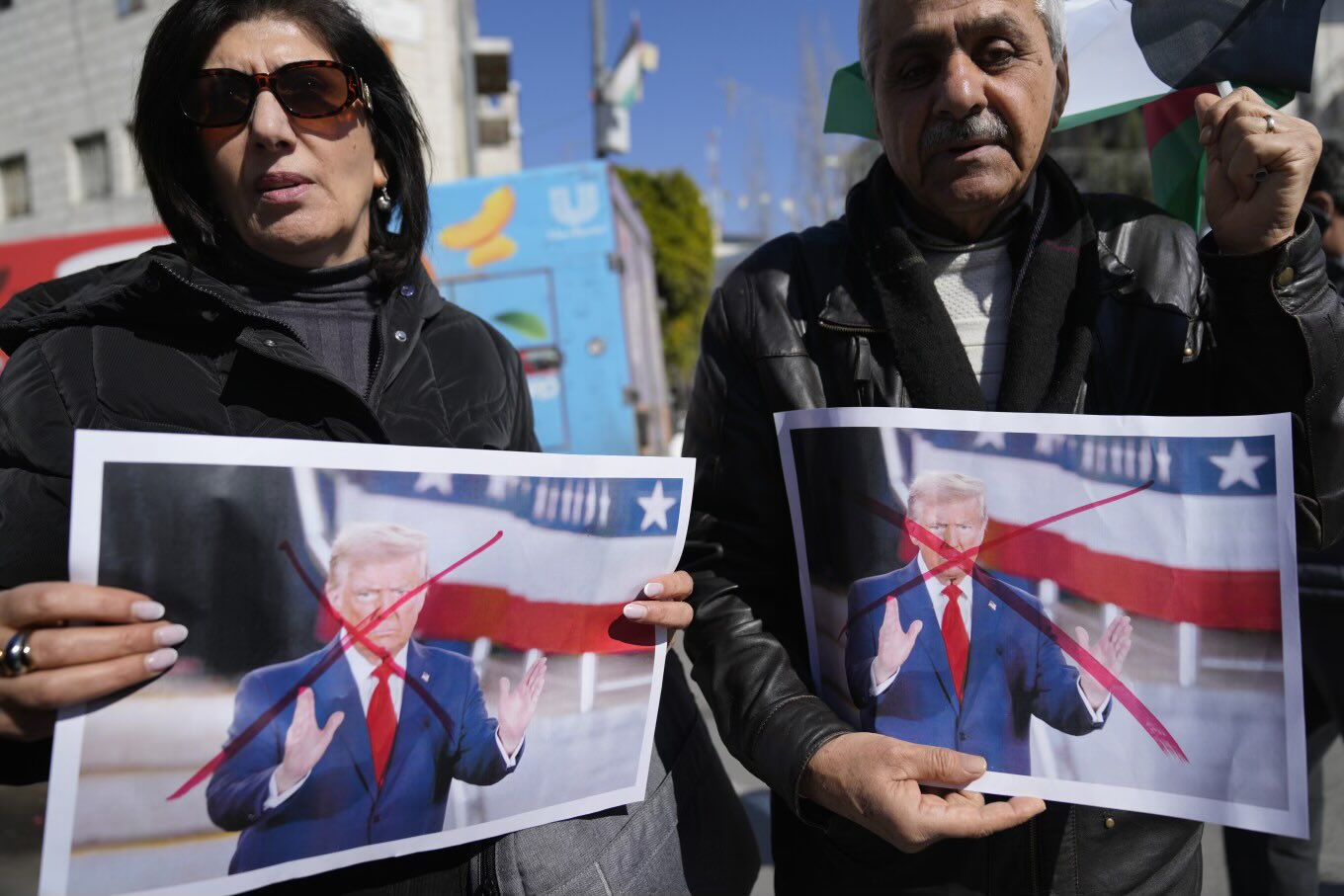
However, it is the Donald Trump administration that is now in the front brokerage seat, talking, and for the first time, to Hamas directly, face-to-face about ending the genocidal, destructive Israeli war on Gaza.

Benjamin Netanyahu is downright angry about this fact, yet he is making sure that he doesn’t upset Trump by his extremist utterances despite the fact that he is on record for wanting to continue the deadly war on the civilians of Gaza under the pretext of destroying Hamas and its military wing.

However, it has been clear, and at least for the past month that direct negotiations between US presidential envoy Steve Witkoff and his team including Adam Boehler have been taking place with top members of Hamas despite the fact that Israel has stepped up its war on Gaza with its mass killing of its starving 2.2 million-population.

The recent breakthrough achieved by the two sides, Monday, is awaiting final approval by the Israeli government which is sending out mixed signals of agreements and discord. However, there is circulating news that Netanyahu is finally ready.

The new deal agreed upon with the American team is that Hamas would agree on a 60-day-ceasefire where the Islamic movement would free 10 alive and dead prisoners (five of each) on the first day of the deal and 10 (also alive and dead) at the end of 60 days.

The American-sponsored deal includes the lifting of the Israeli siege on Gaza and allowing the entry of 100 aid trucks per day to enter the territory. Meanwhile Witkoff says that during those 60 days talks would continue to negotiate a ceasefire on a permanent basis.

However, Israel is still mulling on the fact because it says the ceasefire negotiations originally agreed on with Witkoff last January are different than what the present US-Hamas is talking about. The Israeli side, mainly Netanyahu, states that they want Hamas out of Gaza but first of all they must lay-down their arms and stashed weapons. Finally, the Gaza Strip must be a free area from any weapons.

These are intractable issues although Hamas and directly talking with the Americans, has previously stated it would entertain the idea of Gaza being run by an independent committee. Such flexibility may be one indication why the American administration is talking to Hamas officials and which is unprecedented as no US government, including Trump in his first presidential term, talked to an organization that is on their “terrorist list”.

The latest breakthrough to achieve a ceasefire on Israel’s war on Gaza, relaunched on 19 March maybe seen as another hope-to-be-dashed as in previous long-talks in Cairo and Doha turned out to nothing and were no more than “talking shops” with the Israelis, especially Netanyahu unwilling to end the war on Gaza, and not least of all of what was regarded as weak US president in the form of Joe Biden and his Middle East roving Secretary of State Anthony Blinken.

All this appear to be changing now for Trump wants to end all global wars and doesn’t want to pay American money around the globe as in the case with Biden and his support for Ukraine where billions of dollars were spent. He has already stopped the war with the Houthis after “massacring” the country for a little more than a month and costing the American treasury around a $1 billion.

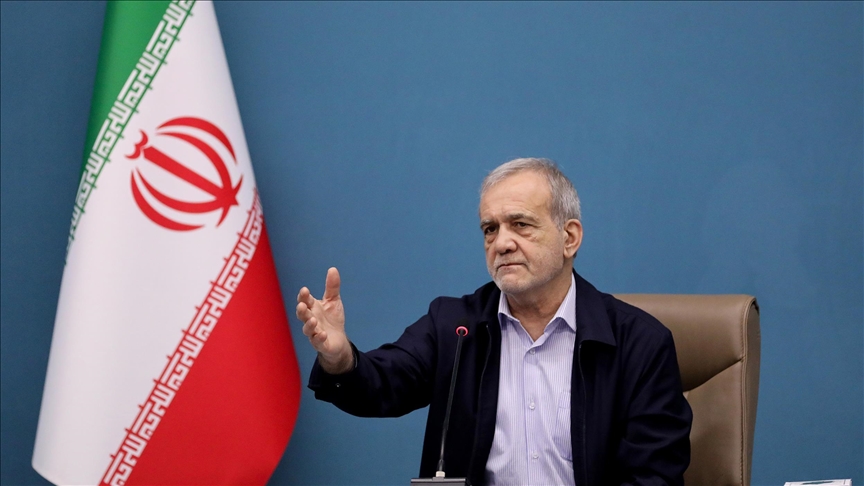
The American president is talking to Iran on a new nuclear deal and is now talking to Hamas with a real possibility of achieving a deal to end the war and allow UN aid trucks to feed the hungry of Gaza who are once again dying of Israeli-imposed starvation.

To prove his point on wanting to achieve a ceasefire in Gaza, Trump sacked his National Security Advisor Mike Waltz for talking to Netanyahu behind his back last April when delicate talks was being pursued between Trump administration officials and Hamas.

Tide turns

The tide is turning against Israel. As well as less endearing developments in the White House against Israel, many countries around the world, including states in the European Union like Britain, France, Spain, Holland, Belgium, Norway, Sweden and many more are today calling for the stopping of the war on Gaza with many openly saying they would support the creation of an independent Palestinian state.

This is something which is making Israel’s government extremely jittery. Israeli Foreign Minister Gideon Sar is today, adopting a threatening attitude. He says if these countries take this step Israel would declare its sovereignty on many areas of the occupied West Bank.

All this, together with the latest negotiations, may finally persuade Israel to accept a deal rather than hold out and be prepared to be called an international pariah. Regardless however, many say that international pressure must be maintained from Trump in the United States as well as Europeans and the EU Union.

Continue reading
Haaretz: US Finally Independent From Israel

An article in Haaretz reports that Israel has suffered several blows in recent days in its historical relations with the United States. And that US President Donald Trump no longer requires Saudi Arabia to normalize relations with Tel Aviv for Washington’s nuclear cooperation with Riyadh.

Adding insult to injury to the Israel occupying state, Trump has reached an agreement with the Houthis Ansar Allah group to end US military strikes on Yemen. This is plus the fact the US has began negotiations with Iran without the blessing of Israeli Prime Minister Benjamin Netanyahu. Further to that a US official in the Trump administration also held direct contact with the Hamas.

However, Odeh Basharat in his Haaretz article argues that the most painful blow Israel has ever suffered was Trump’s dismissal of his National Security Advisor, Mike Waltz, due to a discussion he had with Netanyahu, behind Trump’s back, about launching a military attack on Iran.

Basharat said the United States has finally begun to wake up and free itself from the shackles of Israel, and act as an independent state, not a “banana republic.” Basharat, a journalist from the Arab world, expressed his astonishment at these developments and wondered whether what was happening before his eyes was real or merely an illusion.

The writer believes that a seismic clash is taking place between the two countries and the two men, and that all the reasons are now converging. “America is gaining its independence 250 years after the beginning of its First Revolutionary War,” referring to the war that took place between 1765 and 1783, when 13 British colonies in North America rejected British colonial rule and gained their independence.

Basharat describes this emancipation as the Great American Rebellion, and attributes its causes to the fact that the world—and the United States as part of it—felt deeply concerned by what the writer, with biting sarcasm, called “Israel’s diplomatic acrobatics,” its “enlightened occupation” of the Palestinian territories, and its “closure (of the Gaza Strip) that allows only air in.”

According to the article, as soon as Israel reaches an agreement on a particular issue, it adds new conditions the next day. Although the Arab states that signed peace agreements with Israel were not required to recognize it as a Jewish and democratic state, only the Palestinians are required to do so, which, as Basharat argues, permanently relegates Israeli Arabs to second-class citizens.

According to the article, it has become clear that Netanyahu is deceiving everyone: Arabs, Jews, and Americans, not just Hamas and the Lebanese Hezbollah movement, as he previously boasted to Israeli police investigators that he misled and deceived them, then bombed them.

Since the time of David Ben-Gurion, Israel’s first prime minister, the state’s policy has been based on force. In contrast, Trump seems to believe in a policy of carrots and sticks—meaning diplomacy and force combined—according to the article.

The author claims that the US president thinks differently, as demonstrated by his actions toward the Houthis, Iran, and the tariffs. Once he realized he had failed, he took a step back.

As for Israel, its problem does not lie solely with Netanyahu, as Basharat argues, but rather with the fact that it has not offered an alternative to force. Only three of its former prime ministers, according to the article, have taken a different path: Moshe Sharett, whom Ben-Gurion was keen to overthrow; Yitzhak Rabin, who paid for it with his life; and Ehud Olmert, who was ousted before even presenting his plan.

Furthermore, Israel has long treated the White House as a branch of its prime minister’s office, intervening in the wording of every sentence in documents issued by Washington regarding Israel, according to the Haaretz article as reported in Al Jazeera.

Continue reading
Saudi Arabia Plays Host to Superpower Politics

By Maksym Skrypchenko 

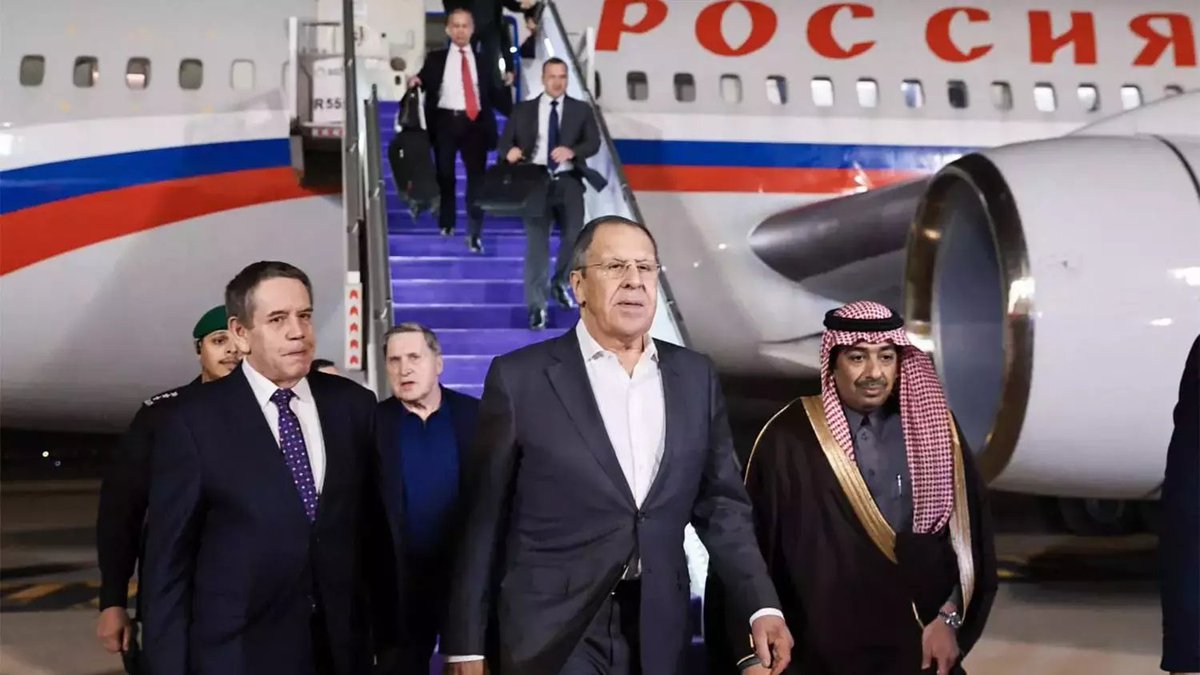
Diplomatic efforts to end the Russia-Ukraine War are once again in the spotlight, as US and Russian officials meet in Saudi Arabia on Tuesday. In a sharp contrast to the previous administration’s strictly defined red-line policy, representatives from the newly formed US President Donald Trump-aligned diplomatic team—Secretary of State Marco Rubio, National Security Advisor Mike Waltz, and Middle East envoy Steve Witkoff—are set to engage with their Russian counterparts in discussions that many fear may sideline Ukraine’s own interests.

The stakes in this conflict extend far beyond territorial disputes. For Ukraine, the war is an existential struggle against an enemy with centuries of imperial ambition. Every defensive maneuver is a stand for sovereignty and self-determination. Yet recent diplomatic moves suggest that Ukraine’s central role in negotiations may be diminished. Ukrainian President Volodymyr Zelenskyy’s absence from the Saudi meeting underscores the deep-seated concern in Kyiv that their security concerns might be marginalized in a process dominated by transactional interests.

https://twitter.com/canon75gaz81/status/1891836717696450562

Under the previous administration, Washington’s policy was driven by a clear set of red lines designed to deter any actions that could provoke a nuclear-armed adversary. That approach was predicated on a belief that excessive support for Ukraine might lead to a dangerous escalation. However, the new strategy, as signaled by Trump’s team, appears less encumbered by these constraints. Instead, the focus seems to have shifted toward a pragmatic resolution—a process that prioritizes ending the war at the expense of Ukraine’s moral imperatives underpinning their fight for survival. This shift represents not only a departure in tone but also in substance. While the previous policy imposed strict limitations to avoid provoking Moscow, the current approach appears more willing to concede Ukraine’s positions if it serves the broader goal of ending the fighting.

Trump’s affiliation with Saudis


The decision to hold talks in Saudi Arabia is far from arbitrary. The Saudi Kingdom provides a neutral venue and a longstanding trusted mediator especially for figures like Steve Witkoff and Donald Trump, whose longstanding business and diplomatic ties in the region are well known. This credibility is further reinforced by Saudi Arabia’s recent announcement of a $600 billion package with the US, comprising investments and procurement agreements from both public and private sectors.

Moreover, Saudi Arabia’s position outside NATO shields it from the obligations that compel Western allies to enforce international legal mandates, including the ICC arrest warrants issued against top Russian officials, notably Putin. In such an environment, Saudi Arabia offers a secure venue for direct negotiations with Moscow, free from the pressures of external legal mandates.

Meanwhile, high-ranking European officials express growing concern over their exclusion from the process. UK Prime Minister Keir Starmer has even suggested the possibility of deploying British troops to enforce any resulting peace deal, a move that underscores the importance European leaders give to Ukraine’s future. The concerns are not merely about the cessation of hostilities, but about the long-term security guarantees that Ukraine desperately needs. European officials argue that a peace process that excludes Kyiv from the initial stages could lead to an agreement lacking the robust assurances necessary to prevent future Russian aggression.

Russian approach

Russia, for its part, is approaching the negotiations with its signature long-game strategy. Recent reports suggest that Kremlin officials are assembling a team of seasoned negotiators well-versed in securing maximum advantage. Their method is well known—ask for a shopping mall when all they need is a cup of coffee. Just one day before the talks, Russian diplomats are already staging a narrative of victory, asserting that the EU and the UK are entirely non-negotiable parties to any future agreements on Ukraine. According to the Russian representative at the UN, Ukraine has irretrievably lost key territories, and any new arrangement should force Kyiv into accepting a demilitarized, neutral state determined by future elections. This approach is designed to create the illusion of strength while ultimately settling for concessions that heavily favor Russian interests.

Meanwhile, for Ukraine, the principle that “nothing about Ukraine without Ukraine” is more than just a slogan—it is a critical security principle. Ukrainian leaders are rightfully wary of any agreement negotiated without their active participation. With the current US strategy favoring swift and transactional outcomes rather than comprehensive negotiations, there is a real danger that Kyiv’s position could be compromised. The absence of Ukraine from these early discussions may result in a peace agreement that fails to address the existential risks the nation faces. Without strong security guarantees built into any deal, Ukraine remains vulnerable to renewed incursions and a potential destabilization of the entire region.

In this evolving diplomatic landscape, the contrast between the old and new approaches is stark. The previous risk-averse strategy sought to maintain clear boundaries to prevent escalation, whereas the current approach appears more willing to blur those lines in the hope of bringing an end to the bloodshed. Yet by doing so, there is an inherent risk: the very nation fighting for its survival might be reduced to a bargaining chip in a broader geopolitical deal.

It is imperative that Ukraine’s interests remain at the forefront of any negotiations. The war in Ukraine is not just a regional conflict—it is a struggle that speaks to the fundamental principles of sovereignty and self-determination. Any peace settlement that fails to incorporate Ukraine’s security concerns is likely to be unstable at best, and catastrophic at worst.

Maksym Skrypchenko is the president of the Transatlantic Dialogue Center

Continue reading
US Officials Downplay Trump’s Gaza Proposal as Unvetted Ideas

US President Donald Trump’s abrupt announcement proposing that the US take “ownership” of the Gaza Strip – battered by a 15-month Israeli offensive – has left senior officials, foreign counterparts, and political observers perplexed, press reports said on Wednesday.

While Trump presented the idea as a formal initiative, advisors and insiders described it as underdeveloped and lacking the necessary planning to make it a viable policy, according to The New York Times. During his first term, Trump was also known for presenting unvetted ideas as policy, leaving his aides scrambling to justify what the president unexpectedly said.

During a joint press conference with Israeli Prime Minister Benjamin Netanyahu, Trump read his proposal from a prepared statement, but sources within the administration said the plan had not been discussed in any formal capacity.

“There had been no meetings, no interagency consultations, no feasibility studies – nothing,” one senior official familiar with the matter was quoted by The New York Times as saying.

Idea without foundation

The lack of preparation behind the announcement was obvious, according to the Times.

Officials from the Pentagon and State Department – critical stakeholders in any foreign policy initiative of this magnitude – were not consulted.

There were no assessments of the military or financial requirements needed to implement such a plan, nor any evaluations of its legal or diplomatic implications.

The announcement also caught Netanyahu off guard.

According to individuals briefed on the matter, Trump told the Israeli leader of the proposal just minutes before their public appearance.

While Netanyahu appeared pleased during the press conference, the broader international response has been far cooler, and even hostile.

The announcement was met with immediate opposition from key US allies in the Arab world, including Saudi Arabia.

Critics highlighted several glaring questions left unanswered by Trump’s proposal.

These include the logistics of removing Palestinian group Hamas, clearing unexploded ordnance, rebuilding Gaza’s infrastructure, and justifying such an action under international law.

There are also concerns about the fate of the some 2 million Palestinians living in Gaza, their home.

Trump suggested that residents could be relocated temporarily to neighboring countries such as Jordan or Egypt, but both nations have already rejected the proposal.

In his remarks, Trump claimed Palestinians would be eager to leave Gaza due to its uninhabitable conditions, a statement that drew further criticism for its tone and feasibility.

Trump is known for vaguely citing people said to hold certain opinions to justify a course of action he has decided upon.

Contradictions, mixed messaging

In a bid to clarify the president’s remarks, White House press secretary Karoline Leavitt downplayed the scope of the proposal, stating that Trump was merely seeking temporary solutions involving regional partners.

However, Trump’s comments during the announcement, including his willingness to put “boots on the ground” (soldiers) if necessary, signaled a far more ambitious and interventionist approach, according to The New York Times.

Senior administration officials have struggled to defend the proposal.

National Security Adviser Mike Waltz, speaking on CBS News, described the plan as a collection of “concepts” rather than a fully formed policy.

“The fact that nobody has a realistic solution, and he puts some very bold, fresh new ideas out on the table, I don’t think should be criticized in any way,” Waltz said.

He added that Trump’s announcement could spur other nations in the region to develop their own solutions if they find his proposal not to their liking.

Critics raise alarms

Many experts and former officials have dismissed the idea as implausible and dangerous.

Daniel B. Shapiro, a former US ambassador to Israel, described the proposal as “not serious” and warned it could worsen tensions in an already volatile region.

“The danger is that extremists within the Israeli government and terrorists of various stripes will take it literally and seriously, and start to act on it,” Shapiro said.

He also cautioned that the plan could jeopardize the ongoing release of hostages under the current ceasefire deal and undermine efforts toward normalization between Israel and Saudi Arabia.

Senior officials within the administration privately expressed similar reservations, calling the proposal a “fantastical event” born out of Trump’s ad hoc approach to foreign policy.

One advisor suggested that the plan would likely fade away as its practical challenges grow more and more apparent.

Trump’s approach to Gaza is consistent with his broader foreign policy style, which often frames international relations as transactional deals.

During his presidency, he has proposed similar ideas, including purchasing or otherwise acquiring Greenland, reclaiming the Panama Canal, and treating Canada as a potential 51st state.

His critics argue that such proposals lack serious consideration of geopolitical realities and international norms.

Trump’s vision for Gaza reflects his background as a real estate developer, viewing the region’s challenges as opportunities for reconstruction and investment.

His Middle East envoy, Steve Witkoff, also comes from a real estate background and reportedly influenced Trump’s thinking after visiting Gaza and witnessing the dire conditions in the war-battered enclave firsthand.

But David Friedman, who served as Trump’s ambassador to Israel, praised the proposal as “out of the box” thinking.

“It’s brilliant and creative,” Friedman said, while acknowledging the immense challenges involved.

“After 15 years of rebuilding, it could be a market-driven process,” he added, referencing Gaza’s potential as a waterfront destination according to Anadolu.

Broader implications, future steps

Despite the skepticism surrounding the plan, Trump’s announcement has already sparked debate among policymakers and international observers.

Supporters argue that it could serve as a catalyst for alternative solutions to the Gaza crisis, while critics warn of the risks associated with floating such half-baked idea.

The proposal’s timing also raises questions, given Trump’s ongoing efforts to reshape US foreign policy.

His administration has faced criticism for reducing the role of the US Agency for International Development (USAID) and other agencies responsible for humanitarian and development assistance.

Observers pointed to contradictions between his stated goals and his administration’s actions.

As the discussion around Gaza evolves, the lack of detailed planning behind Trump’s proposal underscores the challenges of addressing one of the world’s most complex conflicts.

Whether the idea gains traction or fades away quietly, its announcement highlights the unpredictable nature of Trump’s presidency and its impact on global diplomacy.

Proposal

At a news conference on Tuesday with Israeli Prime Minister Benjamin Netanyahu, Trump said the US “will take over the Gaza Strip, and we will do a job with it too,” and that if necessary, US troops would be sent in to turn it into “the Riviera of the Middle East.”

​The controversial announcement sparked global outrage, with many Arab, European, and African countries, as well as the Organization of Islamic Cooperation, issuing statements condemning the proposal.

Trump first triggered an uproar last week by suggesting that Palestinians in Gaza should be relocated to Jordan and Egypt, calling the enclave a “demolition site” after Israel’s 15-month war that has claimed more than 47,500 lives. A ceasefire that took hold on Jan. 19 is currently in place.

The International Criminal Court (ICC) issued arrest warrants in November for Israeli Prime Minister Netanyahu and his former Defense Minister Yoav Gallant for war crimes and crimes against humanity in Gaza.

Israel also faces a genocide case at the International Court of Justice for its war on the enclave.

Continue reading